We may earn revenue from the products available on this page and participate in affiliate programs.
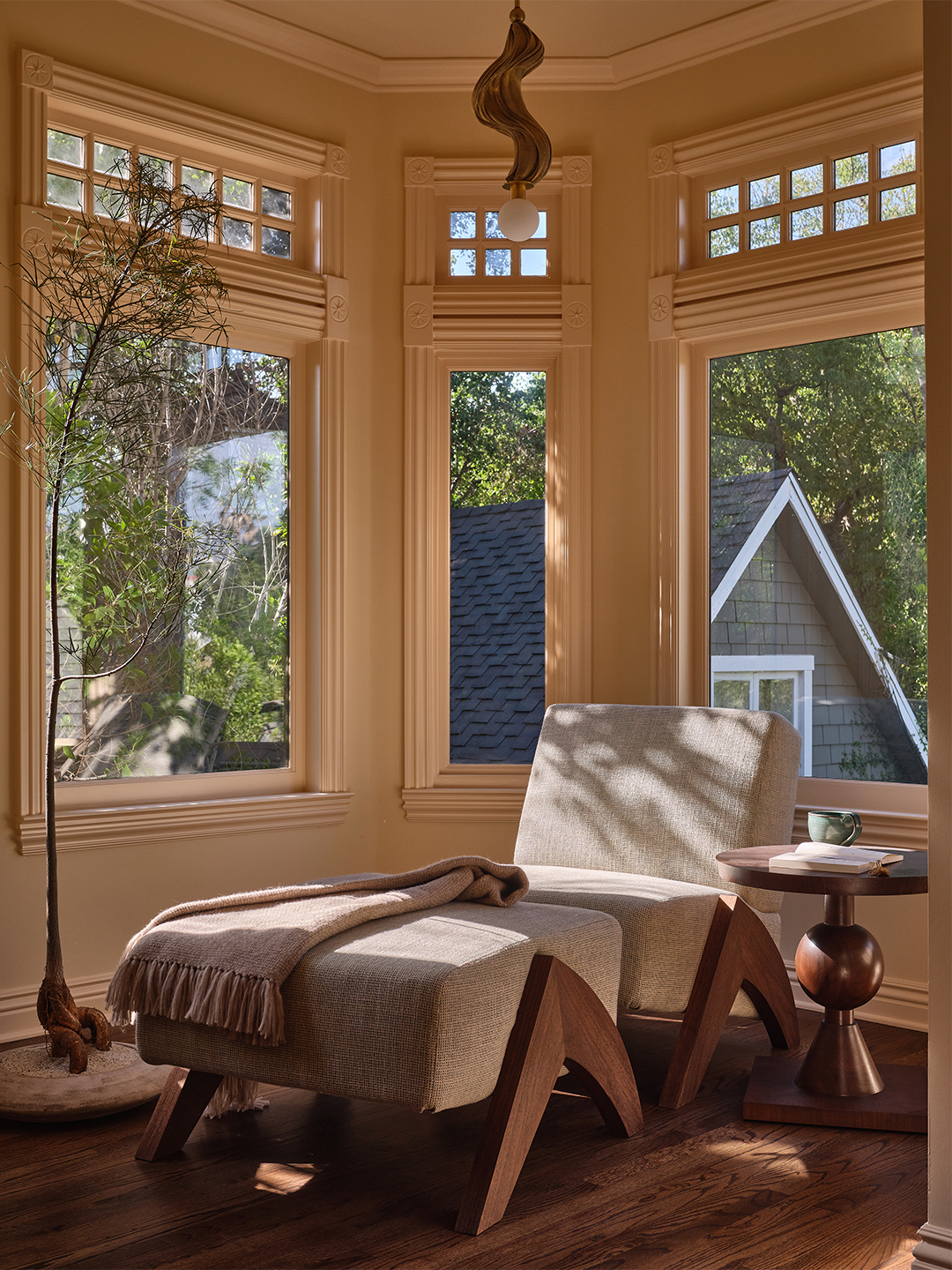
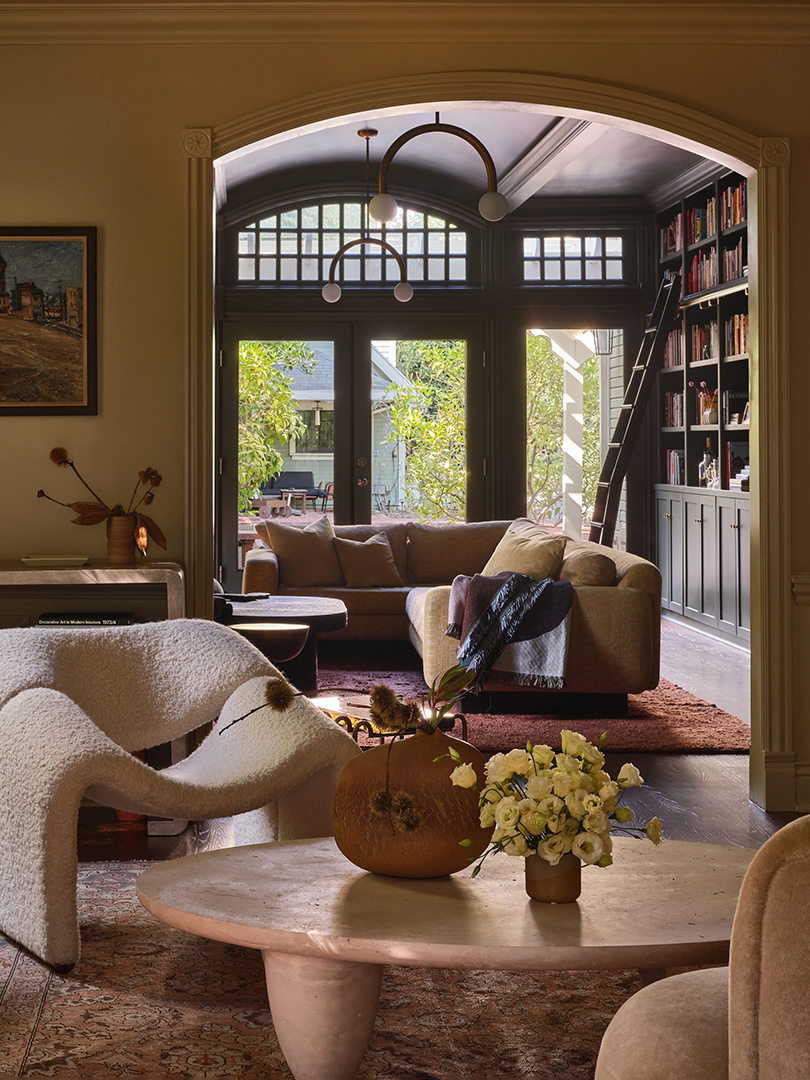
Long before Craftsmans came to define the Pasadena area, homes like this one—a 1903 Folk Victorian—shaped the visual language of residential Southern California. Tamara Honey, founder of Los Angeles design studio House of Honey, recognized that instantly: “The house had an old soul,” she says. But restoring it turned out to be less of a preservation project, more a deeply personal conversation between the home and its surroundings. The owner, who grew up in nearby South Pasadena, had known immediately that she wanted a designer who understood the nuances of the neighborhood’s personality, not just its architecture. With that in mind, Honey and her team focused on amplifying the property’s origins through a lens that felt highly specific to her client: curious, collected, slightly eccentric, and never overly polished.
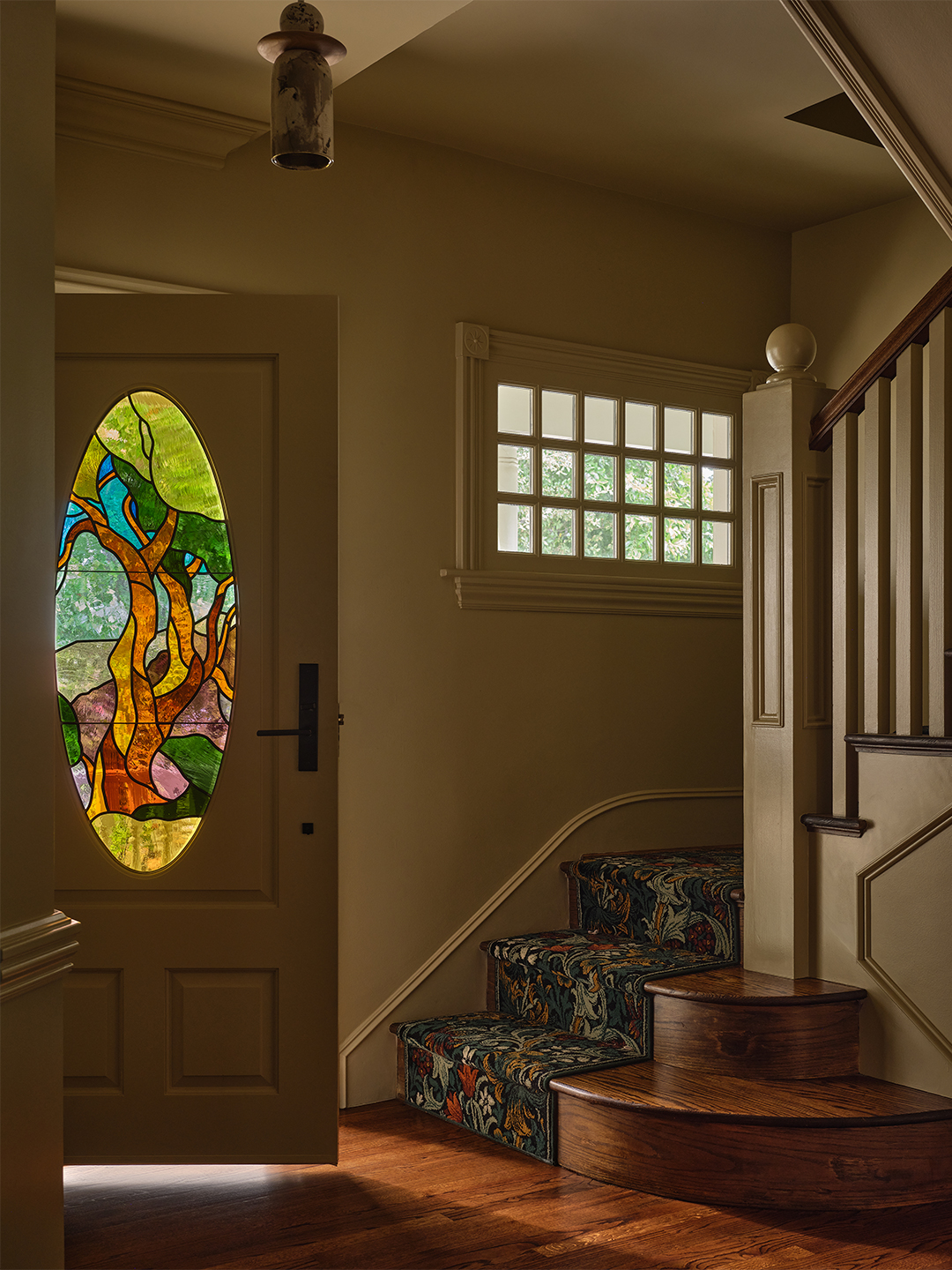
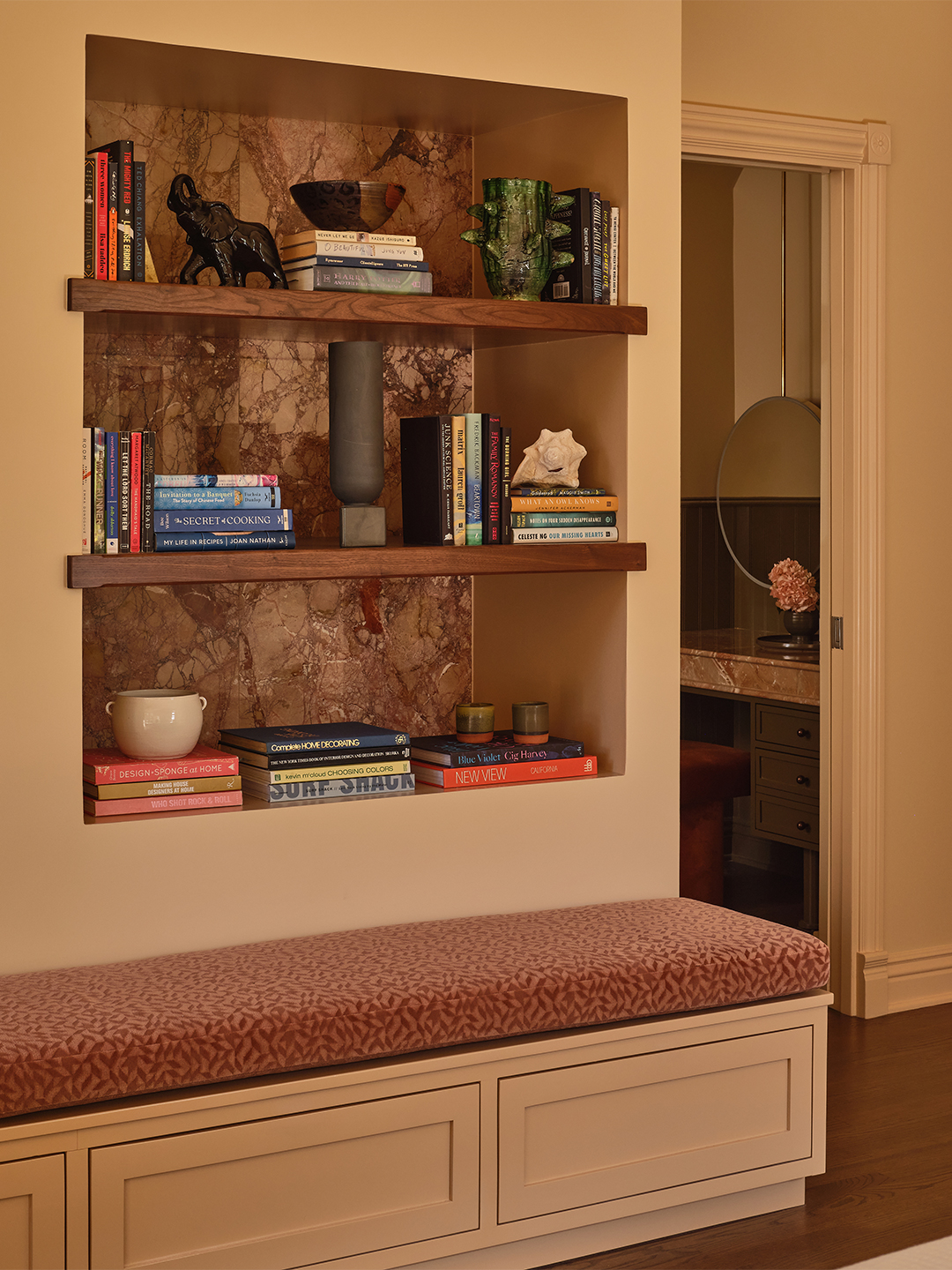
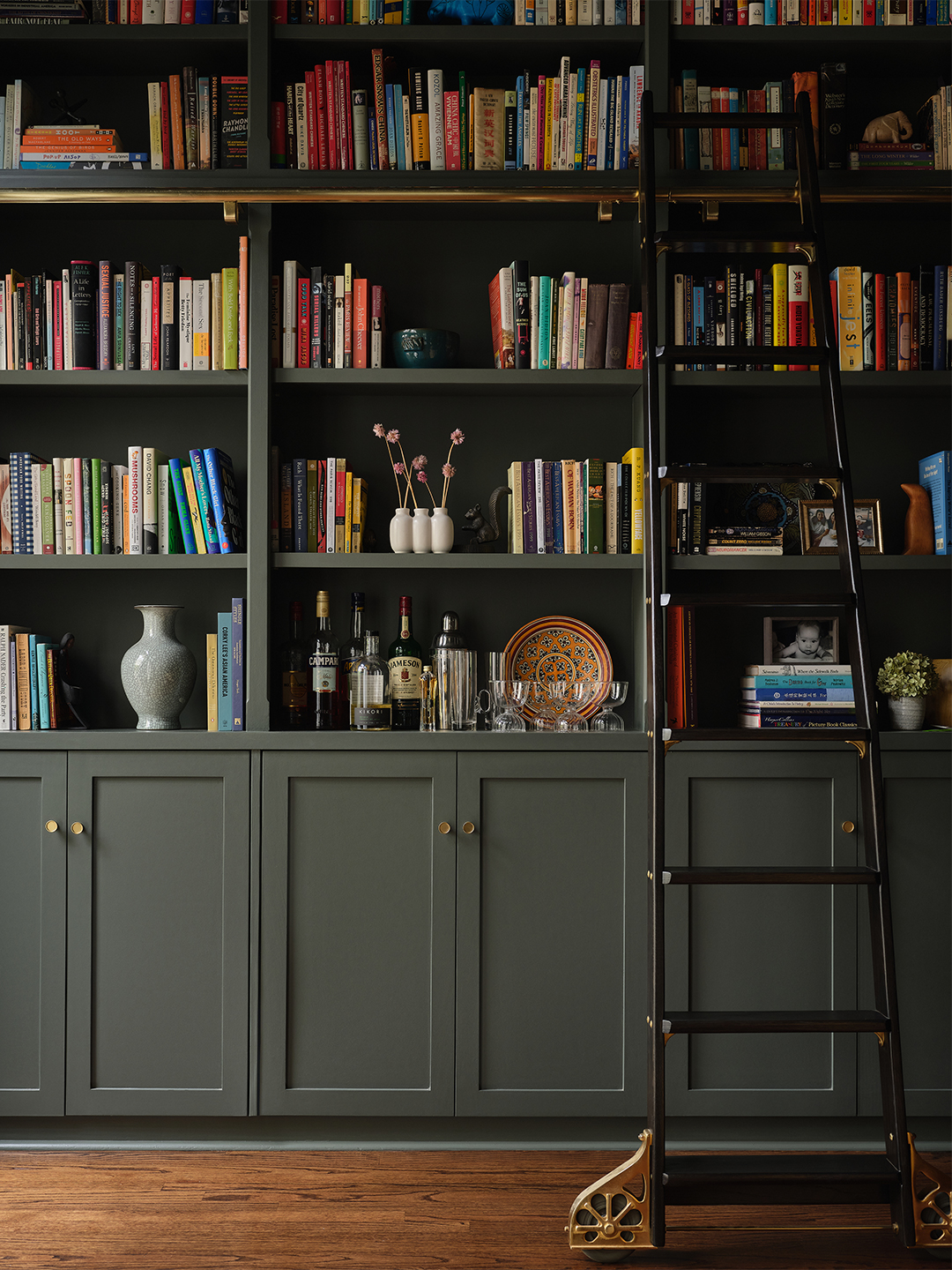
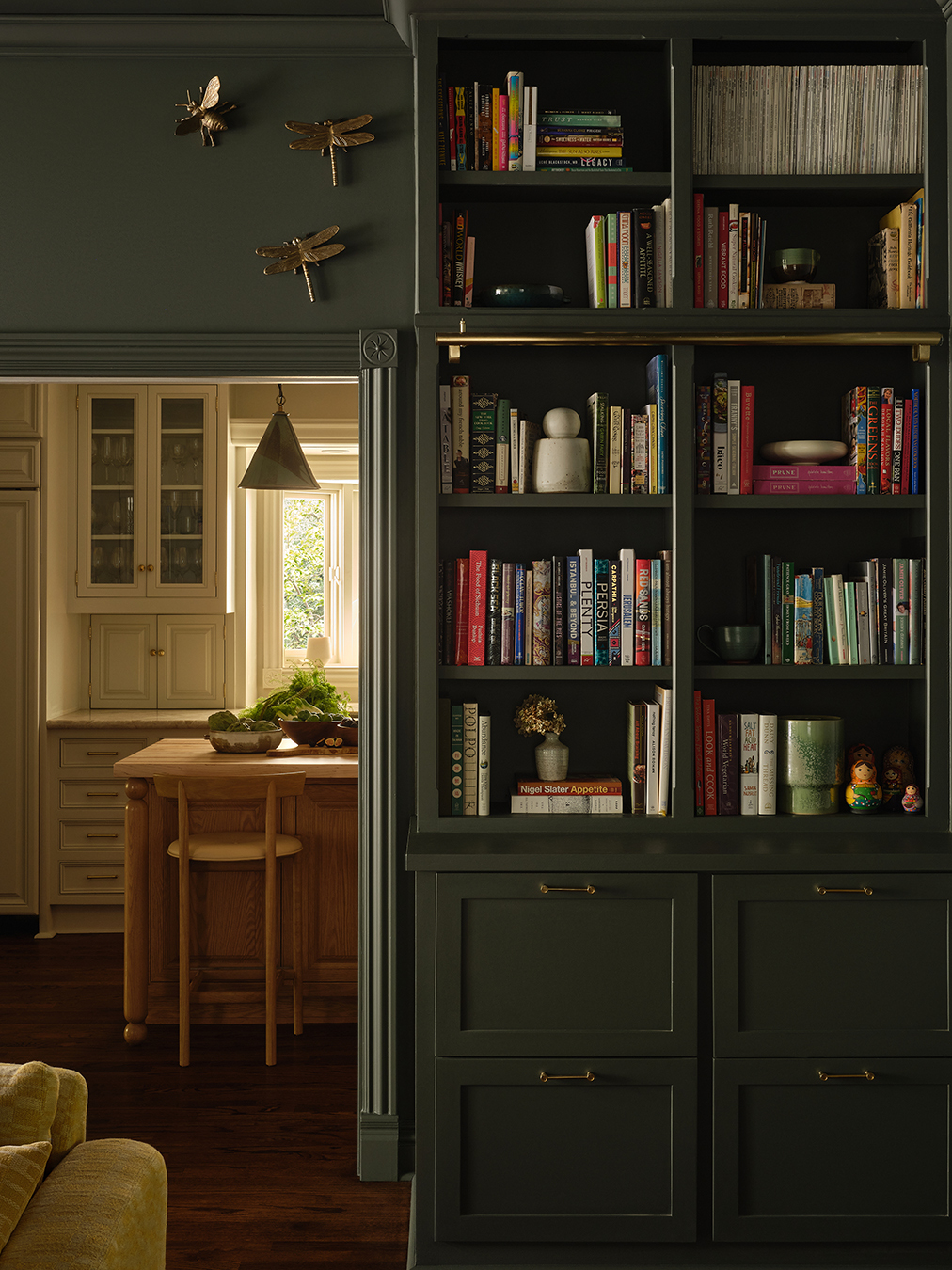
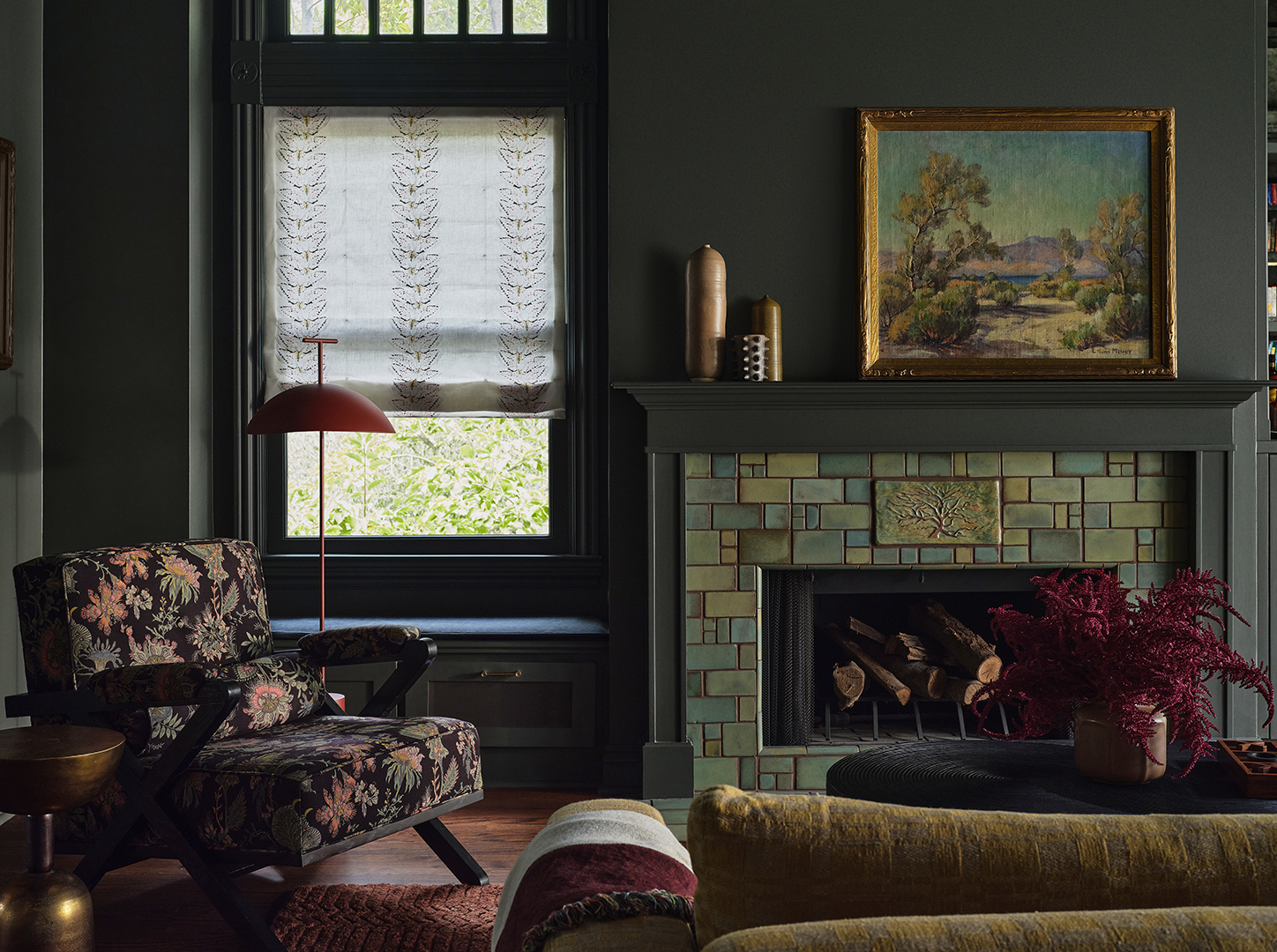
Working with Judson Studios, one of the country’s oldest stained-glass ateliers, Honey commissioned a custom front-door panel featuring a vibrant oak tree—a nod to the native landscape and the kind of craftsmanship a 123-year-old home deserves. If you know where to look, you’ll find nods to nature throughout the house: moth-adorned window shades, insect-inspired wall art, vintage brass dragonflies hovering near the kitchen entry. What keeps the house from tipping into themed territory is the balance of more traditional gestures. The wallpapered dining room boasts matching drapes, there’s a custom, brass-detailed ladder for navigating the bookshelves, and the handcrafted fireplace tile is purposefully imperfect. Ahead, Honey digs into the elements she emphasized to bring the homeowner’s vision to life.
How long was the project from start to finish?
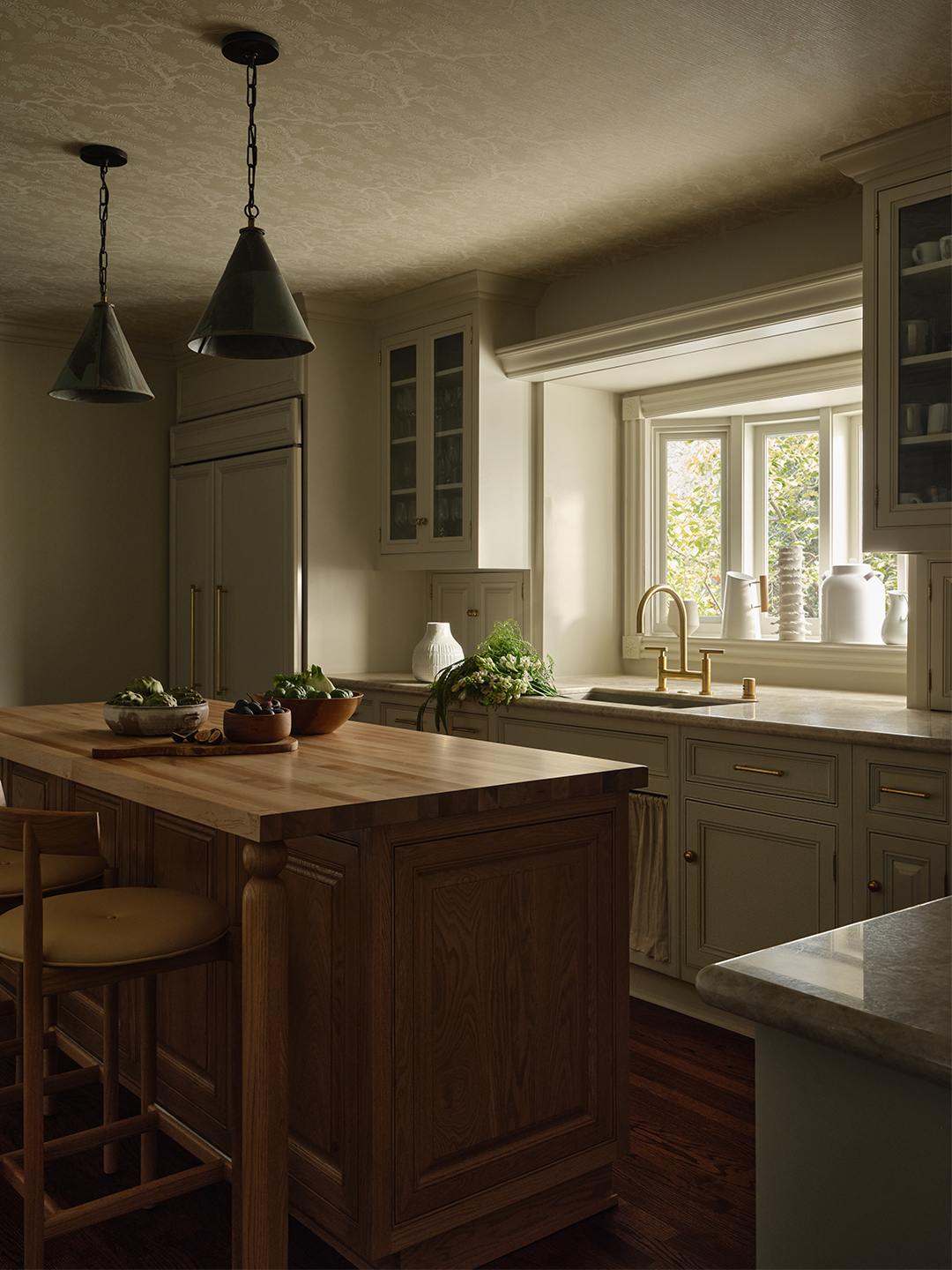
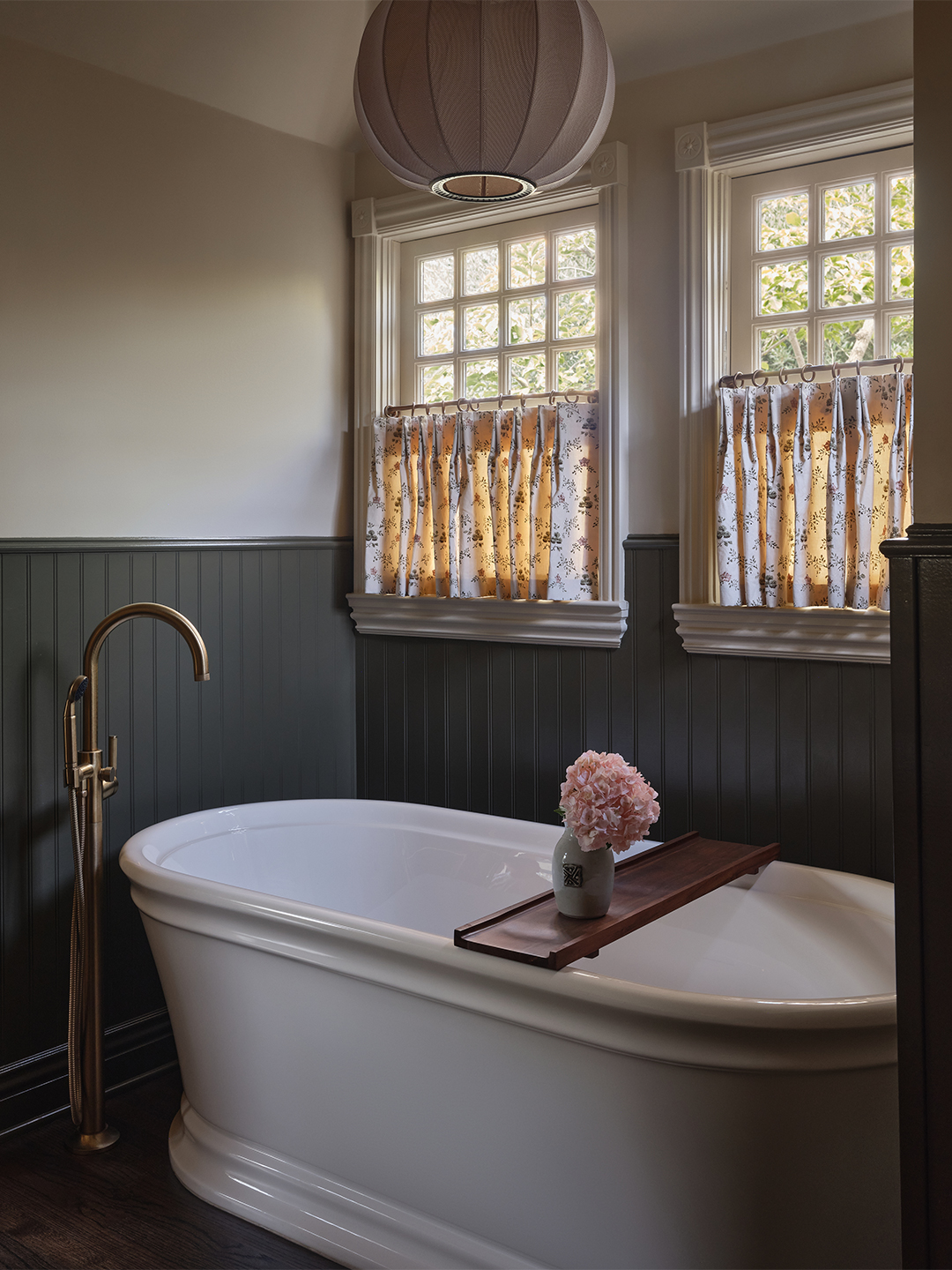
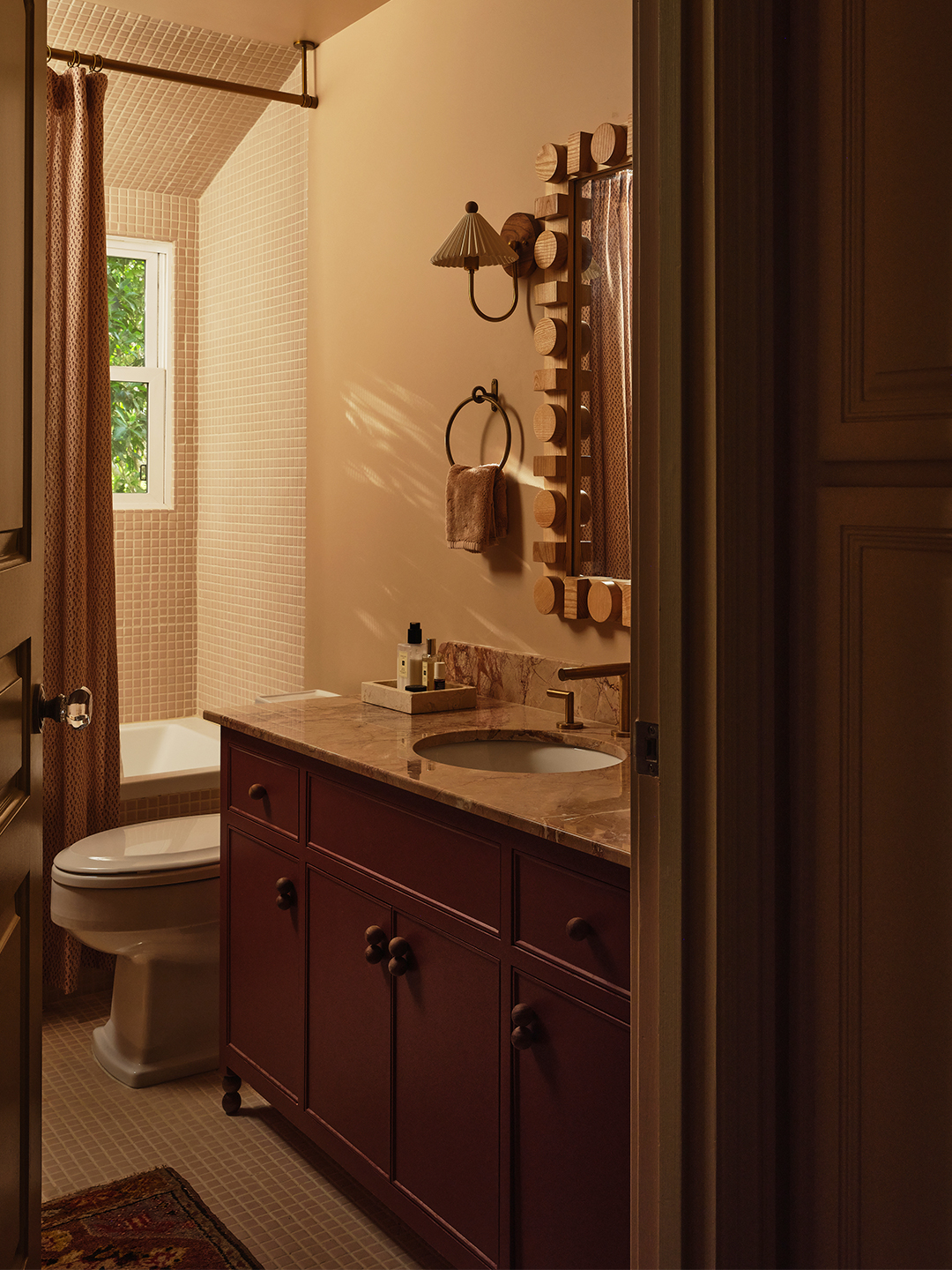
The project unfolded in two phases. We initially focused on the downstairs spaces, but the scope evolved to include the kitchen, guest bath, and primary bath. Our client loved the kitchen as it was—she’s an incredible cook and had no interest in changing something that already worked beautifully. We respected that instinct and rather than reinventing for the sake of reinvention, we refined. The primary and guest baths became opportunities to start fresh, eventually leading to a refresh of the primary bedroom as well.
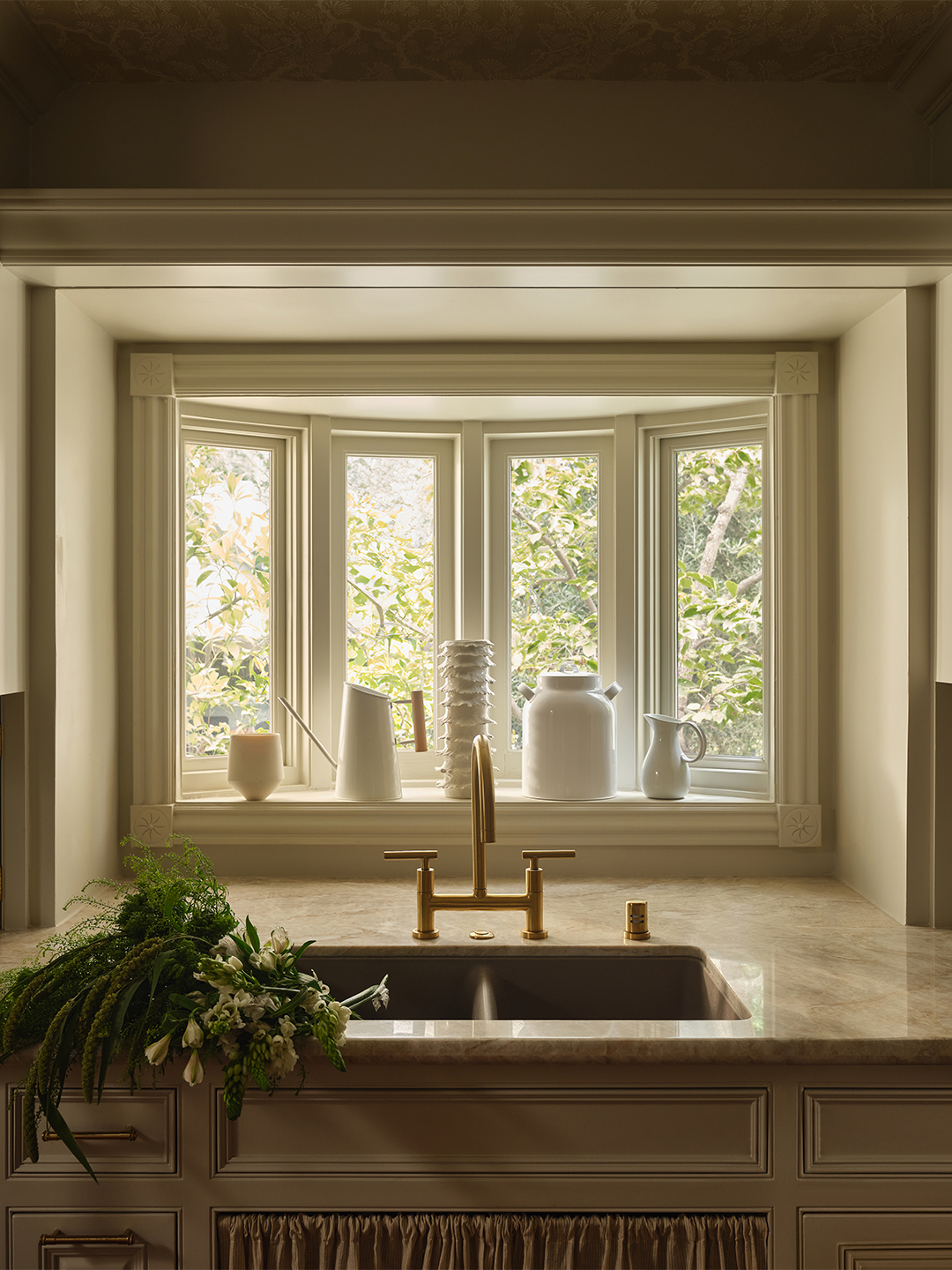
Tell us more about the kitchen ceiling.
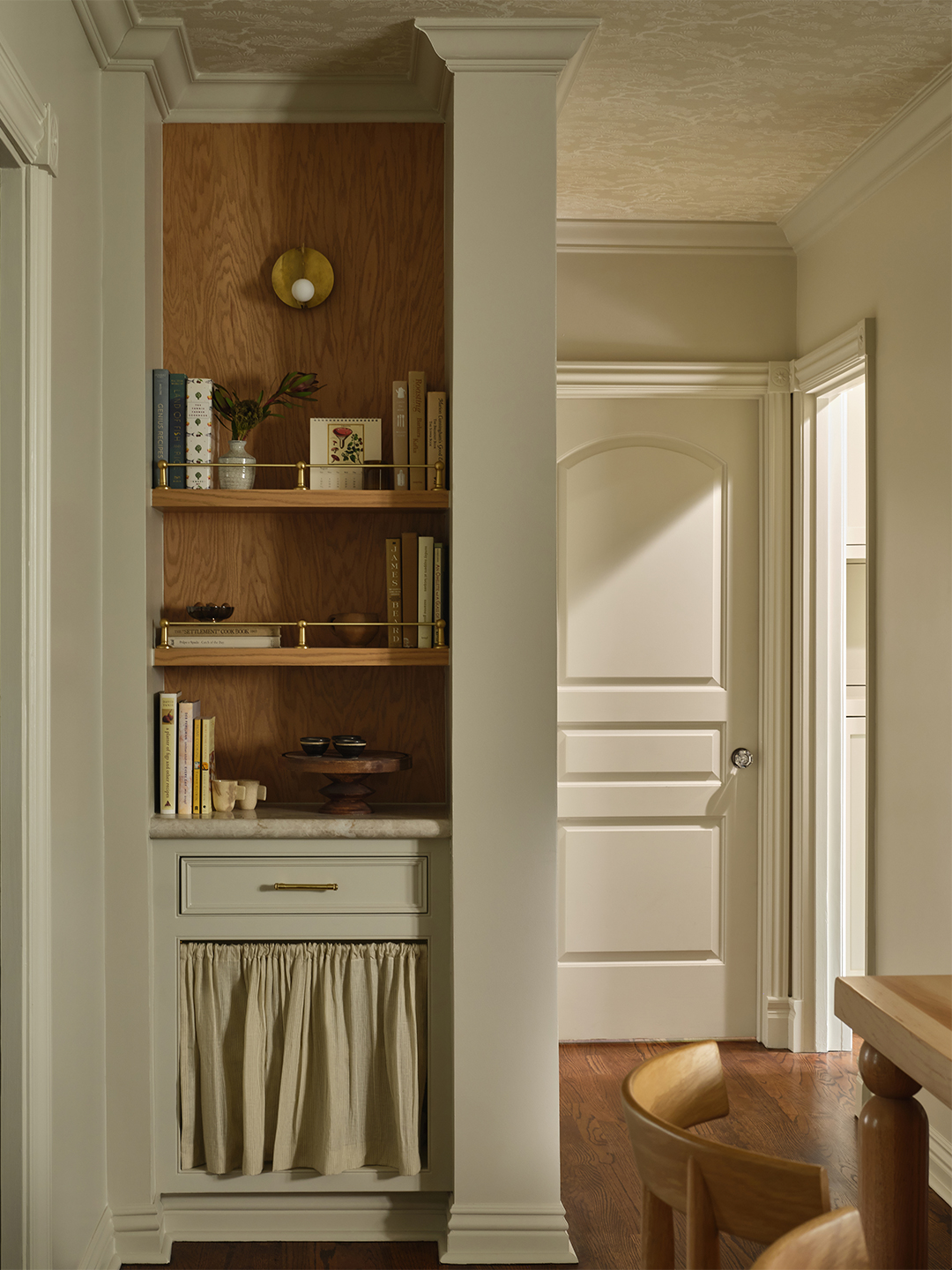
That was one of those risks that quietly transformed the entire room. The ceiling felt like an overlooked opportunity, so we wrapped it in an Osborne & Little wall covering in nearly the same tone as the walls. The effect is intentionally subtle and reveals itself slowly—we love moments like that. Rooms shouldn’t give everything away immediately.
What went into nailing the quirky-yet-collected look?
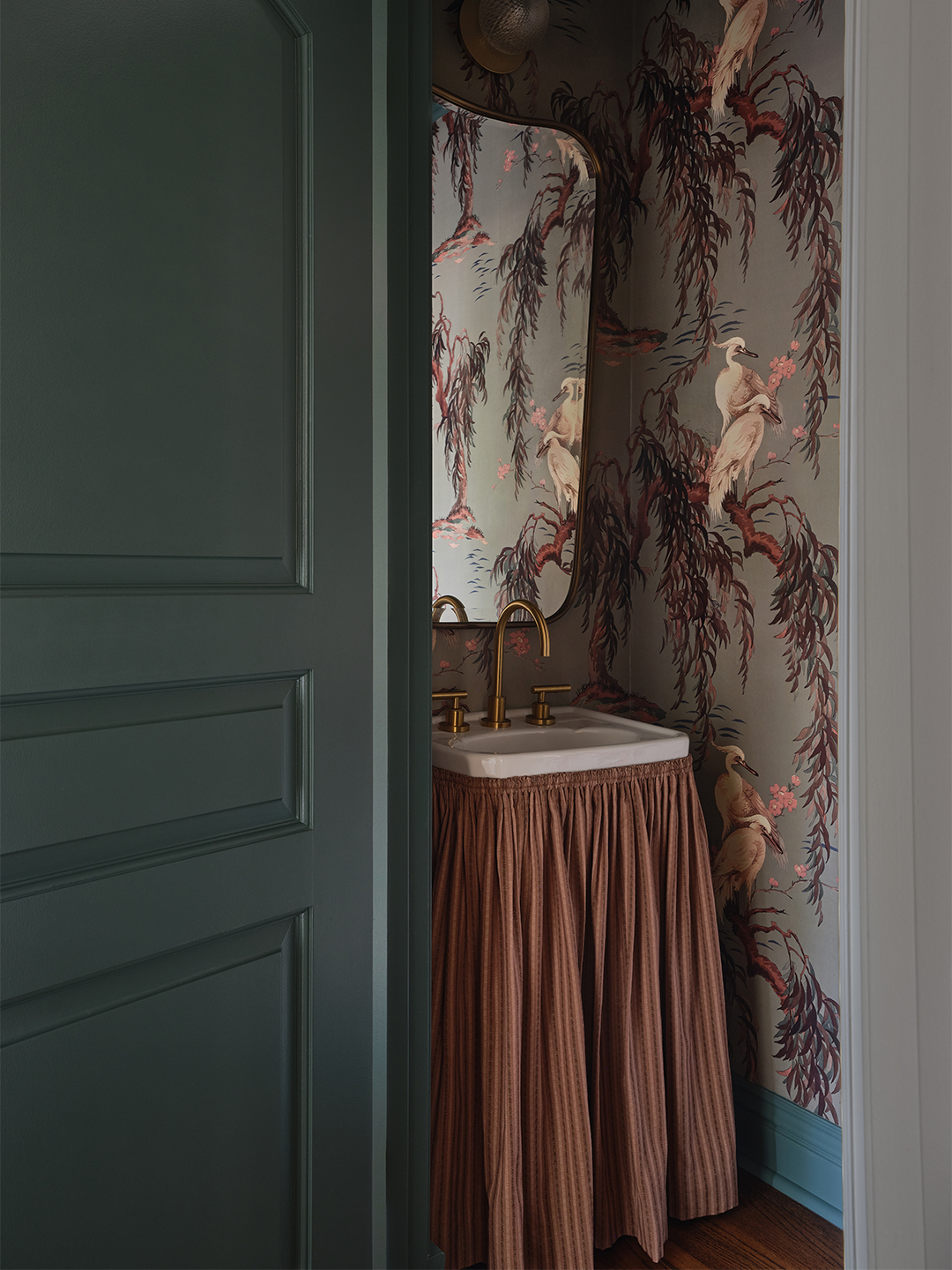
We spend a lot of time getting to know our clients, not just what they like aesthetically, but what they’re drawn to emotionally, what they collect, what they romanticize, and how they actually want to live. Listening is a huge part of our process. From there, it becomes about tension. Mixing refinement with personality. Allowing a room to feel polished, but never overly proper. The best spaces have a little wit to them—something unexpected that keeps them from feeling too resolved.
What was your biggest design risk?
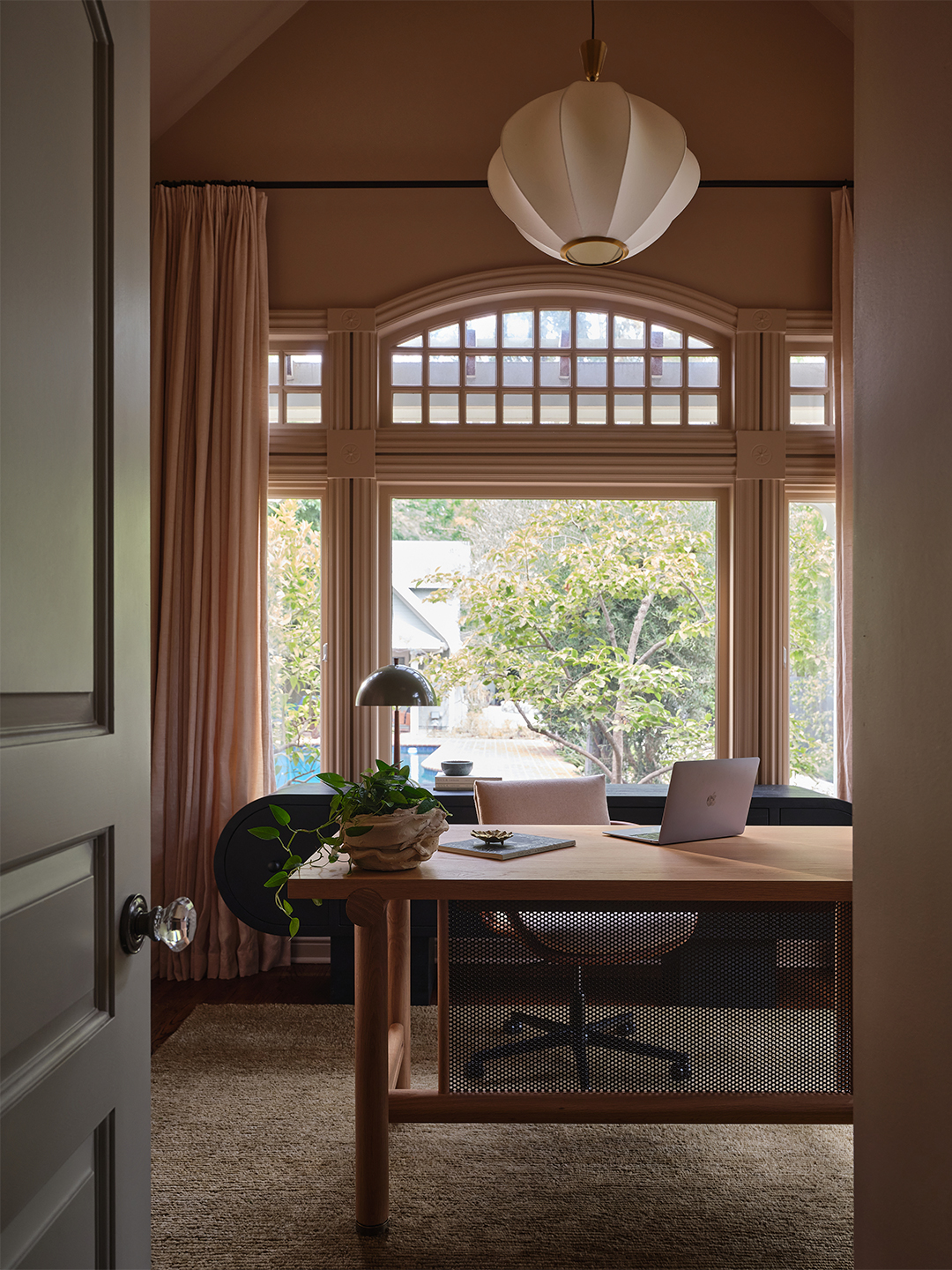
The pattern-drenched dining room, without question. Our client jokingly referred to it as a modern-day Laura Ashley moment, which immediately made us love the idea even more. The house is Folk Victorian, so we liked the idea of borrowing from a historically decorative language, but translating it through a sharper, more contemporary lens.
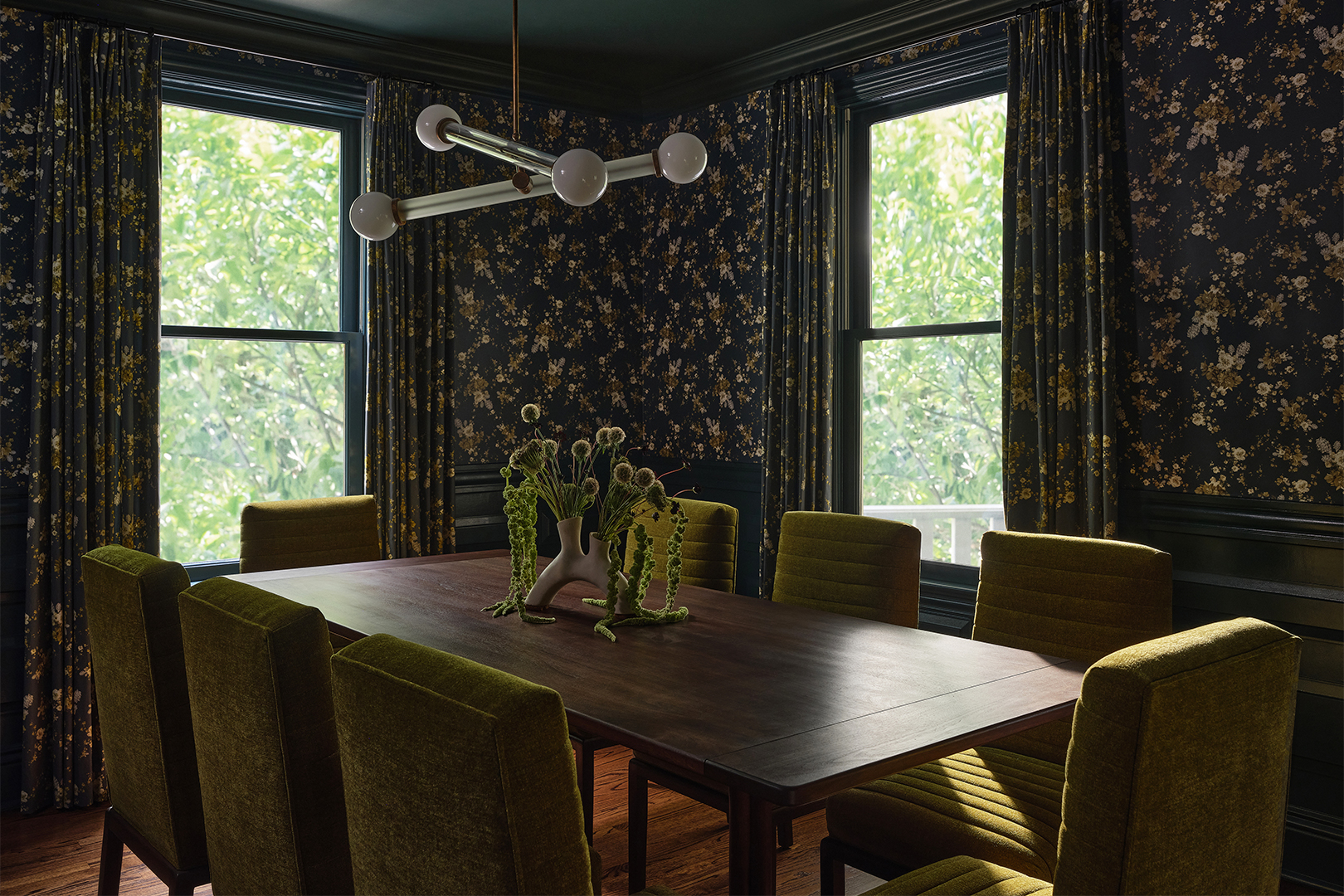
The room walks a fine line between nostalgic and slightly unhinged, which is usually where the interesting spaces live. The cleaner-lined table, chairs, and chandelier keep it from tipping too far into tradition.
Tell us about some of your favorite little details.
The quieter details tend to be our favorites. The moth-print window shades in the family room. The vintage brass dragonflies above the kitchen door. Our client loves insects, so those moments feel personal rather than purely decorative—slightly eccentric in a way we love. We also collaborated with a Pasadena artisan on the custom fireplace tile, which features an oak tree motif inspired by the neighborhood’s historic protected trees. The glaze work is beautiful and imperfect in all the right ways. And then there’s the House of Hackney stair runner: dramatic, romantic, and theatrical enough to make the staircase feel like its own event.
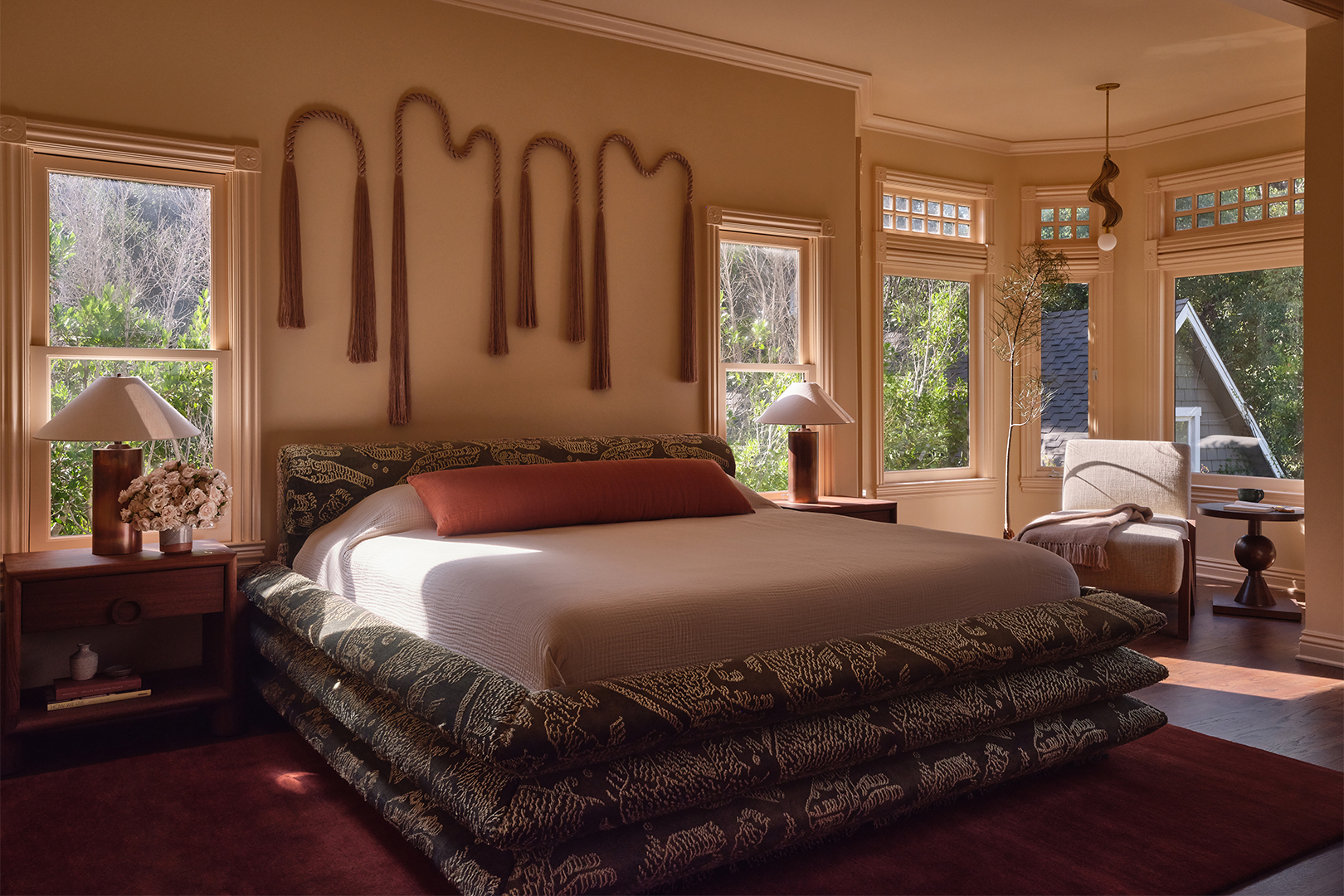
The bed frame is quite distinctive. What inspired that choice?
We fell for the silhouette immediately. It has this wonderful balance of softness and glamour—slightly decadent, but still playful. We wanted the room to feel deeply restorative, but also a little indulgent. A bed should feel inviting, obviously, but ideally it should also make an entrance.