
We may earn revenue from the products available on this page and participate in affiliate programs.
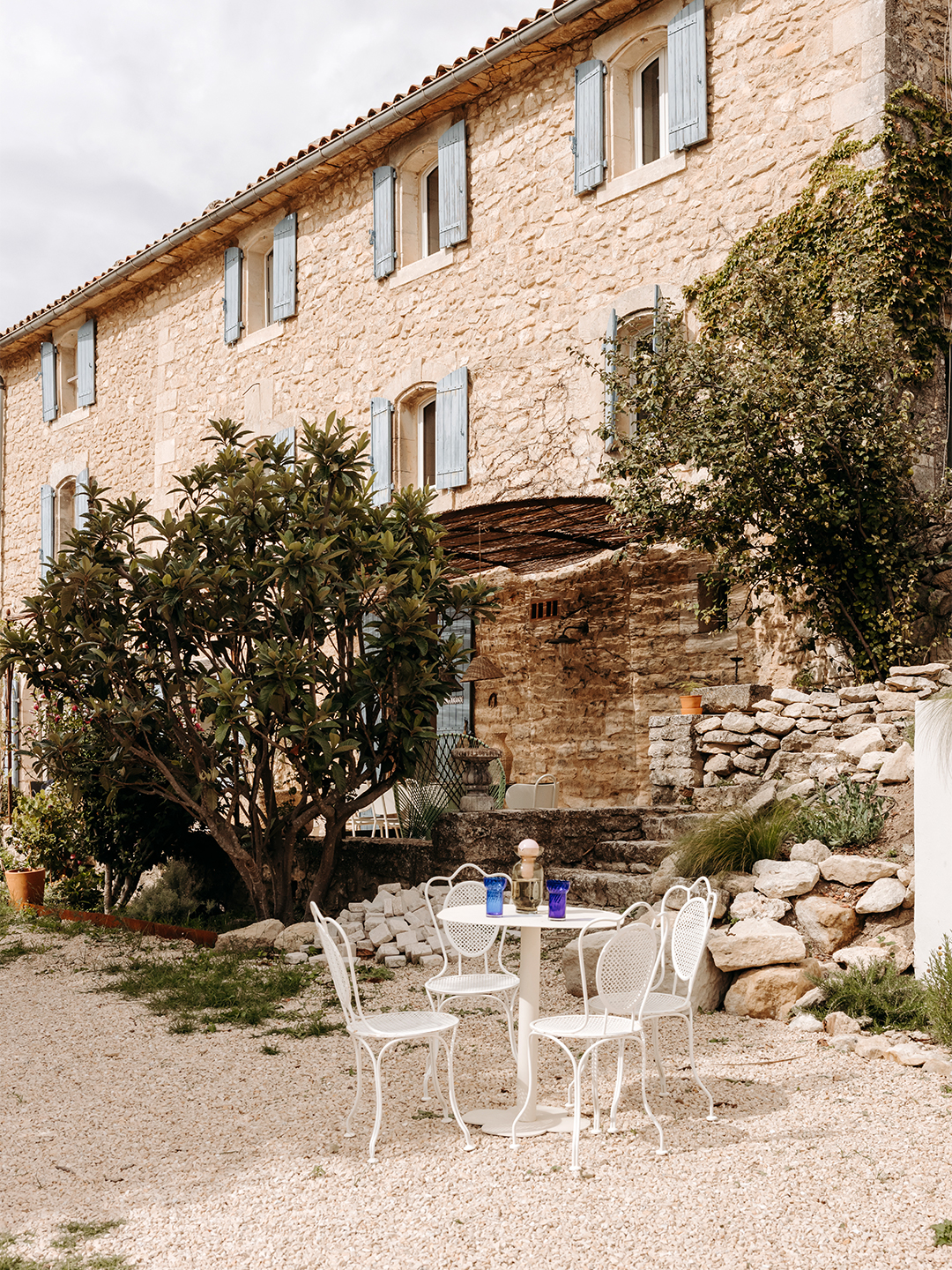
Some houses don’t need to be reinvented, they simply need someone to recognize what has been there all along. When designer and interior architect Margaux Keller and her husband, Alban, came across an 1817 dry-stone Provençal house tucked among the lavender fields of the Luberon, they saw a place where their family could build traditions. The 2,600-square-foot historic home, called La Maïoun, had once been tied to the region’s lavender harvest, and although it needed updated plumbing and electrical work, its original architecture, storied past, and undeniable soul felt untouchable.
Today, the five-bedroom retreat layers contemporary furniture, bold Salernes tile, and Keller’s own designs atop nearly pristine bones, creating a home where rustic Provençal character and modern living exist comfortably side by side. Ahead, Keller shares how she transformed the historic property a place that brings family, friends, and generations of history together.
How did you find this property?
We had been looking for a place in Provence for a while—somewhere that could become a real family home. We wanted a place to gather our children and friends, and a place for memories, meals, summers, and long conversations. When we discovered La Maïoun, it immediately felt obvious. The house was not perfect, but it had something much more precious: soul.
It is an old dry-stone Provençal house, built in 1817, surrounded by lavender fields and nature. It used to be linked to the lavender harvest so some rooms were once used to store flowers. I was very moved by that story, because it connected the house to the land, to scent, to work, and to memory. The name “La Maïoun” also felt right: it means “the house” in old Provençal, and in the Luberon it can also evoke “the link.” That was exactly what I wanted this place to be.
How long was the renovation process?
The renovation took several months. The house was habitable in spirit, but it needed to be completely rethought to become comfortable for modern family life while keeping its original character.
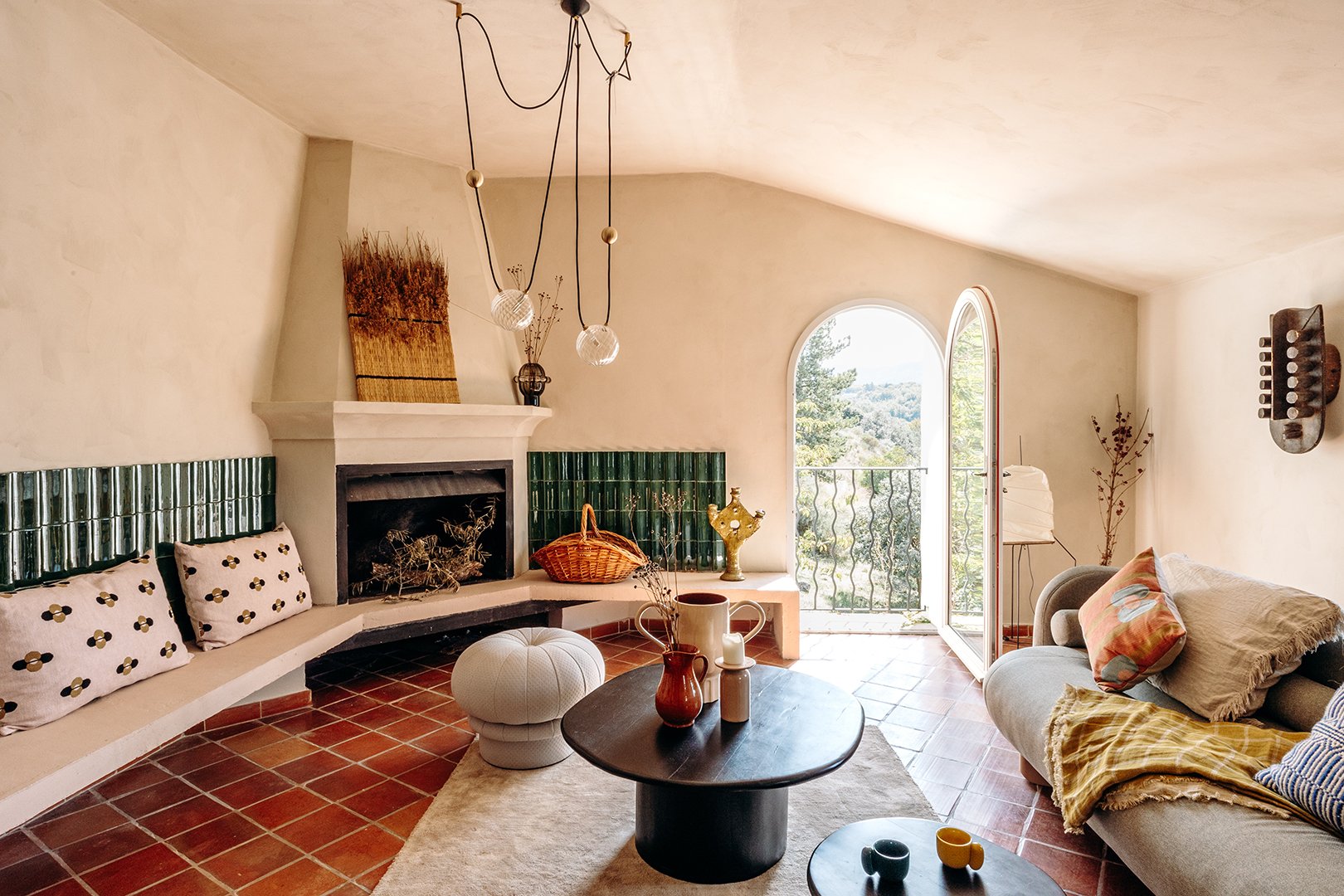
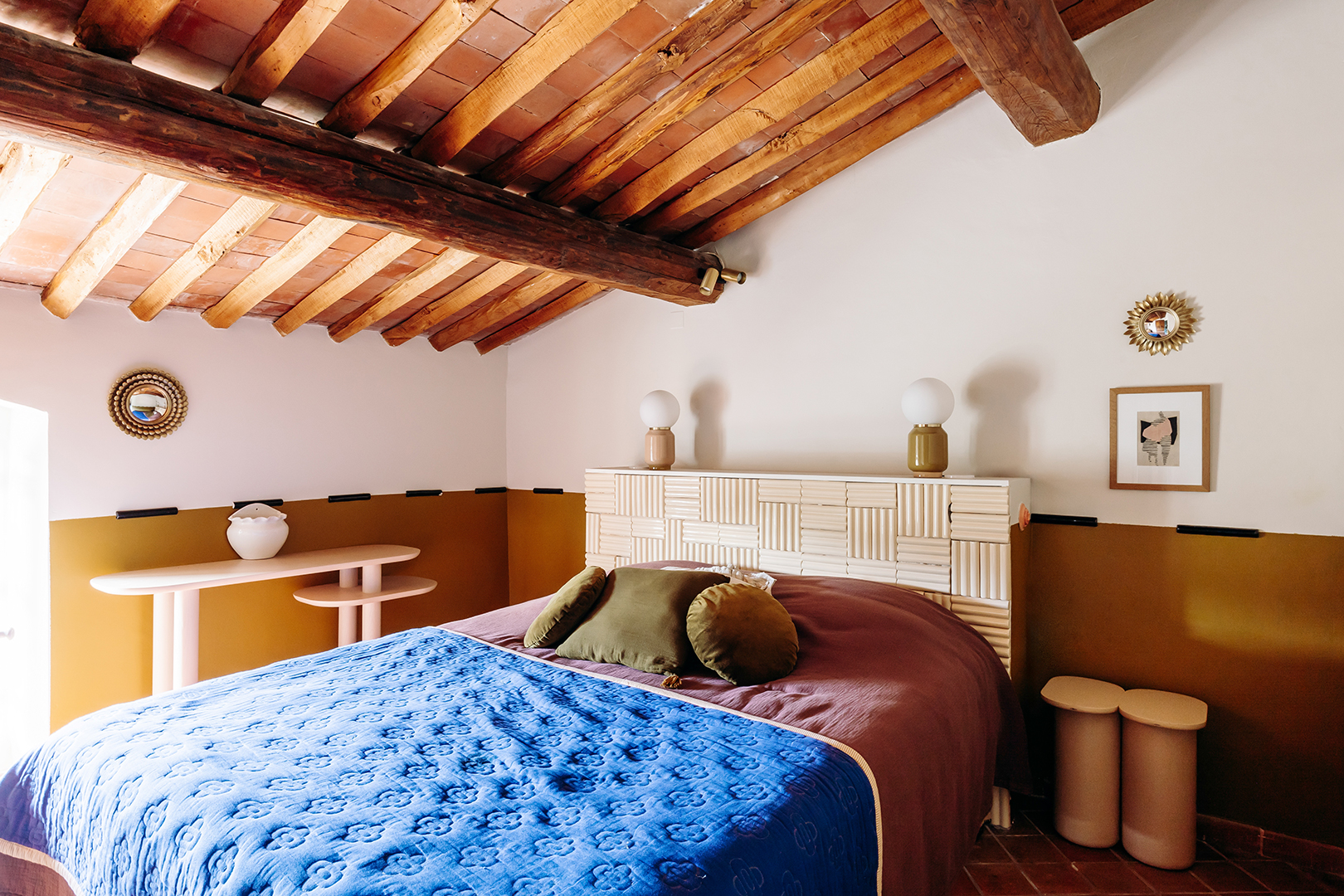
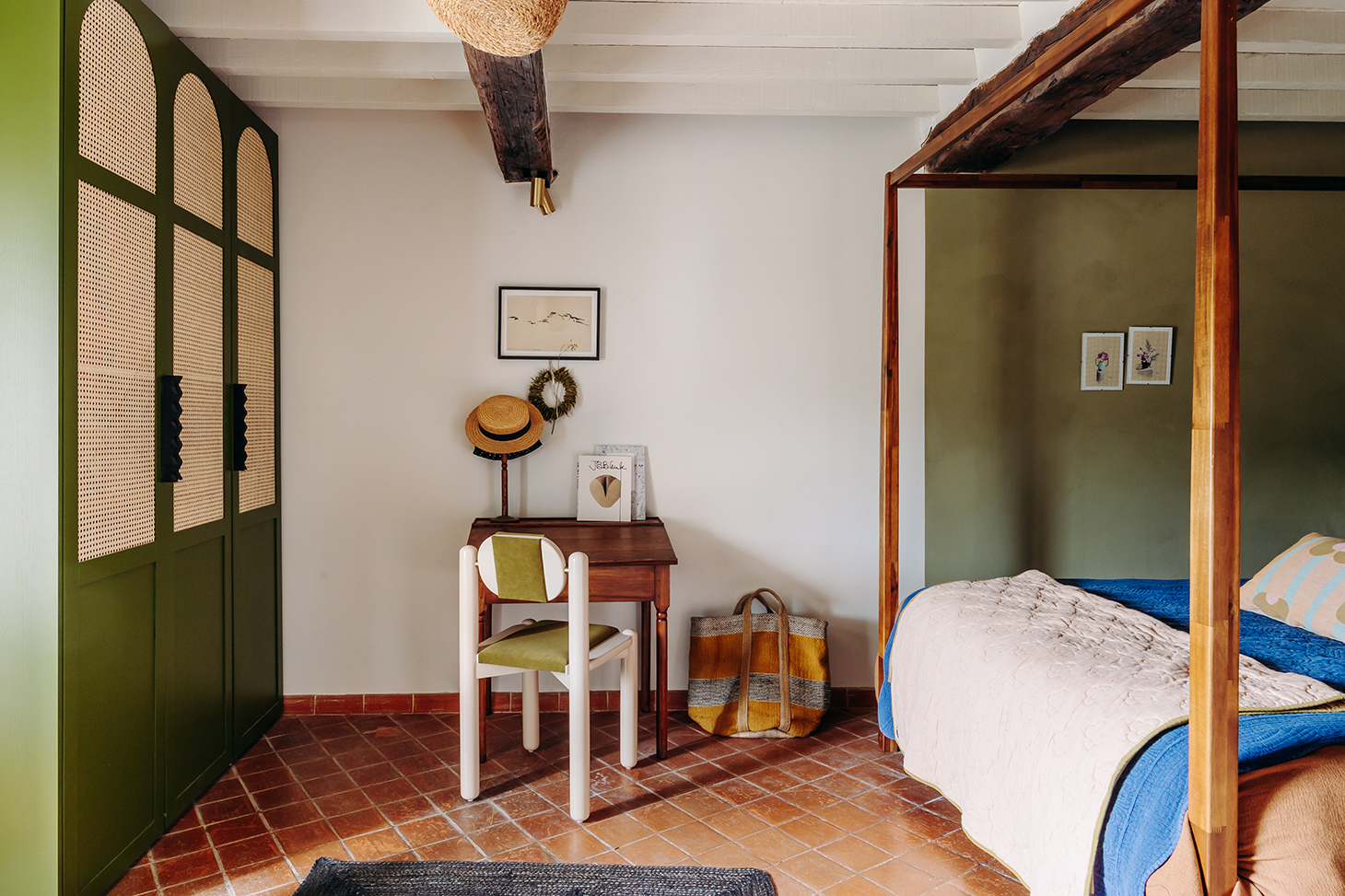
We didn’t want to erase anything. The challenge was not to transform it into a new house, but to reveal what was already there. We worked on the bathrooms, the kitchen, the bedrooms, circulation, lighting, storage, heating, comfort, and all the practical details that make a house easy to live in. But we kept the stone walls, the old volumes, the tomettes (traditional, terracotta floor tiles), the beams, and the irregularities. Those imperfections are what make the house alive.
How do you spend time there now?
La Maïoun is our family refuge. We spend time there with our children, with friends, sometimes with a very full house, sometimes in a much quieter way. The rhythm is simple: long breakfasts outside, children running around, swimming, cooking, reading, walking in the lavender fields, and watching the light change on the stone.
It is also a very inspiring place for me as a designer. I often test objects there, stage pieces from Margaux Keller Collections, and observe how colors and materials behave in real life. It is both a family home and a kind of living showroom, but never in a stiff way. I wanted it to remain joyful, warm, and generous.
What was the biggest design struggle you faced?
Finding the right balance between respect and freedom. With an old Provençal house, you can quickly fall into two traps: either you preserve everything so much that it becomes frozen, or you modernize too much and lose the soul.
I wanted La Maïoun to feel deeply rooted in Provence, but not nostalgic. I wanted it to be colorful, contemporary, playful, and comfortable, while still feeling like it had always belonged there. That balance was the most difficult part.
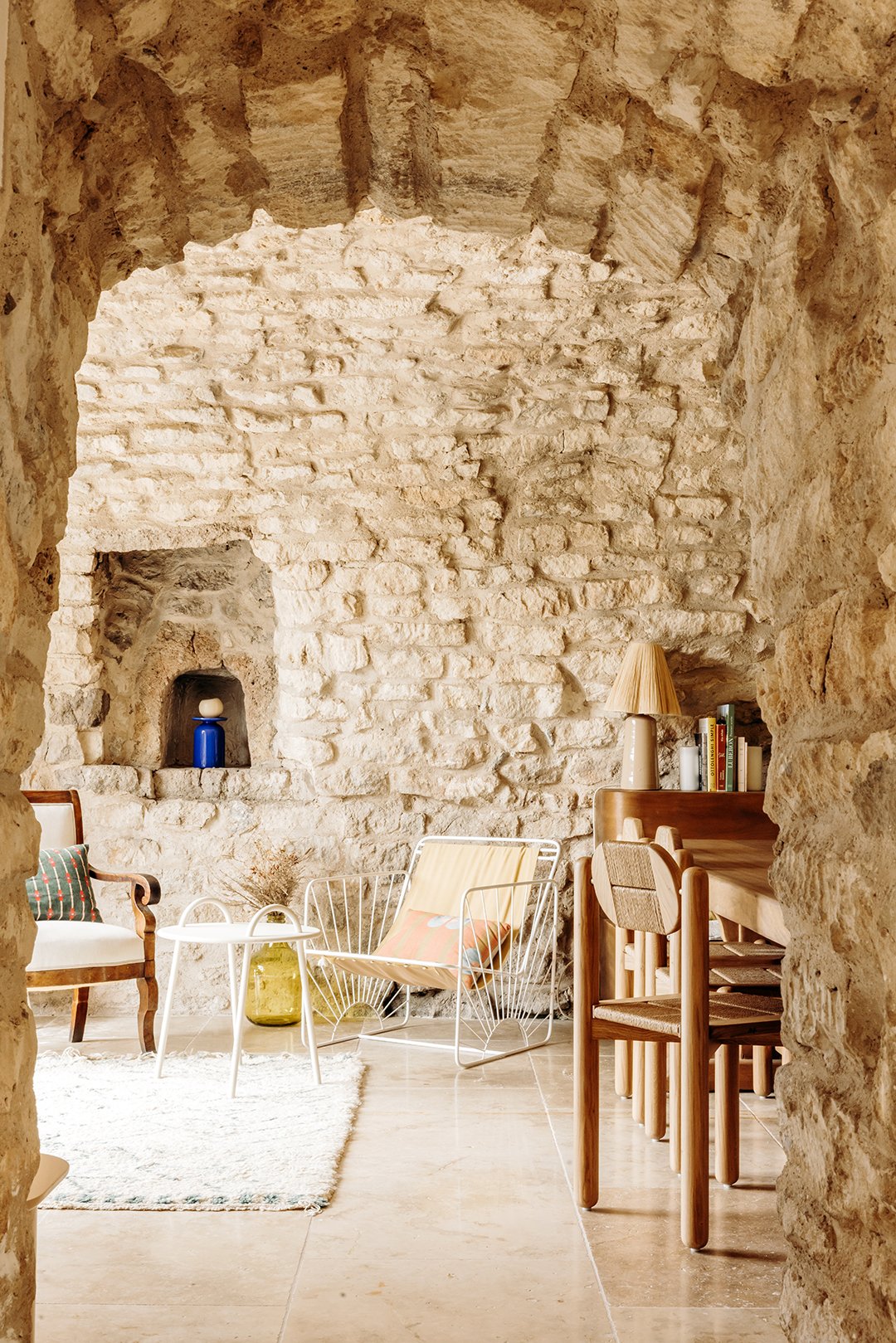
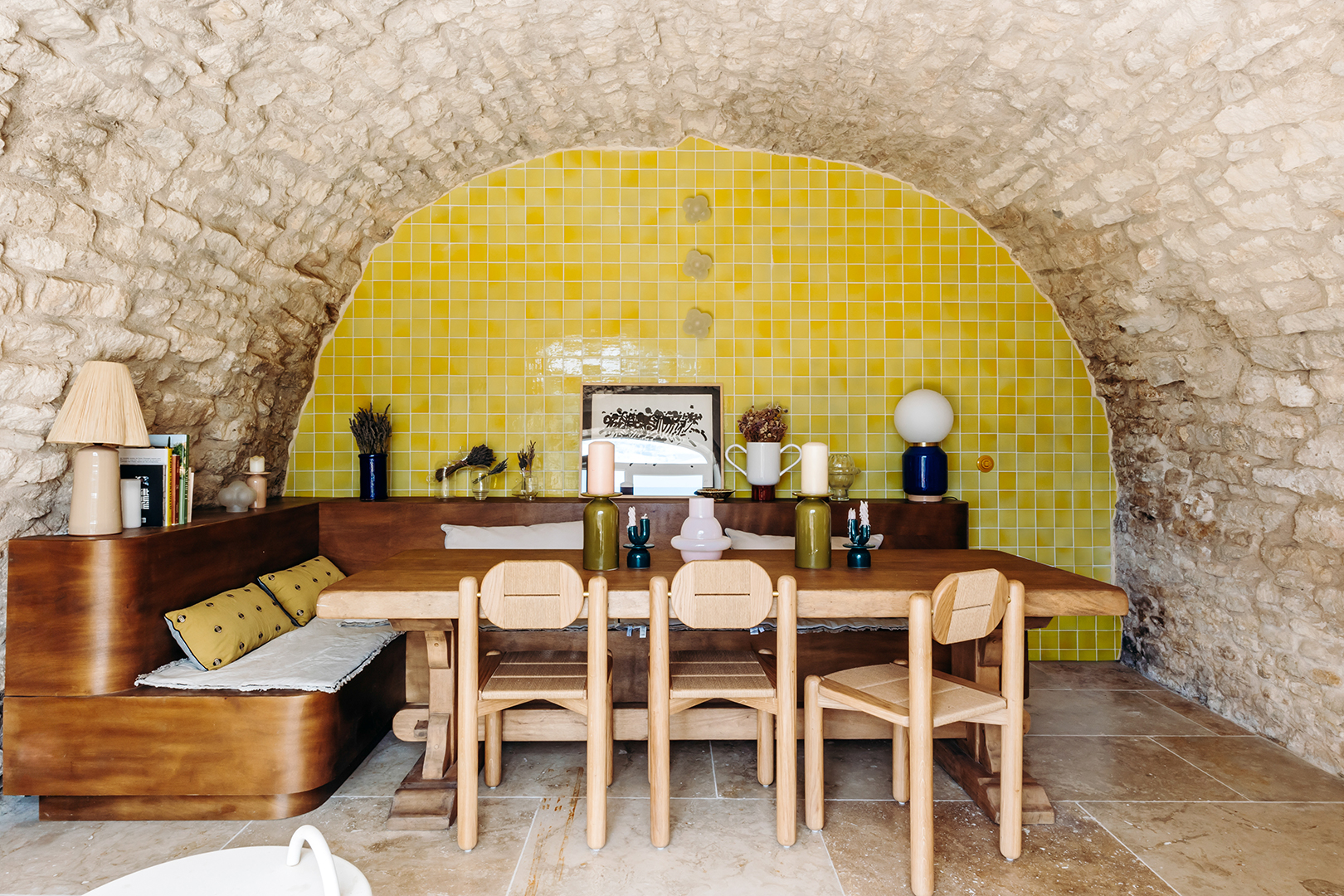
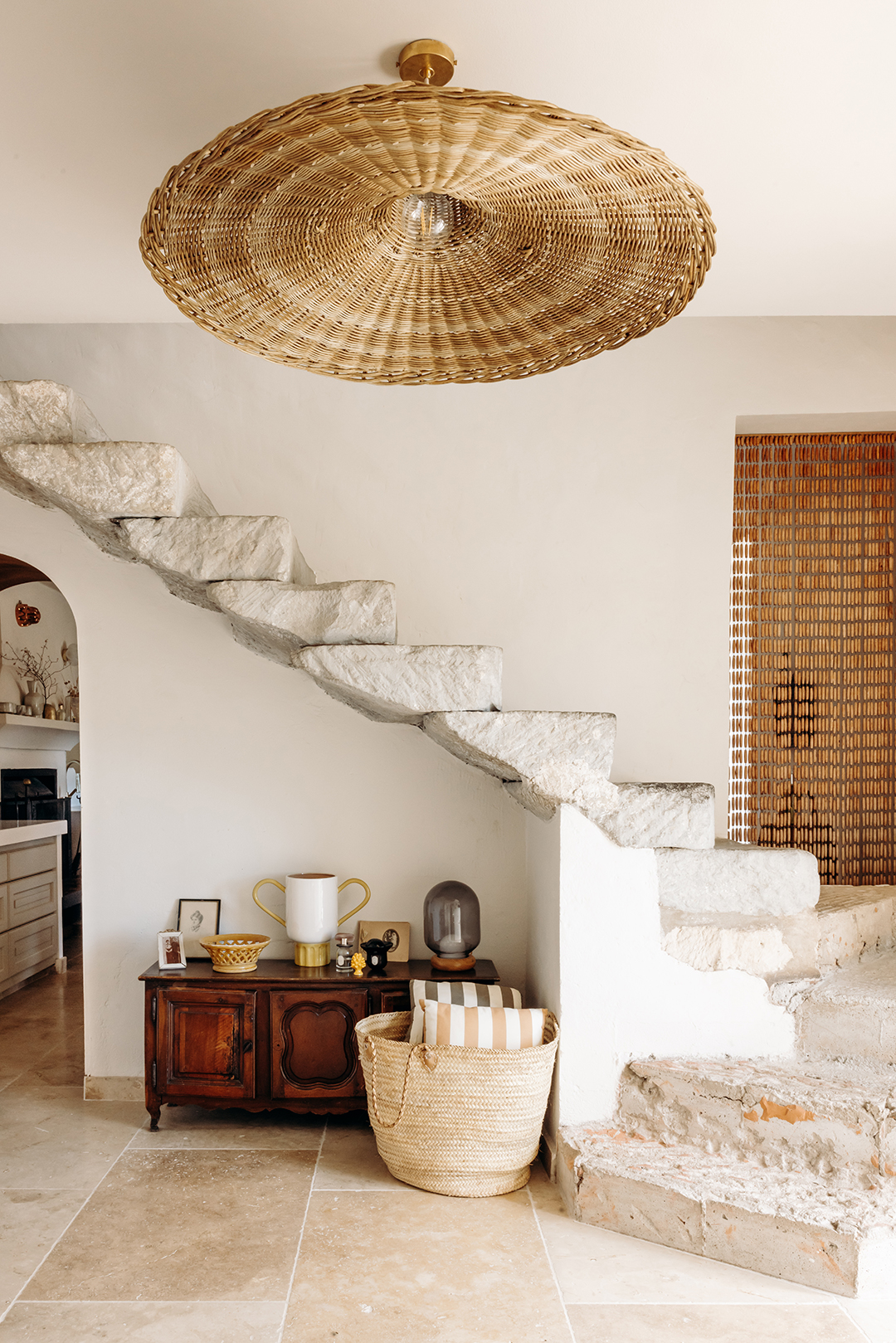
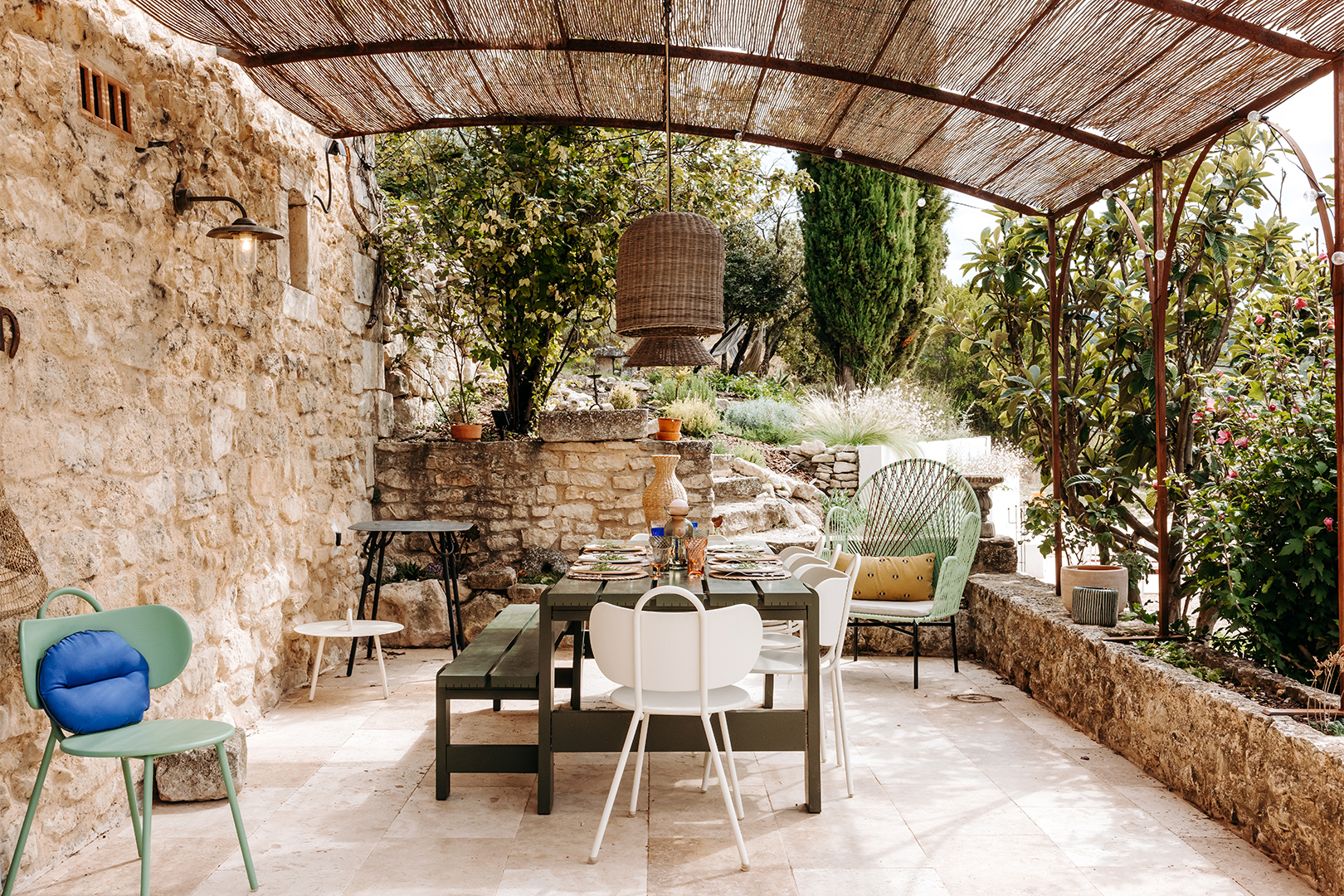
In the dining room, the wood in the table, chairs, and custom bench seat dialogues harmoniously with the stone. Nearby is a new stone staircase, where generously sized rocks were nested together before being integrated into the wall—a technical feat we were able to highlight by maintaining a very refined decor all around.
What was your first big purchase for the home?
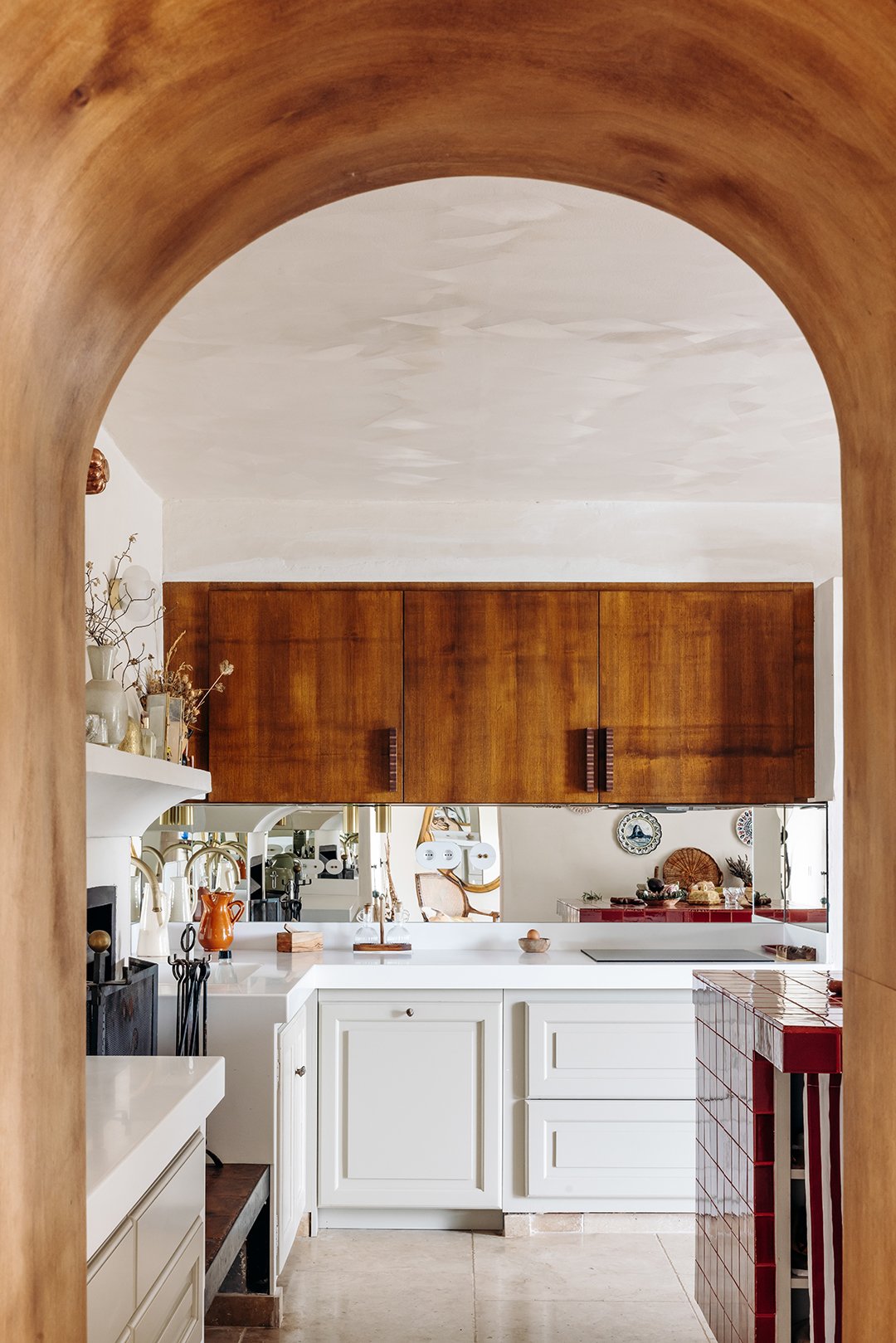
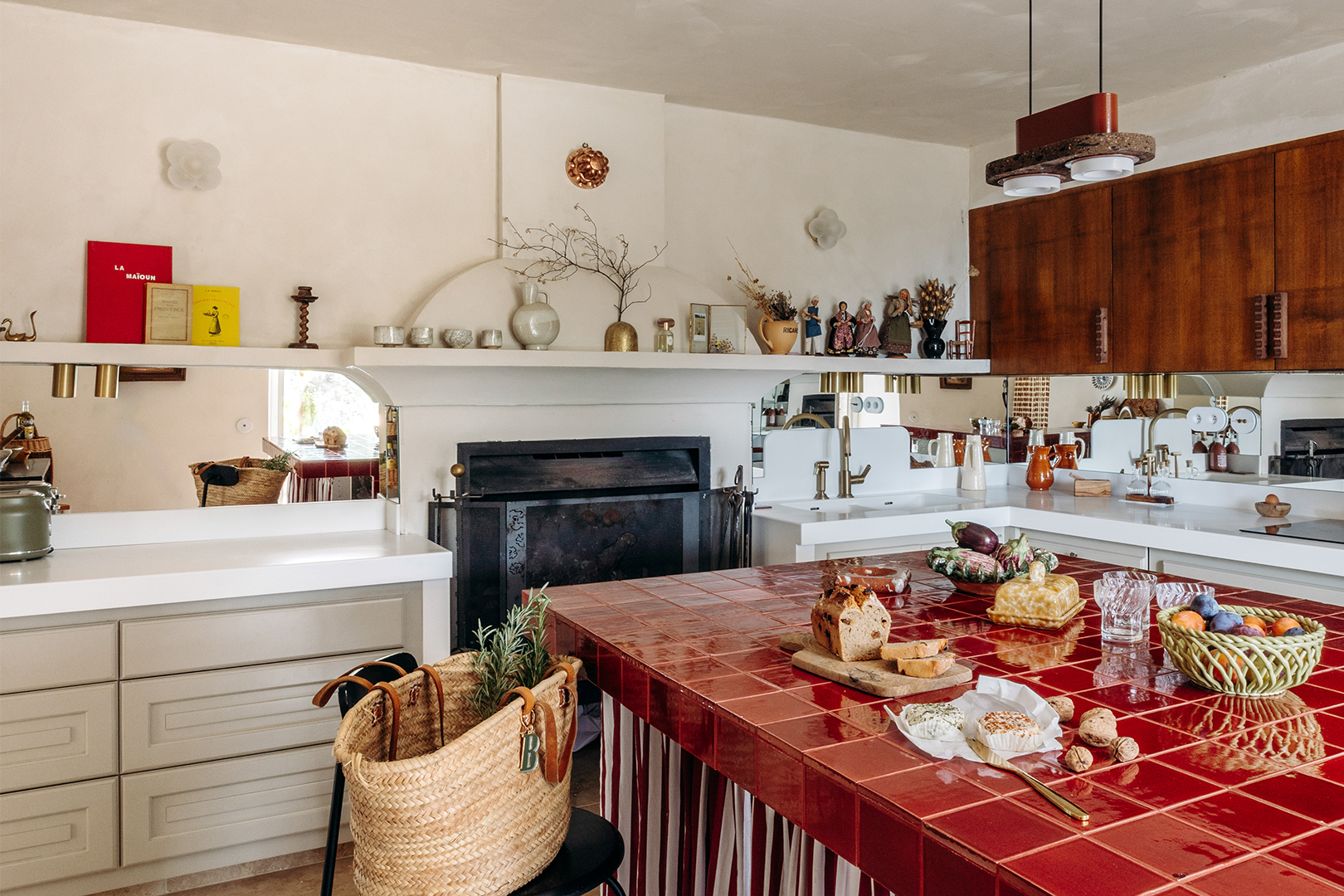
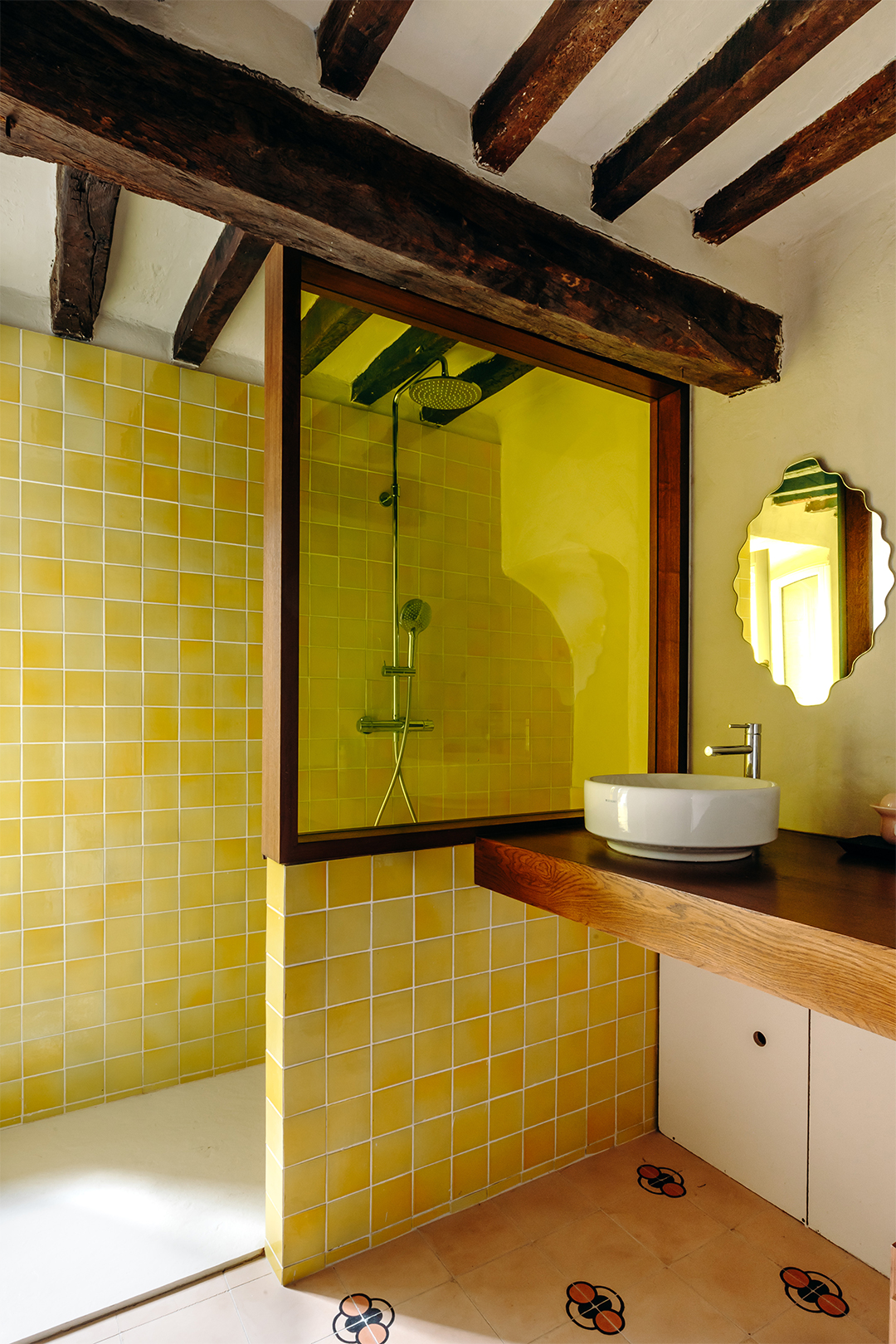
One of the first important decisions was probably not one single object, but the tilework. I knew very early that color would be essential in the house. The yellow tiles, the red kitchen, the bathroom tiles—these were strong commitments. The huge central island in the kitchen is covered with tiles from Salernes—a major manufacturing site for Provençal ceramics—in oxblood red. In the huge dining room, which is home to the majestic rock wall, are bright yellow Salernes tiles. Once those colors were chosen, the rest of the house started to find its rhythm.
I also began very early to imagine which pieces from my own collections could live there naturally—chairs, lighting, ceramics, objects—mixed with vintage pieces and local finds.
What are some of your favorite details in the home?
Moments where old and new touch each other. For example, a very bright yellow–tiled wall next to an old stone vault; tomato-red tiles in the kitchen against the roughness of the house; a graphic headboard in a very simple bedroom; small handmade details near the fireplace.
I also love the blue shutters outside. They are very Provençal, but they also echo the lavender fields around the house. And of course, I love the way the light enters the house at different hours of the day. In Provence, light is almost a material.
How did you bring in the old?
I love anything that already had a life before us: vintage outdoor furniture, old pieces found locally, objects that were not “perfect” but had character. I don’t like interiors that feel too new. A house needs layers. It needs traces of different lives.
Do you have a favorite color or material in the home?
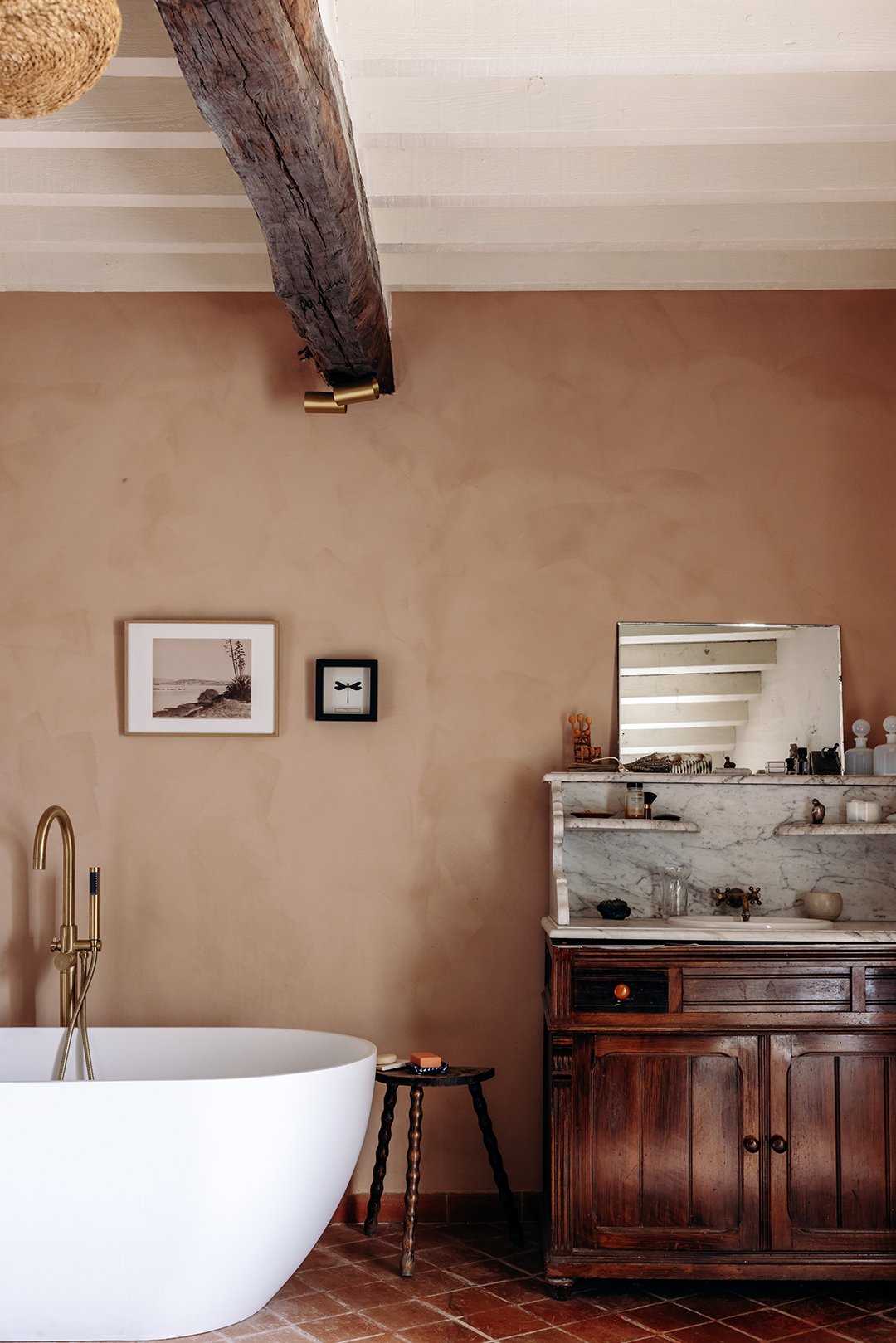
I would say terracotta, stone, wood, and all the warm colors of Provence: ochre, tomato red, lemon yellow, lavender blue, and dusty pink. I don’t really separate color from material. A color becomes interesting when it is embodied in a material—glazed tile, old terracotta, limewash, wood, linen, and ceramic. The house is very mineral because of the stone, so I wanted to bring in colors that feel sun-drenched and alive.
Any advice for someone renovating an old property?
Don’t rush to make everything perfect. In an old house, the irregularities are often the most beautiful part. Before renovating, you have to listen to the house: understand its proportions, its light, its history, its weak points and strong points. Then you can add comfort in a discreet but generous way. Good bathrooms, a practical kitchen, proper lighting, comfortable bedding, heating, and storage—these things are essential. But they don’t need to erase the past. The best renovation, for me, is when you feel that the house has been cared for, not corrected.
I also think it is important to work with local materials and craftsmen as much as possible. It gives the project truth. A Provençal house should not feel imported from somewhere else.
The tile is wonderful. How did you choose the colors?
Color is central to my work. I never use it only as decoration, I use it to create emotion. At La Maïoun, the colors come from Provence, but in a slightly heightened way. The red kitchen reminds me of ripe tomatoes, summer meals, warmth, and appetite. The yellow tiles bring the sun inside the house, even in winter. The blues echo the shutters and the lavender fields. The ochres and terracottas are connected to earth, rooftops, old floors, and the mineral landscape. I wanted the house to feel joyful and generous, but never artificial. The colors are strong, yet they are anchored in the region. They speak about food, sun, earth, flowers, and childhood summers.
Did you build the bed and ladder in the bunk room or were those already there?
The bunk room was imagined as a children’s world inside the house. I wanted it to feel playful, almost like a small cabin, but still elegant and integrated into the architecture. The beds and ladder were designed as part of the renovation, to make the room practical for children and families, but also very graphic.
I like children’s rooms when they are not too “childish.” Here, the idea was to create something joyful, solid, and timeless—a place where children can sleep, play, whisper, climb, and build memories.
Anything else you don’t want us to miss?
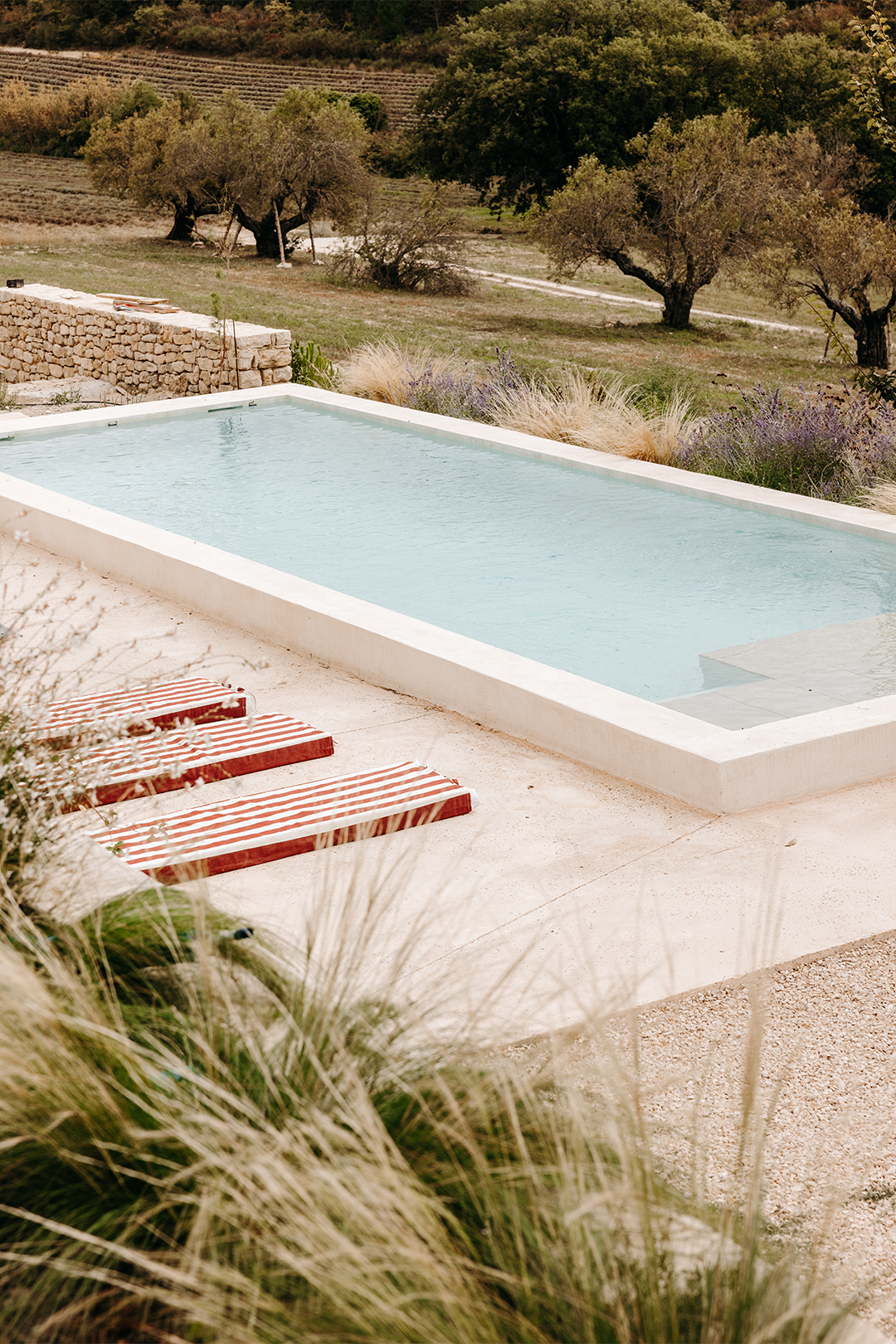
What I love most about La Maïoun is that it is not only a decorated house. It is a house with a story, and I tried to continue that story rather than replace it. It was built in a landscape of lavender, stone, sun, and wind. My work was to bring in comfort, color, and contemporary design while keeping that Provençal soul intact. I see it as a family house, a holiday house, and also a manifesto for the way I like to design: with emotion, with local savoir-faire, with objects that last, and with a little bit of joy in every corner.