
We may earn revenue from the products available on this page and participate in affiliate programs.
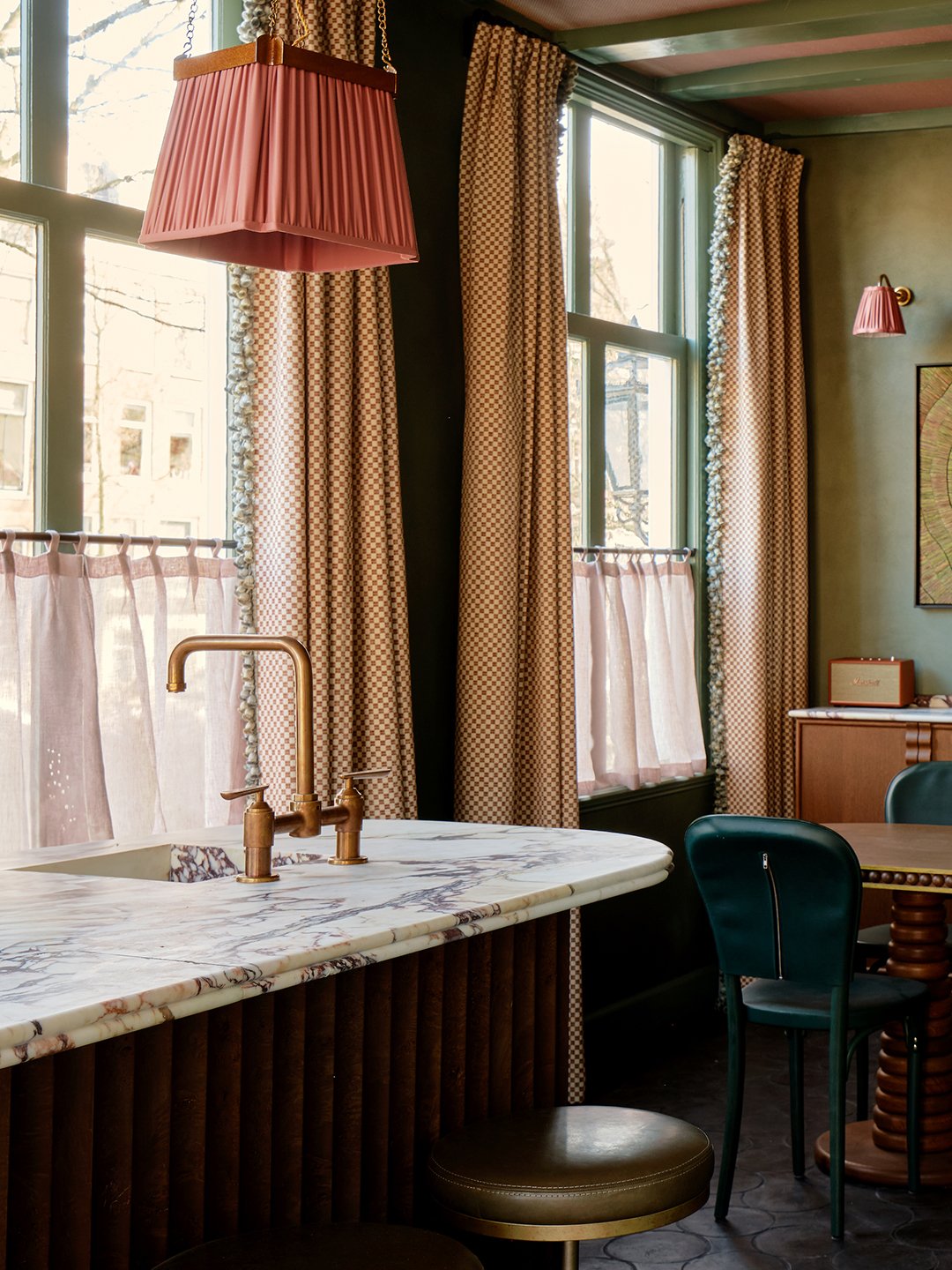
When the owners of an 18th-century Amsterdam canal house called up Reineke Antvelink, the founder of RA Studio, to talk about a renovation, they had a clear vision: a pied-à-terre with the intimacy and polish of a boutique hotel.
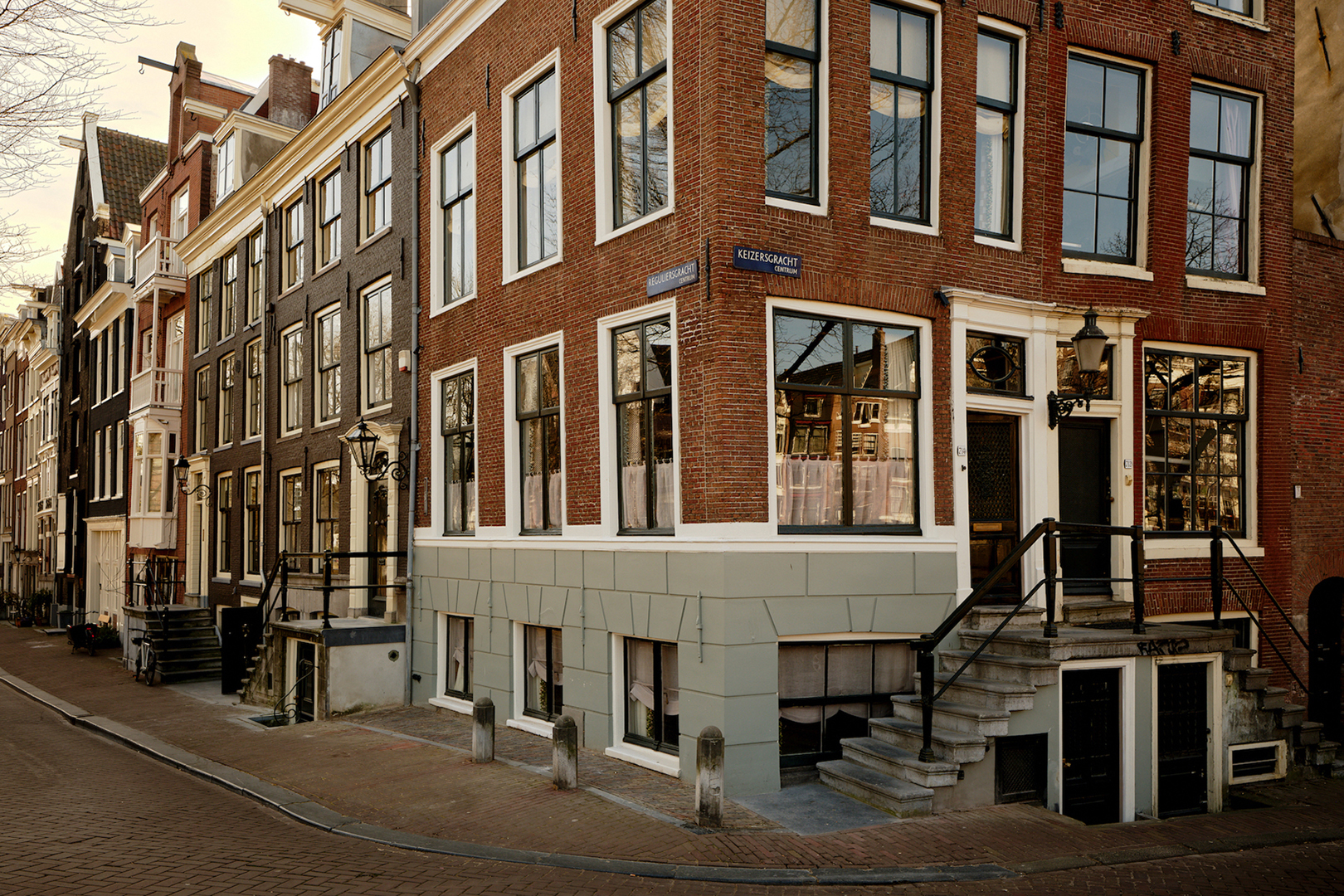
The structure, which dates to 1795, is listed as a monumental home—a Dutch protected building officially recognized for its cultural and architectural value. While many of the 1,200-square-foot, two-bedroom’s original elements—the doors, flooring, and fireplaces—had already been lost to time, the layout, staircase, and beams were all in place and had to be preserved. To bring everything gracefully into the present, the family of four wanted Antvelink to layer in modern lighting, better storage, saturated color, and comfy small-scale furniture.
Spread across a souterrain (below-ground level floor), bel étage (an elevated ground floor), first and second floors, and a tiny attic, the home’s unusual floorplan required Antvelink to pull out every trick in her book. Ahead, the designer shares how she retained the property’s original charm, and why there’s a sink in the bedroom.
Why were the clients keen on a hotel look for their home?
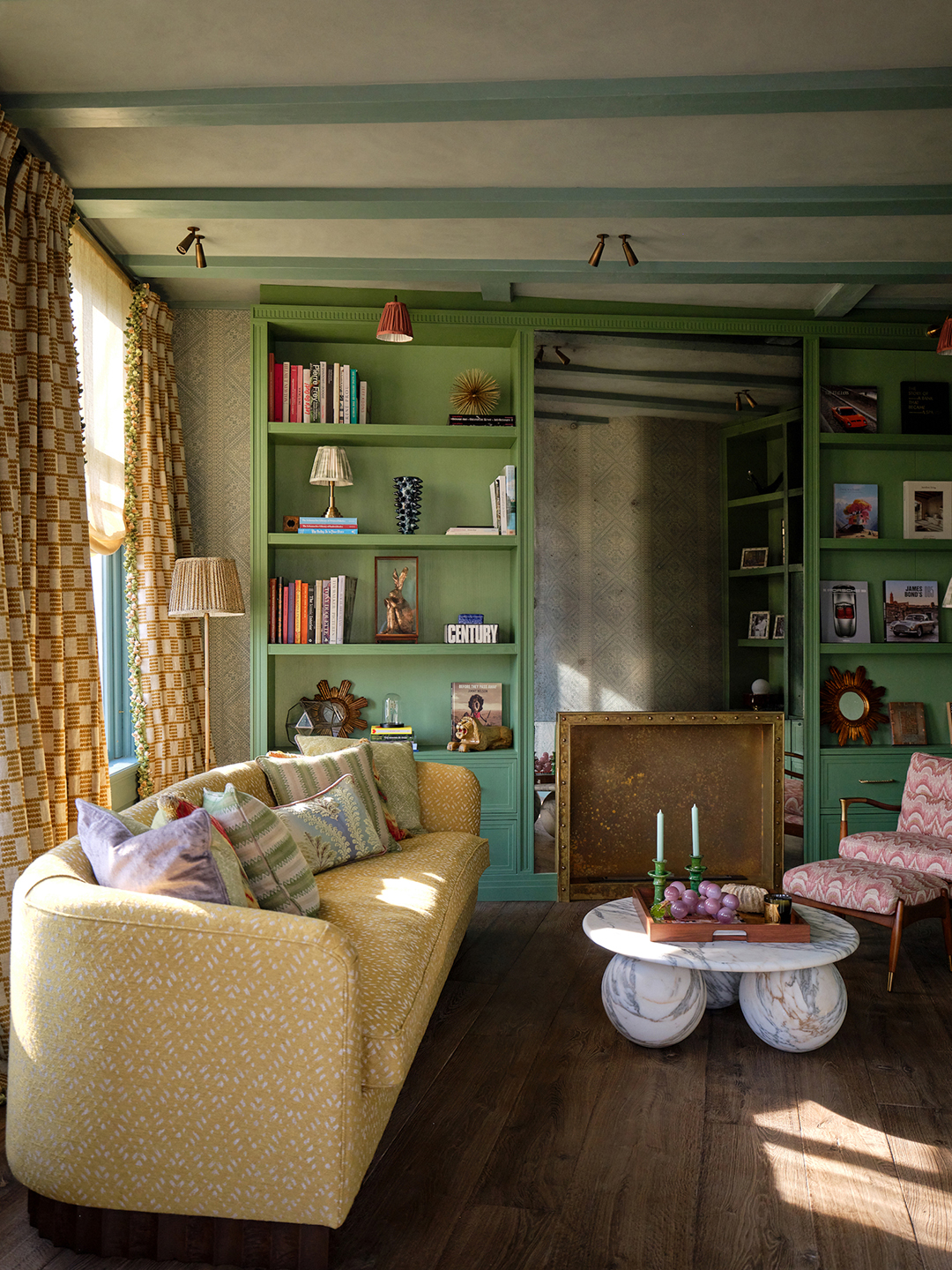
The clients love Soho House, English and French boutique hotels because of the way they mix different styles, materials, and periods without feeling too formal. There is a sense of comfort, warmth, and detail and that was exactly the feeling they wanted.
What were the big, structural challenges you had to resolve?
In historic Amsterdam canal houses, ceiling heights often vary from standard houses. The souterrain is usually lower, while the bel étage is the grandest and tallest. Here, the souterrain is about six feet tall, the bel étage rises to around 11 feet, and the first floor is nine feet tall. The upper levels become much lower, with the attic reaching only 5 feet at its highest point.
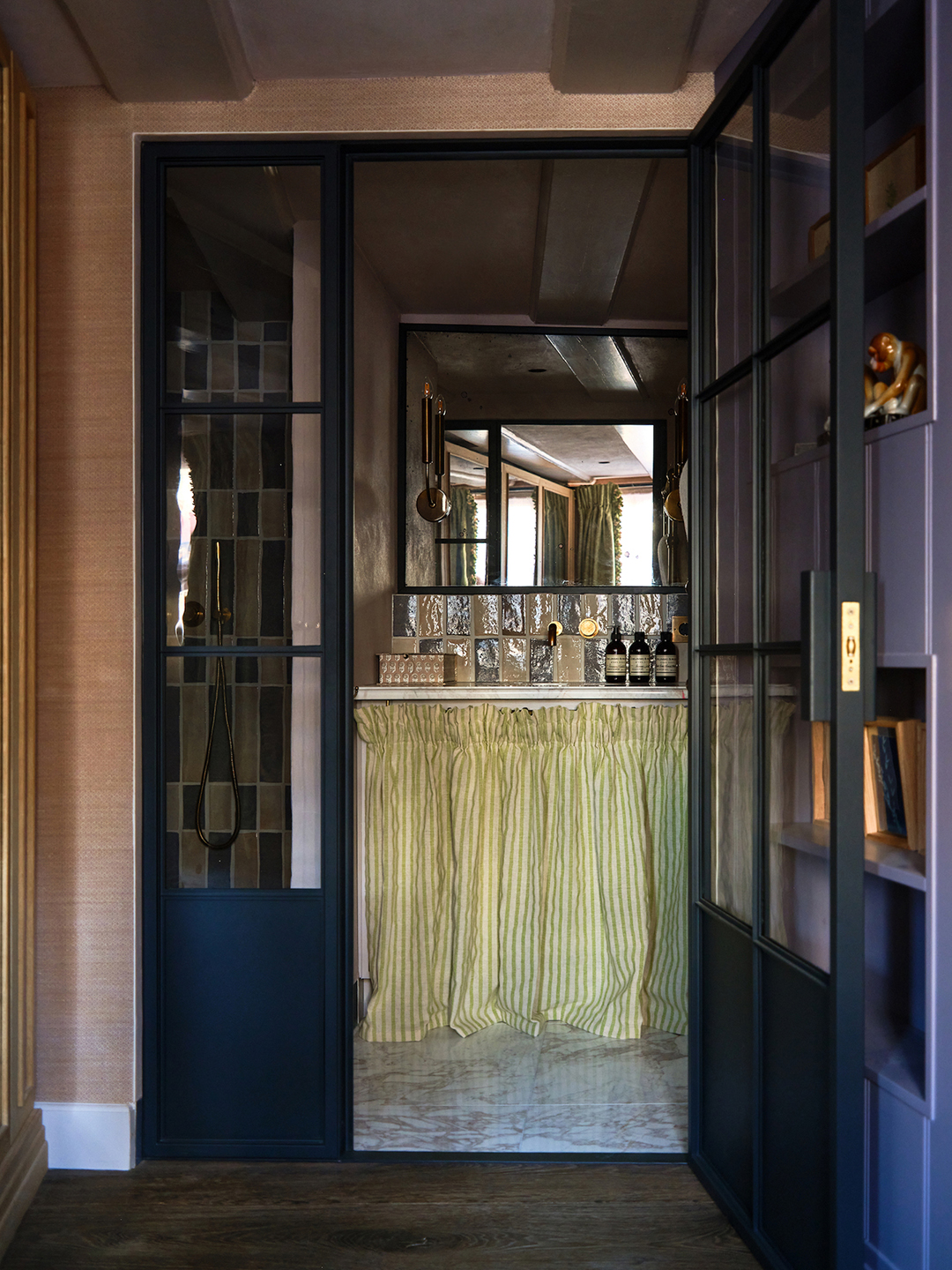
But the compactness became part of the charm. On some levels, the clients do have to bend slightly, but they don’t mind. We used several design tricks to make the low ceilings feel comfortable, from shortening showerheads to lowering a sink and using softer ceiling colors like light pink and green. In some places, the furniture had to be custom-designed, including a small, shallow sofa in the living room.
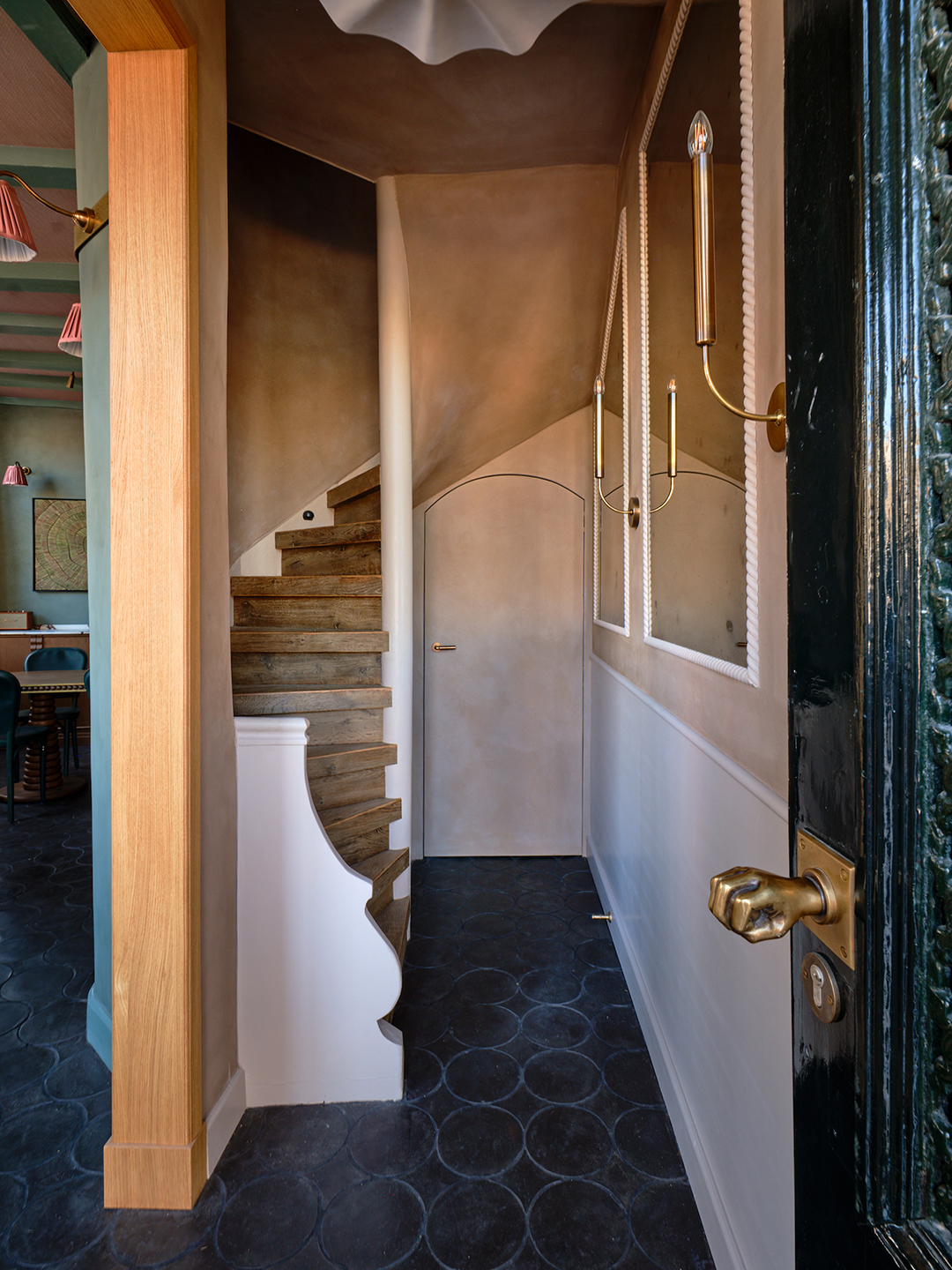
Another challenge was the original staircase. It was old and narrow, and no longer comfortable or safe to use, especially with children in the house. However, we were not allowed to remove it or replace it with a new one. Instead, we attached new steps onto the old treads—that way, the original remains preserved and the family can use it more safely now.
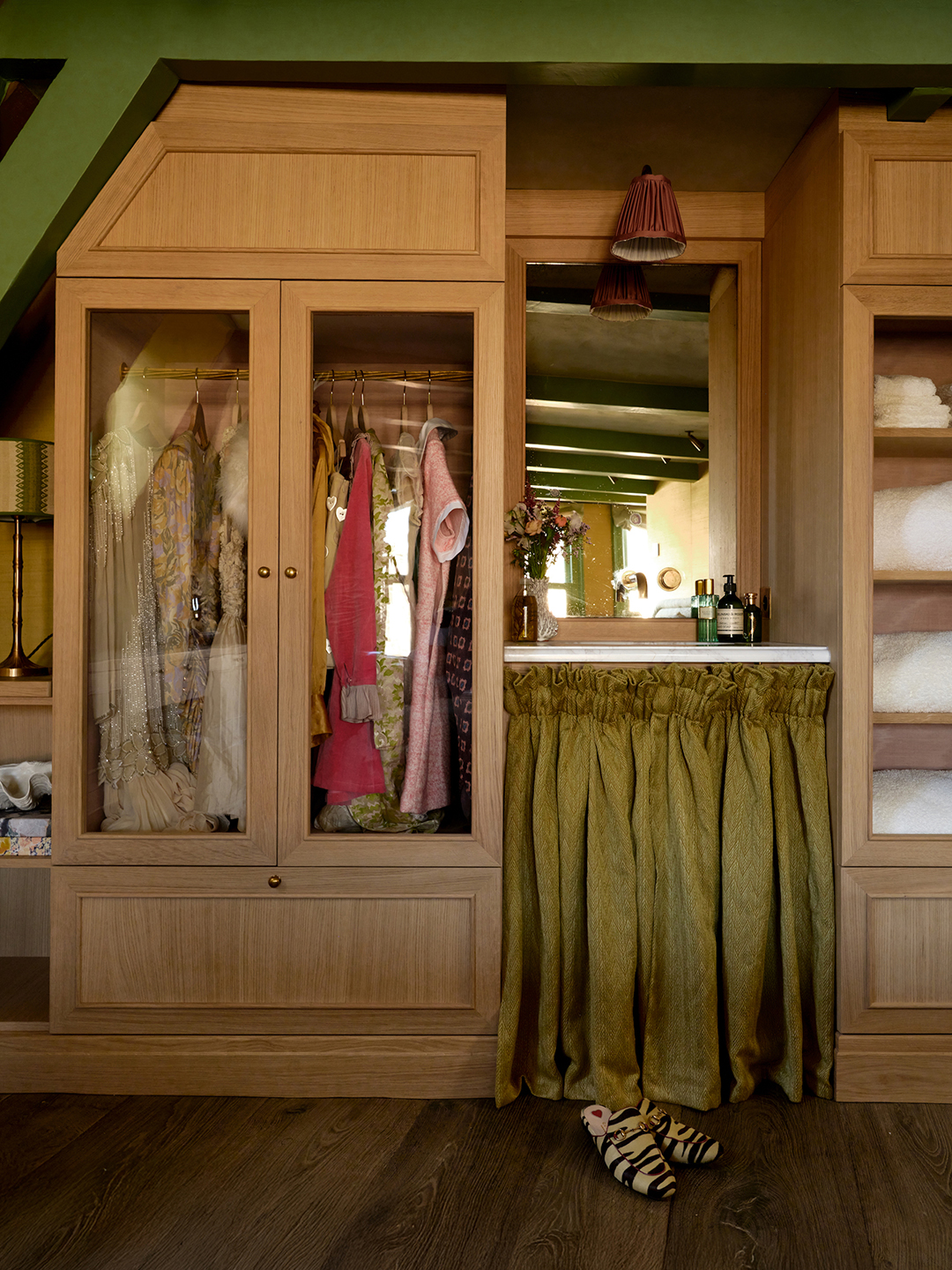
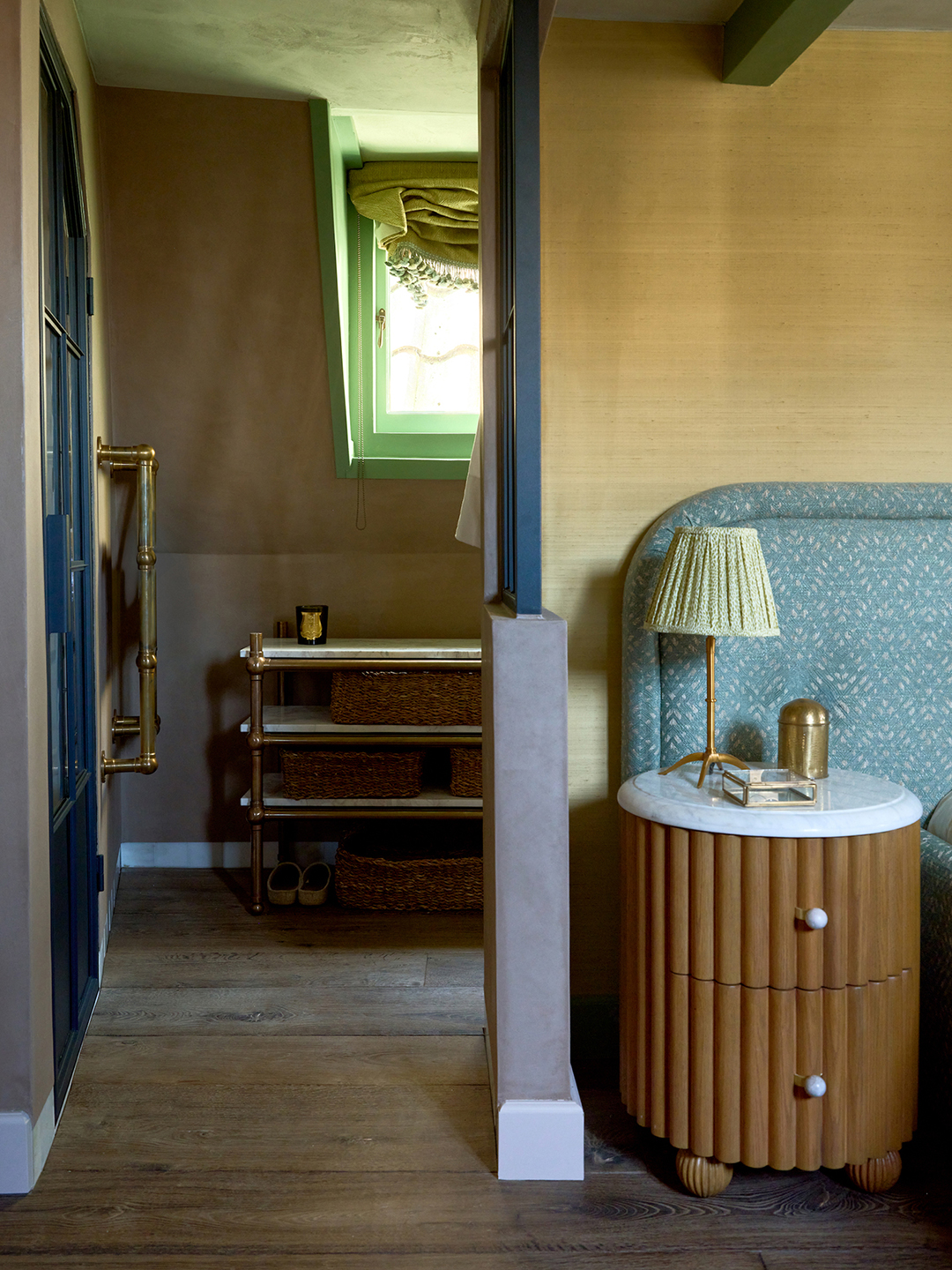
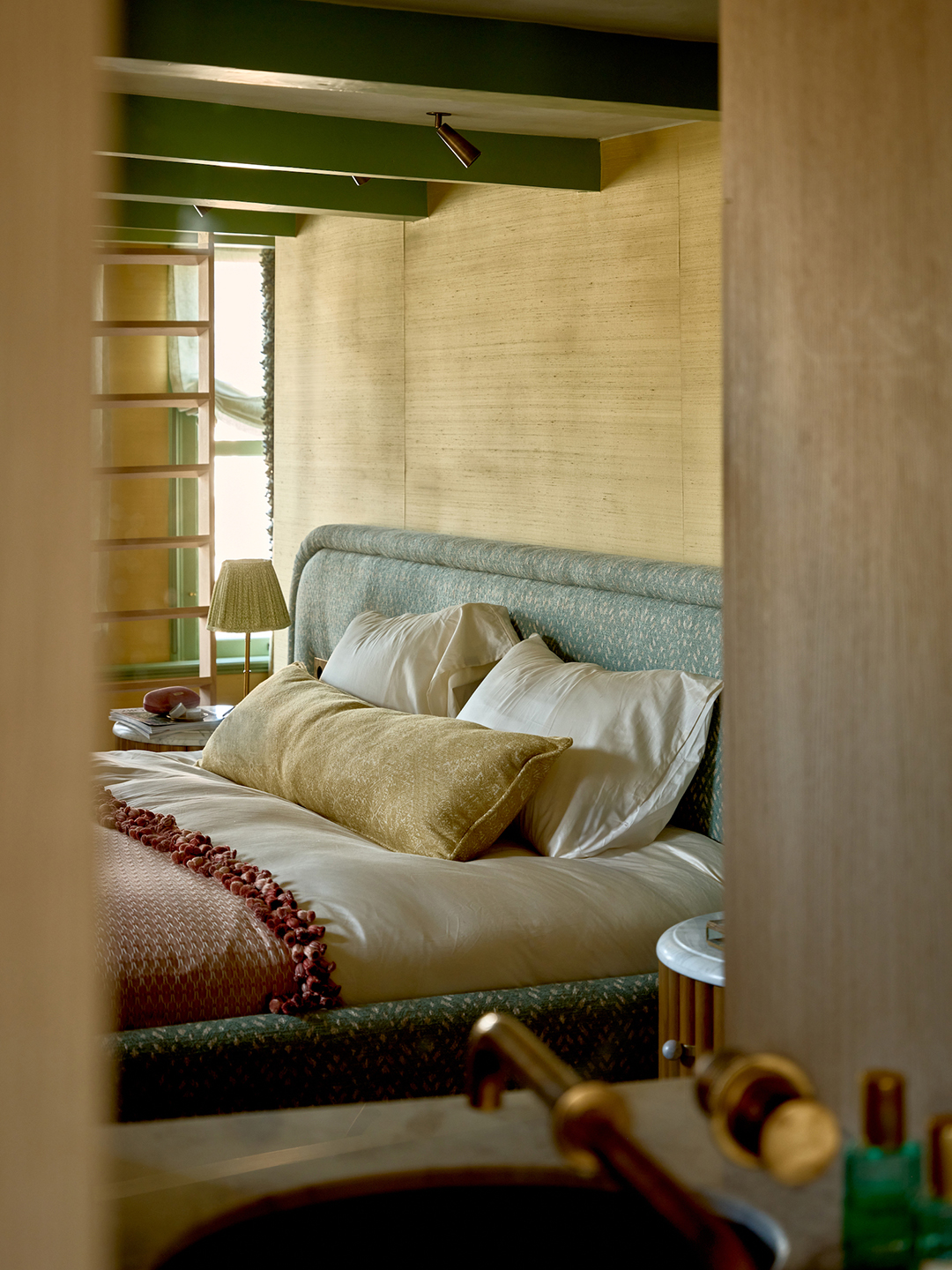
Finally, in the primary bathroom, a sink just wouldn’t fit; there was only enough space for a shower and toilet. We loved the idea of integrating it into the primary bedroom joinery because, historically, European bedrooms often featured sinks built into the millwork. The gesture felt natural rather than unusual.
Different shades of green are used across the house. Why was this color so integral to here?
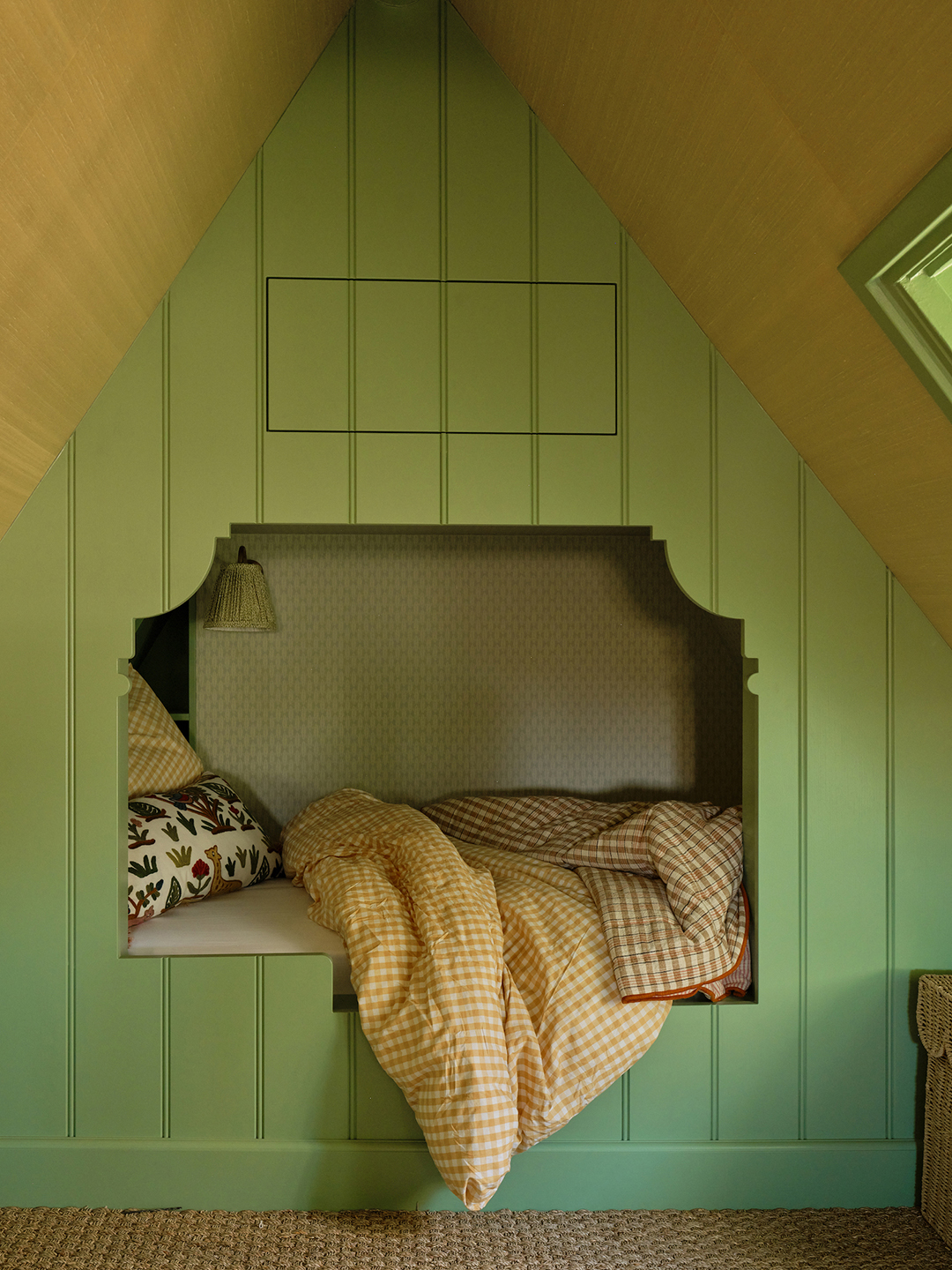
The color palette was an exciting change for the clients. They’re used to calm, earthy tones. However, for their vacation home, they understood that the use of more expressive color would bring much greater depth to the interiors. For that reason, we worked with different shades of green, layered with yellow and purple. In some rooms, the hues skew moodier; in others, they lean fresher or more delicate, like in the attic sleeping nook for the children.
How did you design around the original ceiling beams?
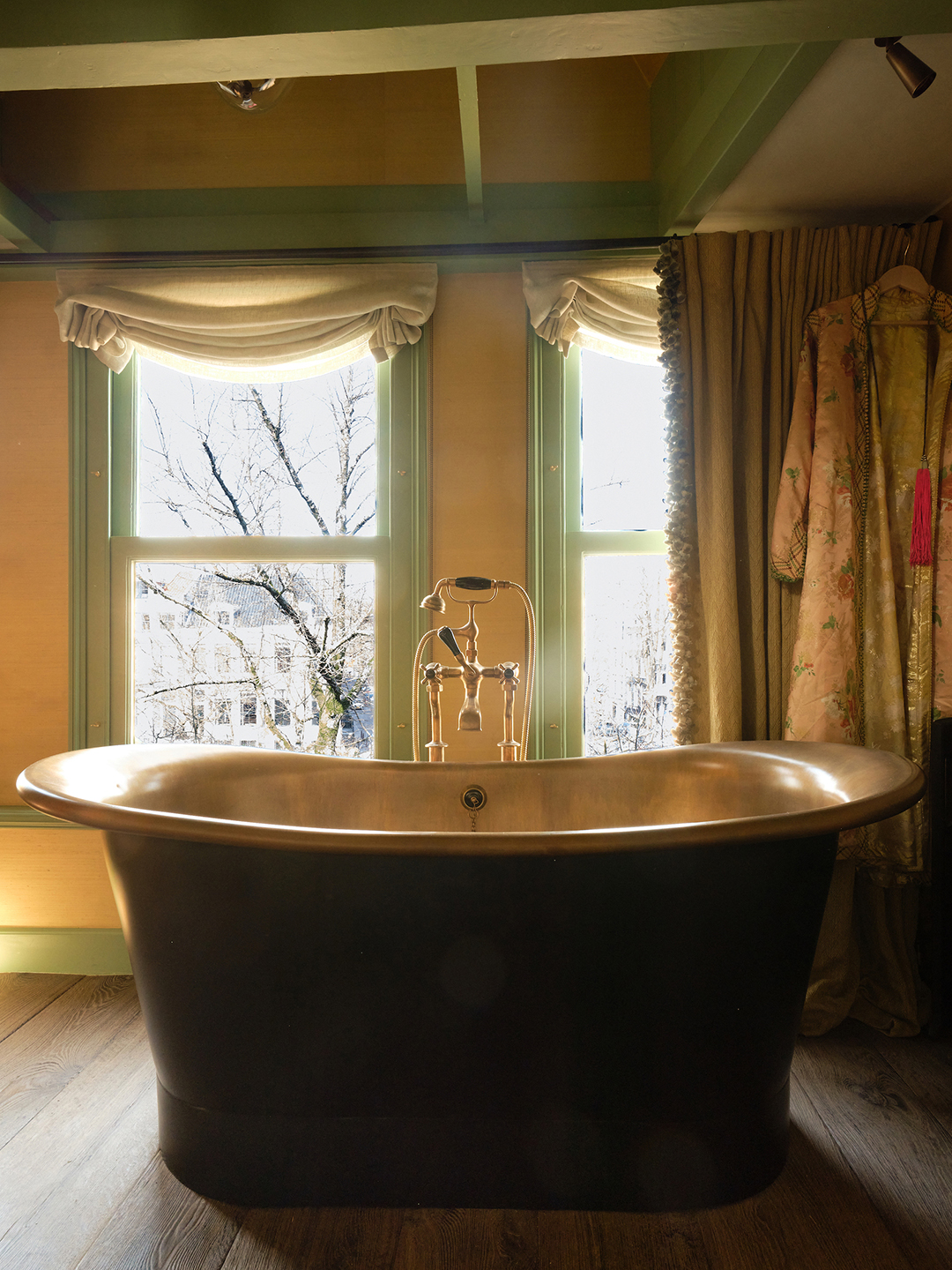
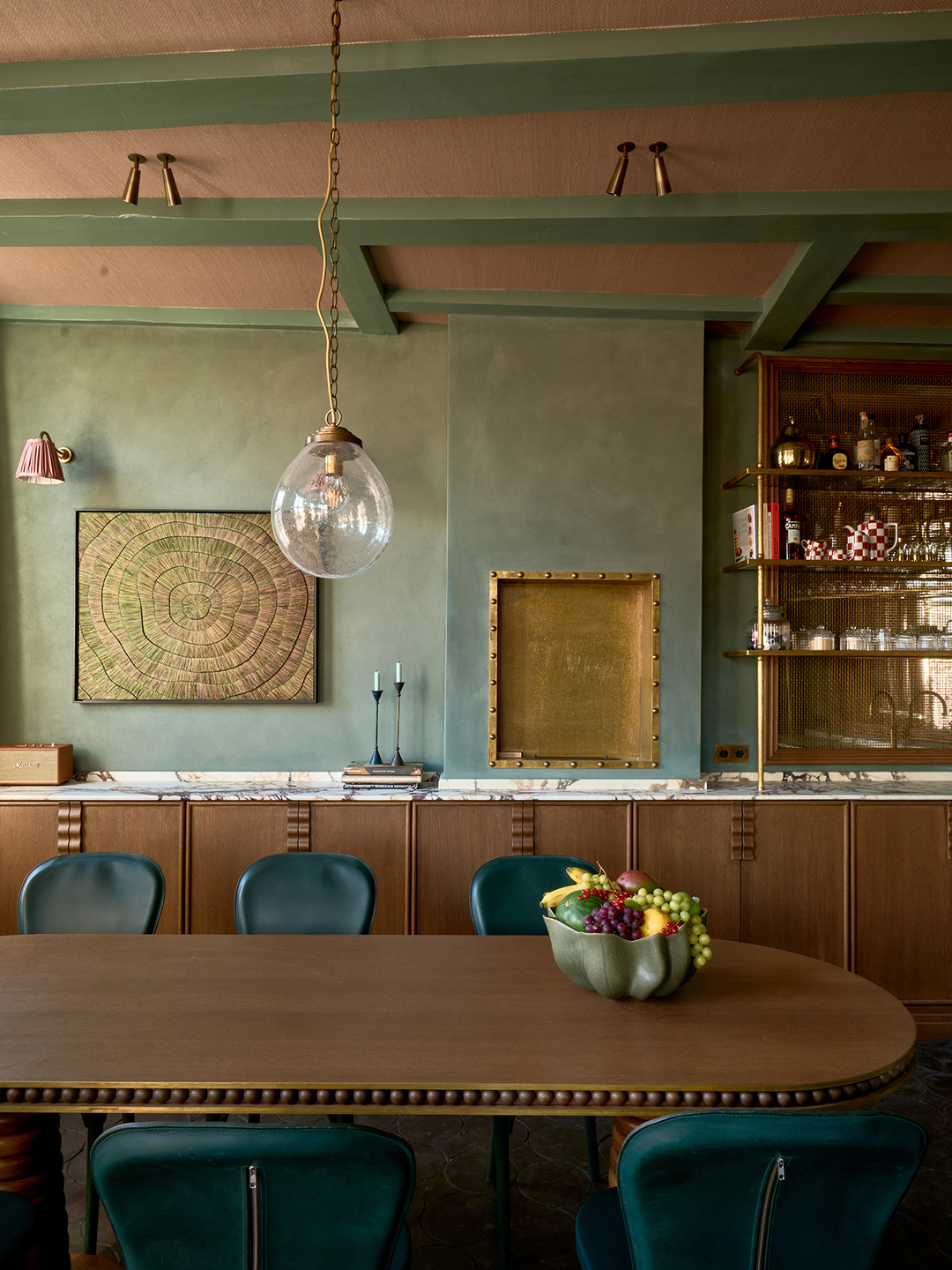
We were not allowed to alter them structurally. What we could do was work with color and texture around them. In some areas, we painted them. Between others we introduced wallpaper, while elsewhere we applied a thick lime plaster to create a more tactile, atmospheric effect.
Why did you decide to add a mirrors in unique places?
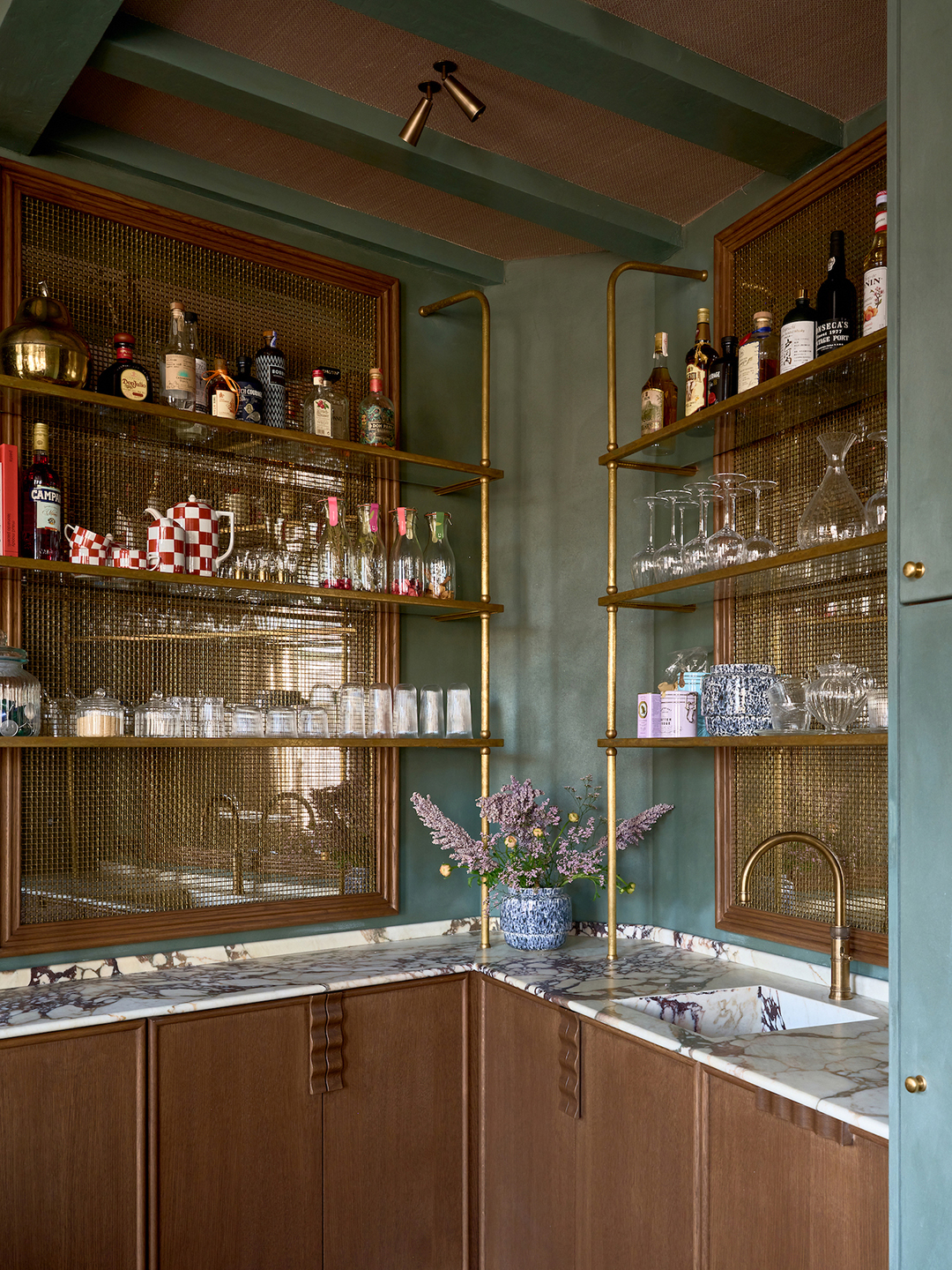
I love working with mirrors, especially in smaller spaces. A mirror can make a room feel larger and catch the light, which was very important in this house. These pieces are specially aged, so they feel authentic and soft rather than new or factory-made. We also used a mirror behind the bar in the kitchen, layering it with brass mesh to create a beautiful play of reflection in what could otherwise have been a dark corner.
The flooring is different in every room—was that intentional?
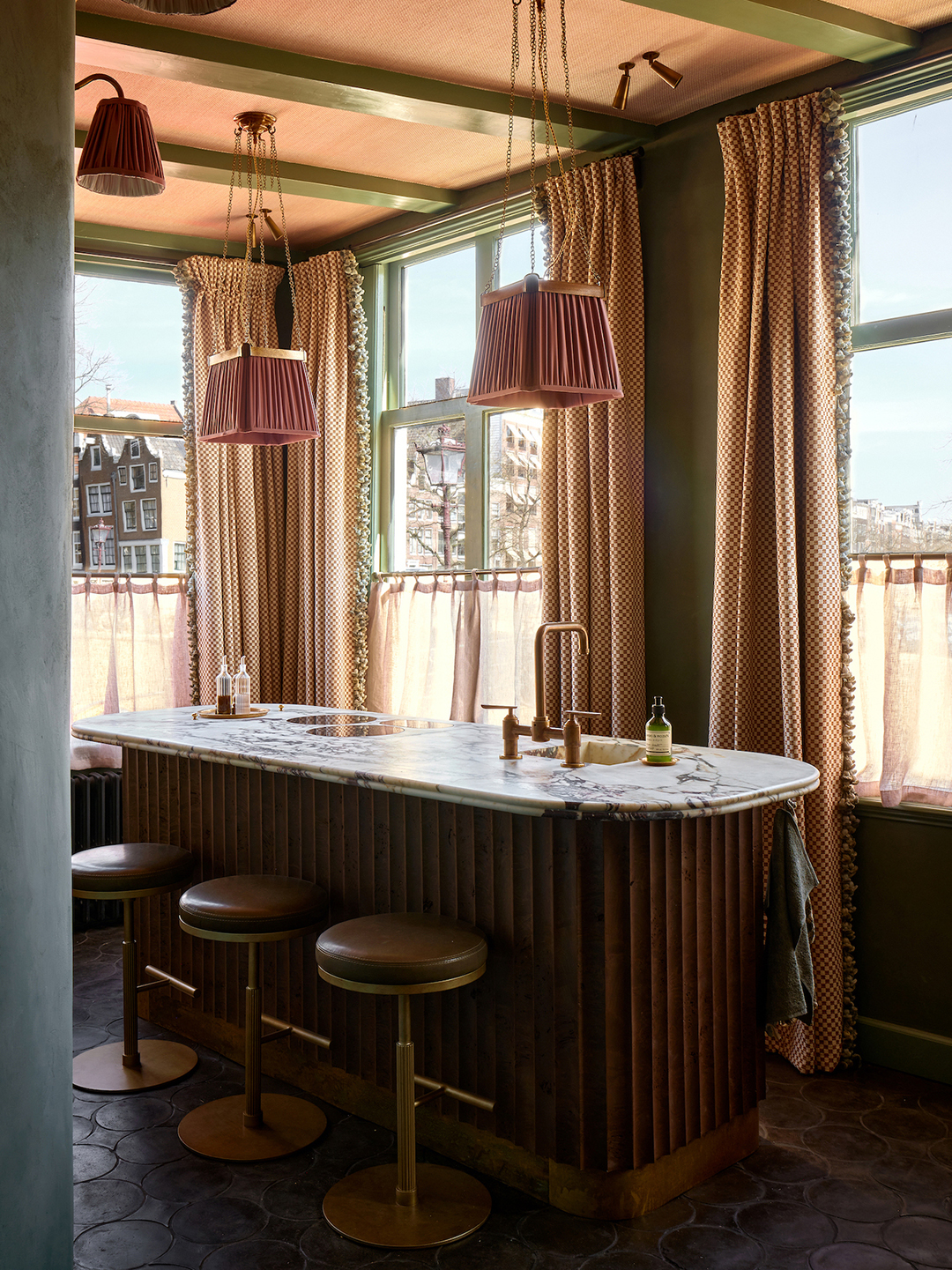
Yes. On the bel étage, we chose black terracotta flooring to achieve the look of a hotel bar. Continuing it from the entrance into the bar area helped create a greater sense of spaciousness. On the first floor, the atmosphere is more like a library, so we introduced a wood floor. For the attic, we chose sisal carpet because of the limited height and because it was a practical solution to install there.
How did you design the storage?
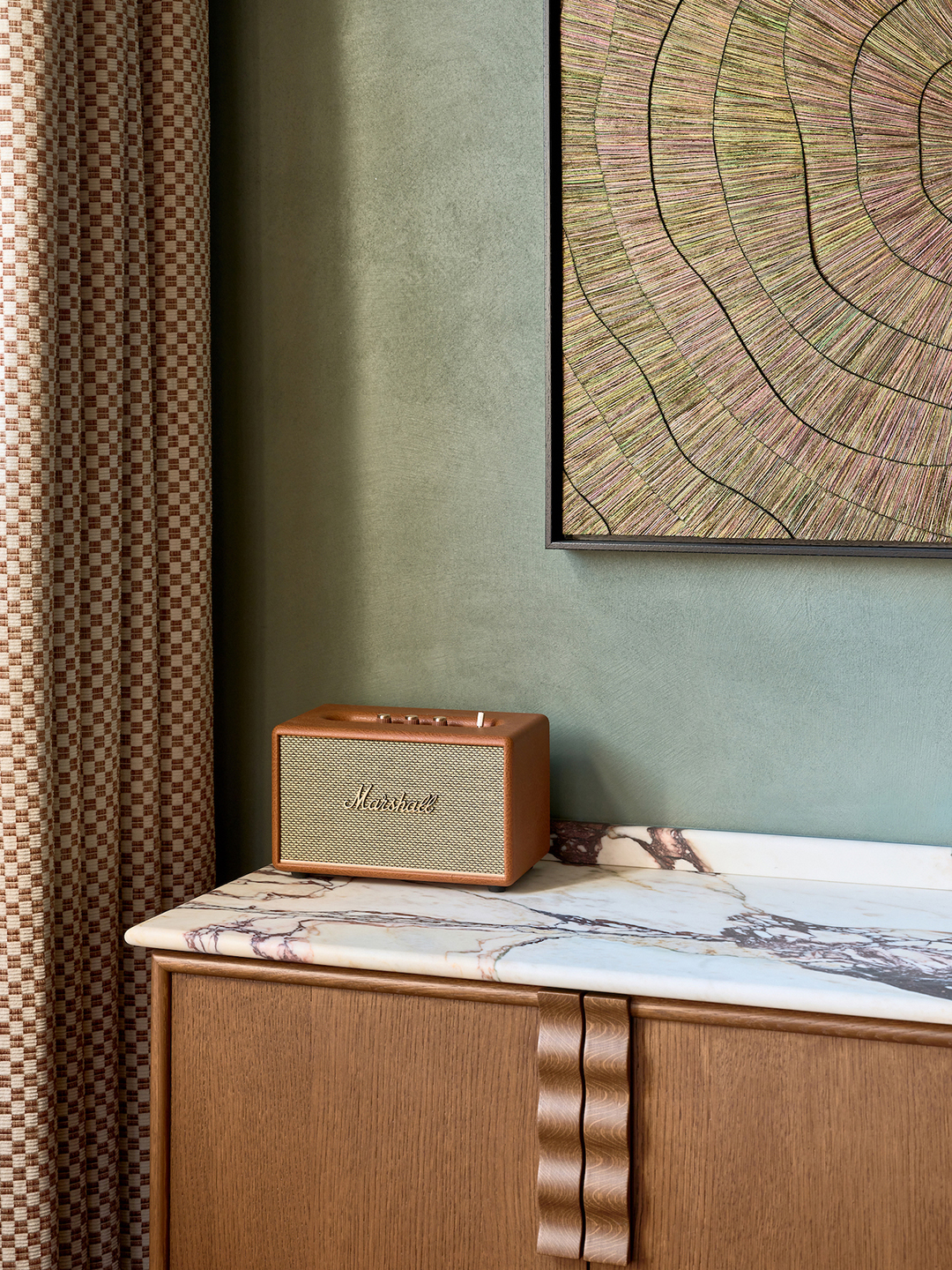
Because the house is so small, storage could never feel bulky or obvious. We created a surprising amount through custom-made joinery. For example, we concealed the fridge, air conditioning, and technical systems behind hidden cabinets; we also hid the washer and dryer in a wardrobe in the children’s room.
What’s your favorite detail in the home?
The house is full of charming little finds, but I especially love the doorknob at the entrance, sourced from Charles Edwards in London (seen in the image of the staircase). It feels like such a joyful welcome, immediately making you curious about what might be happening behind the door.