We may earn revenue from the products available on this page and participate in affiliate programs.
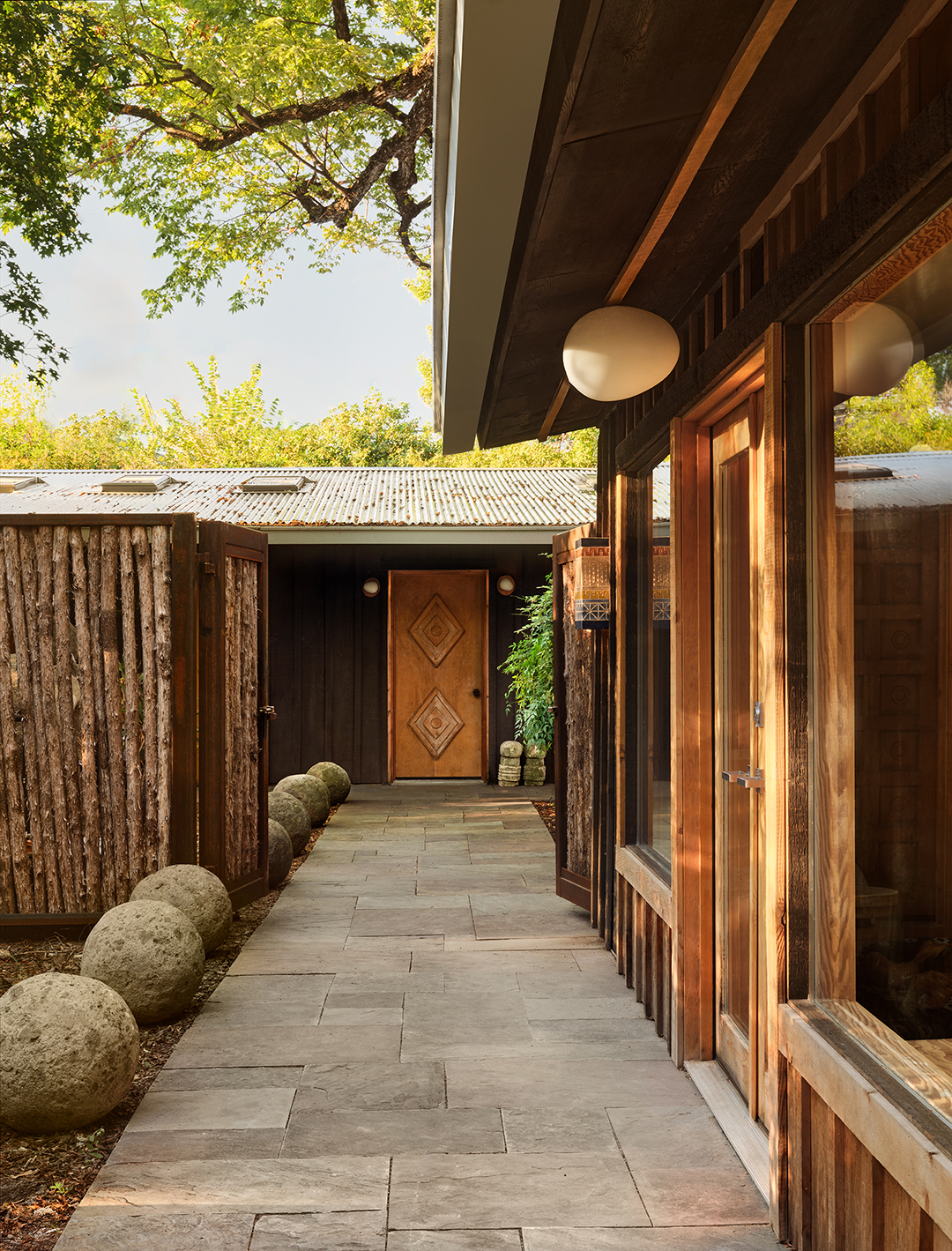
In Dallas’s Belmont Addition Conservation District, most front doors are a handful of steps from the sidewalk. Not Clint Murchison’s. The investor’s mid-century home is the only one in the neighborhood that sits at the very back of its lot, requiring you to meander through a garden first. “The refuge aspect of the home,” he says, is one of his favorite things about living there. For Murchison, whose work is focused on land, food, and community, updating the 1,700-square-foot, two-bedroom house had little to do with looks. “There was no discussion of aesthetics or vibes,” Scott Parks, his architect and interior designer, says. “It was all about process.” Mainly, using the property as an experiment in how to build sustainably in Dallas, down to the bones of the structure.
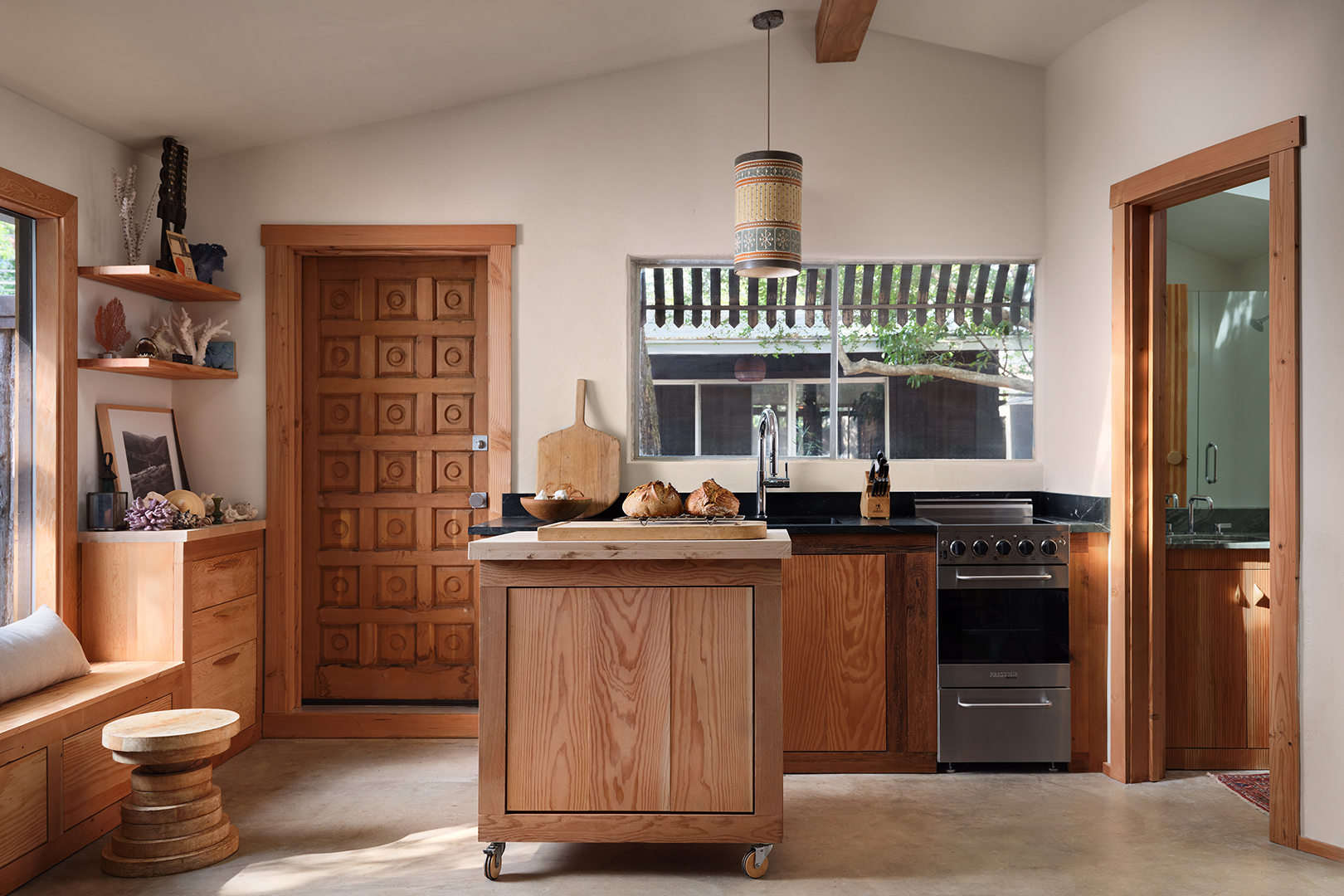
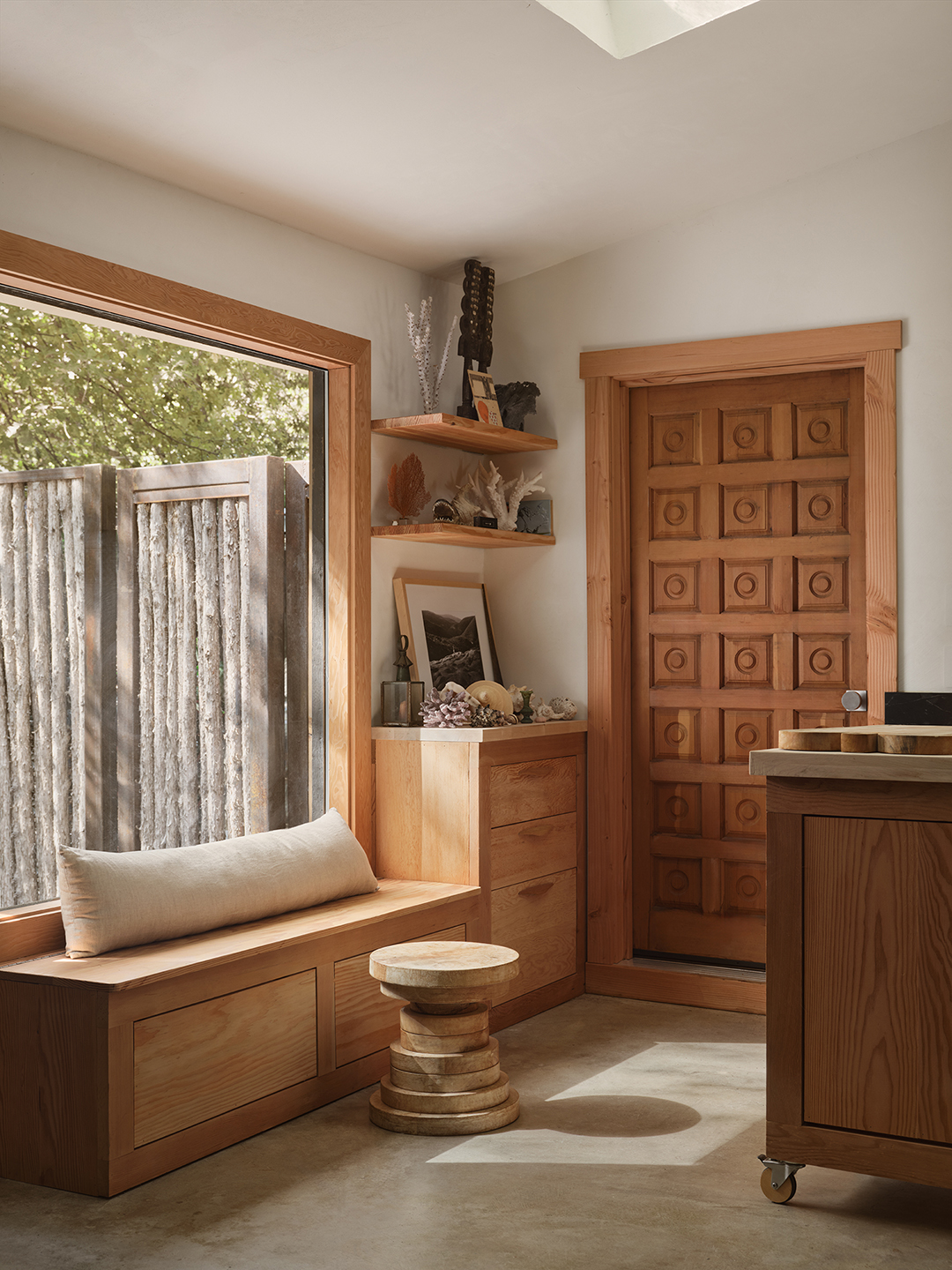
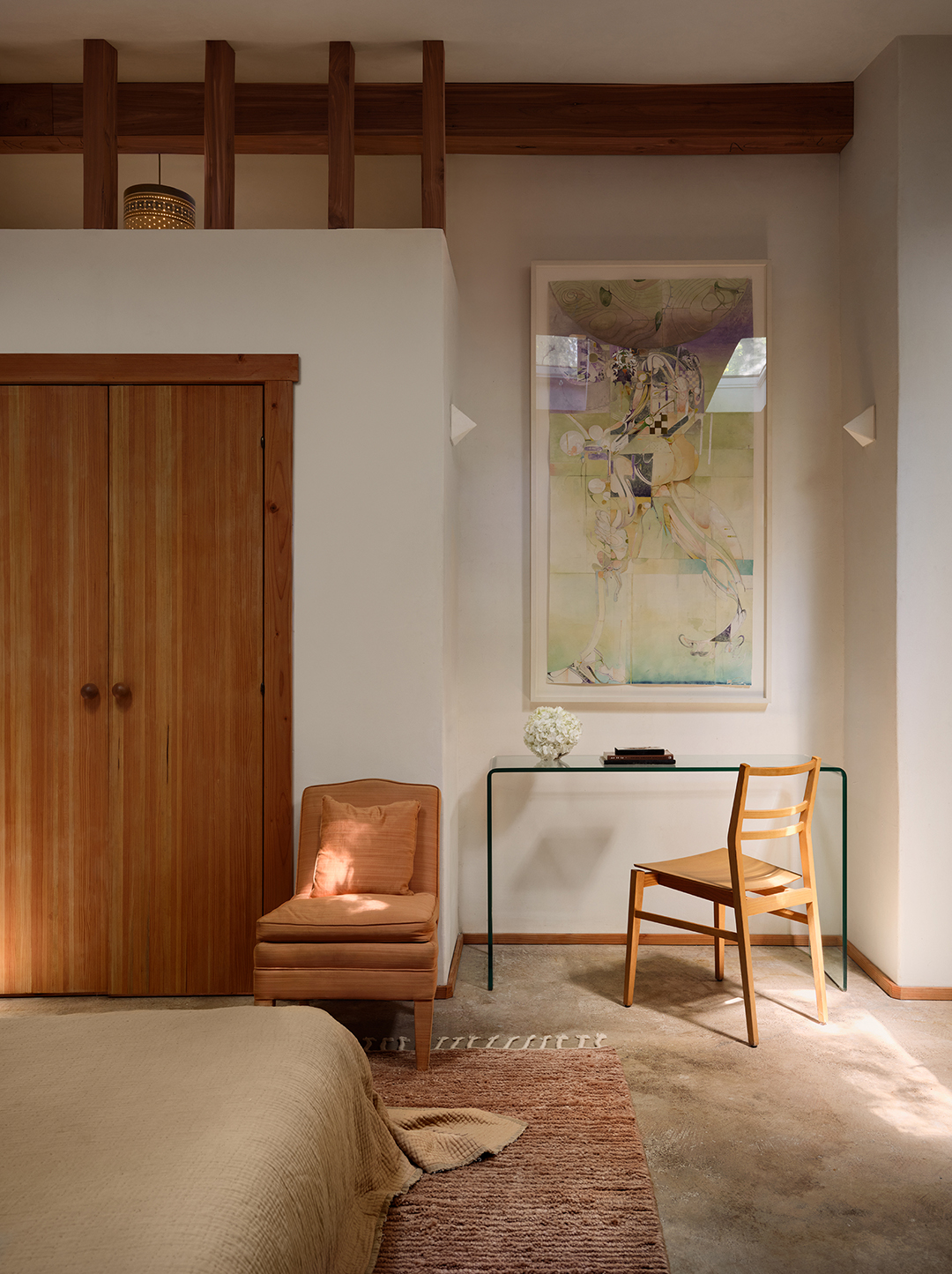
An unusual approach for an unusual home. Parks, who grew up in Texas, trained at Yale, and worked under architect Deborah Berke in New York, was game. First things first: no drywall. Instead, the walls are MgO board finished in textured lime plaster. Behind them, the insulation is sheep’s wool, a renewable material prized for its breathability, temperature-regulating properties, and low environmental impact. In the kitchen, the cabinetry is solid salvaged pine, and the drawers slide on traditional wood-on-wood tracks rather than metal glides. Even the demolition waste was taken into account: any wood removed from the house was reprocessed by the carpenter into new panels, including the striped closet doors in the bedroom. Yet, despite all these careful considerations, the house doesn’t announce its sustainability with a capital S; it simply feels thoughtfully crafted by human hands.
Collaborating closely with Eco Build Lab and regenerative design consultants nRhythm, Parks even found himself rethinking his personal approach to the project. “I constantly had to check my impulse to control the process,” he says. “We took each decision as it came.”
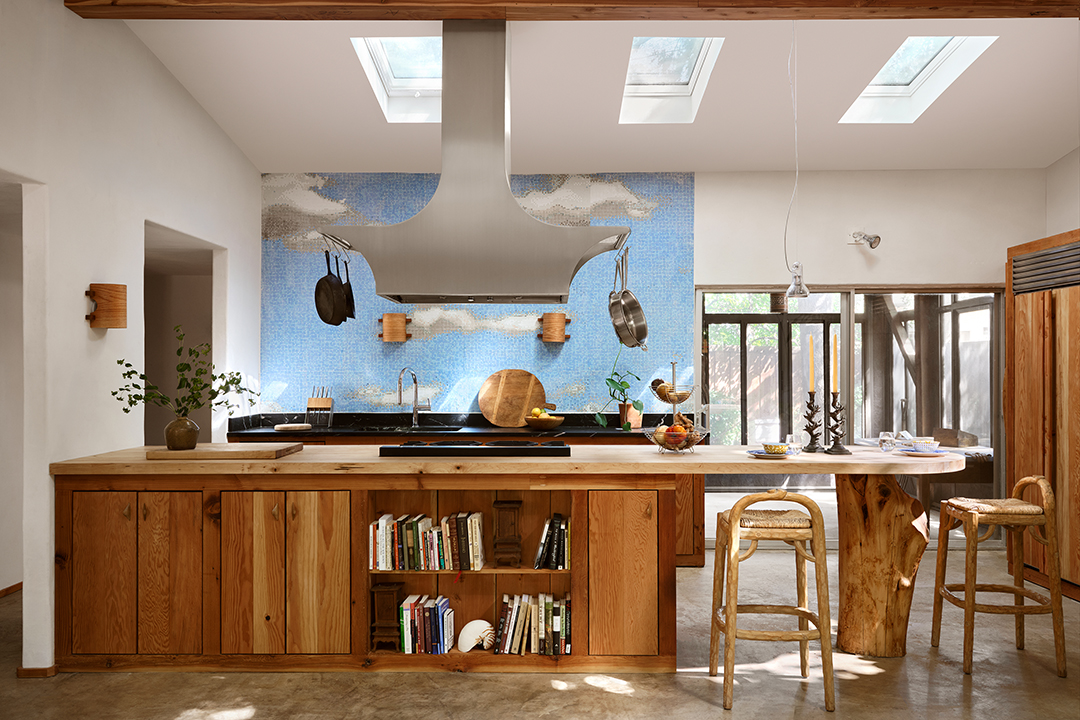
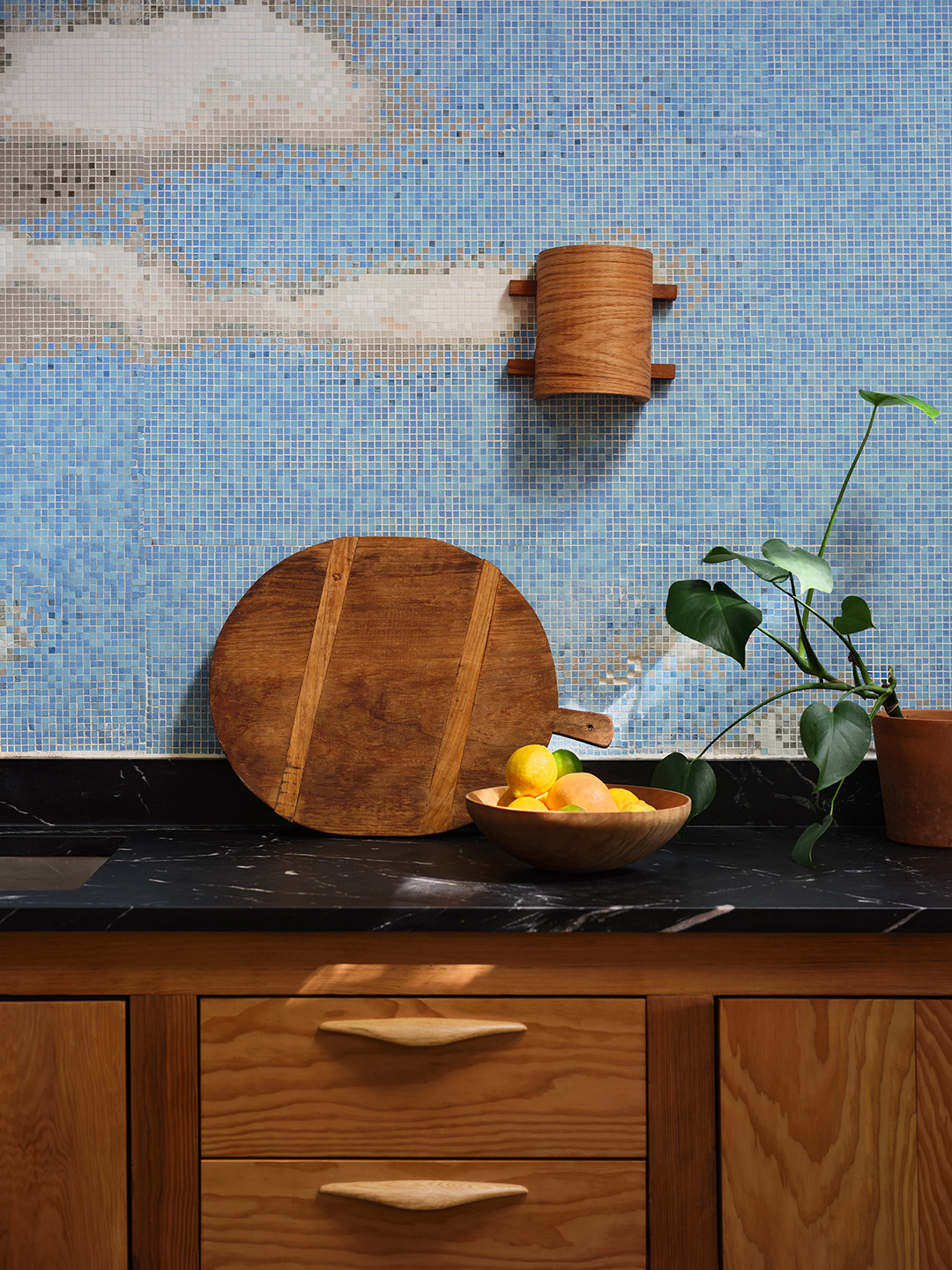
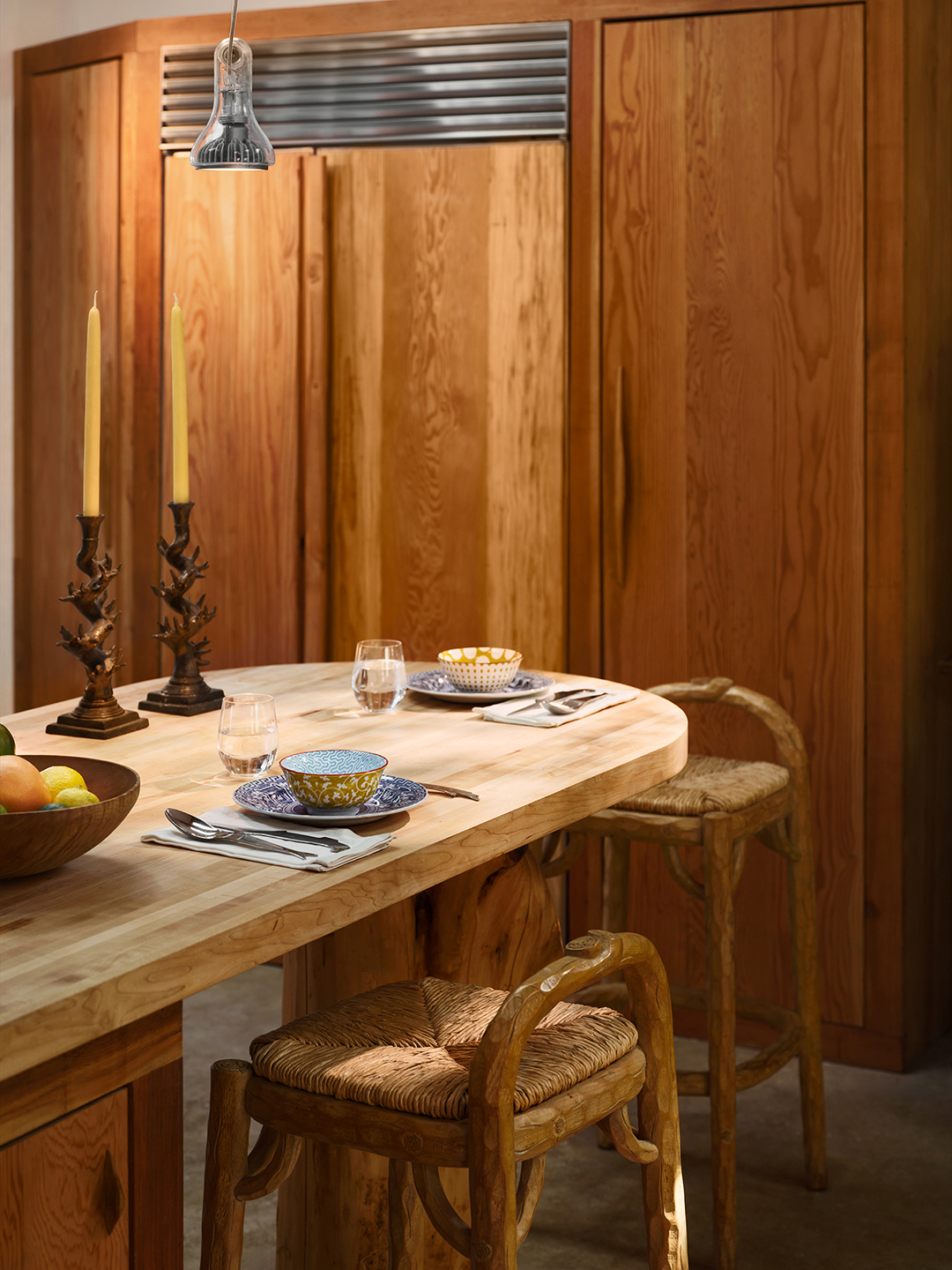
Some of the boldest choices happened in the kitchen. A cloudscape mosaic backsplash floats behind the sink and the custom range hood is meant to resemble the swooping wings of a bird. “It doubles as a beautiful sculpture,” Murchison notes.
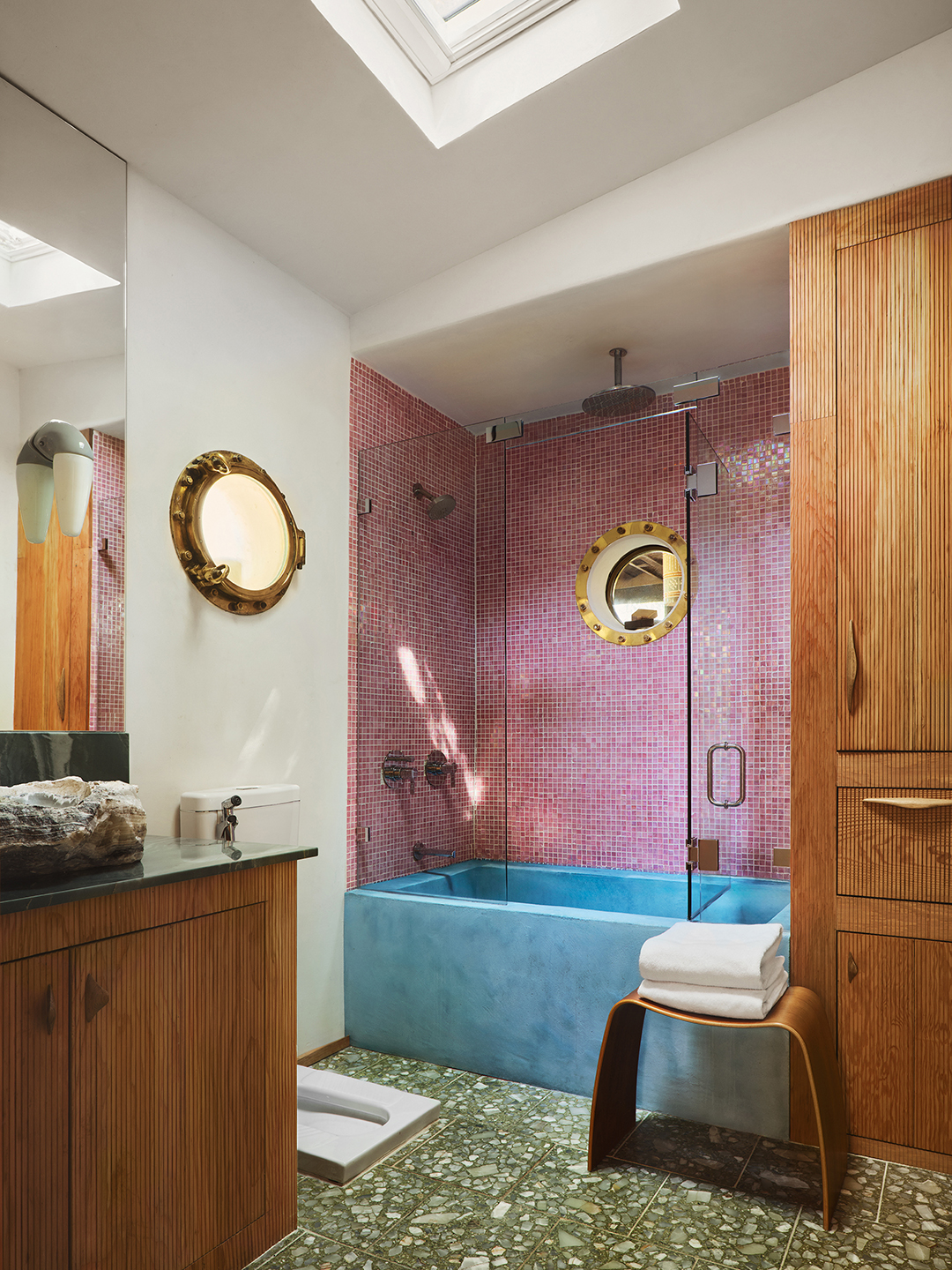
The bathroom had come outfitted with groovy 1960s-style woodwork, which Parks took pains to recreate, then paired with salvaged entry tile on the floor and porthole windows found by Murchison.
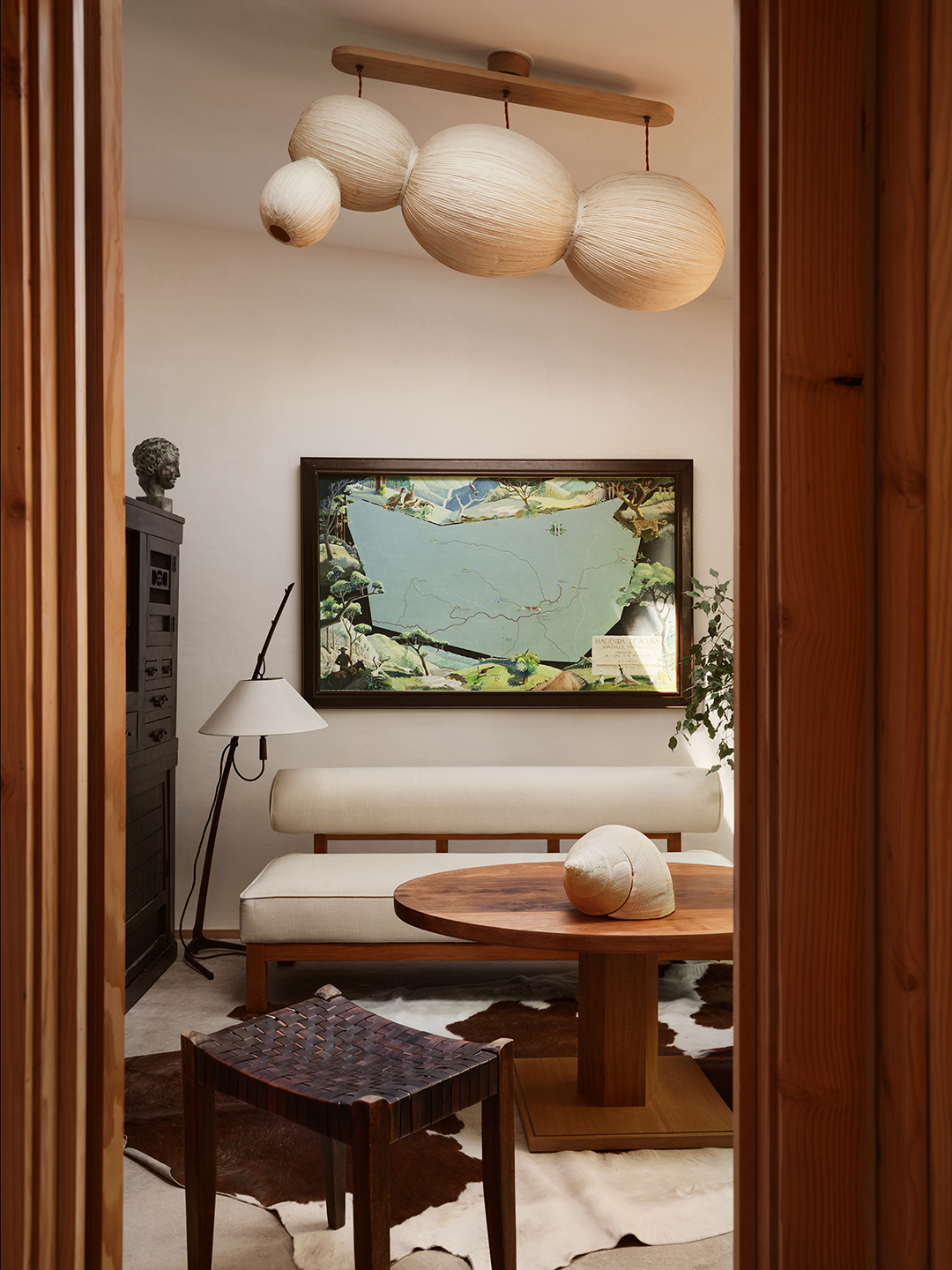
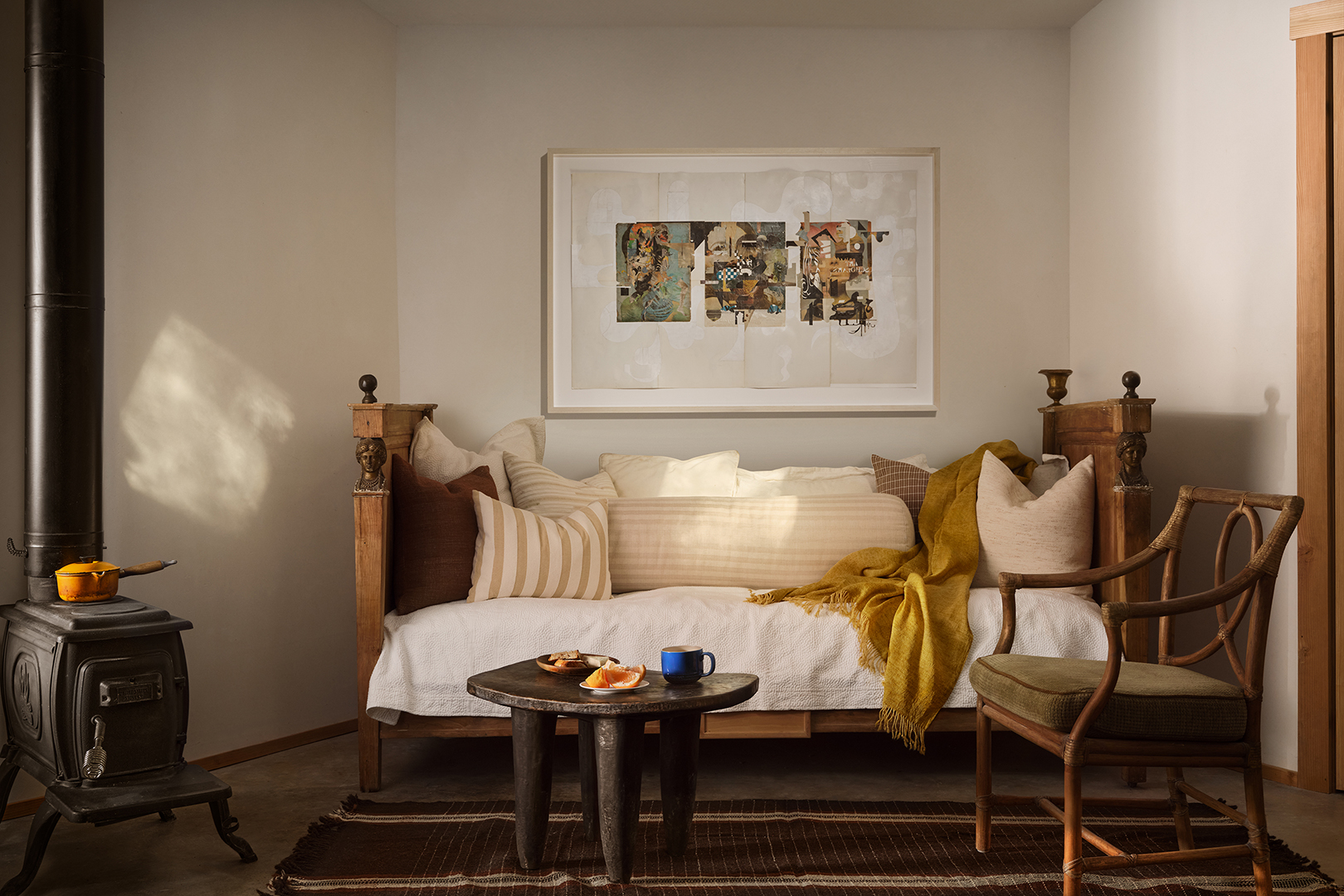
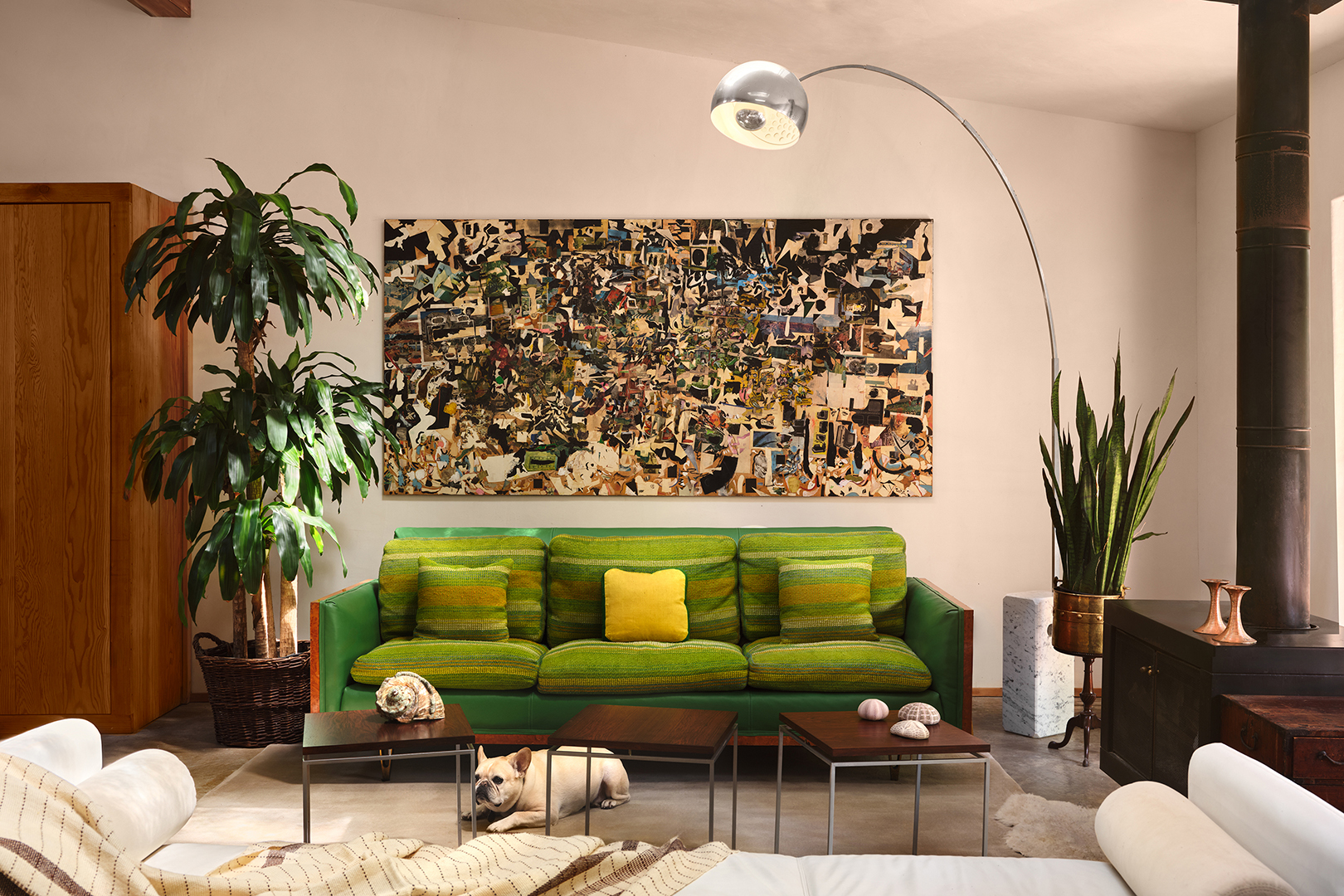
Rather than furnishing the home from scratch, Parks sifted through Murchison’s own collection, a treasure trove of family pieces and secondhand finds. Above a green mid-century tuxedo sofa reupholstered in its original leather color hangs art by Murchison’s brother, Will. A piece depicting Murchison’s great-grandfather’s ranch in Tamaulipas, Mexico, presides over another seating area. “It really wasn’t about my ego or my design imposition,” Parks explains. “It was about achieving a sustainability goal.”
That goal extended to the exterior, too. In the front of the house, Parks fashioned a wide path from salvaged stone pavers and adding a bespoke welded fence that divides the yard; one half is street-facing, the other a more private, layered courtyard. The cedar fence hail from East Texas, home to Murchison’s own family ranch.
For Murchison, who was inspired in part by staying in an off-grid Earthship in Taos, New Mexico, his Dallas home is proof that living lightly doesn’t have to mean living austerely. Eco-conscious design can be textured, strange, soulful, and even a little dreamy—just like a stainless-steel “bird” cutting through a tiled sky.