
We may earn revenue from the products available on this page and participate in affiliate programs.
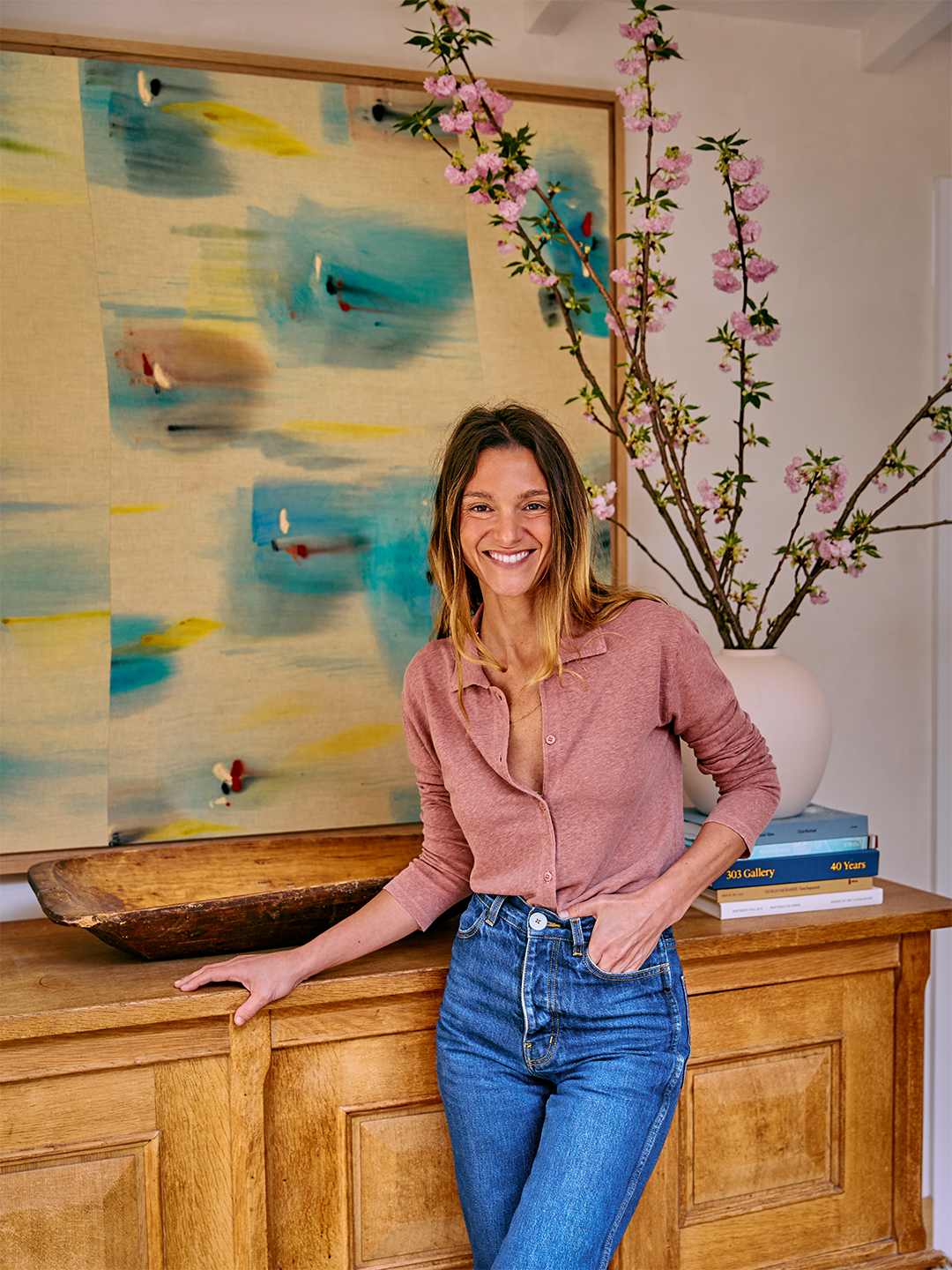
Artists have long been drawn to the ethereal light in Springs, New York, an enclave of East Hampton that has influenced generations of creative luminaries in pursuit of their craft. The sun has dazzled painters like Lee Krasner, Helen Frankenthaler, and Elaine de Kooning all who spent time in this particular corner of the country. It has also captivated textile designer and artist Caroline Z Hurley, who made the colony her home in 2023 with her husband Alex Crane, a menswear designer, and their two daughters. “Part of my core identity has been tied to the dunes and ocean vibes of the Northeast coastline; I’ve always been drawn to it,” Hurley, a Rhode Island School of Design grad, muses. “There’s something about the quality of light here, and the way it reflects off the ocean that is so magical.”
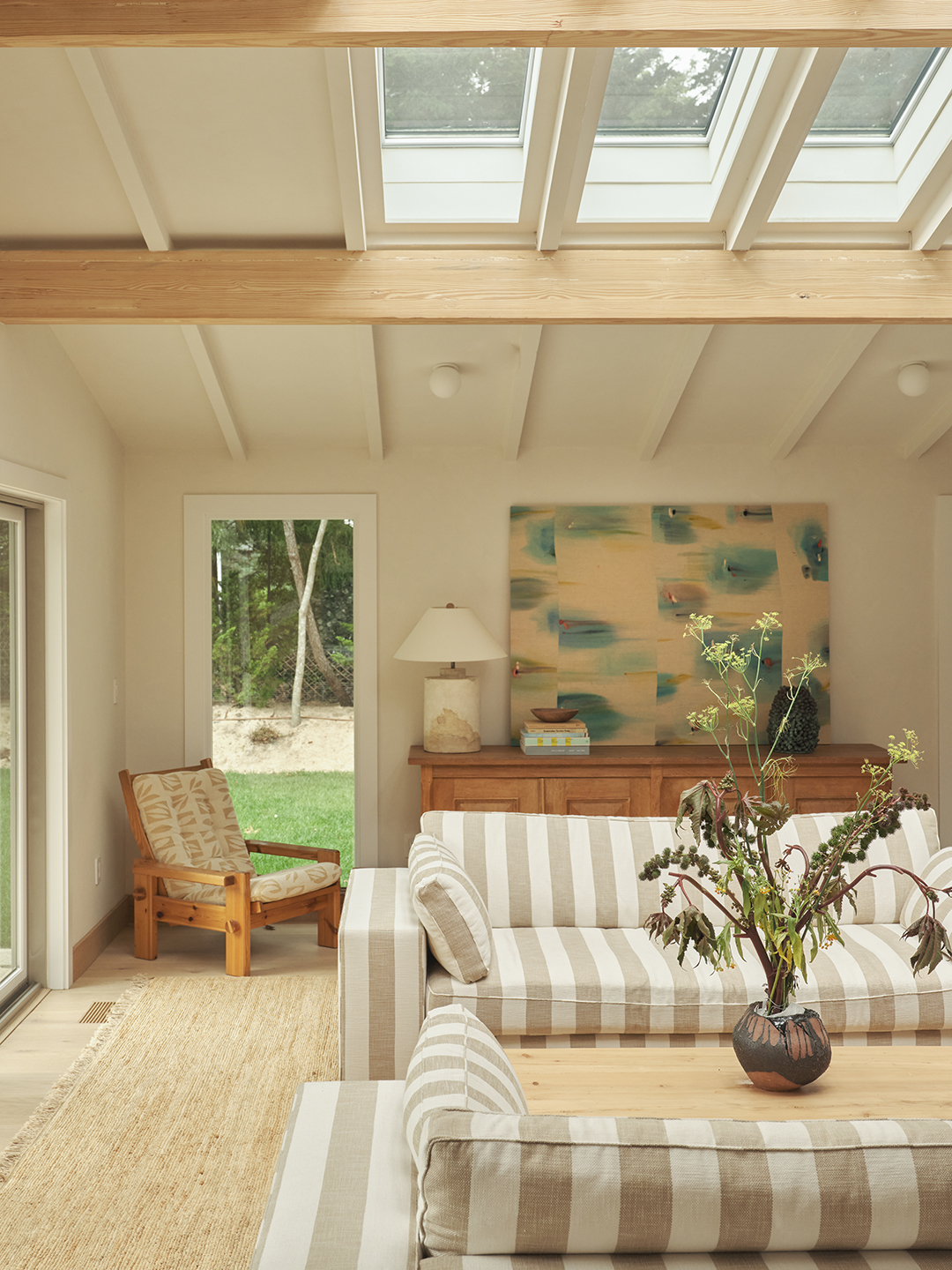
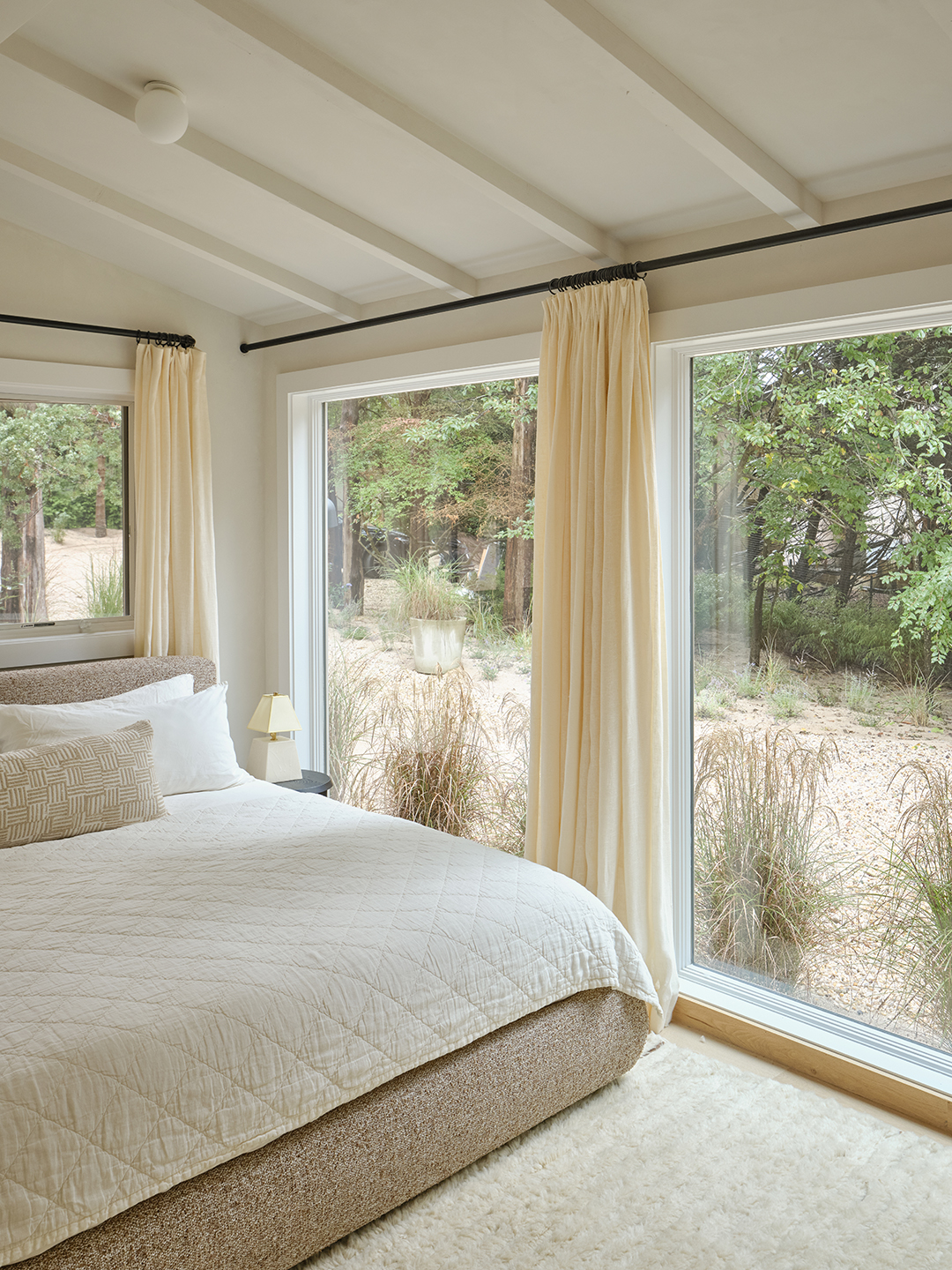
Her search in the area started as a business venture. Craving a place for customers or potential clients to experience the ethos of her eponymous brand, Hurley put an offer in on a small bungalow. When that deal fell through, she and Crane decided to pivot to something more personal. Within months, they had closed on a 1,600-square-foot house from the 1960s overlooking Three Mile Harbor. “When you look out the window, any window, it feels like the inside is a frame, and the outside is the painting.”
After six months of living in the space as is, Hurley had cataloged where they spent the most time, which direction the wind blew in, what time of day the trees cast shade, and, crucially, how light moved throughout. That’s when the couple turned to their friend Michael Yarinsky, co-founder of Office of Tangible Space, who designed Hurley’s original store in Greenpoint back in the 2010s. Together, they envisioned a more cohesive layout that would support the family for year-round living rather than short seasonal stints.
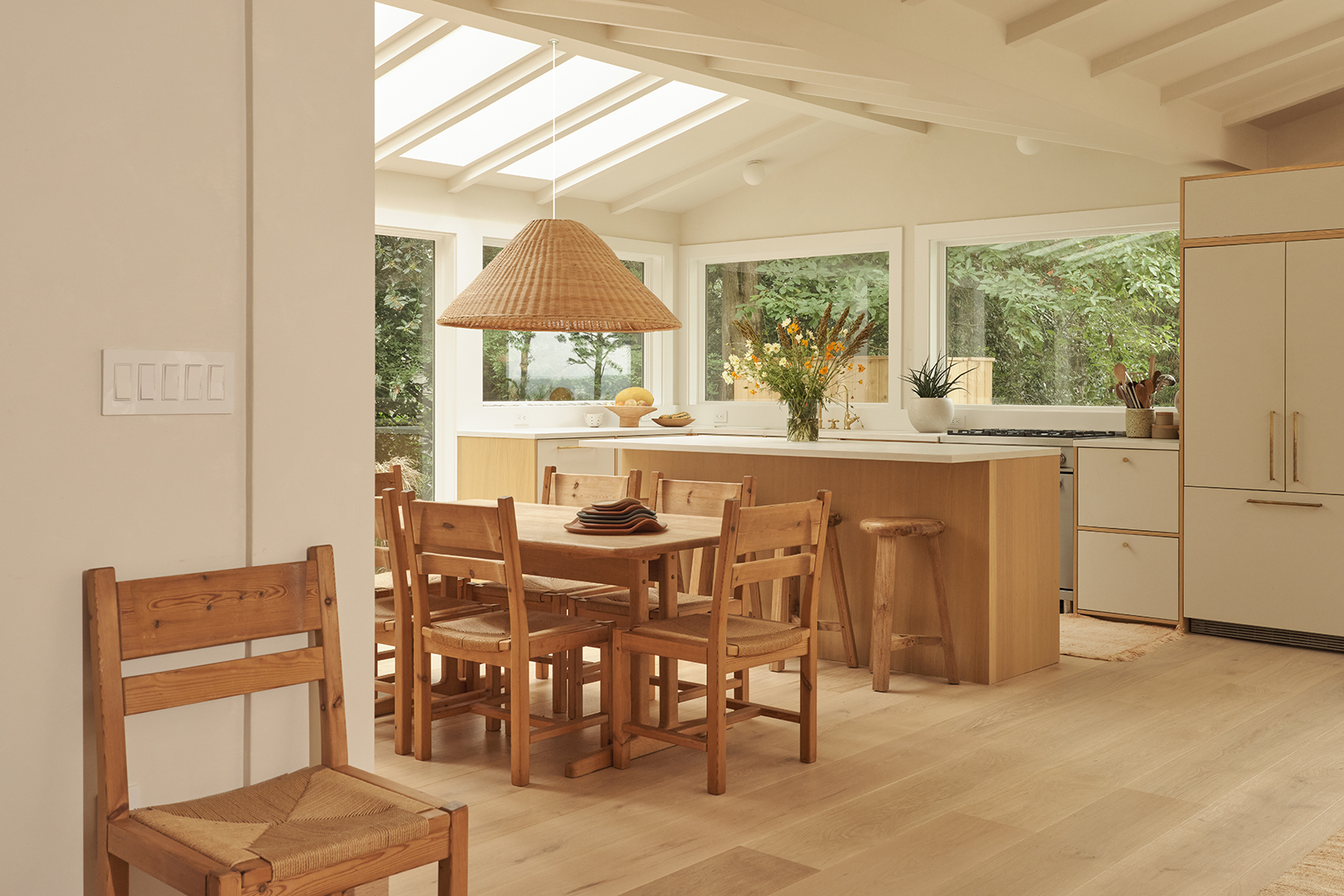
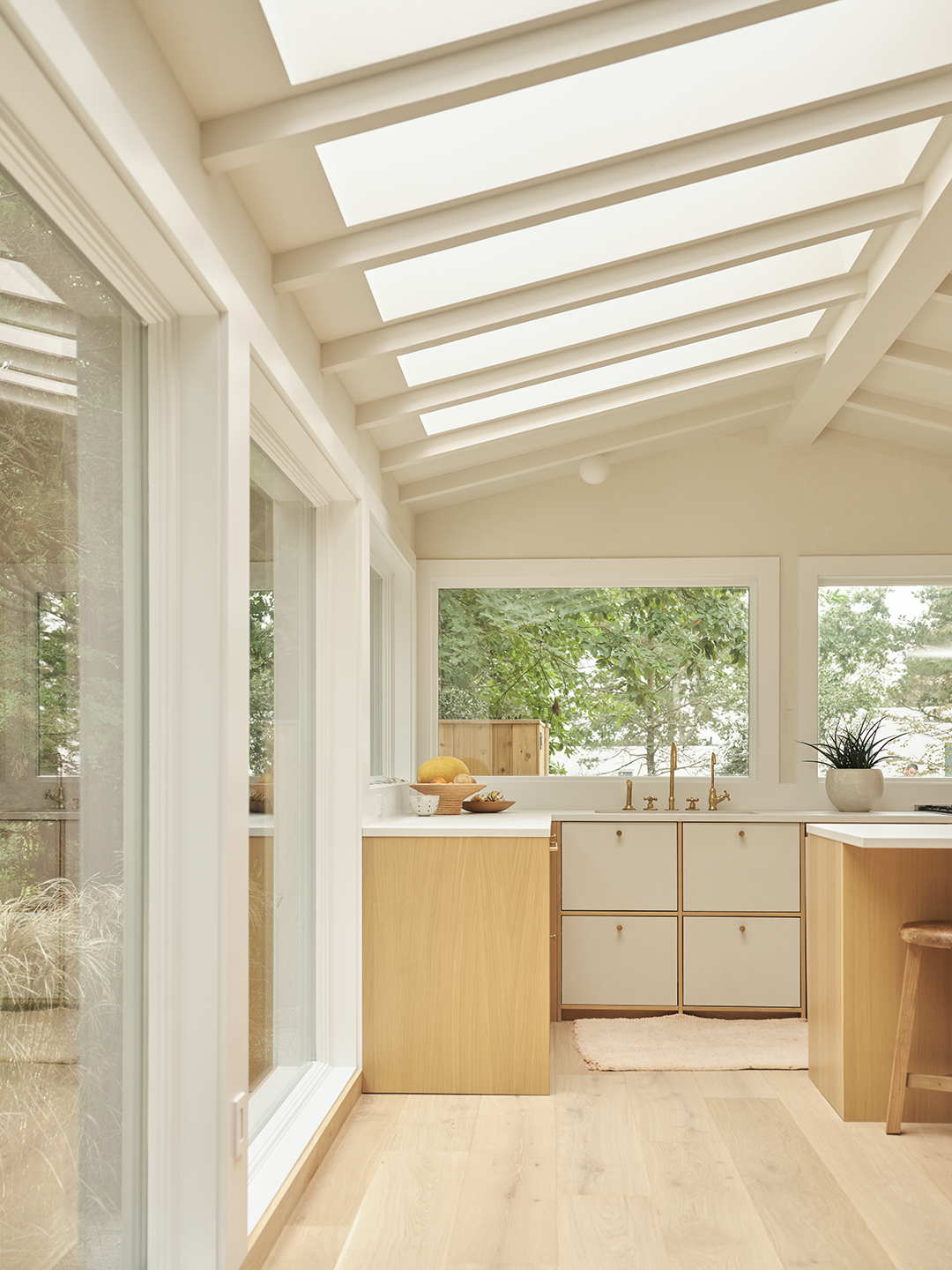
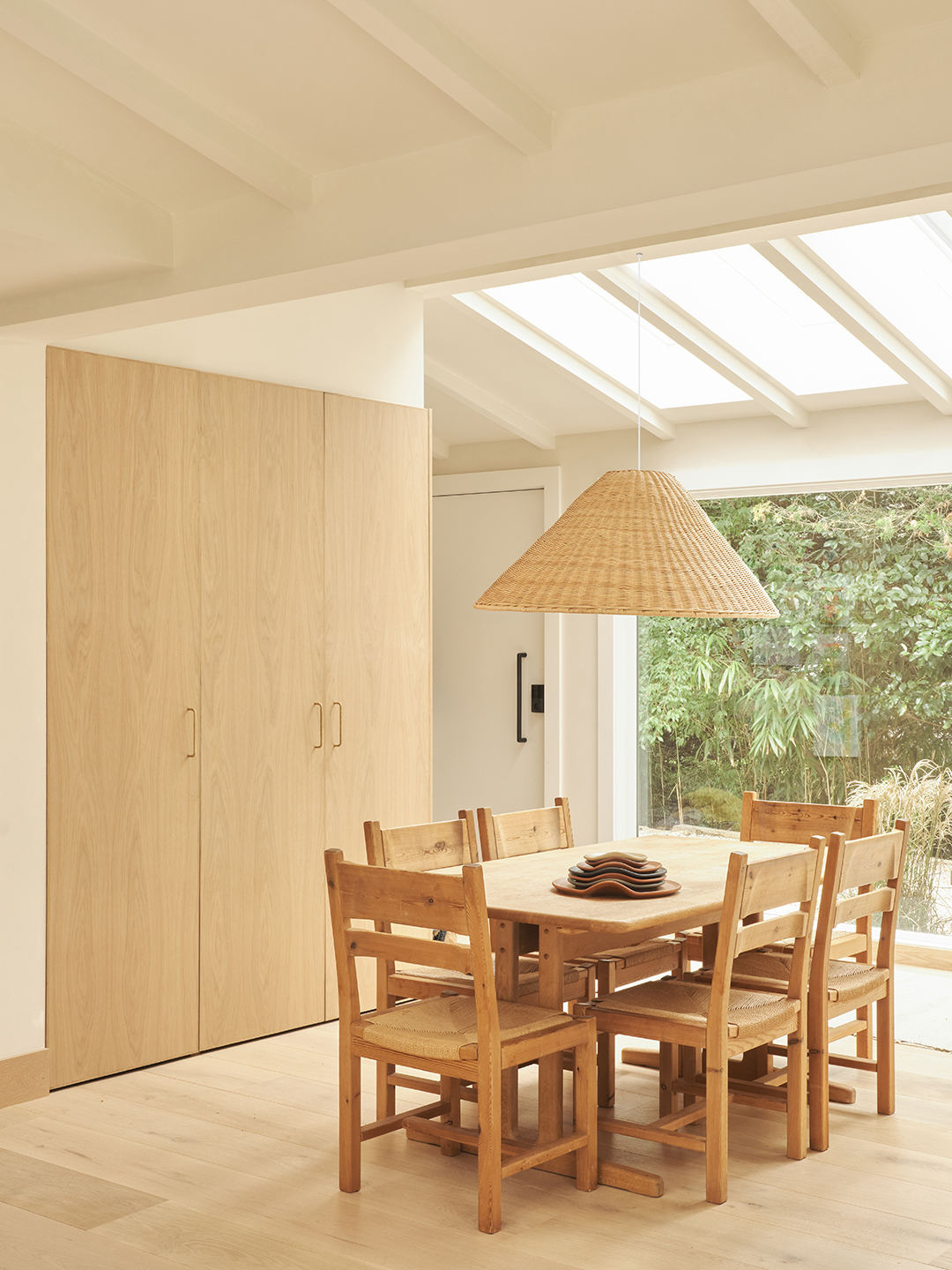
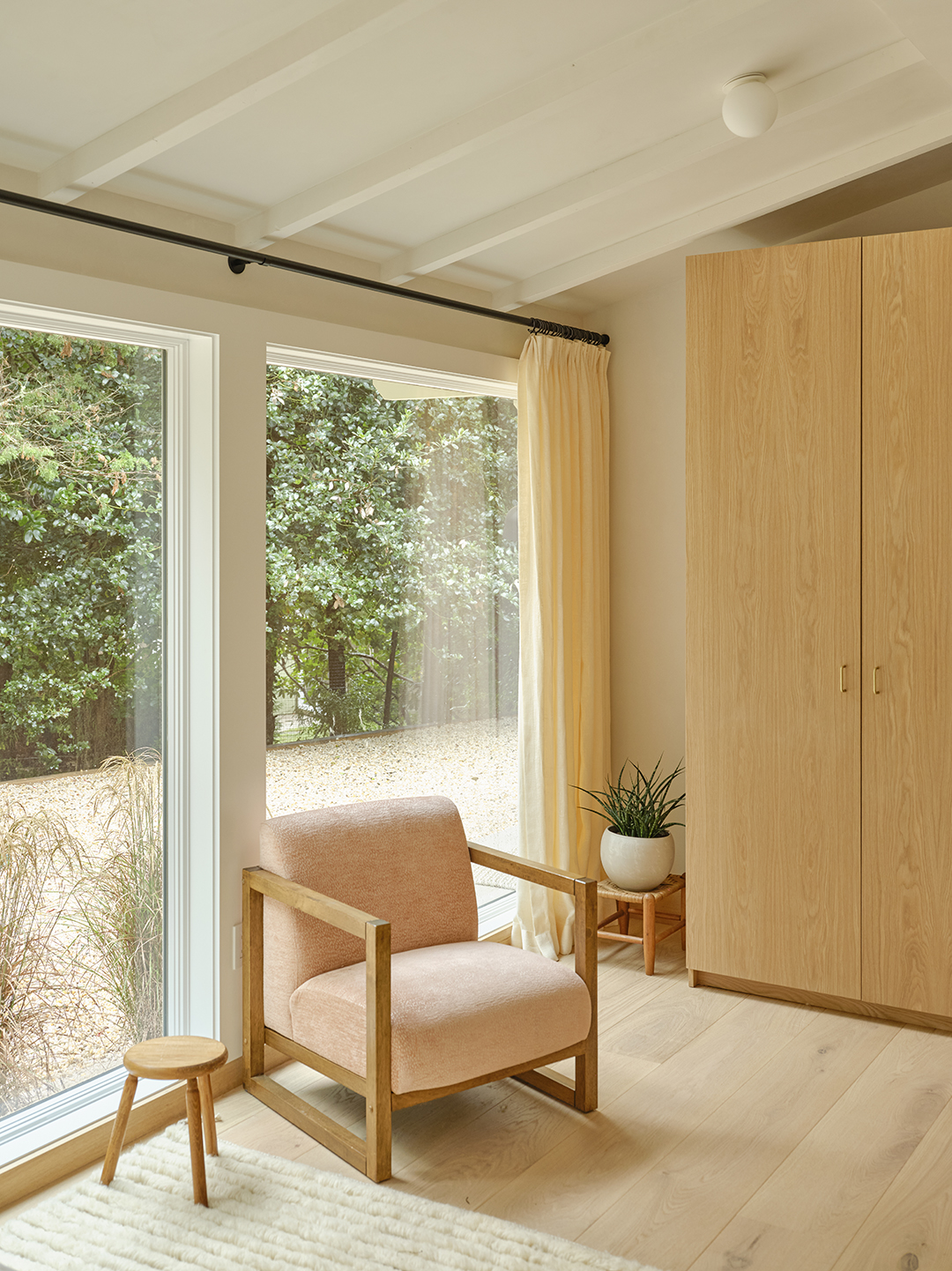
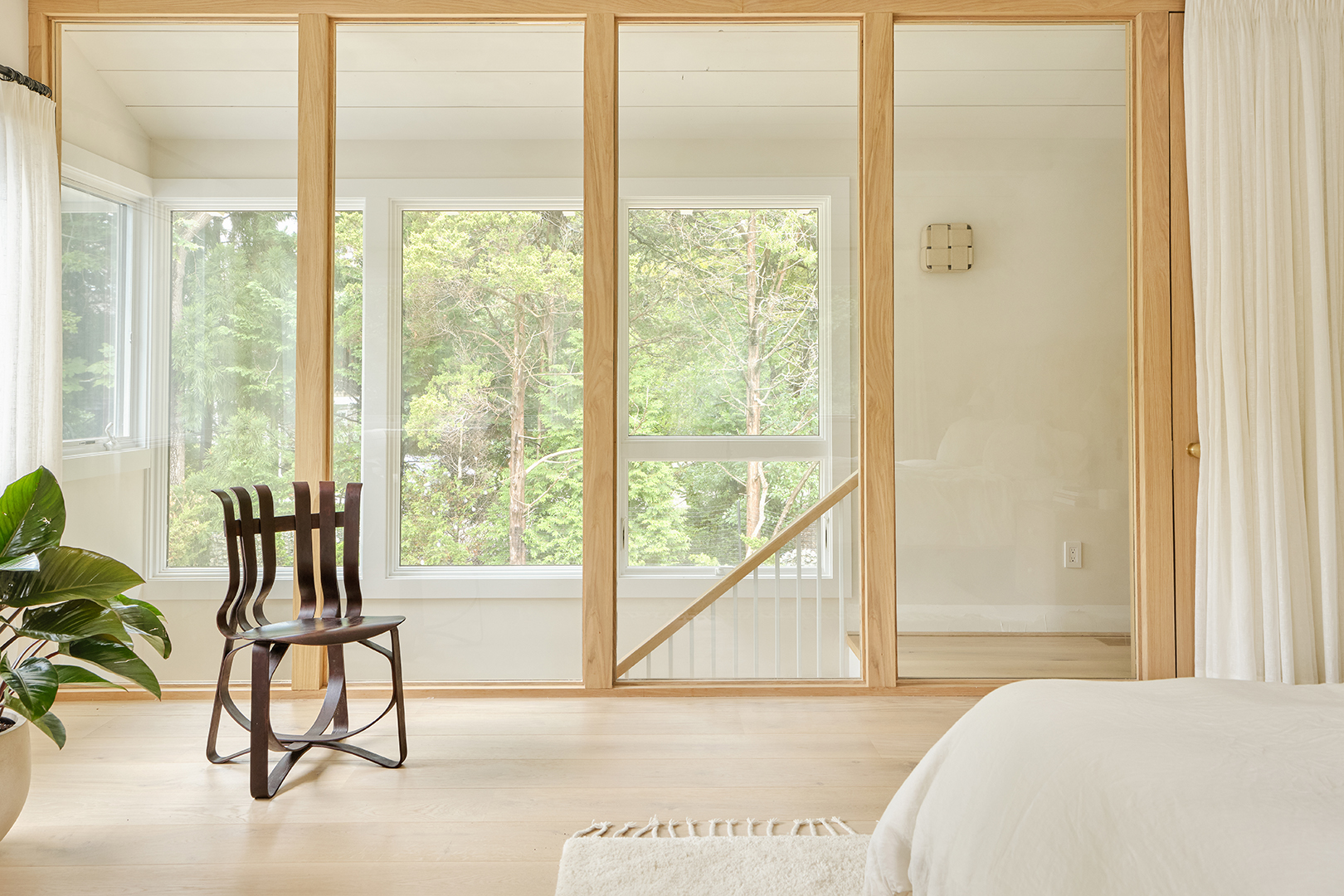
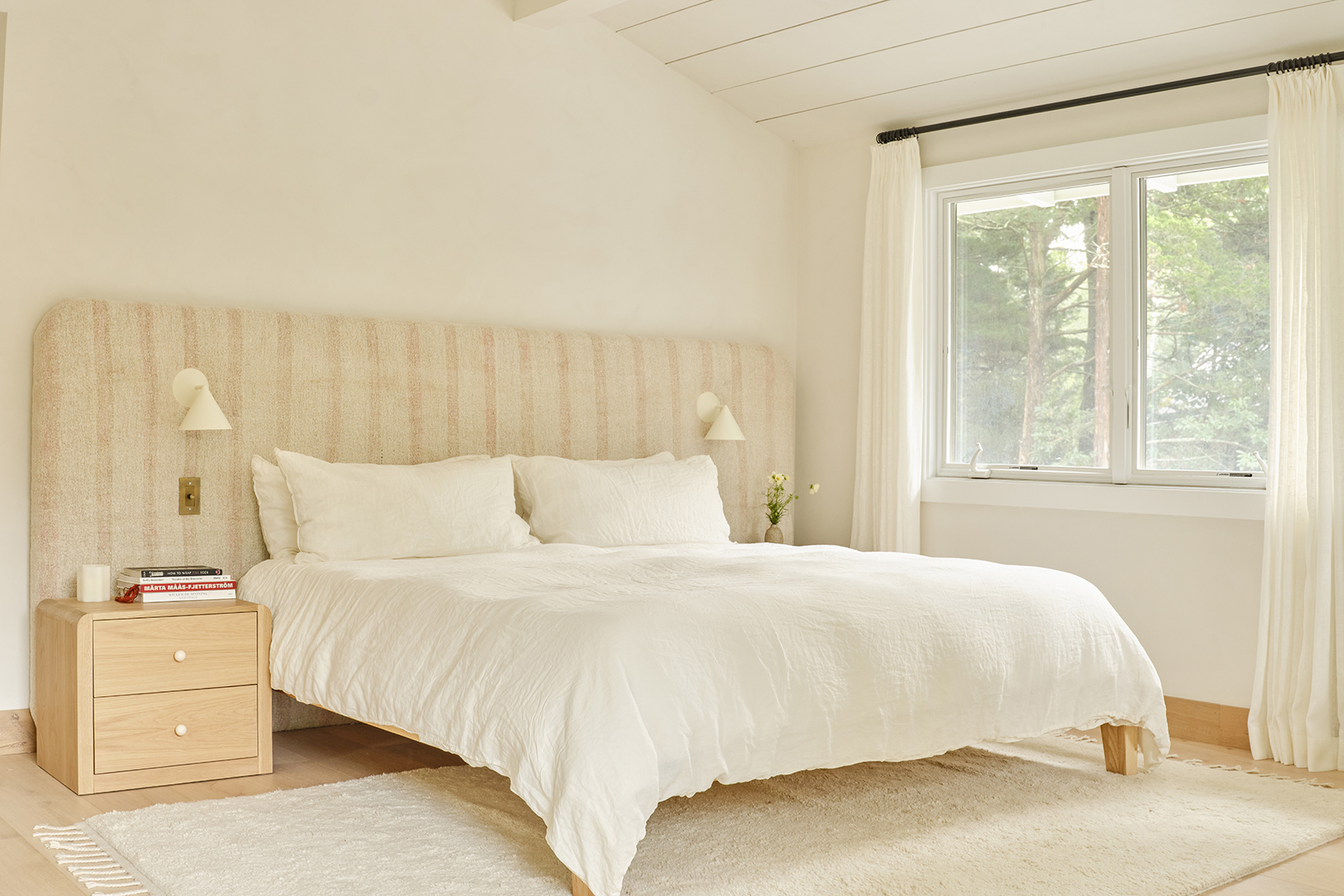
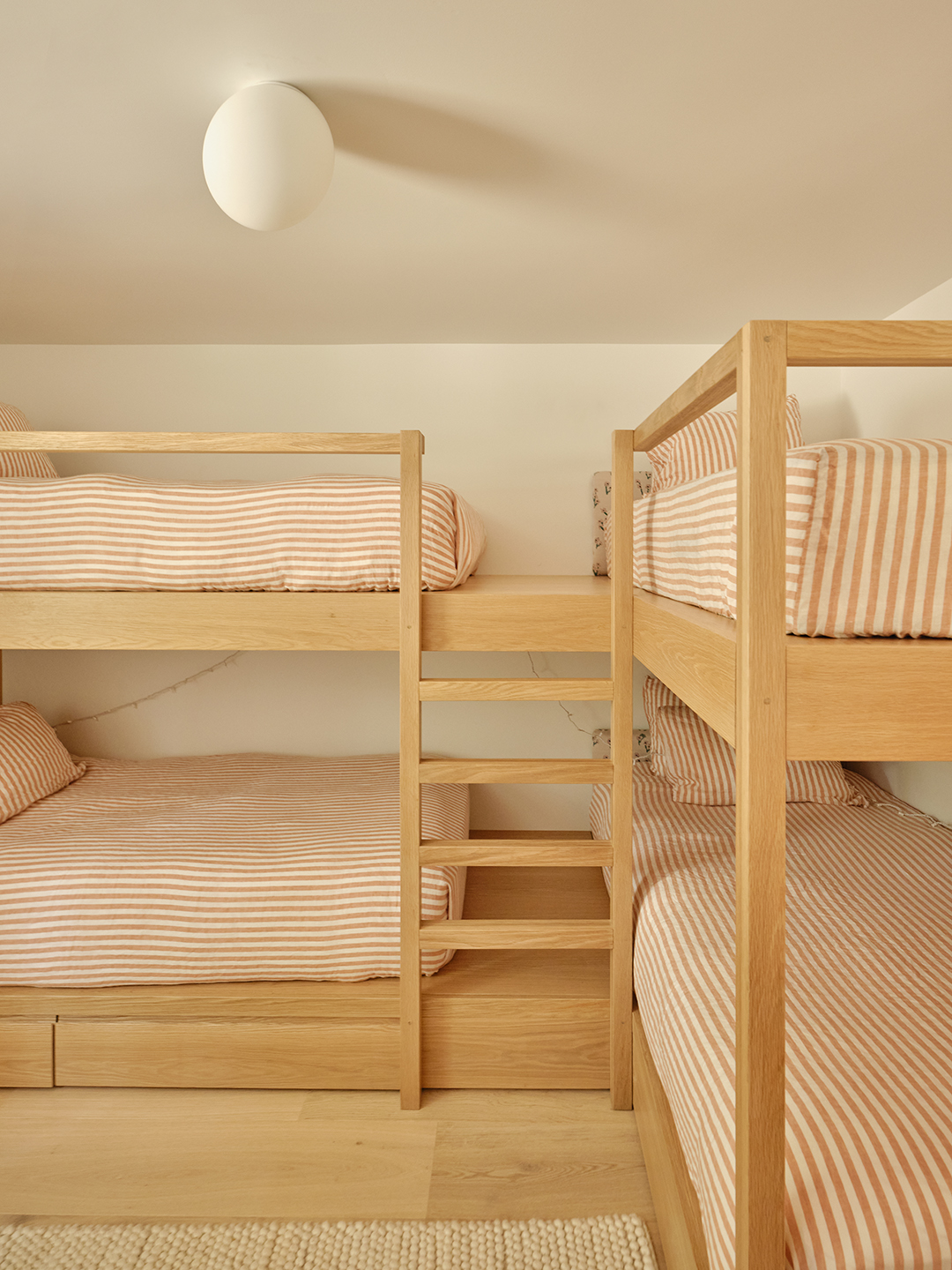
In the beginning, the main objectives were to add extra square footage, eliminate dark dead zones, and integrate a larger kitchen. But, in the end, the project became a nine-month gut renovation, allowing Hurley, Crane, and Yarinsky to really reimagine how they would spend time in the house. To expand the footprint of the three-bedroom, two-bath home, the team added 500 square feet to accommodate a new cookspace as well as another bathroom and bedroom. “Caroline and Alex just wanted this house to be flooded with light,” Yarinsky says, so in came giant skylights in the living room and kitchen. On the second story, the primary suite lost a demi-wall and gained floor-to-ceiling glass panels to let northern rays pour in. “You might as well be outside. You don’t even need to have a lightbulb on for the bulk of the day,” he adds.
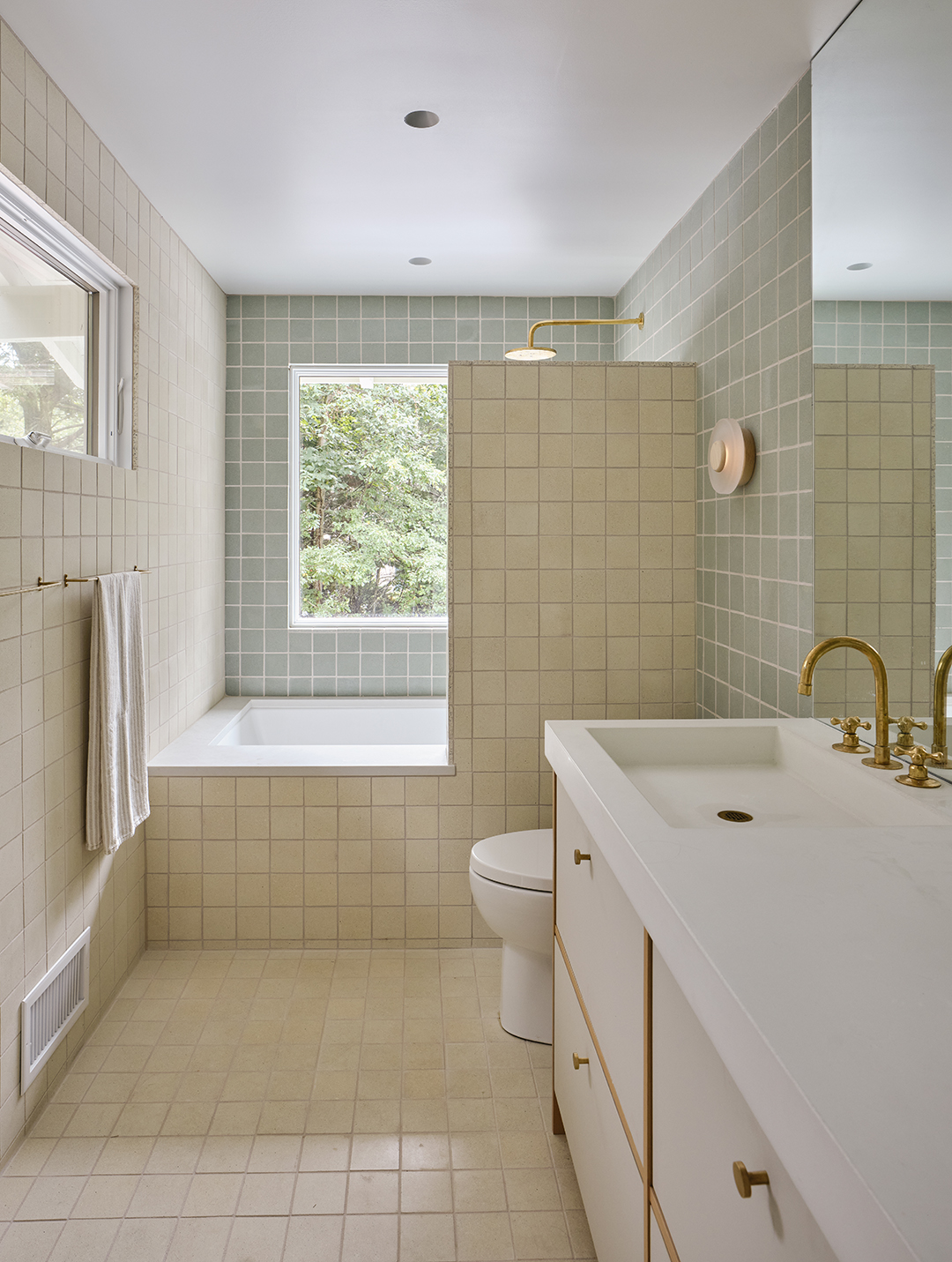
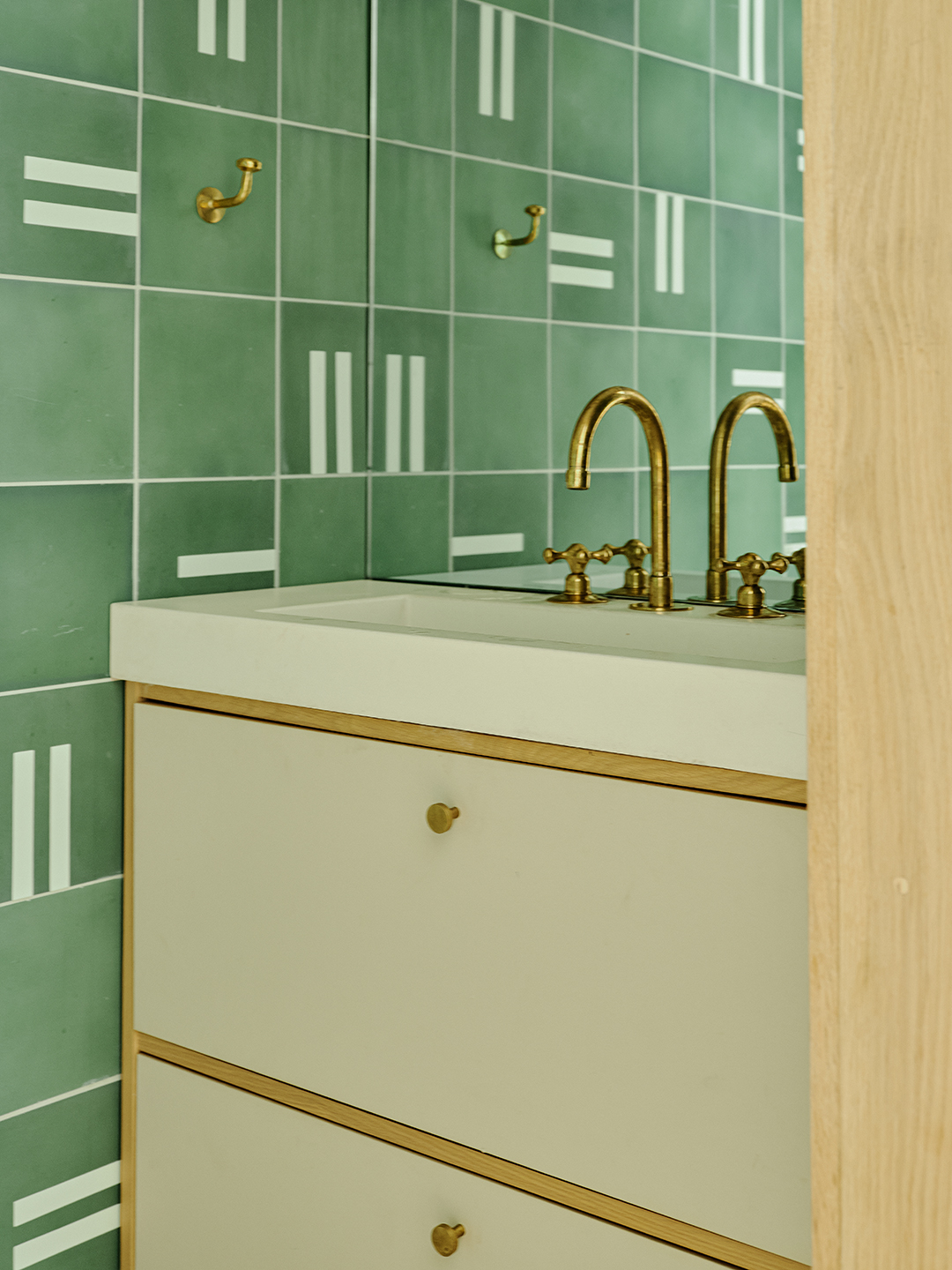
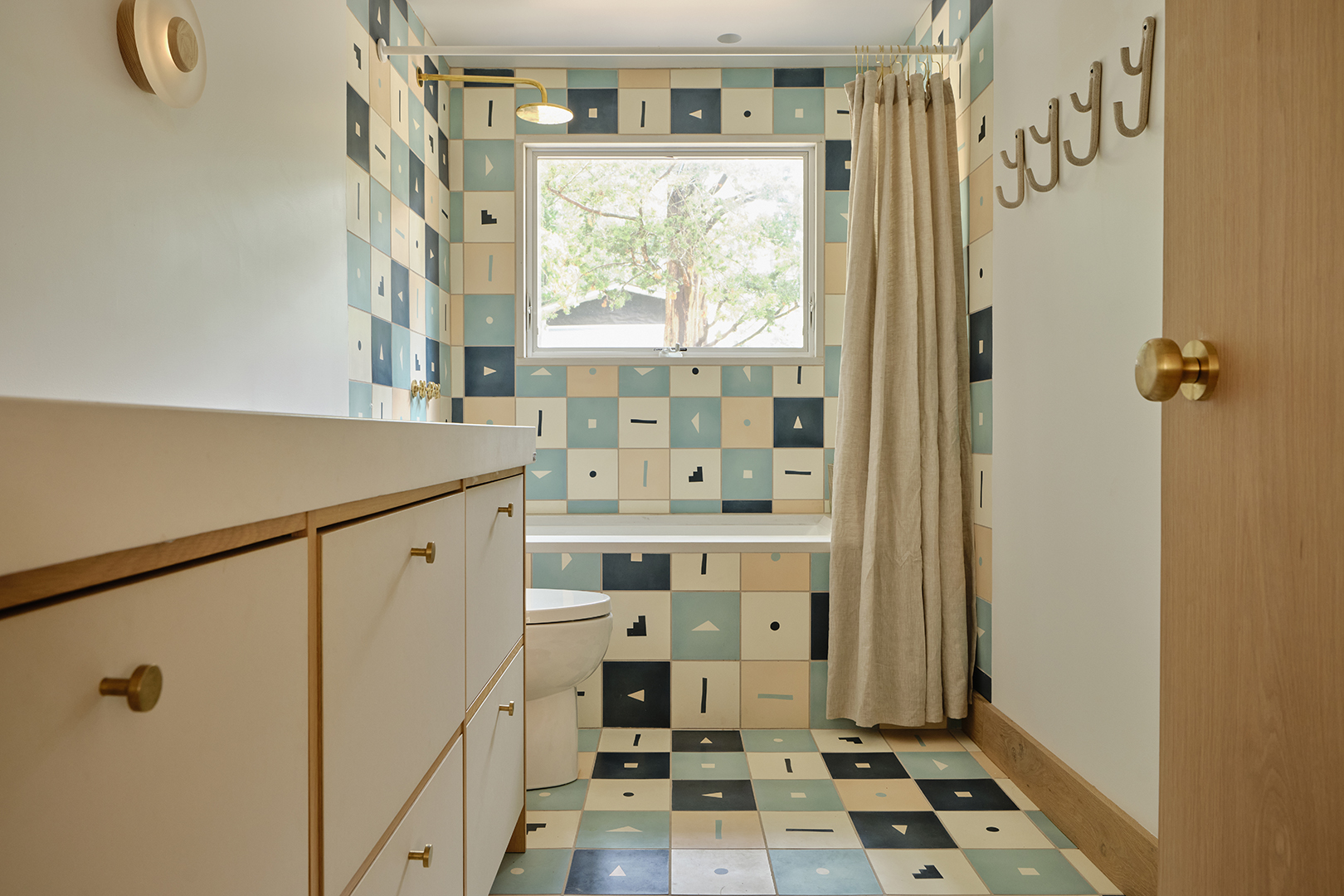
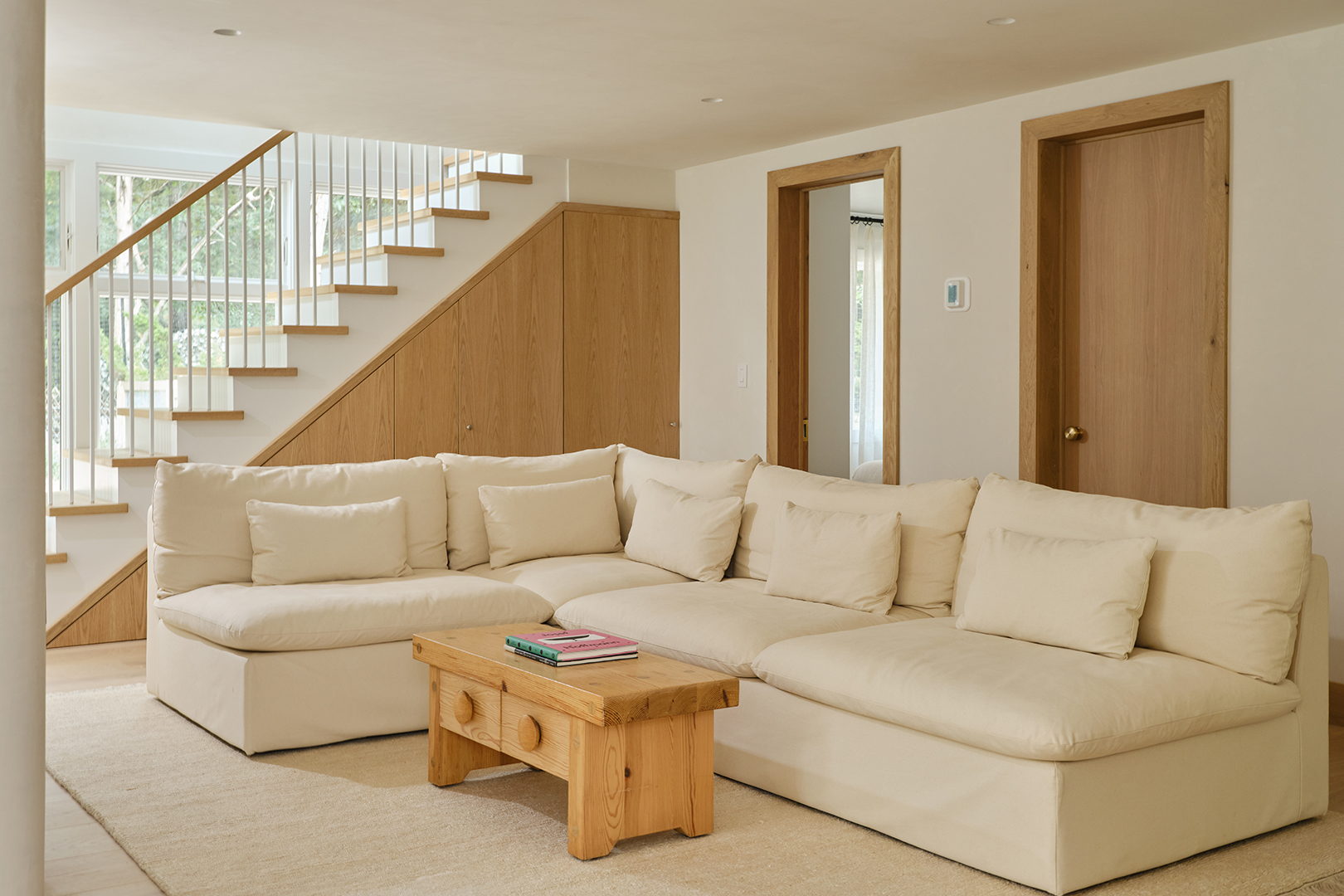
In the great room, they took out an X-shaped brick wall—delineating a fireplace, den, tiny kitchen, and a wedge of a bathroom—to make way for a single curvaceous pillar that does more than just give off warmth. Plumbing, ductwork, drainage, and electrical for solar panels secretly run through the structure, which has a stucco and plaster finish that melds seamlessly with the warm white walls. In the new kitchen and dining area, cast concrete countertops lend heft atop custom oak millwork and natural linoleum fronts. Color-blocked concrete tiles feature prominently in all the bathrooms, two out of three designs dreamed up by Hurley herself.
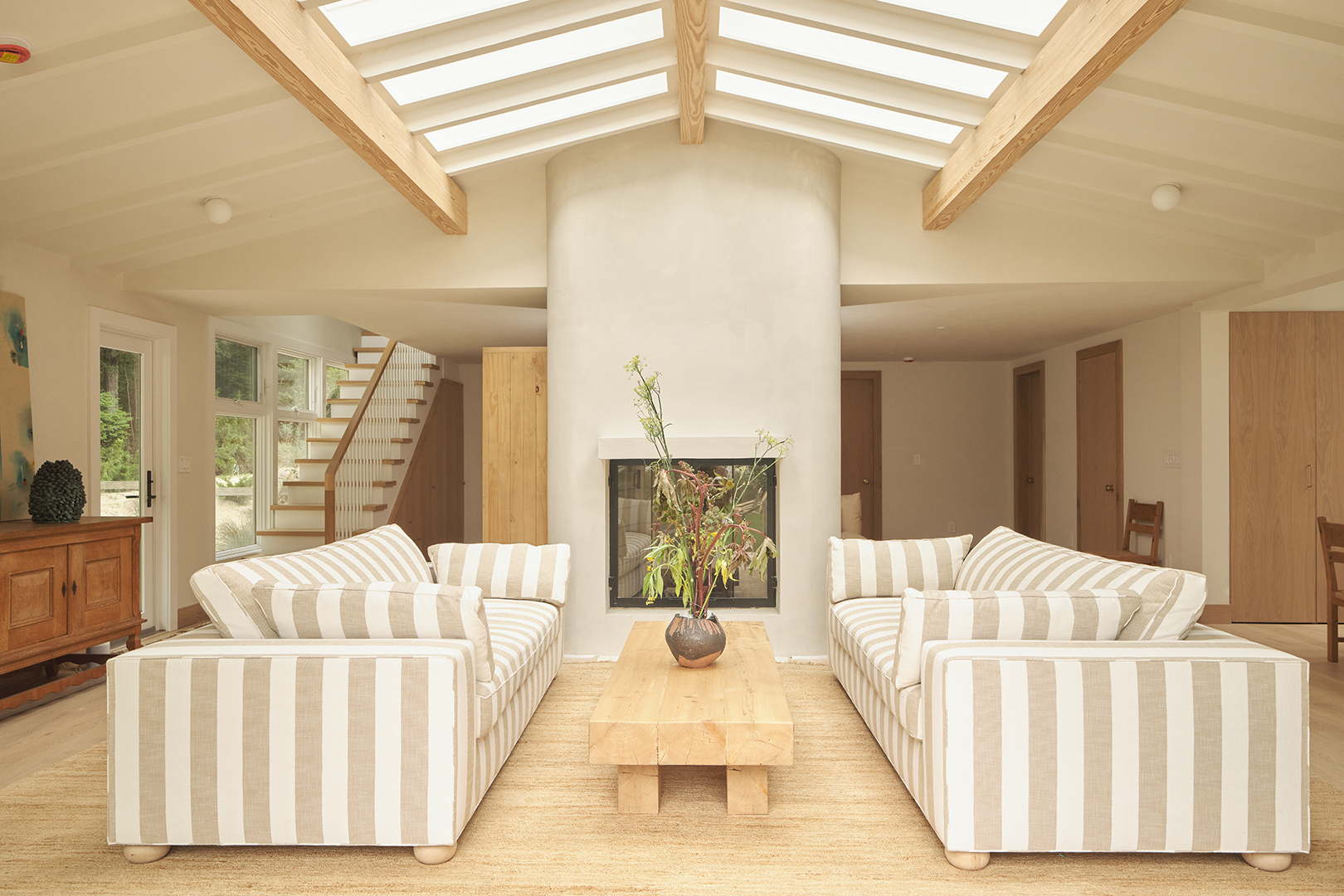
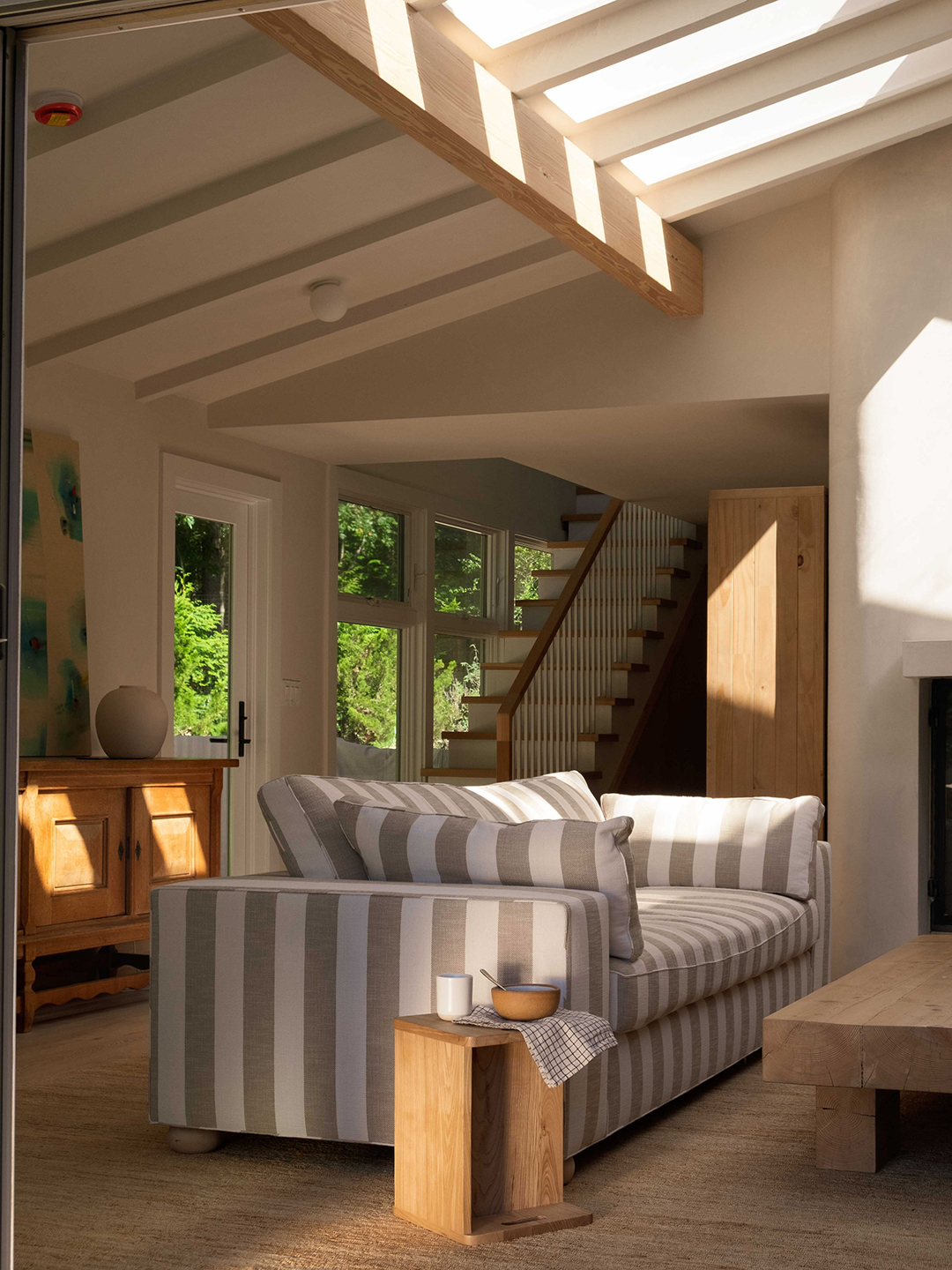
Hurley took the lead on the decorating while Yarinsky and his team sourced fixtures and manufacturers. “The colors I chose were meant to be a canvas for this light to be poured into,” she says. The artist recovered sofas and a lounge chair in her own textiles; sourced vintage fabric on Etsy for headboards and bed frames; and scoured Live Auctioneers and 1stDibs for a credenza near the entry, a coffee table in the family room, and the dining table and chairs. Of course, the project was not without challenges. The couple had to completely redo the basement, add a new septic system, and use expensive steel beams to support the addition. The fireplace was supposed to be wider, but became more compact in service to better flow.
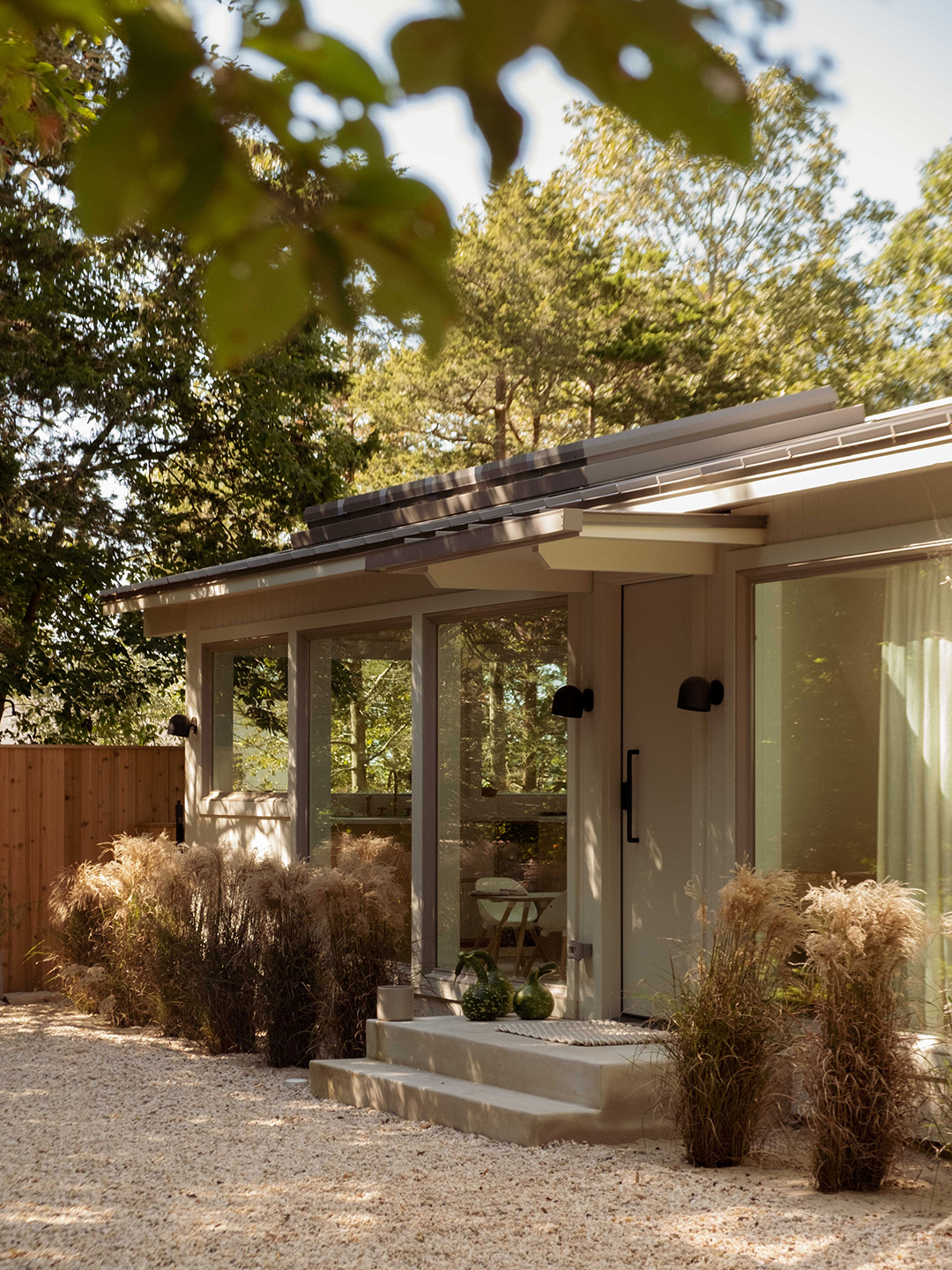
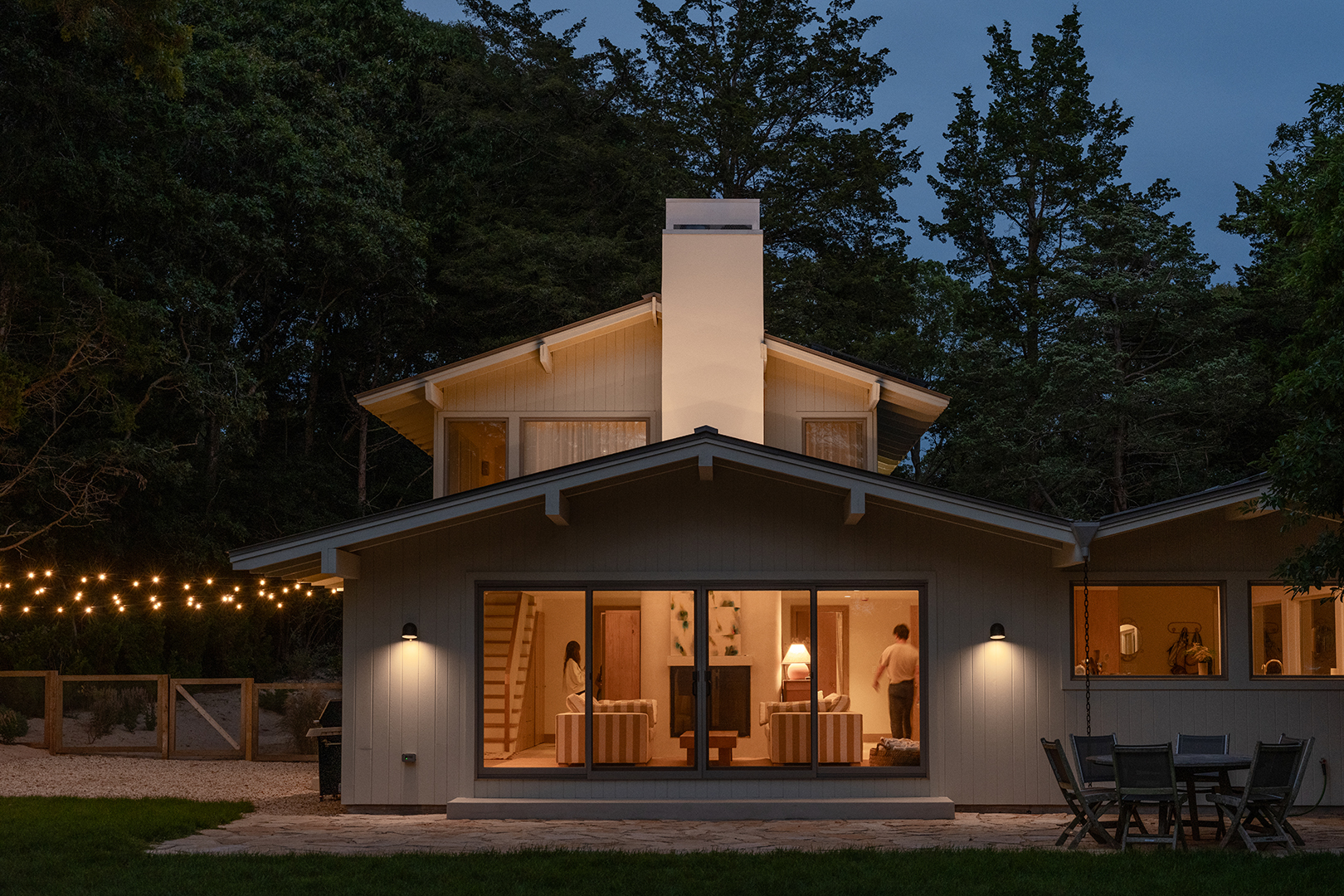
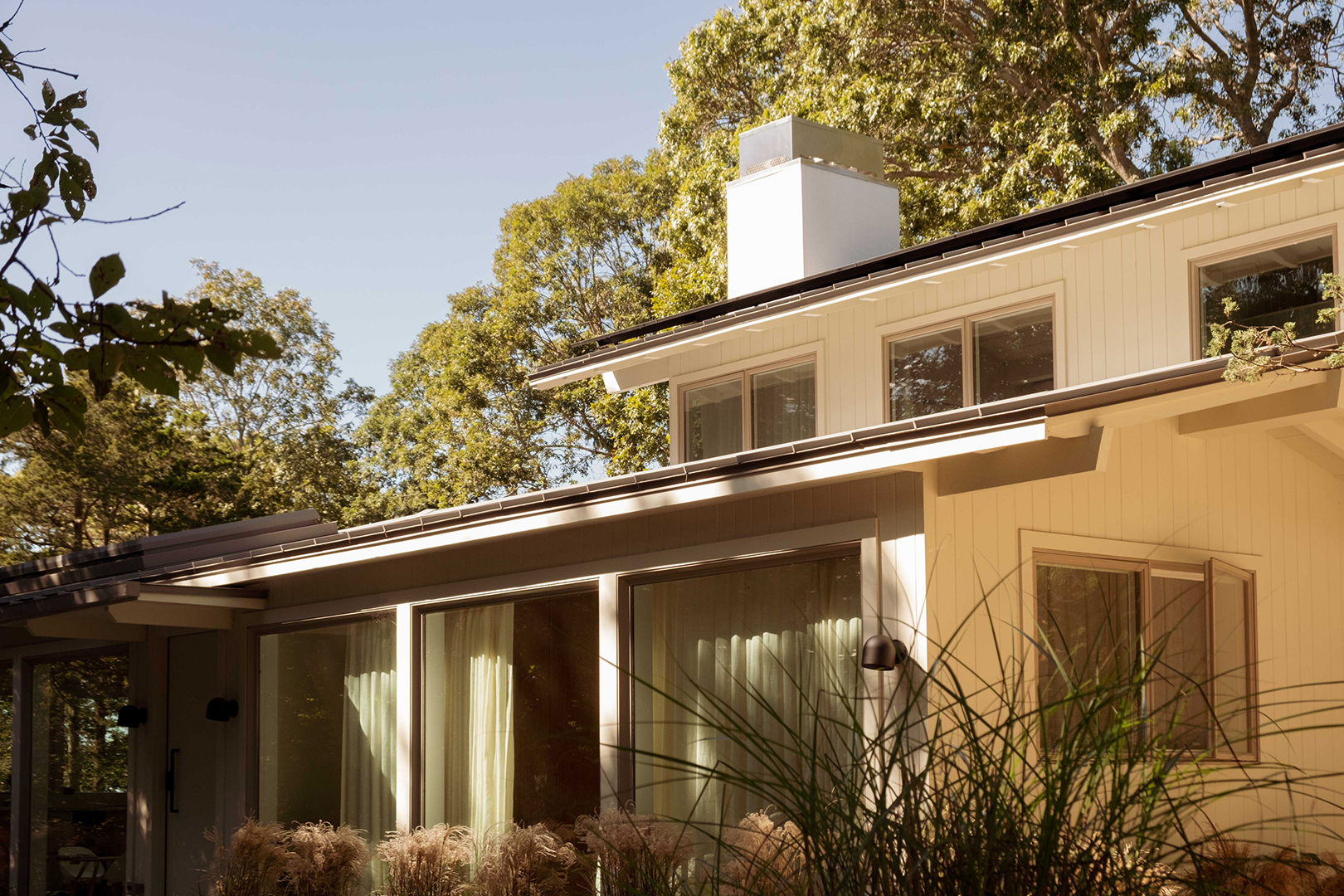
Outside, vertical wood siding and a new metal roof brought the exterior more in line with the region’s architectural vernacular. Before, there was no clear entrance to the home, so Yarinsky set about creating a deliberate garden path to the front door. With its two-step stoop, canopy, and porch lights, there’s no mistaking the way in now.
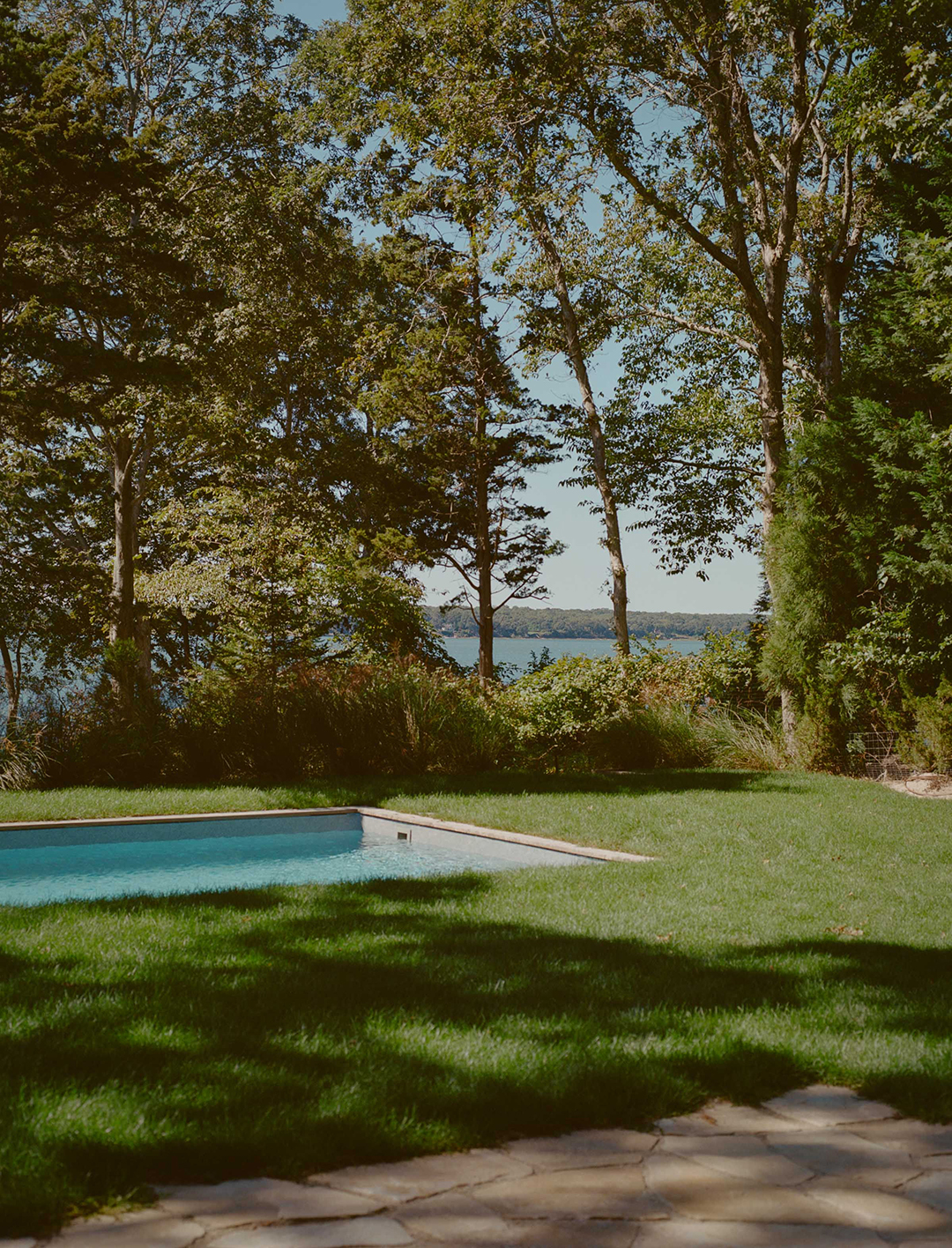
As for the landscaping, “Alex would go running in the dunes and he’d be like, ‘That’s what I want our house to feel like,’” Hurley recalls. They swapped boxy, formal hedges and potted plants for some of his native discoveries to complement the towering pines and rare monkey-puzzle tree already on the property. A bluestone patio stretches out toward a grassy patch and swimming pool—where long summer afternoons are spent—that looks out onto the bay.
After two decades of living in New York City under their belt, this has been an intentionally slower chapter for the family. “We were not planning to move out here full time, but I am so happy that we did,” Hurley says, noting that she rents a small space for her creative practice nearby. “Being able to walk on the beach every day and then come to my studio and paint these beautiful colors—it just feels really more aligned with what my authentic soul wants.” That, plus the sublime light.
Get the Look