We may earn revenue from the products available on this page and participate in affiliate programs.
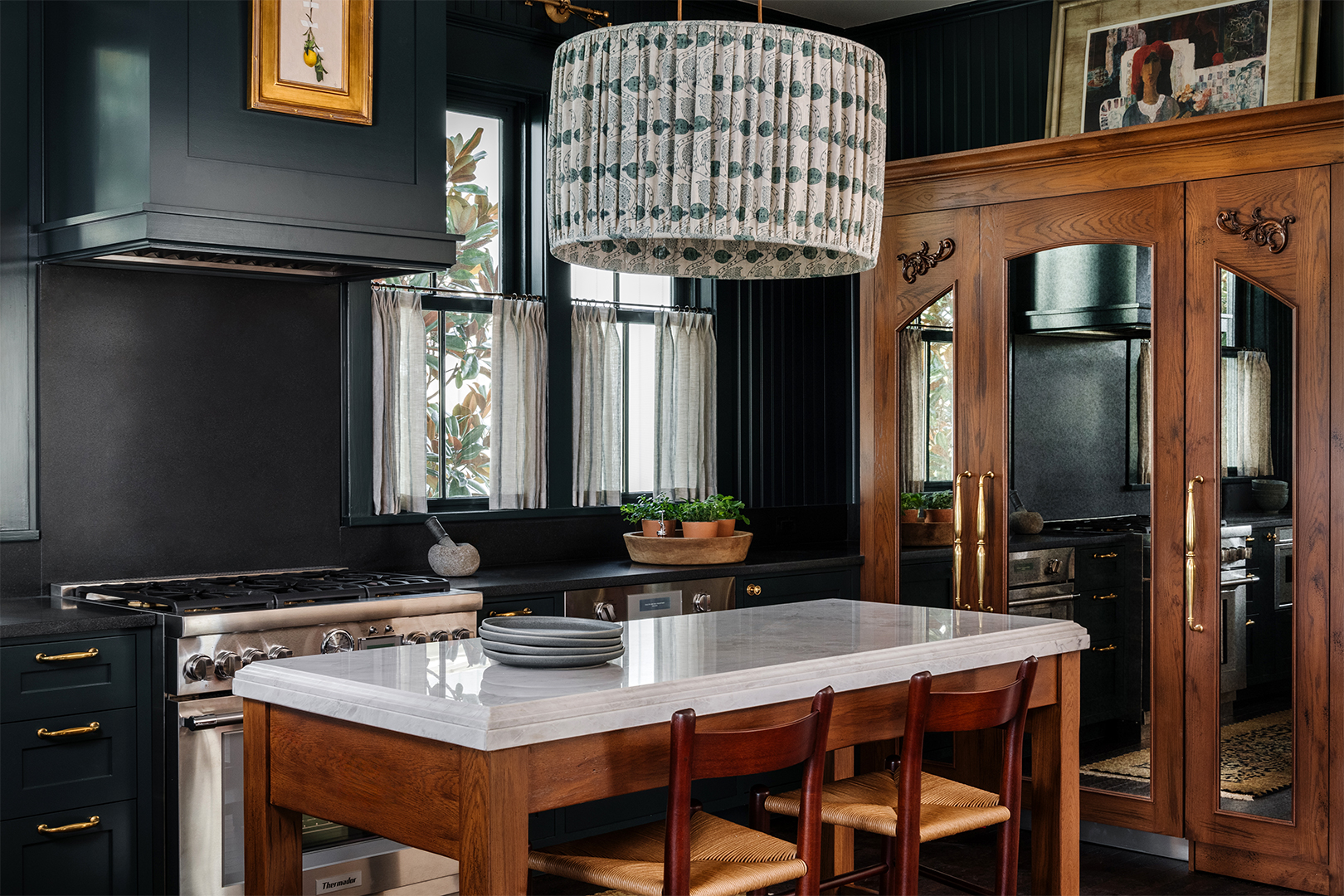
When a couple relocated from London to Amelia Island, Florida, after living abroad for 10 years, they settled near a scrubby marsh reserve to build a two-story home that captured the low-country coastal design of the late 1800s. The clients reached out to Troy Spurlin Interiors to set the tone with elements found in the Cotswolds that also nod to the Southern aesthetic.
The wife, a poet, wanted a specific vibe for the house and encouraged whimsical design. “She thinks very romantically about things,” says interior designer Troy Spurlin. Taking a page out of European kitchens that embraced the architecture of separate rooms—as opposed to an open plan—the clients were drawn to DeVOL Kitchens for its collected feel. The goal was to cultivate warmth through sundry textures and classic elements, while incorporating the comforts of modern living.
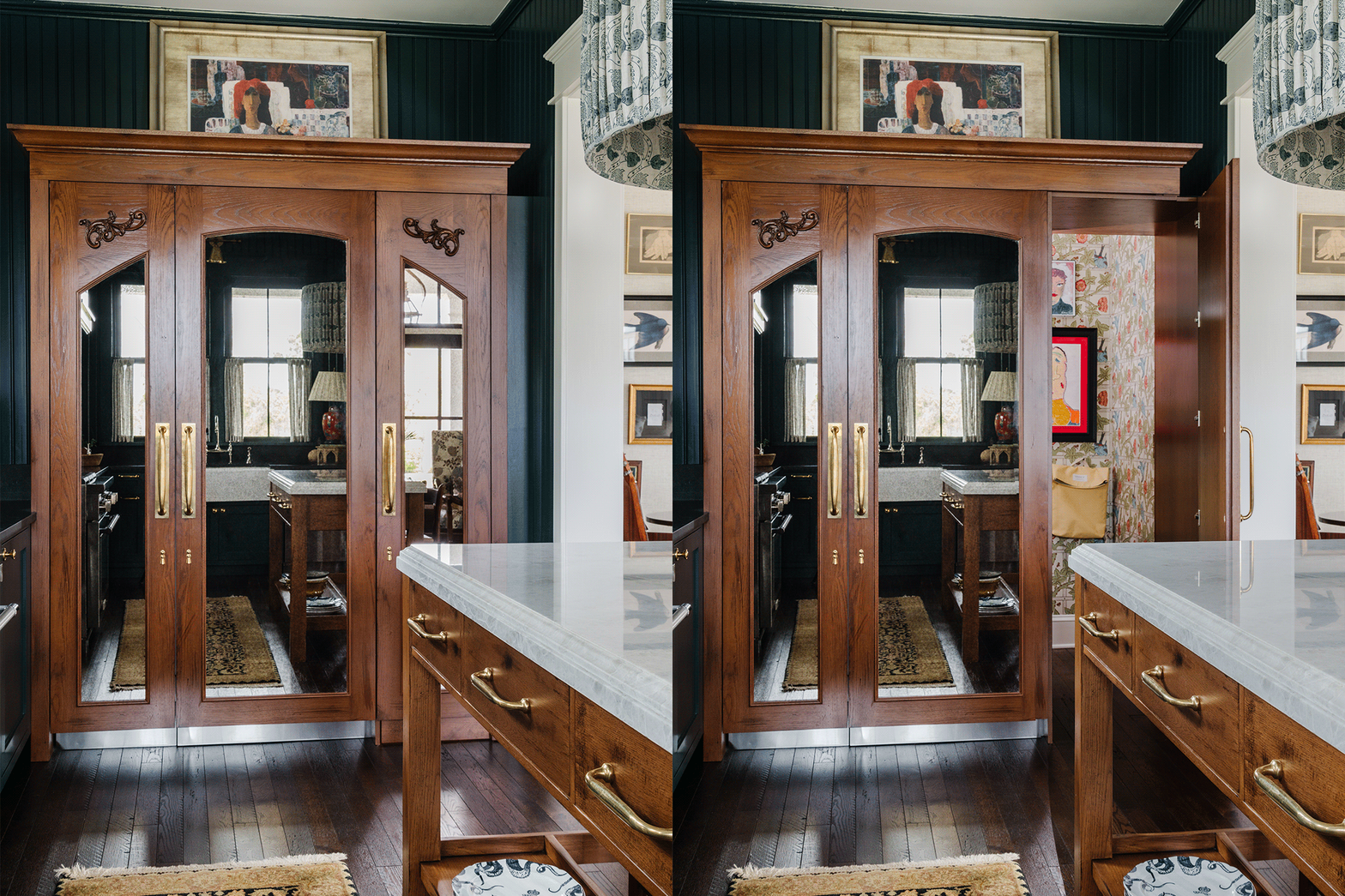
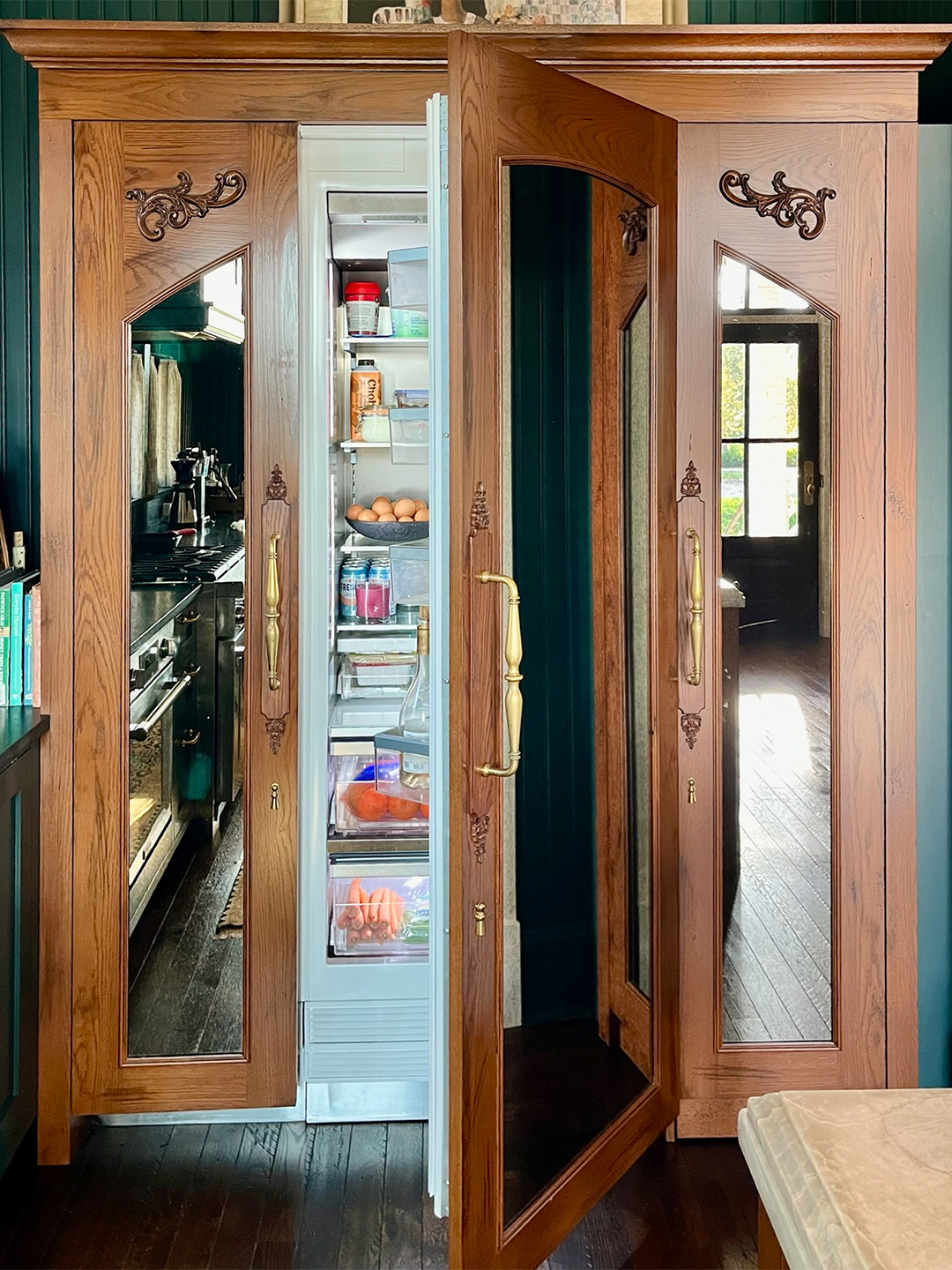
Challenged by the parameters of necessary contemporary appliances, an idea was formulated to place the fridge within a cabinet design that encompassed a hidden passageway to the pantry—that’s where the three doors came into play. Contrasting with the flat front cabinets, the armoire would be the extravagant piece of the room. “It really became our compass,” says Spurlin.
The intent was to create the look of an antique English cottage kitchen of the time when people had furniture-type pieces like food safes, which were used to store and refrigerate food. “Icebox proportions are minuscule. We began to think, if we were building a cupboard for this room, what might that have looked like in the 1920s,” says creative director Alex Gebicke. “Is it possible that within this imaginary storyline we repurposed an armoire for the storage of food?”
Not only did the team want to hide the Sub-Zero refrigeration system, but accessing the “weird, funky gap” to the hidden pantry was tricky. “It was difficult to take our conception of this piece of furniture from what appeared on paper to an installation that incorporated a hallway to a pantry in addition to accommodating a refrigerator and freezer columns,” explains Gebicke. “We wanted the armoire to look completely furniture-like, so it took a lot of on-site measuring, CAD redraws, and careful selection of trims, moldings, and hardware.”
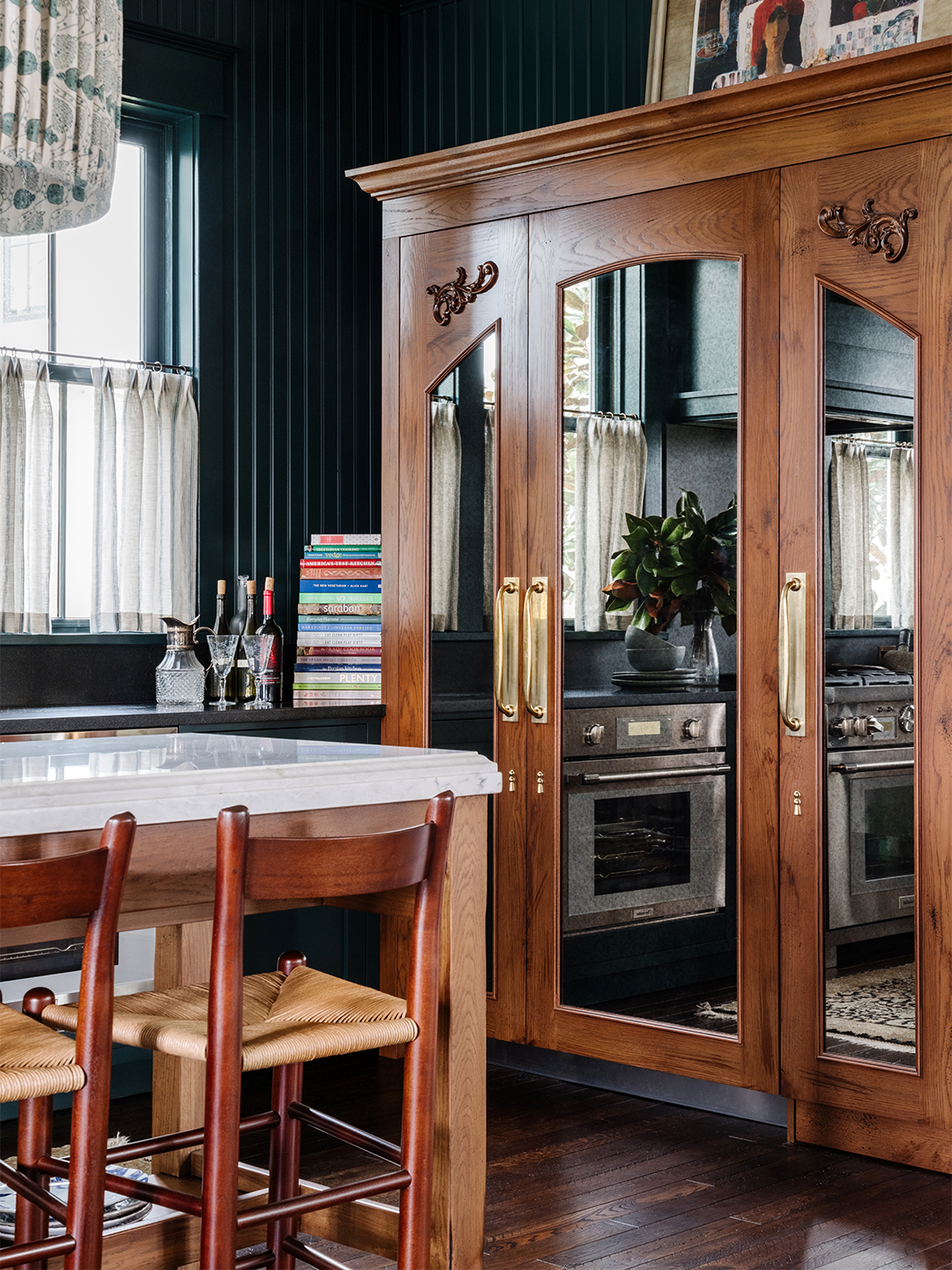
The team did their homework by scouring images of vintage armoires, playing around with carved moulding appliques from Van Dyke’s Restorers, and custom hardware from Classic Brass—all in an effort to make the piece as historically accurate as possible. “It is straight out of The Lion, the Witch and the Wardrobe—complete with antique mirrors and keyholes,” adds project photographer Polina Pigulevsky.
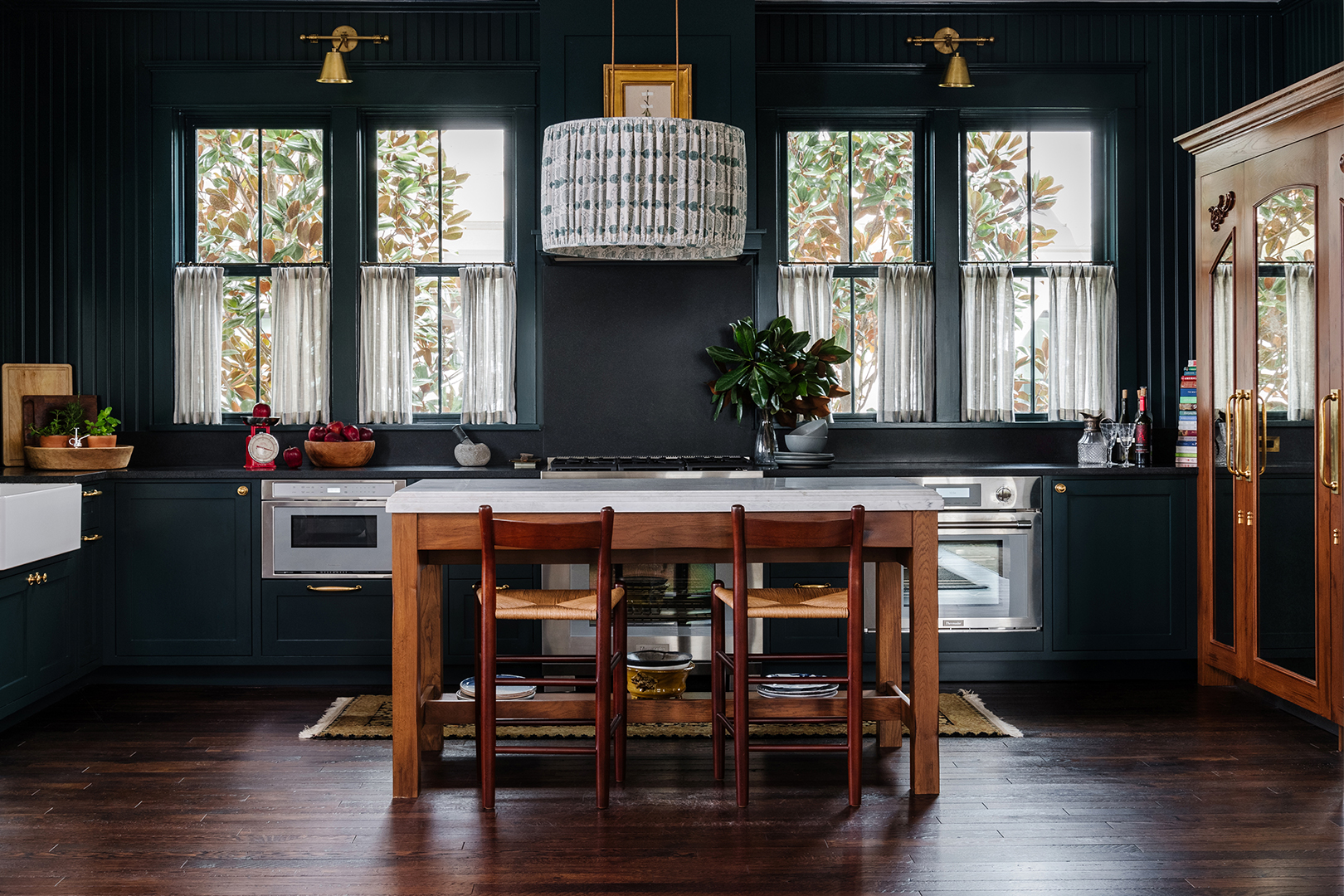
A local furniture maker worked out the math puzzles to create a custom surround of stained oak panels that complemented the custom island with Calacatta Gold marble and the adjustable pendant, harkening to cottage style. The golden hue of the natural wood warmed up the deep, almost blackish green, Benjamin Moore Salamander paint on the walls and beadboard.
It was all part of a narrative to give the kitchen a nostalgic feel. The clients wanted no modern convenience, not even the red kitchen scale has a cord or buttons. “They wanted to bring this historical feel, not only in the design aspect of it, but in the day-to-day use of the kitchen,” Spurlin says.
A new construction home doesn’t have to be predictable. Seeing the armoire in person, you’d never know that it is anything but a piece of furniture. “Friends are always shocked that this American oak armoire conceals a series of clever surprises that add a touch of whimsy to this very European and elegant space.”