
We may earn revenue from the products available on this page and participate in affiliate programs.
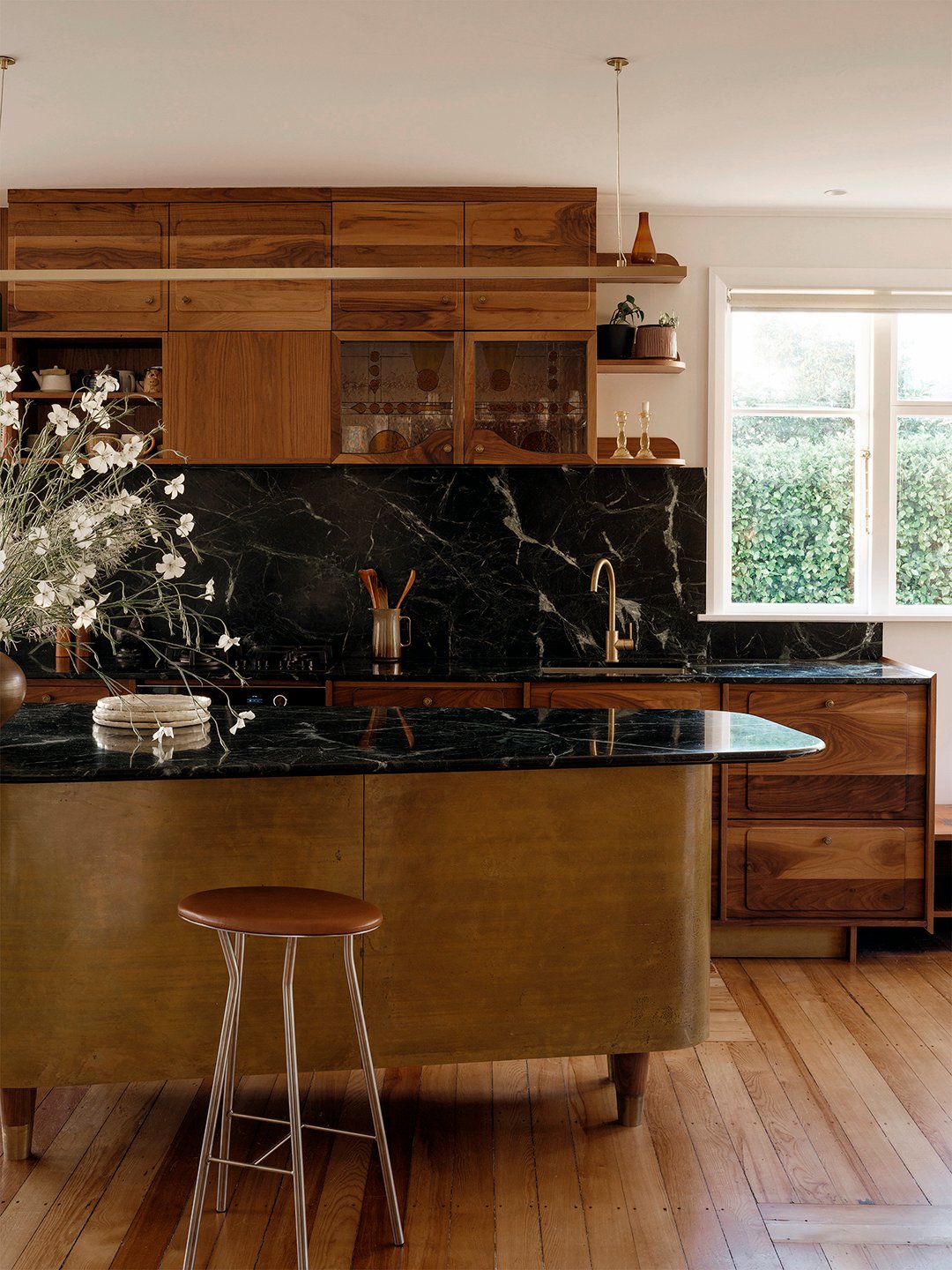
One reason Raimana Jones is really good at designing kitchens? She thinks like a chef. Except instead of produce and herbs, the Atelier Jones founder’s ingredients are wood, stone, and metal. “Like any successful dish, it’s about aiming for a balance of flavors and textures,” says Jones, “as opposed to being bland and overly saturated.” Jones’s recipe for this New Zealand duplex’s kitchen: a wall of brass cabinets aged with vinegar and salt; green marble from ceiling to countertop; and a central island shaped into a smooth curve.
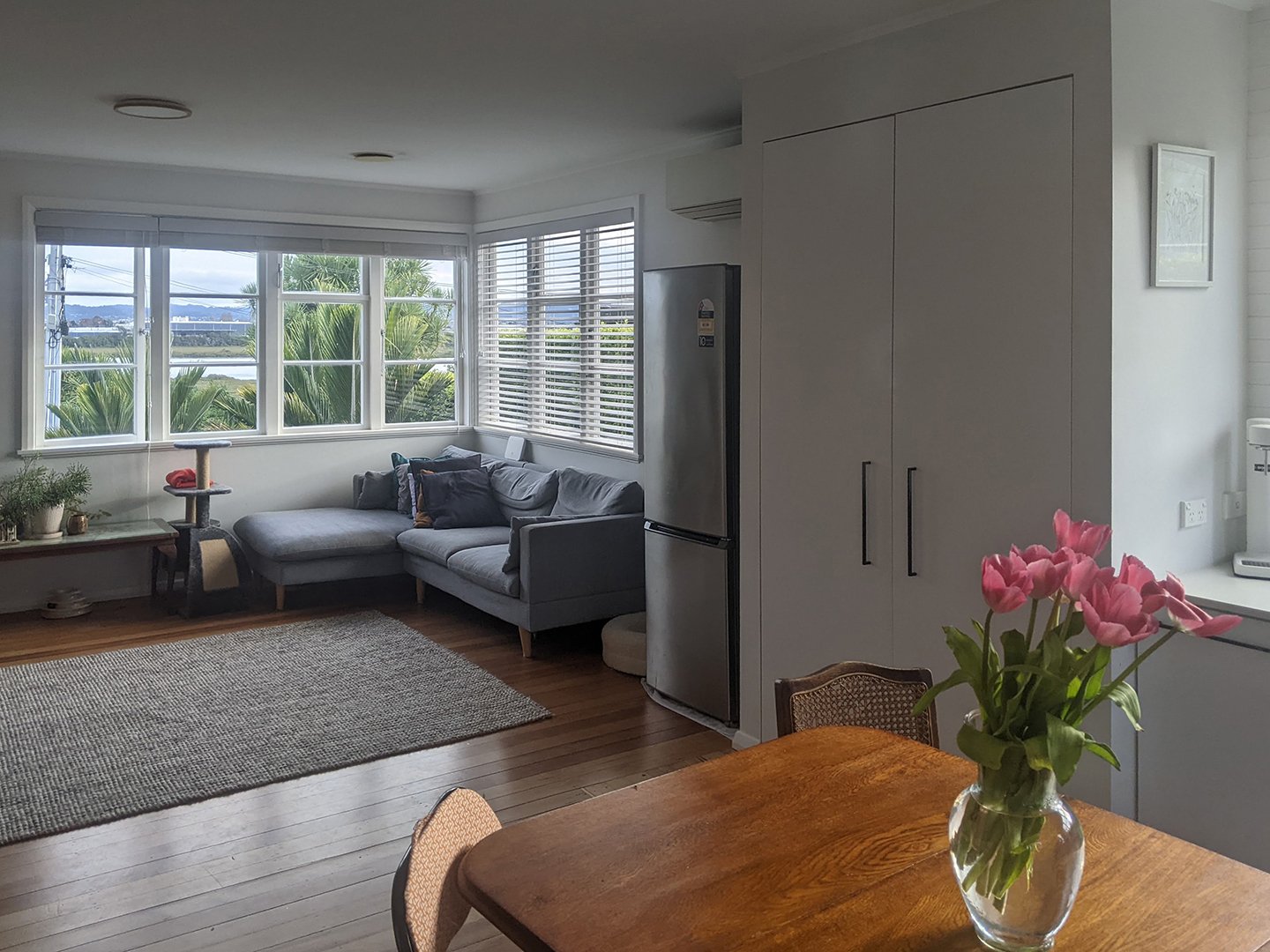
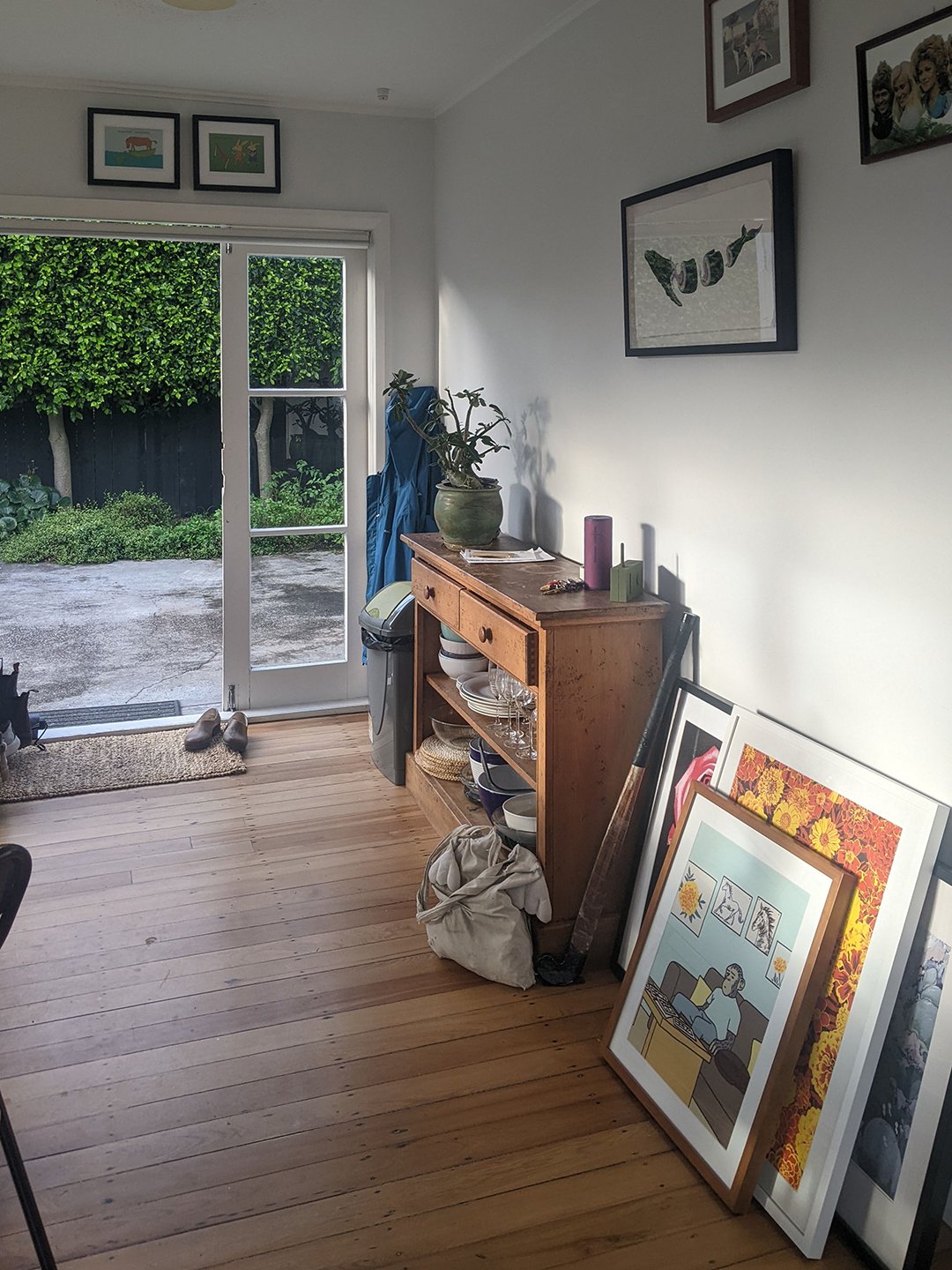
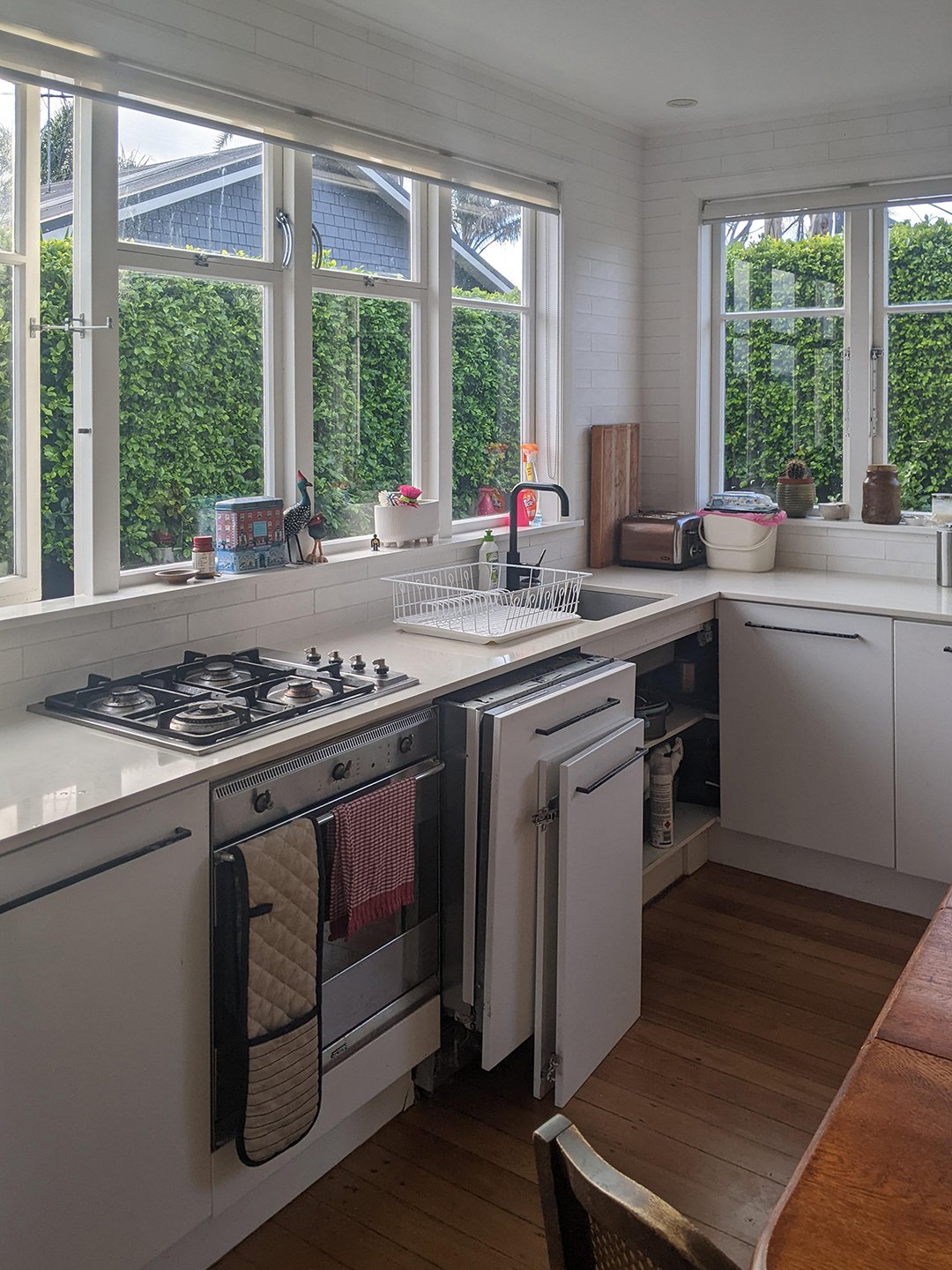
When Jones’s clients, a creative 30-something couple, bought the place, “it was practically falling apart,” she recalls. The storage was poorly planned with the laundry machines dominating the layout, and the stove wasn’t even compliant (it faced a window). Yet the designer saw potential in northwest-facing windows that filled the space with afternoon light and a old, solid wood door that connected the kitchen to the rest of the home.
Although Jones kept her updates to within the confines of the room, practically everything else changed. She pulled out the bulky cabinetry, shifted the primary cooking zone to be closer to the living area, added a central island, and incorporated a dining booth—and that’s just a taste.
The Doors Inspired by More Doors
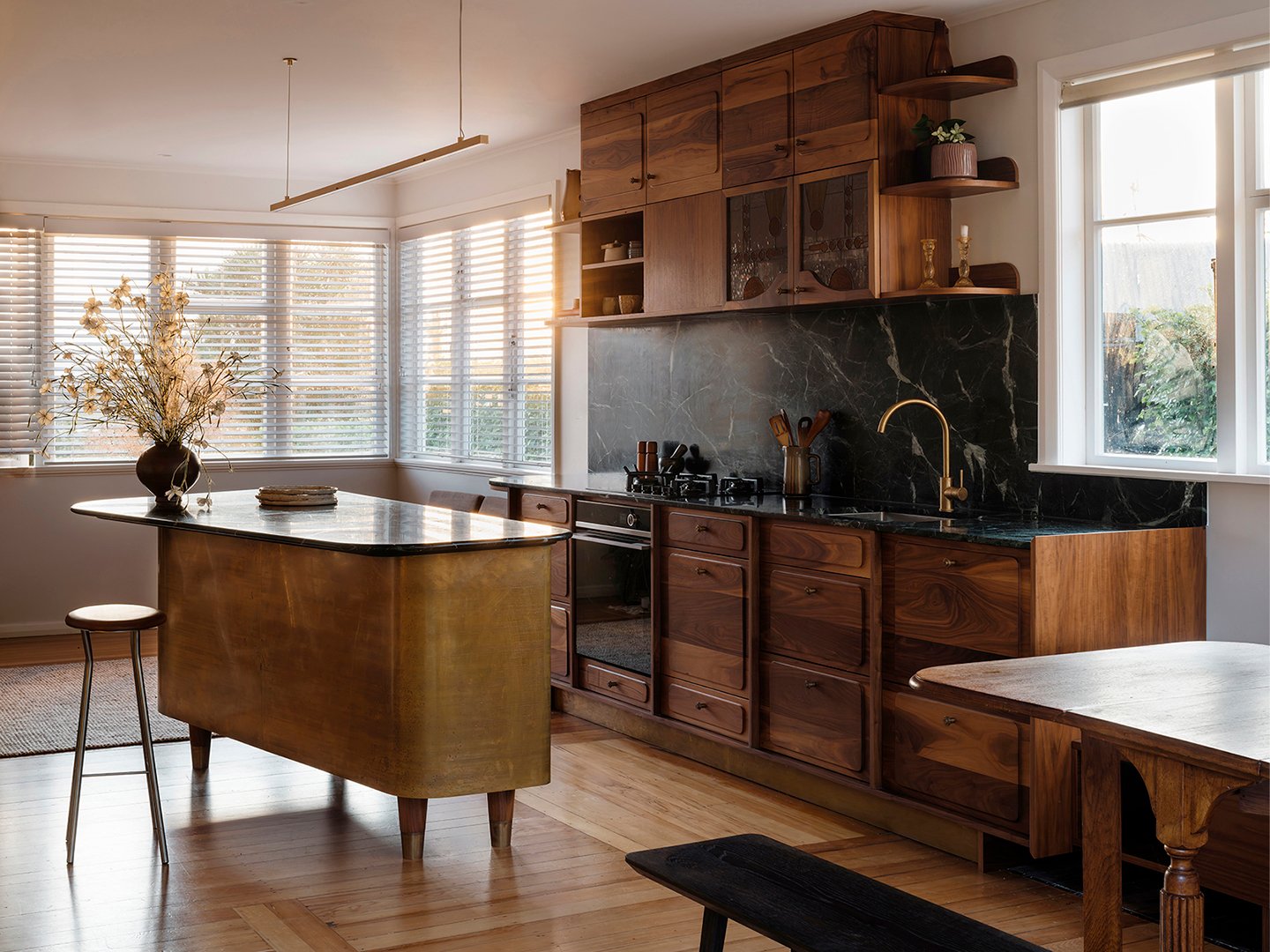
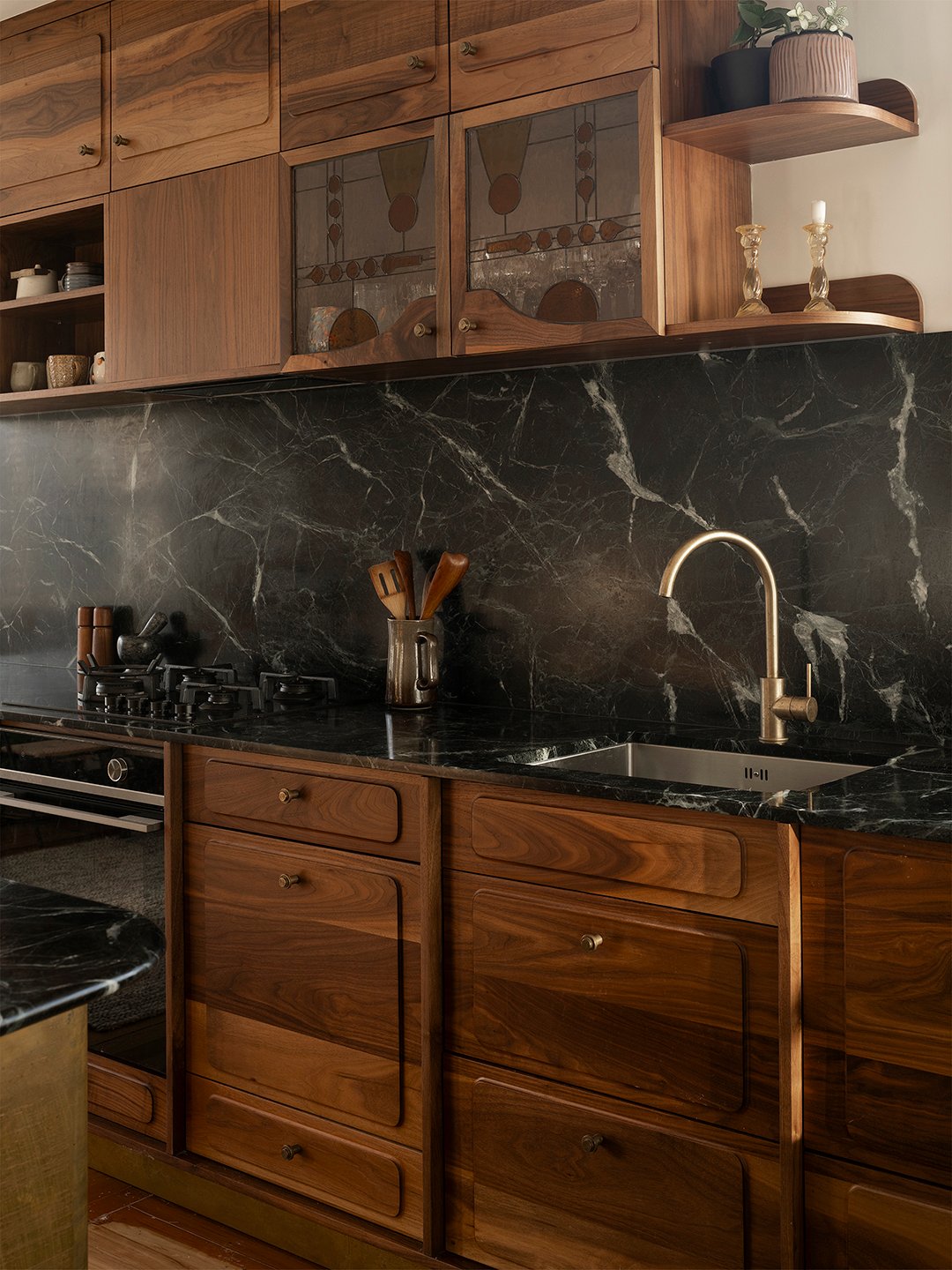
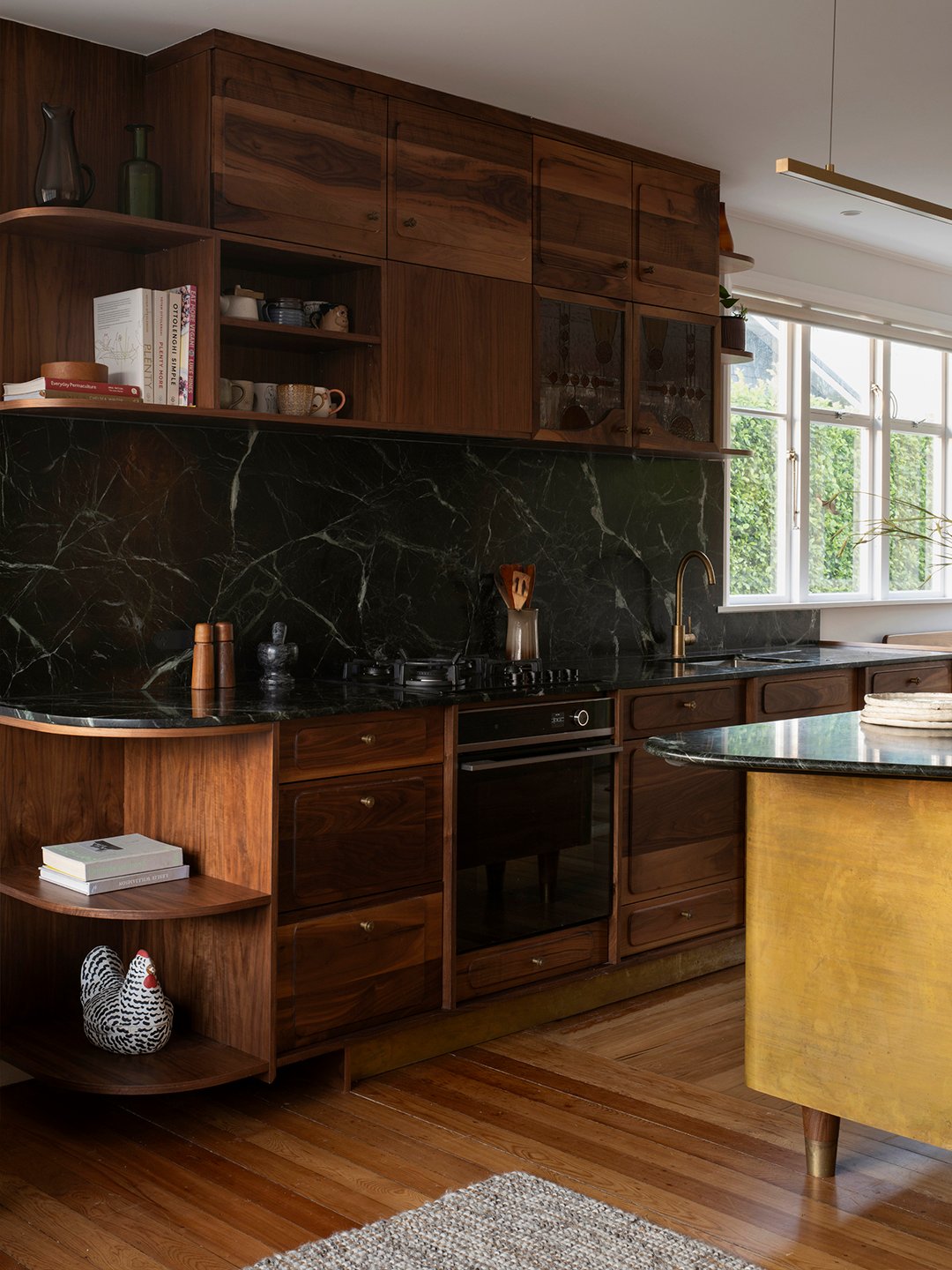
The walnut cabinetry in the cooking area features a series of funky raised profiles sparked by none other than more doors. They mimic the home’s original solid wood ones, just inverted. The playful result reminds Jones of the work of Italian design icon Gio Ponti. “It feels decadent and tactile, adding architectural interest without feeling overly loud,” she says .
The Drawer Inside a Drawer
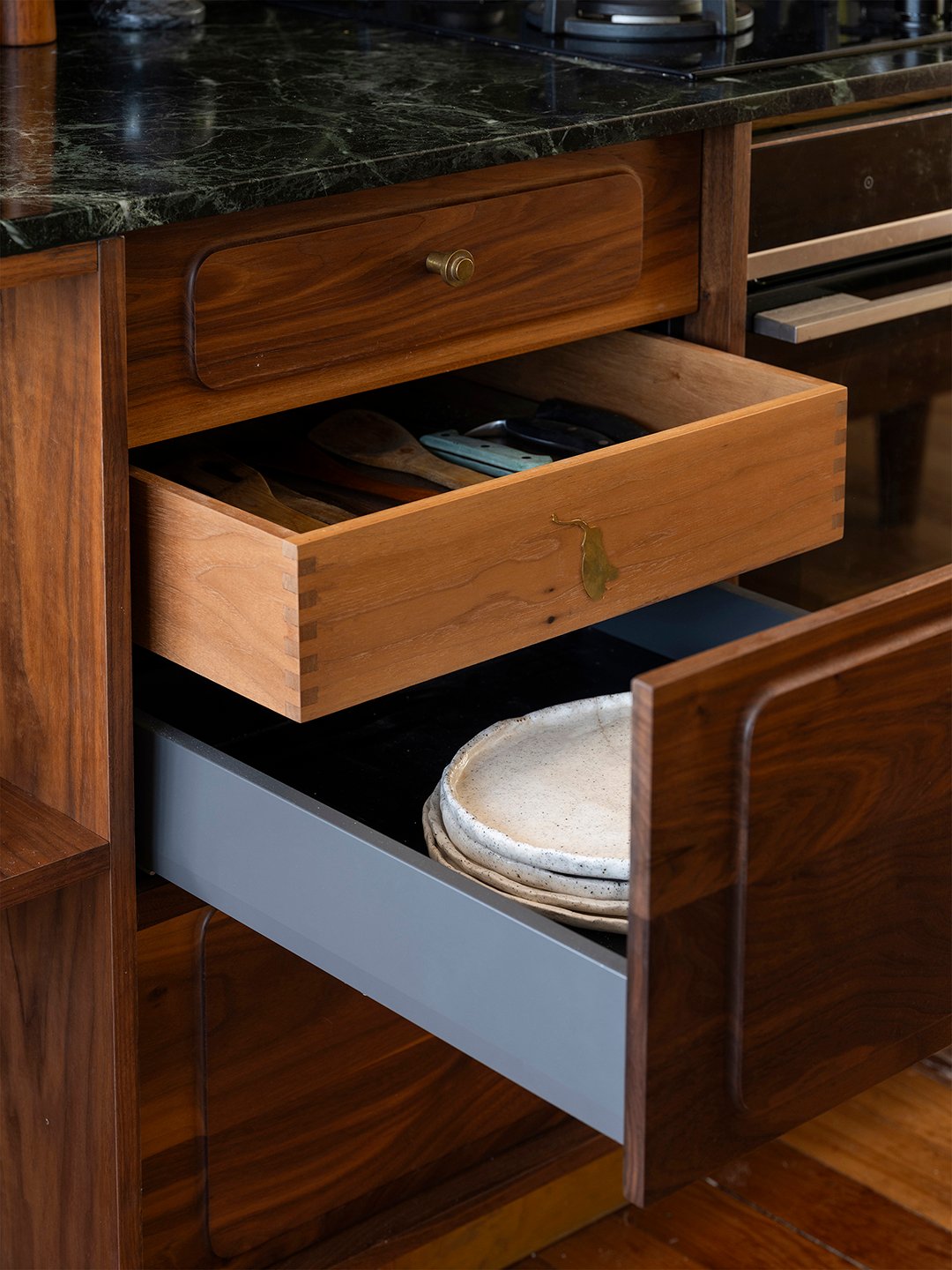
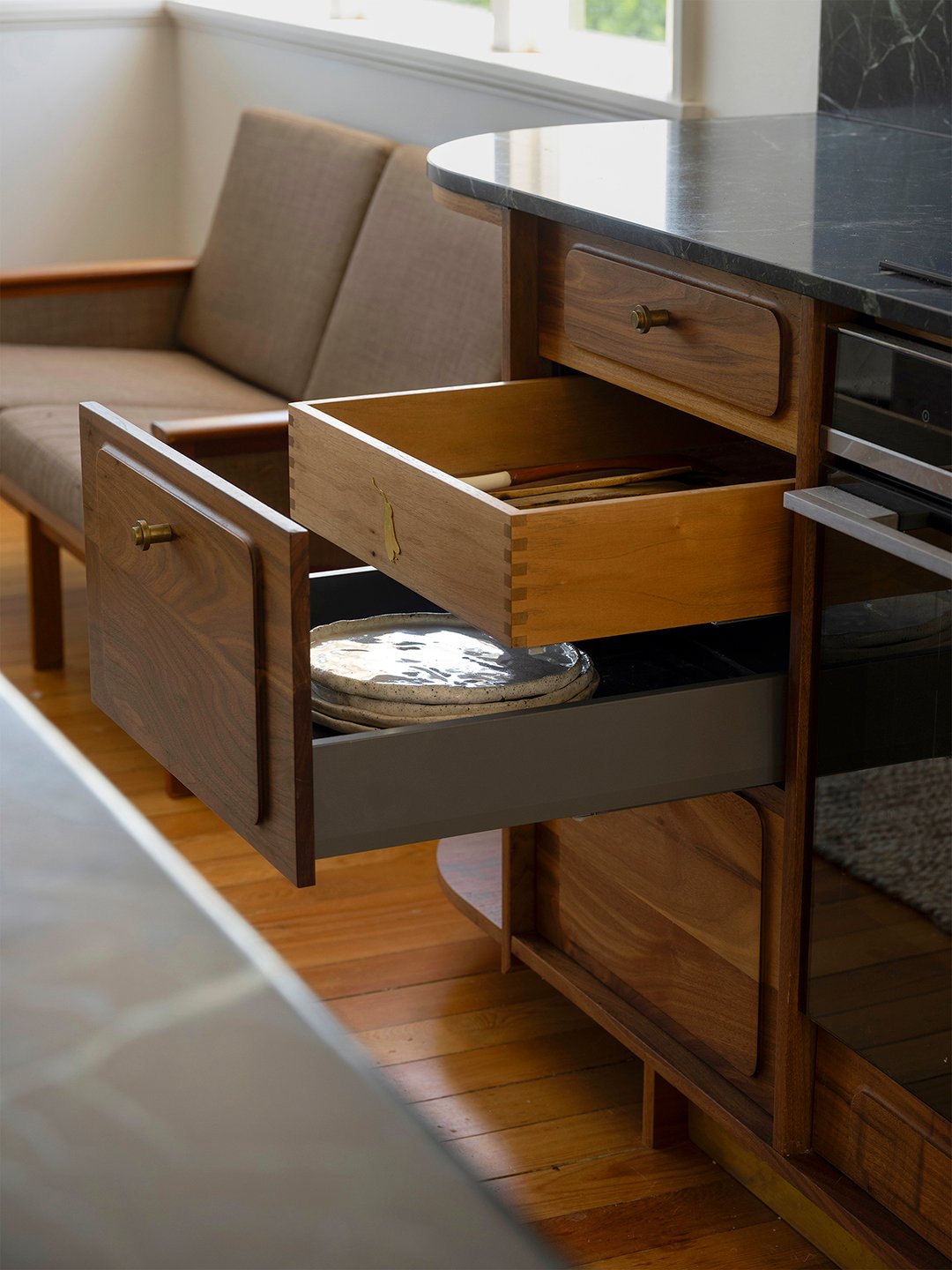
Another meta moment: Open one of the kitchen drawers and you’ll find another nested inside. Cherished cooking tools, like a handmade knife, needed a dedicated home—and why not make it a secret one? “We detailed it with exposed finger joints so that opening the drawer feels like uncovering a delightful surprise,” shares Jones.
The Team Mascot
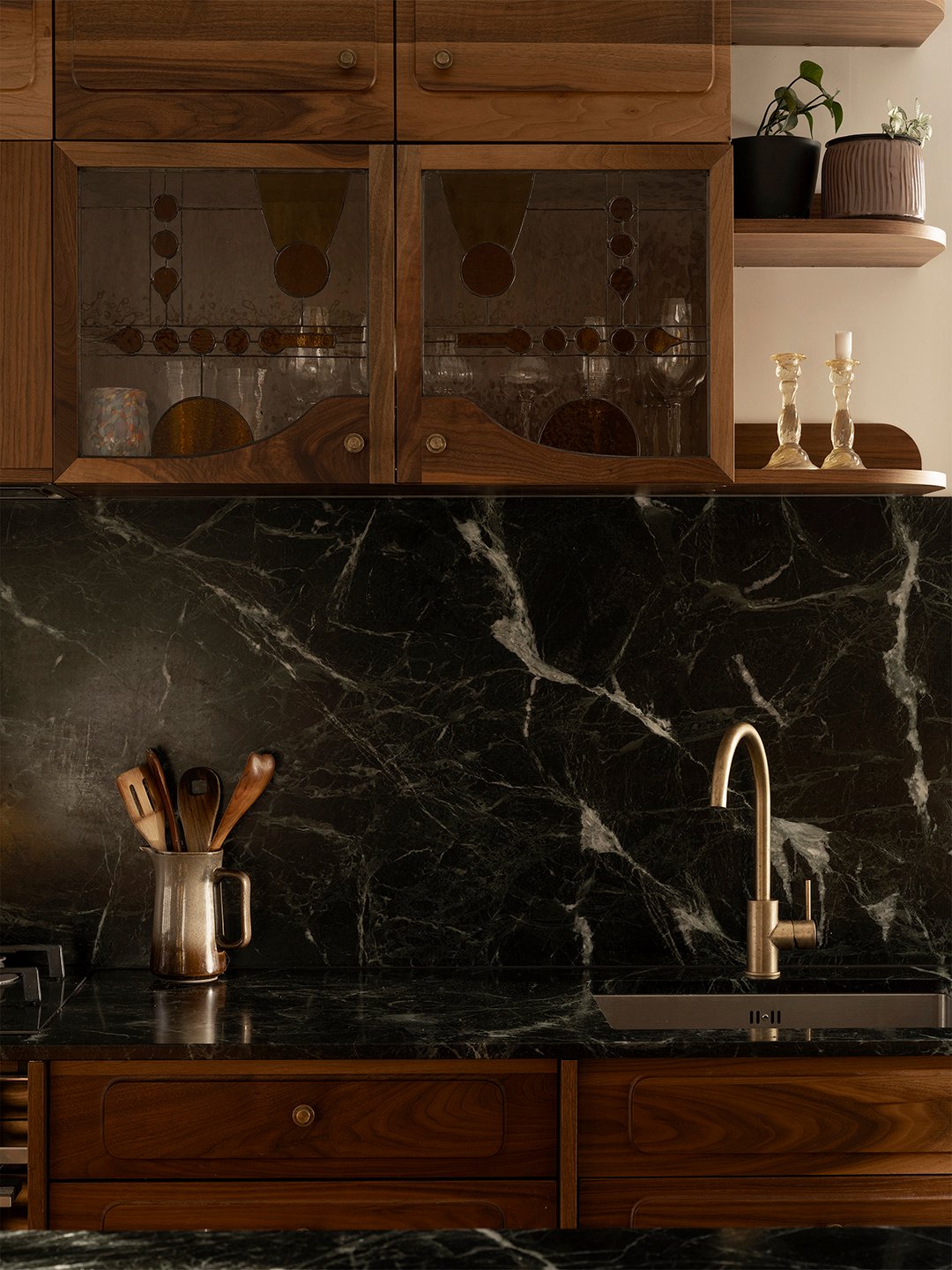
Similar to how architect Charles Rennie Mackintosh used the stylized rose throughout Scotland’s famous Hill House, Jones envisioned a recurring motif in the kitchen as a subtle nod to New Zealand. They landed on the Kōwhai tree, known for its vibrant yellow springtime blooms and distinctive seedpods. An inlaid small brass blossom appears on the face of the hidden drawer, while the glass panels on the upper cabinets feature a more abstract take on the seedpod and flower.
The Seasoned Brass
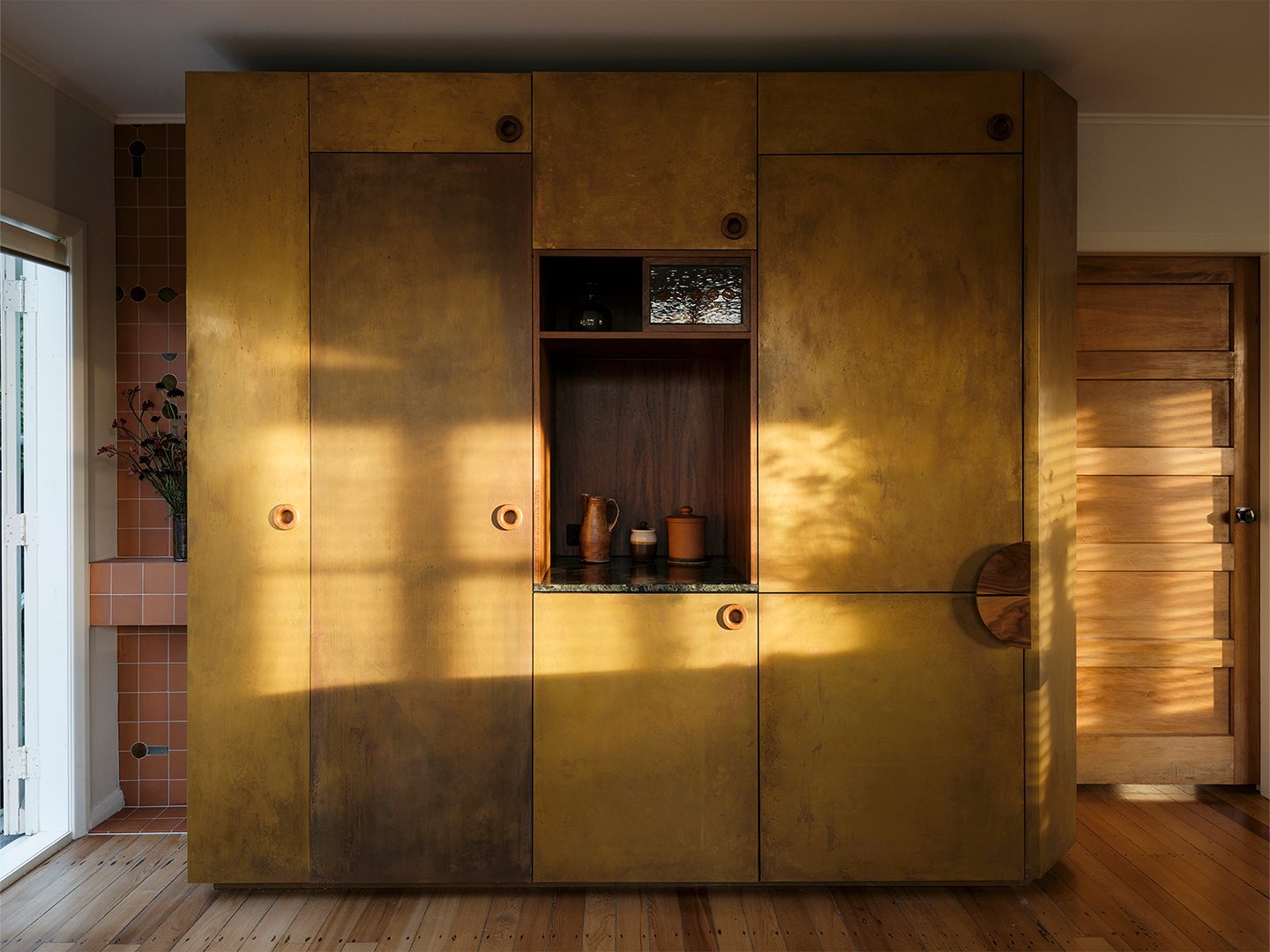
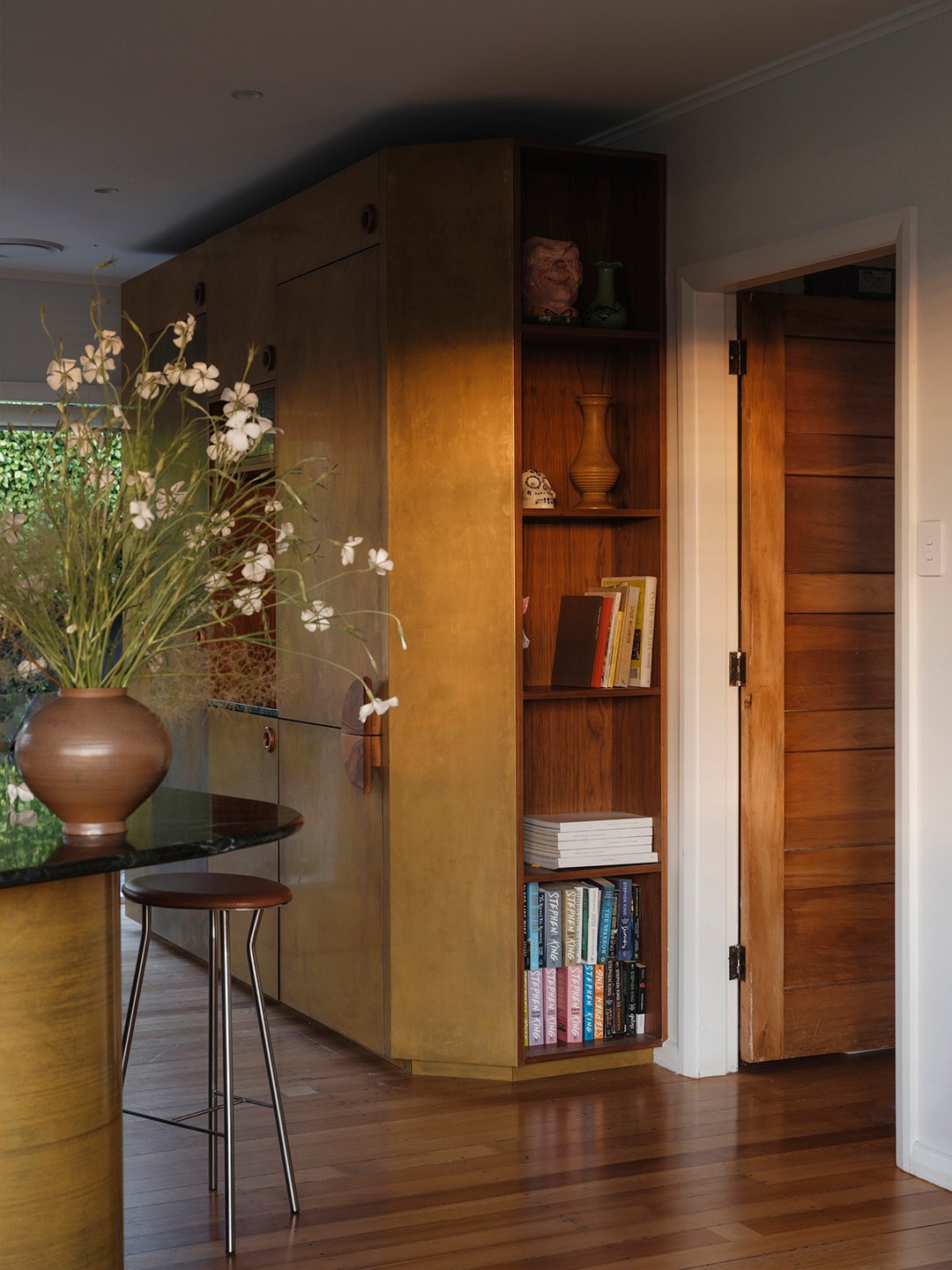
There was still the issue of the many appliances that had previously overwhelmed the layout. Jones set out to conceal them all in floor-to-ceiling cabinetry on the opposite side of the kitchen. But rather than wood, she had the unit made of brass—and not just any brass. Off-the-shelf antiqued metal can look artificial and overly uniform, notes the designer—the opposite of what she was going for. “We wanted something organic that looked as though it had aged with grace over decades,” she says. To achieve that, the team hand-patinated brass sheets themselves using a custom mix of vinegar and salt. It took multiple tests to nail the finish.
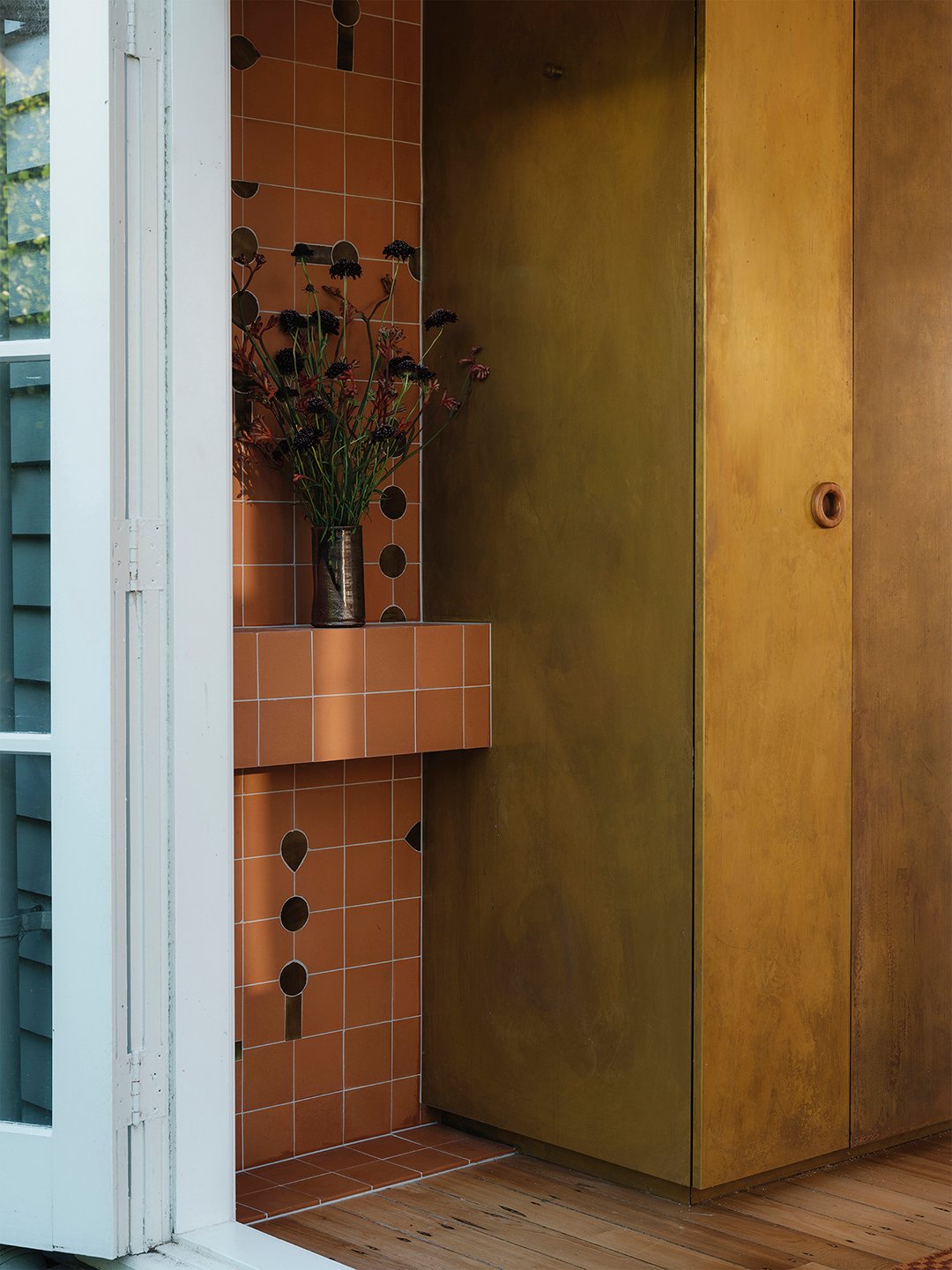
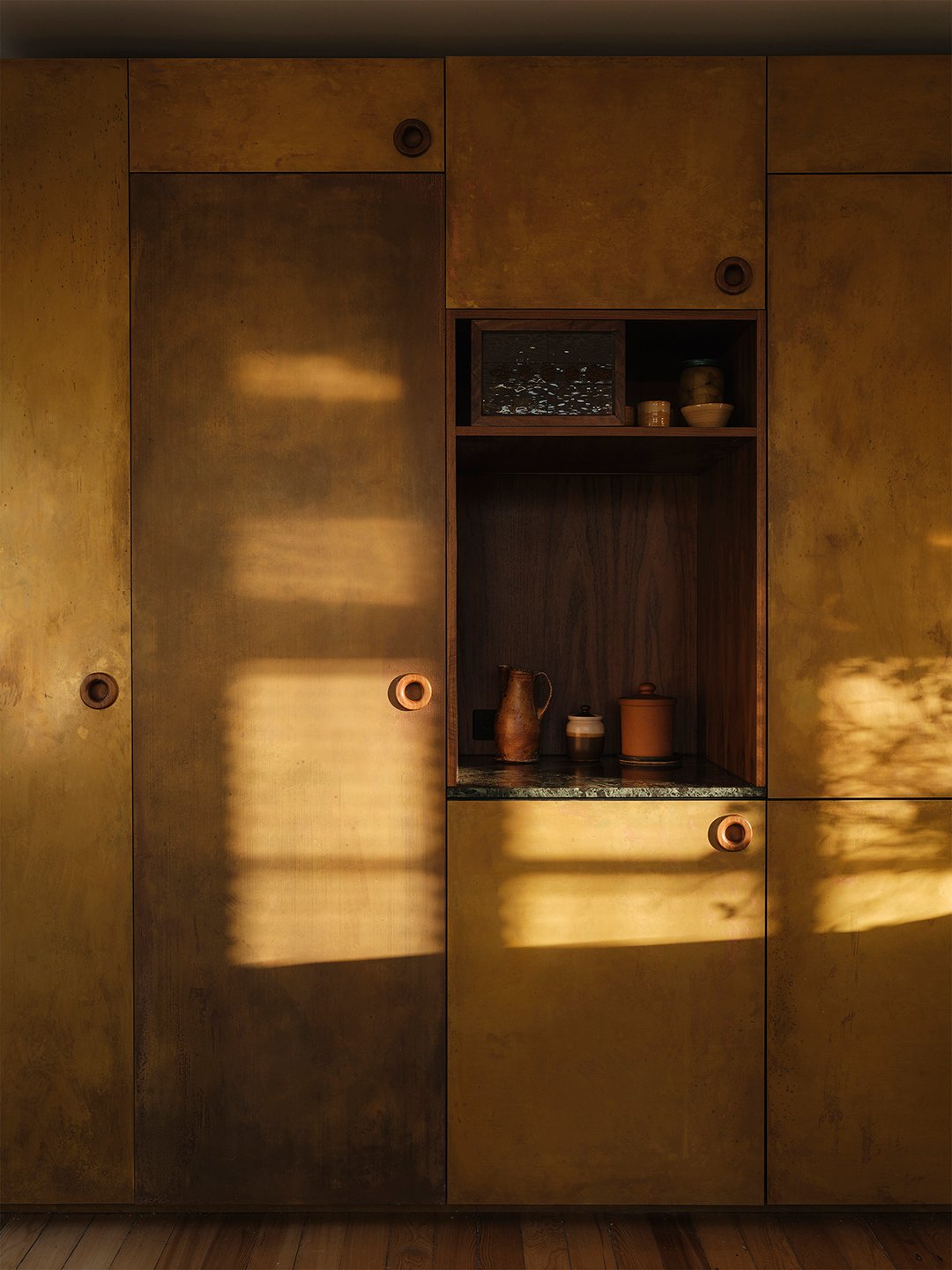
And behind all that perfectly worn-in metal? A broom and utility cupboard complete with an internal outlet for charging the vacuum, a washing machine and linen cupboard, a full pantry, and, finally, the refrigerator. The fronts are sealed with a wax to ensure they’ll stand up to lots of use.
The Tiny Tiled Side Table
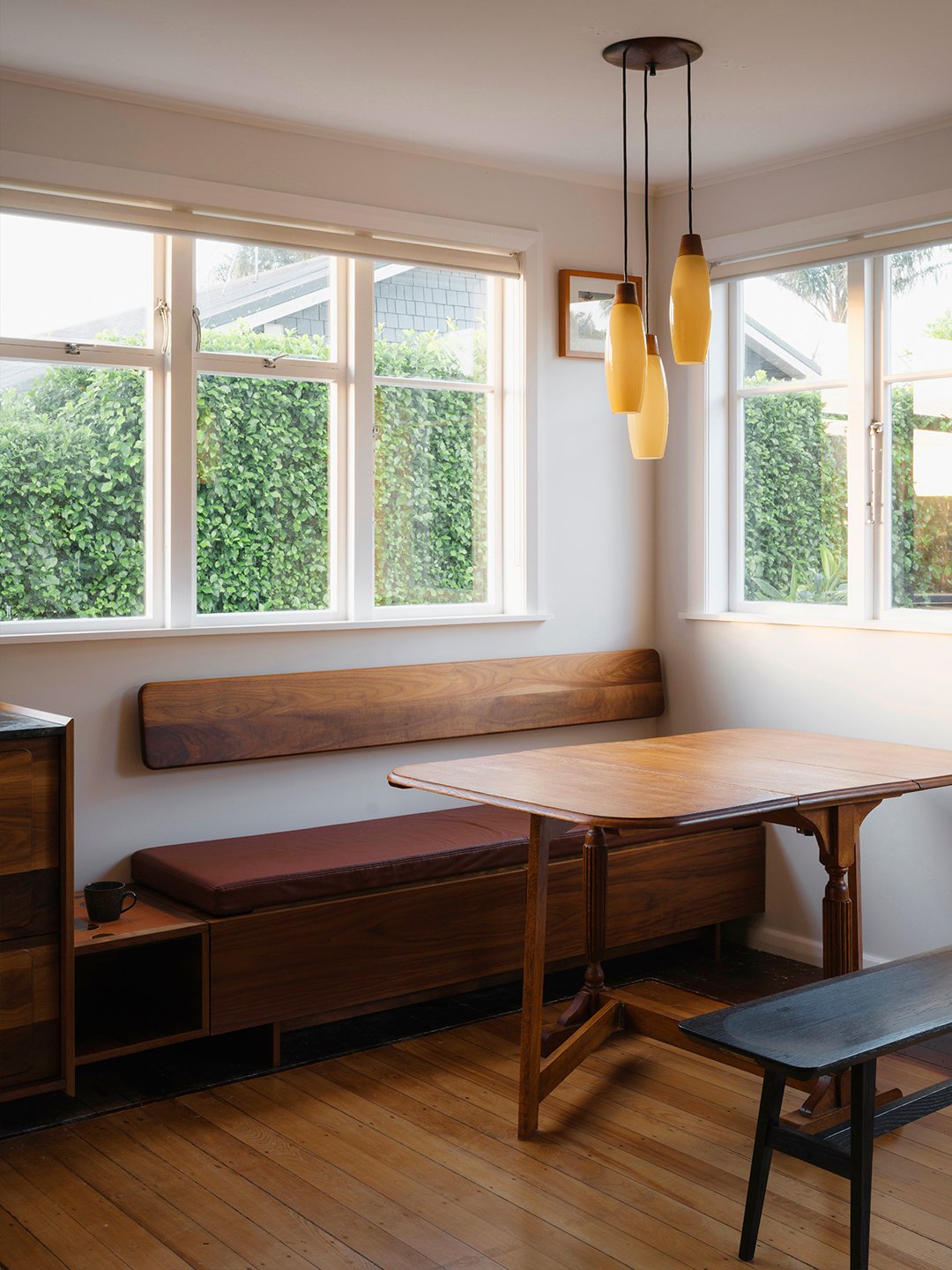
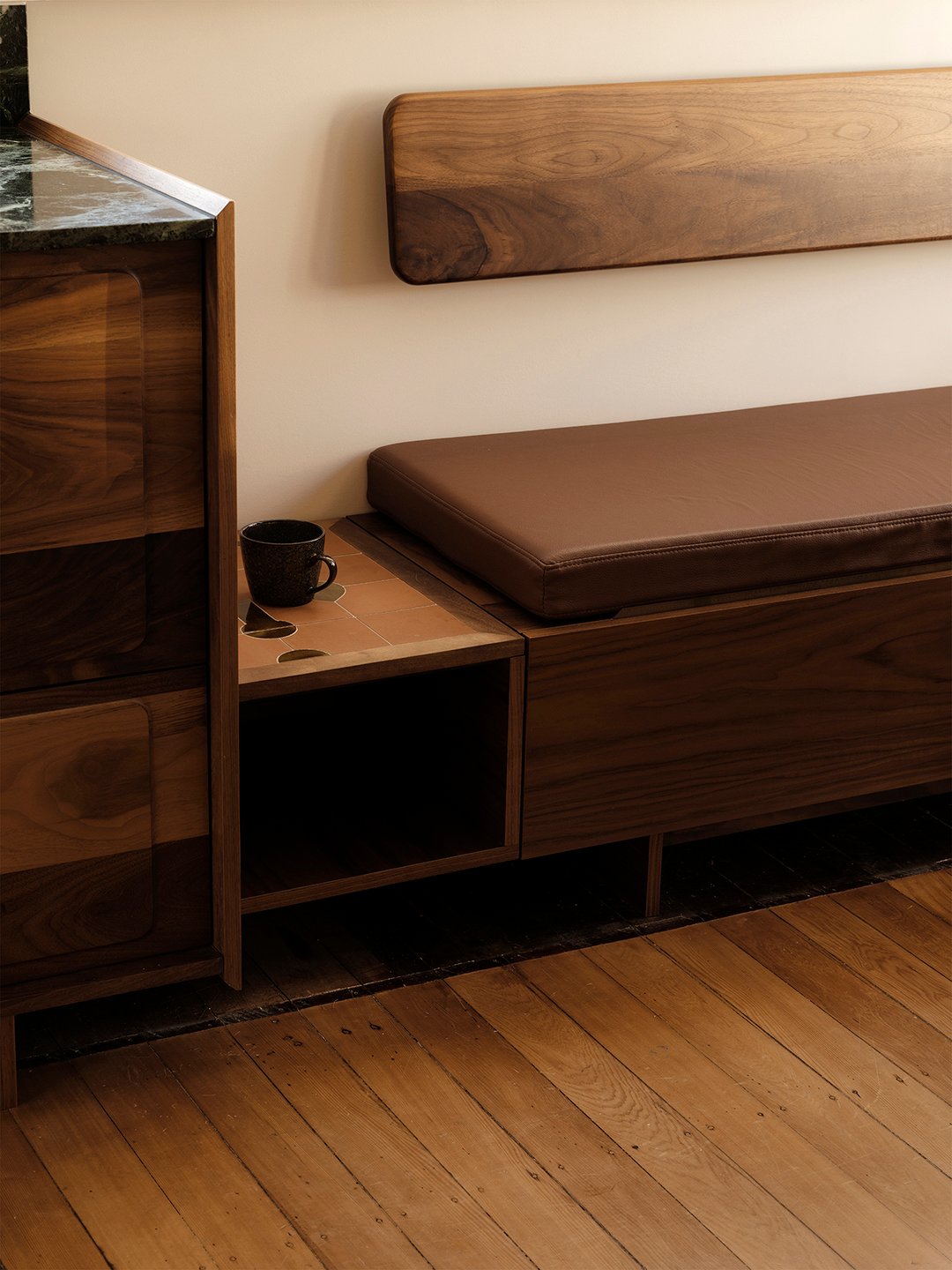
To balance out the shine of the brass, Jones brought humble terracotta tiles into the picture, including a sliver of wall with a built-in display shelf and a side table integrated into the new dining bench. “The clients love spending time there, especially when working from home,” says Jones. No coasters necessary: The surface, which also features the kōwhai motif, is an ideal spot to rest a cup of coffee.