
We may earn revenue from the products available on this page and participate in affiliate programs.
Two years ago, Bo Shepherd received a message that seemed more like a prediction. As the co-owner and head of design at Woodward Throwbacks, a Detroit-based studio, she’d posted a completed home remodel on Instagram, and a follower named Shaina’s comment stood out: “She told me she wanted us to design her kitchen someday, once she bought a house,” Shepherd remembers. All she needed was a little time.
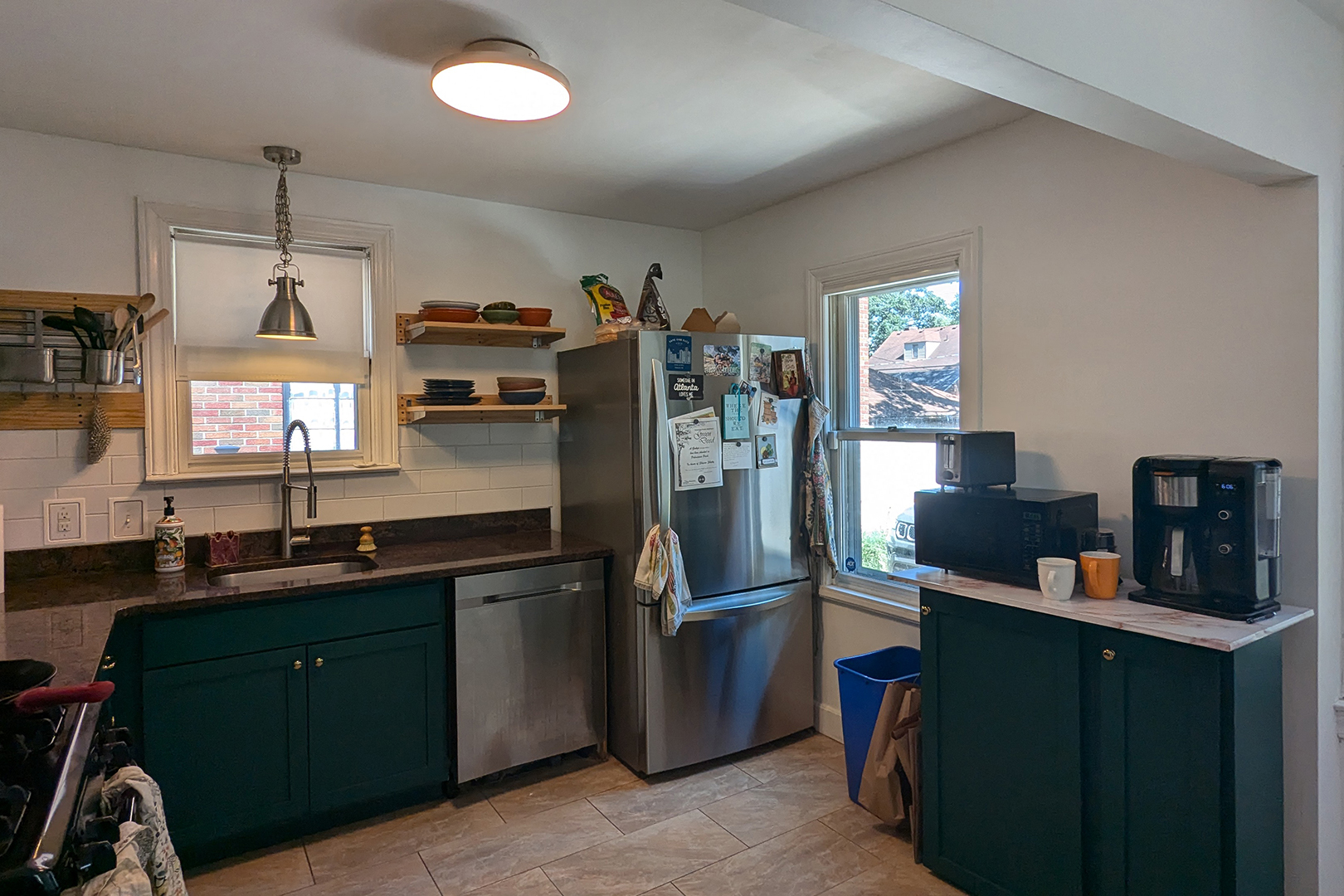
Upon purchasing a 1920s property in Detroit’s University District neighborhood a few years later, that fan of Shepherd’s work became a client after all. The house had been flipped, its interim owners stripping it of old details and giving it a bland once-over, and Shaina and her husband wanted Shepherd’s help restoring some of the original warmth in the kitchen. “Since so many details had been stripped away, we were essentially starting from a blank slate, which gave us the freedom to rebuild character with real intention,” Shepherd says. Here’s how she and her team at Woodward Throwbacks pulled it off, focusing on budget-conscious upgrades and salvaged accents.
Tweak the Layout
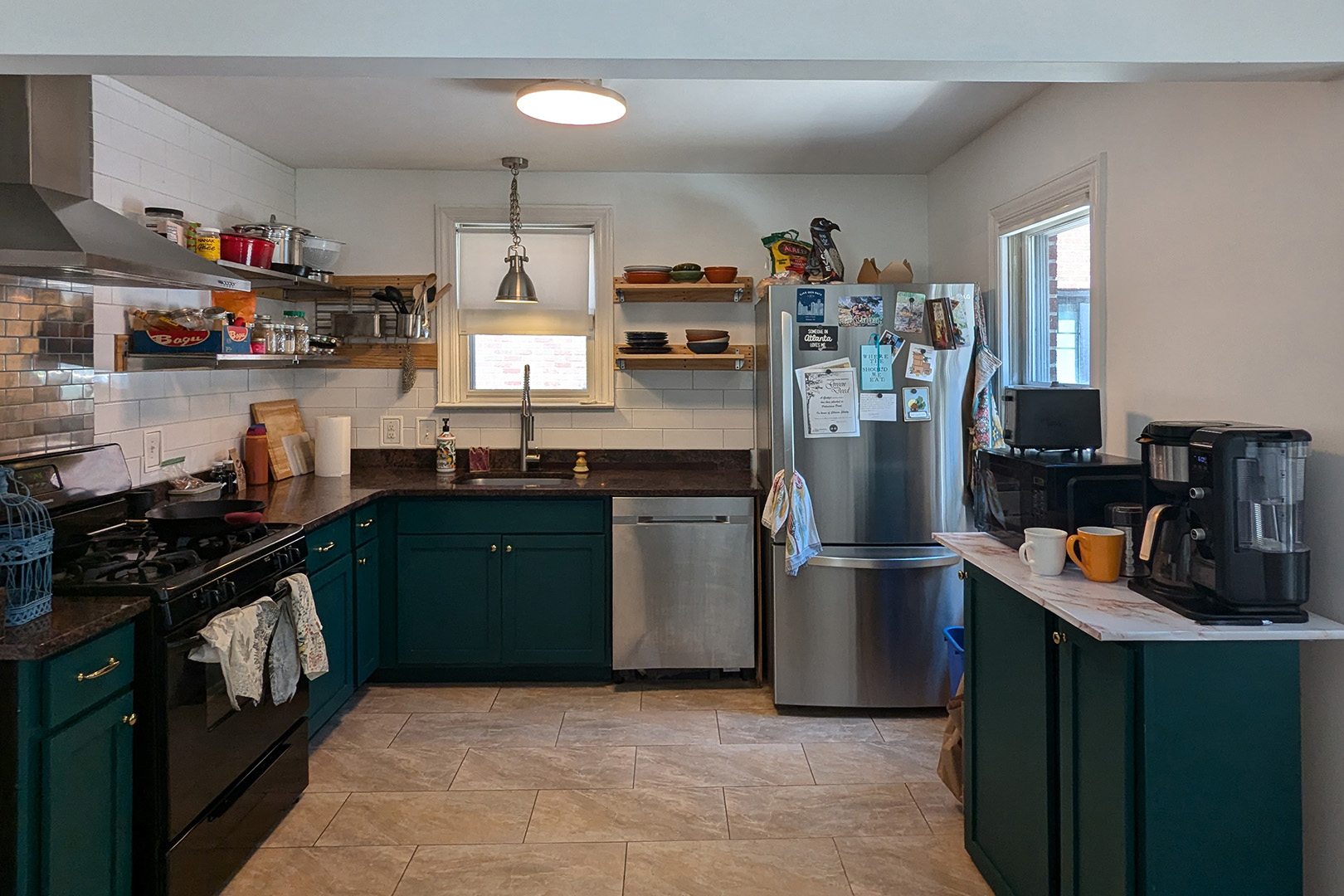
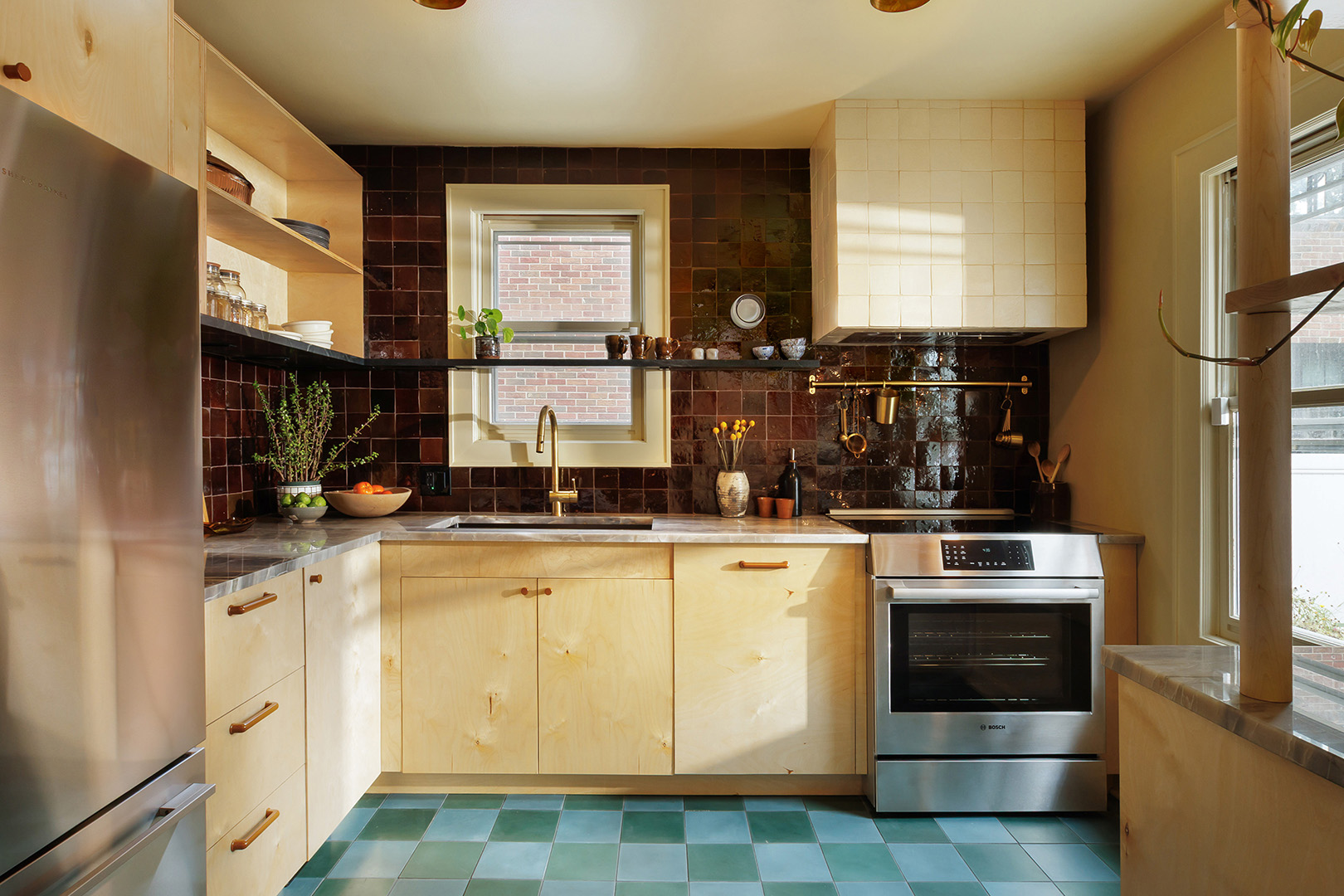
The footprint was undeniably tight, with the kitchen tucked into one end of a 174-square-foot room and a dining area opening up the other. Every inch mattered, and while Shepherd aimed to keep much of the original layout the same, she worked with her general contractor, Van Sickle Construction, to make one specific shift: Swapping the locations of the fridge and range. “That one change completely strengthened the flow and made the space feel more intuitive for everyday living and hosting,” she says.
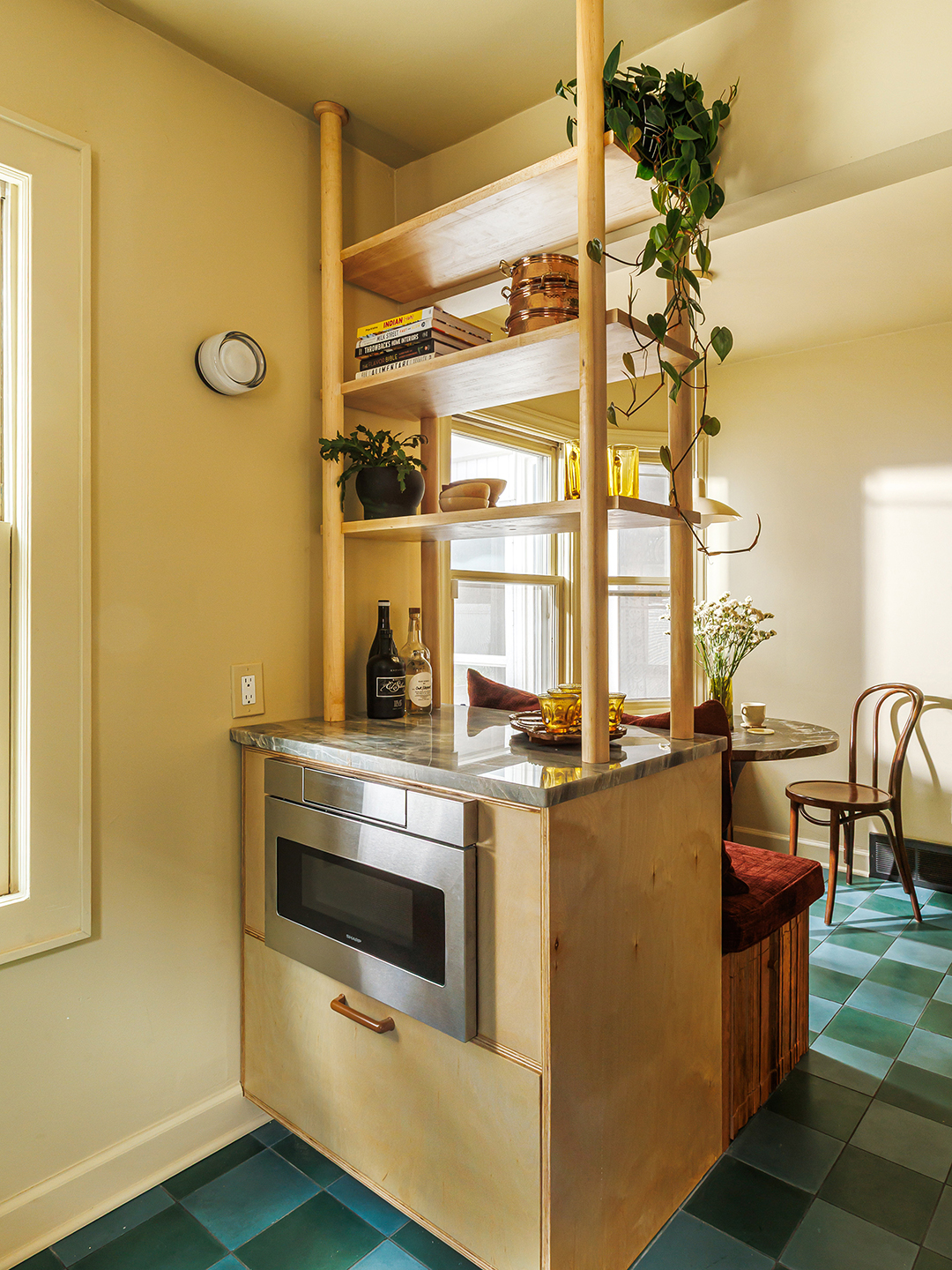
Finding a balance between an airy and cozy feel included figuring out a way to separate the kitchen from the dining area. Their subtle fix? Mounting open shelving to the ceiling between the range and banquette, with a cabinetry base on the bottom. “That helps define the zones while keeping it open and functional,” Shepherd notes. Similarly, a slim marble shelf that stretches across the window allows the owner to display her pottery and plants without blocking the view.
Enrich the Palette
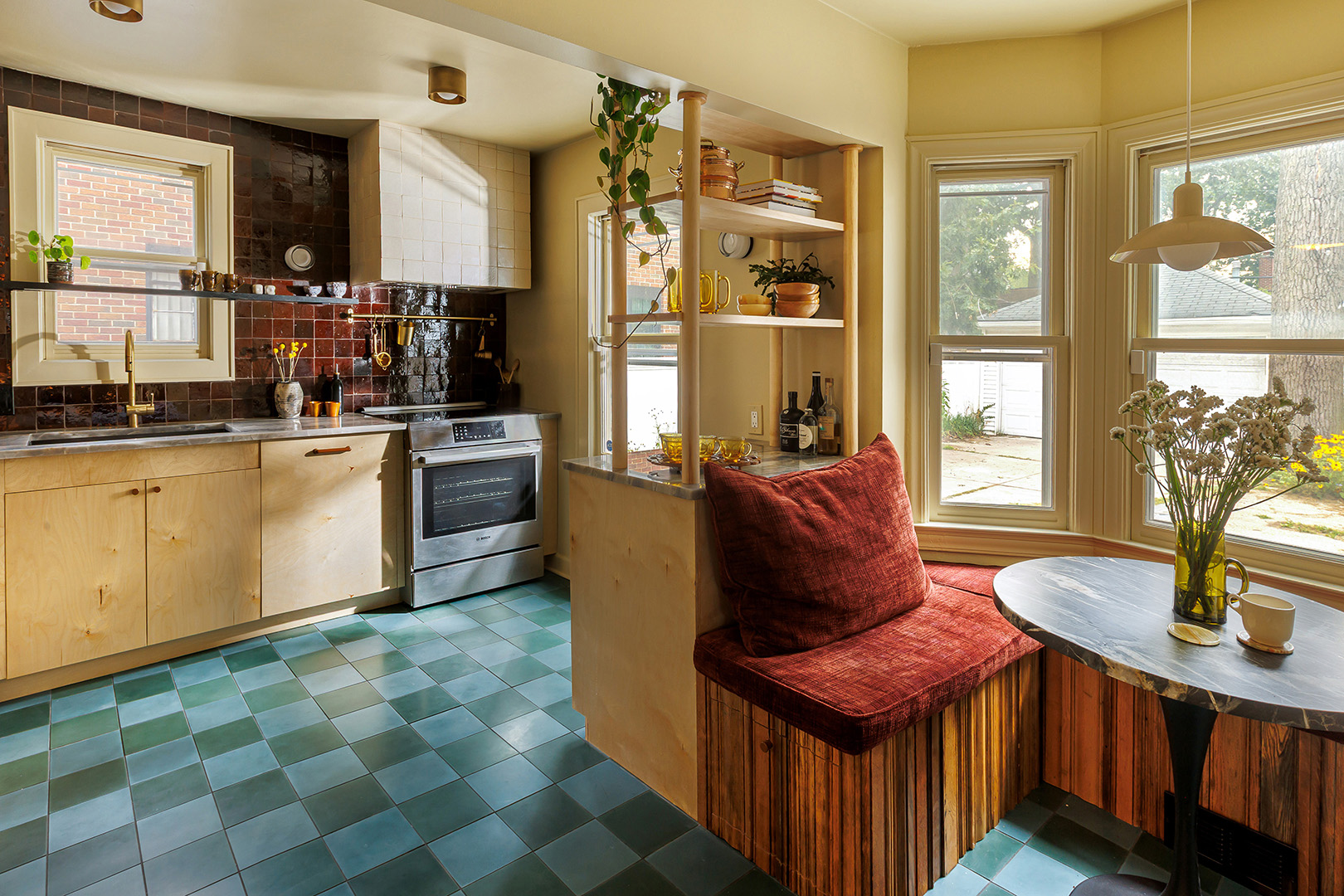
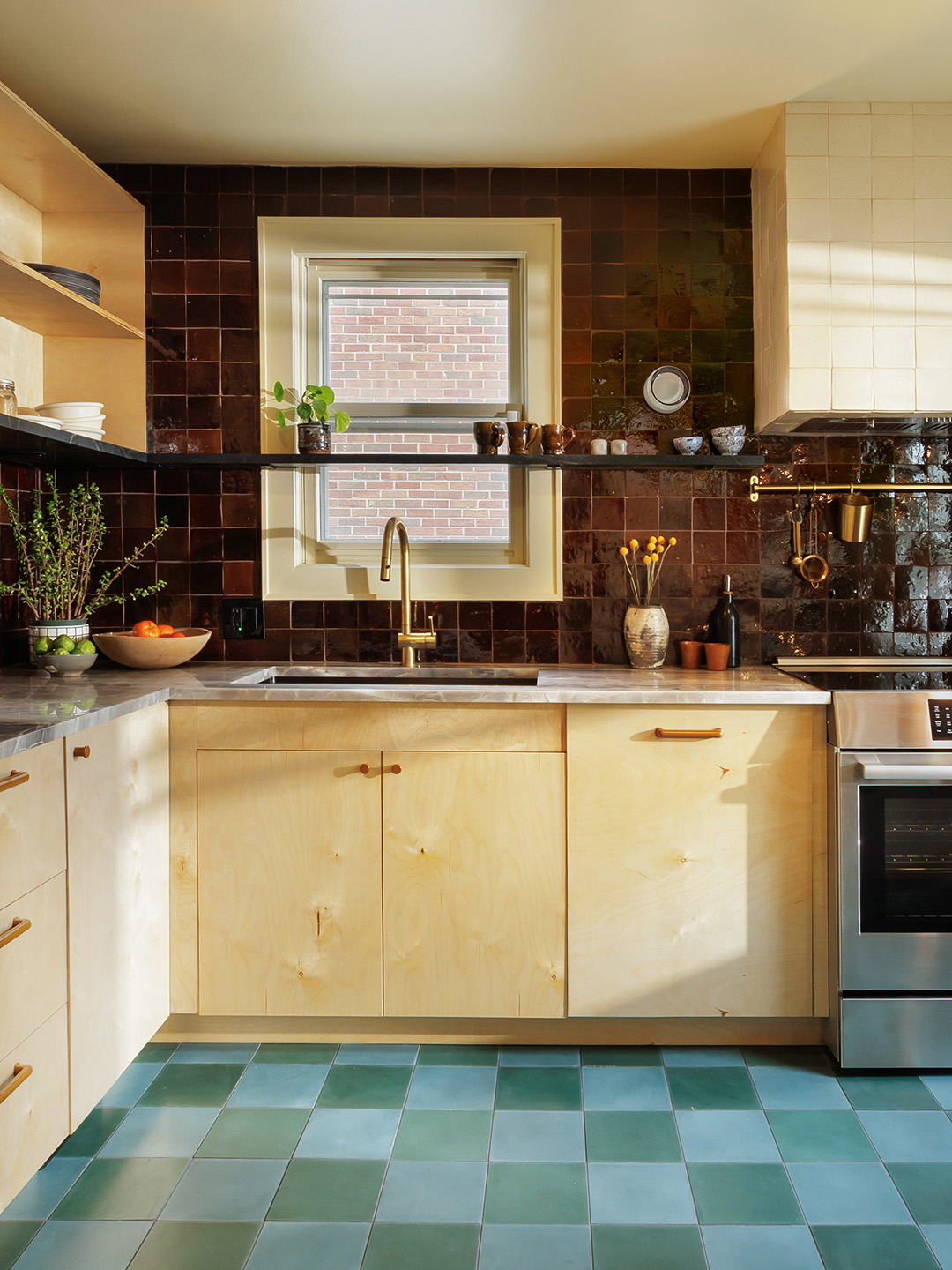
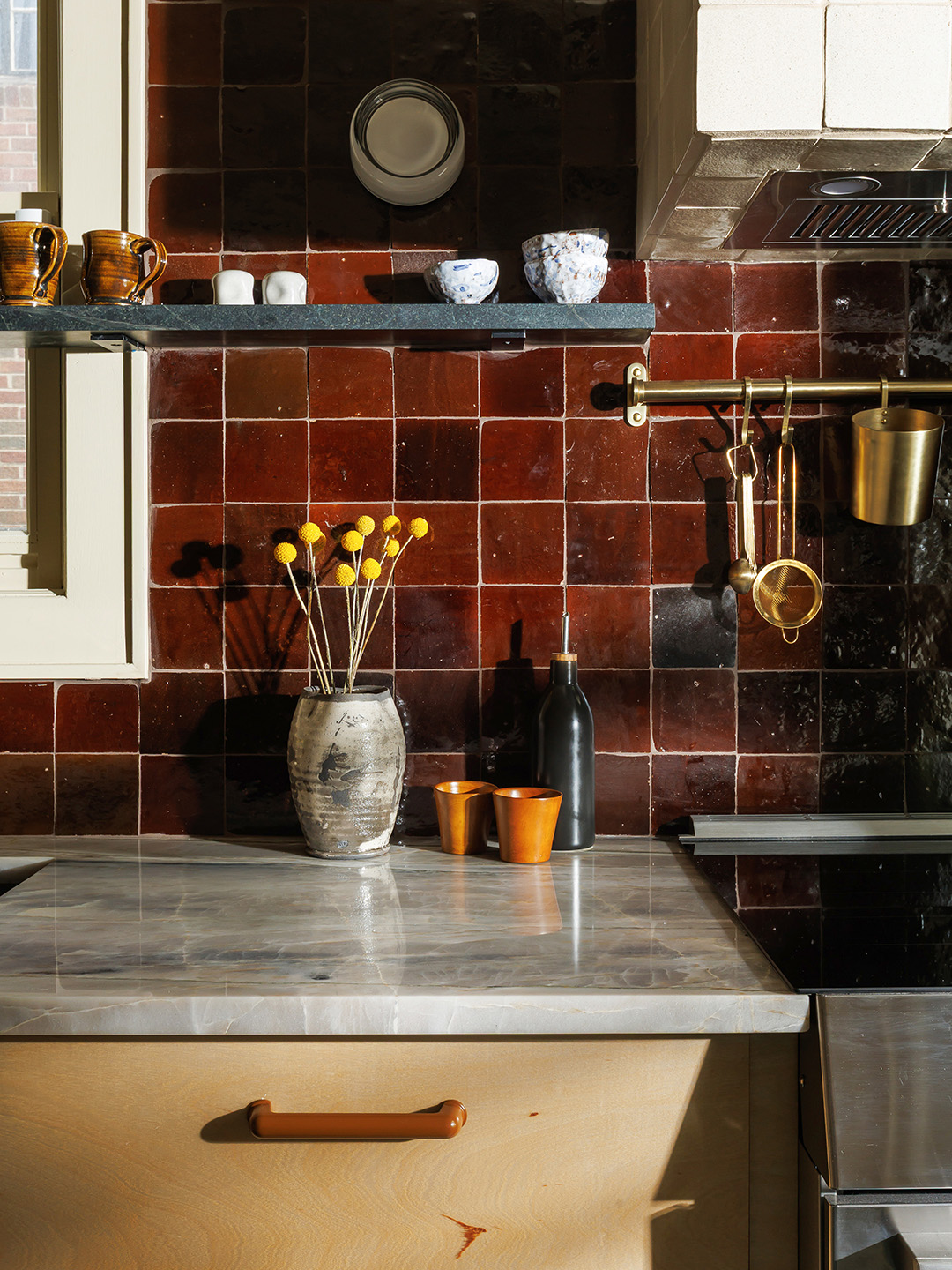
From the beginning, the owner requested a combination of browns, yellows, and reds to form a backdrop that felt bold yet grounded. Shepherd chose to use birch, a fast-growing and relatively inexpensive hardwood, to make the custom cabinetry more affordable. “What we love most is the look,” says Shepherd. “Birch has a tighter grain and a more consistent appearance, which gives the cabinetry a clean, refined feel.” Coordinating tiles climb the range hood, while the rest of the room is color-drenched in Palo Santo by Backdrop.
The creamy yellow paint and light wood set the stage for richer contrasts: A brown ceiling-to-countertop backsplash above a bright checkered floor. “We brought in vintage-inspired hardware, Remy by Schoolhouse in Butterscotch,” Shepherd says, “and layered that with brass accents to warm everything up.”
The checkered floor was actually a pivot—we originally fell in love with a tile that ended up being discontinued,” Shepherd explains. “The original option had dark blue stripes, so we knew blue was still something we wanted to incorporate. We landed on a blue-and-green check pattern, which helped break up the dominant brown tones and added a playful graphic moment.”
Customize a Banquette
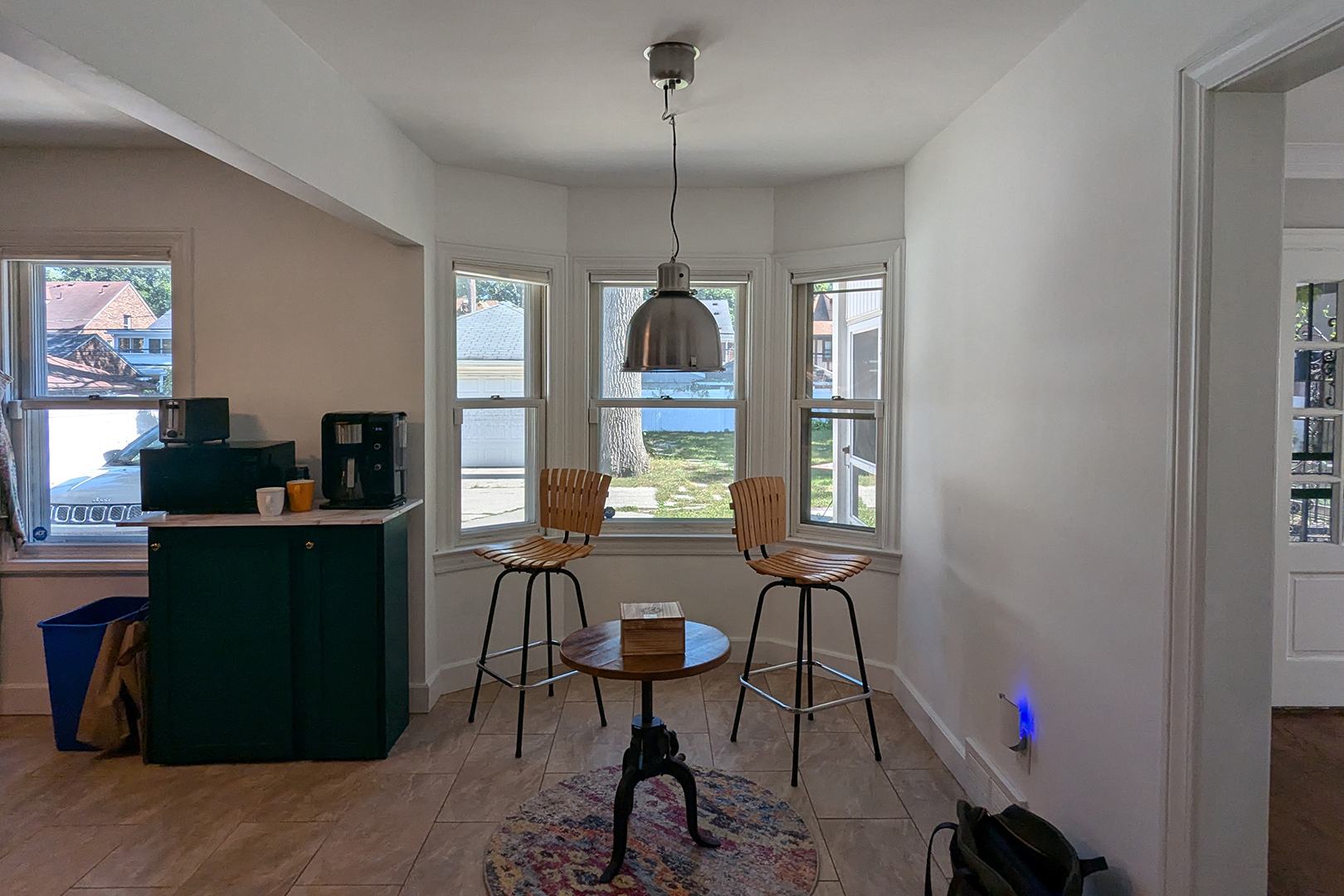
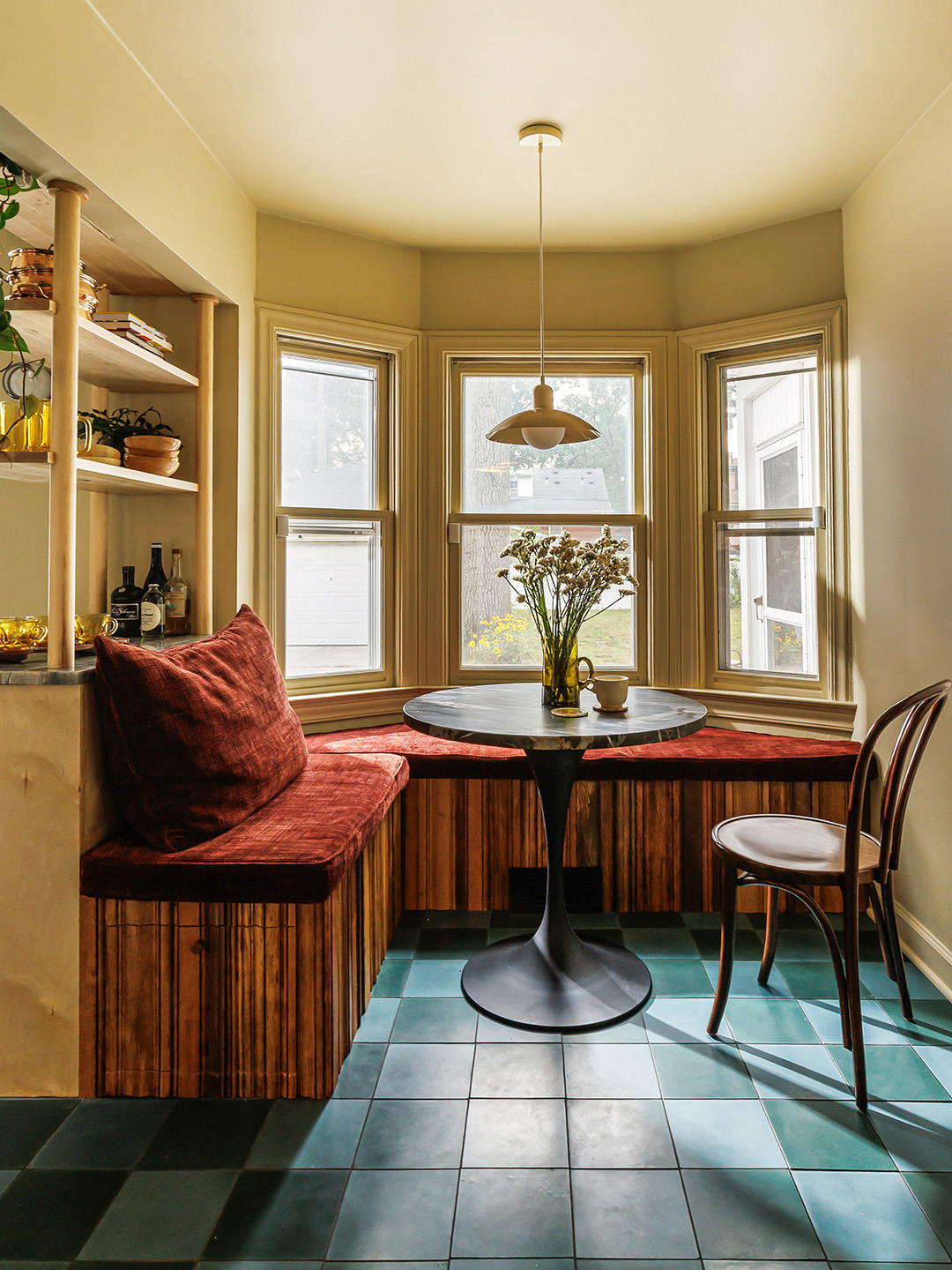
Shepherd played to her strengths by adding a cozy banquette under the room’s bay window. “Our company primarily works with salvaged materials, and we love using traditional pieces in unexpected ways,” she says. “So the banquette cladding is actually made from salvaged wood trim that we repurposed as our version of fluting.”
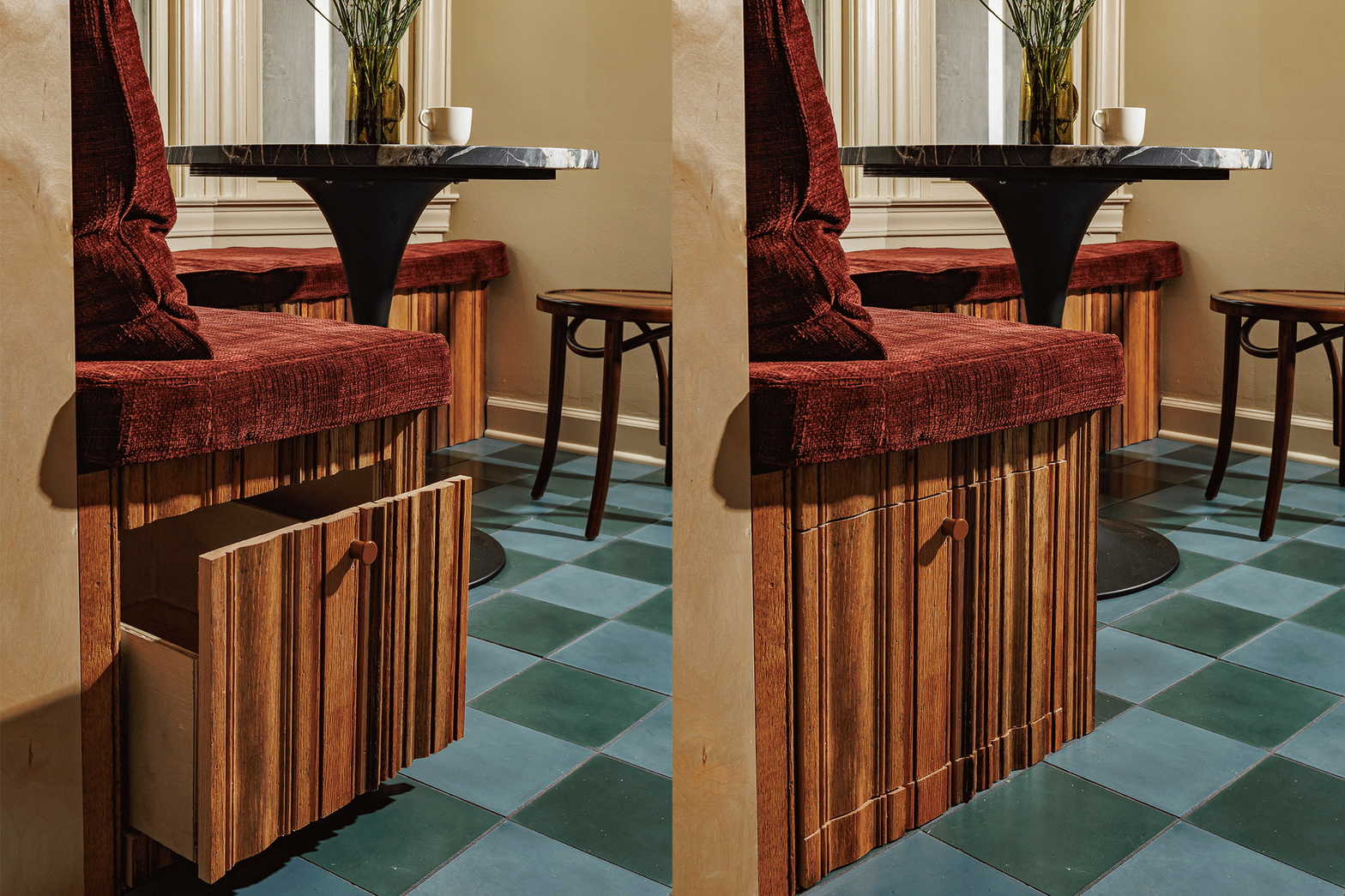
Perhaps the biggest challenge of the entire project was getting the proportions right, and Shepherd spent extra time ensuring that her math was correct. Once the banquette was in, they paired it with burgundy upholstery and a marble-topped table to match the countertops. “It makes the kitchen feel lived-in and communal,” Shepherd says. “And yes, we integrated storage. Because in a smaller home, every inch matters.” So does the creativity in a long-awaited partnership. “This was one of those projects that felt special from the start,” she adds. “The trust was there immediately; it truly felt like a collaboration.”
Additional reporting by Allison Duncan.