
We may earn revenue from the products available on this page and participate in affiliate programs.
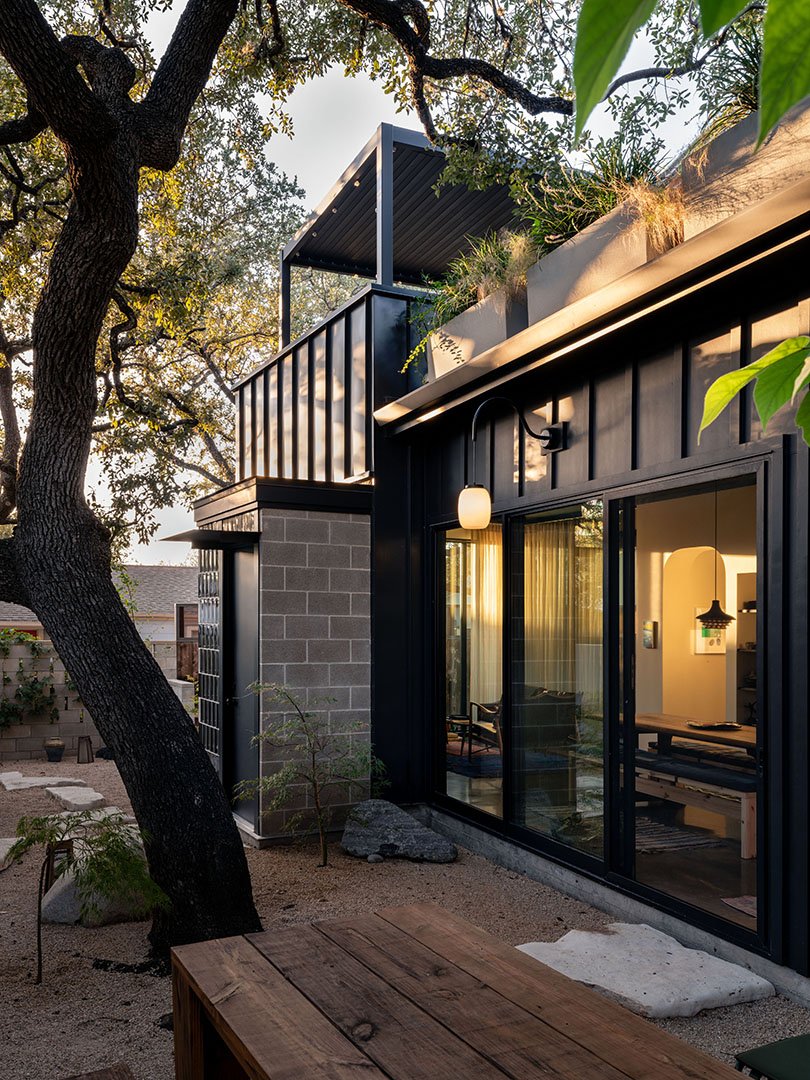
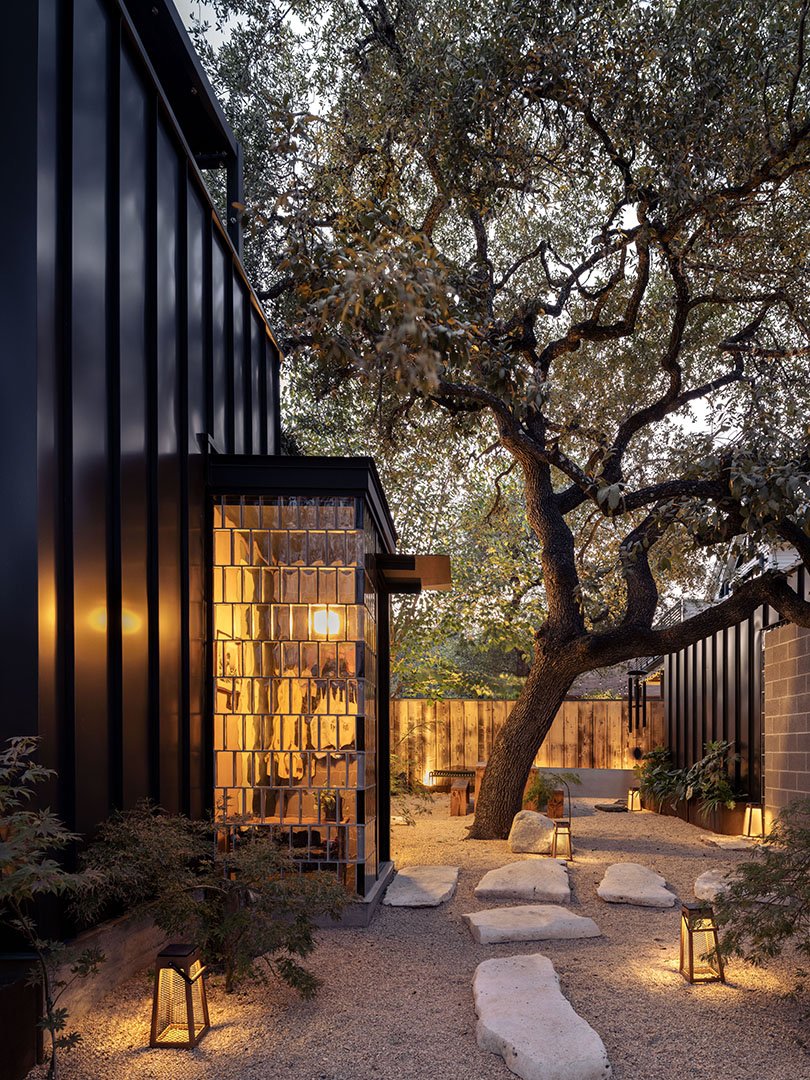
Entering Michael Magers’s Austin, Texas home is like walking through a Richard Serra sculpture. Two intersecting, curved concrete walls disguise the first steel door. On the other side? A courtyard that looks straight out of Japan. Below the soaring oak trees are big boulders, and, around the edges, fencing that Magers charred himself in the traditional Yakisugi method. A one-hundred-year-old Japanese katana hilt, adorned with a dragon and cherry blossom, is welded into the handle of the front door. You know you’re only two minutes from the city’s major retail street, and yet you feel thousands of miles away.
“I joke it’s got Texas ryokan vibes. It’s Donald Judd meets Kyoto with a side of Copenhagen,” says Magers. Tying his worldly inspirations together is craftsmanship, a theme that’s played out in Magers’s work. The documentary photographer traveled the globe covering culinary traditions before he started capturing crafts of all kinds, from tattooing to swordsmithing. More recently, he added winemaker and record store co-owner to his resumé. Obi, the hybrid shop-and-gallery space he founded with record collector and LatinWorks founder Sergio Alcocer, opened its doors this month.
Magers is so fascinated by the making of things that he has a Substack dedicated to interviewing all types of creatives, from the Taiwan-Lantern designers to Black Pumas guitarist Adrian Quesada. So, naturally, his home is filled with storied (and predominantly handmade) objects. “I like to look at a tea bowl that’s one hundred years old when I make my matcha and think, how many bowls of matcha have been made in this thing?” he says.
The place needed a dose of history—it was basically brand-new when he bought it a few years ago. “It was a little cookie-cutter for Austin,” recalls interior designer Alex Boudreau, who had helped Magers out with his previous townhouse. Her task this time was to inject the small, two-bedroom home with personality and originality. Alongside Matthew Helveston of Woodeye Construction, they started by finessing the bones, turning squared-off thresholds into smooth 45-degree archways.
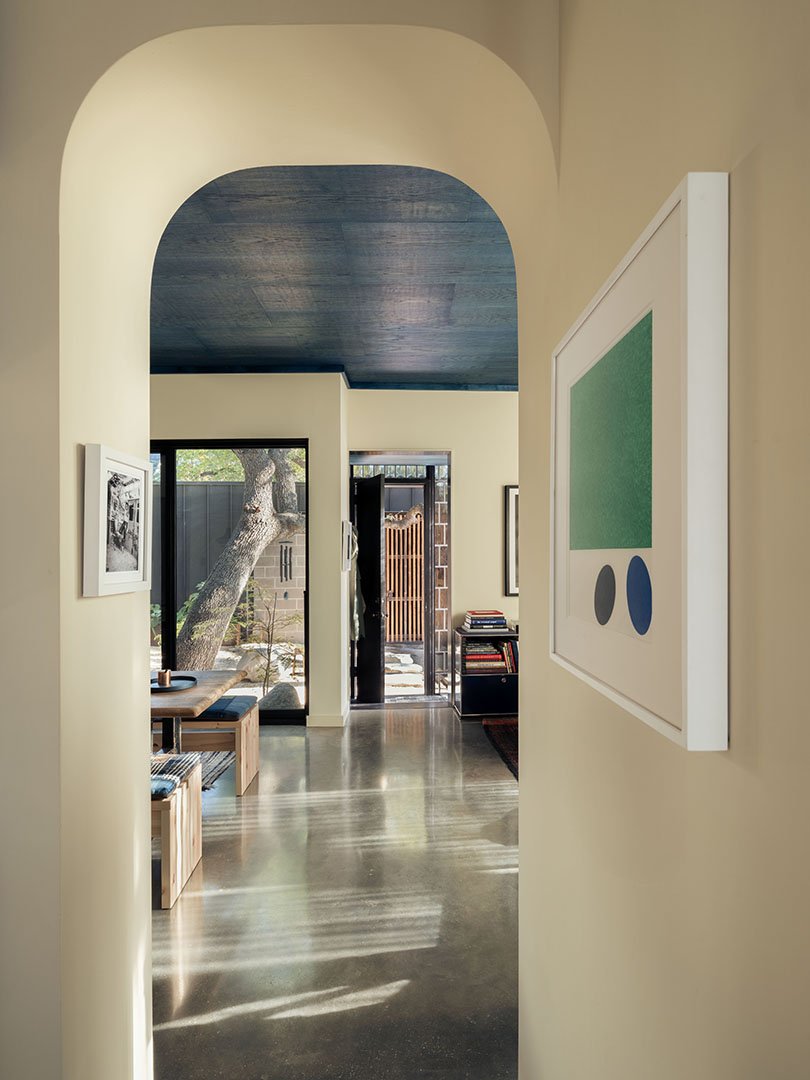
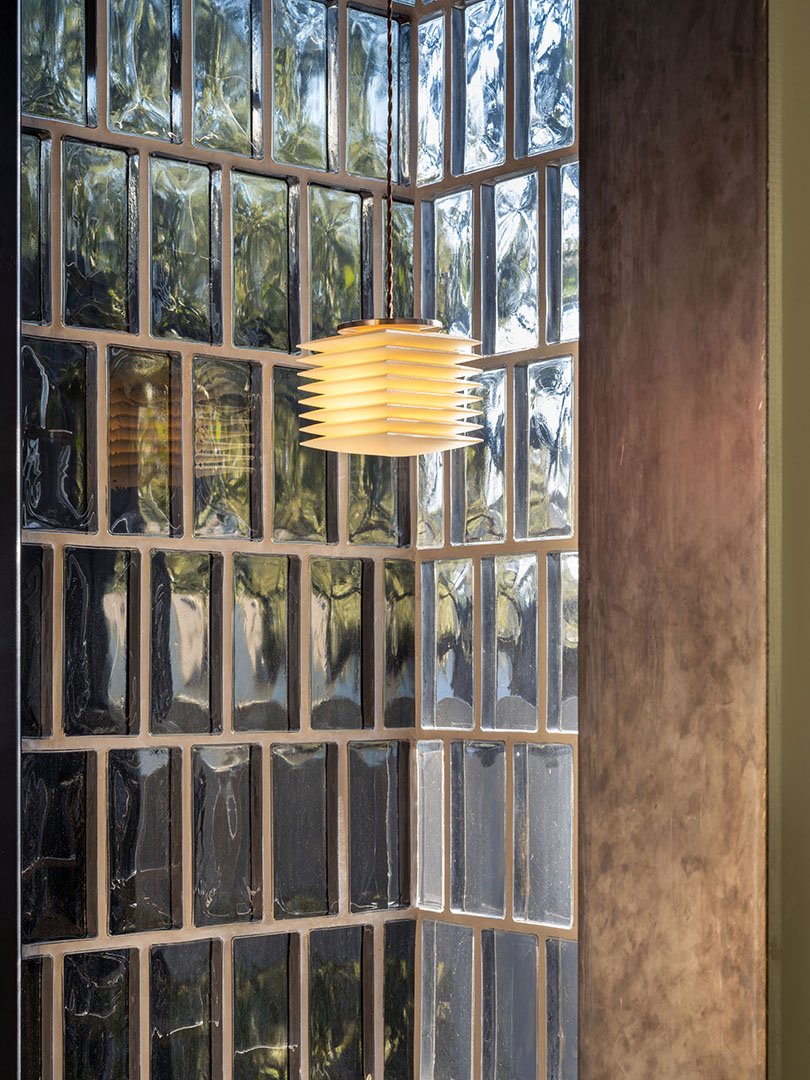
The house became a laboratory of sorts; the mudroom one of his experiments. Framing two sides of the small space in 3-by-6-inch glass bricks, Magers was inspired by traditional Japanese genkans (or entryways) where the intention is to shed the things you’ve carried with you from the day—emotionally, physically, mentally. “Mike came to me with all these thoughts and ideas. My role was to absorb everything he said, organize it, and layer his collections,” says Boudreau.
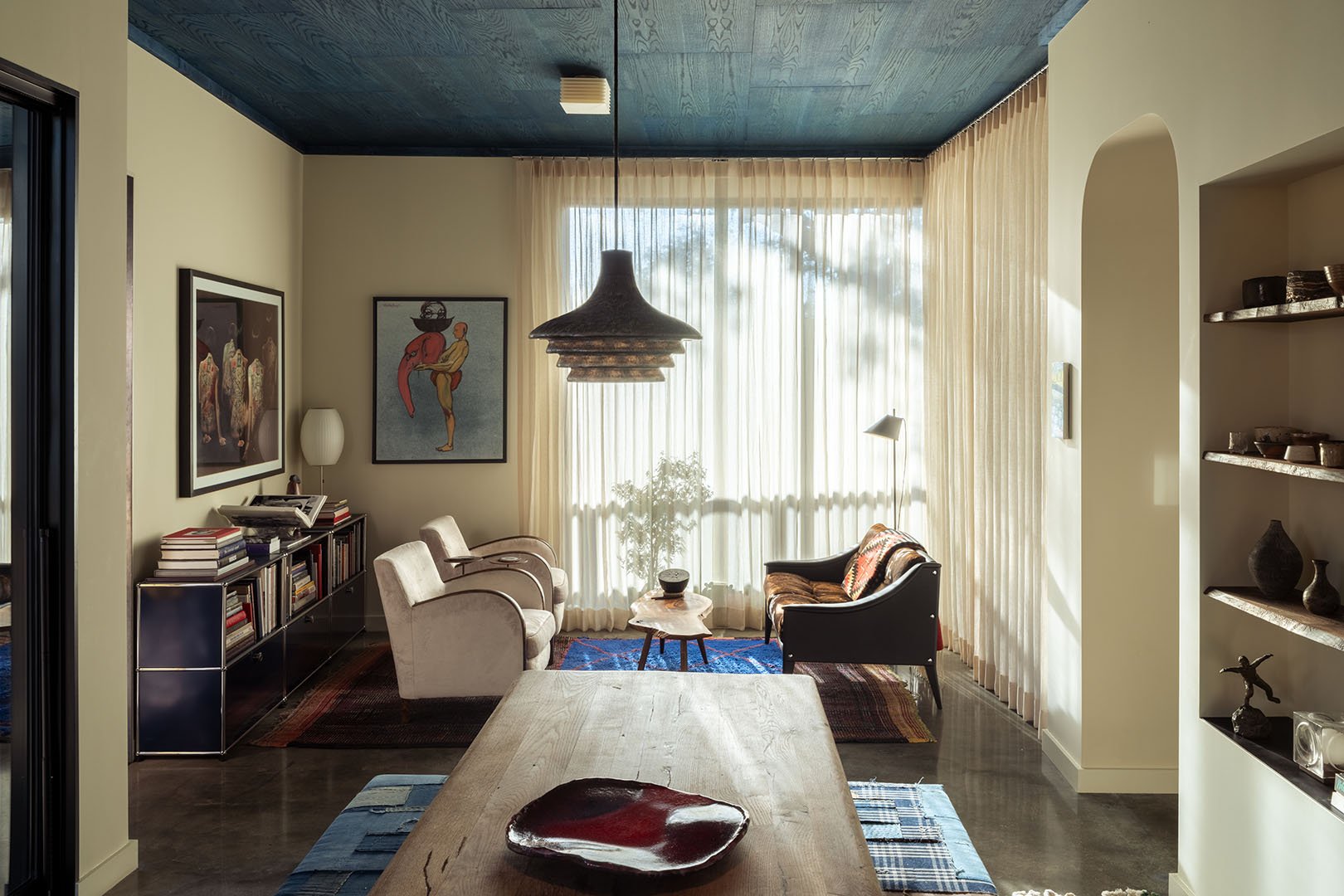
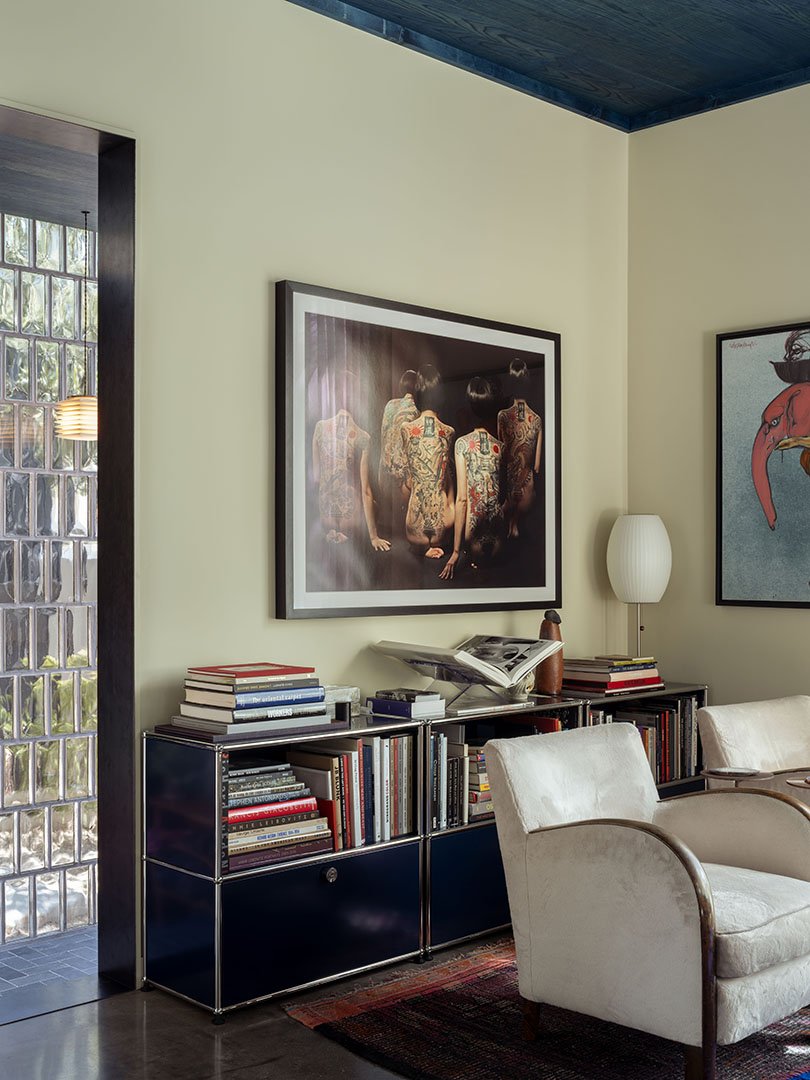
Another “aha” moment that came to him around 4 a.m.: Paneling the living room ceiling in indigo blue-stained plywood. “It was about, how can we create something that brings warmth and texture but can also be done economically?” shares Magers. The boards were light enough to be nailed directly into the sheetrock. But before they were professionally installed, Magers stained the budget-friendly wood himself using Danish brand Linolie & Pigment’s satin wood oil.
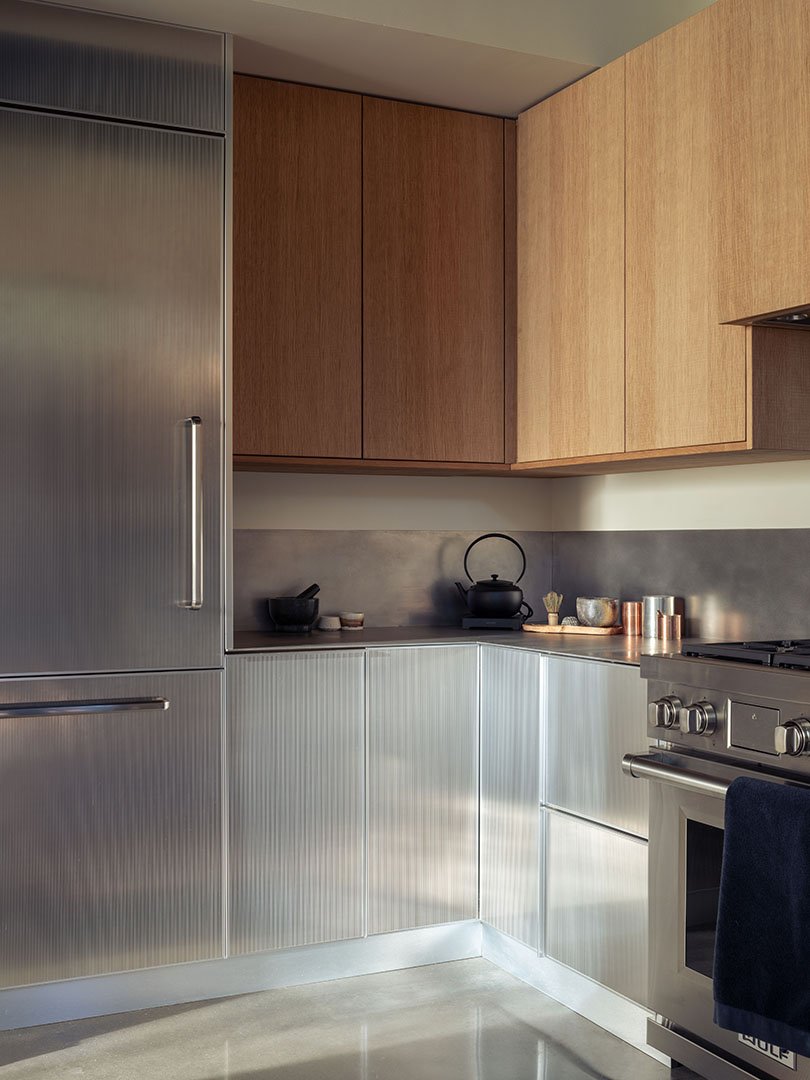
For the kitchen cabinetry, Boudreau and Magers originally looked at custom stainless steel, but given the cost and fabrication logistics, they pivoted to Reform’s Reflect series. Magers burned and stained the live-edge wood shelves himself so he could display his collection of ceramics. “Everything in the space, whether it’s beautiful or not, is meant to be functional. Nothing is purely decorative,” he says.
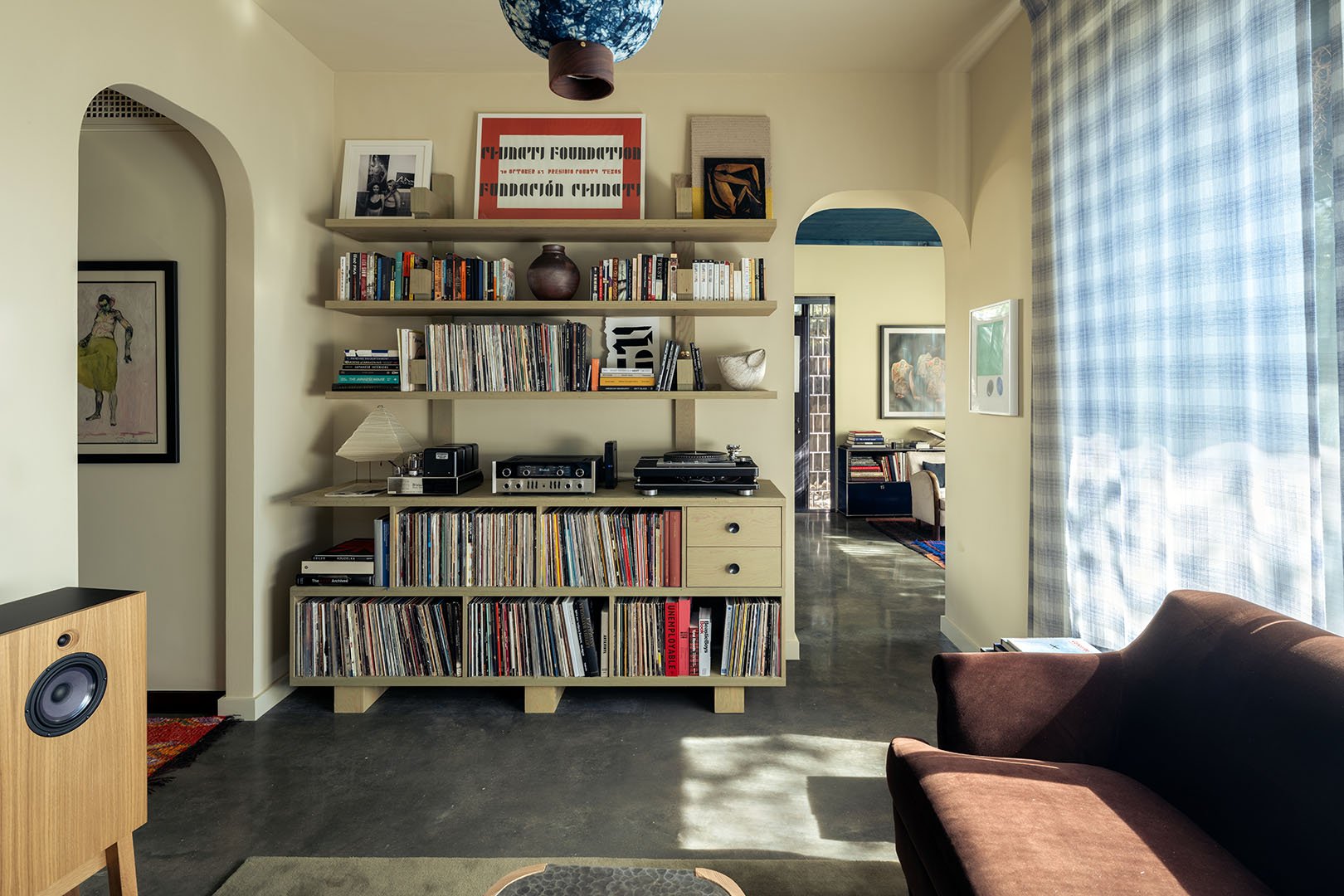
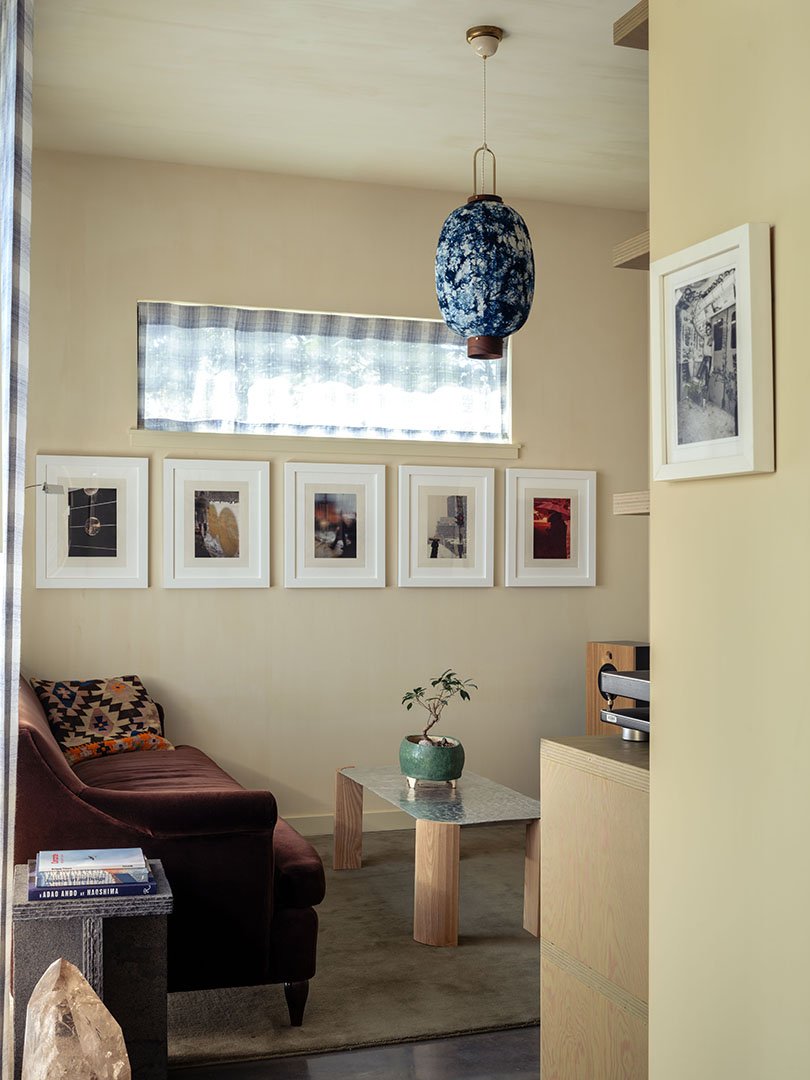
For the more complicated woodwork, he relied on trusted fine furniture maker and carpenter Shota Yamaguchi. In the nearby listening room (formerly a bedroom), a custom storage unit designed by Boudreau and built by Yamaguchi out of Douglas fir ply houses heaps of vinyl, books, and a restored Garrard 401 turntable. The walls and ceiling are swathed in a subtle limewash treatment, while the windows are shrouded in an alpaca sheer check print— “one of my all-time favorite fabrics,” admits Boudreau.
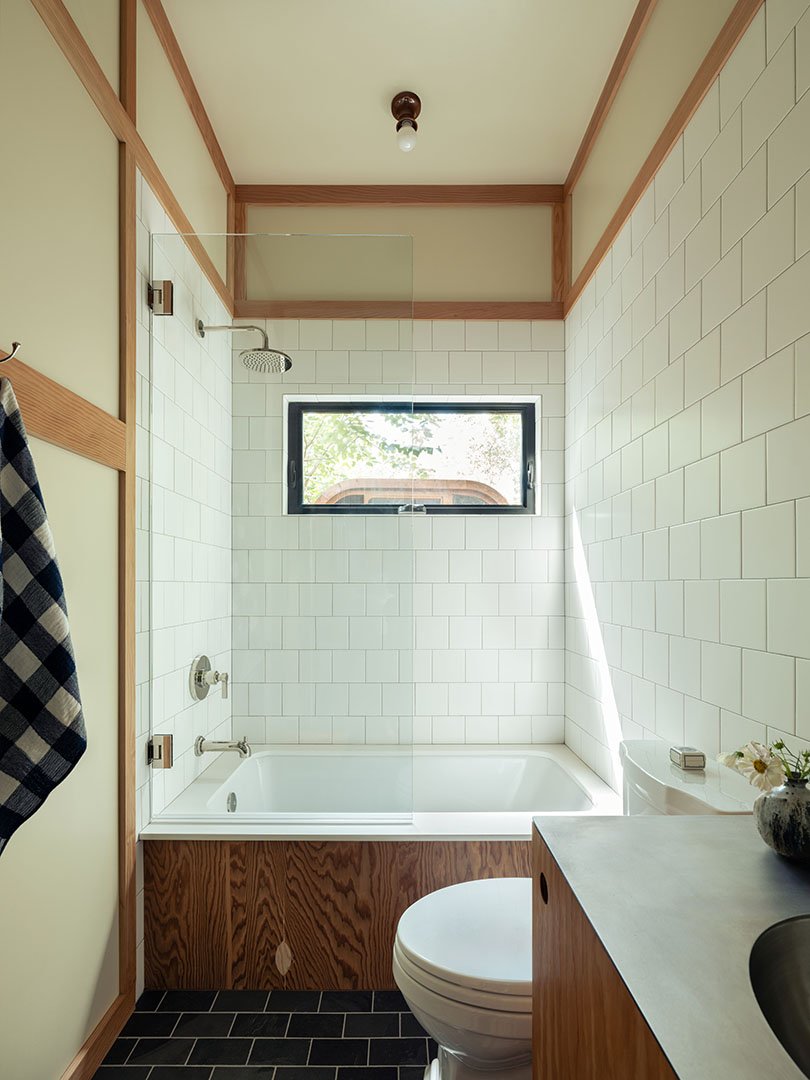
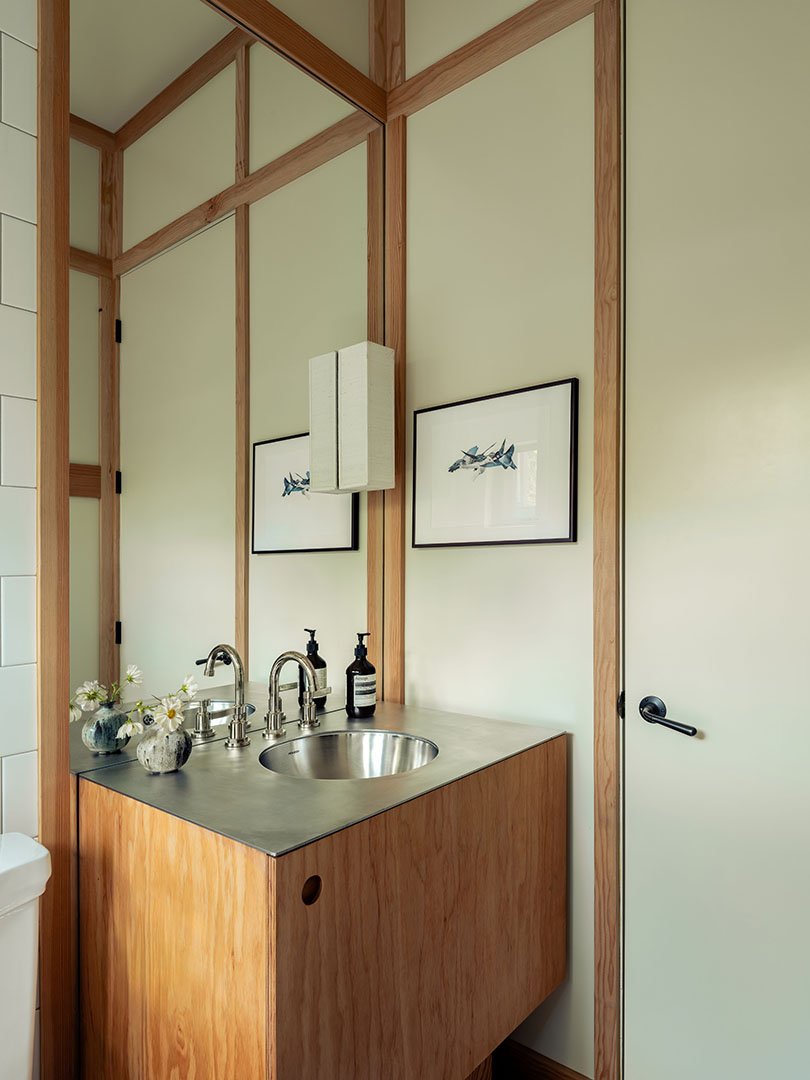
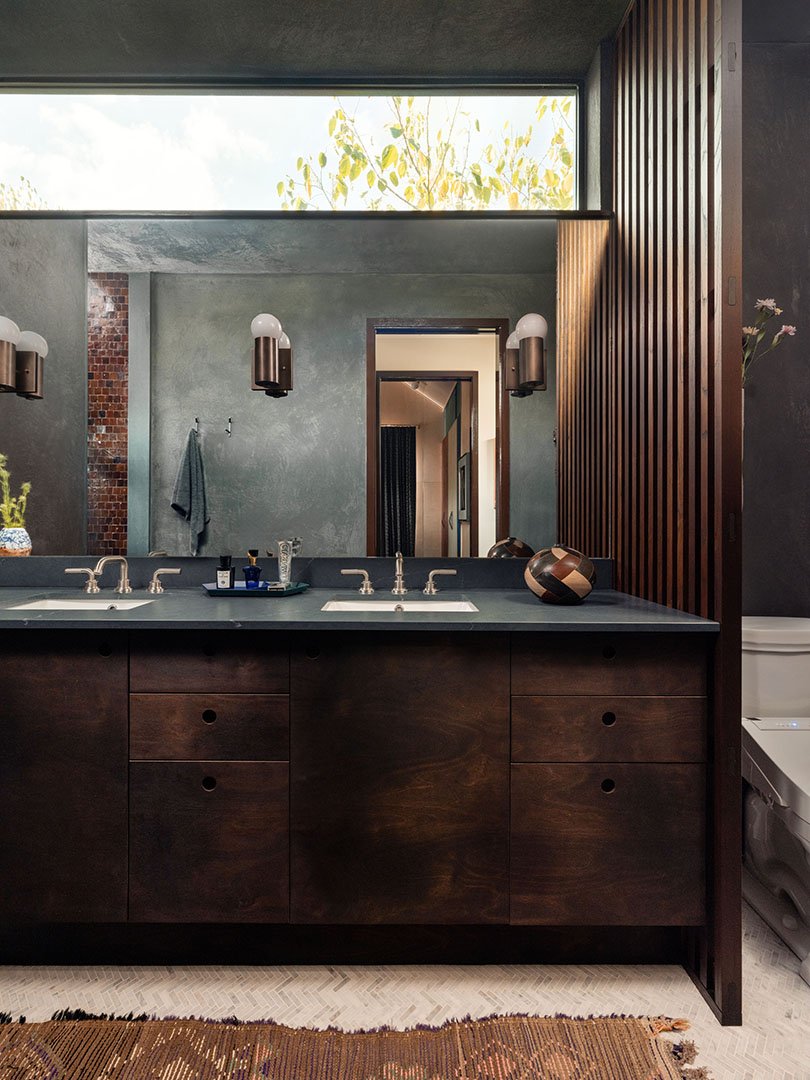
Much like the exterior, the downstairs bathroom is the perfect blend of Texan and Japanese influences. The boxy, unpainted vanity, also made out of Douglas fir plywood, was a little nod to artist Donald Judd; the wood trim on the walls evoke shoji screens. There was nothing particularly fancy about the remodel: the silk wall sconce is an old CB2 find, the sink is stainless steel, and the tub skirt is made out of plywood. Still, the bathroom feels like a zen retreat. While a space for guests, it’s also where Magers rinses off after using his sauna and cold plunge outside. “It reminds me of being in a cool hotel,” he says.
After wrapping up a mini spa session, Magers will head back outdoors and tend to the plants. As night falls, lanterns light up the path that winds between the Japanese maple trees, and for a moment, “it feels like you’re in a different world,” Magers says.