
We may earn revenue from the products available on this page and participate in affiliate programs.
Just to put everyone on the same page, here’s what 500 square feet actually amounts to: a petite hotel room, a two-car garage, one-fourth of a standard size tennis court. The space is limited, for sure—but the possibilities for what to do with it are not, as evidenced by the 10 apartments below, some of which are even tinier than that by half. Think: a fairytale apartment in Normandy, a Swedish designer’s colorful studio, an elegant Manhattan efficiency. Ahead, let these homes show you how smart, stylish decor goes big in a small footprint.
Skip The Centralized Focal Point
Square Feet: 235
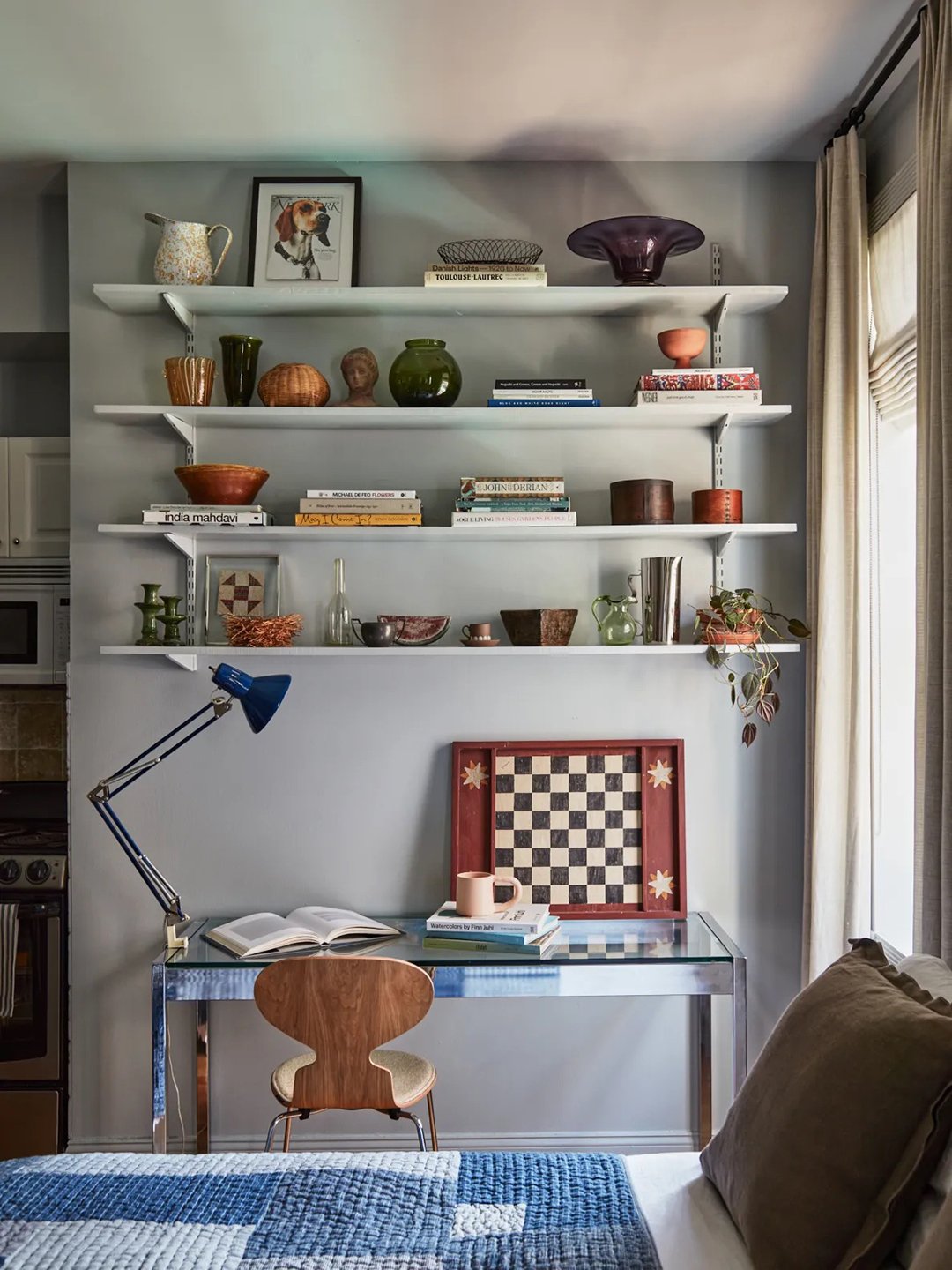
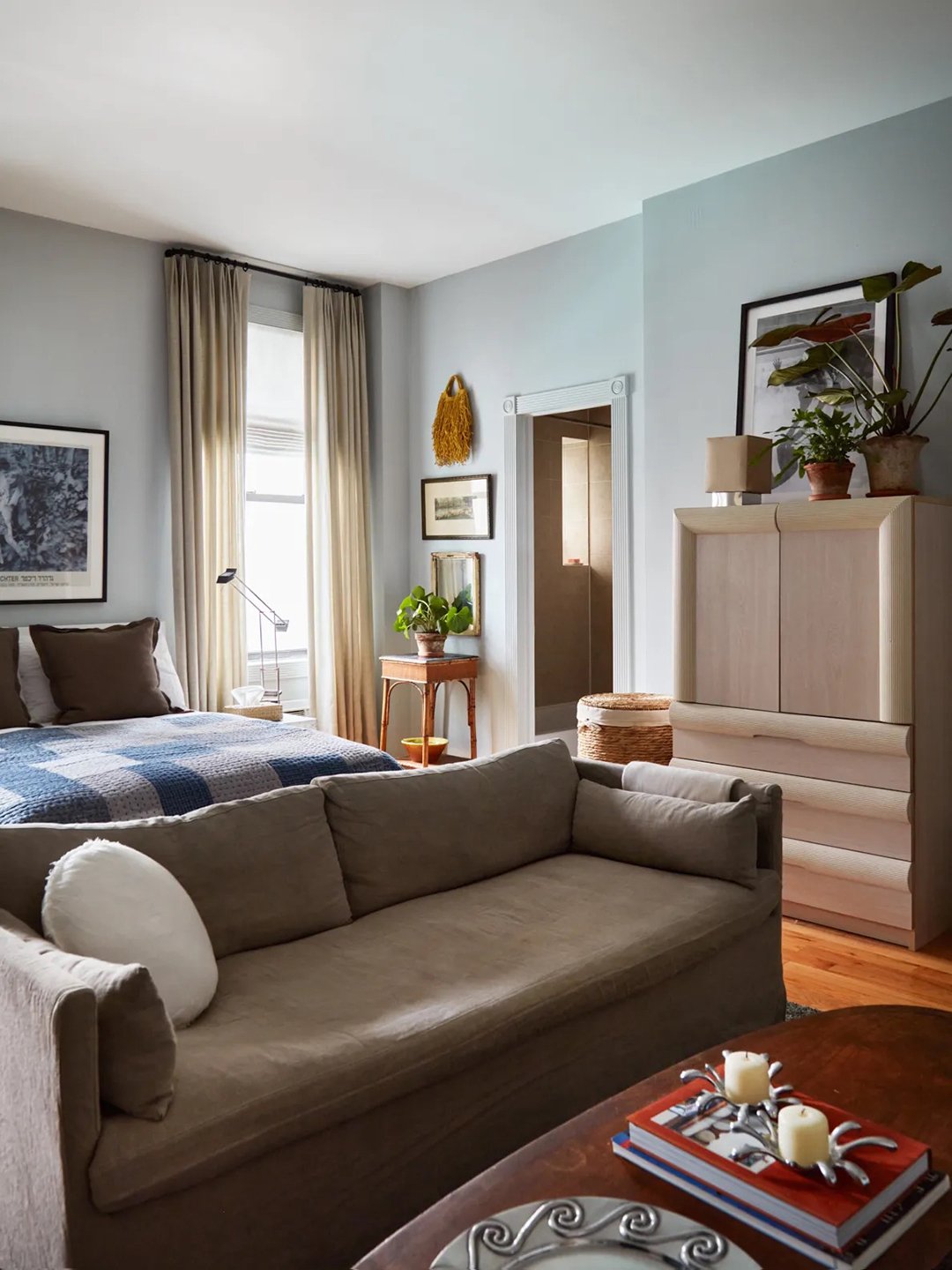
Domino contributing editor and interiors stylist Julia Stevens knew there was only one layout that made sense in her Gramercy Park studio, and that colorwashing (“anything other than white”) would magically enlarge the room. But her instinct to skip a centralized focal point and instead spread compelling artwork and objects throughout is what really makes this space feel special—it encourages the eye to rove around. The result is a home that feels serene but just the right amount of “busy,” and much more expansive than its Lilliputian footprint.
Use The ‘Sixth Wall’ To Streamline
Square Feet: 420
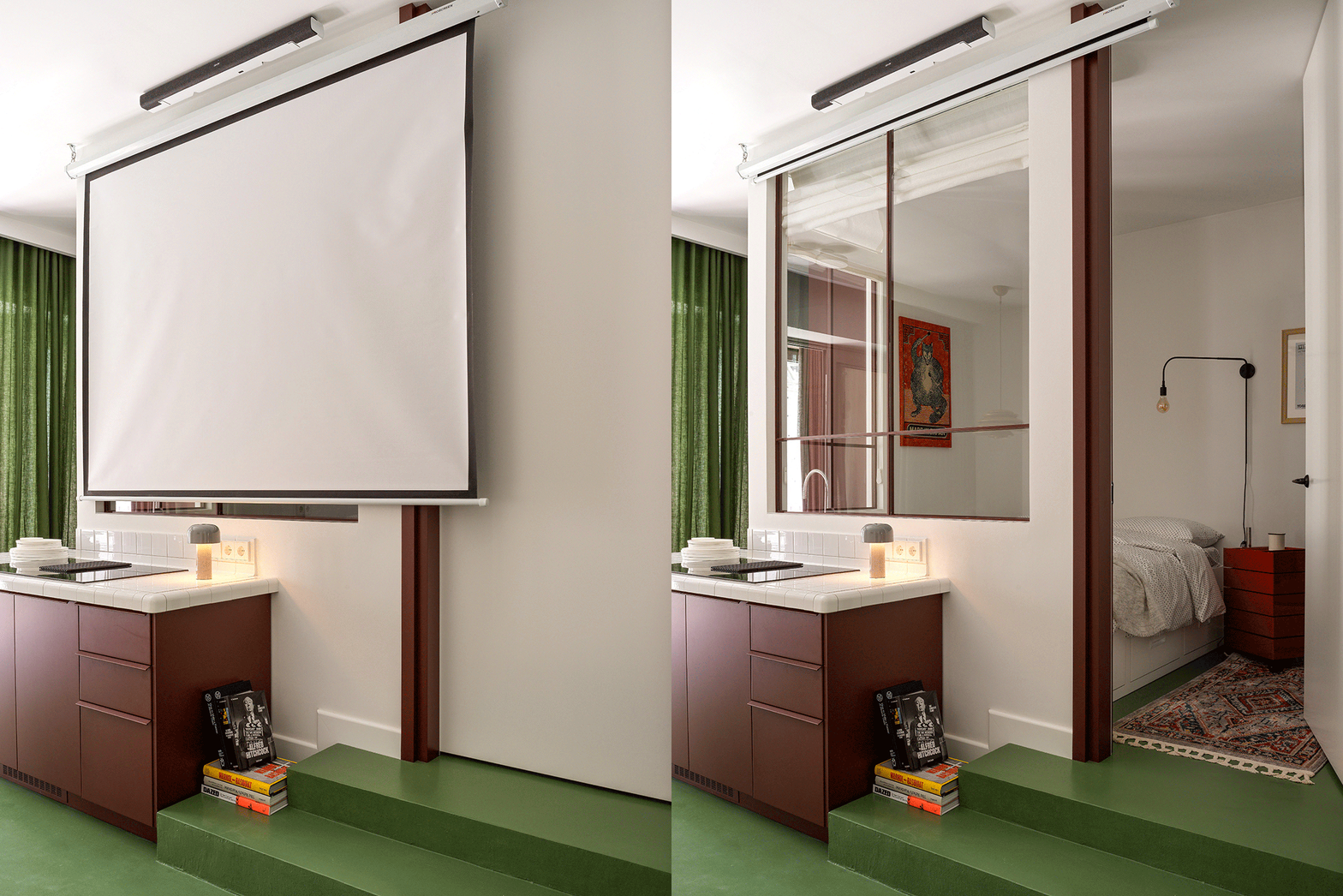
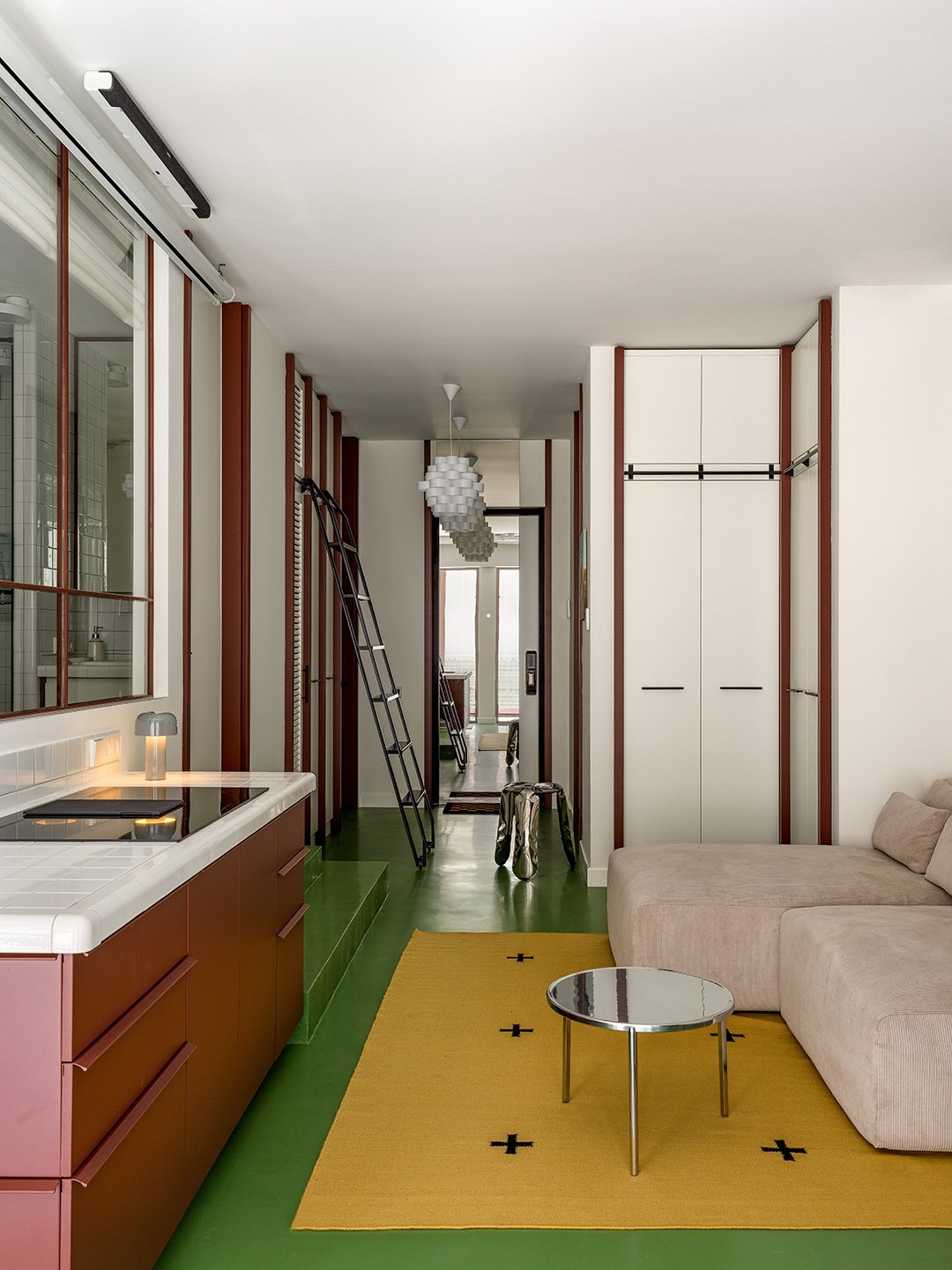
Located in Almaty, Kazakhstan, this apartment started out as a blank white rectangle, and designer Elina Mussakulova saw potential for plenty of lovely nooks, including a sun-washed kitchen, dining area, and small step-up bedroom. Ceiling-height millwork and drapery were employed as a tried-and-true trick for making the space feel roomy, but an equally brilliant move was painting the floors throughout a cheery apple green. That jolt of color in an otherwise restrained scheme adds plenty of personality without dominating the design and creates an overall sense of cohesion.
Max Out On Custom Millwork
Square Feet: 430
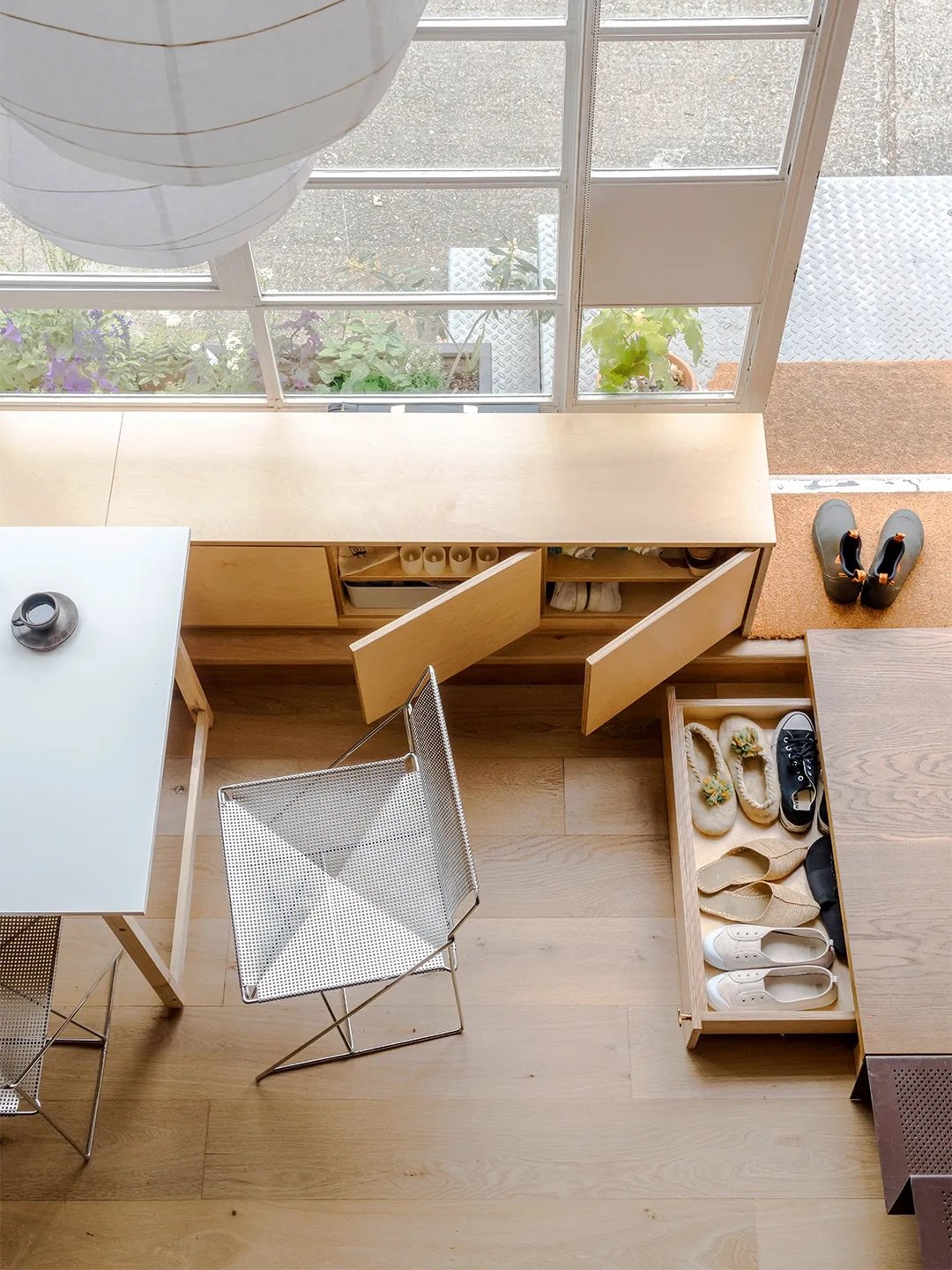
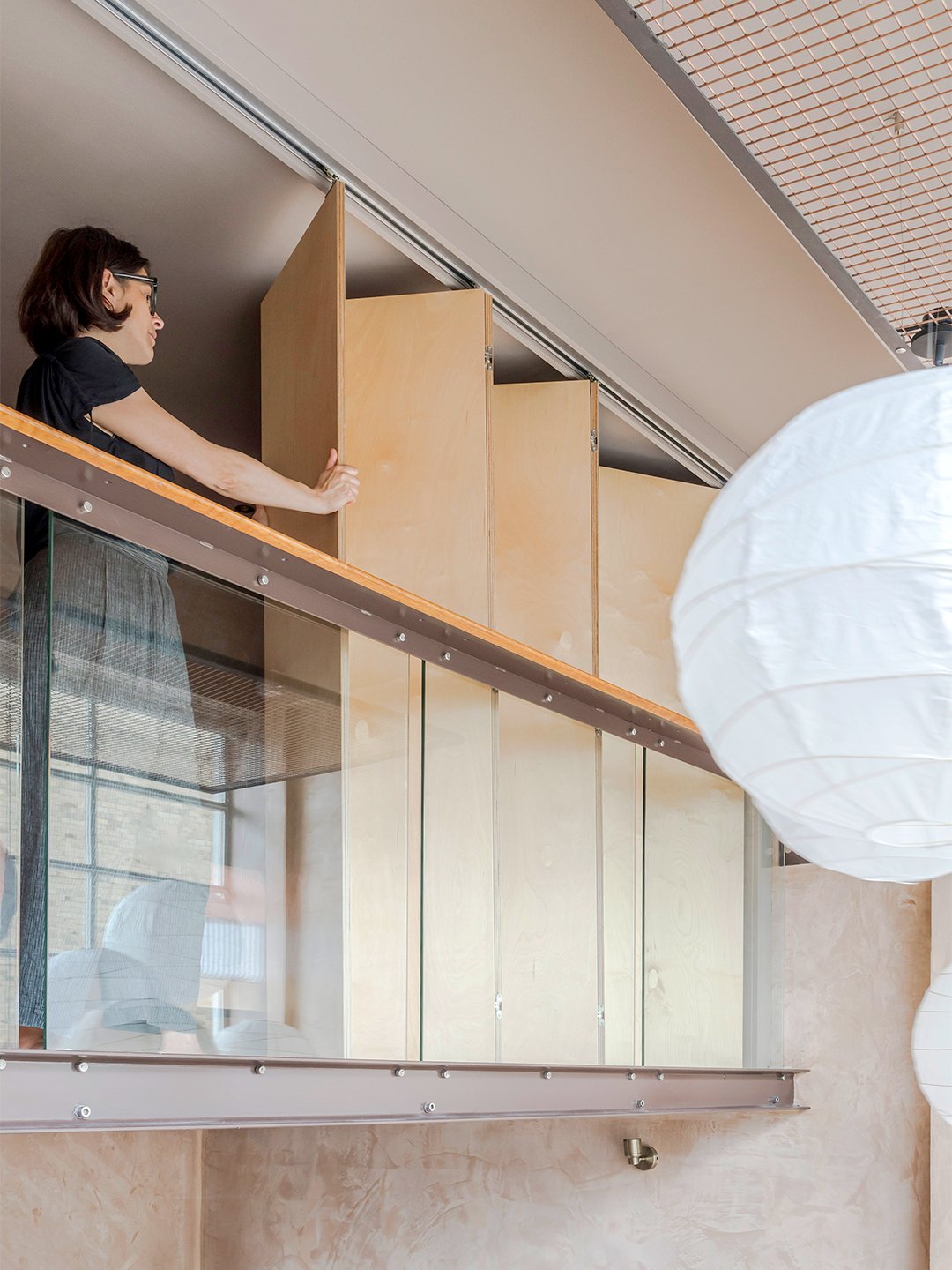
There is no denying the fact that this micro-apartment in the heart of London is a bit of a squeeze, but London-based interior designer Louise Glynn knew she could make it work for herself and her toddler—so long as the majority of the renovation budget went to custom cabinetry. Glynn decided to use plywood, which, in addition to being cost-effective, works well with the unpainted plaster walls and industrial elements. Though the kitchen cabinets, pull-out shoe storage, and built-in dining console keep things streamlined, the folding panel in the small upstairs bedroom was particularly inspired. Closing it allows Glynn to put her son to bed and still roam around the rest of the apartment without disturbing him.
Cordon With A Curtain
Square Feet: 350
Select antiques and smart, well-proportioned furnishings—along with floor-to-ceiling kitchen cabinetry and generous bathroom storage—are certainly part of what makes this Brooklyn studio apartment feel perfectly put together. Still, the standout design element here is the soft ripple curtain: Suspended from a ceiling track, it divides the living room from the sleeping space; that same drapery was used for the floor-to-ceiling window, and creates a soft background for a small dining area.
Make The Bed A Built-In
Square Feet: 442
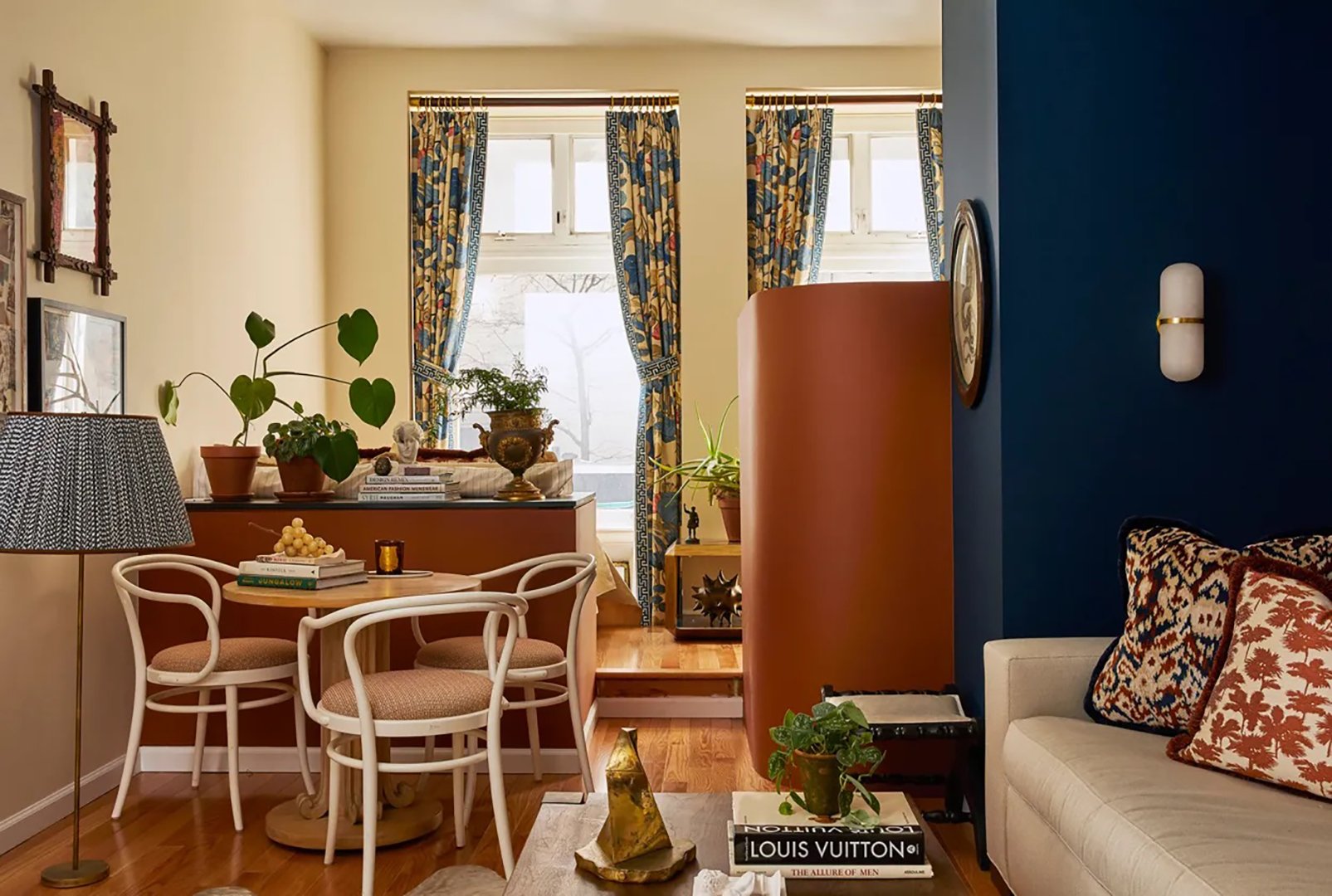
There are myriad elements that make this apartment in Manhattan’s Lenox Hill a veritable star of small space design, from the micro-patterned wallpaper that wraps the entire entryway to the fabulous patterned textiles and strategic color-blocking scheme. A built-in headboard that not only hides the bed but subdivides the studio proves that structural architectural tweaks can be an extremely worthwhile investment, too.
Size Down On Features And Fixtures
Square Feet: 420
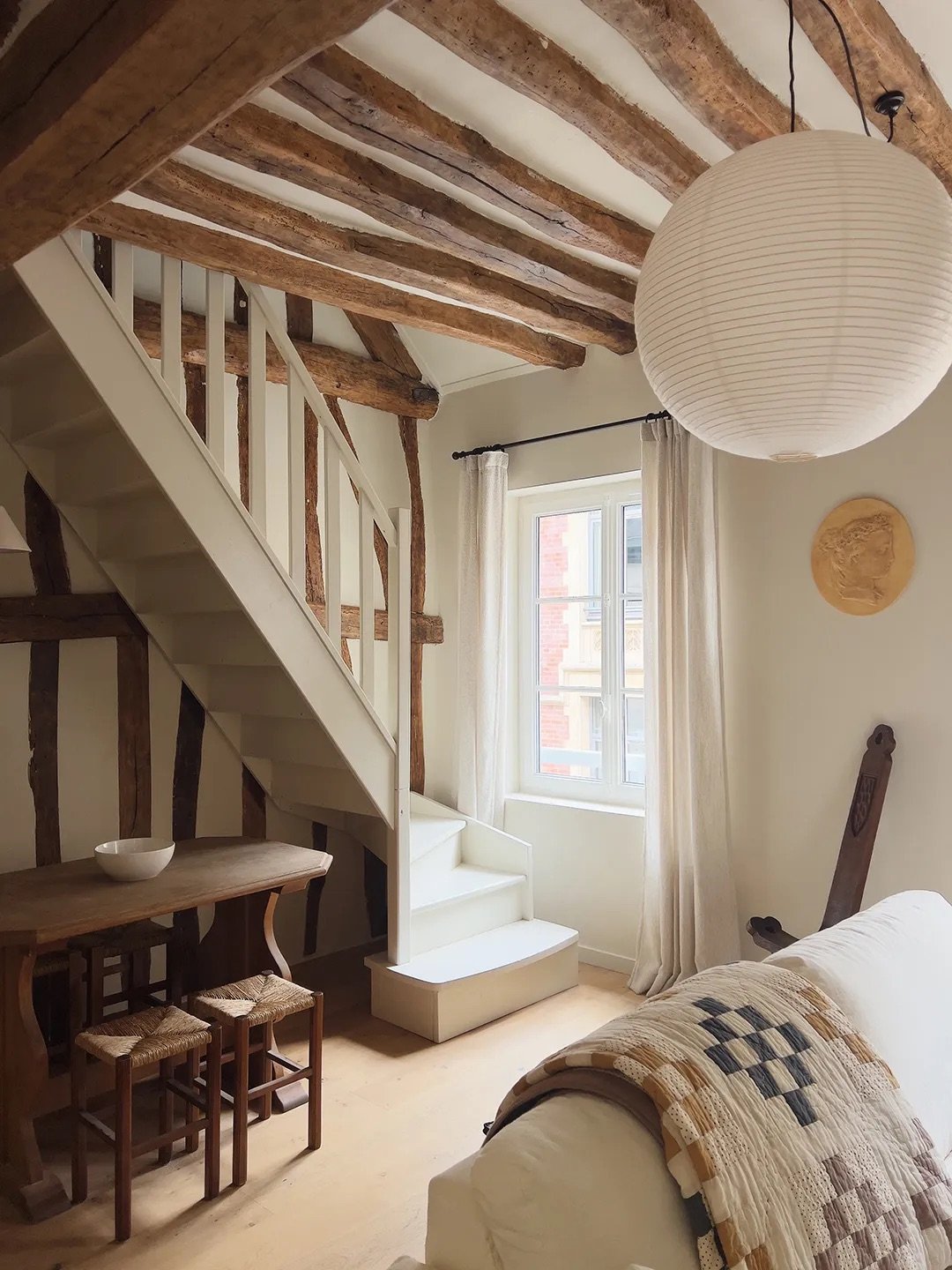
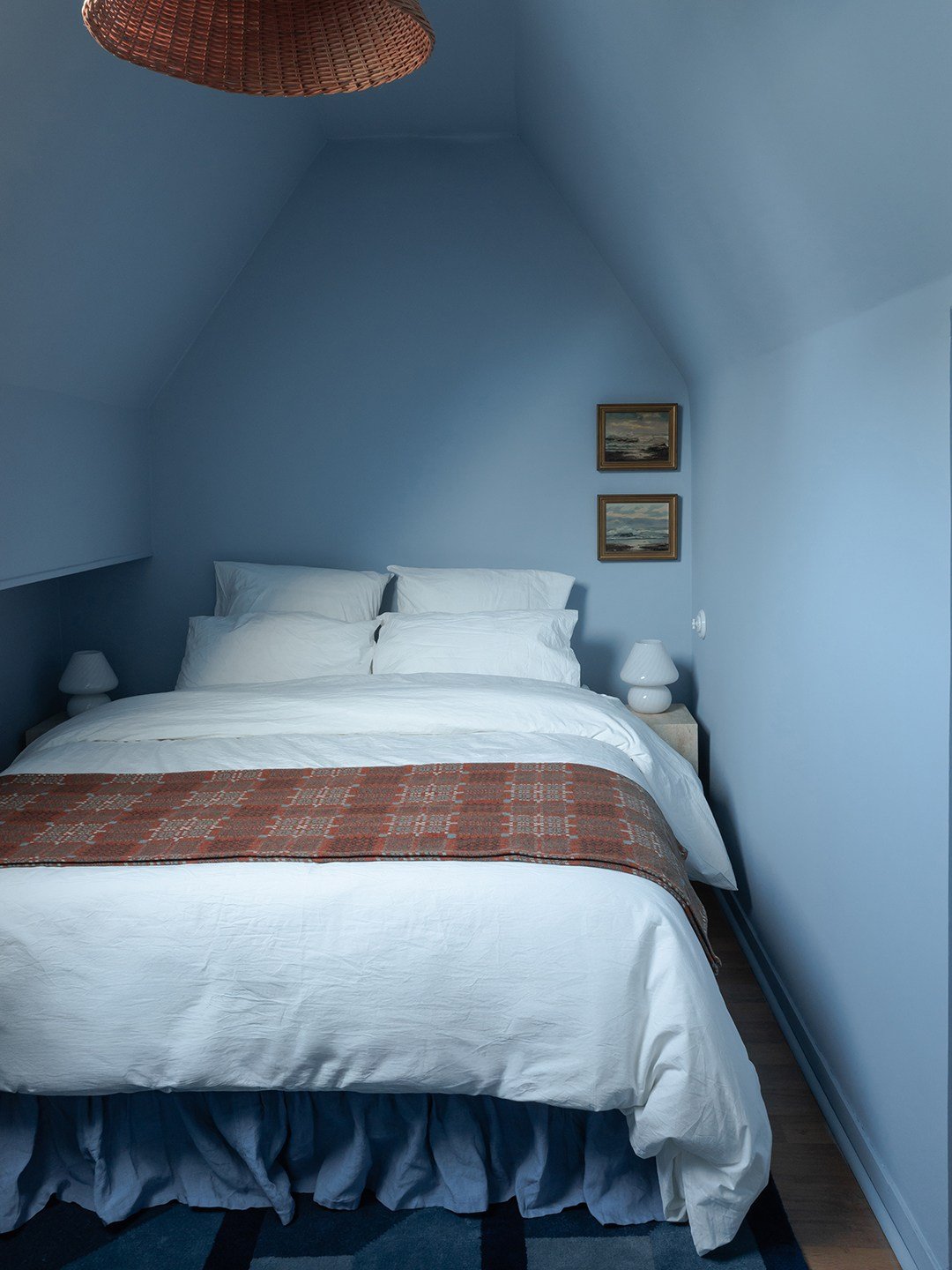
Every square-inch of this historic abode is beautifully finished and charming. (Consider it a byproduct of an interior designer and art director renovating a small apartment with gorgeous exposed beams in Normandy, France.) The couple, who purchased the place as a weekend getaway as well as a vacation rental, were clear-eyed about what needed to be full-size and what didn’t. The former category includes the bed, for one thing; the latter, the kitchen sink and stovetop. Who needs more than two burners, anyway?
Don’t Forget To Have Fun
Square Feet: 500
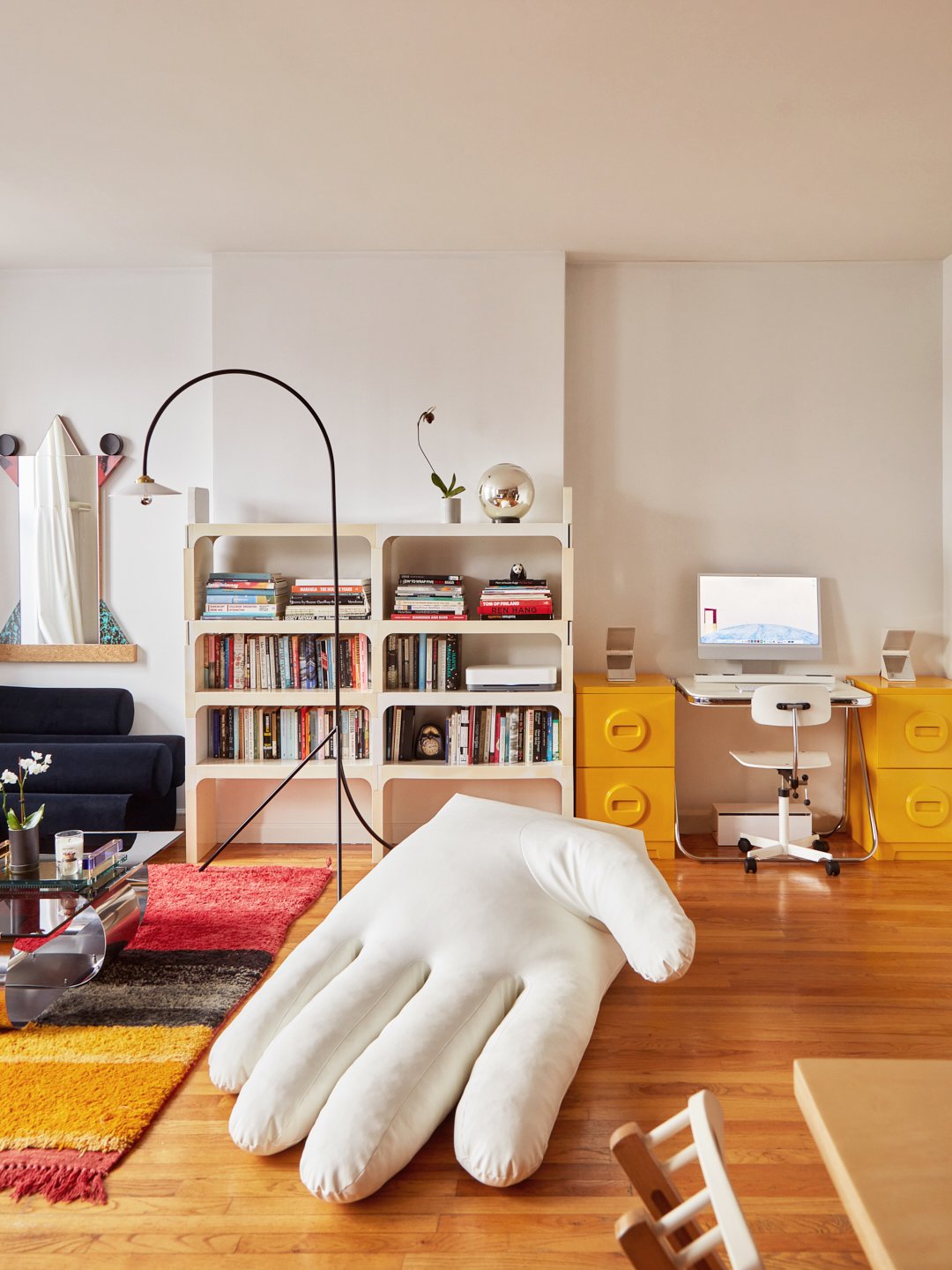
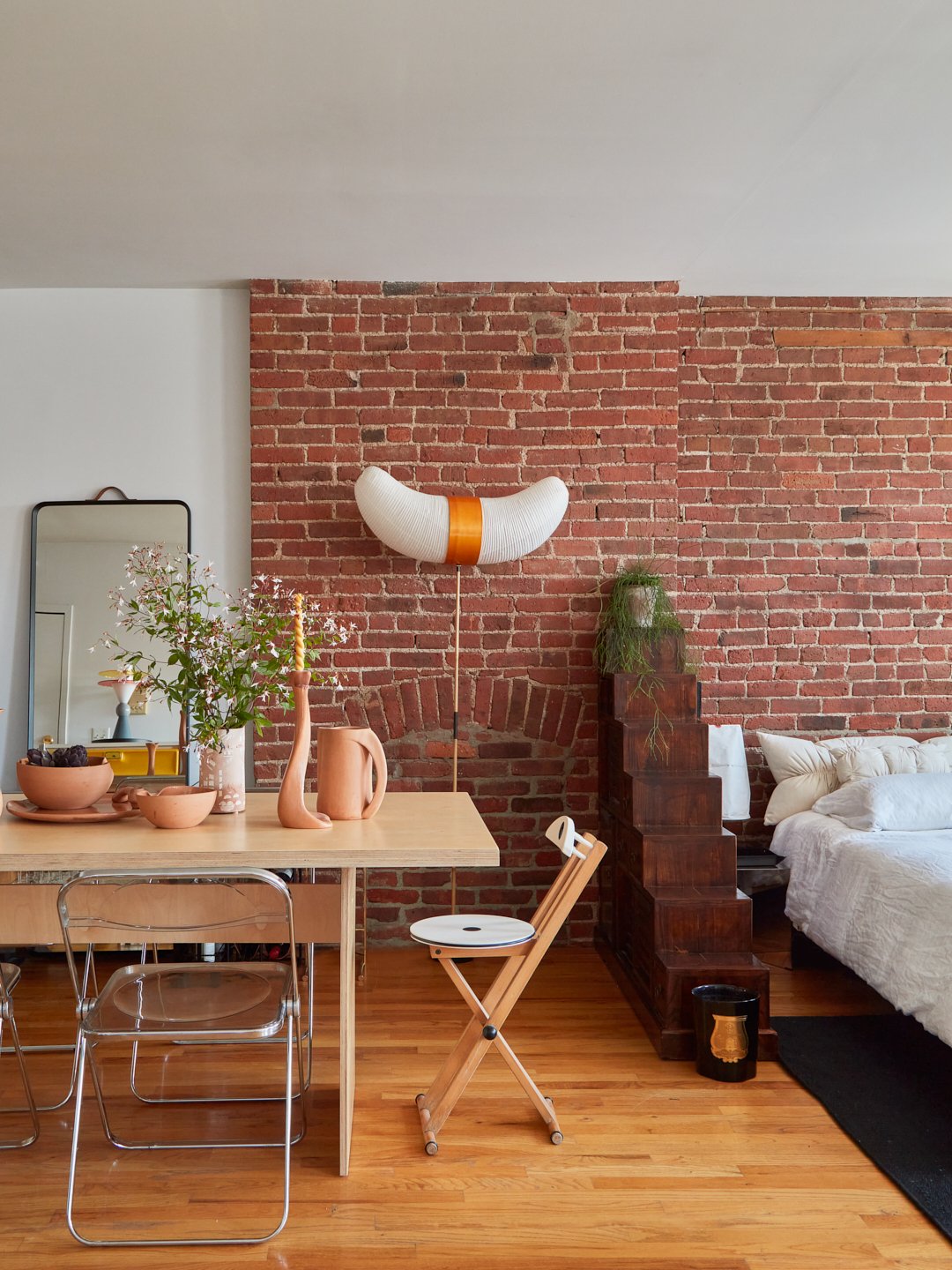
Admittedly, the hand-shaped pillow is the most obvious show-stealing element in this Williamsburg loft. But there is a playful vibe that permeates the entire apartment, like the punchy yellow cabinets, an oversized Ponytail palm, and banana-shaped sconce in the dining room. The bottom line? Sometimes small space design falls back on tasteful standbys—but there is always room for a little insouciance.
Consult The Color Wheel
Square Feet: 500
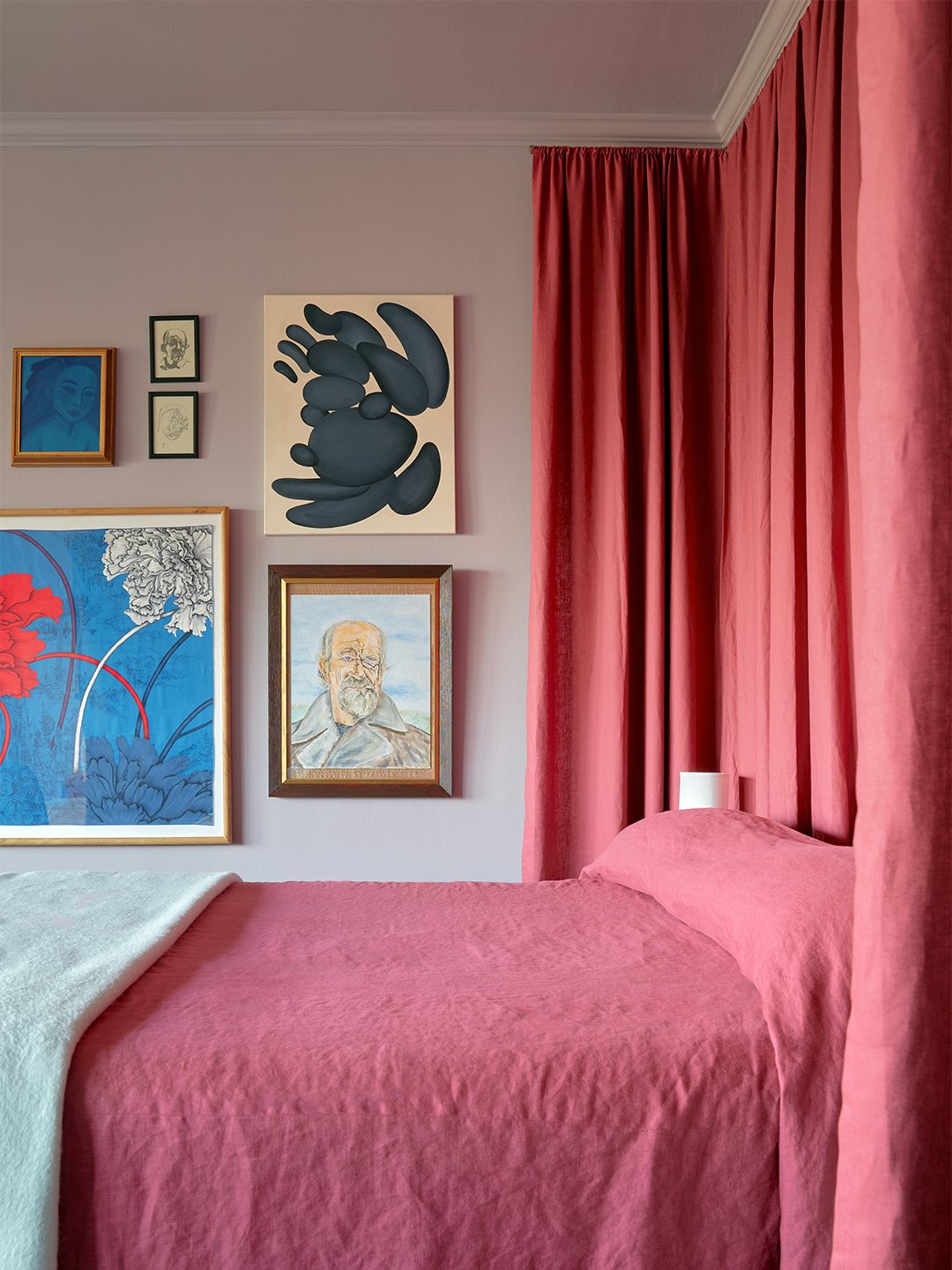
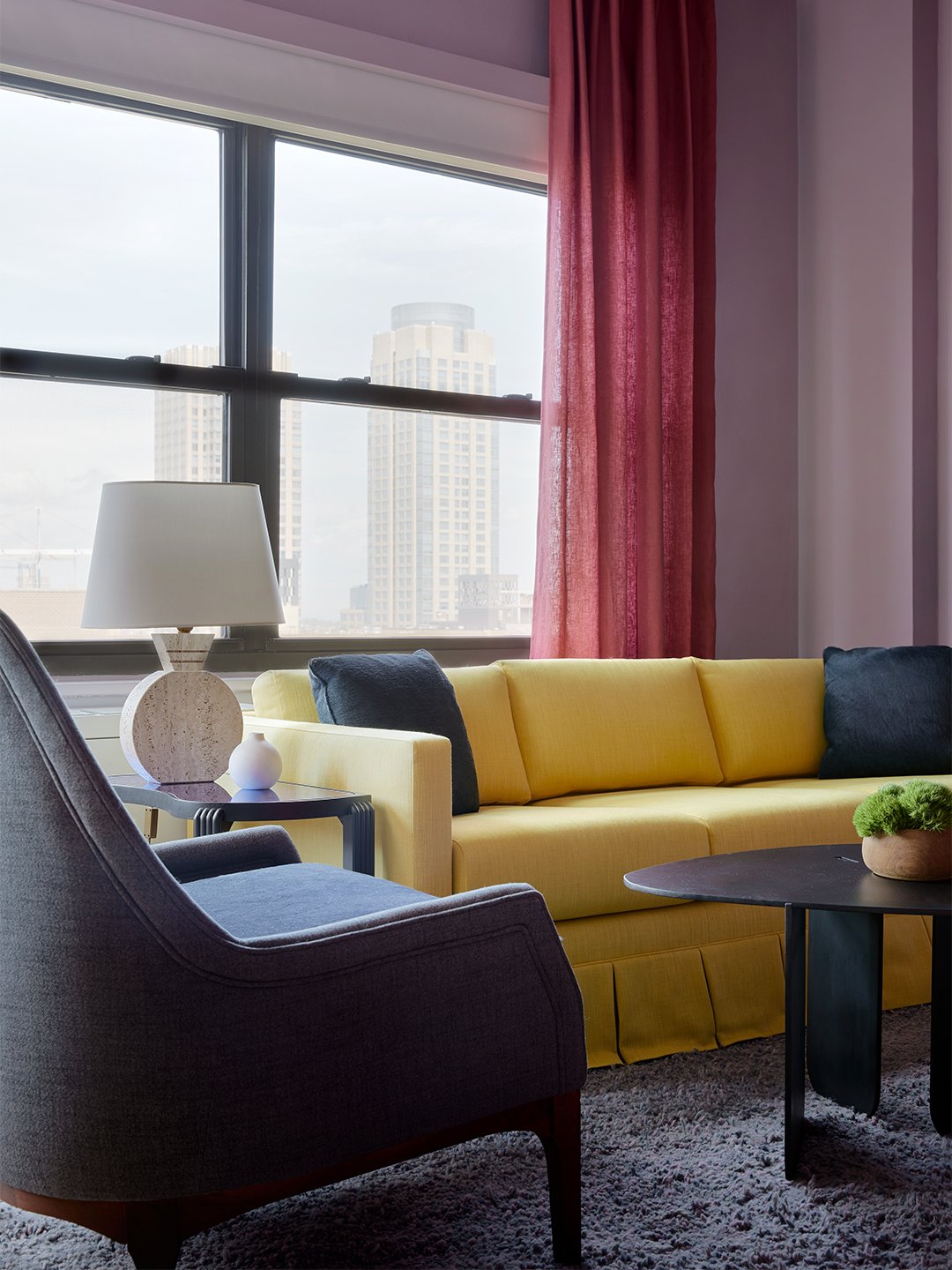
A stunning but subtle Beni Ourain rug does an excellent job of separating the sleeping and sitting areas from the kitchen and dining space in this small Manhattan studio. But to further subdivide the color-washed lounge zone, the designer of this elegant room turned to the color wheel: by placing a lemon pleat-skirted sofa directly across from a raspberry-draped bed and full-height fabric headboard, he created clear, distinct “rooms,” courtesy of basic color theory.
Go For Gallery Vibes
Square Feet: <400
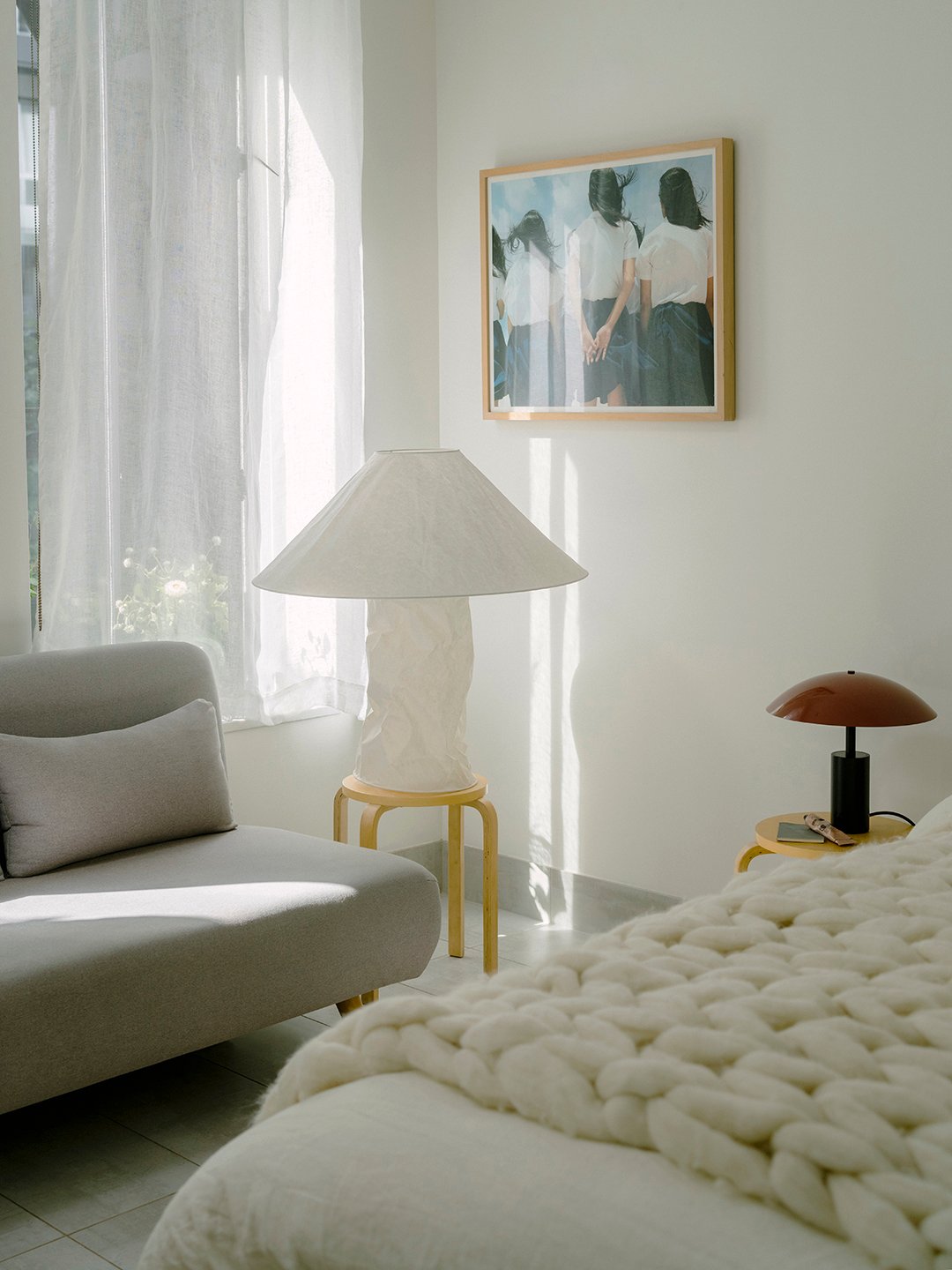
Home to Lower East Side-based stylist Beverly Nguyen, this apartment was designed with gatherings in mind, including furniture that could easily be convened for impromptu parties and plenty of spots to lounge while dinner and drinks are being assembled. The space is more or less a collection of chic vignettes—which all work together within the white-walled gallery feel, which can play host to personal treasures without tipping into maximalist mode.
Cultivate Those Curves
Square Feet: 320
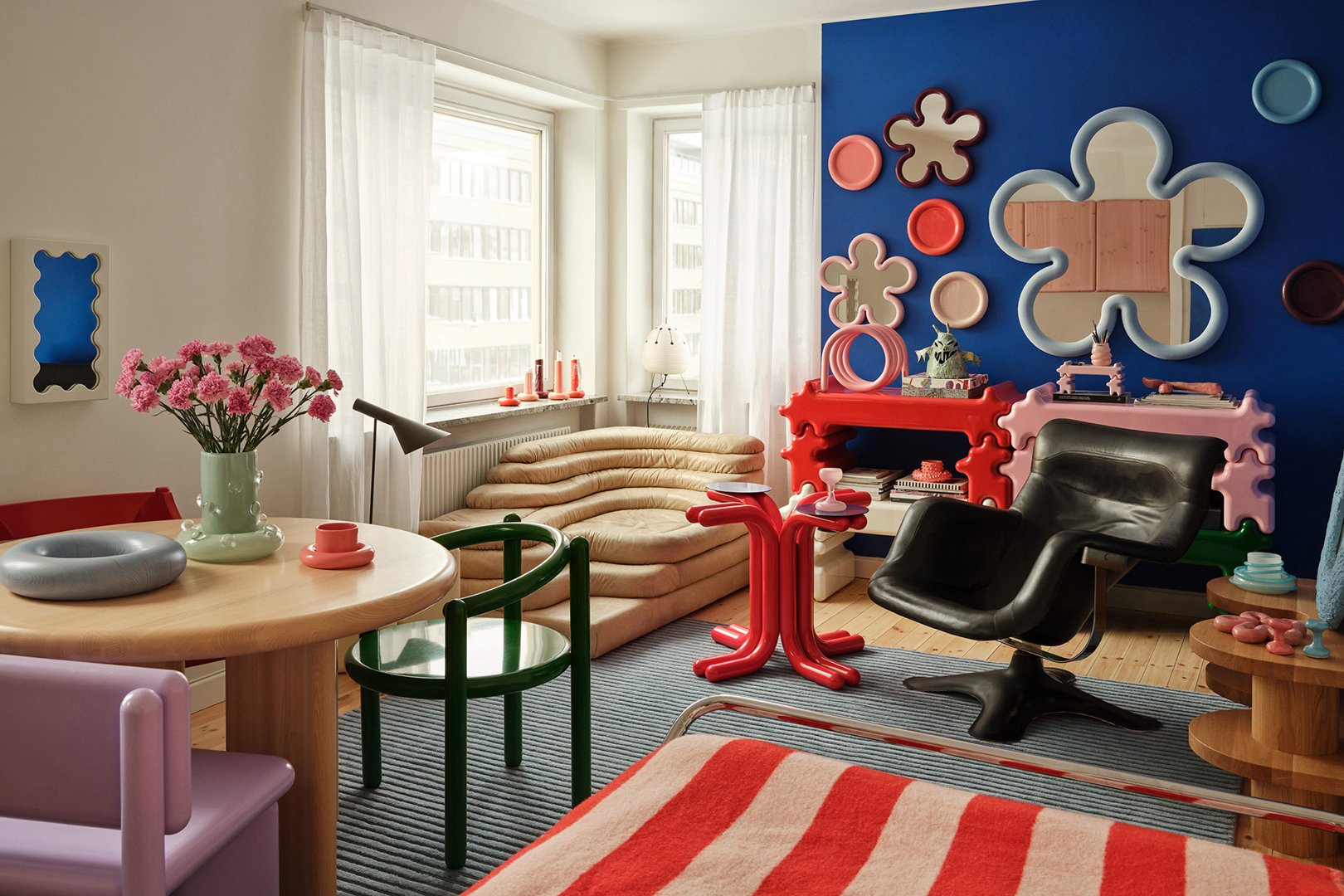
There are no shortage of moves to admire and inspire in this joyful Stockholm studio, occupied by the designer Gustaf Westman. A wall of flower-shaped mirrors magically creates depth; unconventional furniture invites guests to sit down, sprawl out, and stay awhile. Color is key to the design concept. Curves also play a big part, and offer a lesson for small space dwellers everywhere: When designing for close quarters, fewer corners make for better flow—and cut down on opportunities for painful collisions. Win, win.