
We may earn revenue from the products available on this page and participate in affiliate programs.
The dream: a sunlit home office with a door you can dramatically close at 5 p.m. The reality: your laptop propped up on a pillow or wedged next to a pile of magazines on the coffee table. If your living room is pulling double duty these days, you’re not alone. Thankfully, you don’t need a big renovation (or even an extra room) to make it work. With a few smart layout moves, hardworking furniture pieces, and some visual sleights of hand, your space can toggle between Zoom-ready workspace and lounge zone without missing a beat. Here are ten clever solutions to consider.
Turn a Tiny Nook Into Your 9-to-5
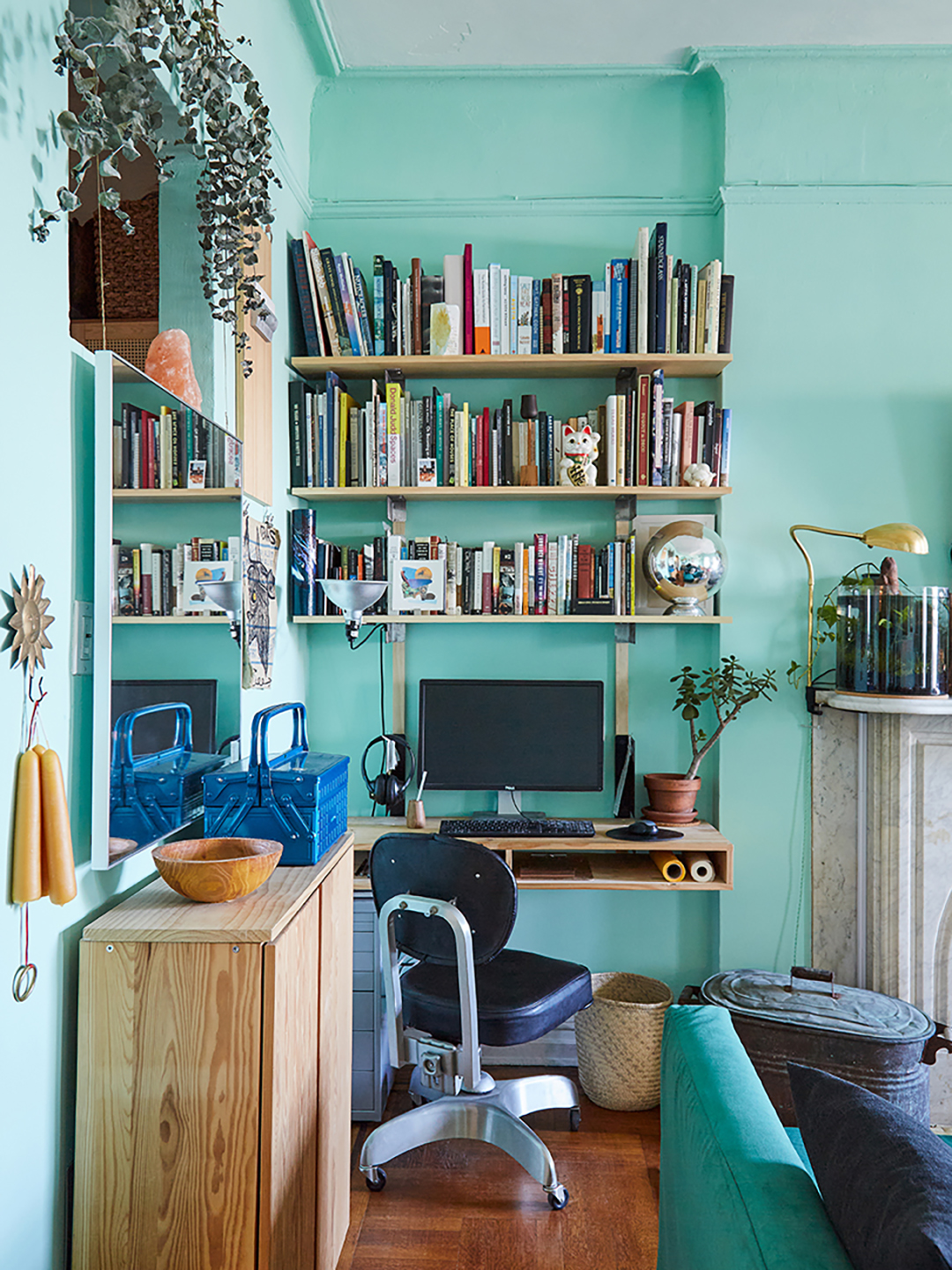
That awkward alcove or underused corner is prime real estate for a custom-looking setup. Add a lamp and shelves cut to fit snugly, as Alden Anderson and Parker Thompson did in their Brooklyn apartment, and you’ve got yourself a fully functioning office.
Try a Desk That Doesn’t Look Like a Desk
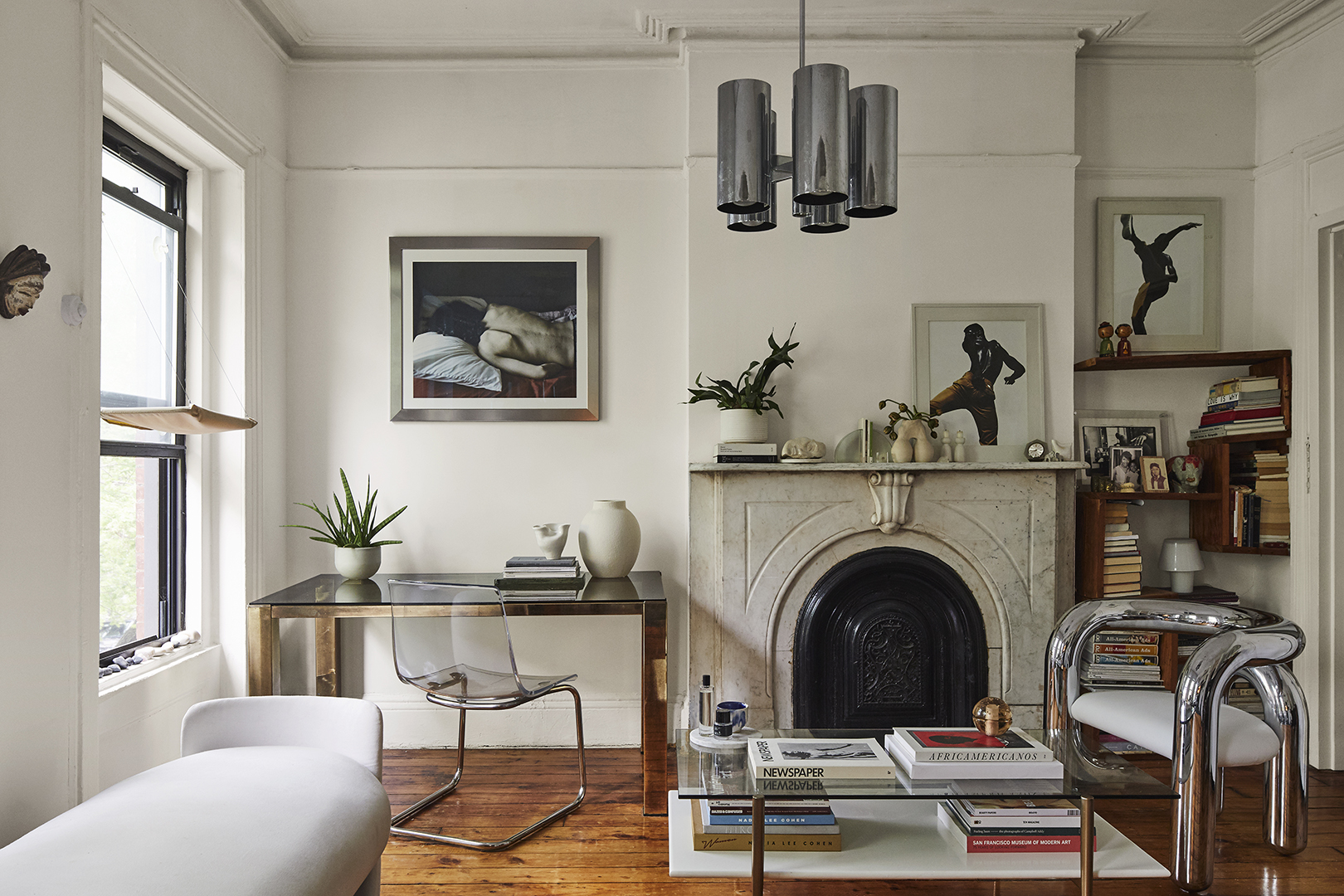
Photographer Dana Scruggs opted for a vintage smoked-glass table as both desk and dining spot to keep things visually cohesive. The goal: something that blends in when the laptop is closed.
Give the Console Table Another Task
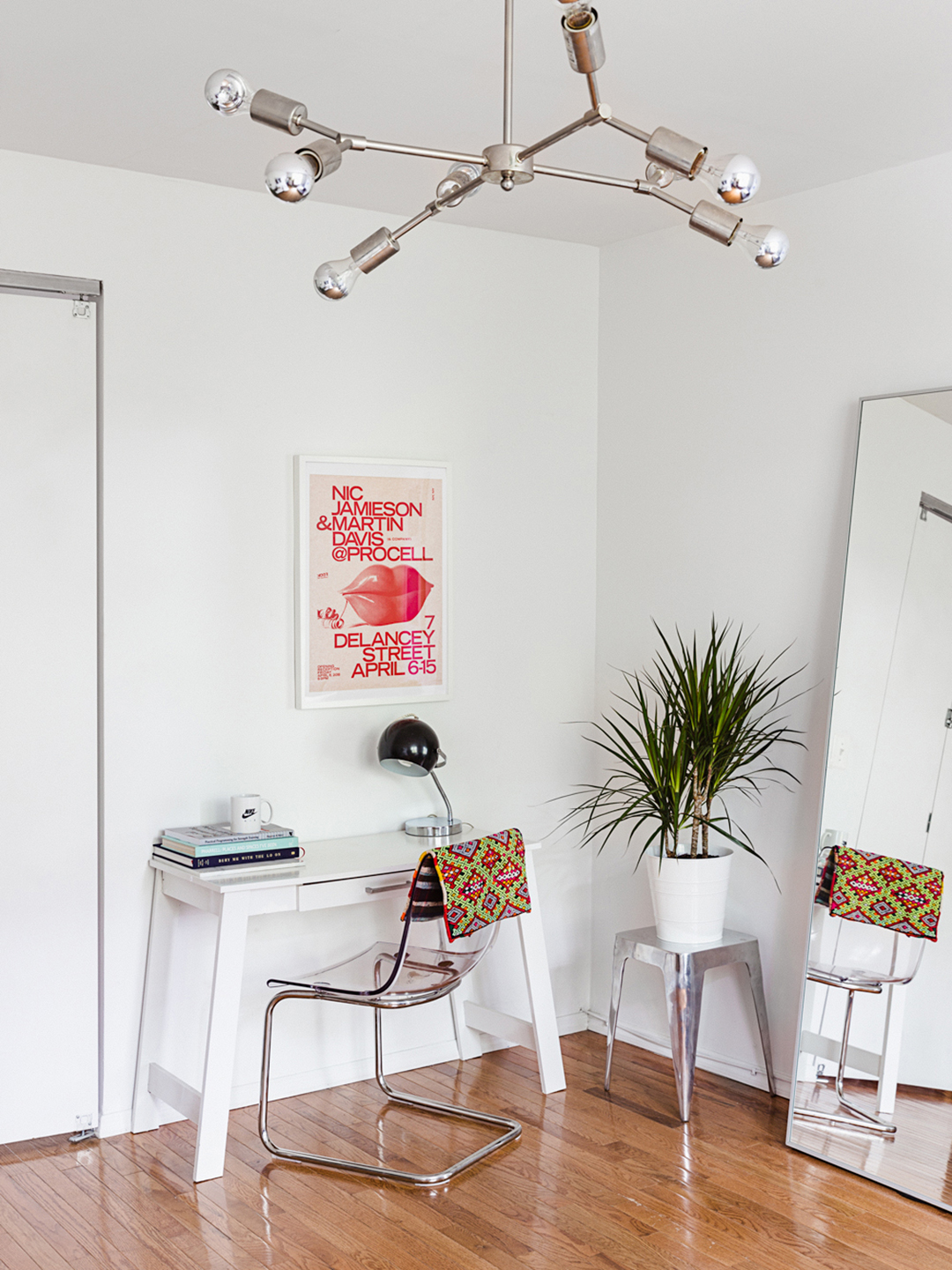
A slim console can easily double as a desk with the addition of a compact chair or stool. Style it minimally so it transitions seamlessly from workspace to living room vignette.
Carve Out a Corner and Commit to It
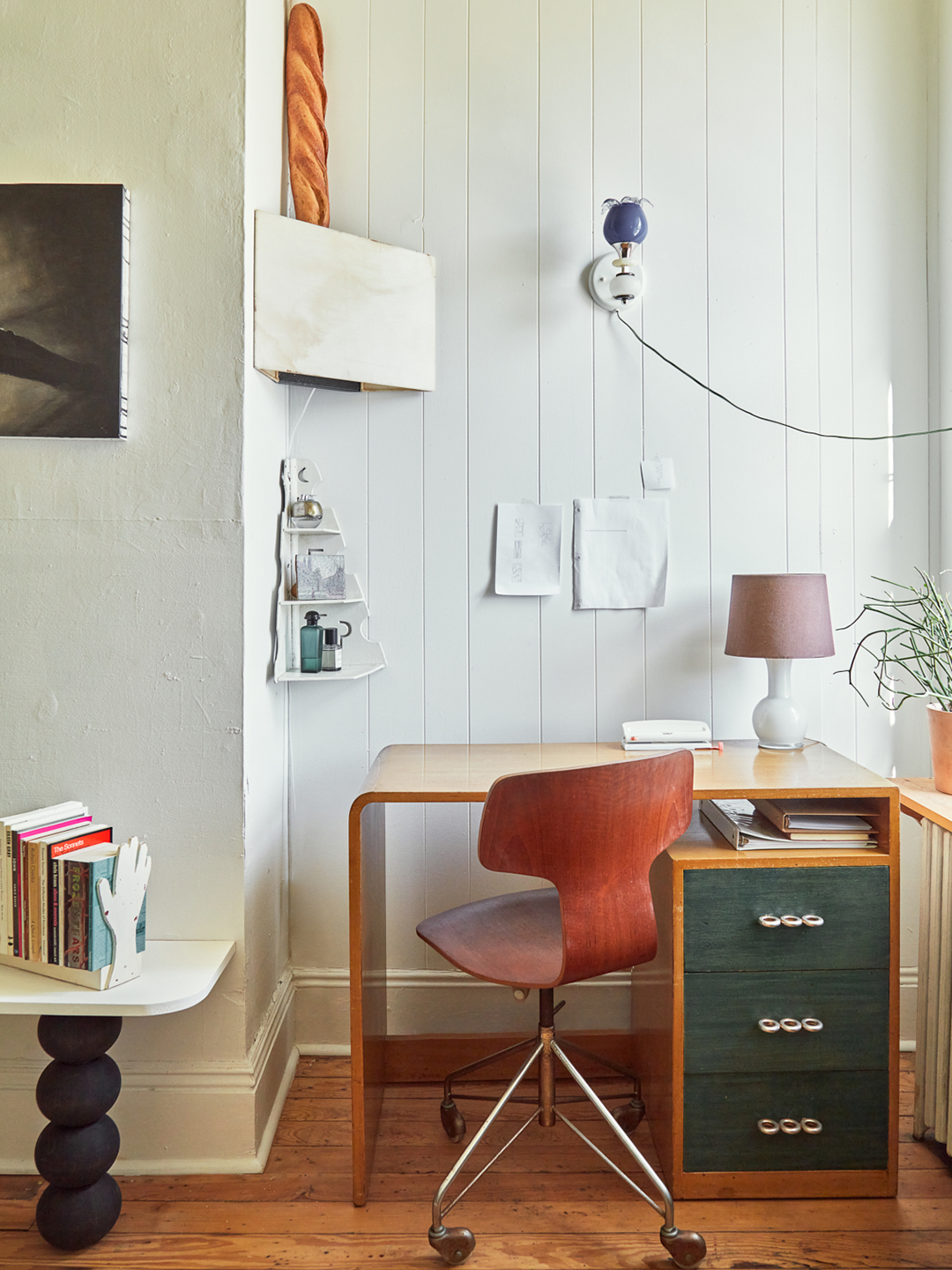
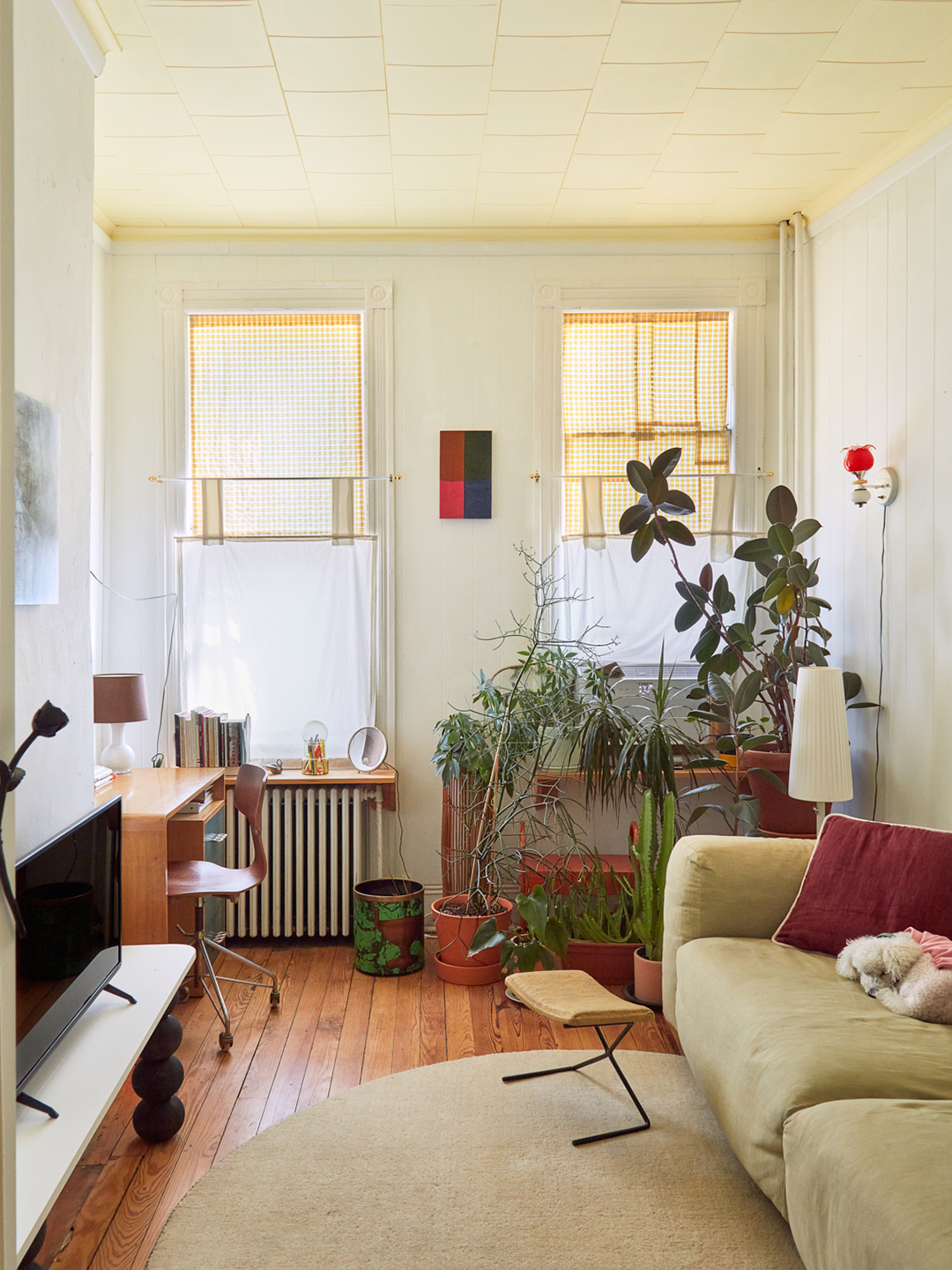
Even in a small space, consistency is key. Dedicate a specific area to work, kit it out with everything you might need—spacious drawers, a proper chair, access to important documents—and resist the urge to migrate. You’ll keep clutter contained and your routine intact.
Curtains Aren’t Just for Windows
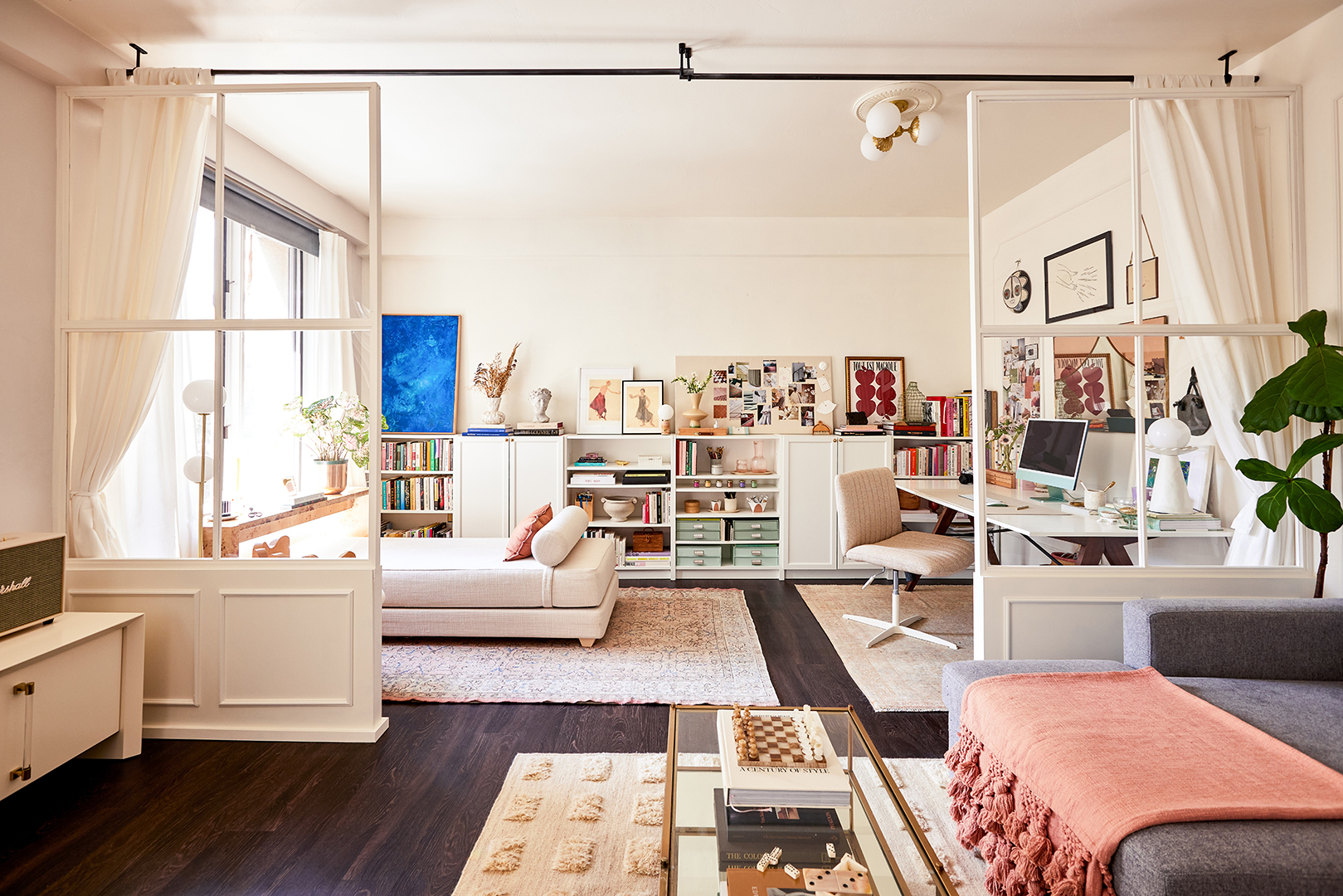
Amal Iqbal defined the office side of her studio apartment with window-like partitions and curtains hanging from ceiling-mounted rods. With one quick pull, the workday is over.
A Slim Secretary Is the Ultimate Space Saver
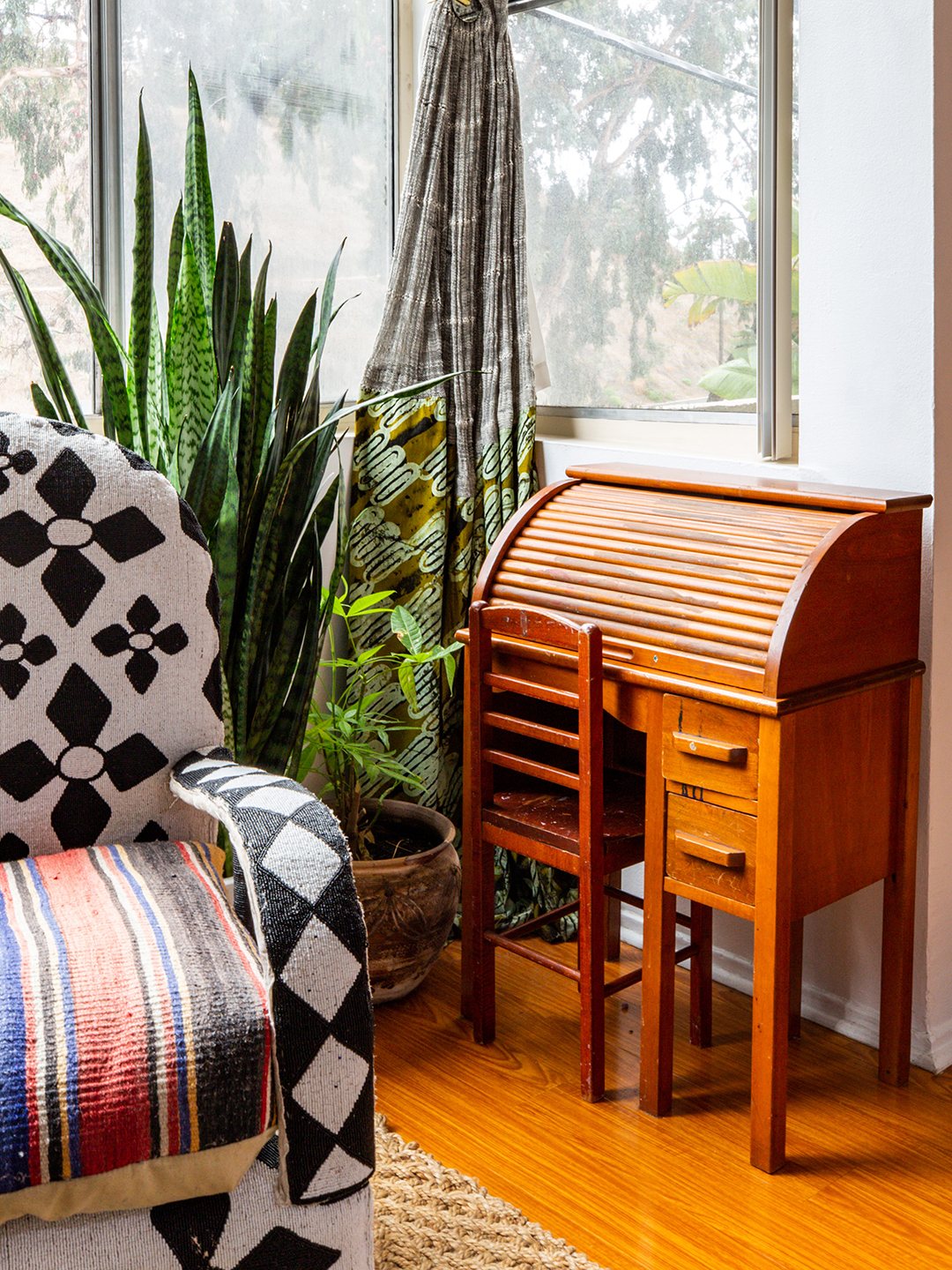
Fun fact: This secretary desk, in the L.A. home of designer and stylist Jordan Adero, is actually kid-sized. But the idea still holds: This style packs a lot of storage into a small footprint, which you’d never know when the accordion top is closed.
A Drop-Down Desk Works Overtime
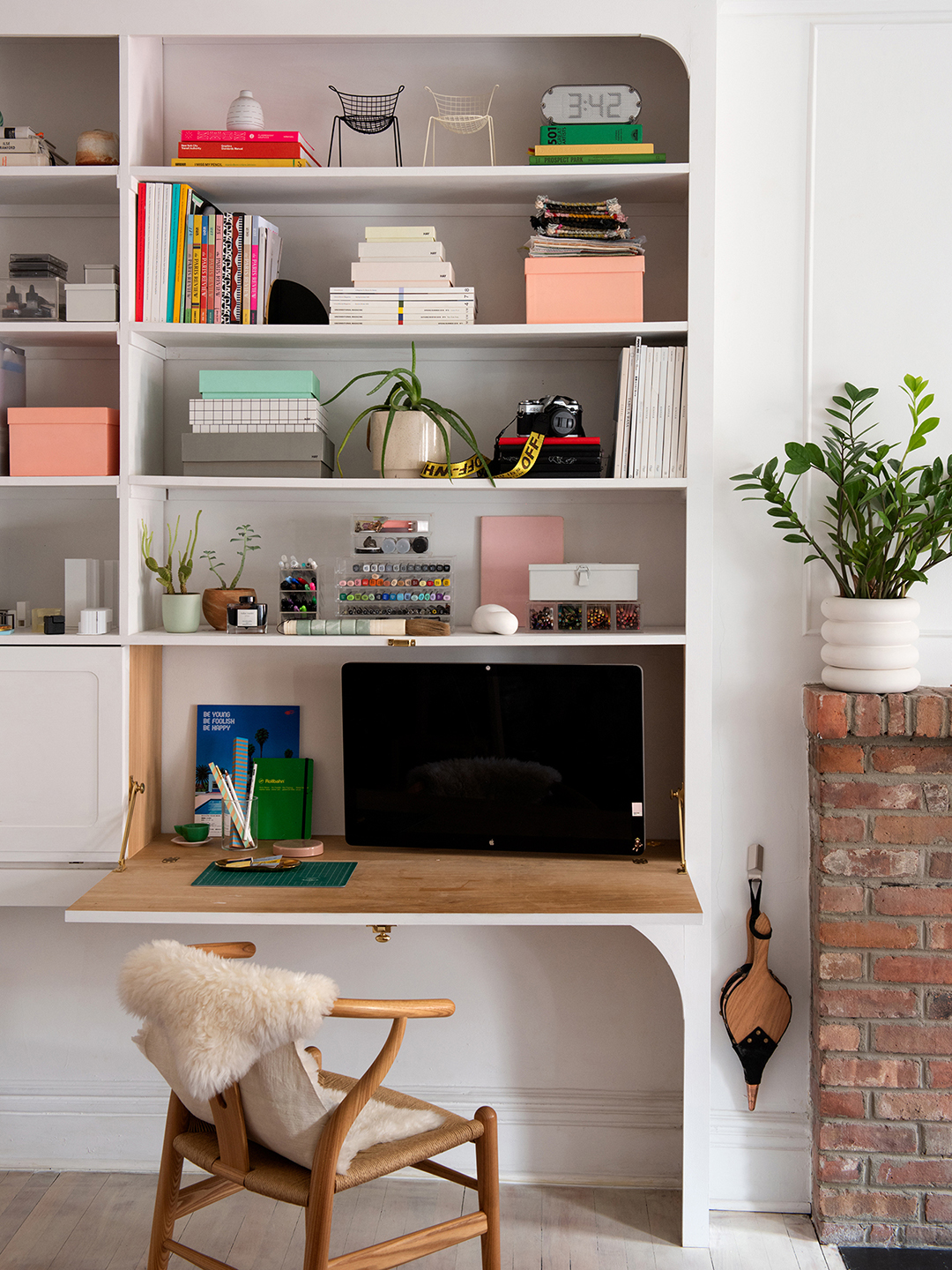
A wall-mounted, fold-down desk is ideal for narrow quarters—pull it down when needed, then tuck it away to reclaim the floor space. Even better if it’s designed to blend in with your built-ins, like the one in industrial designer Laura Yeh’s Brooklyn apartment.
Divide the Space Without Closing It Off
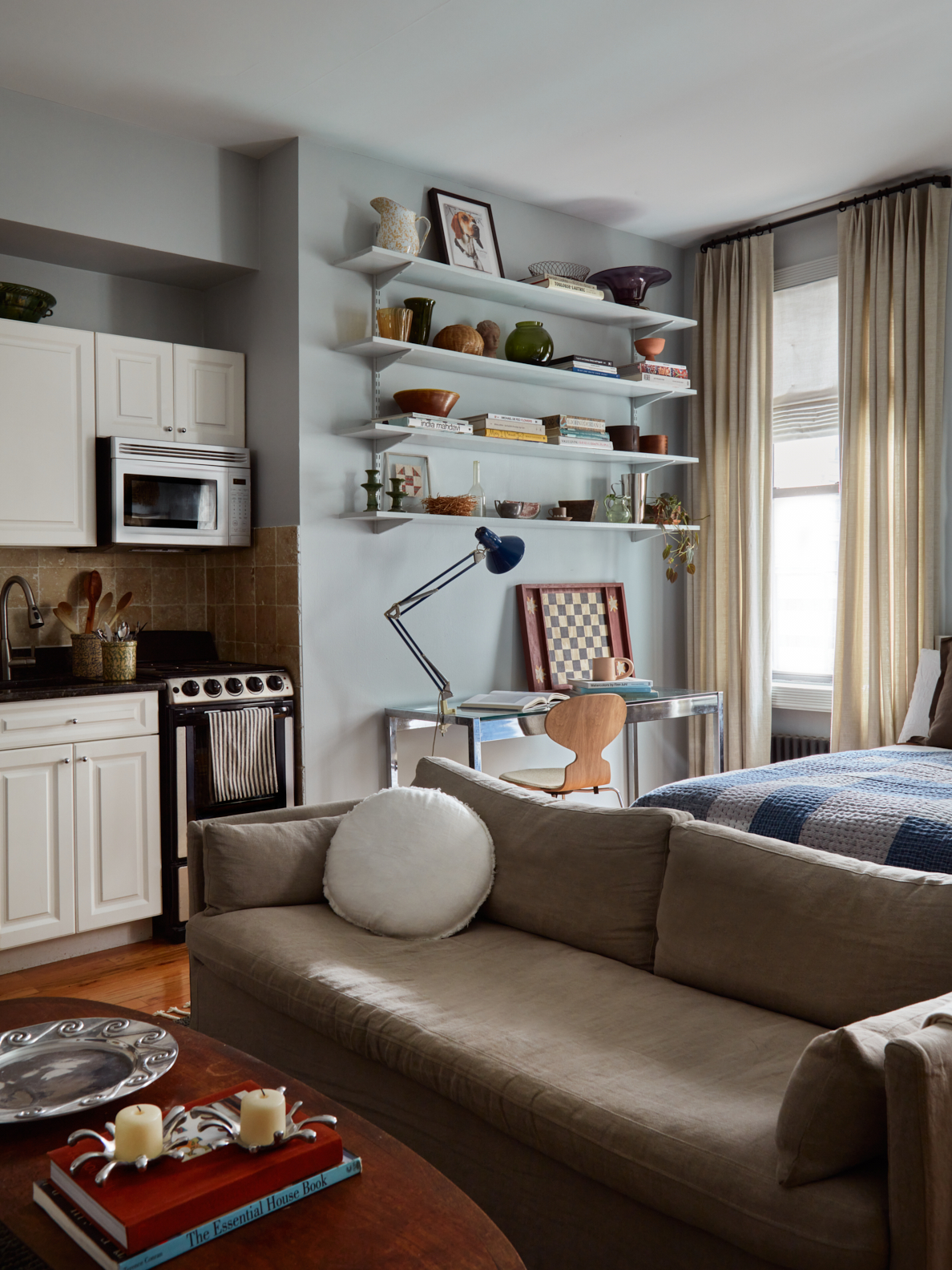
Use open shelving, a screen, or even the placement of a sofa, as stylist Julia Stevens did skillfully in her New York City studio, to subtly separate zones without totally disrupting the flow of the space.
Skip the Standard Chair
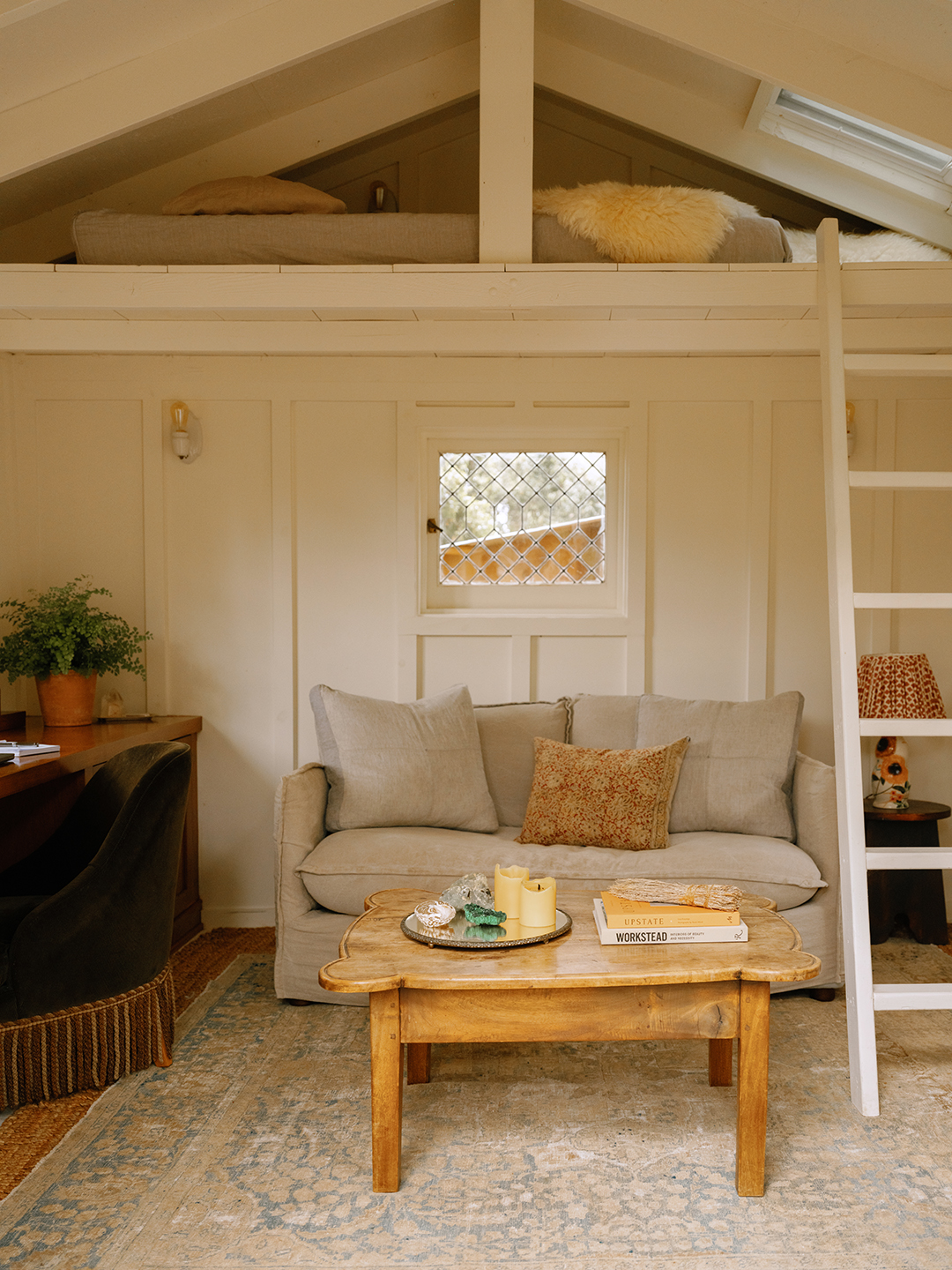
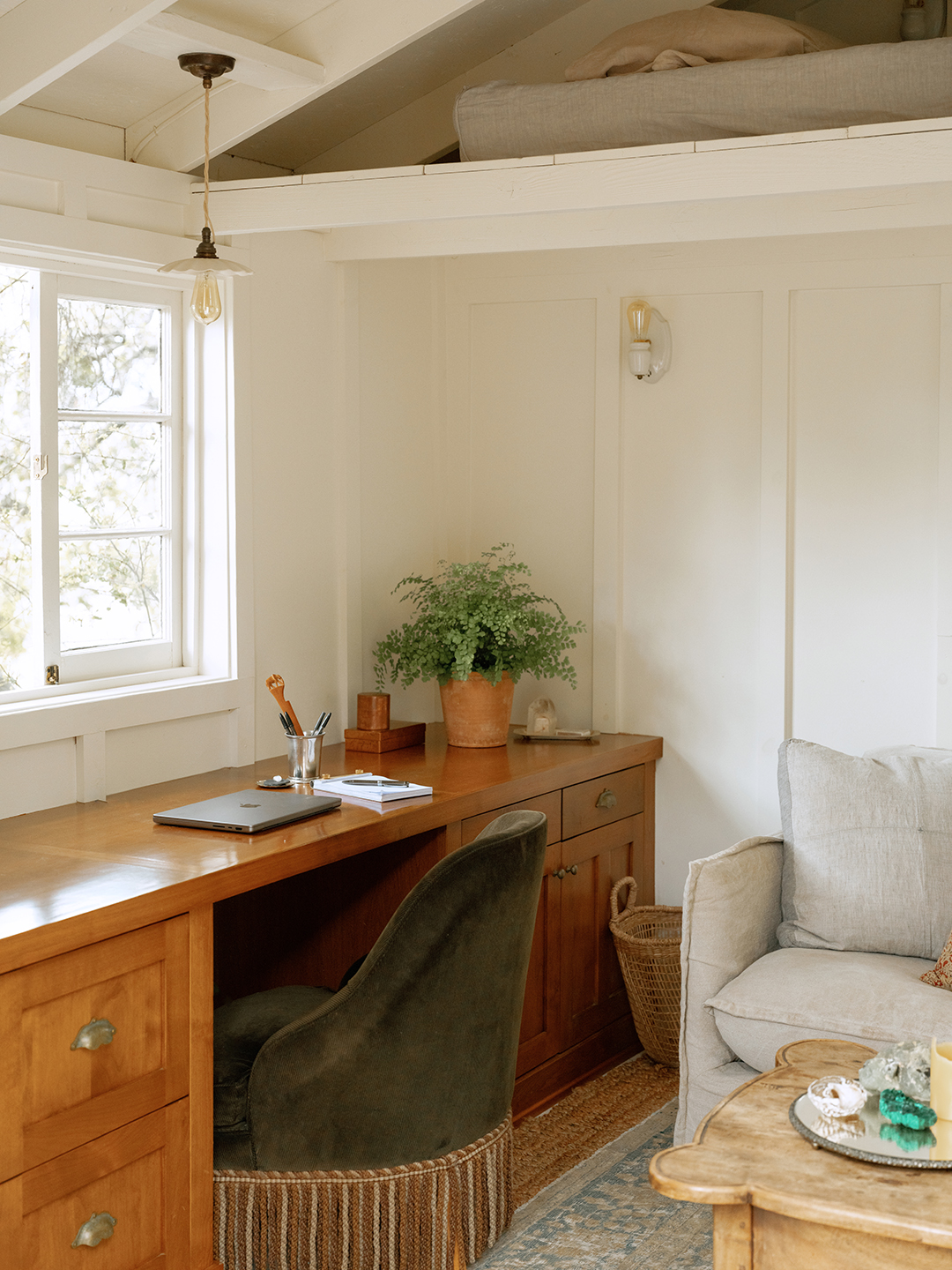
A typical rolling desk chair might be ergonomic and easy to maneuver, but it’s bound to be a glaring aesthetic outlier. In her husband’s shed-turned-office, manifestation pro Lacy Phillips used an upholstered slipper chair instead.
Shop Vintage
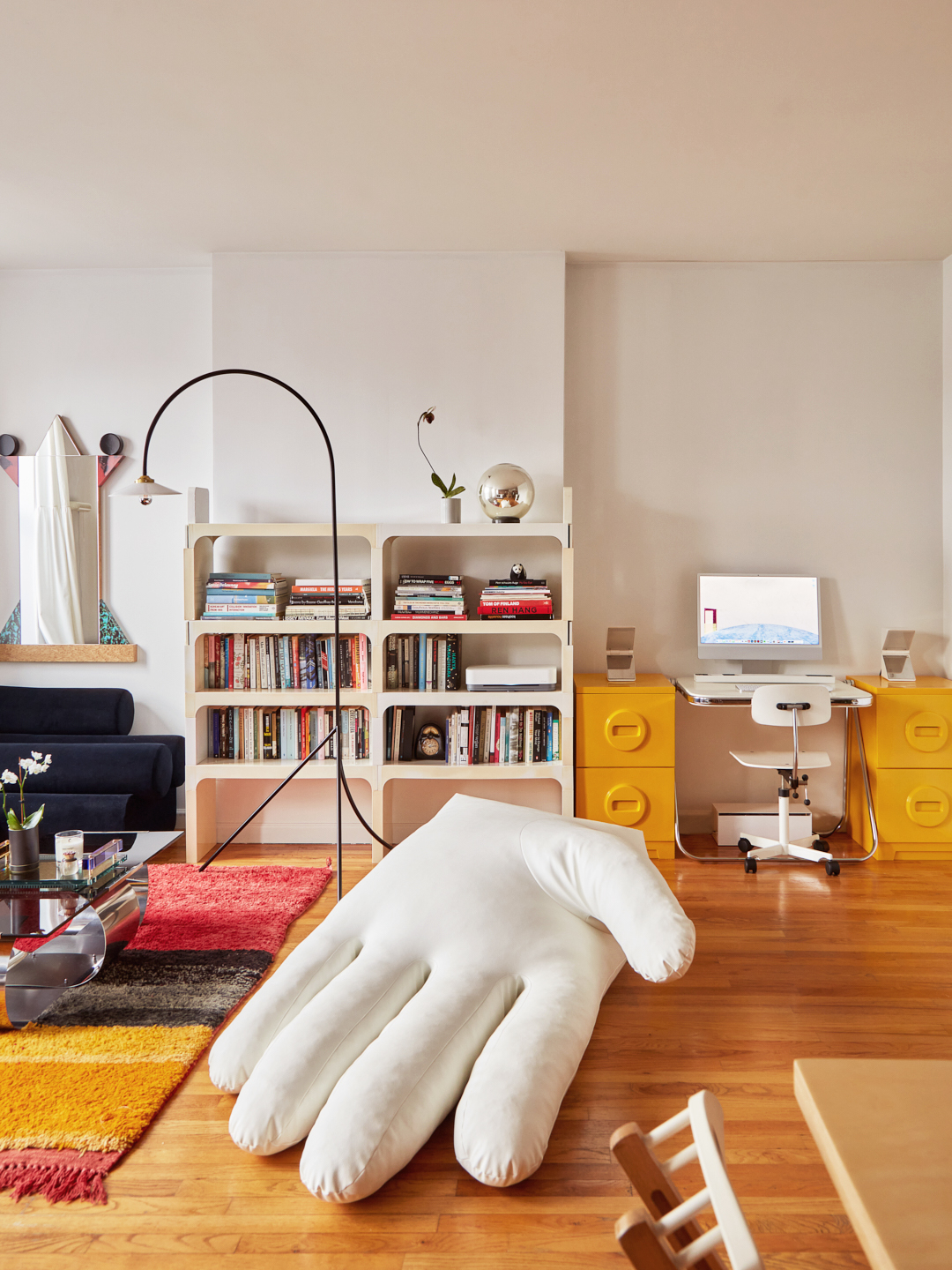
If you’re staring at it all day, it should make you happy. The easiest way to avoid sad cubicle vibes is to shop secondhand. In designer John Sohn’s Brooklyn apartment, the cheery yellow Akro-Mils filing cabinets are from the 1970s.
Define the Space With Paint
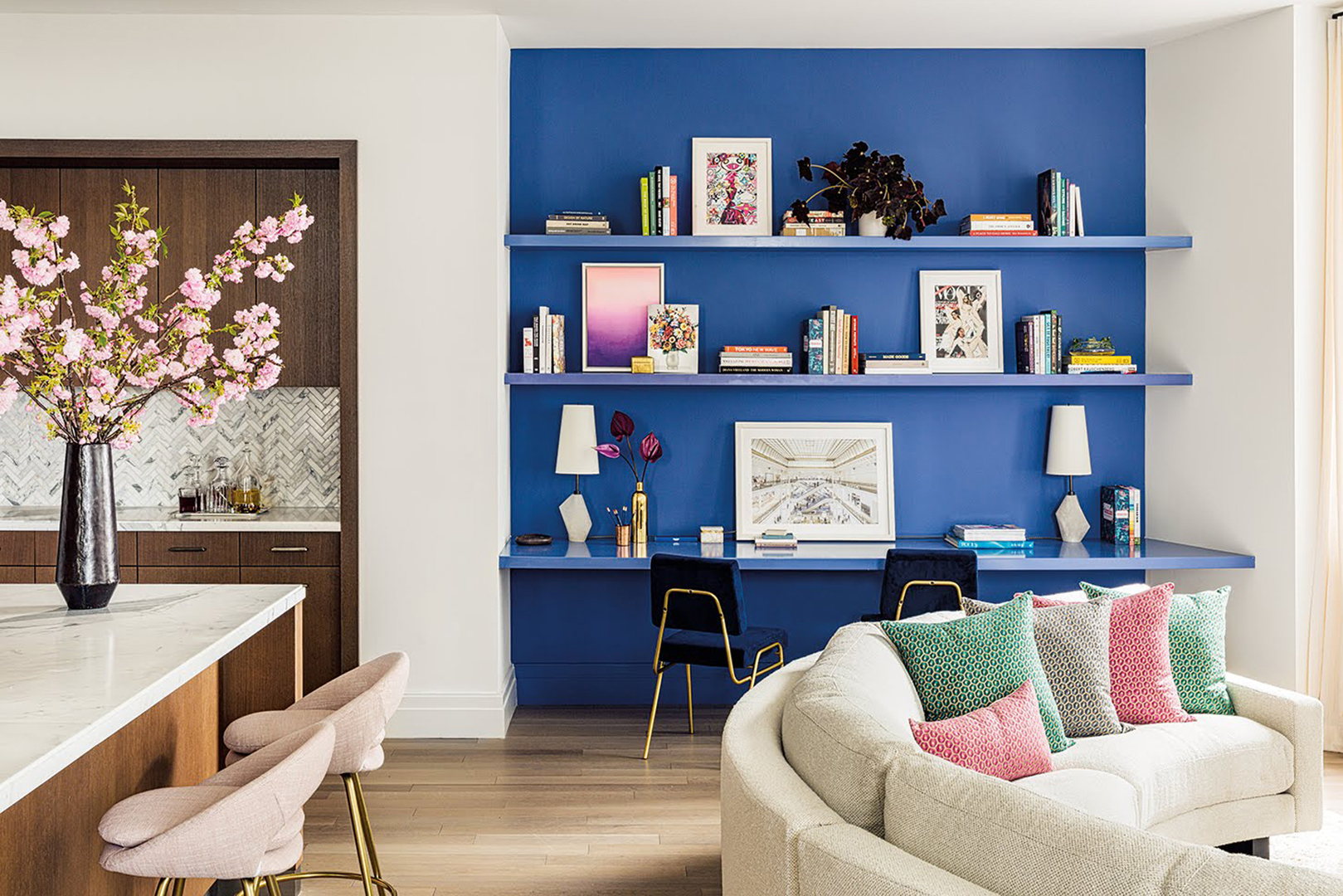
A simple shift in color or finish can visually carve out a workspace without adding walls. Designer Bennett Leifer chose a cobalt blue in this Tribeca loft.
Float the Desk and Match the Shelves
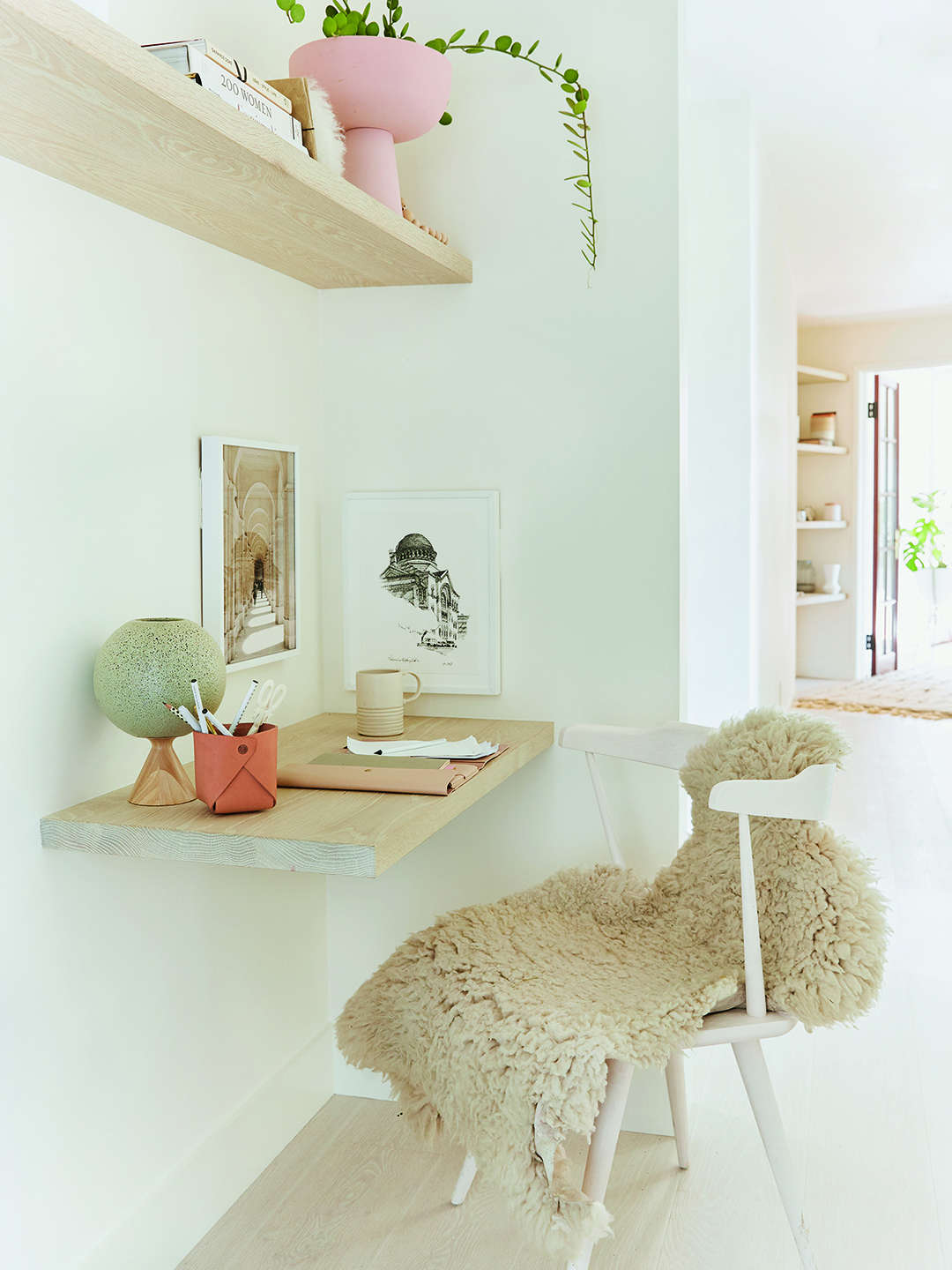
Match your desktop finish to the shelving above it to create an intentional, cohesive feel, no matter how mini the workspace may be.