
We may earn revenue from the products available on this page and participate in affiliate programs.
When Hannah Hemmerly looks out her Brooklyn co-op window at the Empire State Building, she sees a childhood memory rather than a tourist attraction. Her dad bought the apartment when she was five, in the early 2000s, after her parents divorced. It quickly became a space where anything felt possible, especially in her bedroom, which she once painted in stripes of pink, purple, and blue after failing to choose a favorite. A blurry iPhone photo of that skyscraper view came with her to college. Now, it’s back to being the backdrop to daily life—but this time, the home is her own.
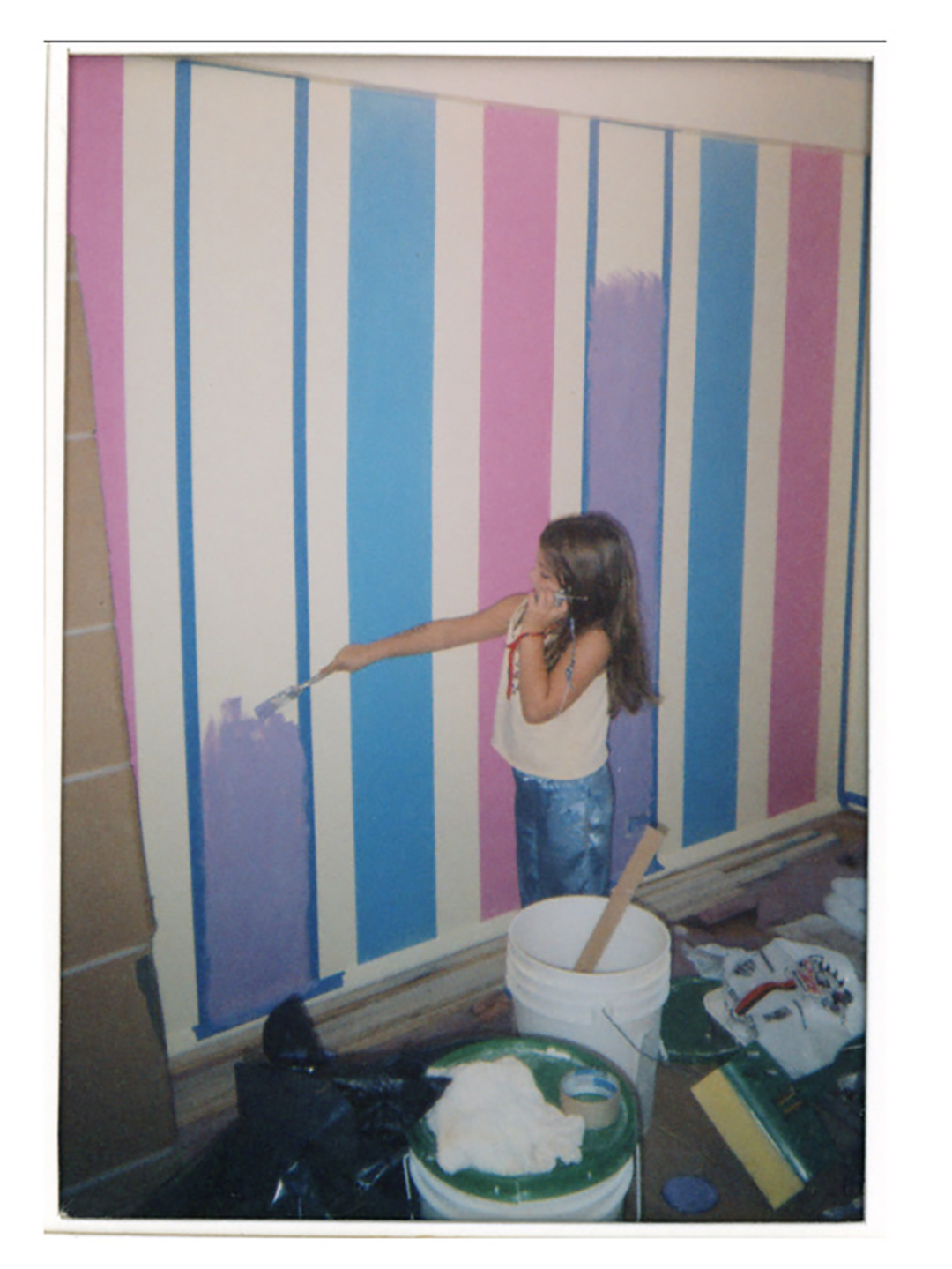
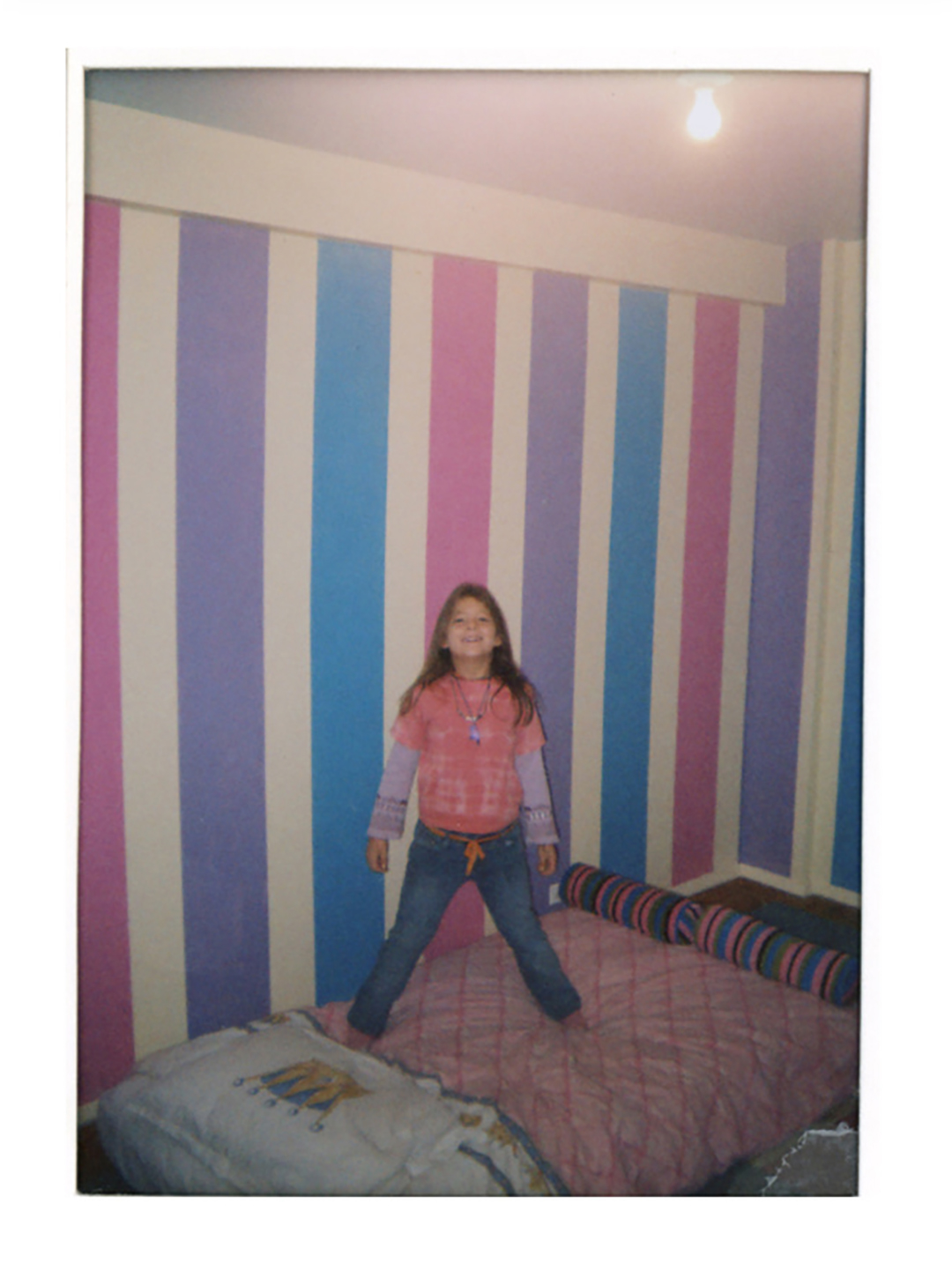
There was a fire when she was eight, followed by a paint refresh, but otherwise, the 780-square-foot space stayed largely the same for years. Eventually, it shifted into something more transient: a landing pad, then a vacancy, then a temporary solution when Hemmerly moved back to New York during the pandemic to attend Pratt Institute, just a few blocks away.
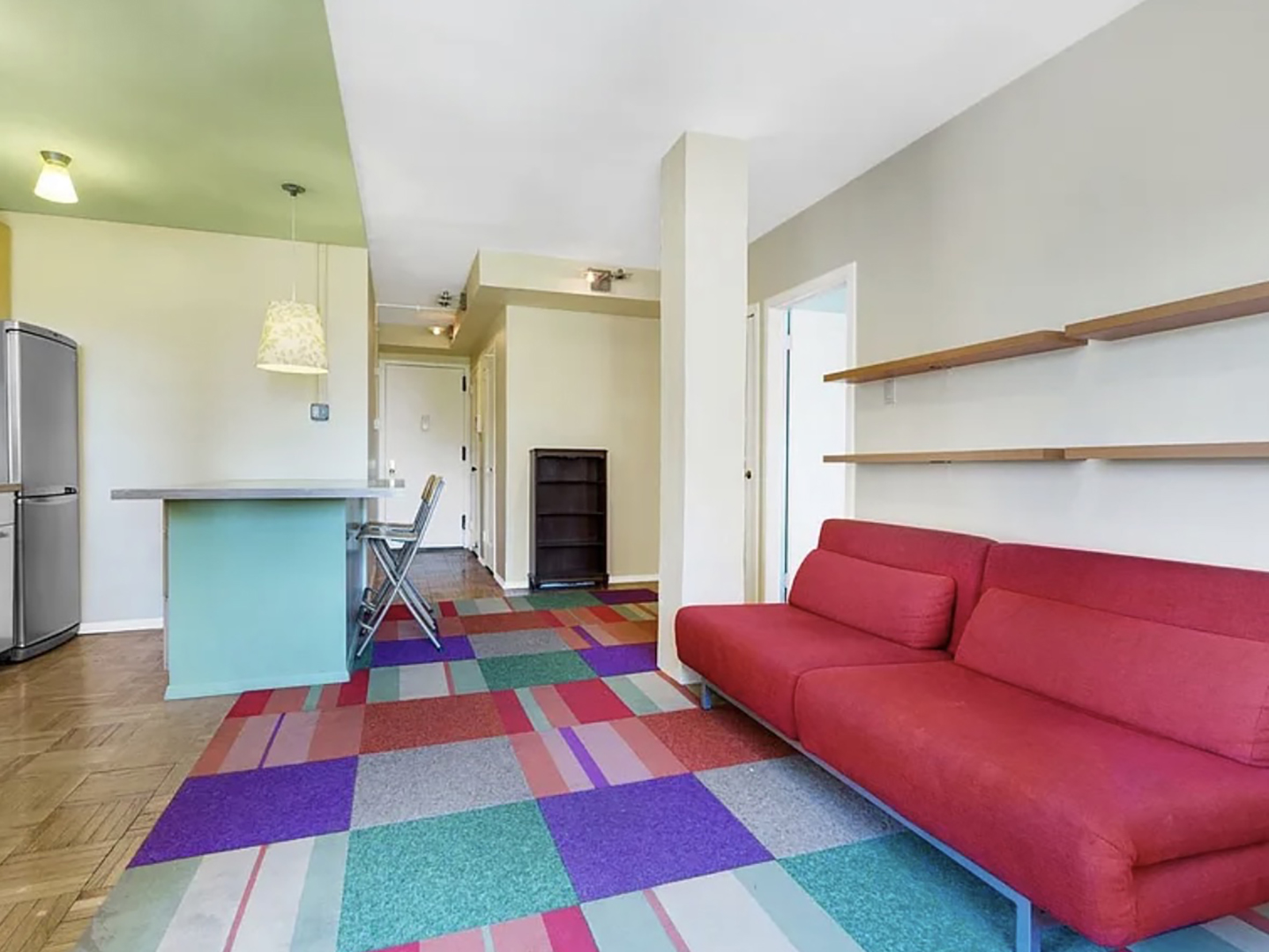
Even then, it didn’t quite feel like hers. “I kind of lived in it as if it were a rental,” she remembers. But after about a year and a half—by then, joined by her now husband—the couple started itching to set down more permanent roots. “We wanted it to feel more purposeful,” Hemmerly says. “Like somewhere we could entertain, somewhere that actually reflected us.”
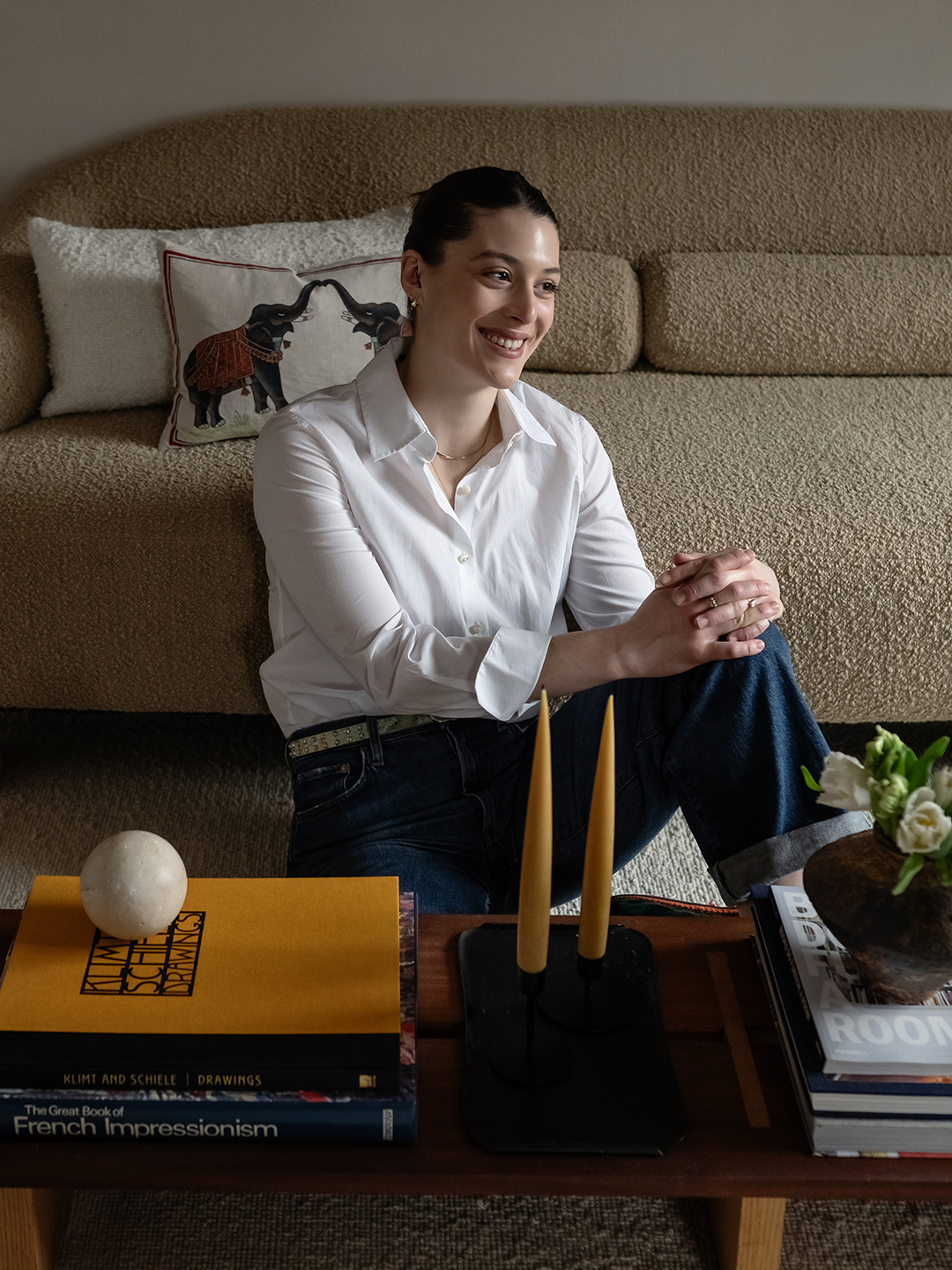
Last summer, they committed. Over the course of four months, the pair took on the renovation themselves: demoing the kitchen, painting, installing light fixtures, and reworking nearly every surface in the apartment. It wasn’t about a full overhaul; it was a shift in intention. Ahead, the changes that made the biggest impact.
Let Materials Do Less
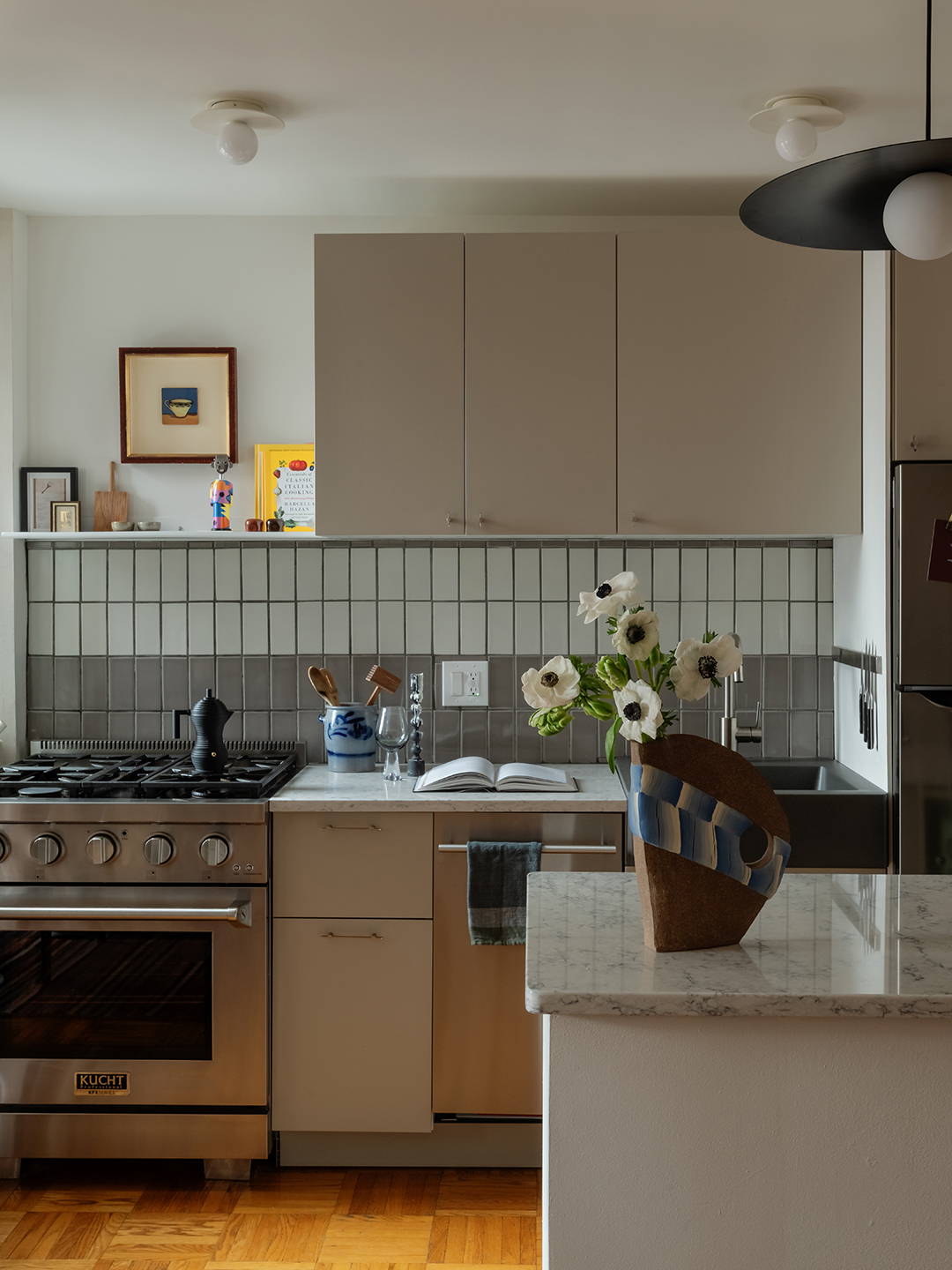
Working with a small footprint, and an IKEA kitchen, Hemmerly leaned into simplicity. Rather than trying to disguise lower-cost materials with bold choices, she kept the palette neutral and bright. “I tend to think restraint is better,” she says. “You want those materials to feel as elegant and understated as possible.”
Scale Down to Open Up
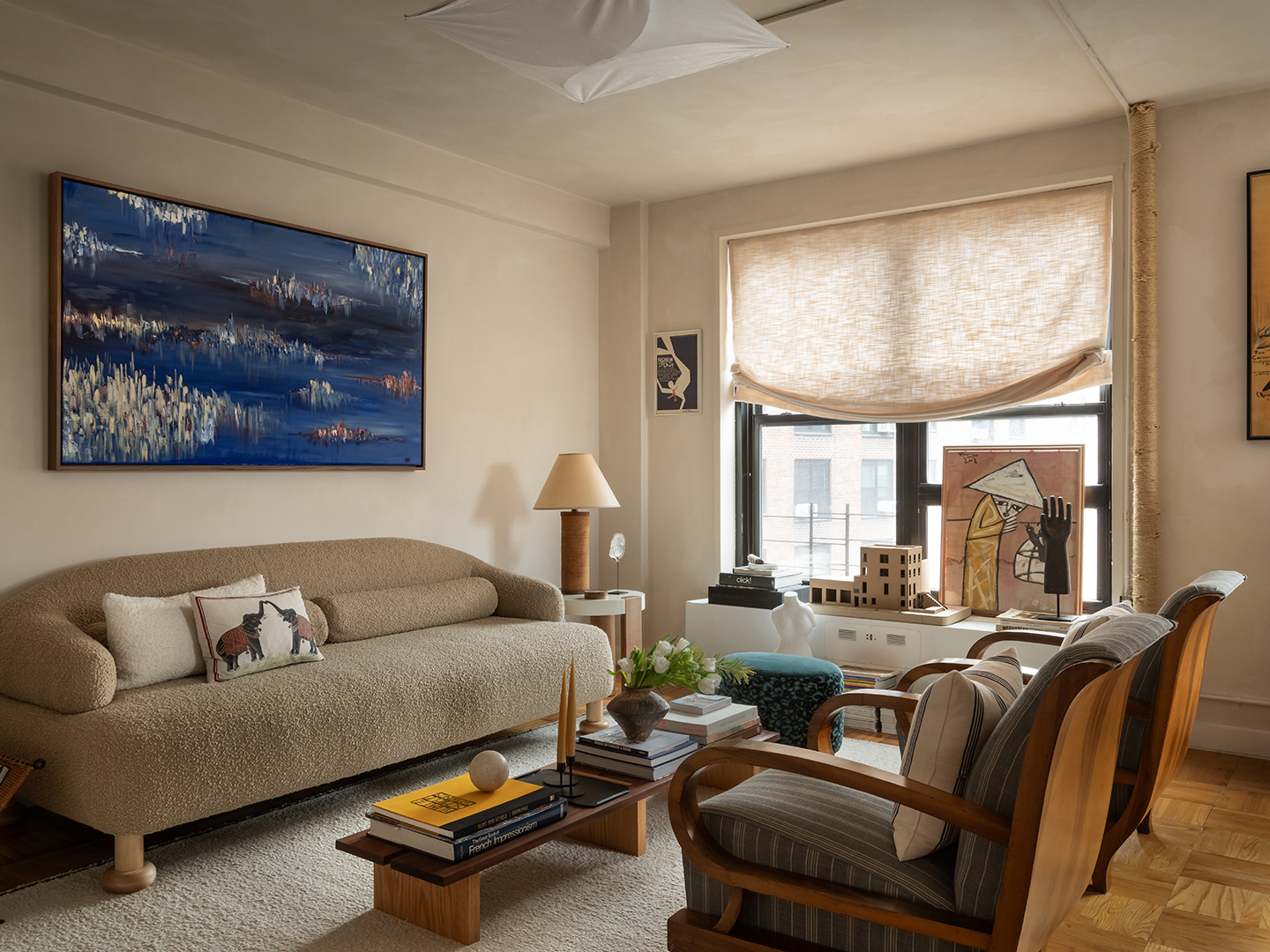
Hemmerly gravitated toward antiques not just for their character, but for their proportions. “When you use smaller furniture, it actually makes the space feel bigger,” she explains. Many of the pieces were sourced on weekend trips—drives to Hudson, quick detours through Connecticut, the occasional auction scroll. The goal wasn’t to fill the space quickly, but to let it come together gradually.
Let Sentiment Lead
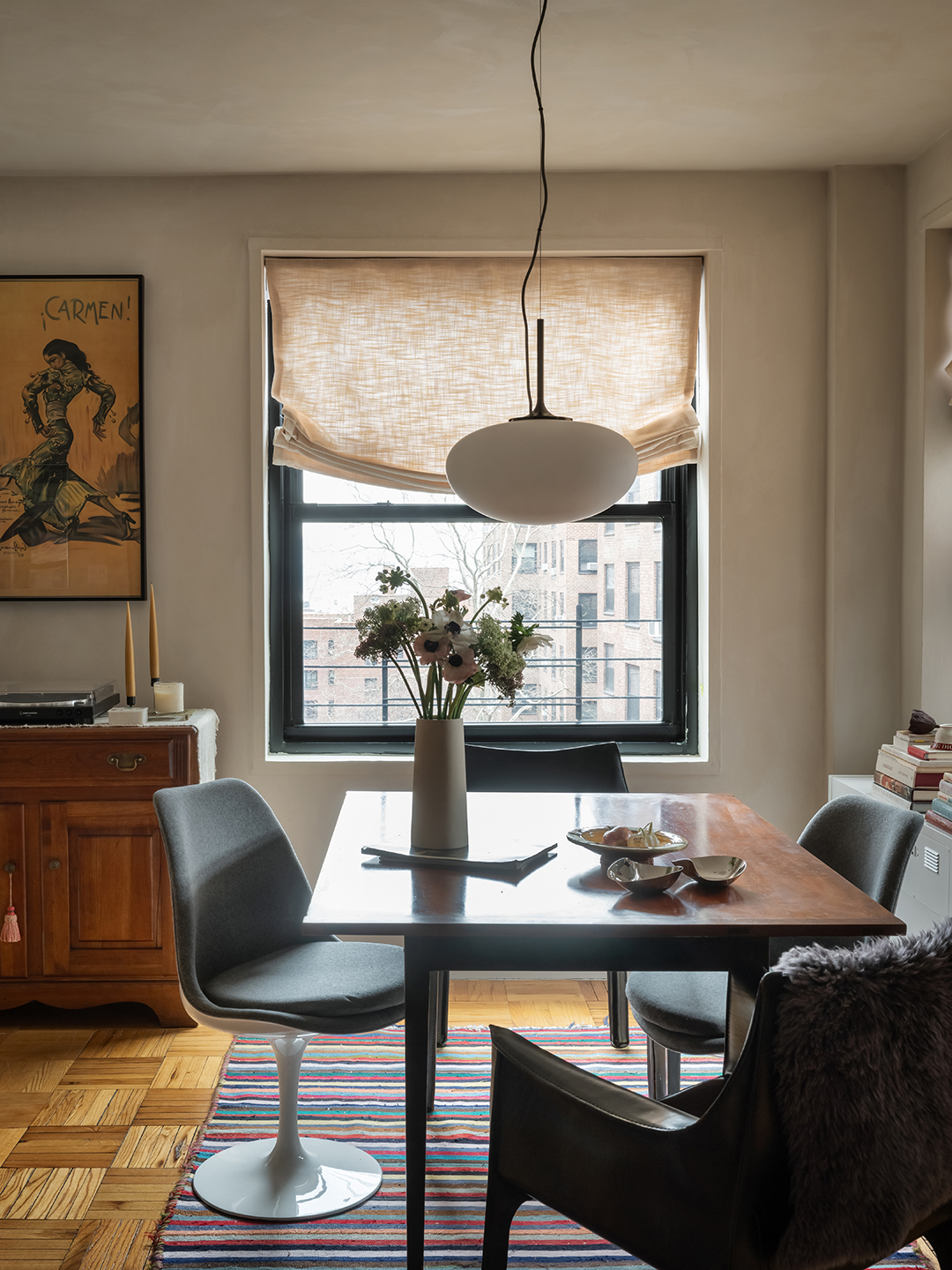
The apartment is layered with pieces that span generations: a dining table from her grandmother, a bar cart from her mom’s side of the family, smaller objects collected over time. “I didn’t want to invest in disposable things,” she says. That balance, between the inherited, the found, and the chosen, keeps the space feeling both grounded and evolving.
Get Scrappy With the Details
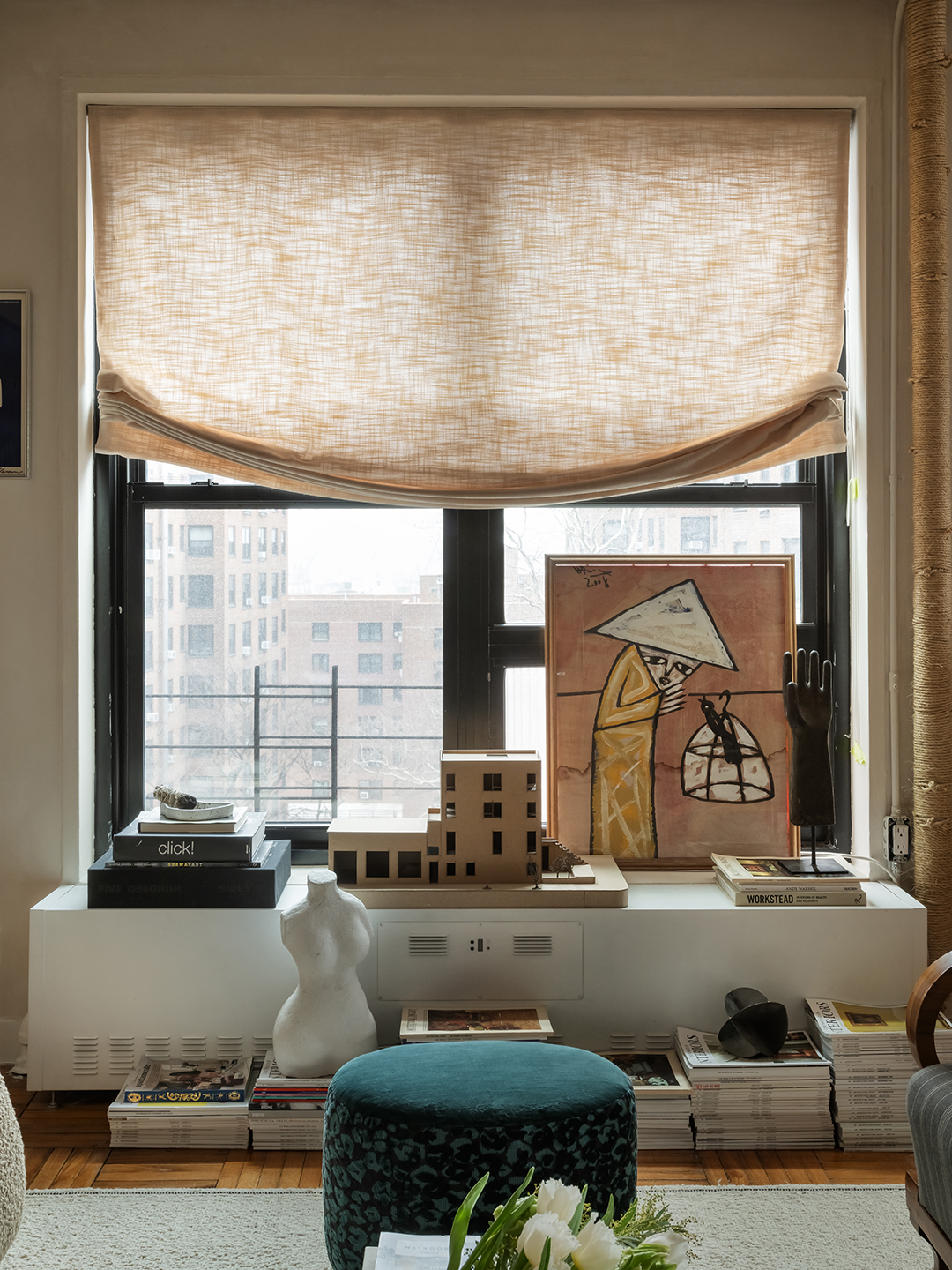
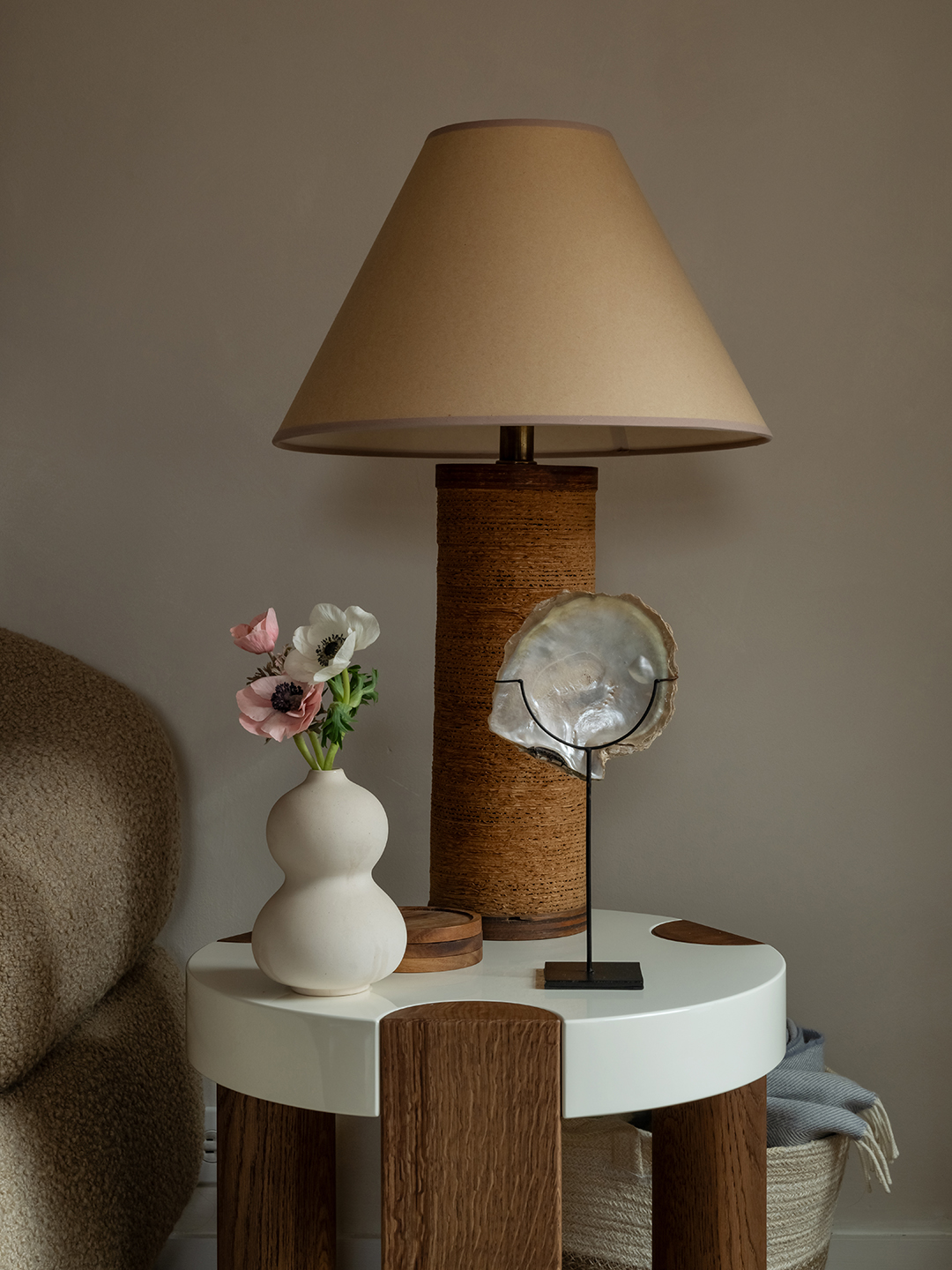
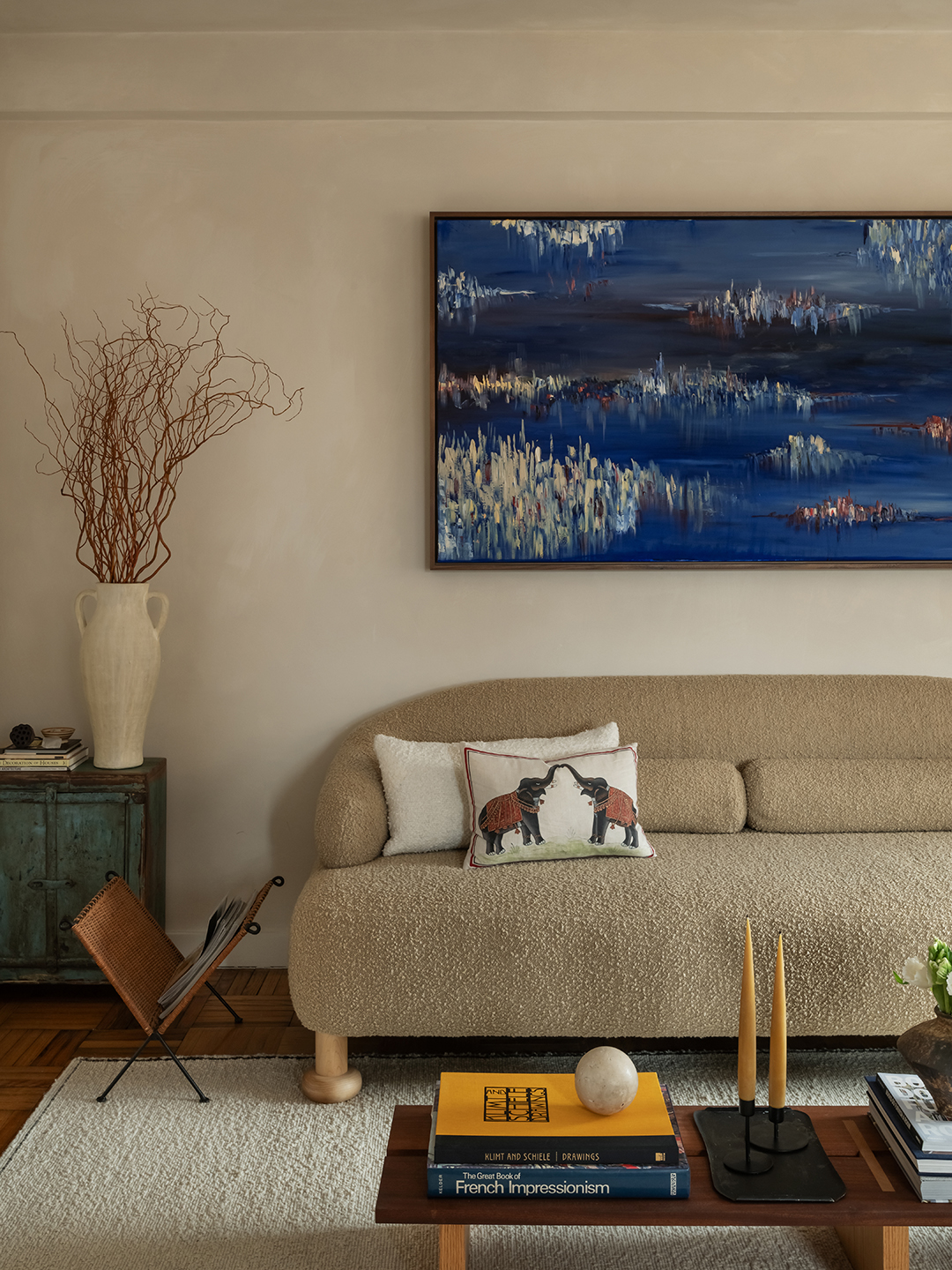
Budget shaped nearly every decision, but Hemmerly used the constraint as an opportunity to get even more creative. She used fabric samples for upholstery (covering a seat of a vintage chair) and scrap materials for smaller projects like pillows and window treatments. “There are ways to make something work without buying everything new,” she says. Envisioning a large painting for the living room, Hemmerly made one herself: an abstract landscape inspired by the place where her husband first told her he loved her.
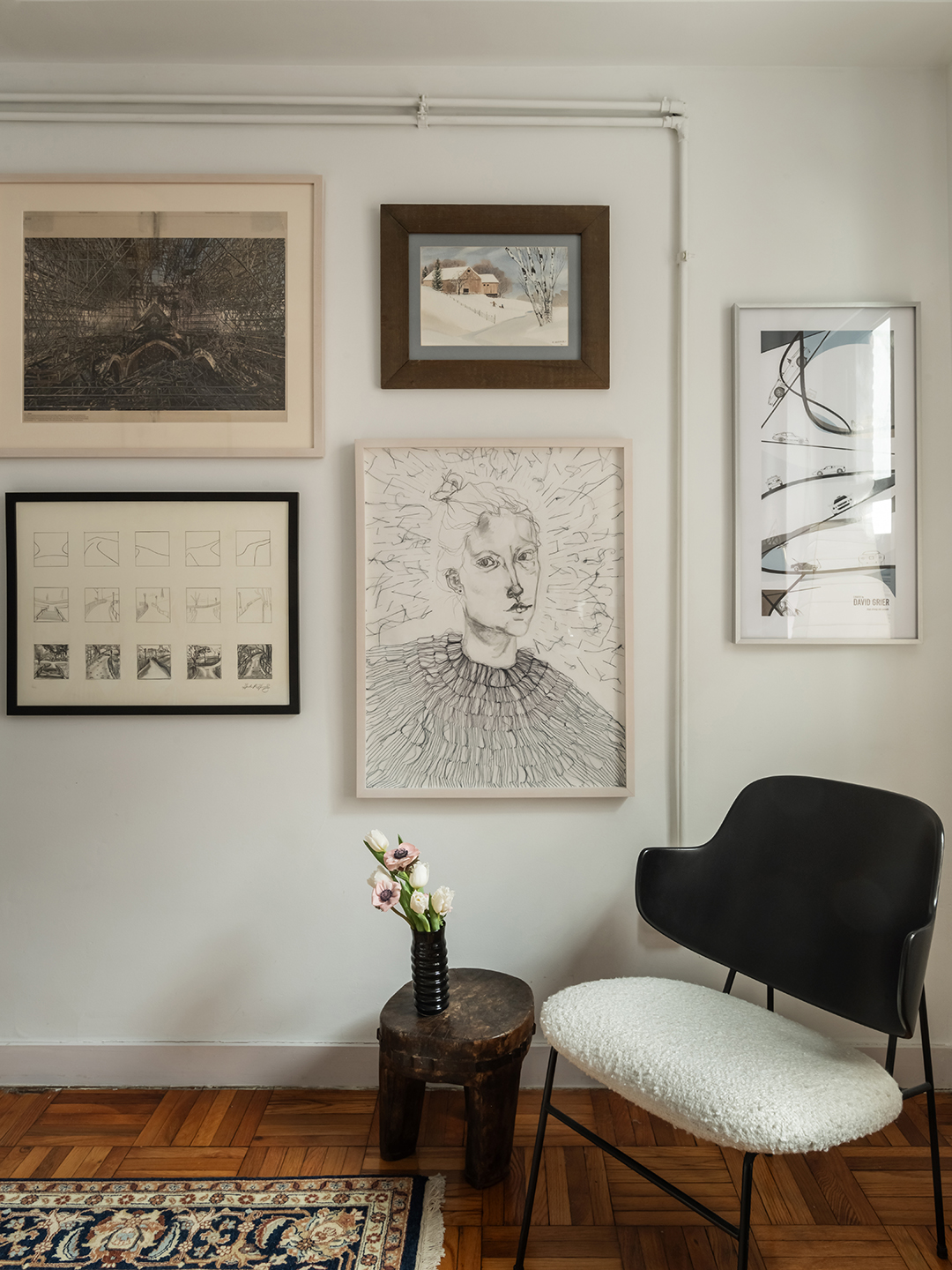
For all its history, the apartment isn’t stuck in the past. “What’s funny is that it doesn’t feel like my childhood apartment anymore,” Hemmerly says. “It feels completely different.” Still, traces remain. A memory of where a dresser once stood. The echo of music playing from a radio. The knowledge that the dining room moonlighted as a den. Together, they create an underlying comfort that’s hard to manufacture. “I feel really at home,” she adds. “And I think that’s rare in New York.”