
We may earn revenue from the products available on this page and participate in affiliate programs.
A walking commute is a veritable luxury in New York City. But for Keren Craig, the British-born cofounder of the glam fashion brand Marchesa, the 22-block route from her family’s Hell’s Kitchen apartment to her West Chelsea design studio slices straight through the real-estate boom of the Hudson Yards project, which has its own heavy-metal soundtrack.
“You can’t talk to anyone on the phone, it’s so noisy,” says Craig. It’s enough to drive someone off-kilter—or, more sustainably, upstate on the weekends, which is what the designer and her husband, Piers North, along with their two young daughters, now cherish as routine.
Their love affair with Accord, a picturesque hamlet two hours north by car, dates back to when Craig was pregnant with their oldest, Delilah, now eight. Regular visits to see friends schooled them in the art of the unwind, spurring daydreams about a place of their own. Uninspired by a round of showings, they perked up when they learned that the price had dropped on a converted 1920s barn, set on a wooded seven-acre plot.
“I remember turning into the drive, and my husband and I looking at each other like: Oh, God, this is going to be the one, isn’t it?” Craig says with a laugh, recalling the swirl of excitement and dread that comes with a budget-testing purchase. “Somehow we were going to make it happen because it was just so magical.”
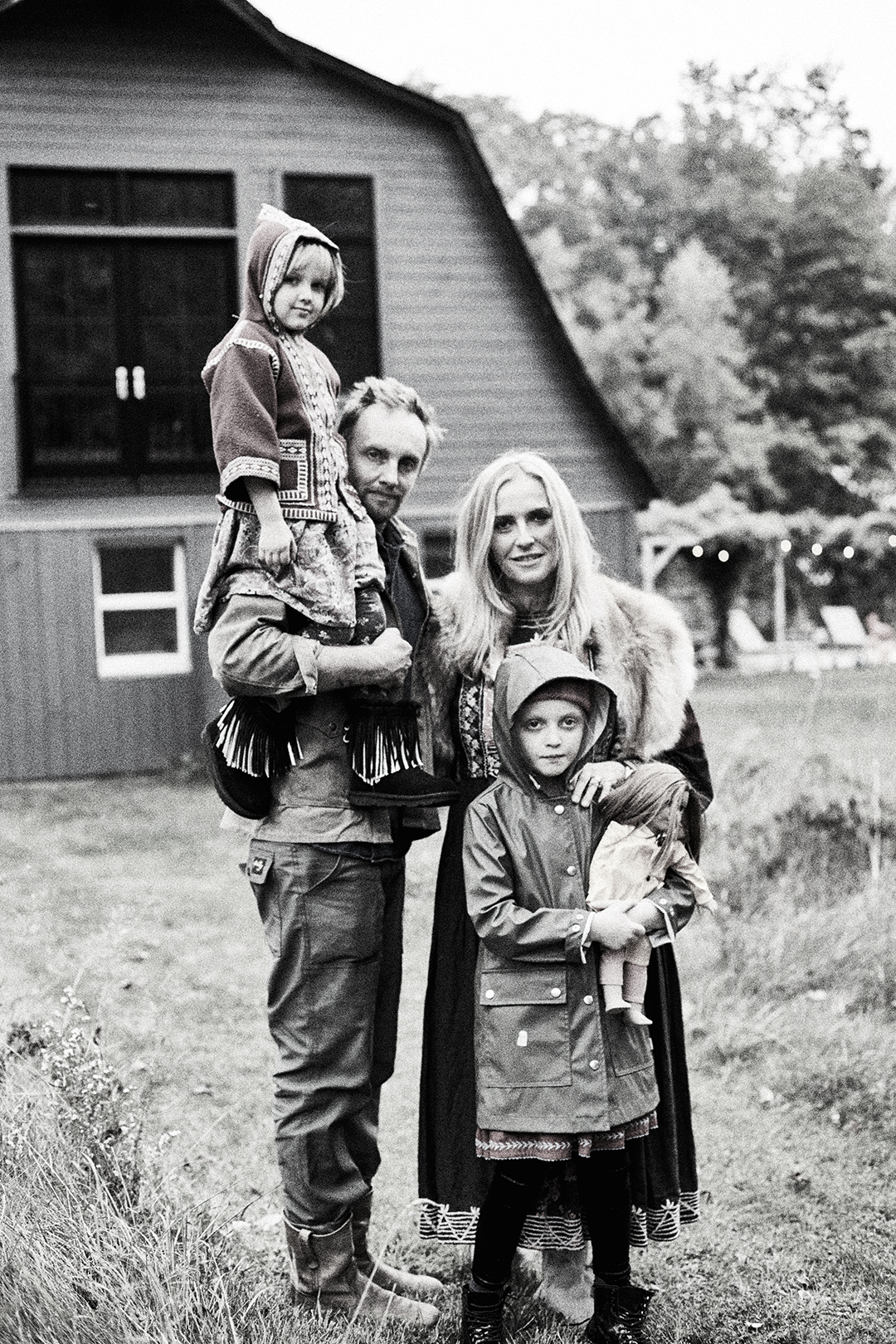
And so full of potential, which is code for a laundry list of projects that have unspooled over long weekends and holiday breaks. Chief among them was the barn’s second story, which had been weatherproofed but not properly insulated, leaving it uninhabitable in winter. Craig traces that quirk to the original conversion, in the 1980s, by owners who had grand plans of turning the place into a theater and dance studio.
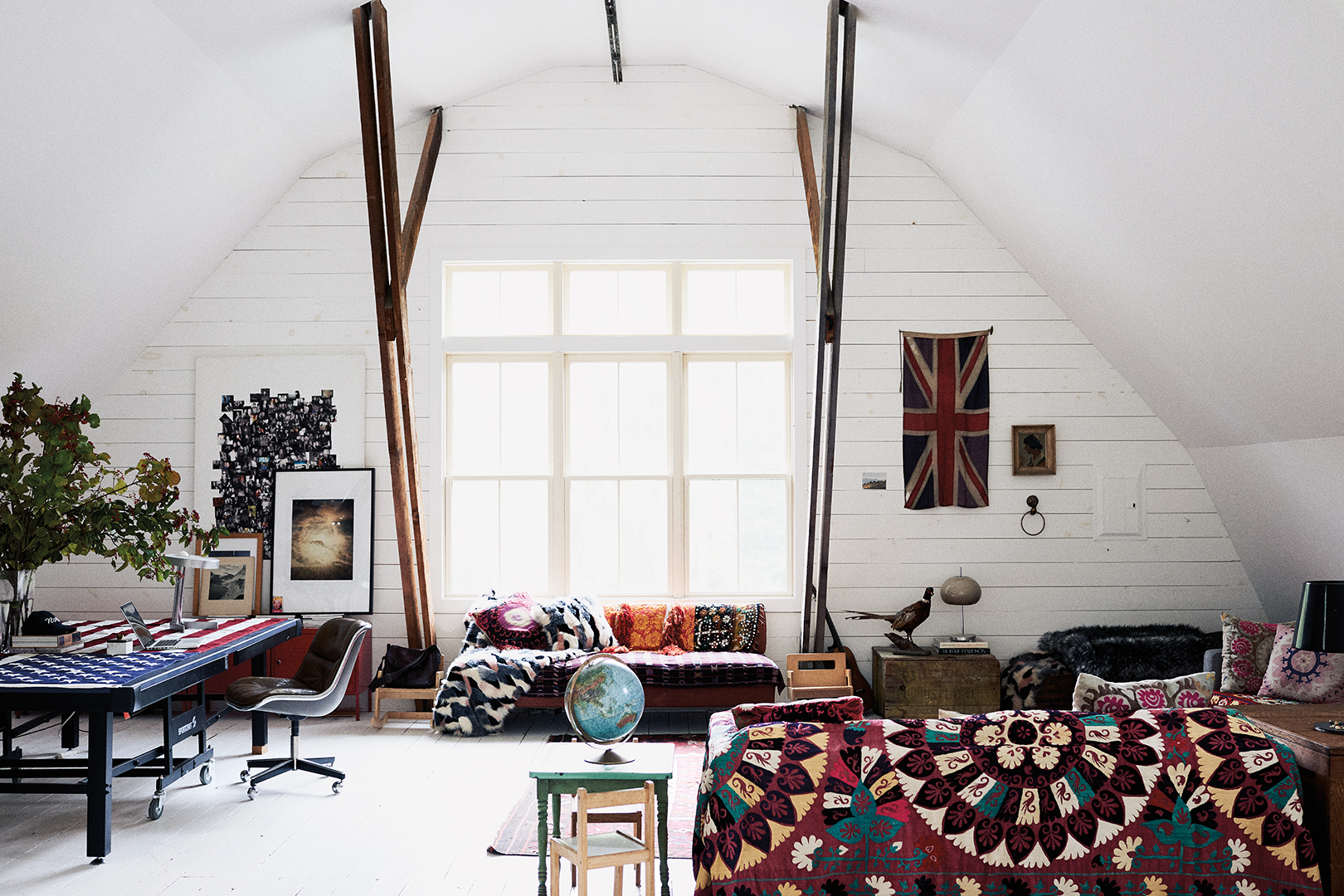
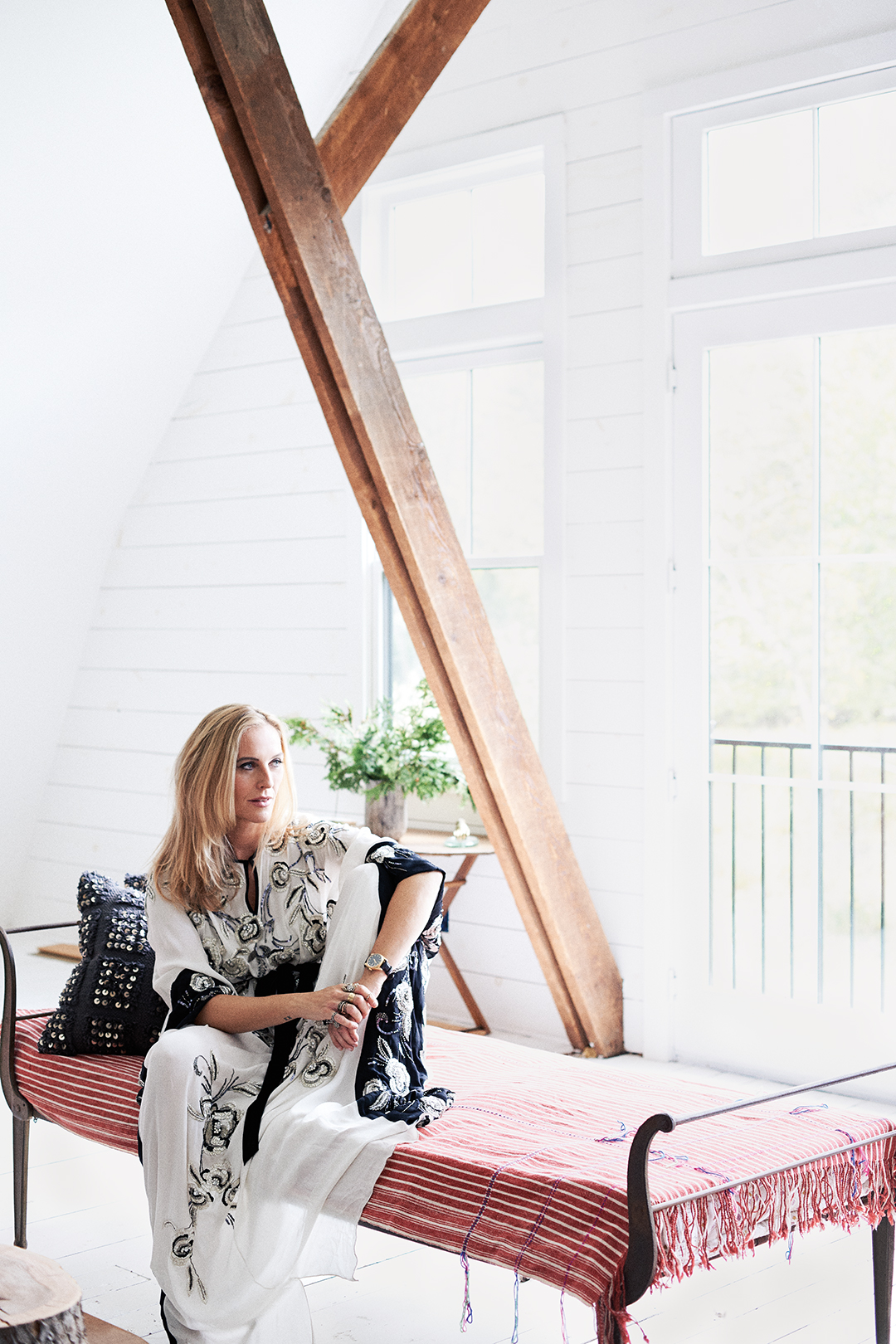
For Craig and North, a creative director, renovating that upper floor meant doubling the house’s footprint and reclaiming the open-plan lifestyle of their previous Manhattan loft. At one end sits the children’s play zone, with cozy sofas draped in vintage suzanis and a work surface (an incognito ping-pong table) topped with a hand-sewn American flag (nearby, a weathered Union Jack hangs on the wall in a nod to the couple’s home country). Across the room, the more formal seating area invites all-day lounging, with a mix of Moroccan-style poufs, a deep-dish sofa studded with Turkish pillows, and a large-scale painting by longtime friend Charles Lahti.
The floor-to-ceiling white paint provides a blank canvas for Craig’s adventurous decoration, born of a lifelong fascination with South Asian and Middle Eastern textiles. She cites the lushly layered interiors by Edouard Vuillard (her grandmother’s favorite painter) as early inspiration, along with a lineage of family artists, though it was a months-long stretch in India during art school, spent studying traditional block printing, that cemented her taste for the collage-like effect. “They used to lay the fabrics outside on the ground, and you’d see all those different prints drying in the sun,” Craig recalls. “That’s where my true love of color, pattern, and play came from.”
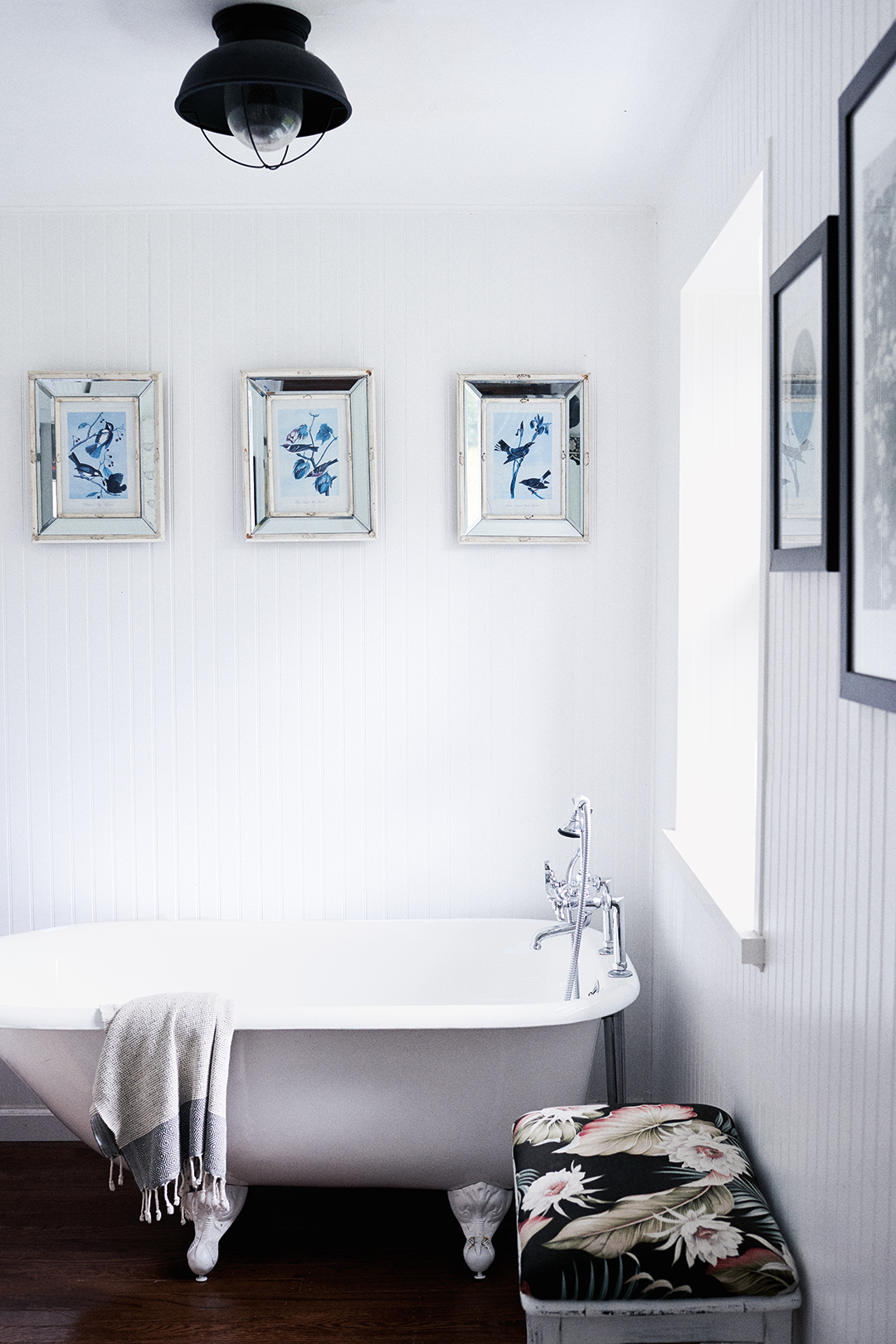
If the house stokes a certain aesthetic freedom and laid-back approach, it carries over into everyday life. The master bath’s claw-foot tub, a steal discovered in Florida, outranks an expedient shower “just because you don’t have that sort of ticktock, ‘Ooh, I’ve got seven other things to do,’” Craig explains.
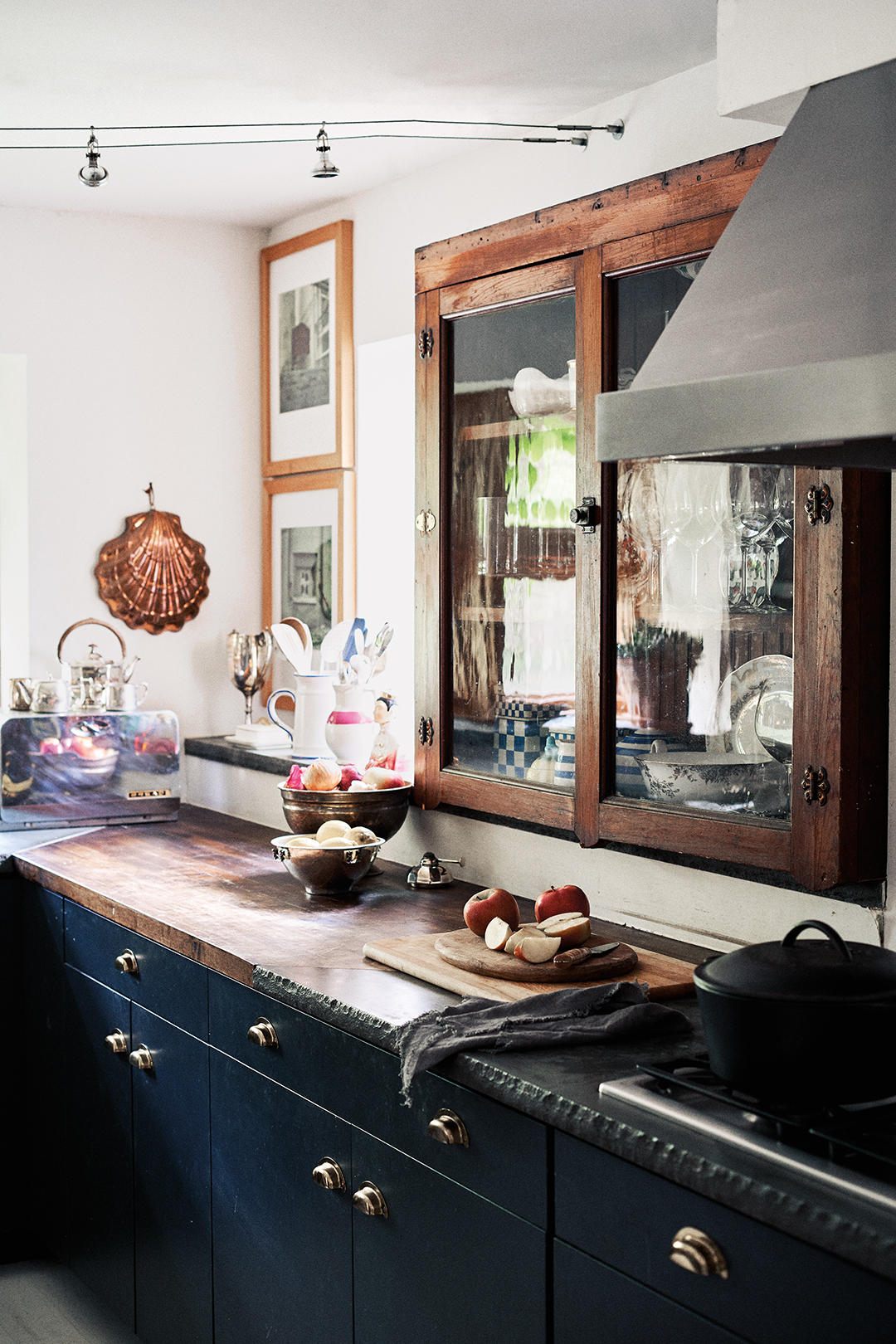
Her newfound passion for dinner parties, where family-style menus often take a page from Yotam Ottolenghi’s Middle Eastern–inflected cookbooks, came with a lightbulb moment. “I always thought I hated cooking, and then I realized I just hate doing it in a rush,” says Craig. With the stage set for casual entertaining, guests might be treated to an impromptu performance: “When we have people over, we put on music—the girls love to dance!”
The Art of Assemblage
Comb the Markets
“I’m obsessed with vintage shopping,” says Craig, who seeks out a market wherever she travels. Lately she’s been drawn to Etsy. “It really is the global souk,” she notes, with the recommendation to double check size before purchasing. “Always keep a tape measure by your side, because scale can definitely be an issue.”
Layer Up
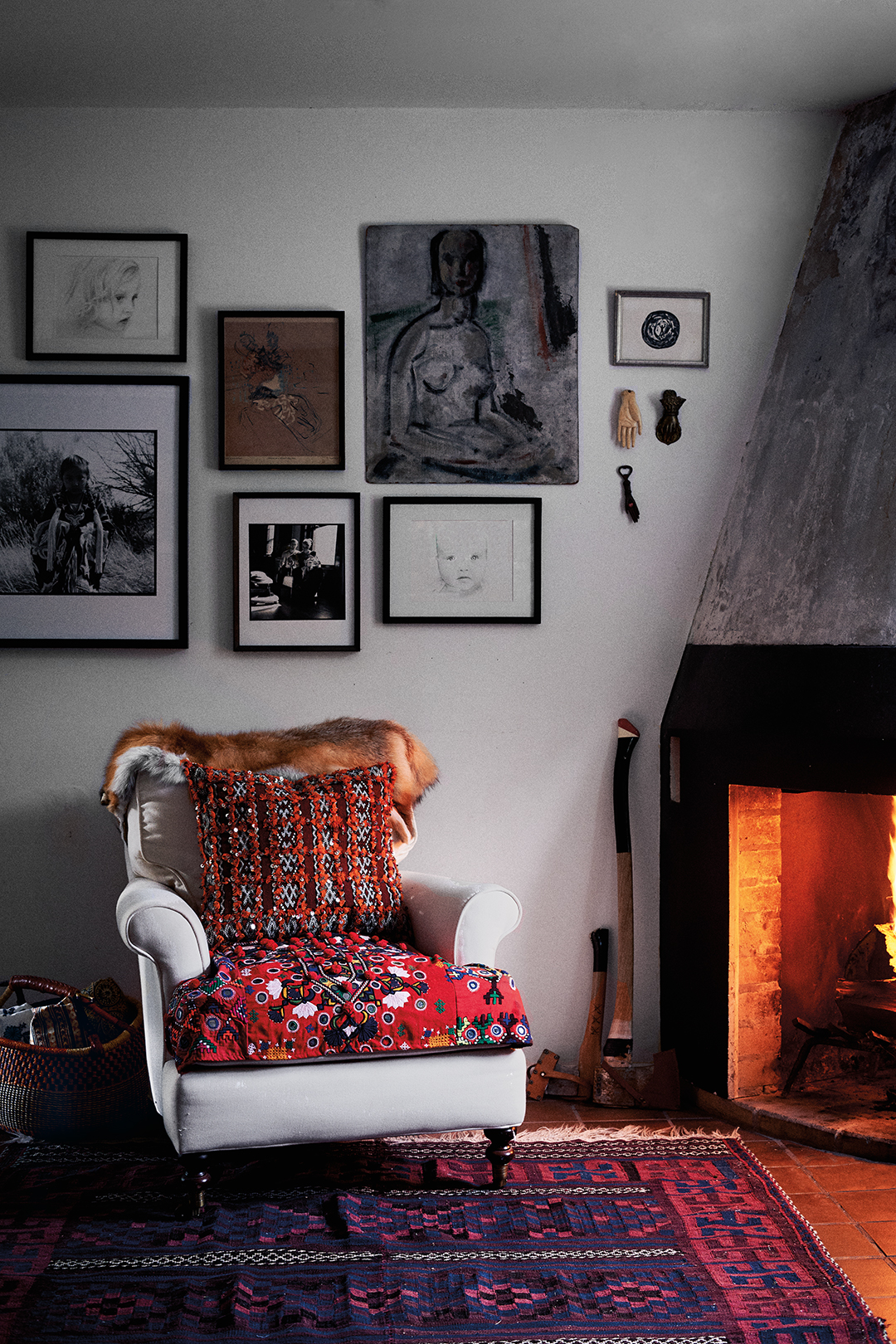
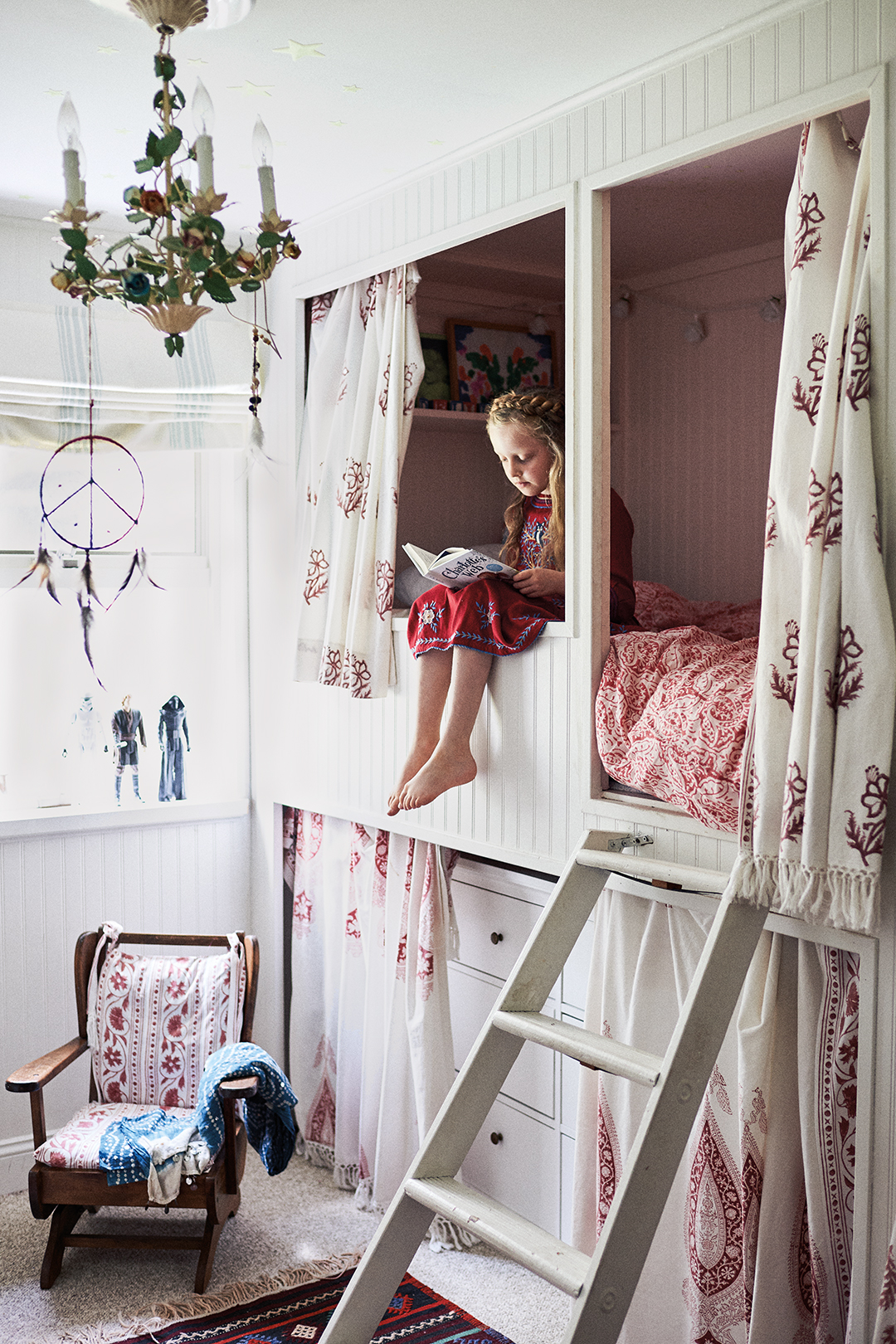
For a richly immersive environment, integrate found fabrics beyond the two-dimensional bedcover or rug. Craig uses graphic suzanis, embroidered kanthas, and flat-weave kilims to add another dimension to furniture and accents. She sourced pillows made from Turkish textiles to liven up a neutral sofa and covered a white armchair cushion in a vivid red-toned piece. Hanging block-print curtains to frame the girls’ beds was another way to incorporate her favorite fabrics into the space.
Find a Unifying Thread
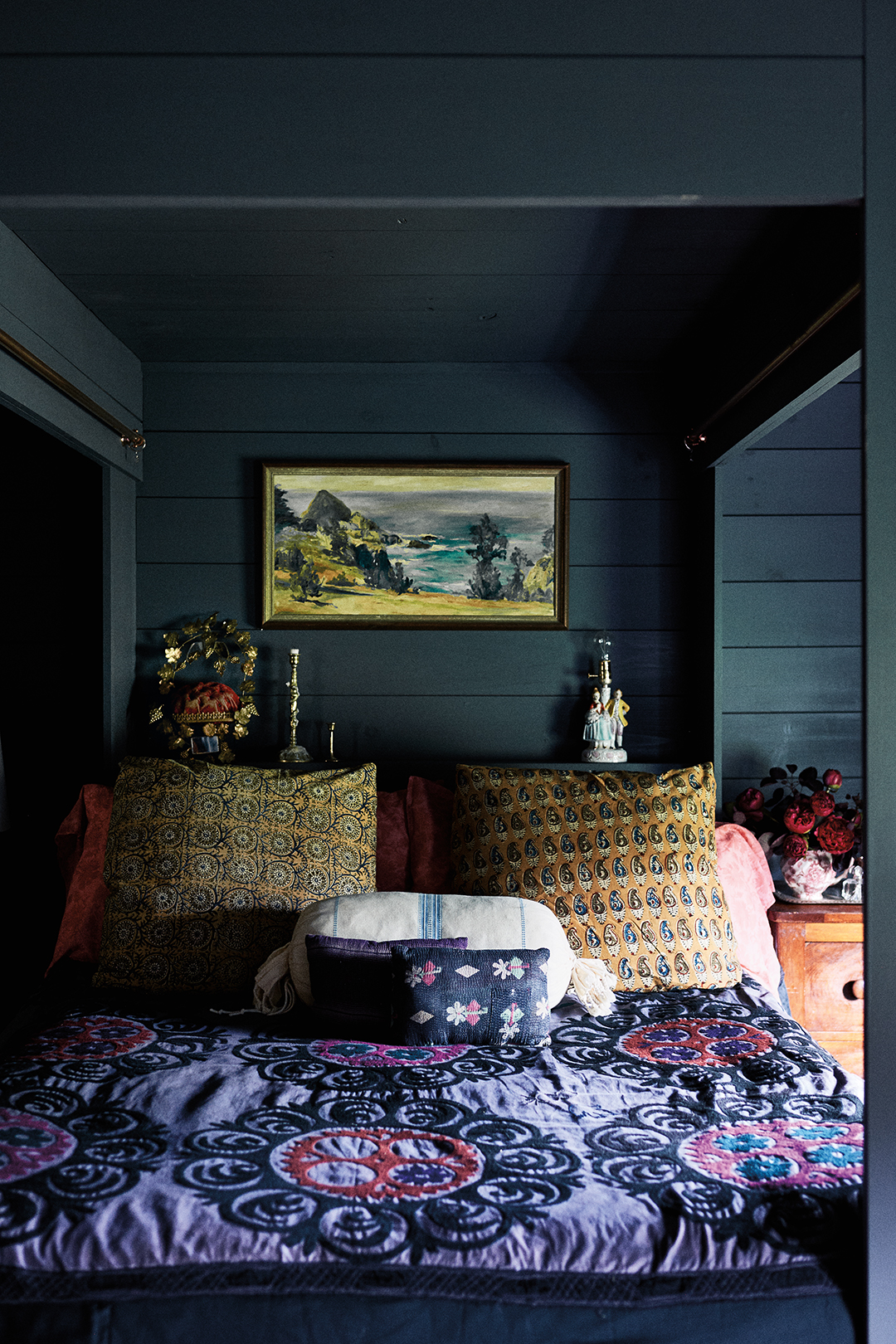
There are no rules when combining prints and patterns with confidence. Craig suggests starting with one theme “that guides everything,” whether a shared palette—as seen in the midnight blue tones in her bedroom—or a particular design technique.
This story originally appeared in the Winter 2017 issue with the headline Material Instincts.