
We may earn revenue from the products available on this page and participate in affiliate programs.
At this year’s edition of 3 Days of Design, Copenhagen’s annual design festival, the brief was clear: playfulness, full stop. Georg Jensen staged an exhibition of games crafted in sterling, wood, and even stone. Iittala installed a giant Aalto vase you could walk into on the harbor. Vipp and Barcelona-based studio Mesura’s installation included a garage-sized, butter-hued sofa reminiscent of a swimming pool.
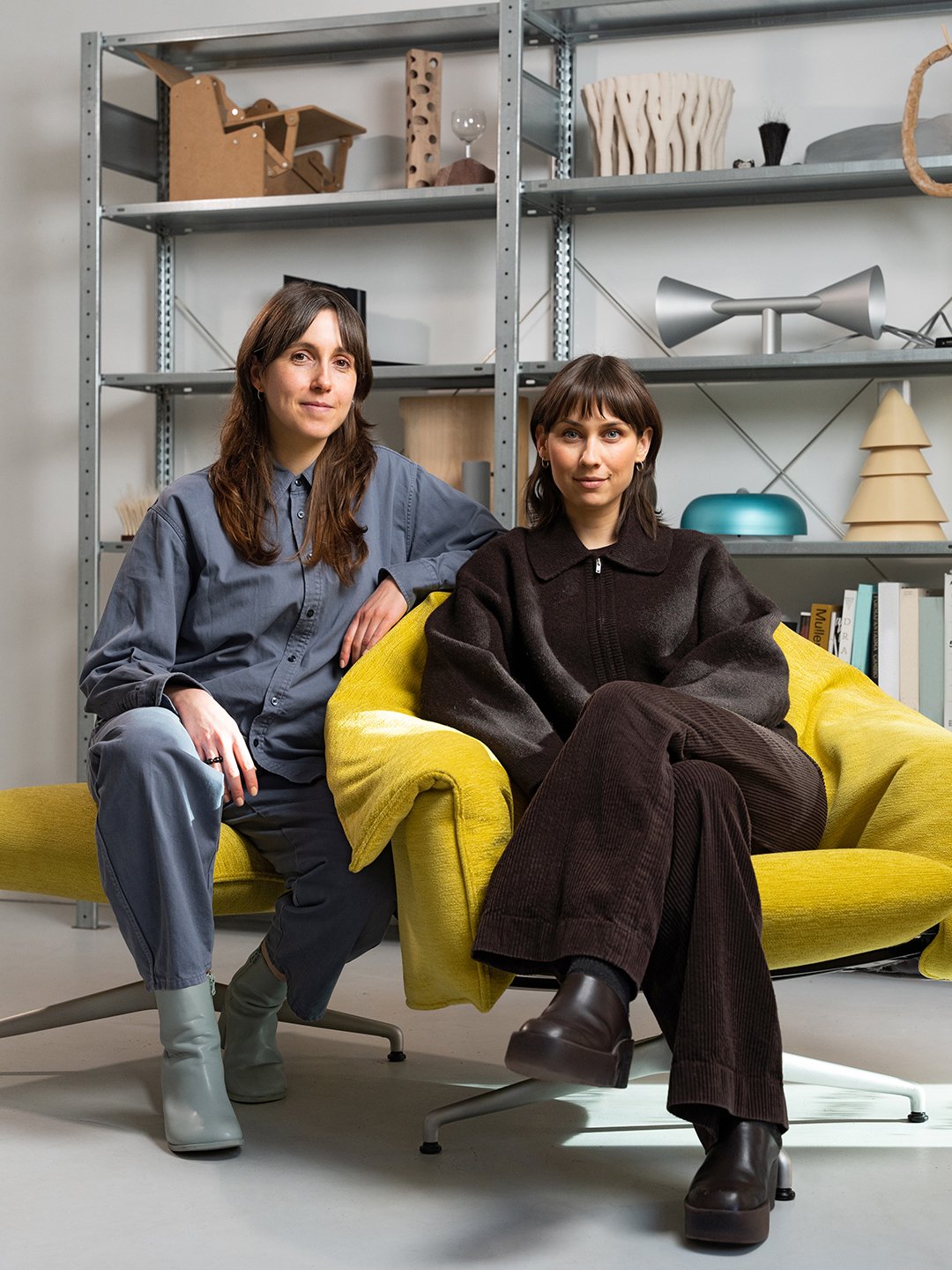
One of the most lighthearted pieces I saw was at Vitra—a charming lounge chair named Bascule designed by Berlin-based Studio Œ. Founders Lisa Ertel and Anne-Sophie Oberkrome are easygoing and affable, and that spirit is reflected in their work. They name-check everyday situations, routines, and habits as points of inspiration in their product and industrial designs. The idea for the duo’s Römer glasses sprung from attending gallery openings. “Many people come mainly for the drinks. We liked the idea that the exhibited objects could also be the glasses people were holding and using,” Ertel says. “In that way, the object becomes both functional and part of the exhibition itself.”
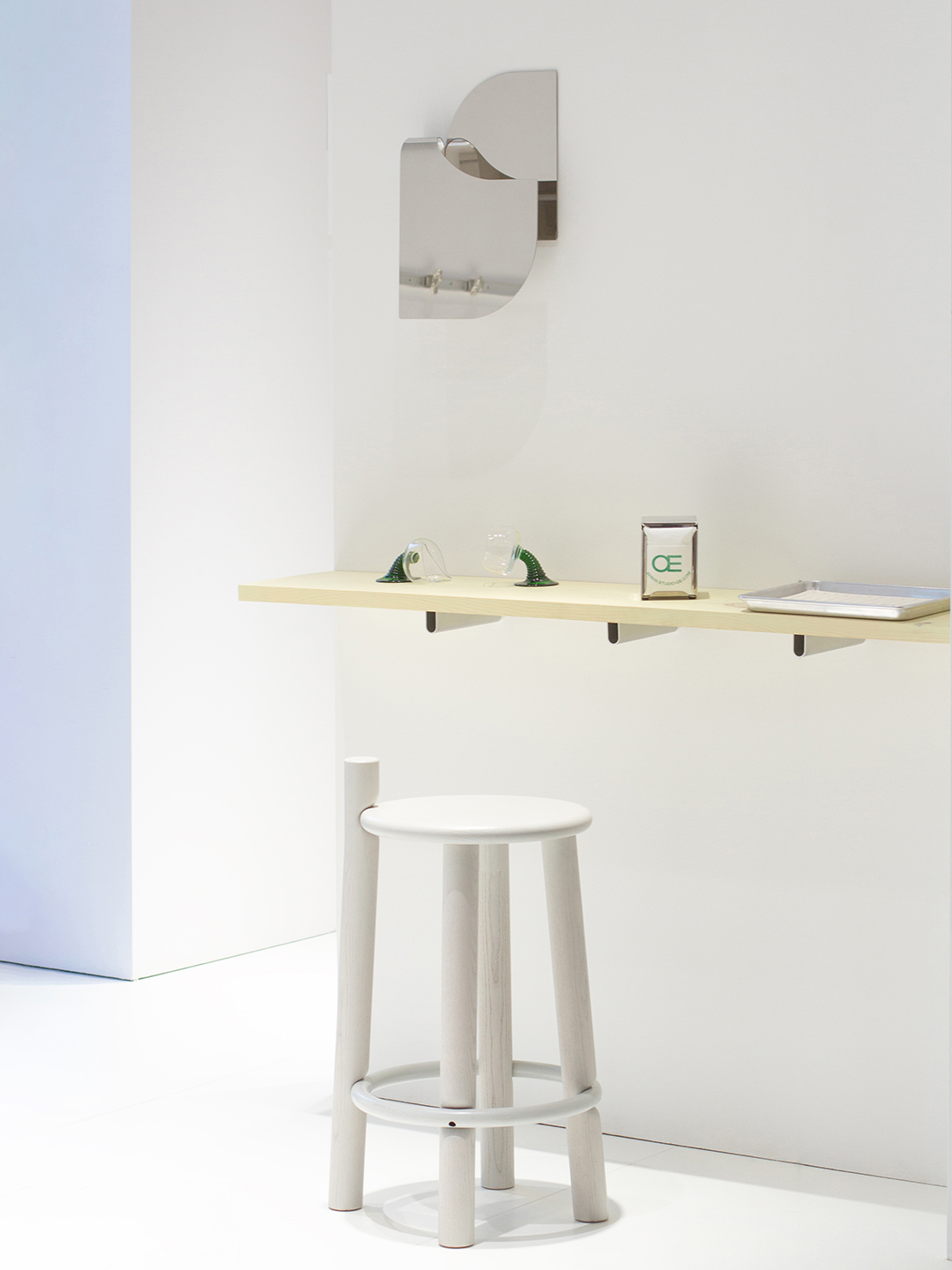
How people lean and shift when they sidle up to a bar inspired the Dopo stool, which is one color and made of ash wood, sometimes complemented by a metal foot rest. “Something we observed is that people really use the barstool not only for sitting but also for interacting,” Oberkrome notes. Details like a knob for hanging a coat or bag “really invite you to touch it,” Ertel adds.
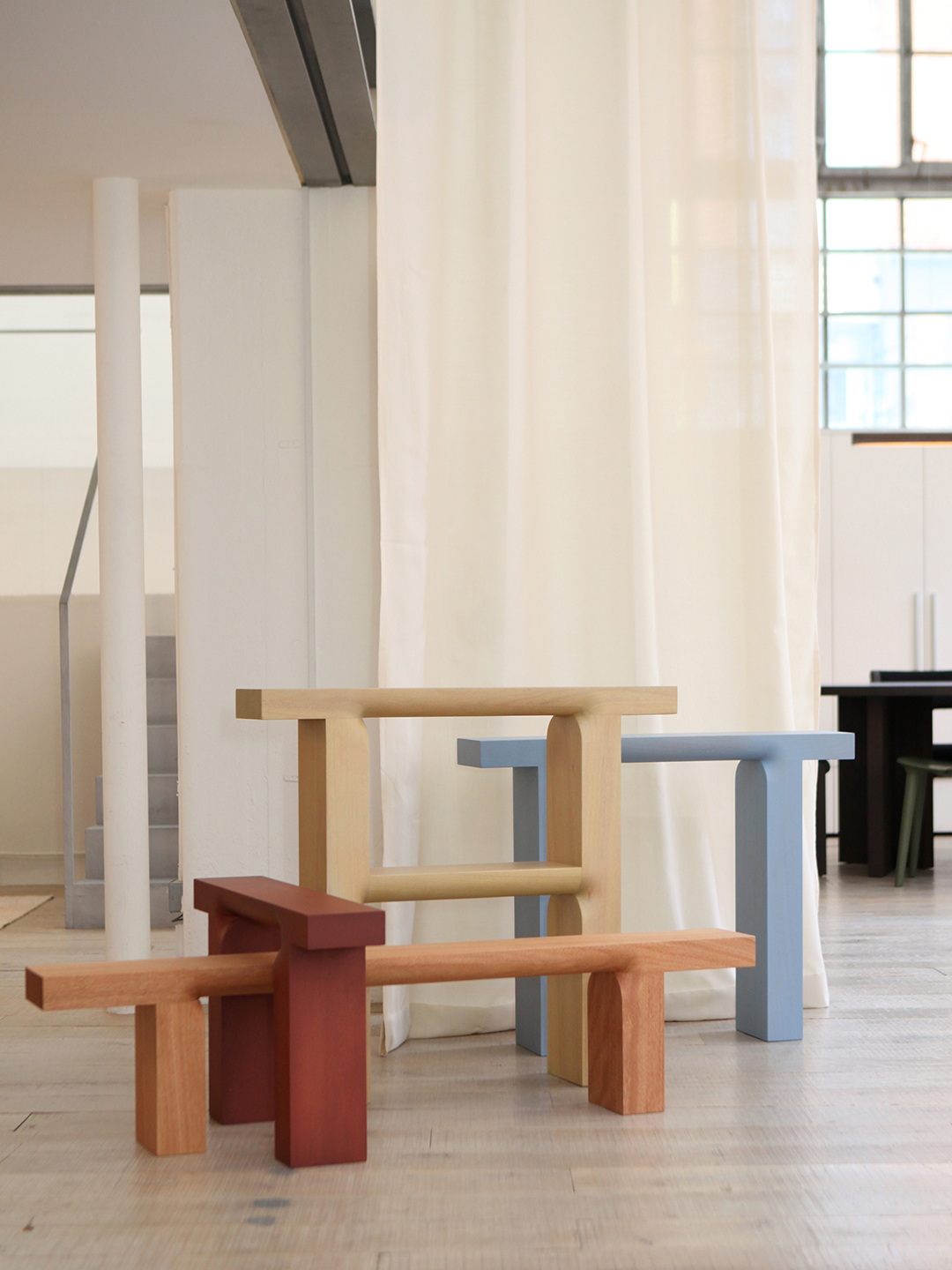
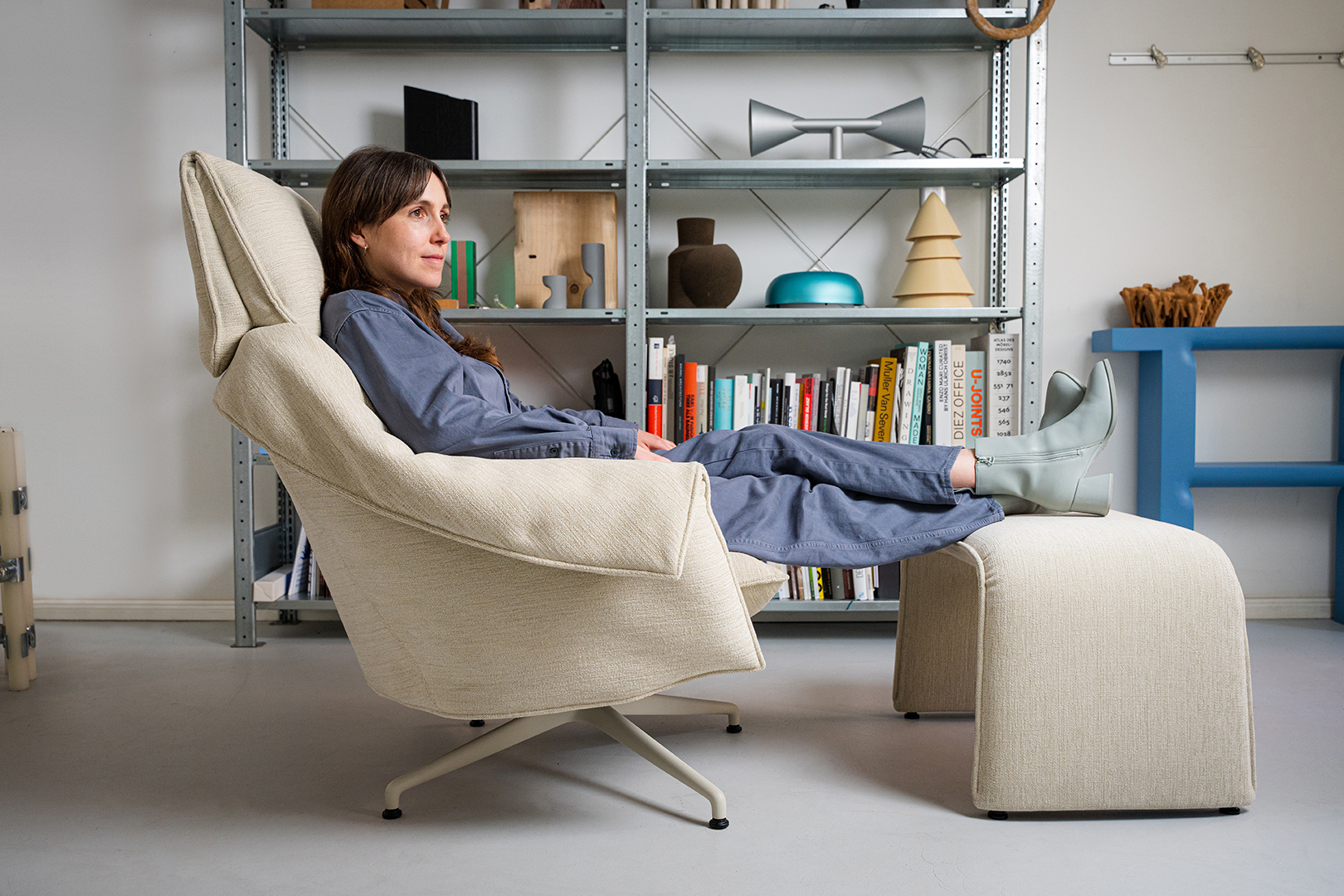
They took a similar approach for Bascule, which is Studio Œ’s first upholstered product and born out of an innovative mechanism developed by Vitra’s engineers. (The name translates to seesaw in English.) The chair can transition from an upright angle to a nearly-horizontal position, all depending on where your weight shifts. Studio Œ dreamt up a replaceable cover—or should we say coat. “The very first mock-up we made was more like a scarf, and it developed into a jacket,” says Oberkrome. Just like in fashion, getting the proportions and range of motion exactly right required a lot of hands-on prototyping. “There was a lot of sewing, draping, and tailoring for us.” It comes with or without a headrest, and has a matching ottoman, too.
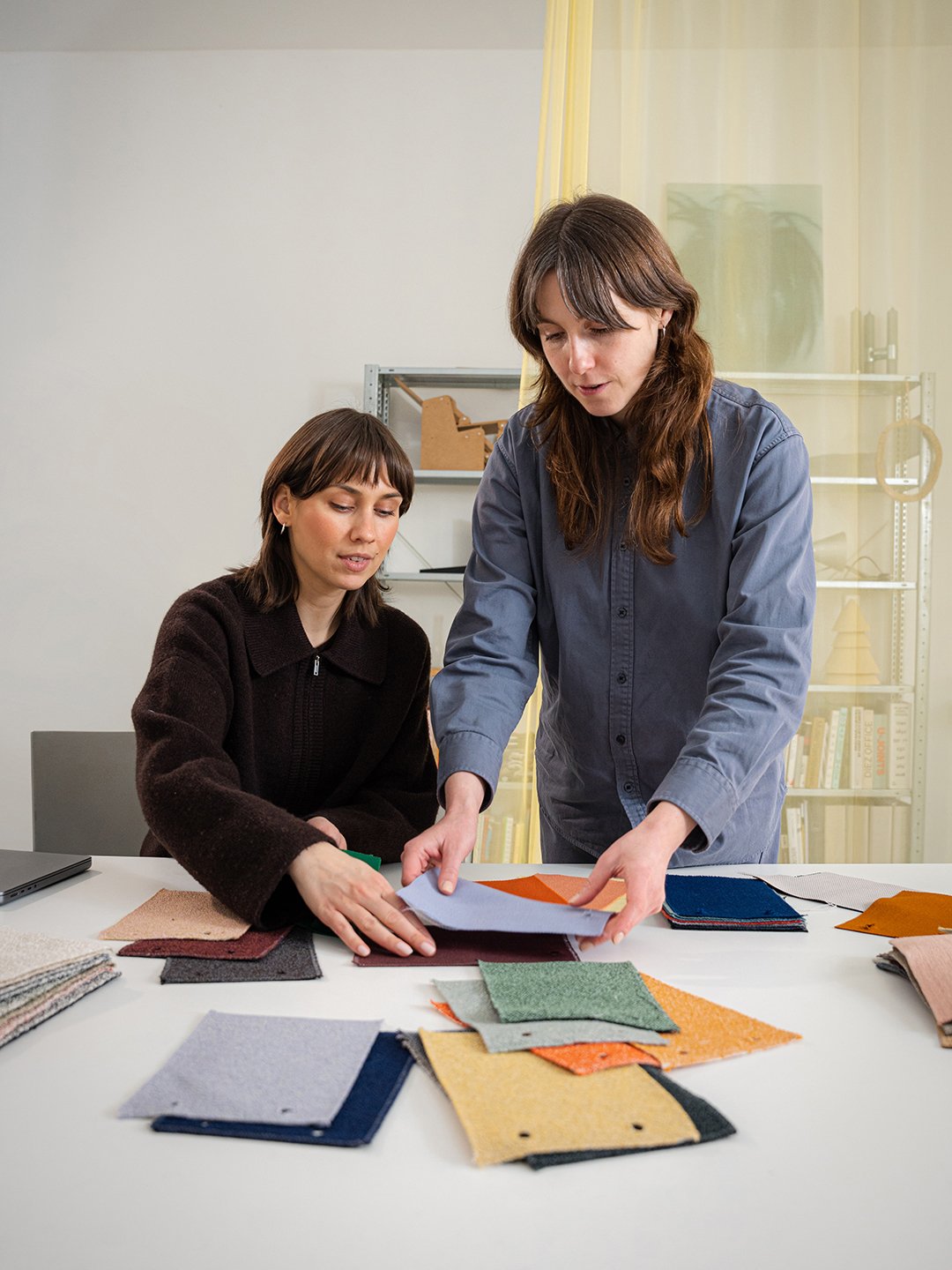
Of the many Vitra fabrics at the duo’s fingertips, they were particularly excited to work with Cento, a 100-percent wool available in vibrant hues like mustard and malachite, as well as Iroko, a chenille flatweave. “It is quite a heavy textile, but it drapes beautifully and brings a very special softness and richness to the piece,” says Ertel of the latter.
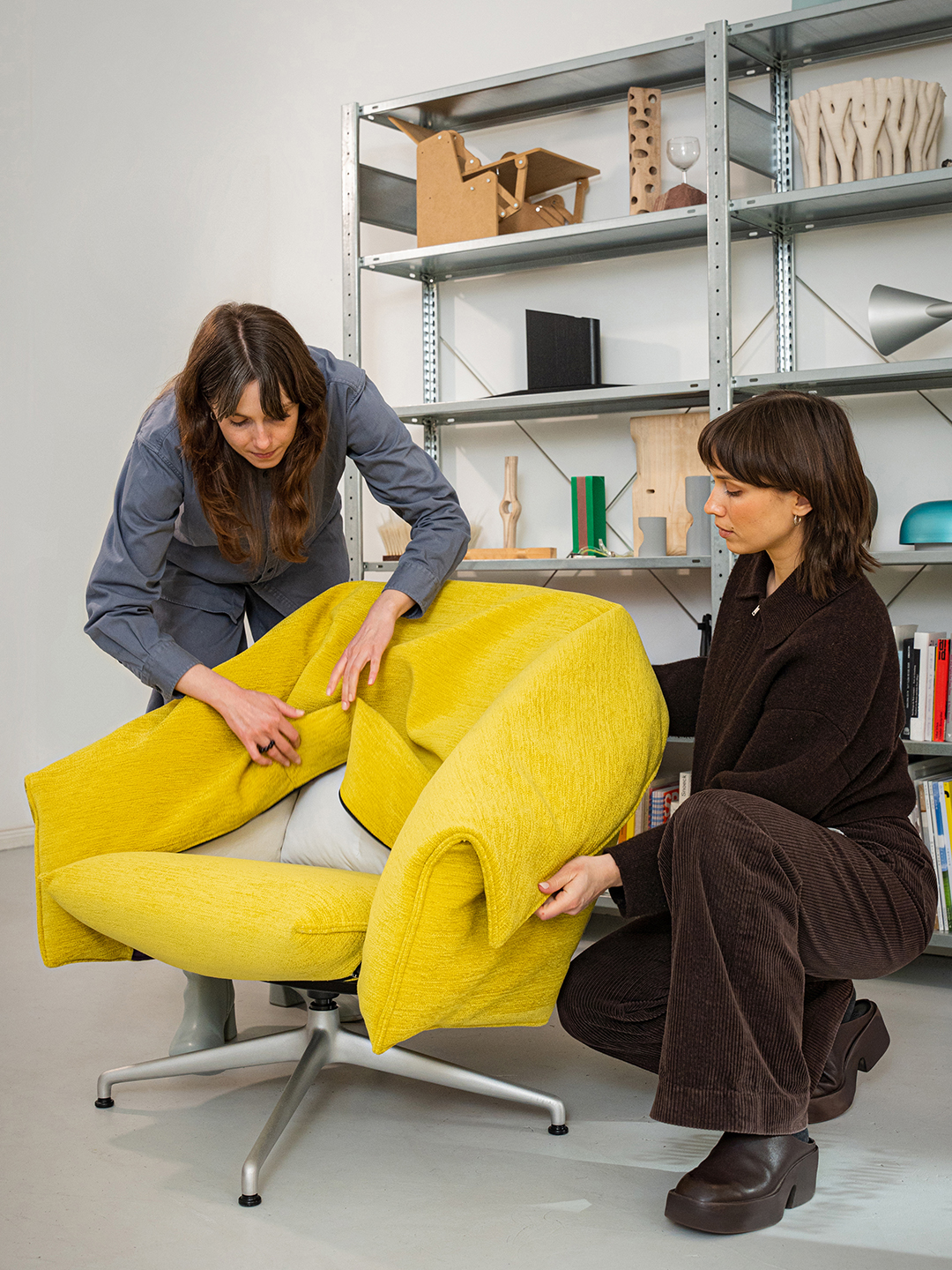
While we could absolutely see Bascule in living room or home office settings, I could easily envision it as a contemporary spin on the nursery glider, too. Ertel and Oberkrome would take a book in one, too. “We always thought that we would love to see it in a library because it could be so nice to relax there,” Oberkrome says.
Ahead, I asked the pair about what they do to stay ahead of the curve, what they are ready to stop seeing in the furniture world, and the kind of design they hope to see be embraced more and more.
In this era of social media, everything starts to look the same. How do you push your own product design to be so clearly Studio OE?
Oberkrome: For us, projects often start with the material. We allow ourselves to be guided by it, rather than forcing a preconceived idea onto it. At the same time, we try to question established approaches. With Bascule, for example, it was our first upholstered furniture project, so we entered the process with curiosity rather than fixed expertise. Through exchange, experimentation, and research, we developed a piece that feels warm, open, and tactile. Qualities that are very important to our work. Another important part of our work is storytelling. At the beginning of a project, we love to go deeply into research, into histories, materials and everyday gestures and atmospheres.
What are you ready to stop seeing in the furniture world?
Ertel: If we had to choose one material, we would say classic PU foam (non-recyclable polyurethane foam), especially when it is used as the default solution without much questioning. Beyond that, we are ready to see less furniture that feels generic or interchangeable.
What in design do you hope people start embracing more of?
Oberkrome: We hope to see people embrace materials in a more honest way, allowing them to show their natural qualities instead of covering them up or making them look like something else. With wood, for example, this could mean appreciating the natural grain, small irregularities, and individual characteristics that make each piece unique. Also, a stronger focus on furniture that is made to last. Pieces that can stay with people over many years, age beautifully, and maybe even be passed on to the next generation.
Vitra and Studio Œ’s Bascule chair will be available to purchase beginning September 3, 2026 at Vitra and select dealers.