We may earn revenue from the products available on this page and participate in affiliate programs.
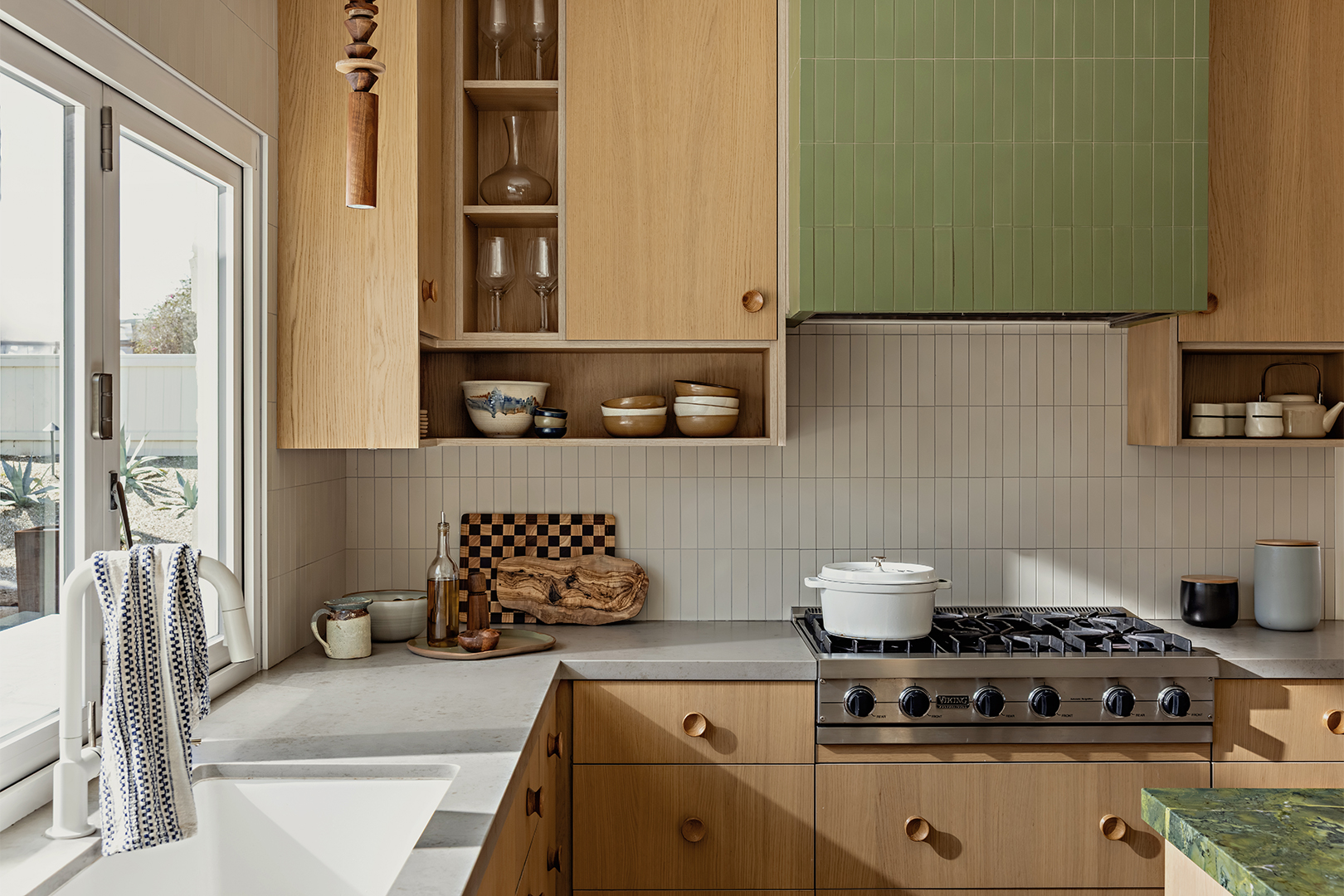
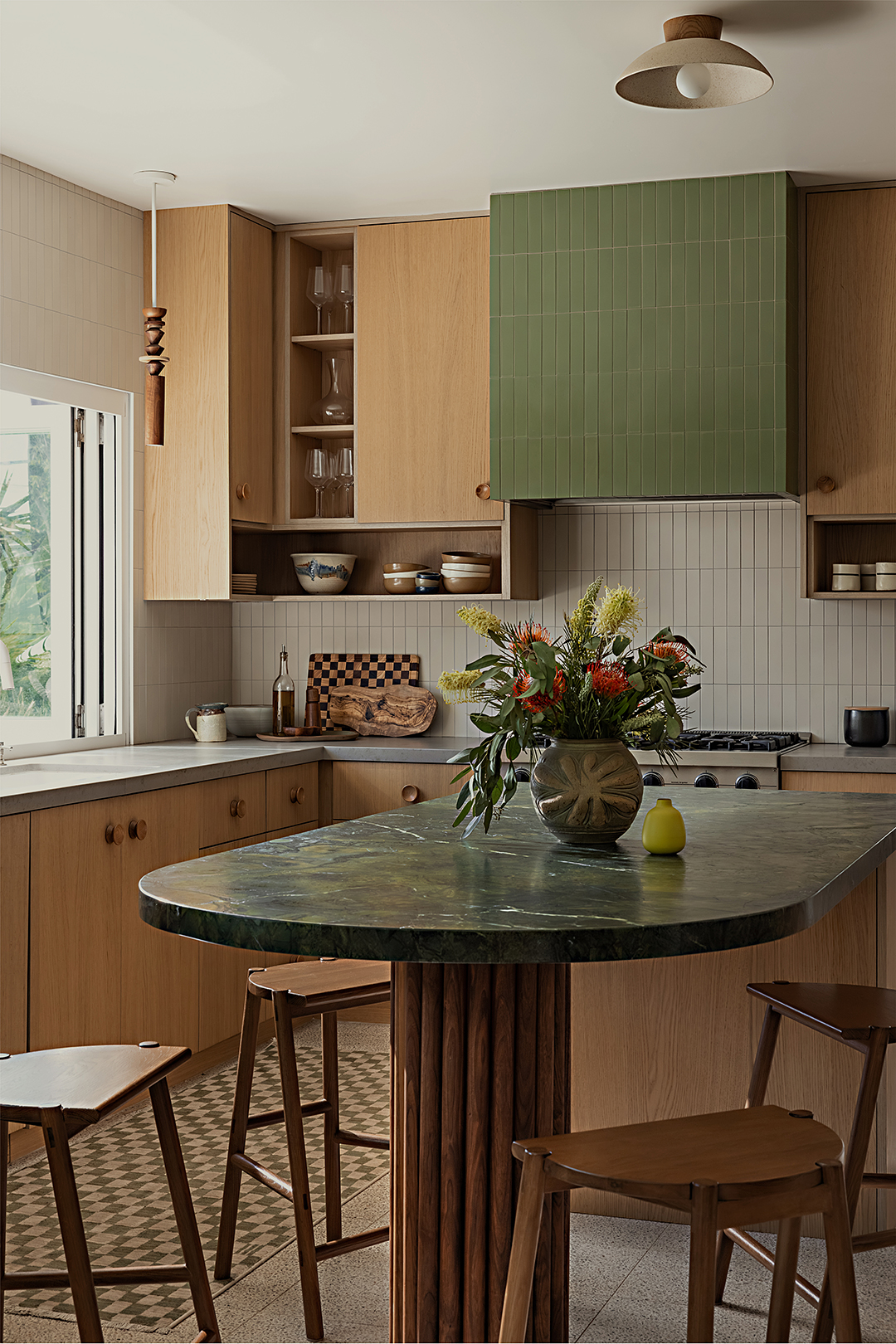
For Christina Valencia, the kitchen was never just another room to renovate. It was the space that would determine how her family lived in the house. After years of remodeling homes for clients through creative studio Colossus Mfg, Valencia and her husband Kele Dobrinski (also her creative partner), approached the kitchen in their own Encinitas renovation as a culmination of so much they’d learned along the way: prioritize sunlight, make room for people to linger, and choose materials that can survive actual life.
“I’ve remodeled enough houses now that I feel like I know what I want in a kitchen,” Valencia says. “This time it was about bringing all those lessons together.”
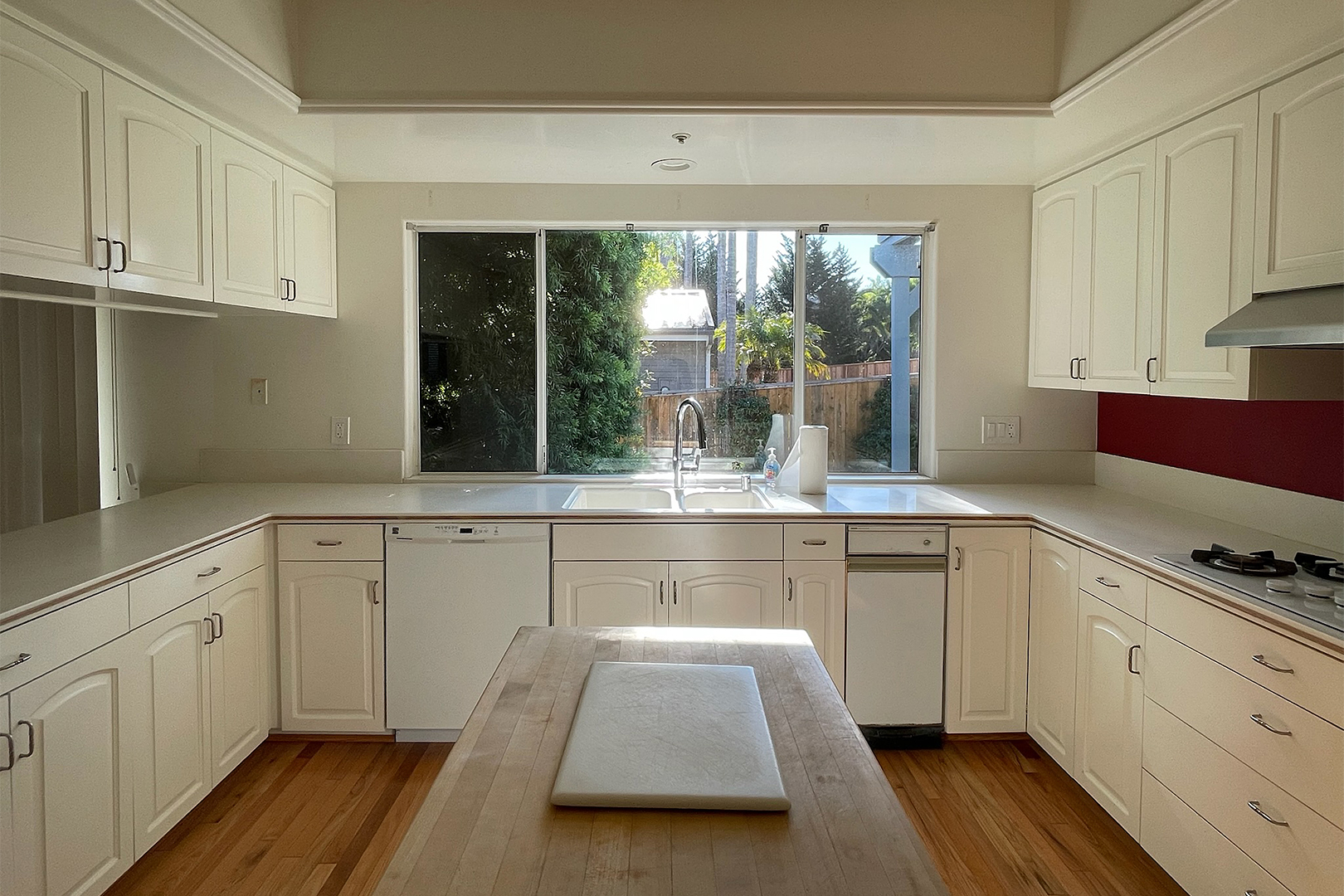
There was just one complication: The couple would be renovating the home from nearly nine hours away. At the time, the family was still based in Sacramento, and after closing on the house around Christmas, they gave themselves roughly six months to finish renovations and move in before the school year ended. Frequent flights and long drives south became part of the routine as they checked in with contractors and problem-solved on-site. “It’s always tricky managing construction remotely,” Dobrinski says. “Especially when you’re working with a new team.”
The Kitchen Was Designed for Constant Drop-Ins
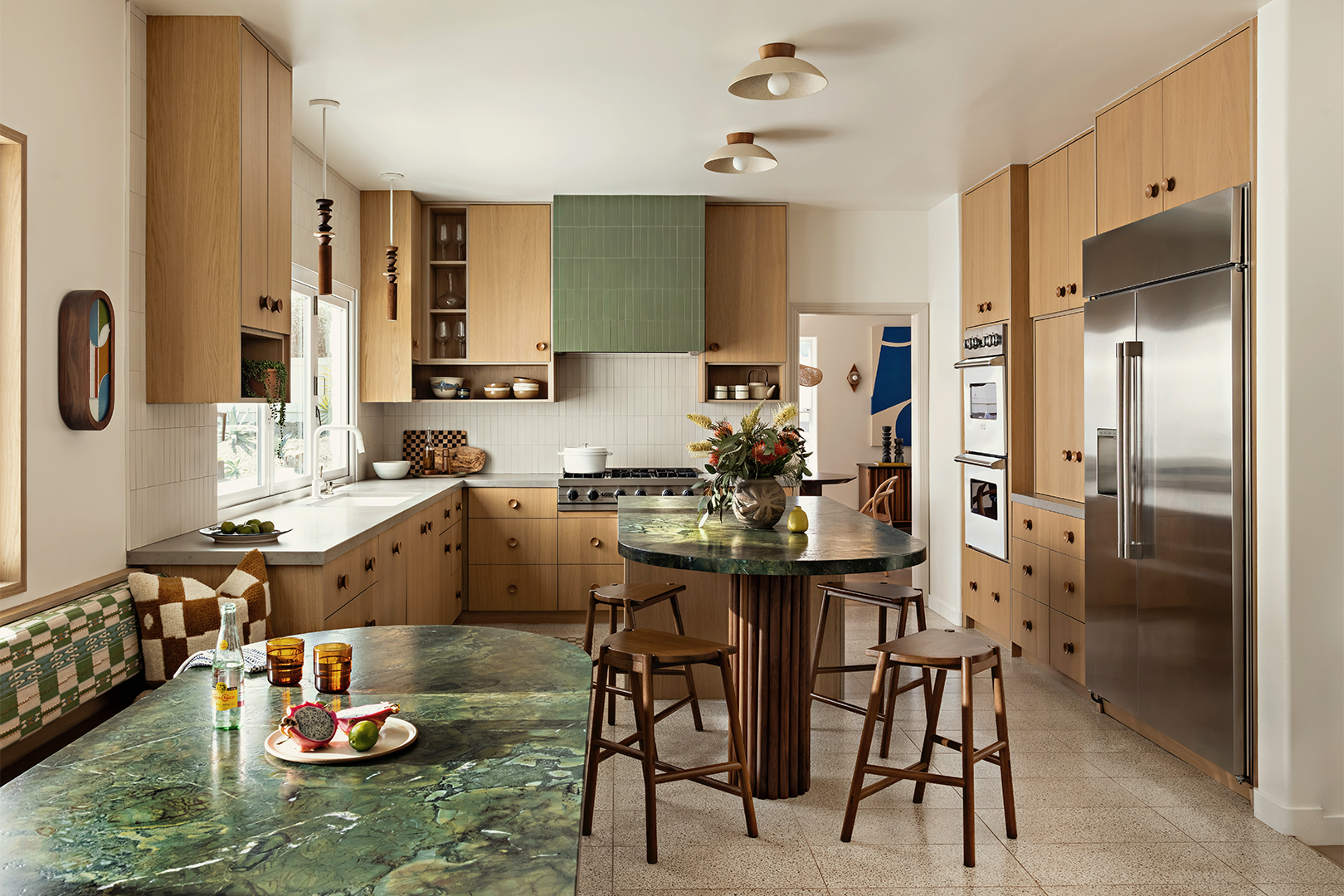
For Valencia and Dobrinski, the kitchen needed to feel less like a formal showpiece and more like the center of daily life. A south-facing orientation floods the room with natural light throughout the day, while oversized openings connect the kitchen directly to the backyard. The result is a space that constantly spills outdoors.
“Our doors are almost always open,” Valencia says. “Neighbors, kids, people stopping by—it’s meant to feel welcoming.” Instead of separating cooking, dining, and lounging into rigid zones, the couple leaned into flow. The kitchen opens directly into the living spaces, making it easy for conversations, meals, and gatherings to move naturally throughout the house.
The Subtle Terrazzo That Hides Everyday Chaos
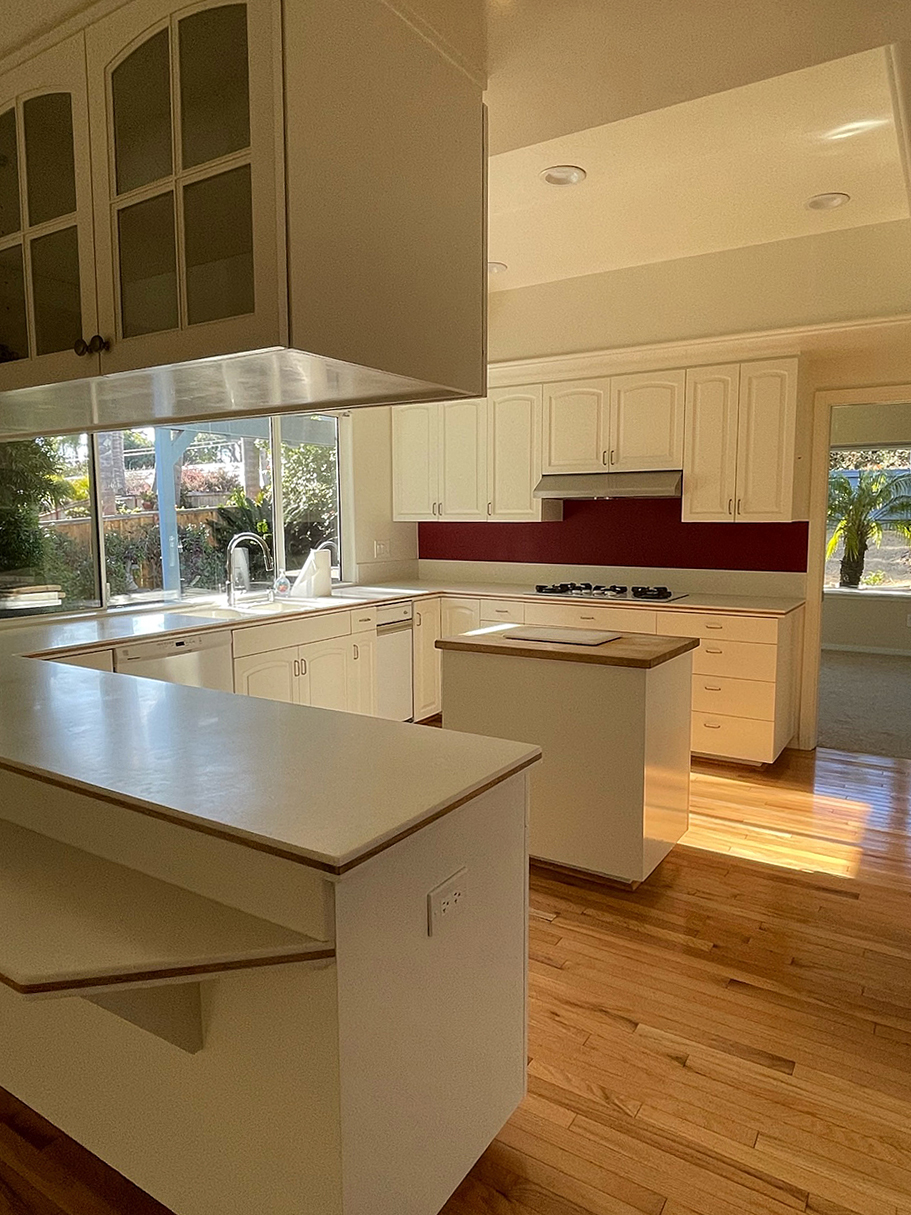
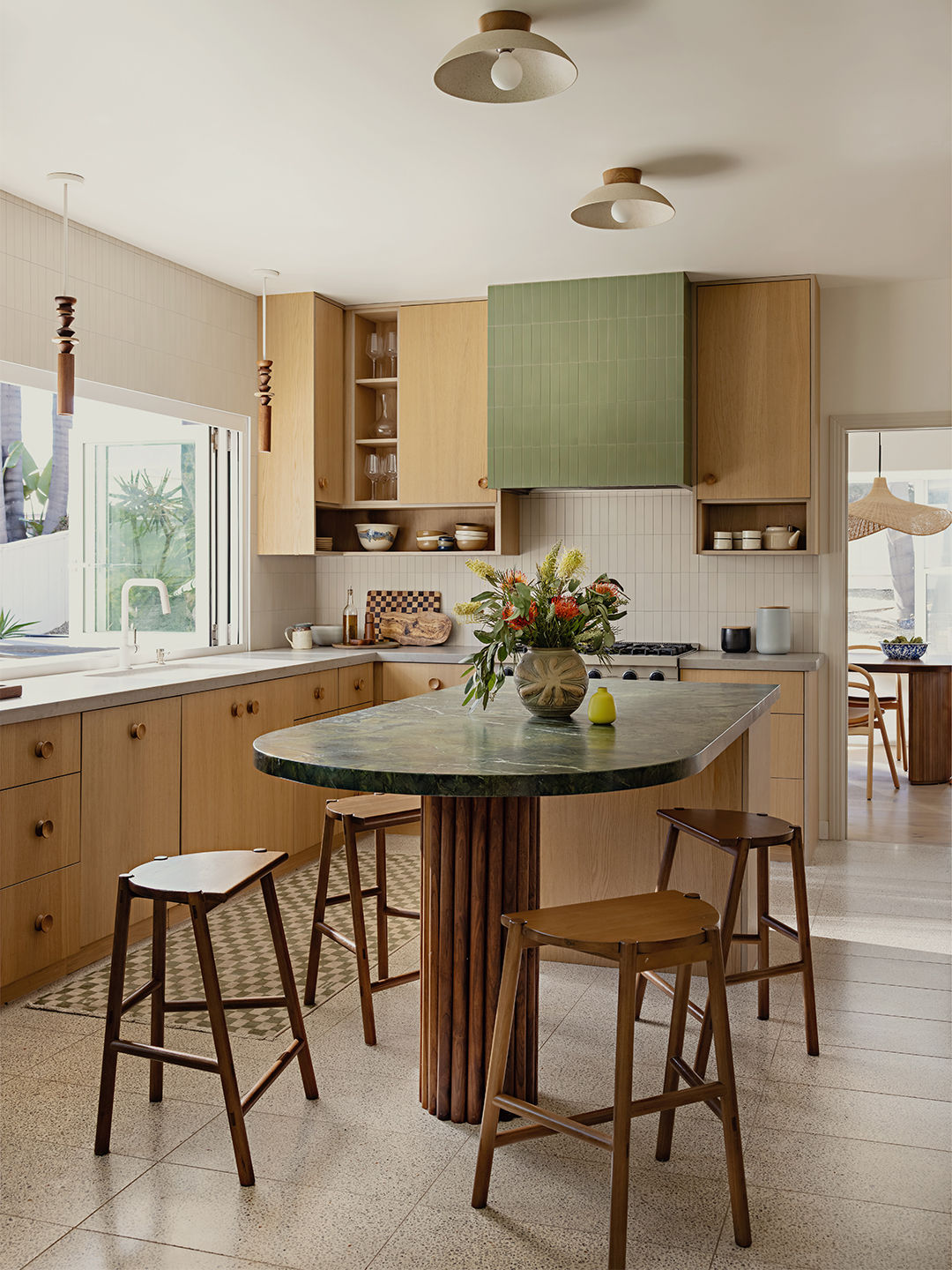
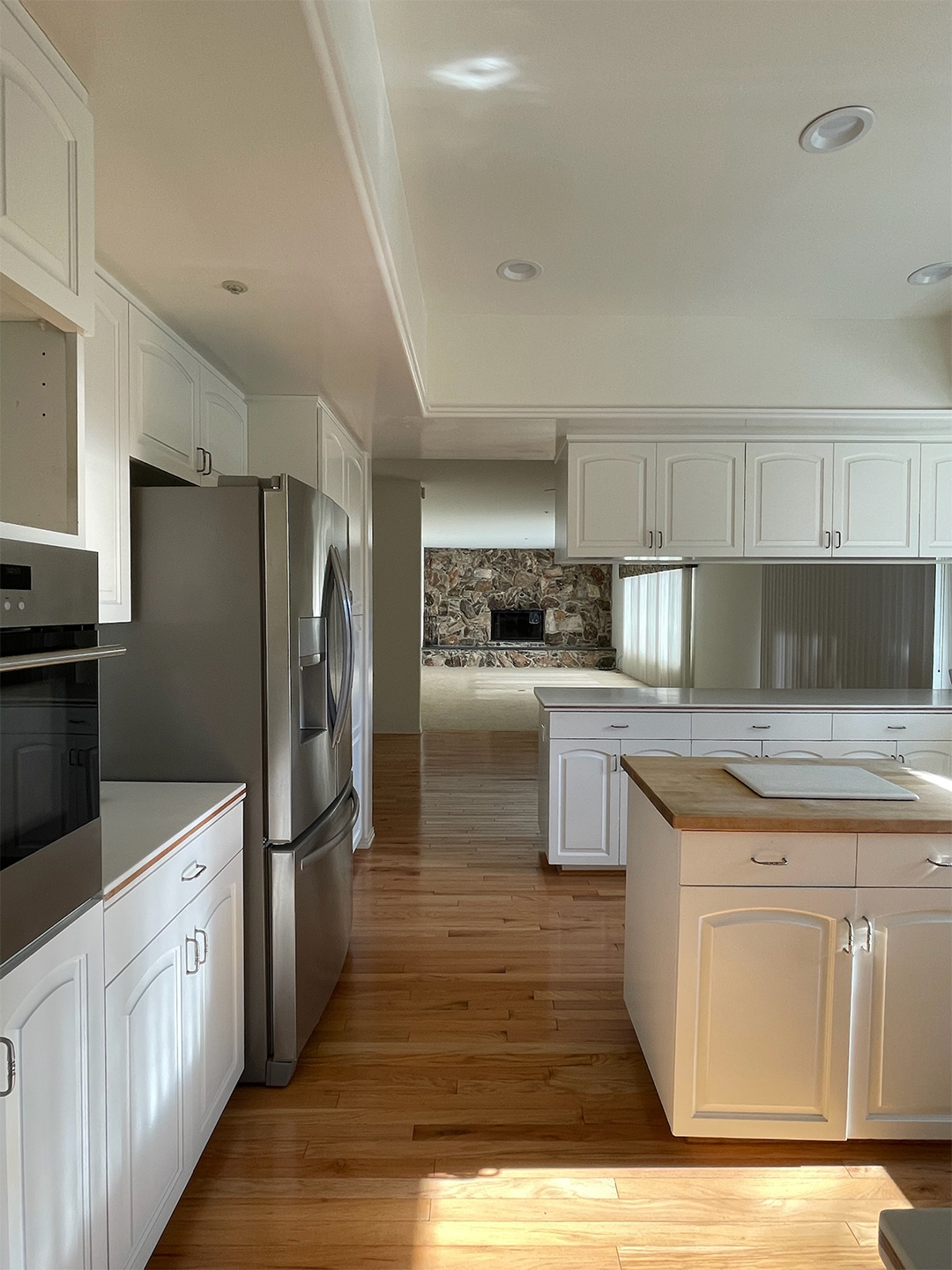
While the home is filled with handcrafted details, some of the smartest design decisions were the most practical. Terrazzo tile runs throughout the kitchen and adjoining living areas, chosen as much for durability as aesthetics. “It’s a little more subdued than the terrazzo you see everywhere right now,” Dobrinski says, “but it’s incredibly functional.”
The softer pattern helps disguise crumbs, dirt, and the wear that naturally comes with kids, guests, and near-constant indoor-outdoor traffic. Running the same flooring throughout the shared spaces also visually expands the footprint of the home, allowing the kitchen to feel connected to the rest of the house.
The Built-In Detail That Makes the Whole Room Feel Softer
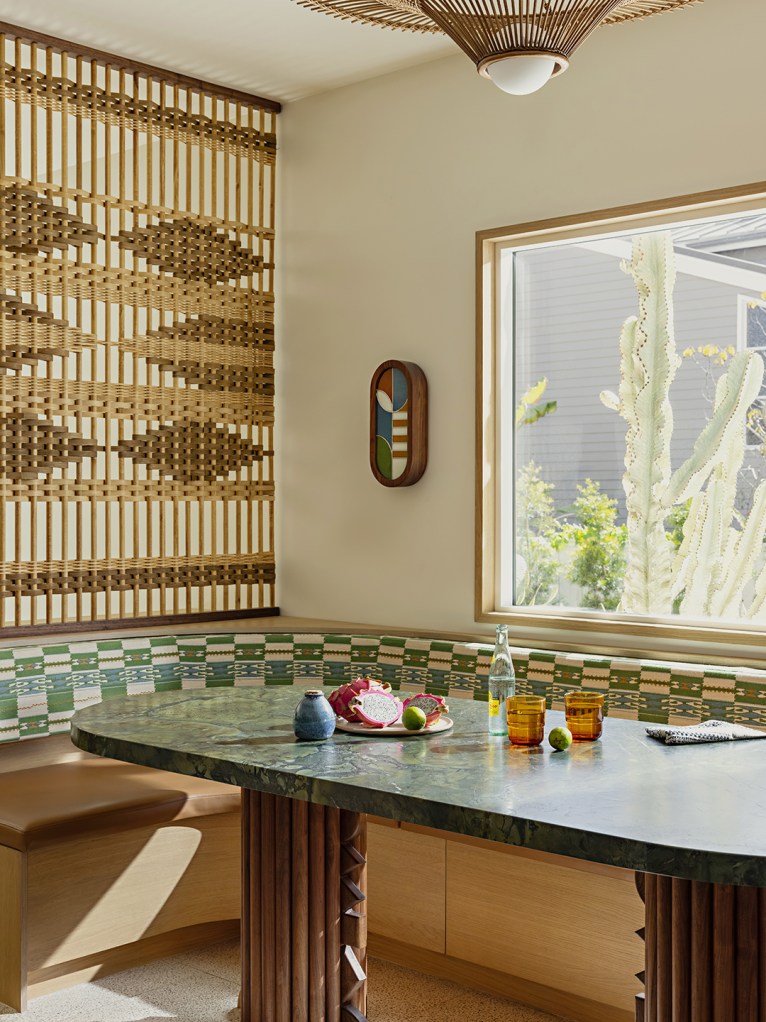
To balance the harder surfaces of tile, stone, and cabinetry, the couple layered in texture anywhere they could. A built-in banquette creates a more relaxed dining area than a traditional table-and-chair setup, while a custom woven screen wall adds warmth and dimension nearby.
The woven detail was originally inspired by an idea the couple developed while working on their HGTV series, but it ultimately became one of the kitchen’s defining features. Beyond adding visual texture, the screen subtly separates spaces without closing them off completely—a move that keeps the kitchen feeling open, breathable, and connected to the rest of the home.
For Valencia, that sense of openness was always the point. The kitchen wasn’t designed for perfection; it was designed to be used constantly.