
We may earn revenue from the products available on this page and participate in affiliate programs.
You know the saying—that you can have the most inviting living room but by mid-party everyone ends up in the kitchen? So it goes in this 1805 Federalist cookspace in Newburyport, Massachusetts, which was recently refitted with period details and reconfigured for the lively social life of a few British expats.
Kate Dasklakis of KSD Designs took the couple’s brief of “a little of London, some countryside charm” and embarked on a renovation that included replacing knob-and-tube wiring, restoring a crumbling chimney, and more. Throughout the home, and particularly in the kitchen, the designer “wanted to lean into the idea of a Town & Country feel with British undercurrents.”
Ahead, see how the New England residence got its antique groove back with a fresh coat of paint, original beams and brick, and a sitting room-mudroom hybrid suited for daily use (and yes—there’s teatime.)
Expose Original Beams, Source Period Floors
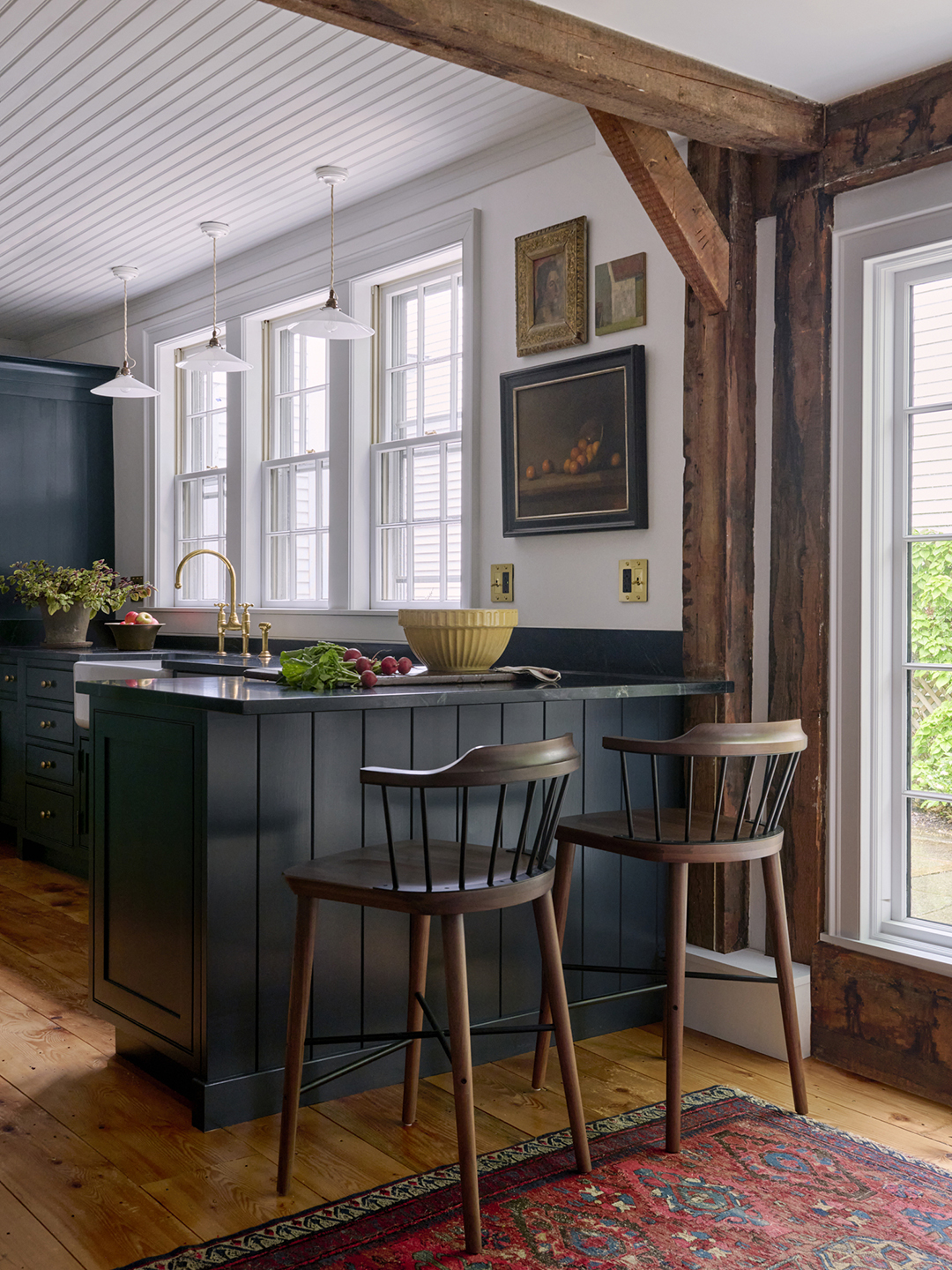
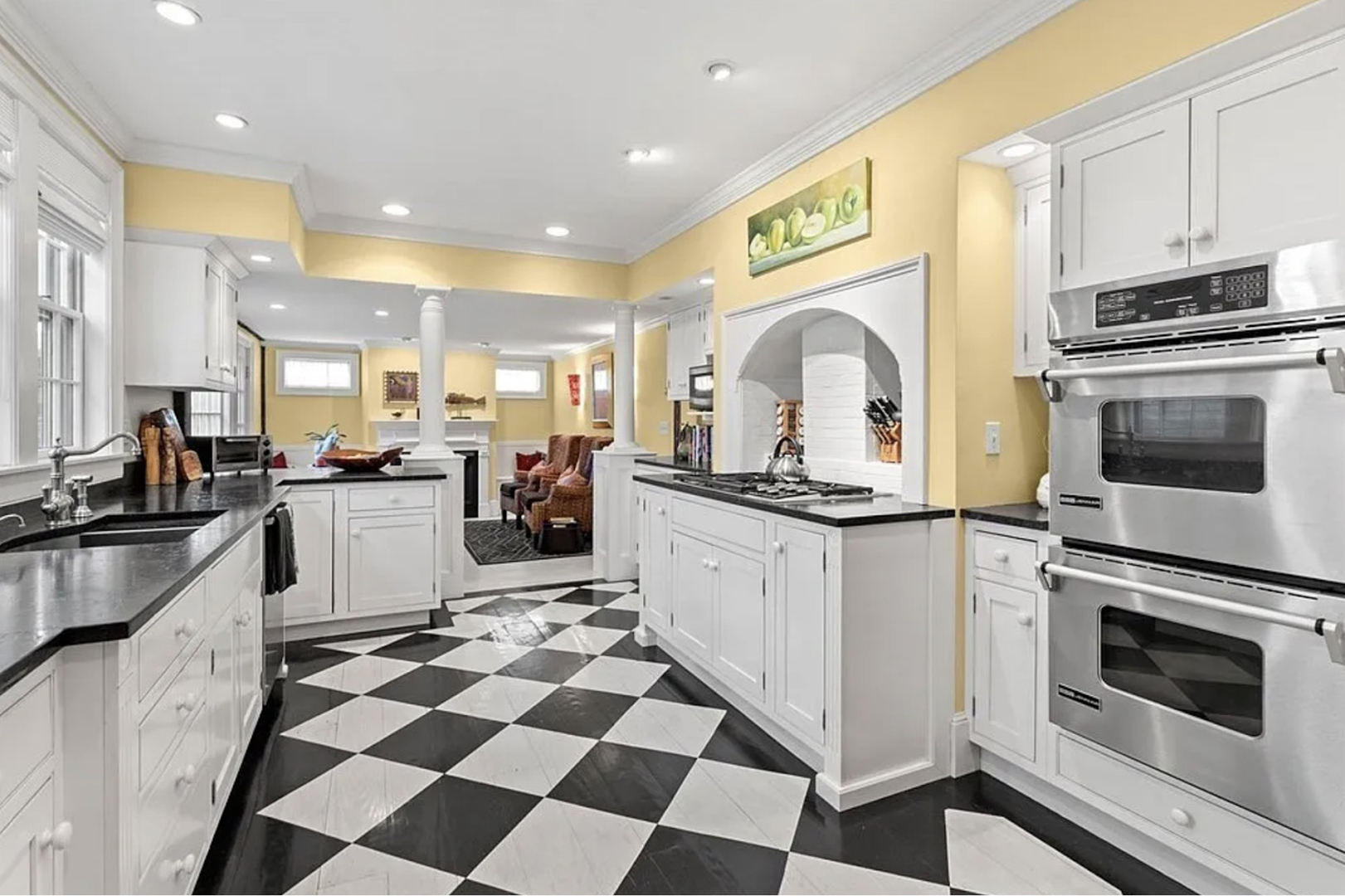
The previous owners had built columns between the kitchen and sitting area, chopping it into two separate spaces. Dasklakis immediately set about removing them—they weren’t original—and created a counter-overhang that offers a spot to perch on a pair of modern Windsor stools. “When we removed the columns and drop ceiling, we found beautiful beams to expose,” explains Daskalakis of restoring the original bones of the space. “It was a very exciting day.”
Sadly, the original floors had also been ripped out, replaced, and repainted in a checkerboard pattern that covered up the beauty of the antique wide-pine. So, Dasklakis went about sourcing 18th-century boards from Nor-East Architectural Antiques in Plaistow, NH—an easy fix. “Back in the 1800s they used whatever they had, which meant the boards were different lengths and widths… we stained them clear to keep the authenticity of the pine.”
Let the Stove Make the Statement
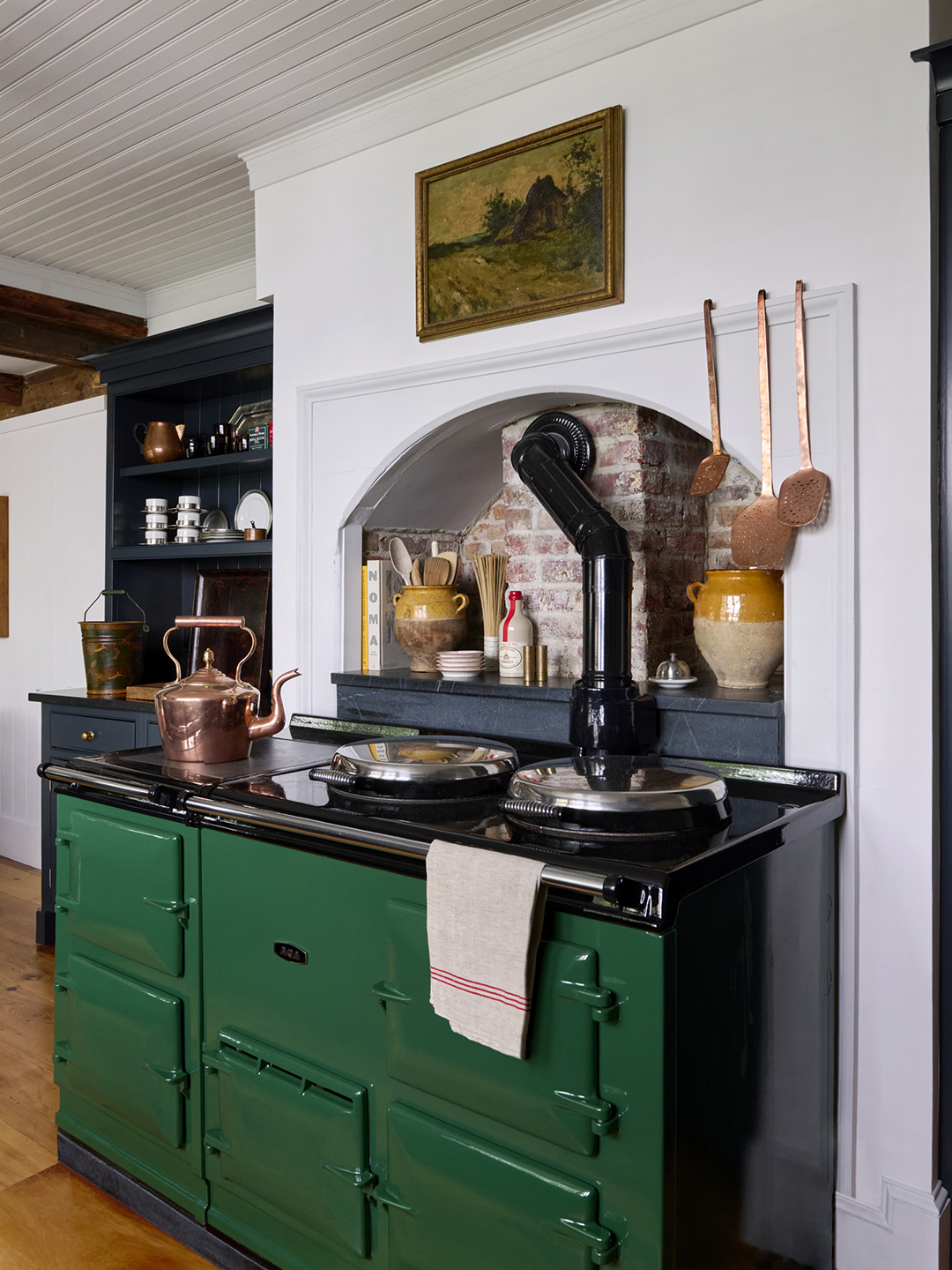
A modern cooktop had previously been installed in front of the kitchen fireplace, which was covered in an out-of-step glossy backsplash. Daskalakis seized the opportunity to expose the original brick behind the tile. Instead of sourcing replacement antique masonry, the team opted to carefully restore what was there, giving the hearth an authenticity that ties the house to its roots. She also added a quintessentially British moment: the racing-stripe green Aga range, which had been a fixture in the couple’s home in the U.K.
“It took some serious chimney cleaning to make it happen, but the fireplace is my favorite statement in the kitchen,” says Dasklakis.
Install Built-ins That Feel of the Era
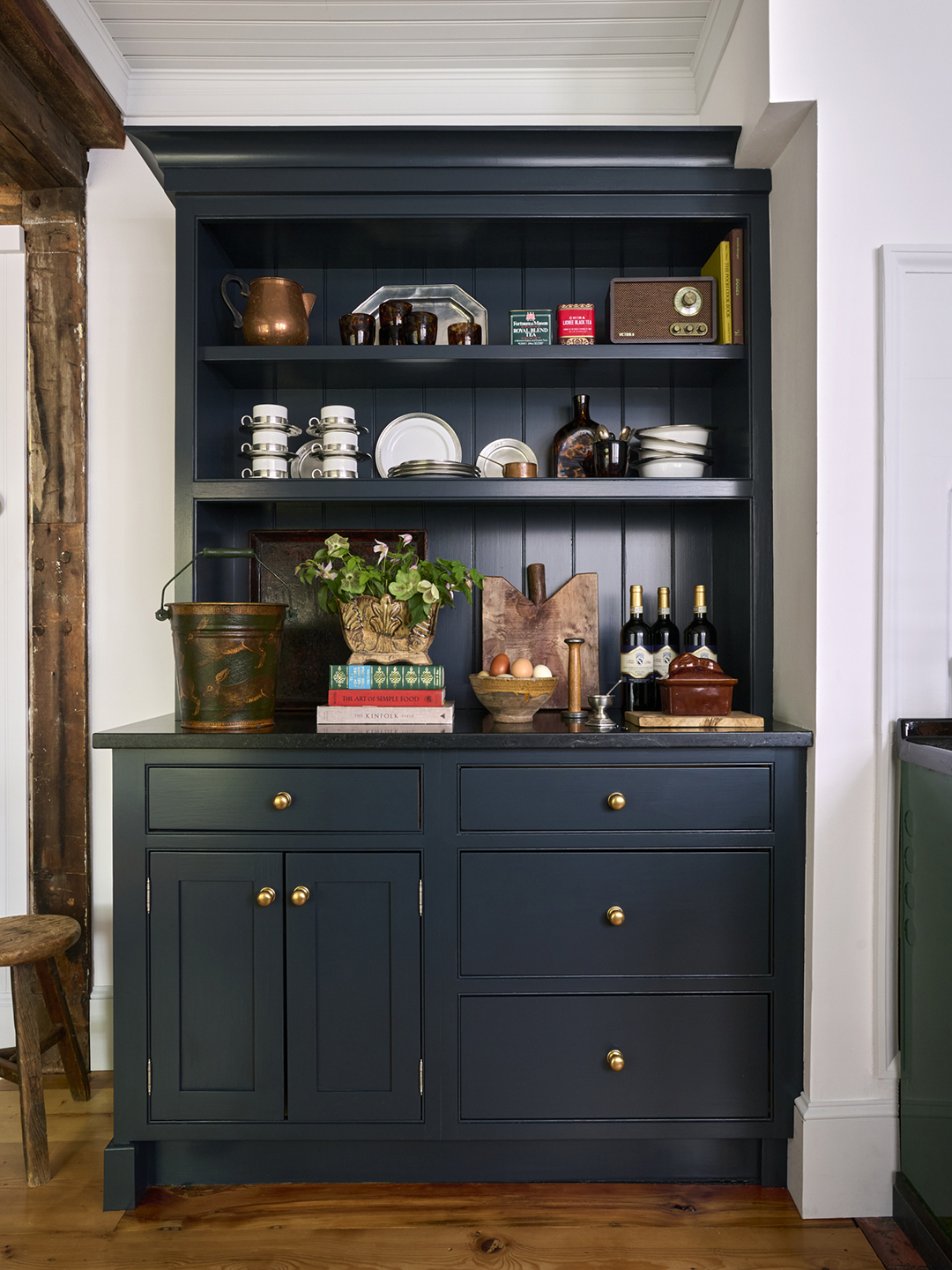
Given that tea is a daily ritual (much like their 19th-century predecessors), the couple needed a place to store and access their daily serveware. Daskalakis designed a built-in cabinet that echoes a period hutch; the cabinet delivers both easy-to-reach functionality and a place to display collected curiosities. While the hutch stands alone, Dasklakis used beadboard identical to the base of the breakfast bar to keep things cohesive.
Give Cabinets and Lighting the English Treatment
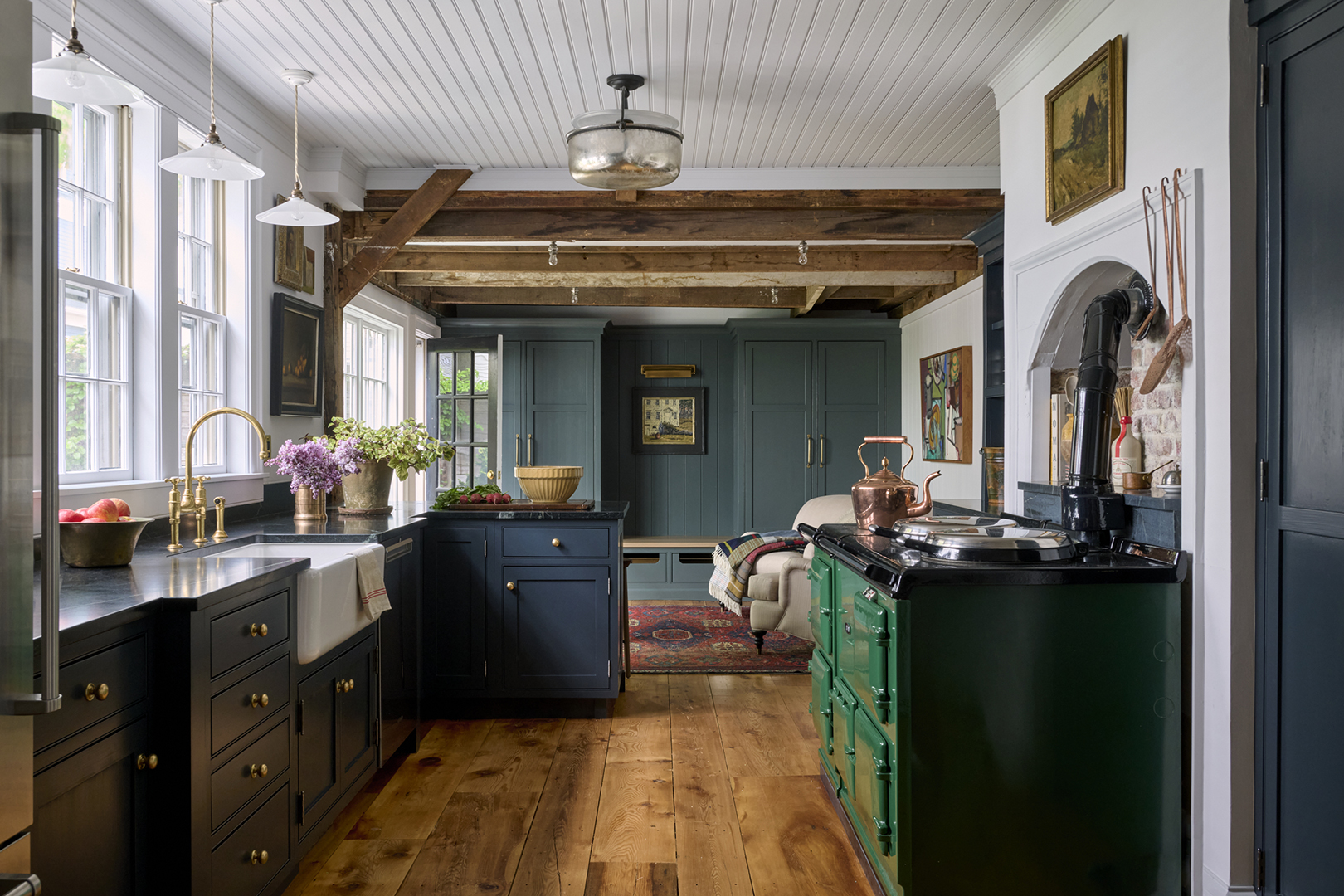
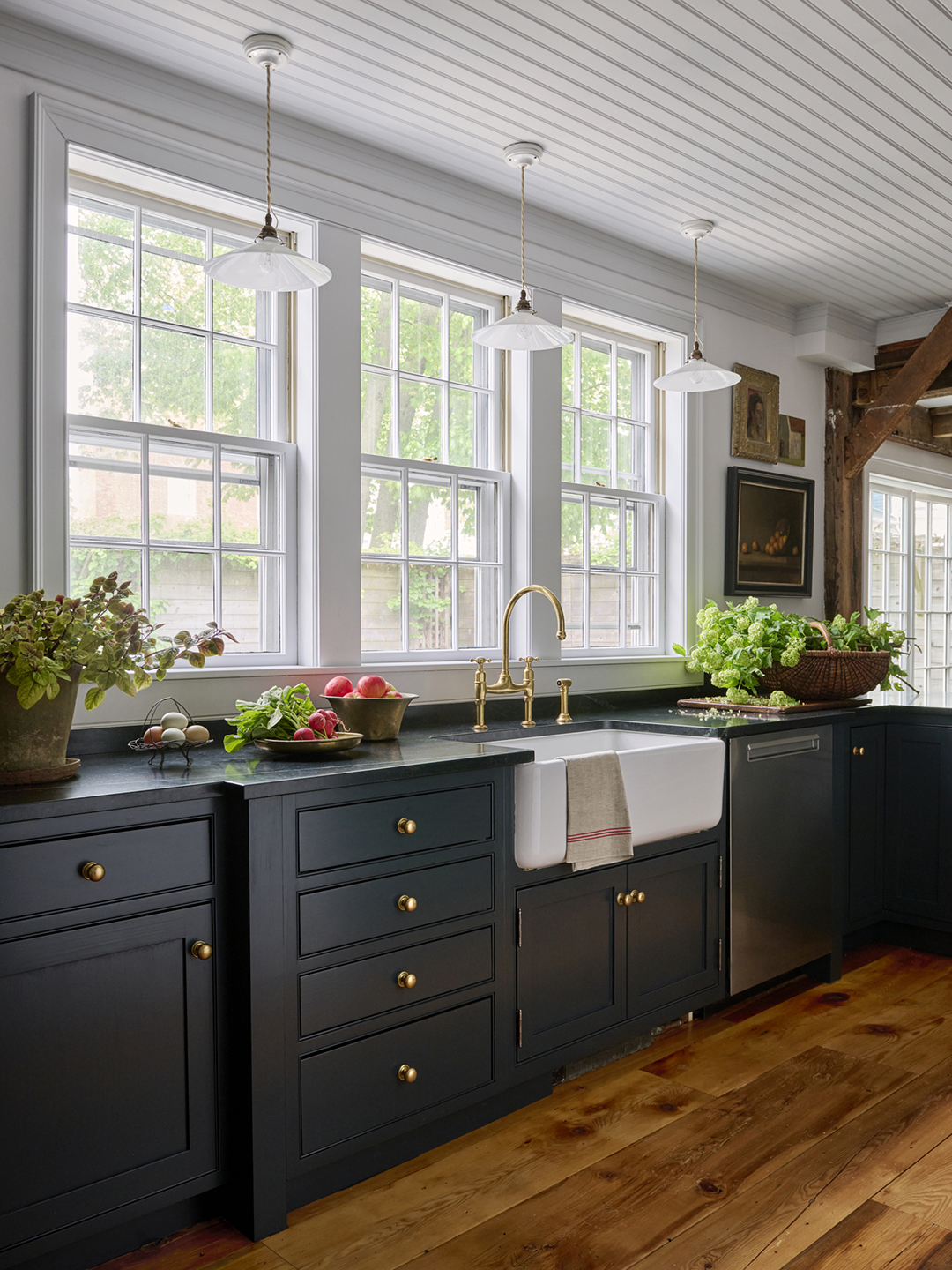
Daskalakis wanted to ground the room in a hue that lent gravitas to the kitchen, echoing the home’s cozy paint colors throughout. “The kitchen windows bring in lots of natural light and we wanted to lean into the brightness with white walls, but to spice up the cabinets with a deep saturated color that would pop,” she says. Enter Farrow & Ball’s dramatic Railings for the lower cabinets and hutch, which paired well with the existing soapstone countertops (they managed to survive the renovation). Out went the track lighting; in came classic beadboard overhead, dainty pendants over the sink, and a mercury-glass flushmount. The team then installed paintings from local artist Donald Jurney and antique switchplates.
Flip a Stiff Seating Area Into a Multi-Use Space
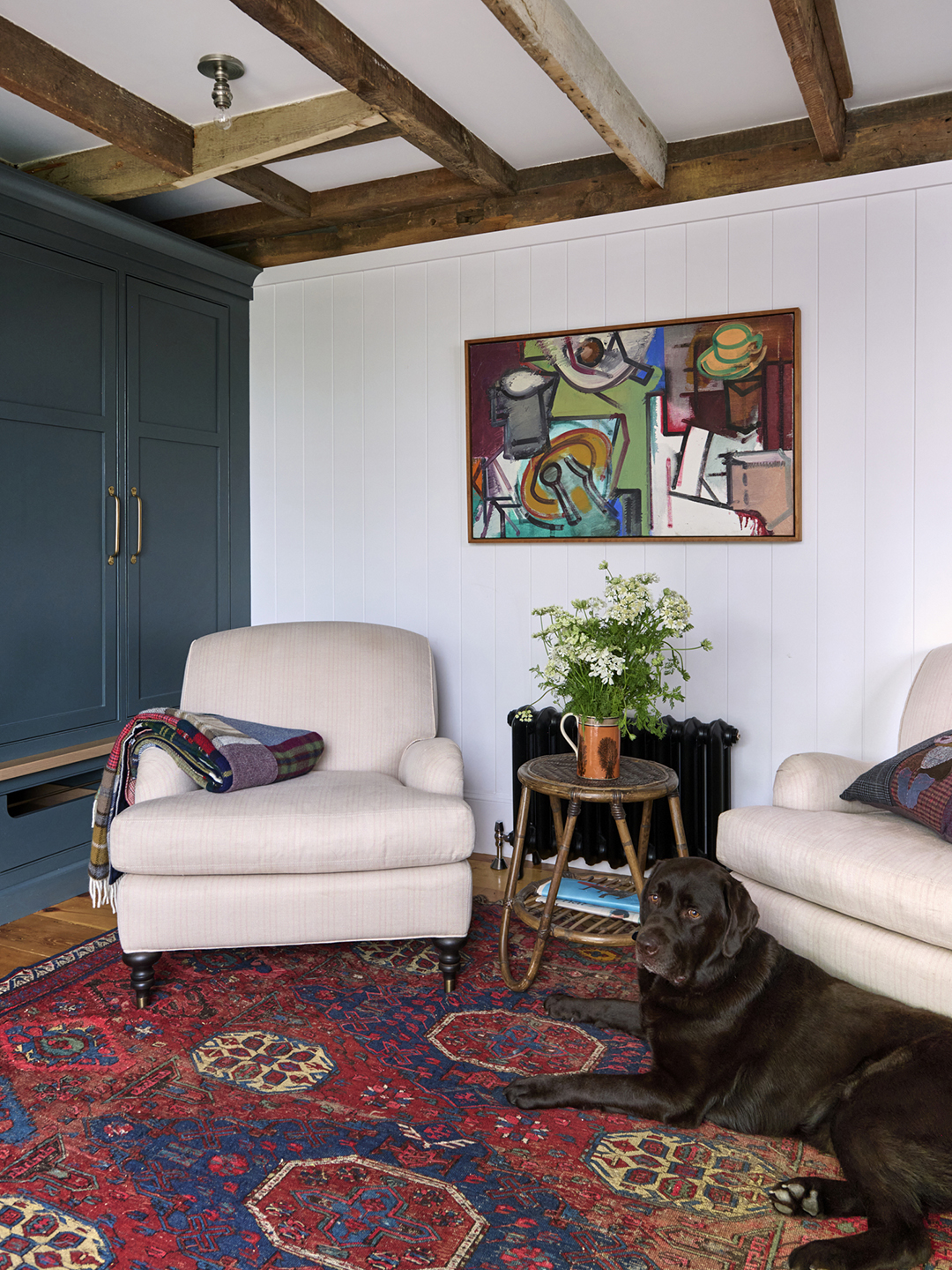
Few period homes have a mudroom at the ready, so creating space for the family’s comings and goings, as well as tea time and a chat, was a necessity. The often-patchwork architecture of Federalist homes results in oddly-angled walls, as was the case in this space. The designer straightened it, removed a fireplace, and crafted built-in storage for the inevitable abundance of shoes and bags that collect there. “My favorite aspect is the integrated pulls on the drawers,” says Dasklakis.
Today, roll arm chairs, a classic radiator, and a cozy rug combine into a place to pop on boots or sit down with a book and mug—all while a pot of tea is rumbling on the stove. Country casual, indeed.