

We may earn revenue from the products available on this page and participate in affiliate programs.
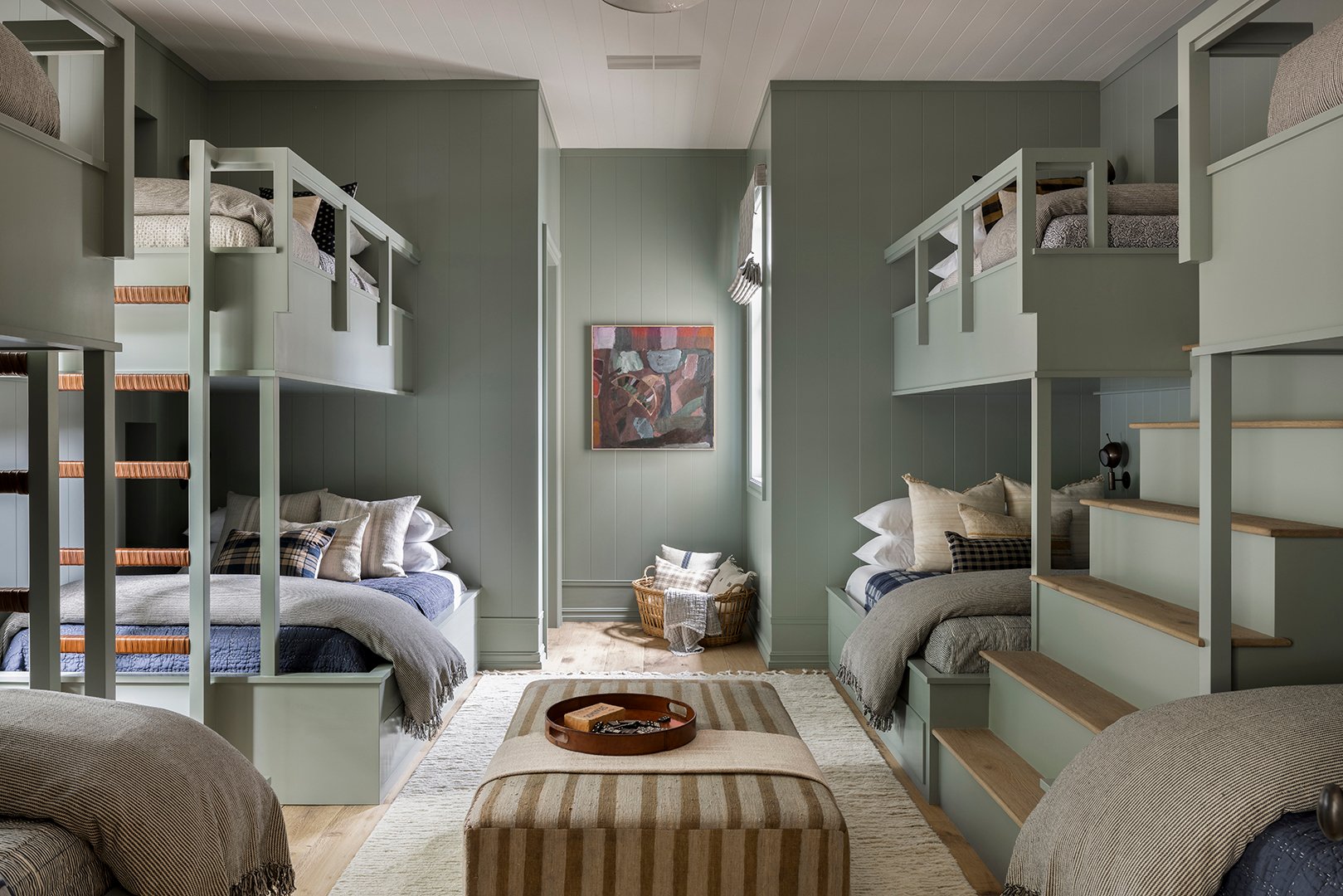
Amber Lewis is ready to peel back the curtain. “I want to talk about how much goes into a project,” says the founder of Amber Interiors whose third monograph, Interiors, hits bookshelves today. “We’re essentially acting as designers, builders, architects, therapists, and managers. It’s so process driven, and I don’t think designers get enough credit for that.” Instead of producing another breezy coffee table book, she decided to pack Interiors with personal stories, fascinating insights from years on the job, and useful advice about what it actually takes to bring a great room to life. Some of the most captivating photos in the book are of bunk rooms: functional, fully customized, and somehow both whimsical and sophisticated at the same time. What really goes into creating one?
“Bunk beds come into the equation when a client needs space for more people,” Lewis says. “If the room has height, you can always go up.” But she’s clear that this isn’t a weekend DIY project. Building a bunk room takes an enormous amount of planning: Is it for kids or adults? Will they still want to use it in five or ten years? And is it safe? You’ll be embarking on what Lewis considers “true, genuine construction” at a meaningful cost. This is a custom job, and not something you’re going to want to rip out down the line just because your kid grew 6 inches too tall to fit on a twin mattress. Read on to learn Lewis’s best tips for creating a bunk room that everyone wants to sleep in—and that will last you, and the next homeowner, for life.
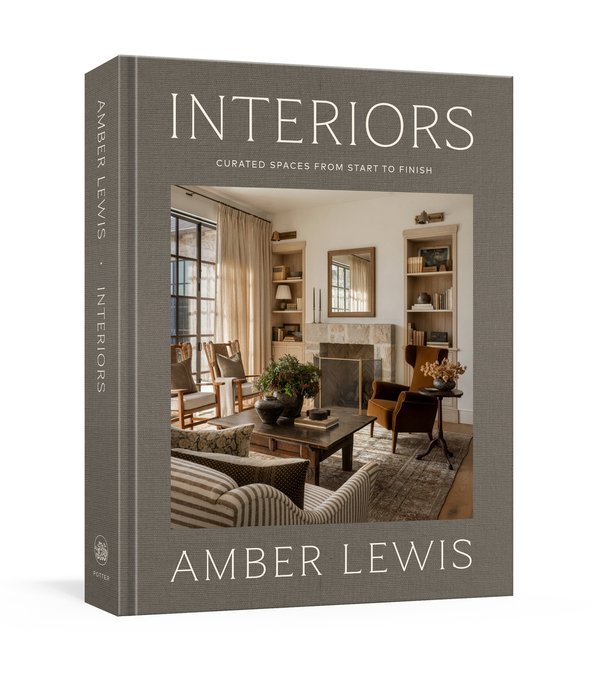
Interiors: Curated Spaces from Start to Finish by Amber Lewis
Ensure Structural Integrity
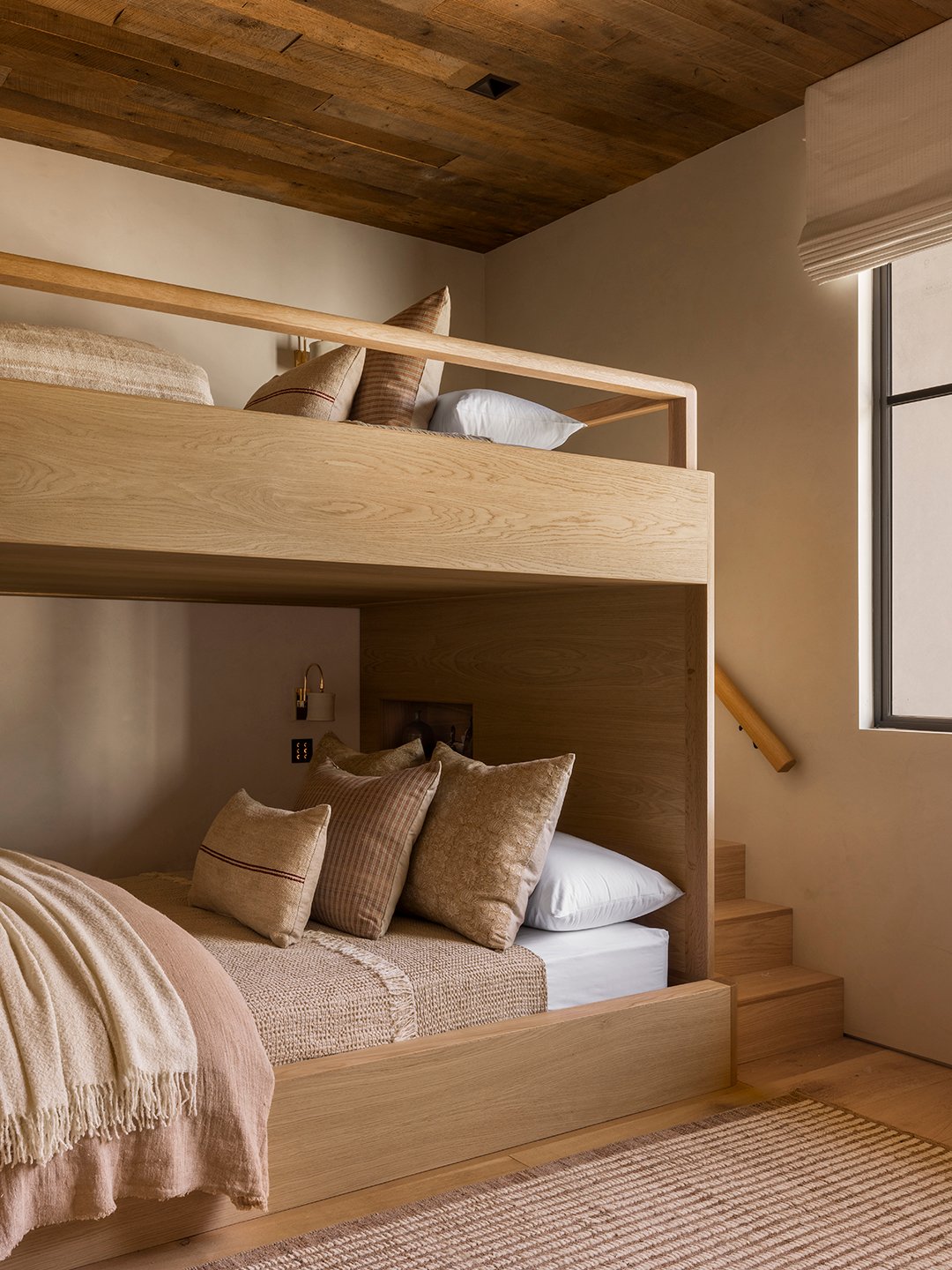
Built-in bunks need to safely hold the weight of the frame, a mattress, and bedding, as well as a person or two, all suspended above another person. “If the bed is not going to have support on all four corners, you really have to engineer the interior of it, probably with steel and concrete, and that would have to go tie back into the actual wall itself,” Lewis explains. “At the end of the day it’s going to weigh 1,000 pounds.” Adding middle supports or anchoring the beds to two walls will help bear some of that load, but above all else you will want to hire a team with engineering expertise—not just a builder who makes cute beds.
Be Realistic About Your Budget
Store-bought bunk beds are almost always going to be more cost effective than built-in bunks, says Lewis, as the latter are custom designs that require construction. “When you’re building anything, there are costs associated,” she explains. “As soon as you start doing custom millwork, and engineering support, and building stairs, your budget is blown.” Don’t try to cut corners with the design team, either, since structural integrity of the bunks is so important.
Rather, Lewis recommends buying a set of bunk beds and customizing them to look built-in, painting them to match the walls or choosing bedding that coordinates with other upholstery in the room. Save up now and built-in bunks may very well be in your future.
Keep the Sleepers in Mind
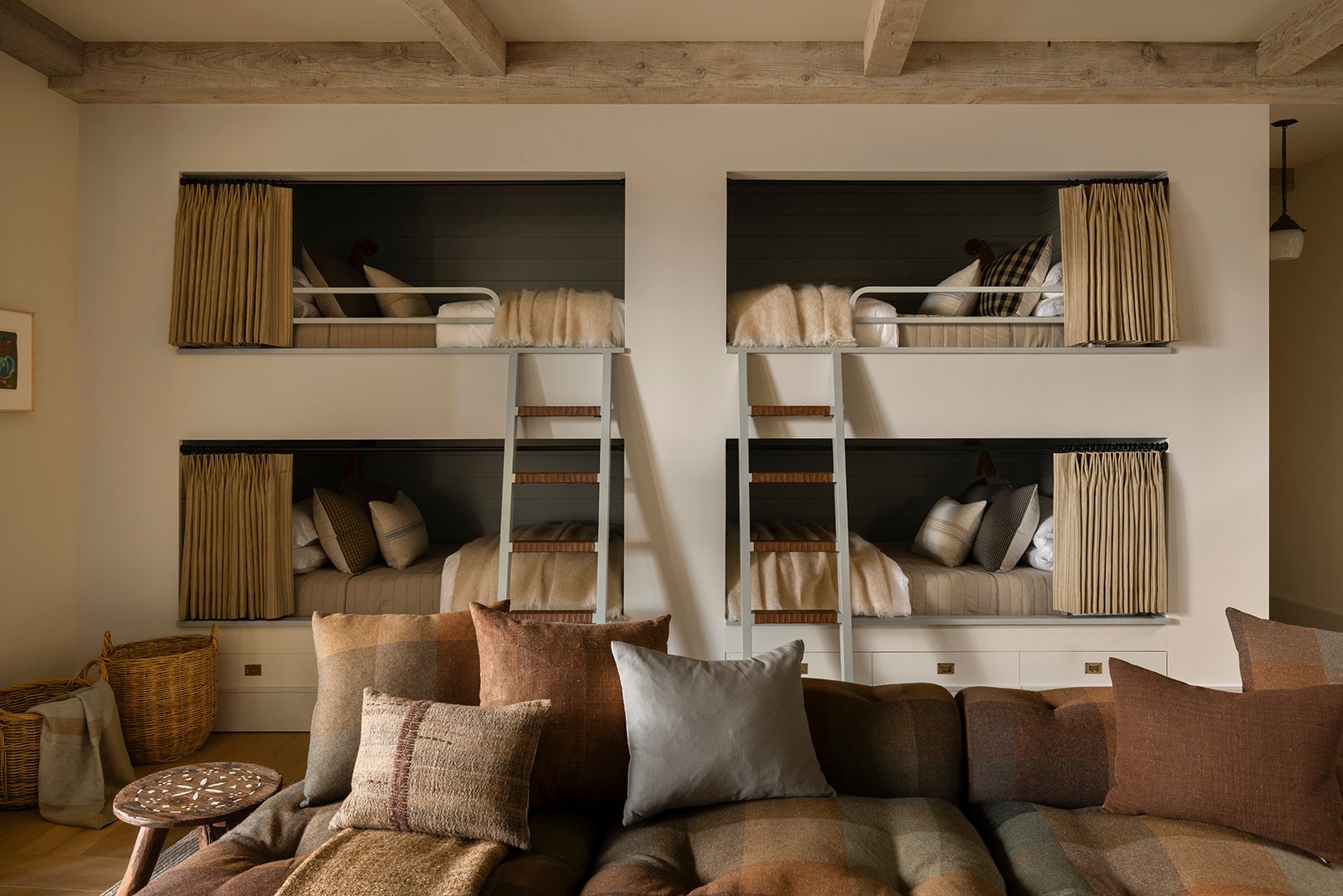
But what if your kids grow up and then don’t want bunks? No matter. Lewis says that the majority of her clients requesting bunk rooms actually want them for adults. “It’s for housing guests,” she explains. “Queen beds on the bottom, sometimes a twin on top, sometimes it’s double queens, sometimes it’s a full.” (She’s never designed a bunk room with a king bed but “there’s always time for a new first.”)
Hanging curtains around the bunk isn’t just a soft, pretty touch—it will give adults a bit of privacy while sleeping in a room full of friends, and they’re also light-blocking in case a neighbor stays up reading or the sun pours in early. Lewis ensures that each bed has plugs for charging devices, and sometimes a personal Bluetooth speaker so guests can listen to their preferred white noise while falling asleep. Reading lamps are also a thoughtful touch.
Design for the Future
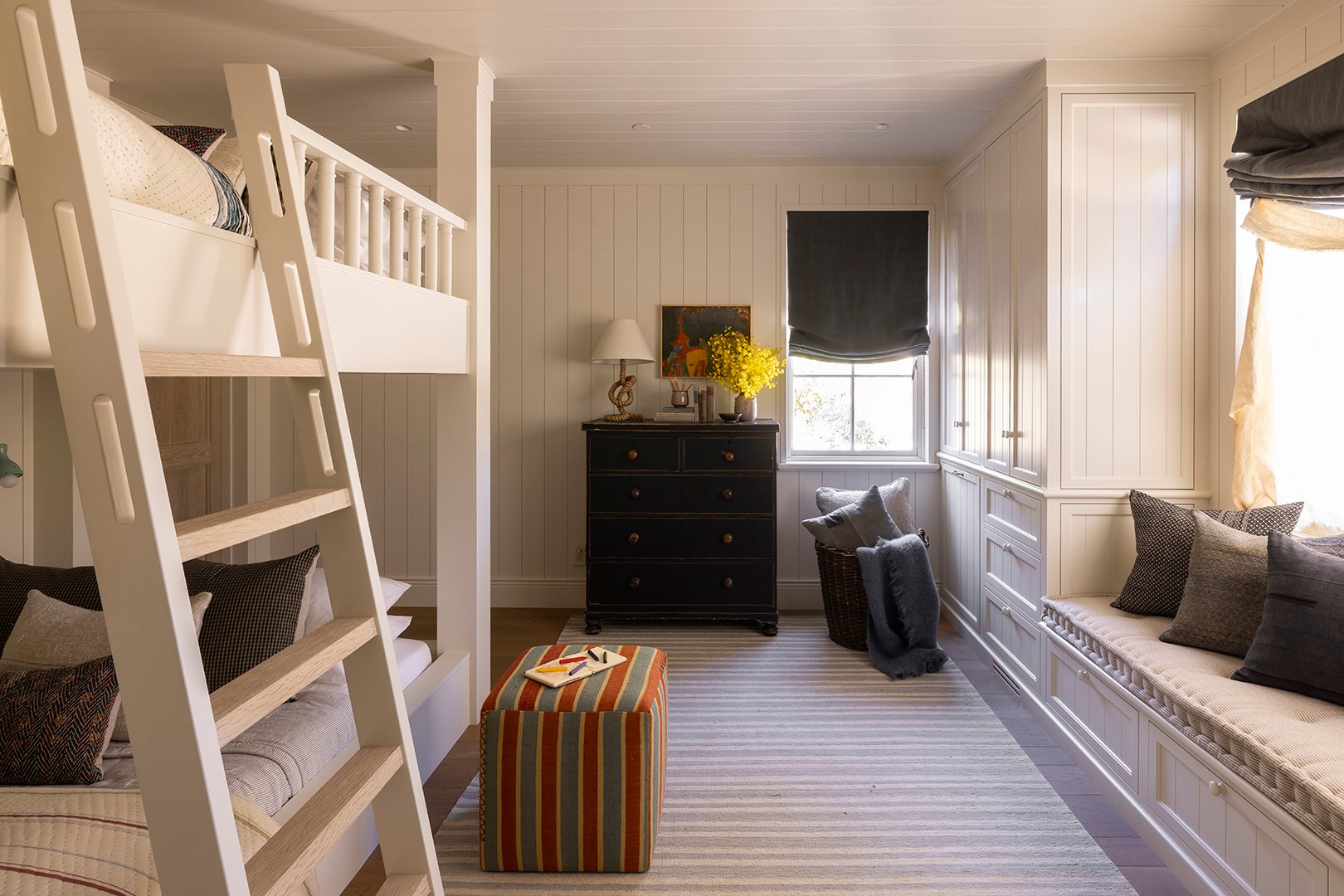
If you are designing a bunk room for your kids—siblings who share a room, a tween who wants to host her friends for sleepovers—don’t ignore the obvious: They’re going to grow. Even if your child would fit in a twin bed now, says Lewis, consider putting in a twin XL or larger mattress so they are comfortable years down the line. “Trust me,” she says, “I have a 17-year-old and she is literally a head taller than I am now. If I had built her a tiny little bunk bed, I would have been really bummed.”
Lewis likes installing removable rails, which stay locked in place at first but can be tucked away when a child grows up—or even when you climb up the ladder to smooth the blanket. “You want them to feel protected, but you may also want to remove the rail one day,” she says. Again, the goal is to avoid needing to redo the room just because your needs change.
Add (and Hide) Safety Features
“The biggest things that we think about are, How are they going to get up to the top bunk, how are they going to get down safely, and then, How do you prevent anybody from the top bunk from falling down to the bottom?,” Lewis explains. Removable rails account for the latter, and then you also need ladders that can be climbed by people of all sizes—even in the dark.
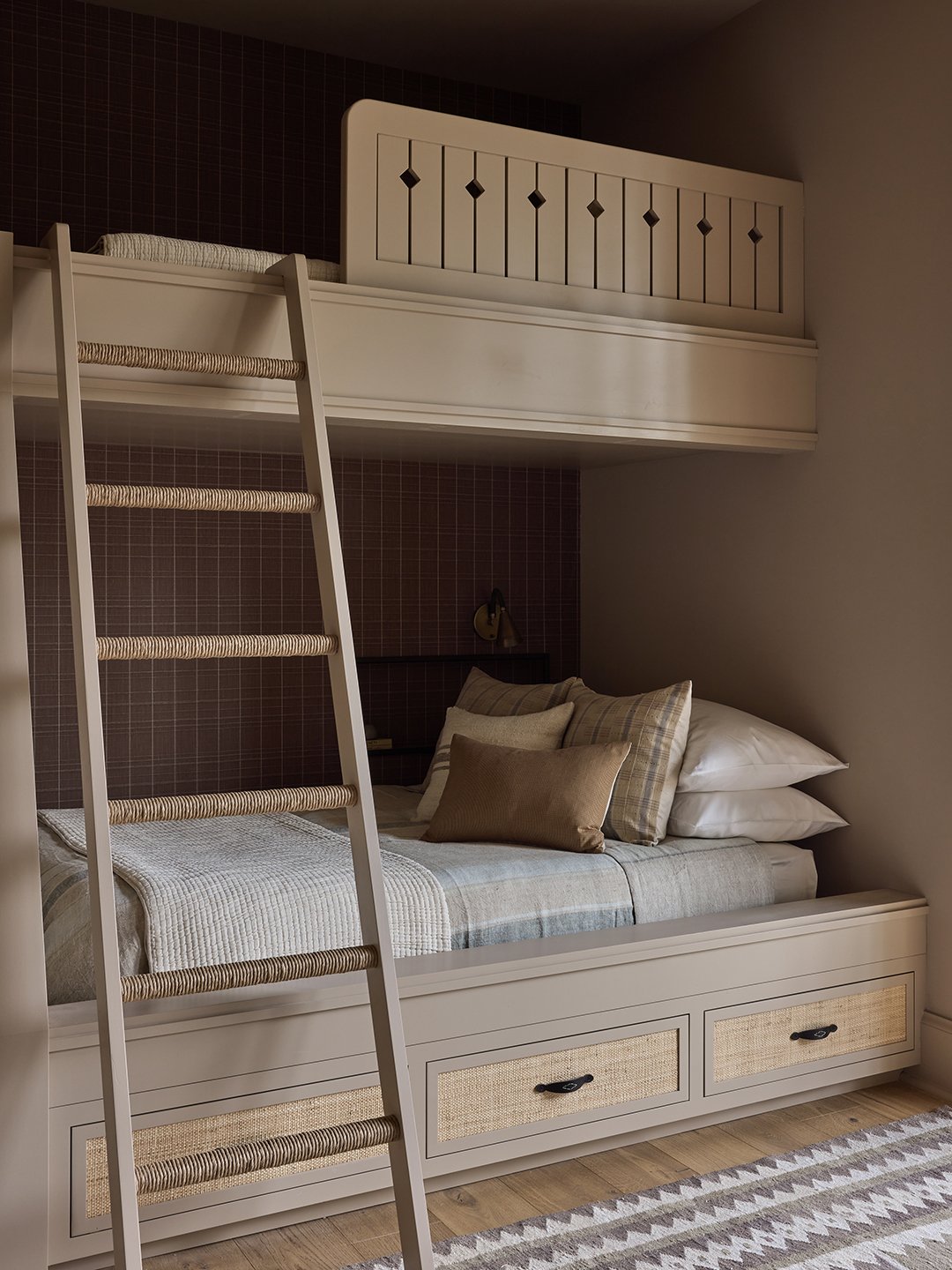
“If we have external ladders, we’ll try to wrap something around the rung itself, whether it’s rope or leather, to give it a little bit of grit,” Lewis says. Vertical ladders are sometimes necessary, but they are much easier to climb when positioned at a slight angle to the ground. And if you have room for even a narrow staircase, it’s going to be the sturdiest and safest way to get people up and down.
Make the Room Easy to Clean Up
“Bunk beds are wonderful and great, but they’re kind of a pain in the ass to make,” laughs Lewis. She’s not talking about construction anymore, rather how very annoying it is to climb a ladder, perch on the top rung, and attempt to smooth sheets and blankets while literally climbing across them.
“You don’t want a lot of top fluff and bedding,” she says, recommending just a throw blanket on top of the sheets for everyday use. “You can always chuck another blanket up there if they need one.” If the height of the room allows it, have the beds designed so that the mattress sits on top of the frame rather than sitting deeply into it. Cramming sheets and blankets down into the crack between the mattress and the frame will swiftly become your least favorite chore around the house.
Another favor to your future self: Install a “master off switch” by the door that turns off every light in the room, so you don’t have to pad across each mattress to flick off every reading light.