
We may earn revenue from the products available on this page and participate in affiliate programs.

Most days Jessie Bloede’s Austin street is like a scene out of Leave It to Beaver. She and her husband Forrest’s two sons (ages 9 and 10) ride their bikes to school, pedaling by leafy trees and historic bungalows—much like the one the family had lived in for four-and-a-half years. All of their close friends are nearby, including the general contractor who would help bring their brand-new two-story house to life. “His child goes to school with our boys, so we could hold him accountable every morning,” says Bloede, laughing.

Starting from scratch wasn’t the original plan, but when adding onto their current place proved to be complicated and expensive given the quirky floor layout, the Bloedes packed up their things, moved into a rental down the block, and brought in architect Elizabeth Baird and designer Avery Cox to work their magic. Seemingly small details, like thin window frames with near-perfect Sheetrock returns and curved cased openings, make the fresh build feel high-end. “You can tell there were no corners cut,” says Baird. “Because you can’t cut corners with this kind of design.”
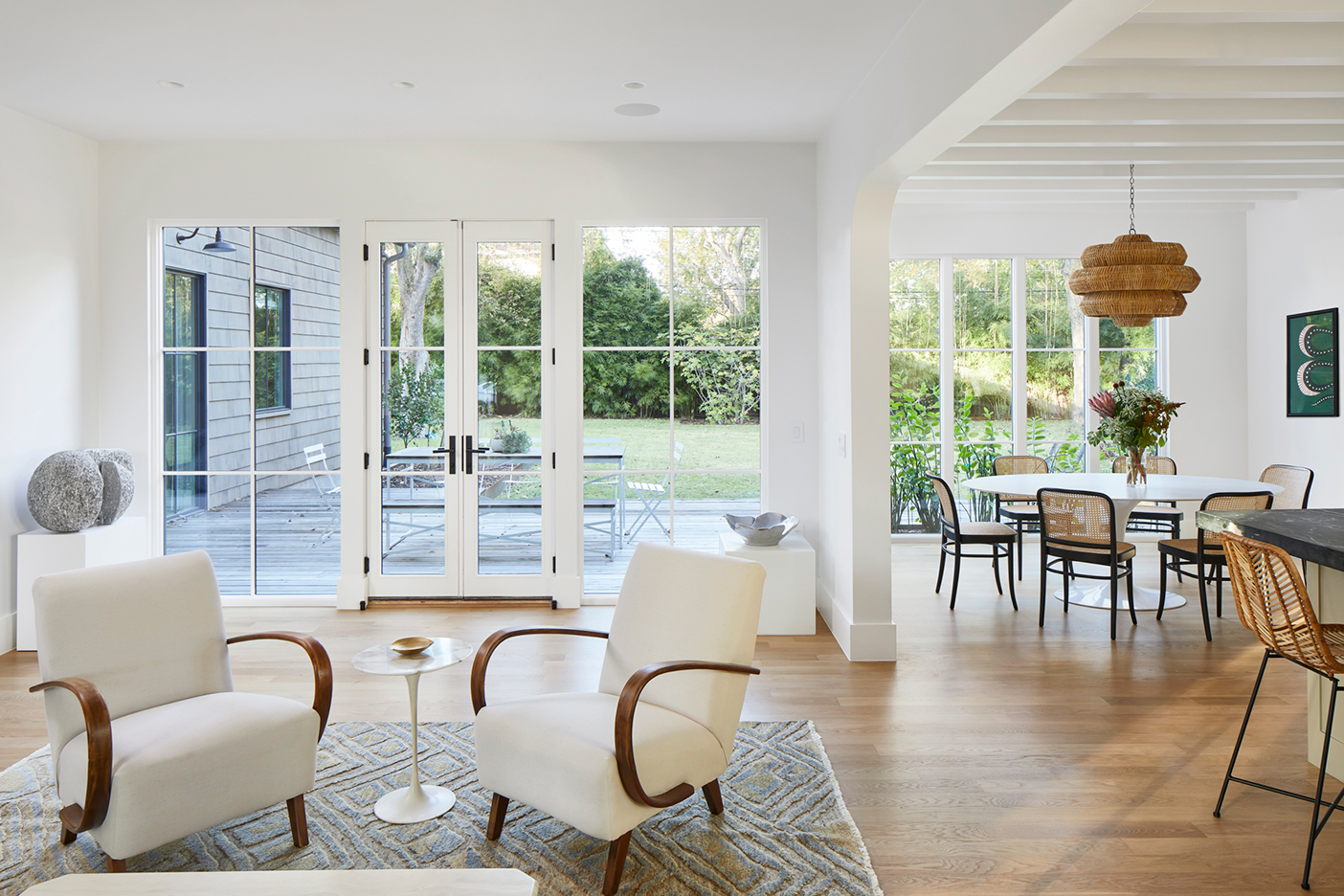
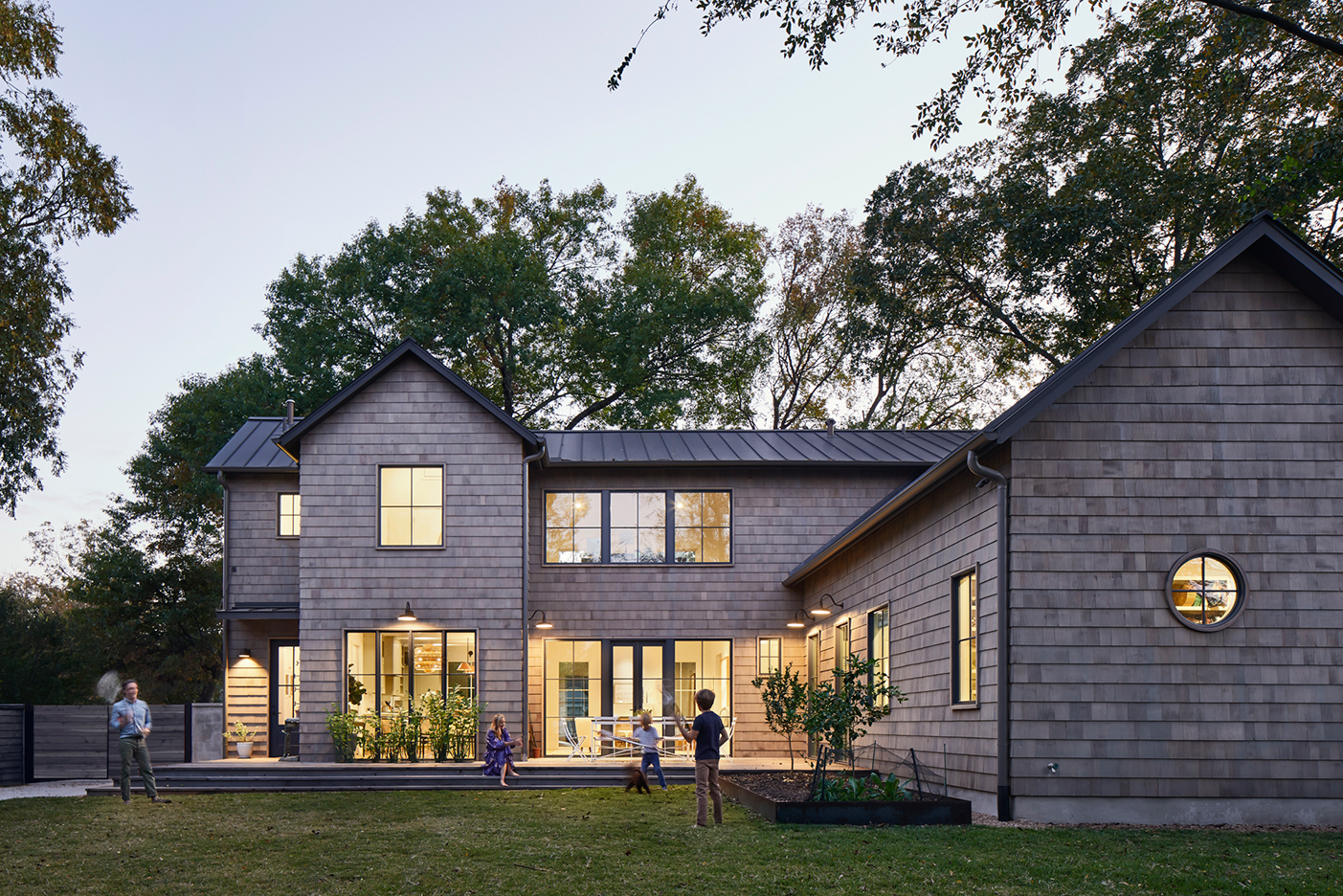
The orientation of the quarter-acre lot worked to the architect’s advantage. It’s north-south facing, meaning Baird could deck out the back of the home in windows without worrying about the family’s utility bill skyrocketing. (In Texas the hottest sun comes from the west.) “They almost never have to turn a light on during the day, which is always a goal of mine,” she says. The streamlined Windsor Pinnacle frames are paintable wood on the inside and metal on the outside, giving the traditional cedar shingle exterior a modern twist. A stucco-plastered chimney and bronze-tone roof tie it all together.
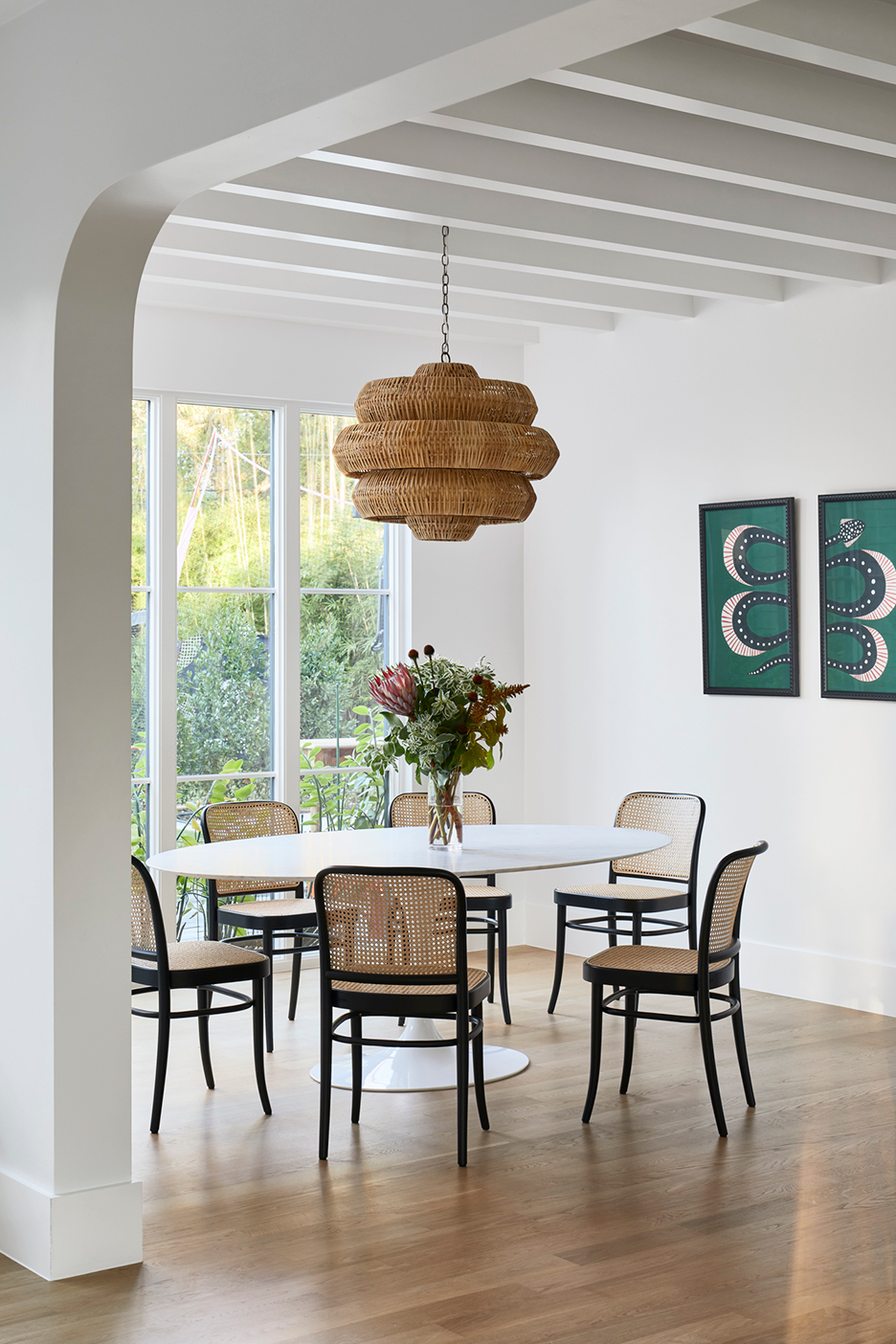

Inside, Cox leaned into “off colors.” In the kitchen, that looked like a terracotta pendant lamp over the island and khaki green cabinets. These muddy, nature-inspired hues anchor the open-concept space. “I think if we would have done white, it would have looked like a museum,” adds Bloede. Cox went so far as to match the plaster-coated vent hood to the shade of the cupboards.
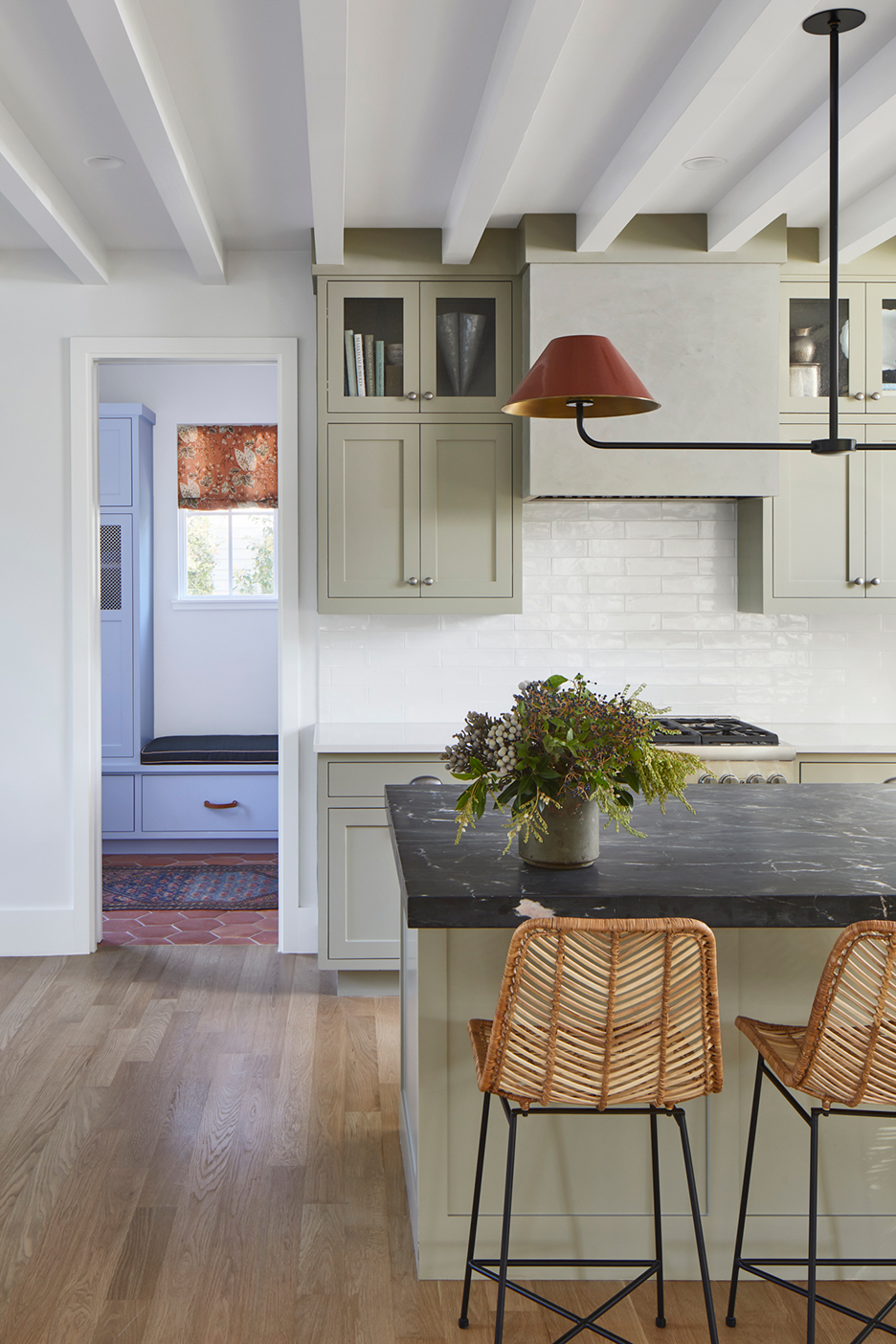
Continuing the cabinets up to the ceiling was a must storage-wise, so in order to introduce some lightness back into the room, Baird made some of the door fronts glass and incorporated open shelving nooks. The architect visually differentiated the eating area from the living space by lining the former‘s ceiling with boxed-in beams.
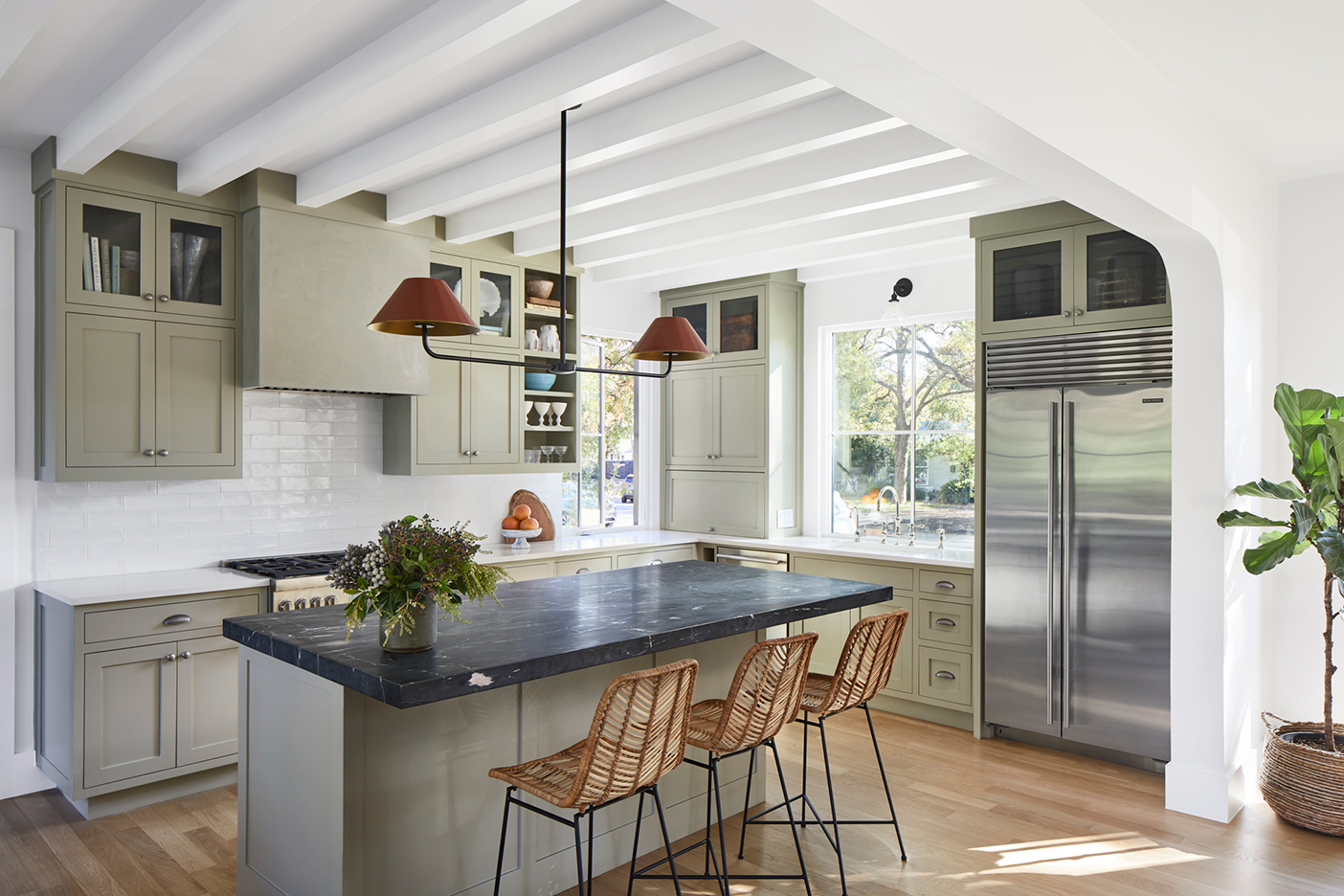
The large appliance cabinet in the corner by the sink helps keep countertop clutter to a minimum, but it’s the pull-out refrigerator drawers, situated within the island, that get the most use. (One is for juice boxes and Lacroix; the other is for wine.) “It really is the center of the home,” says Bloede.
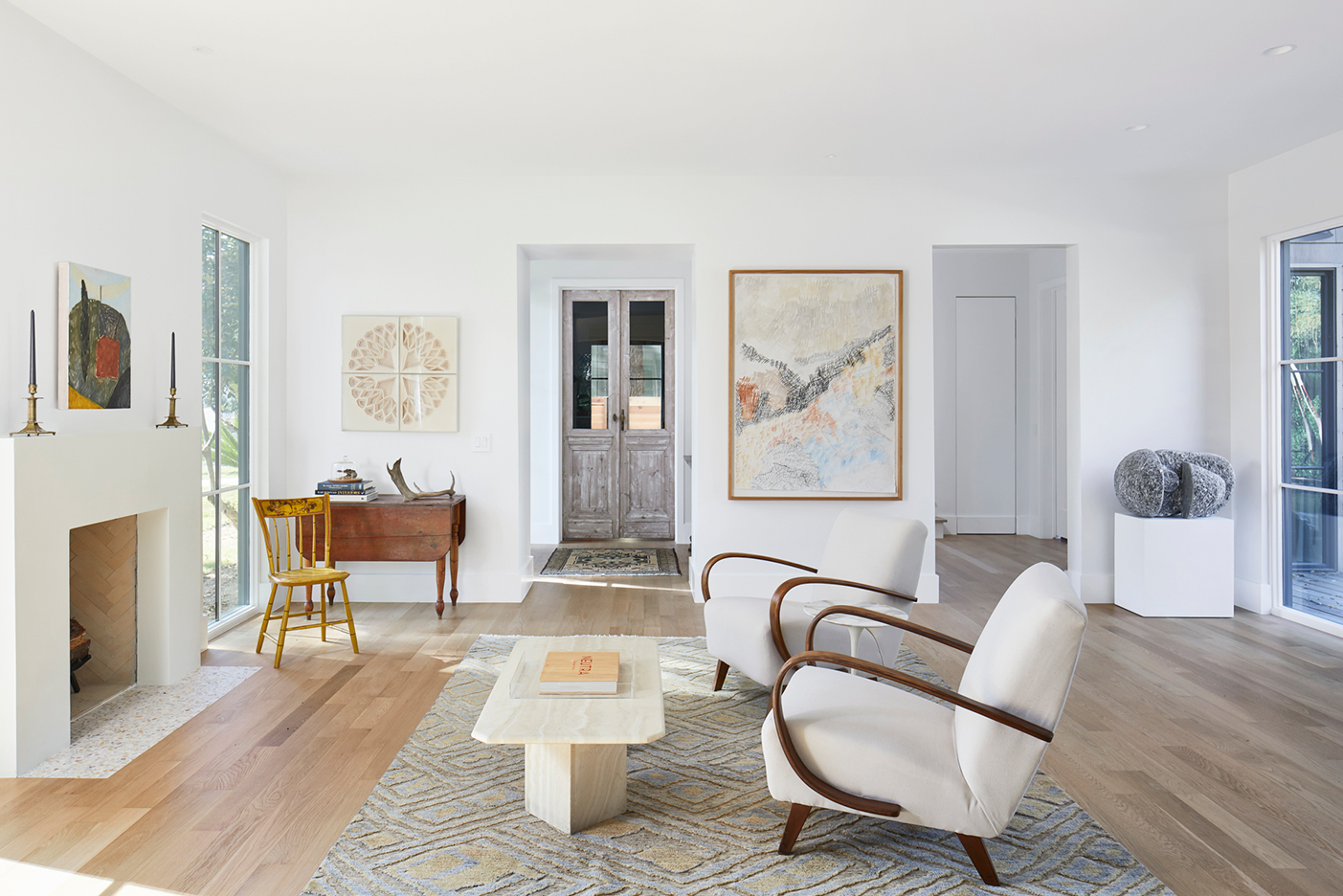
Having always lived in older houses, Bloede was determined to re-create that character-rich feeling, no matter how fresh the drywall was. Although, “it was a little hard for me to imagine this house without old knobs or creaky wood floors,” she admits. On a trip to the Round Top Antiques Fair last year, she stumbled across a vendor selling 18th-century French doors. “The paint was still peeling off some of them,” she recalls. The aged pieces (complete with knobs she sourced at Olde Good Things) now separate the office from the entryway.
Cox sourced samples of terrazzo for the project before they actually knew how they were going to incorporate the material. The fireplace hearth proved to be the perfect spot. It’s out in the open and visible to guests, but it’s low and not so in your face. The orange flecks draw out the golden tones of the white oak floors and the brick inside the firebox.
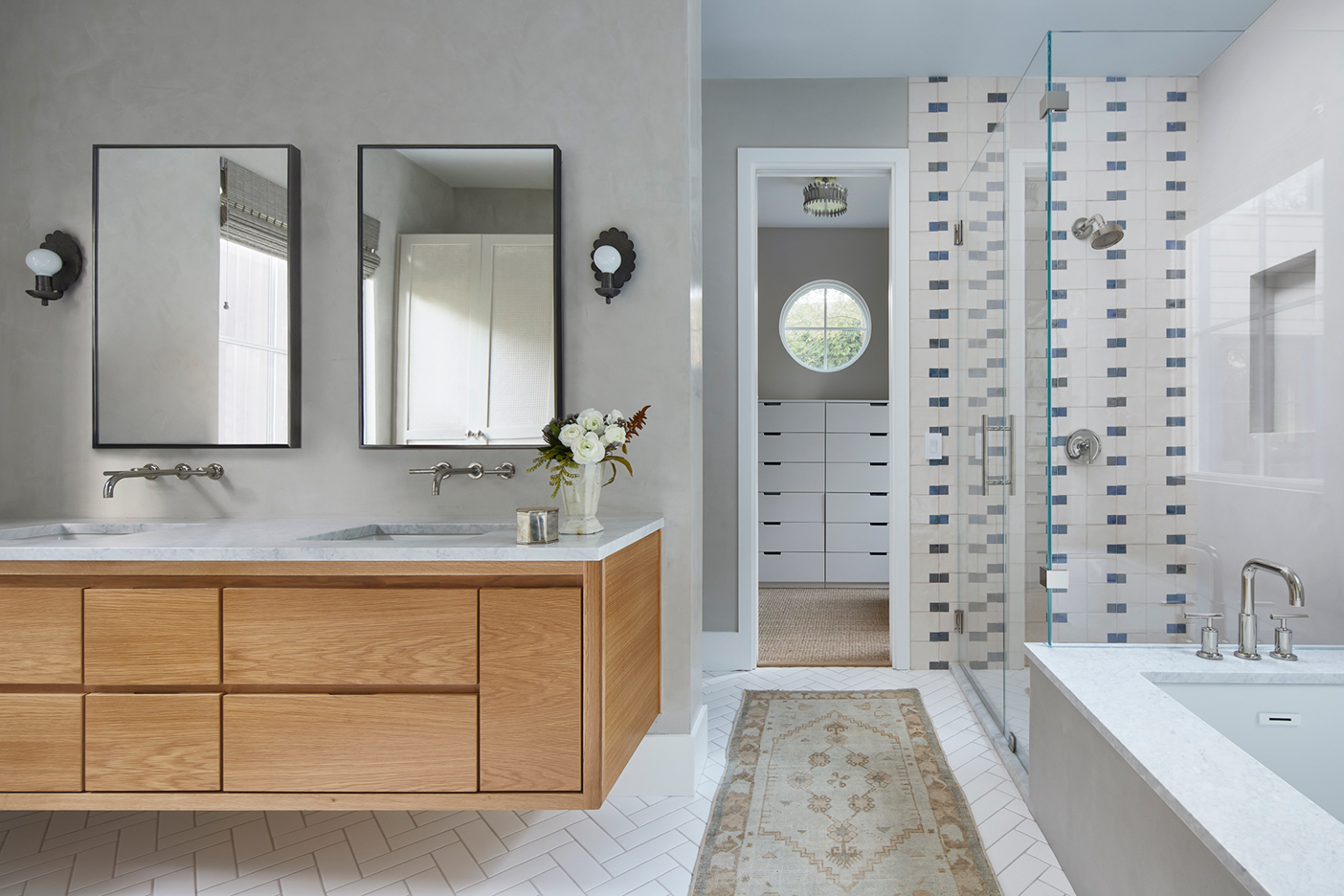

For years, the couple had shared a bathroom with their kids, so this time around they were craving a spot to call their own. “Let’s get the biggest tub we can find,” Bloede told Baird and Cox. In order to achieve true spa vibes, the team coated the walls in Venetian plaster, except around the shower and tub (there, Cox used a faux concrete treatment that’s water-repellent). In addition to cane-lined cabinet storage, Bloede asked for parquet floors. Budget constraints didn’t allow for wood, so they ended up achieving a similar look with white subway tiles in a herringbone pattern.
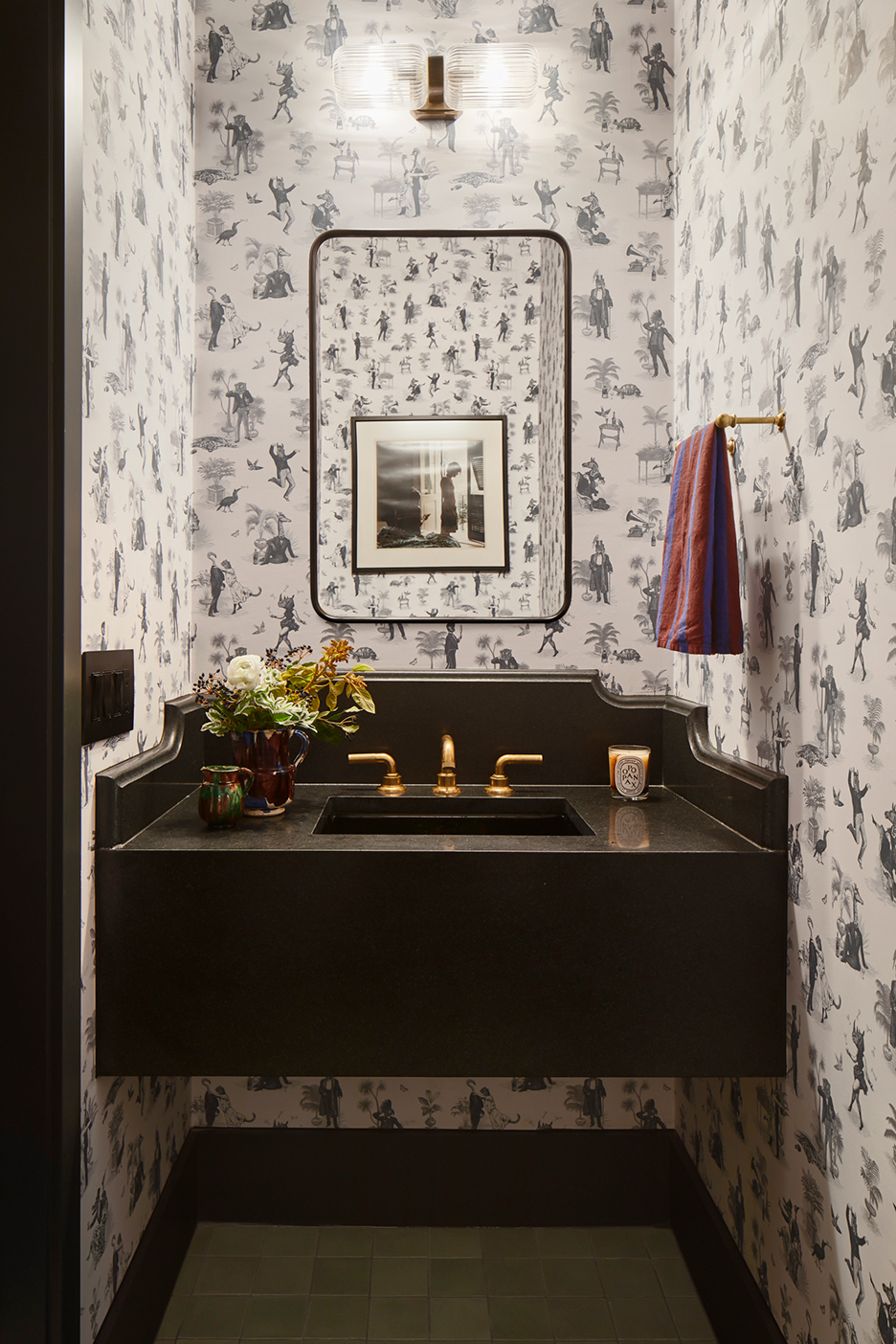
The playful powder room is another standout, and one of only two spaces in the home with wallpaper. To elevate the simple black granite sink, Cox surrounded it with an intricate backsplash.

The couple also made some kid-friendly decisions, like adding extra insulation between the second floor (where the boys’ bedrooms are) and the first (where Mom and Dad sleep). Picturing what life would be like in the decades to come, they gave each child their own bathroom sink, vanity, and laundry chute, so they won’t always be bumping into one another.
This was the most important lesson Bloede learned when she polled her friends who had built homes from the ground up. “I asked them: What’s one thing you wish you would have done?” she recalls. “Almost all of them said to design the house you’ll need in 10 years, not the one you need today.”