
We may earn revenue from the products available on this page and participate in affiliate programs.
Living in Maine means a lot of things, but two realities come up frequently. There are always people visiting, and getting anywhere can take serious travel time in Vacationland. All that to say, it’s very helpful to have a guest bed—and even better to have a place where friends can crash when they don’t want to drive 45 minutes (or two hours) home after dinner.
So when I moved into a two-bedroom apartment post-divorce, with far fewer belongings than I’d previously owned, I knew I wanted the spare room to become a guest haven. I liked the idea of having a space that was always ready for friends and family to stay. I also knew, based on the history of my life thus far, that I’m prone to moving, rearranging, and general stubbornness. If I could find a bed frame that was attractive, easy to take apart, and equally easy to put back together, all the better.
FlexiSpot Kana Japanese Joinery Bed
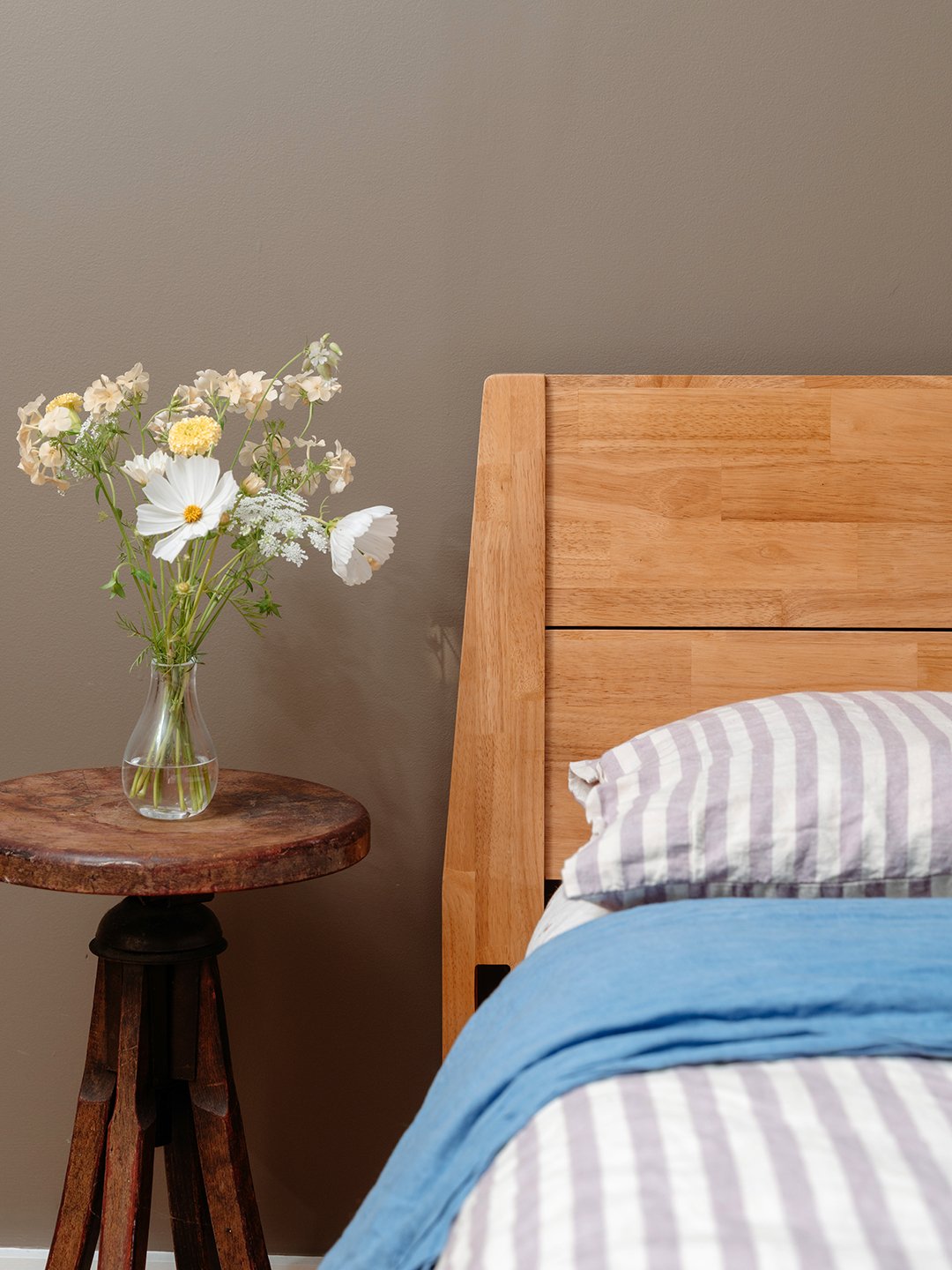
As we all know, once you get a general idea of something in your head—in my case, an attractive, easy-to-assemble, not-too-expensive bed—your social media ads quickly become infiltrated with more of the same. Somewhere in that algorithmic onslaught, I came across the FlexiSpot Kana Japanese Joinery Bed.
It had the simple wood construction and tool-light assembly of other joinery beds I’d admired, but with one major difference: a price tag roughly $1,000 to $1,500 less. I wondered if it was too good to be true, but I decided to take the plunge anyway.
The Delivery and Assembly
I opted for the queen-size frame with a headboard, which arrived in two large boxes. They were too heavy for me to move upstairs on my own, so I needed help getting them into the room, but after that, I was on my own. I also appreciated that the packaging was relatively minimal, given my unfortunate tendency toward recycling-mountain accumulation.
FlexiSpot claims the bed can be assembled in “under 10 minutes,” so naturally, I set a timer.
Getting all the pieces out of the boxes took me about 20 minutes. Everything was individually, and very conveniently, labeled with small stickers, so once I was ready to actually build the thing, it felt a bit like assembling a gigantic Lego set. Match a letter to a letter, a number to a number, and each piece satisfyingly slots into place.
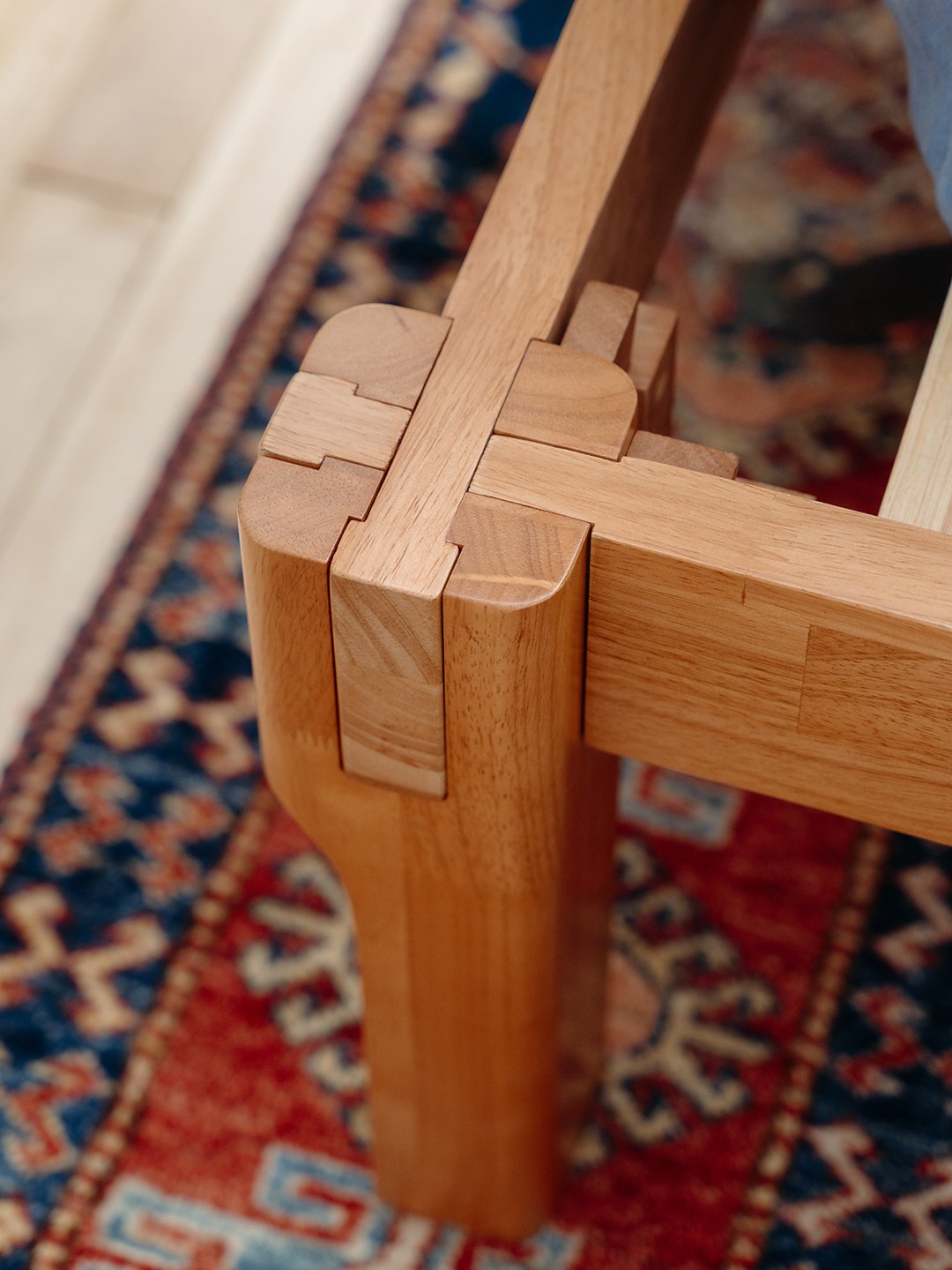
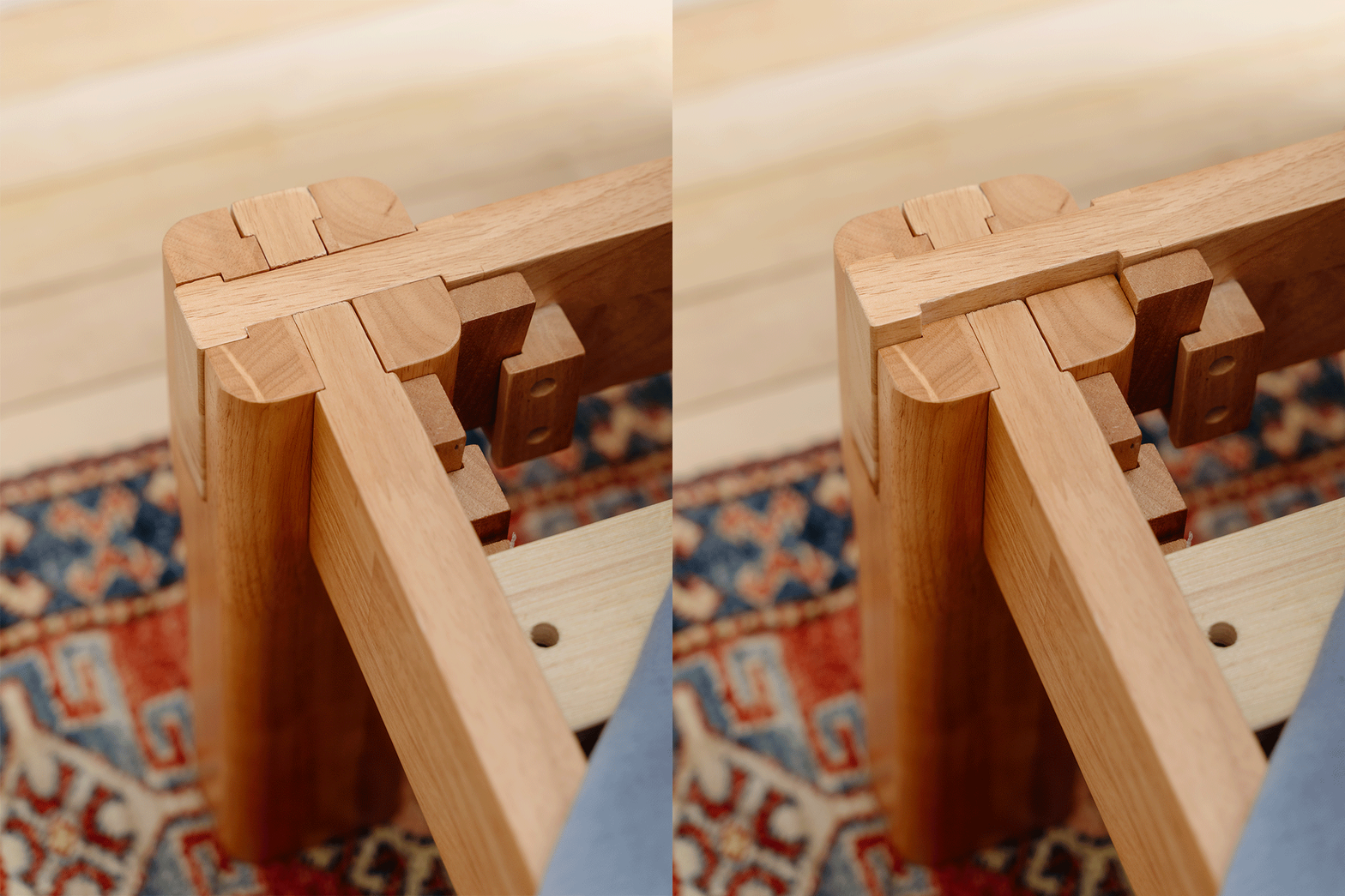
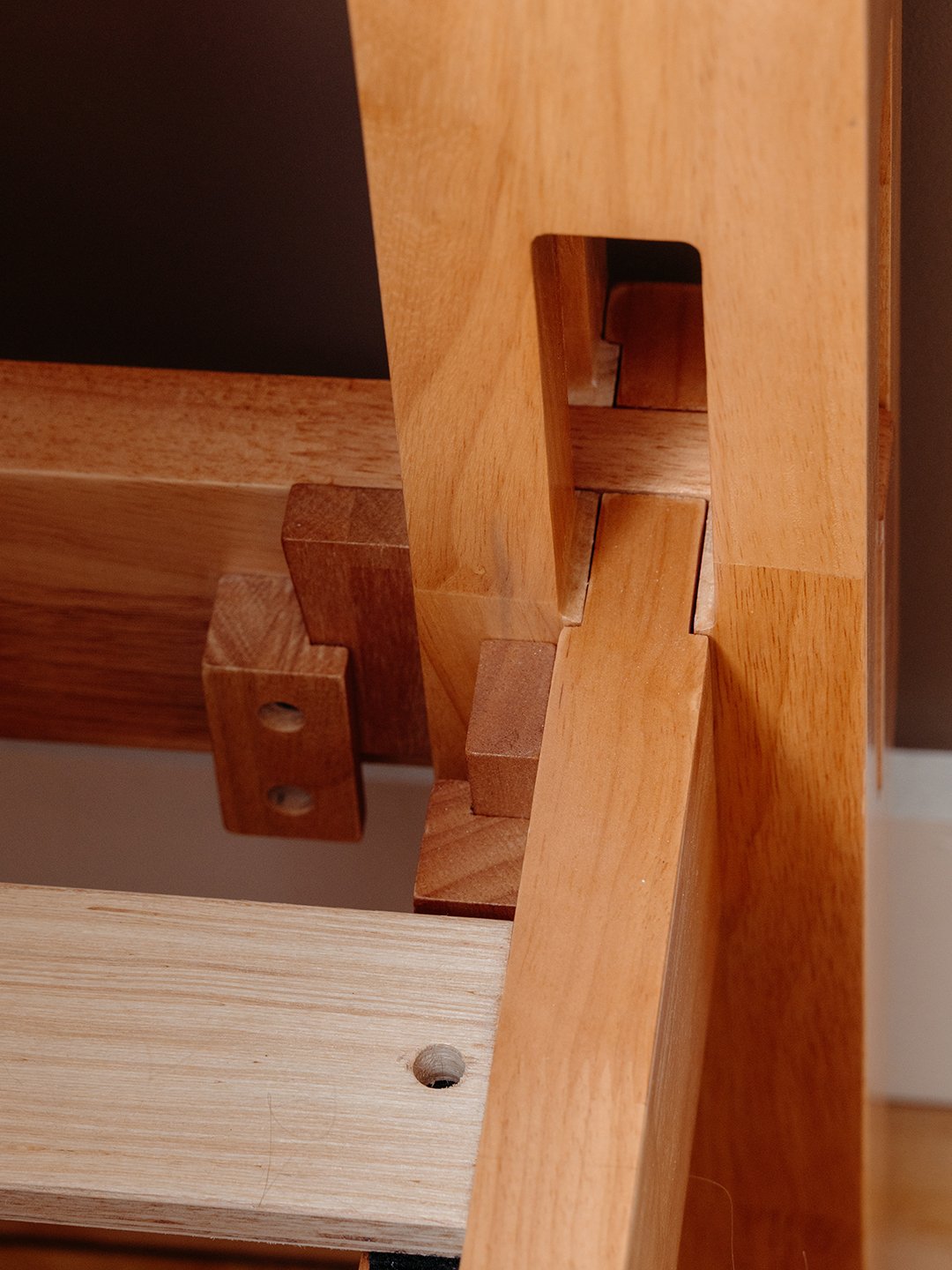
The actual assembly took me another 20 minutes, so I didn’t quite hit the advertised 10-minute mark, but I found the whole process quite fun. There are only a few screws needed to secure the support beams to the perimeter of the frame, and I could tighten those by hand.
The Kana does have a handful more components than other joinery beds I’ve assembled before, including small wooden wedges and doweled slots that secure the slats, but nothing felt complicated. And then, almost as if I’d planned the perfect long-term product test, I decided to move the bed to another home about a month later.
Taking it apart was simple, all the pieces held up well through the move, and the second assembly was noticeably faster. I barely needed the instructions; one quick glance was enough to remember where everything went.
How It Looks and Holds Up

After several months of use, I’ve been impressed by both the sturdiness and overall look of a bed that costs around $750 for a queen-size frame with a headboard (and is often on major sale).
The Kana is made from solid rubberwood rather than particleboard or MDF, and it feels substantial. I wasn’t particularly familiar with rubberwood before this, so I did some digging and learned that it’s made from rubber trees after they’ve finished producing latex, giving the wood another useful life rather than simply discarding the trees.
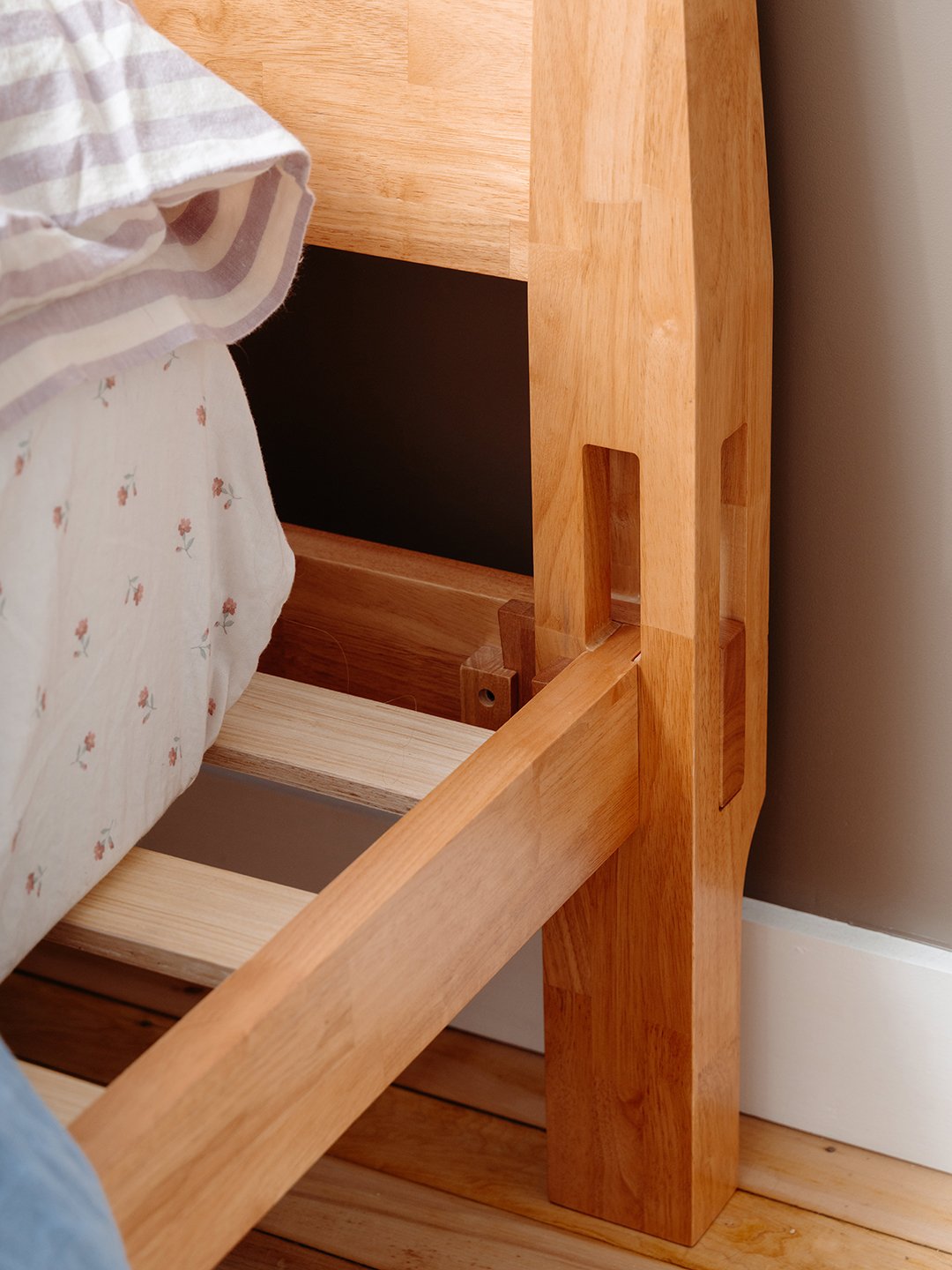
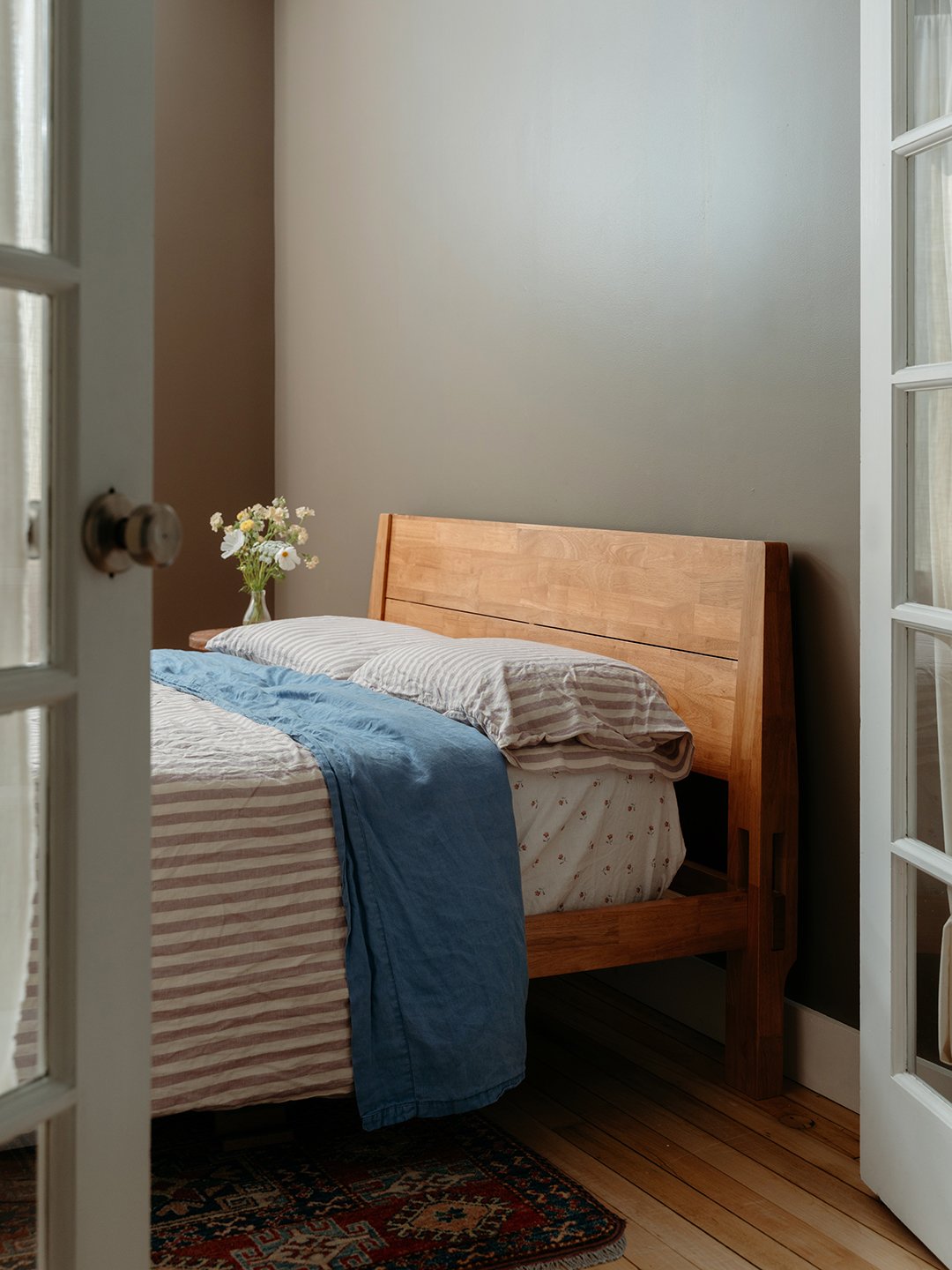
More importantly for my purposes, it looks good. The consistent wood grain and warm oak stain work beautifully in my apartment, and the simple silhouette makes the bed feel like something I could put in many different rooms and potentially many different homes without growing tired of it.
There are also some thoughtful design details that aren’t immediately obvious in photos. The legs are recessed, for example, allowing the frame to sit flush against a wall without the baseboards getting in the way. I’ve experienced zero squeaks or wobbles. I feel confident letting both rowdy toddlers and large adult friends loose in the guest room without envisioning broken slats or a furniture-related disaster.
The Unexpected Storage Bonus
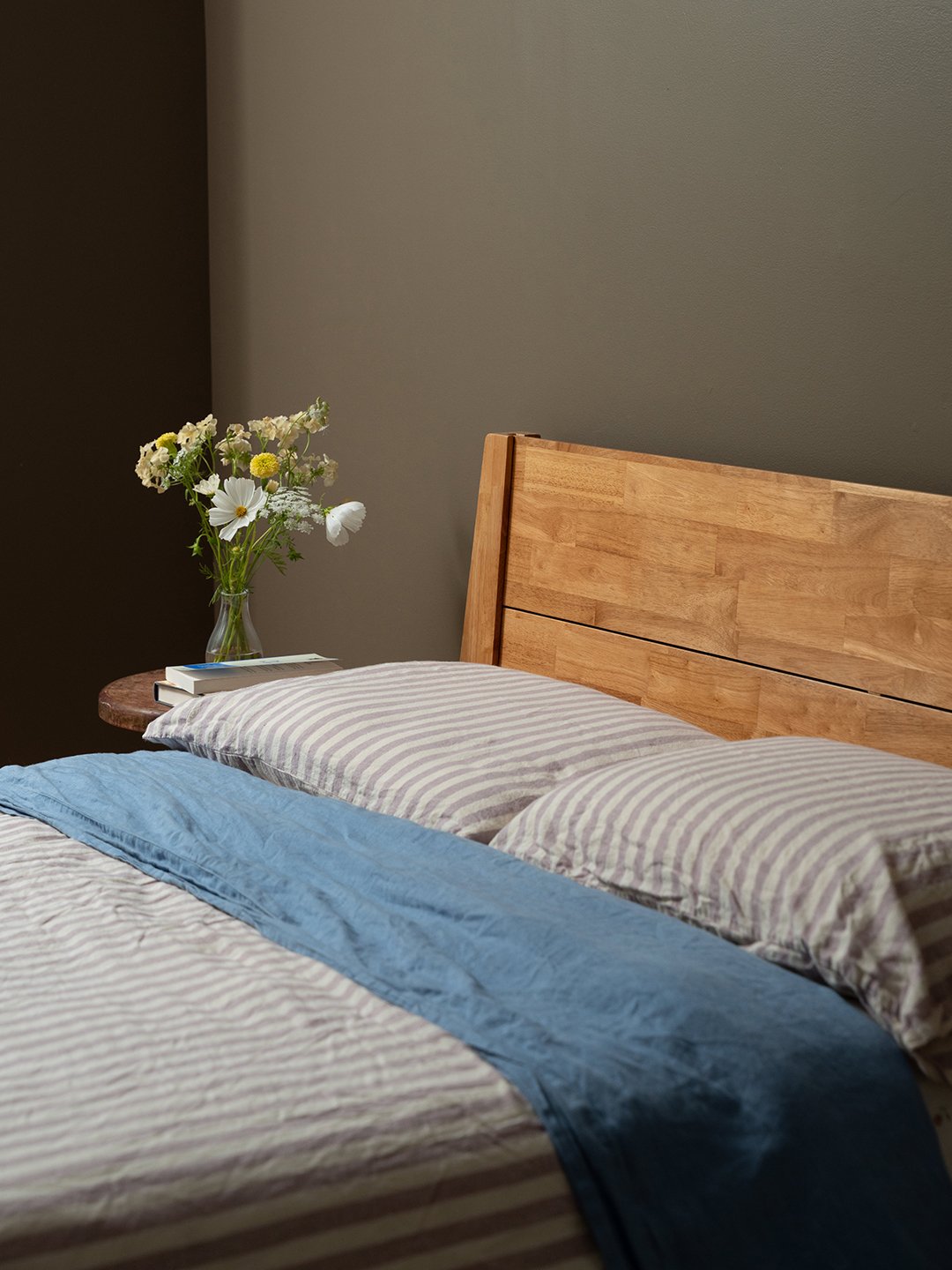
One of my favorite features has nothing to do with joinery at all. There’s roughly 10 inches of clearance underneath the frame, which means I can stash bins of extra bedding and pillows out of sight. (And, let’s be real, all sorts of other random stuff I don’t know what to do with).
For an apartment without endless storage, having a bed that doesn’t sacrifice all that usable space is a major plus. And because the frame itself has such a light, open profile, it doesn’t look like I chose it primarily because I wanted to shove things underneath it.
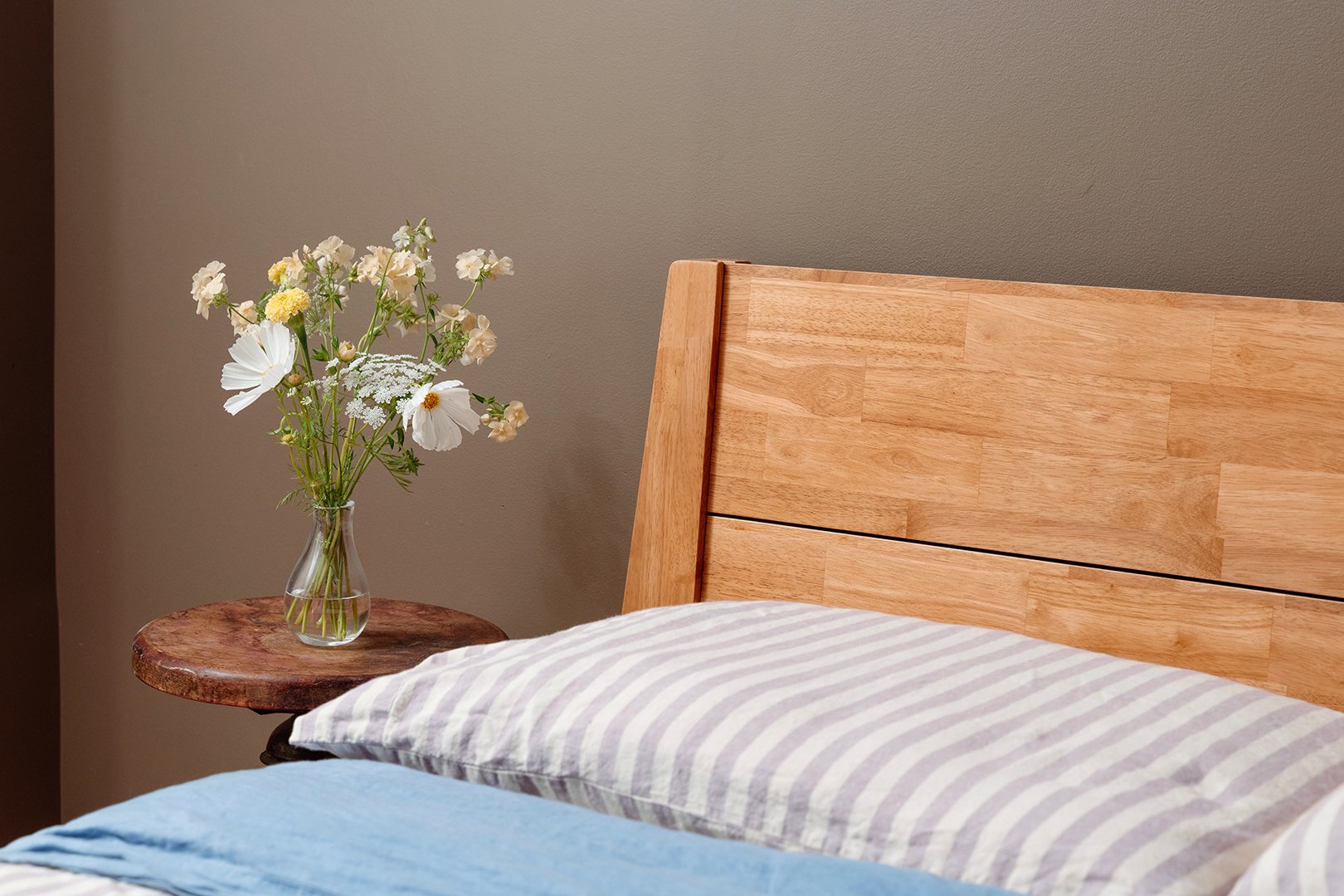
Between the easy assembly, solid-wood construction, under-bed storage, smooth edges, comfortable headboard, and a price that’s significantly lower than many of the joinery beds I’d been eyeing, I’m a big fan of the Kana.
But the best test came when I did exactly what I’d suspected I would: took the whole thing apart and moved it. Nothing broke, nothing warped, and putting it back together was even easier the second time around. Yes, I’ll probably shift this bed around another dozen times. There’s something reassuring about knowing that wherever it ends up next, I can take it apart without a toolbox, put it back together without losing my mind, and have a good-looking guest bed waiting on the other side.