We may earn revenue from the products available on this page and participate in affiliate programs.
The renovation started with soup night. Architect and designer Jenny O’Leary hosts them regularly at the Brooklyn home she shares with her husband; friends bring friends and everyone leaves knowing a few more people than they did before. One evening, a mutual pal arrived with a couple who had just bought a late-1800s brownstone in Carroll Gardens. By the end of the night, they had toured (and admired) O’Leary’s own remodeled spaces, and somewhere between the mingling and the meal, a loose plan formed to be in touch in the near future.
Their next conversations weren’t just about design and logistics, but about routines and personalities. “Such an important part of the process for me, especially when I’m working with a couple in their home, is to be their friend,” O’Leary says. “I want to make sure I understand every way they’re going to use their home, because they will be using it a lot every single day, in every single crevice and corner.” Those distinctions would end up shaping the entire project. The challenge wasn’t just updating an old house and preserving what they could, but designing a kitchen two people could comfortably share on the daily.
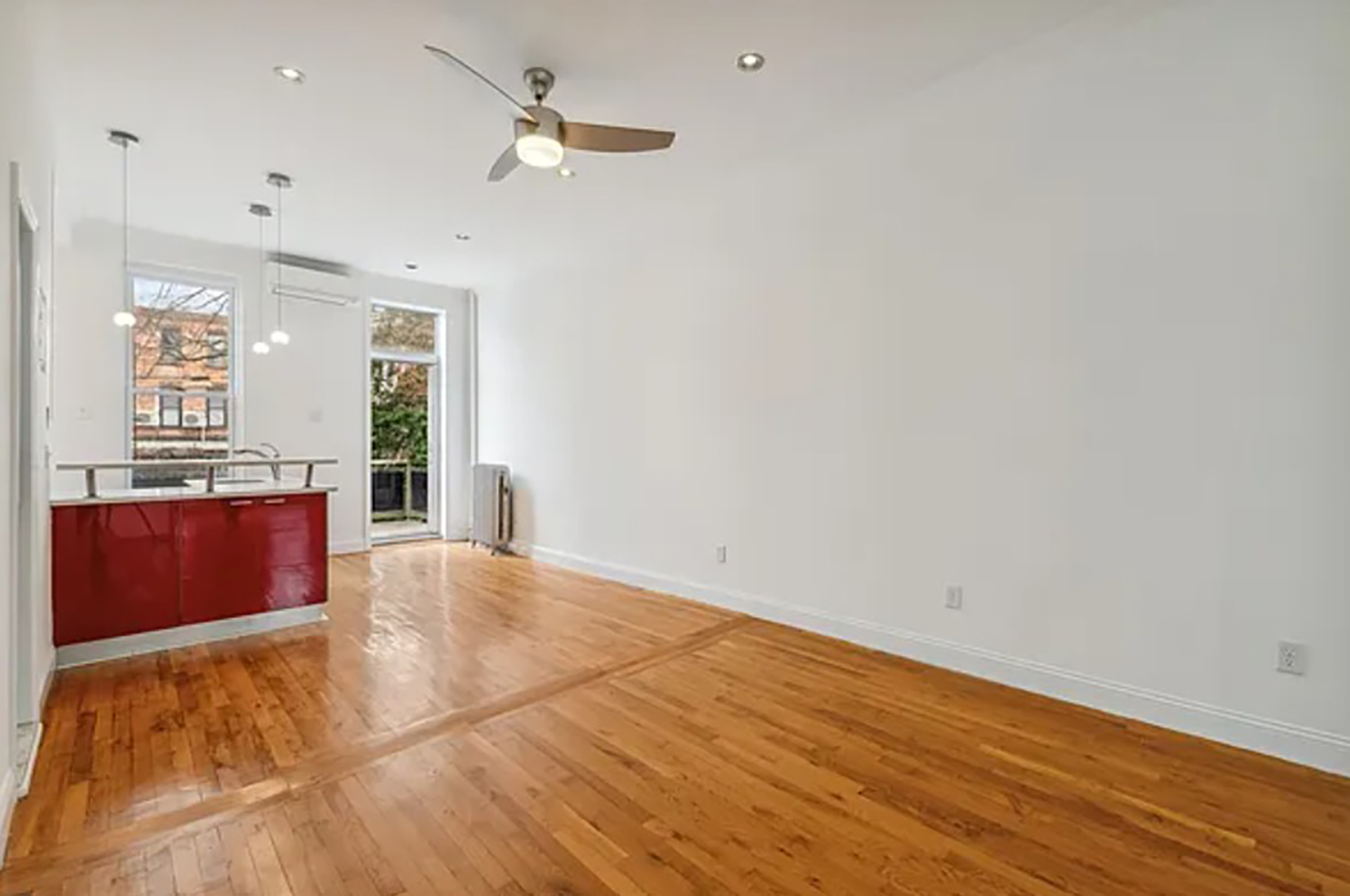
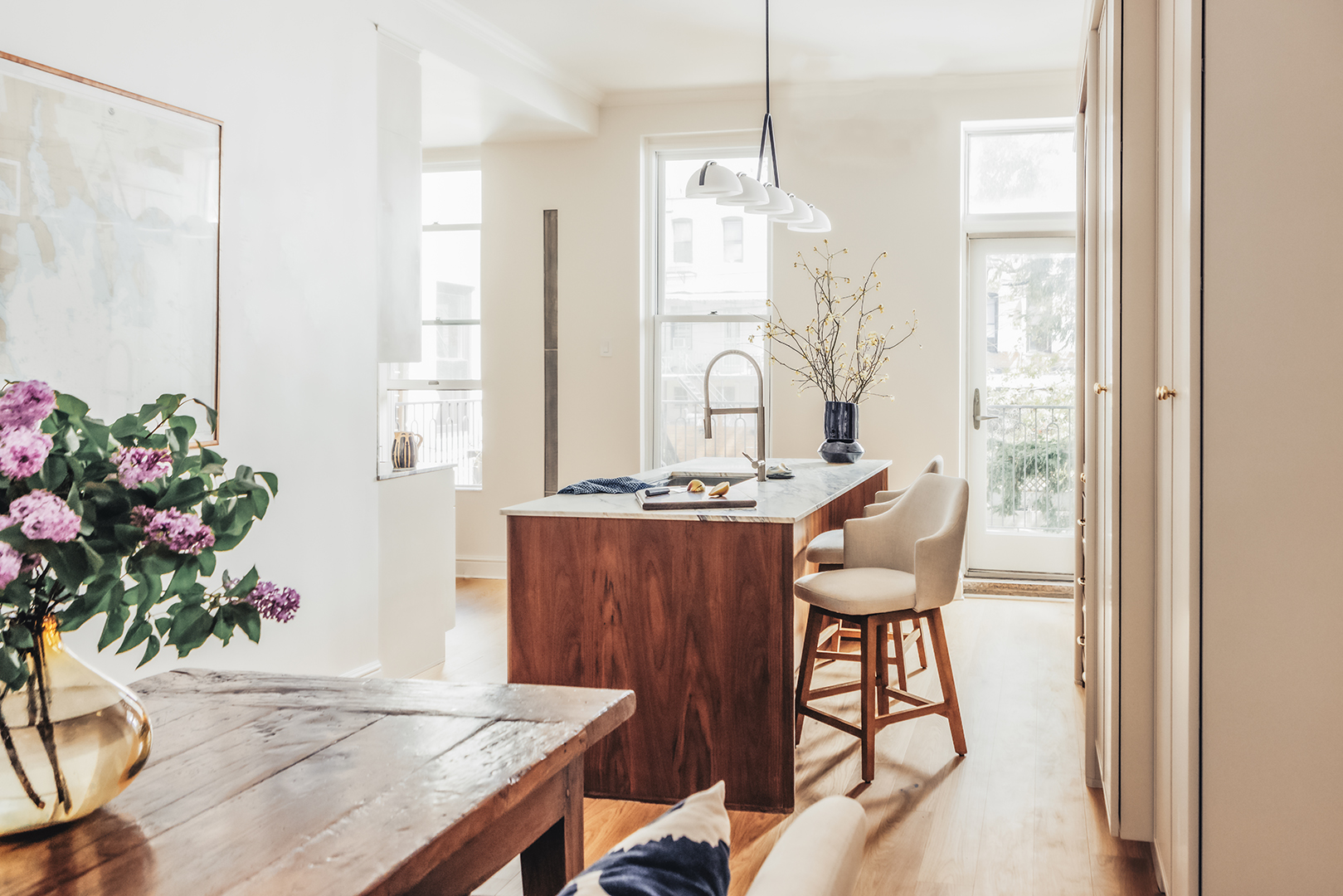
Early on, O’Leary realized her clients had opposing styles: One person gravitated toward darker, heritage woods and traditional lines, while the other leaned lighter and softer elements. Rather than push them toward a single aesthetic, O’Leary treated the difference as the brief: The kitchen would need to feel calm and classic enough for both of them.
If You Can’t Decide Between Tones, Do Both
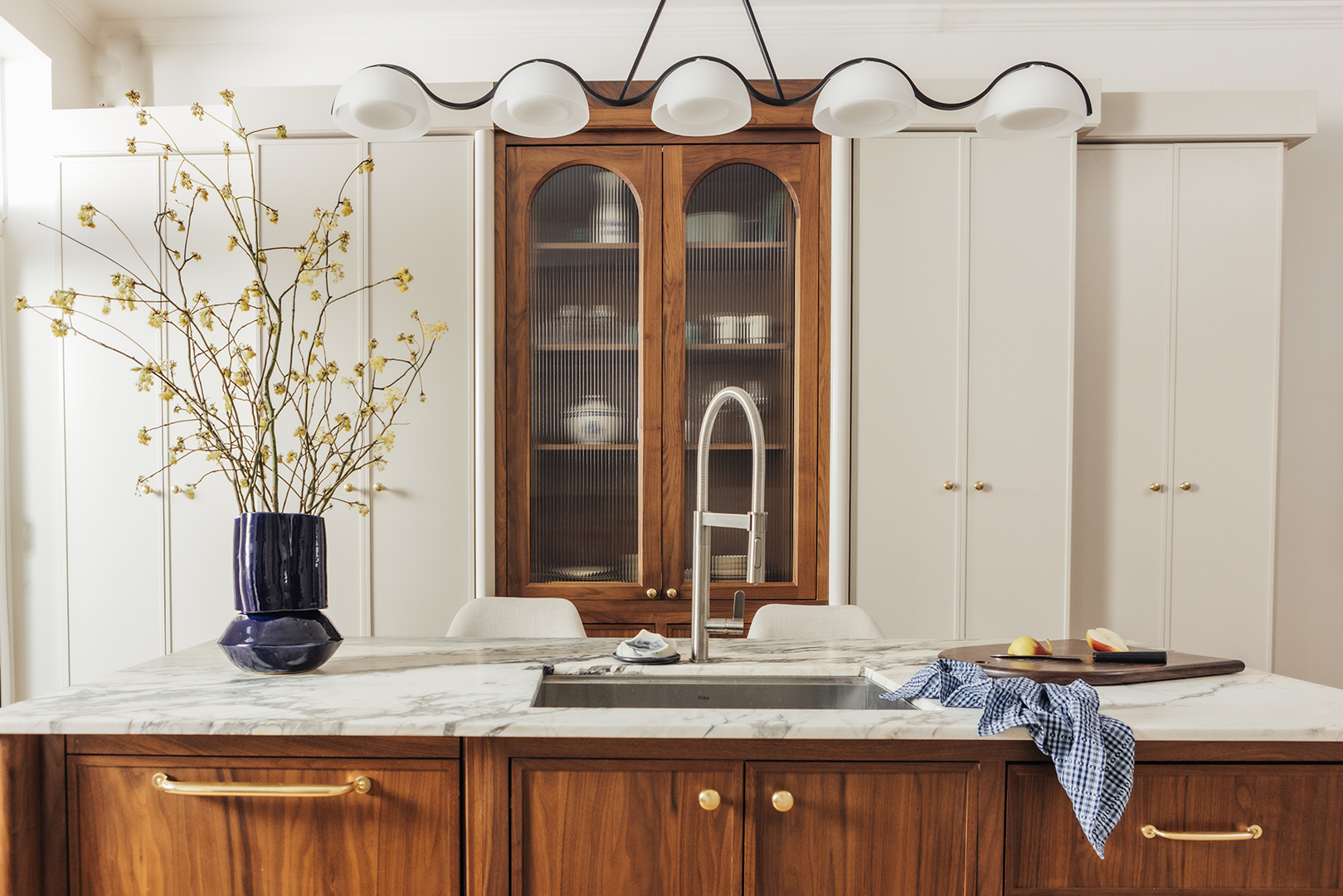
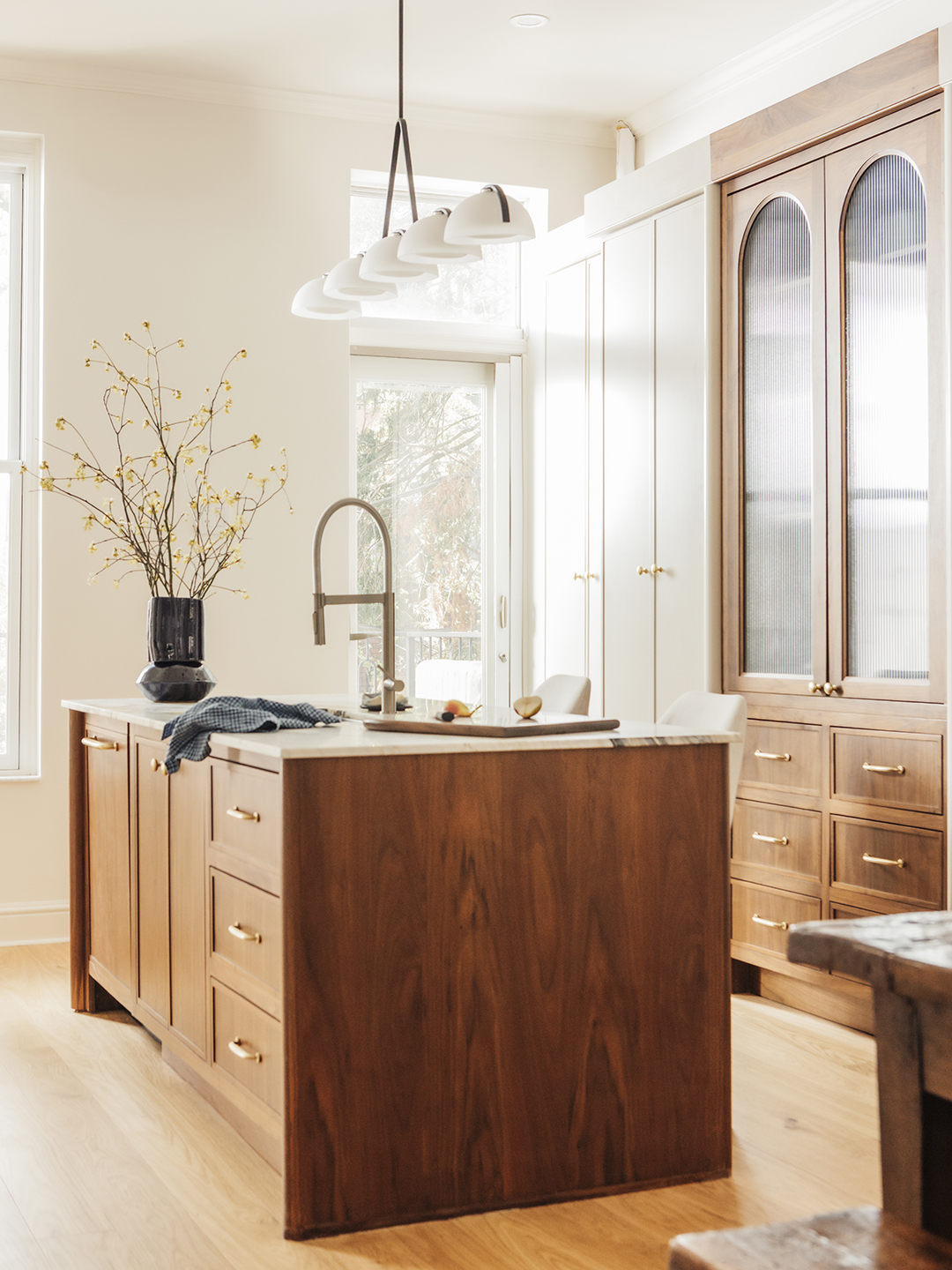
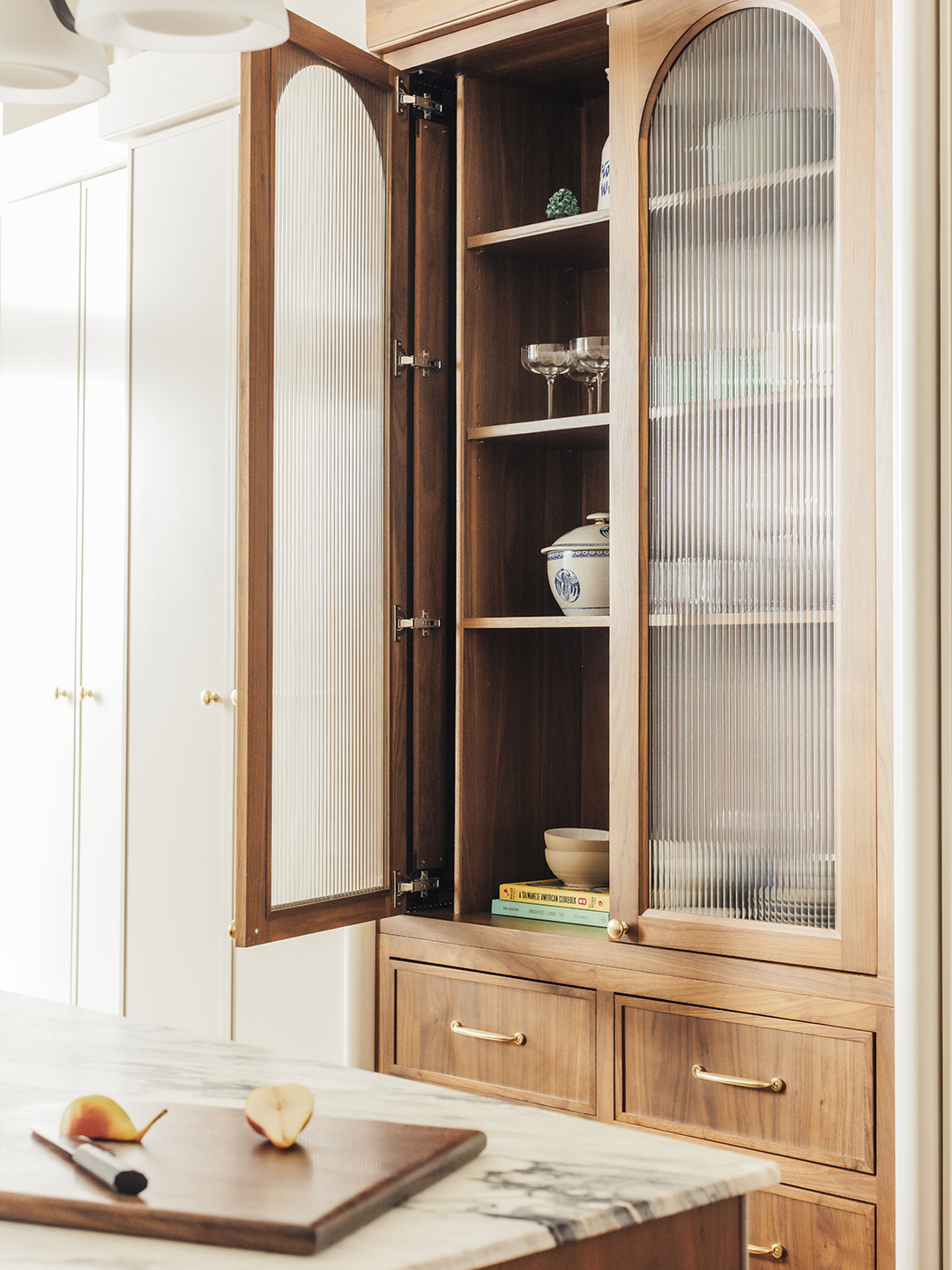
The goal wasn’t to make the kitchen look new, but rather like it had always belonged to the brownstone, just been updated for modern life. O’Leary worked with Isla Porter on the cabinets, using mostly warm oat-milk fronts to soften the room, balanced by a darker wood on the island, a nod to the family’s heirloom furniture. The wall of dual-finish cupboards is meant to read like original built-ins.
Consider Daily Use As Much As Aesthetics
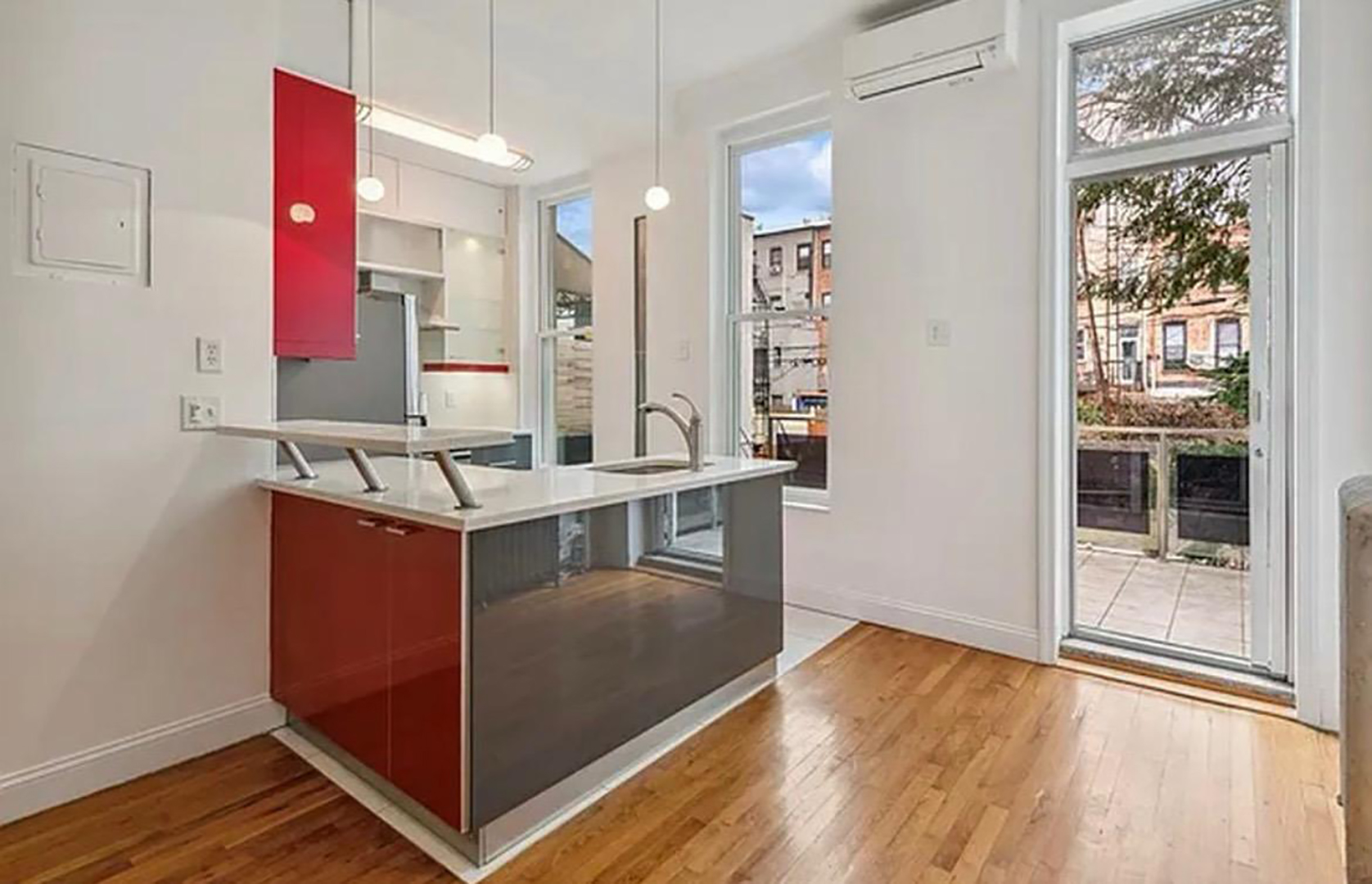
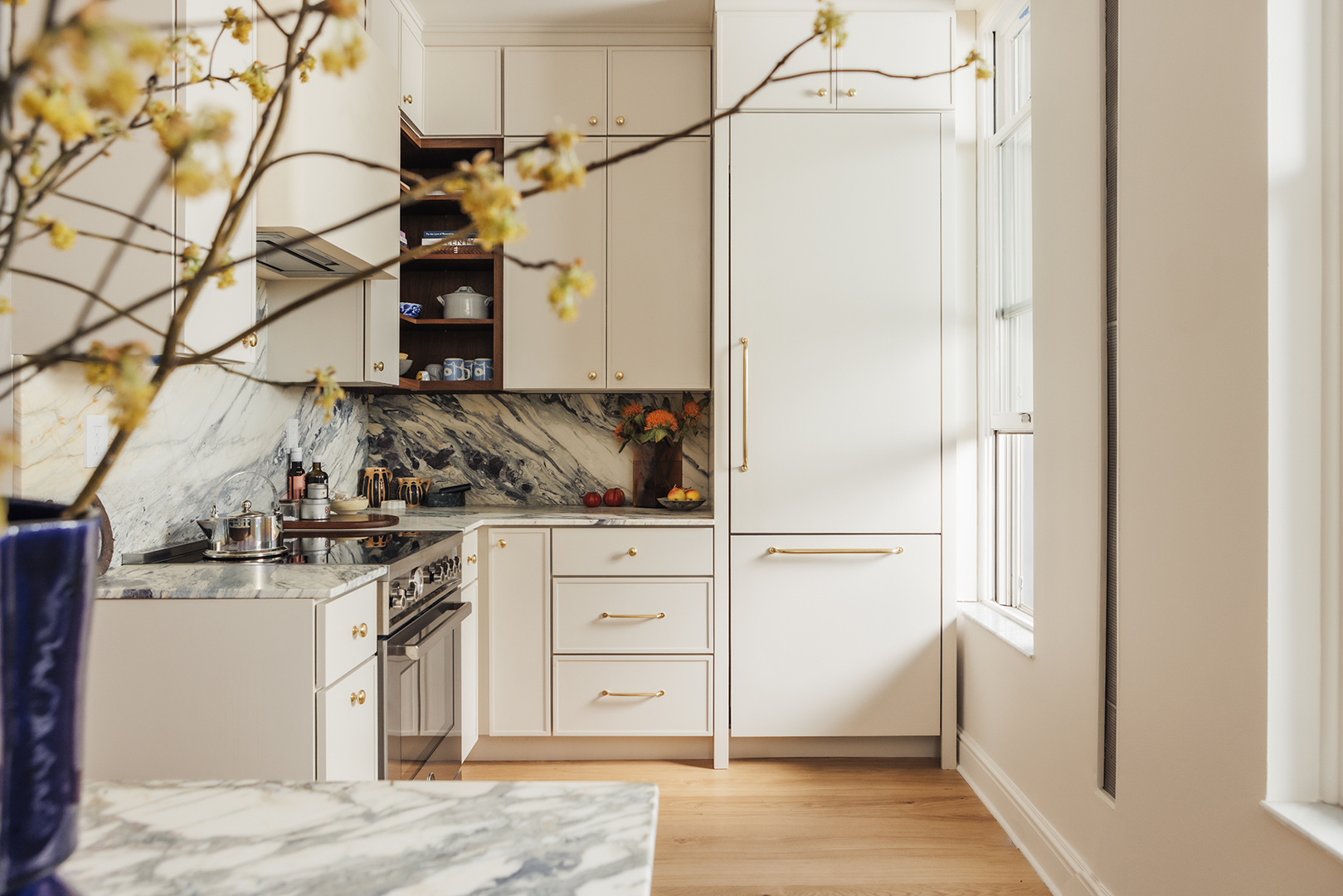
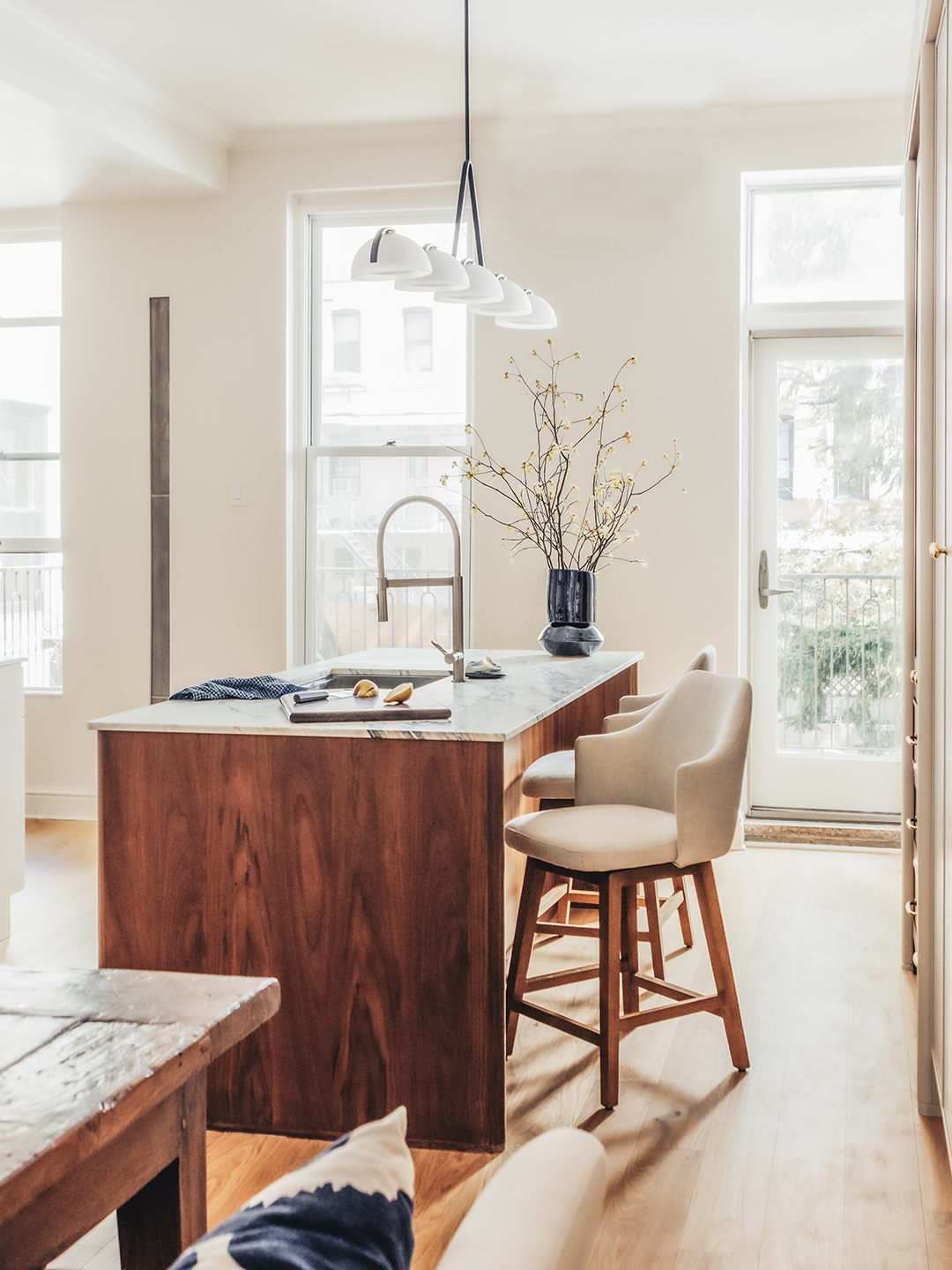
Before construction began, O’Leary mapped everyday movement through the space: where someone naturally stands while talking, how dinner prep would happen while guests linger at the table, and the dance of two people cooking side by side. She tucked appliances slightly out of view, concentrated storage along the dining area’s cabinet wall, and kept sight lines open between the living room, dining room, and island. The result is a layout that promotes socializing even mid-meal, so the cook can remain part of the conversation and the mess quietly disappears around the corner.
Find an Anchoring Color Palette
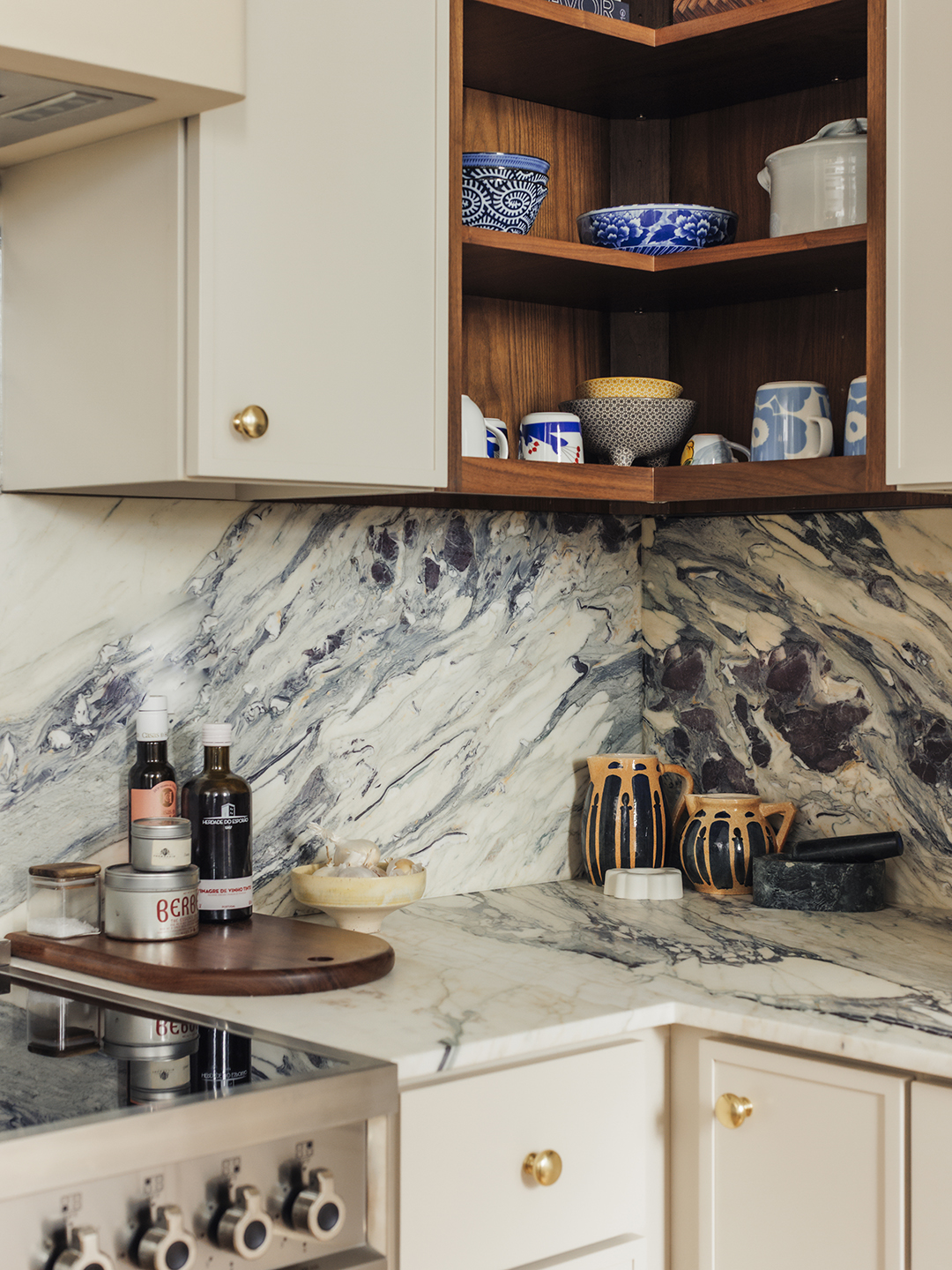
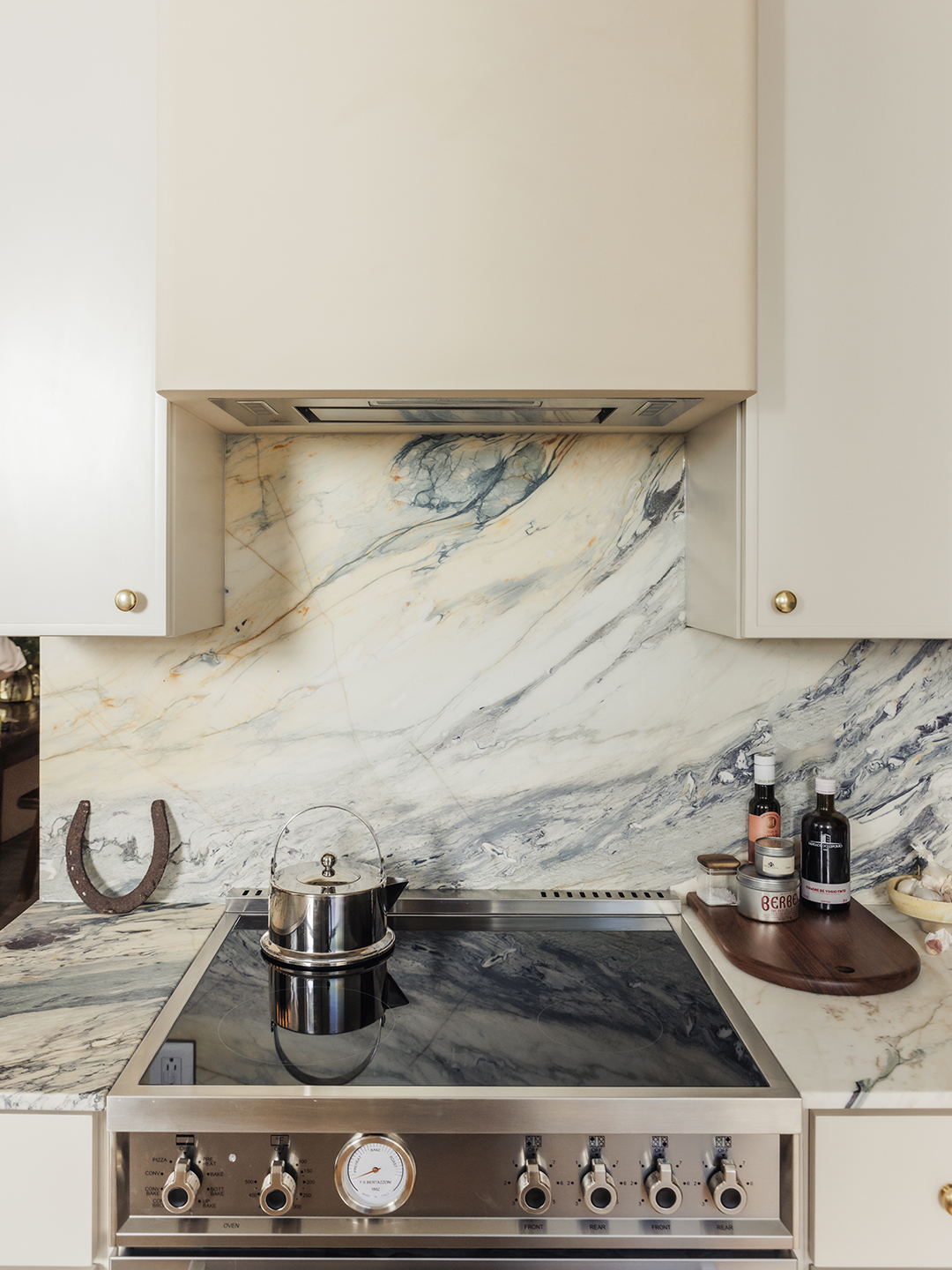
After finding a richly veined Calacatta Turquoise honed marble slab, the design team made use of every inch of it: ib the kitchen counters, as the top of a bathroom vanity, in a shower threshold. The blue undertones and hints of ochre guided paint and wallpaper choices throughout the home, too. Instead of a statement moment confined to one room, the material stitches the spaces together. A year later, the couple hasn’t found much they’d change, spending the majority of their waking hours in the kitchen. For a renovation, that might be the highest compliment.