
We may earn revenue from the products available on this page and participate in affiliate programs.
Chartres 1883, in Bywater, New Orleans, didn’t start out as a home—it started out as everything else. A hay and feed store. A grocery. A café. A soft drink shop. So when a fifth-generation local millworker and his wife spotted the property in 2022, they didn’t see a fixer-upper—they saw a charming piece of history begging for a second act. The couple fell hard—so much so that they bought the building without plans of ever living in it themselves.
Turns out, luck was on their side. The structure still had incredible bones: original wooden floors, fireplaces, tall guillotine windows, and more. The wraparound balcony retained its iron railings and cast-iron columns, while six-over-six dormers dotted the roofline. Inside, the staircase and balustrade stretched across the rear wall of the main building—the kind of historic detail that makes vintage lovers stop in their tracks.
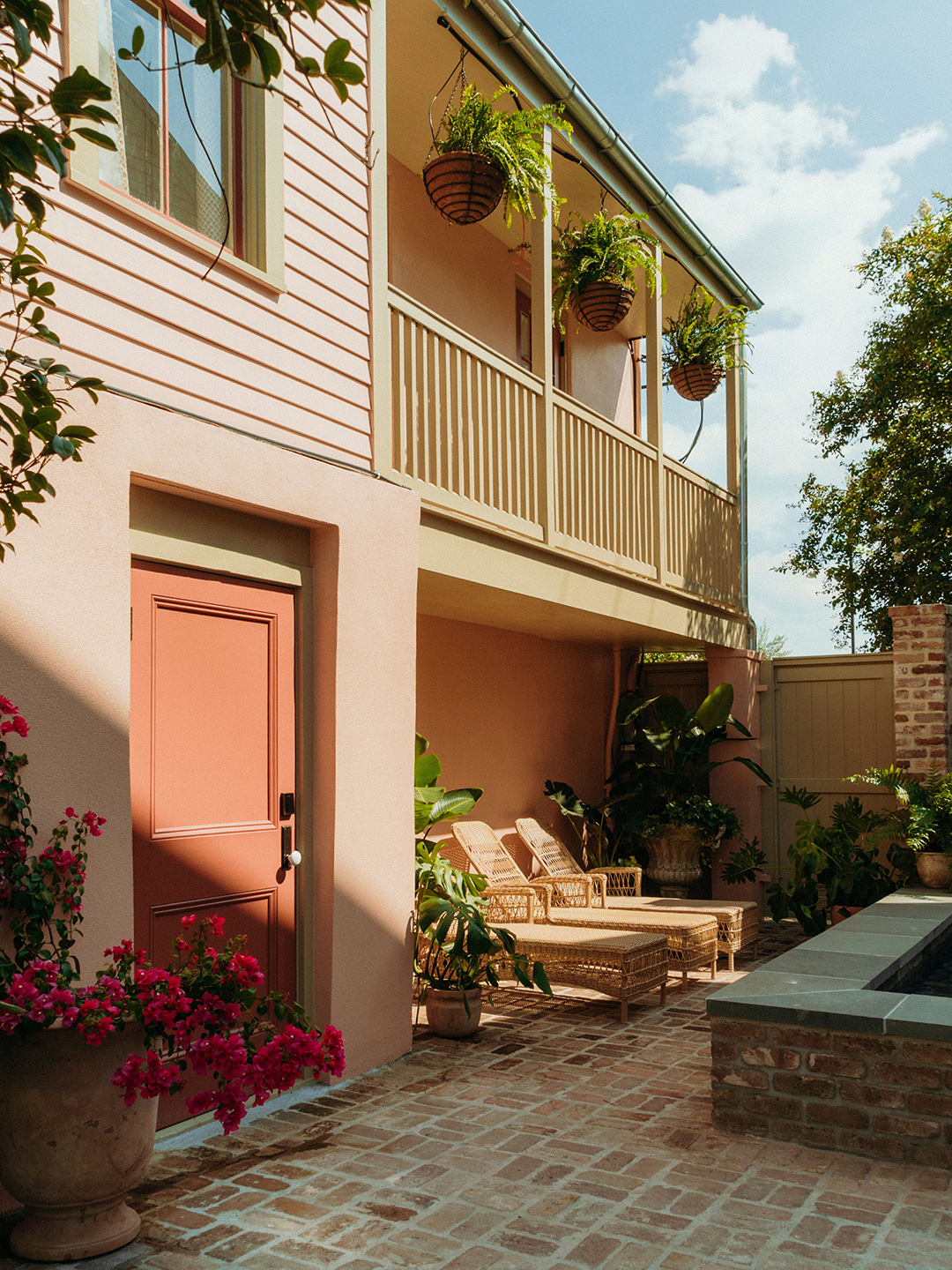
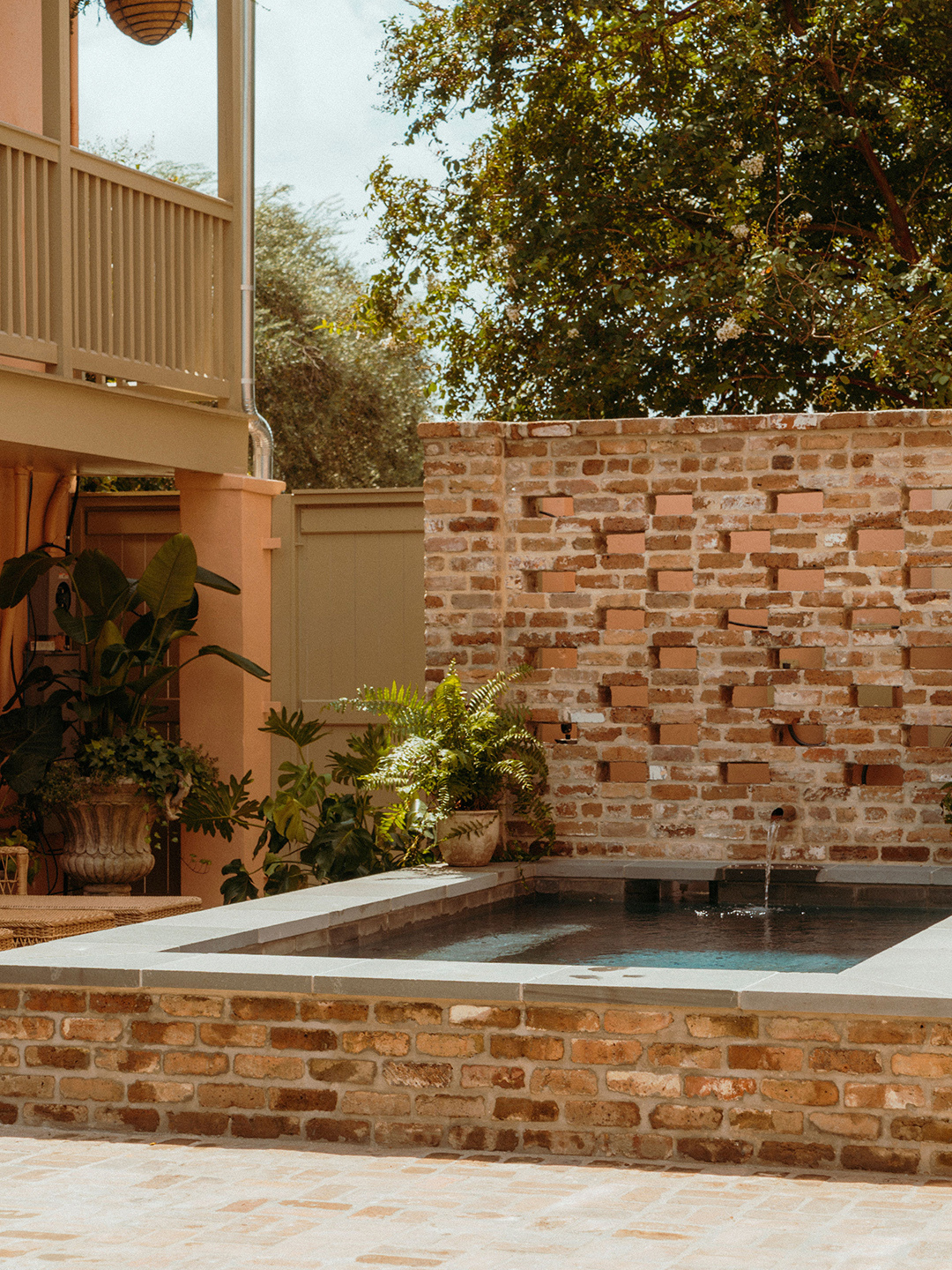
Of course, time had also left its mark. Years of patchwork renovations had left the interiors dated and disjointed. The grounds were overgrown, maintenance had been deferred, and a few awkward additions—masonite doors, a spiral staircase to the attic loft, and an exterior one on the carriage house—had crept in along the way. Convinced the place was worth saving, the couple worked with local hospitality group Dear Valentine—led by founder and creative director Melissa Shelton, who guided the project from concept to completion—to assemble a New Orleans-based team to help bring it back: Inhab Group for construction, Southkick Historic Preservation for historic problem-solving, CICADA for architectural interventions and permitting, and Logan Killen Interiors for the interiors.
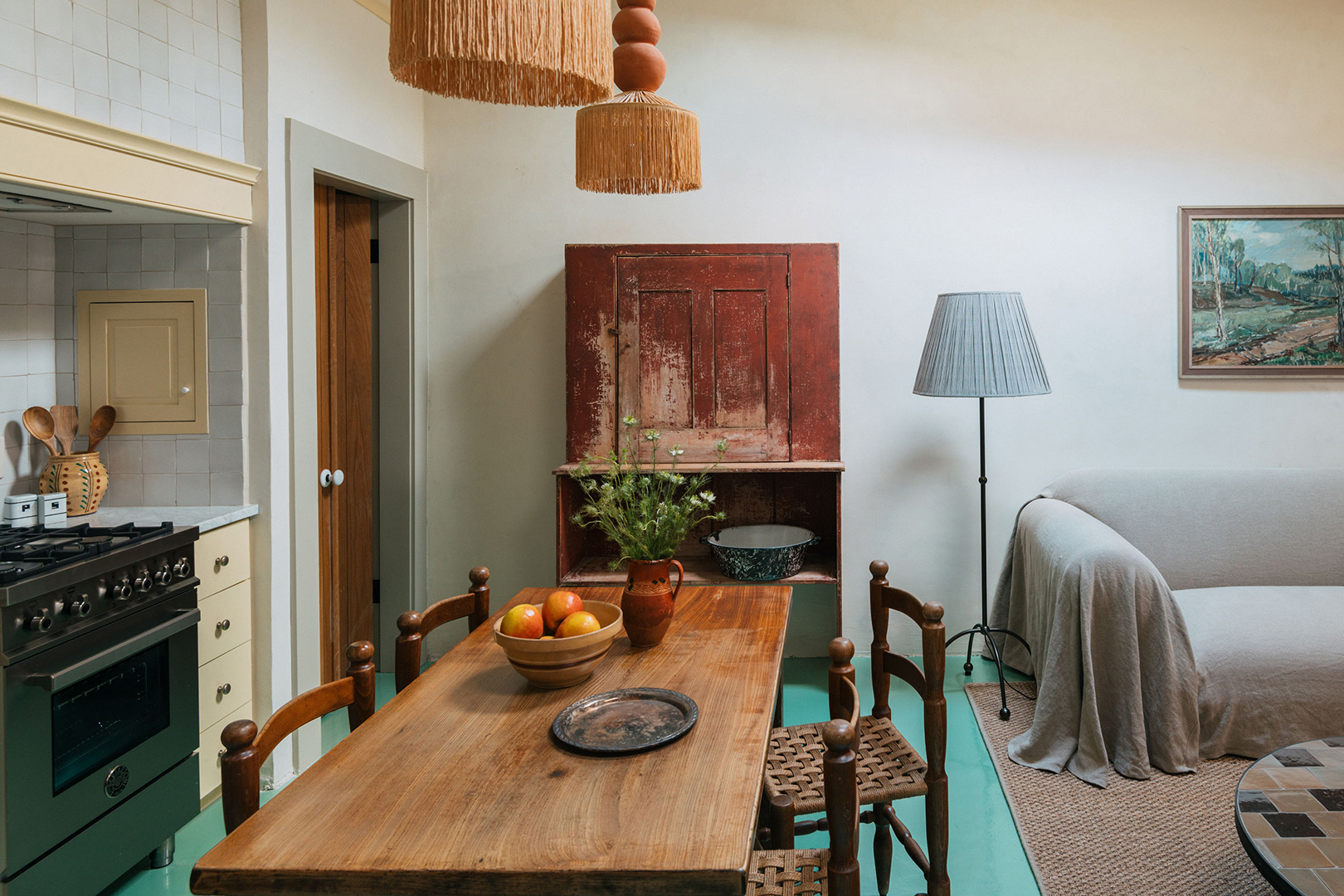
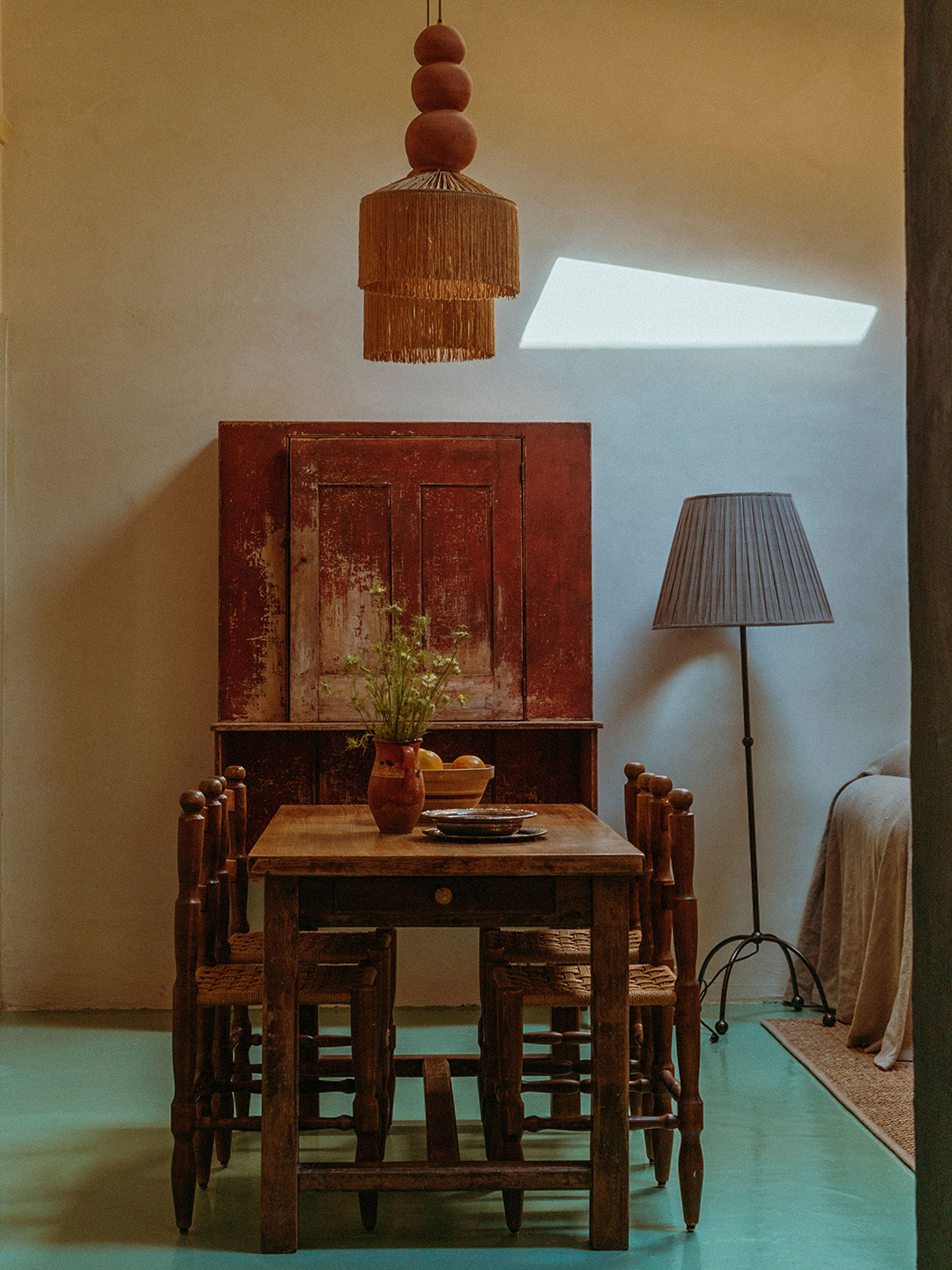
The goal was simple: preserve the building’s soul while making it work as a warm, livable vacation home. The old storefront became the main living spaces, while the original kitchen and storehouse was reimagined as a separate carriage house. Ahead, Shelton takes us inside the 143-year-old residence.
Which design decision felt like the biggest leap of faith?
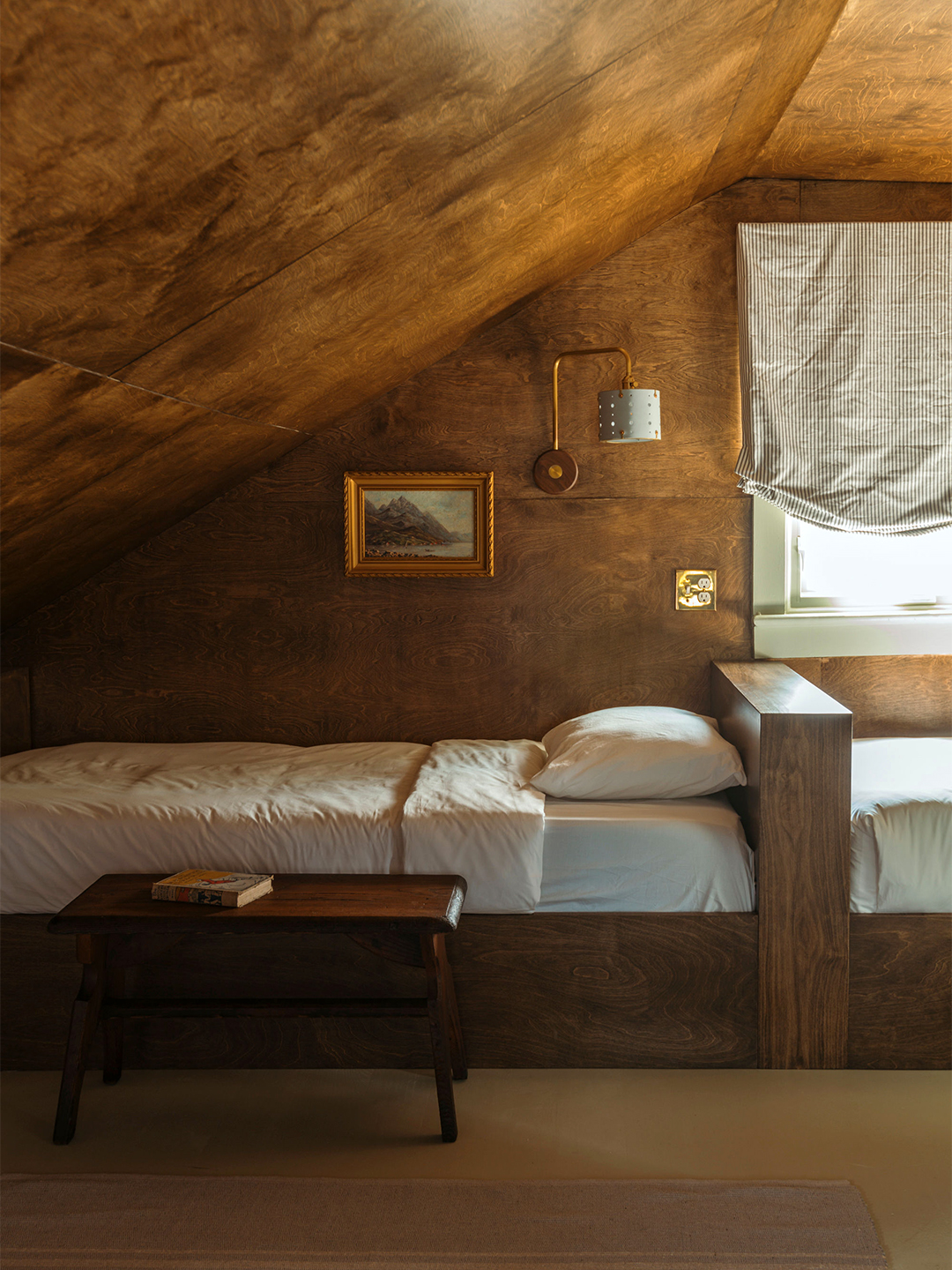
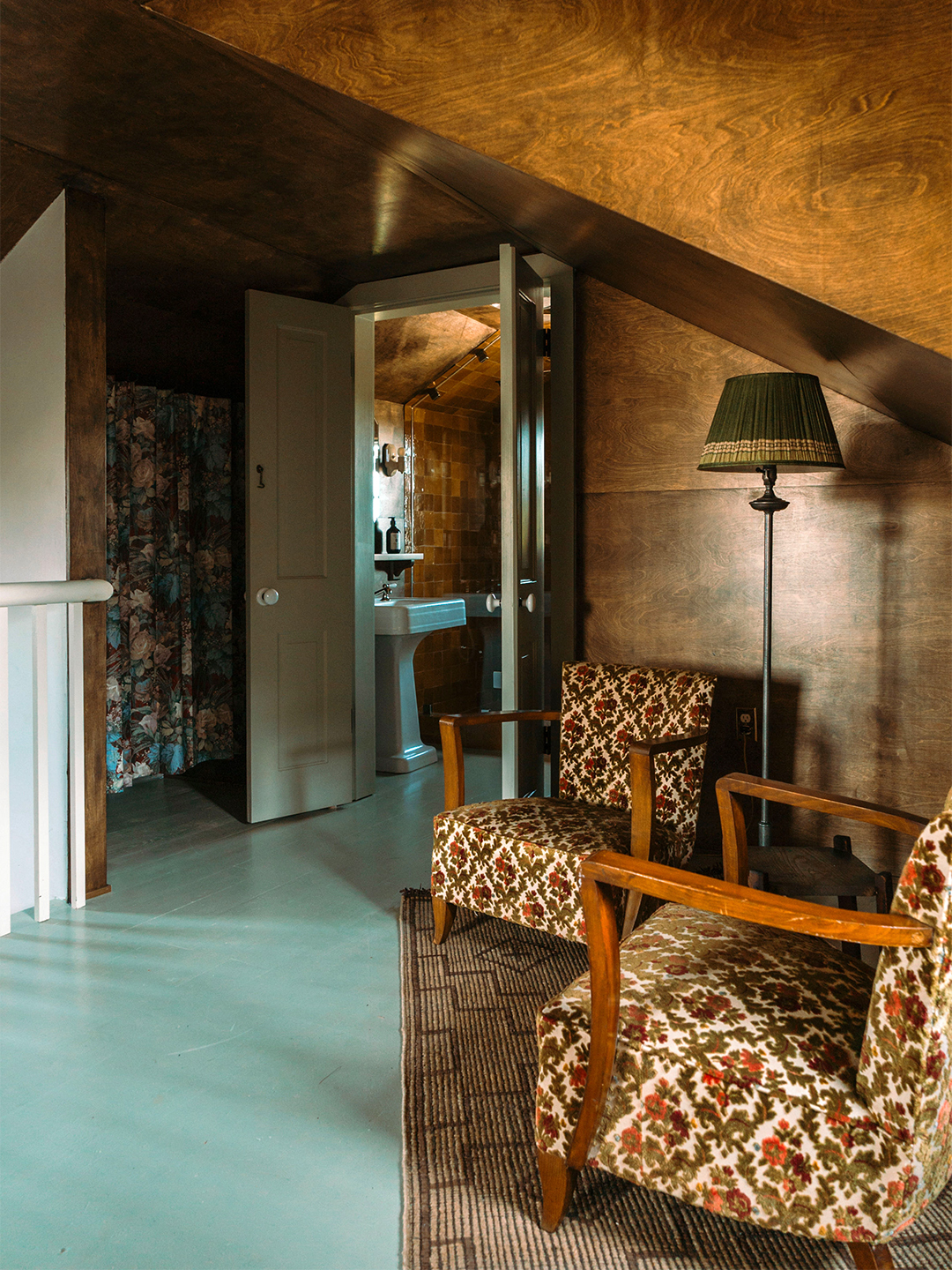
One of the bigger gambles was the paneling in the twin loft on the third floor. The room sits right under the roofline with low, angled ceilings, so we wanted it to feel cozy and intentional. We originally considered traditional paneled millwork, but the cost would have been enormous given all the surfaces and angles. Instead, we installed simple plywood panels and hand-stained them in place. It gave us the warmth and texture we wanted while leaning into the attic-like character of the space—at a fraction of the cost—and it’s actually become one of the most popular images we’ve shared. People really love the simplicity of it.
What storage detail turned out to be surprisingly brilliant?
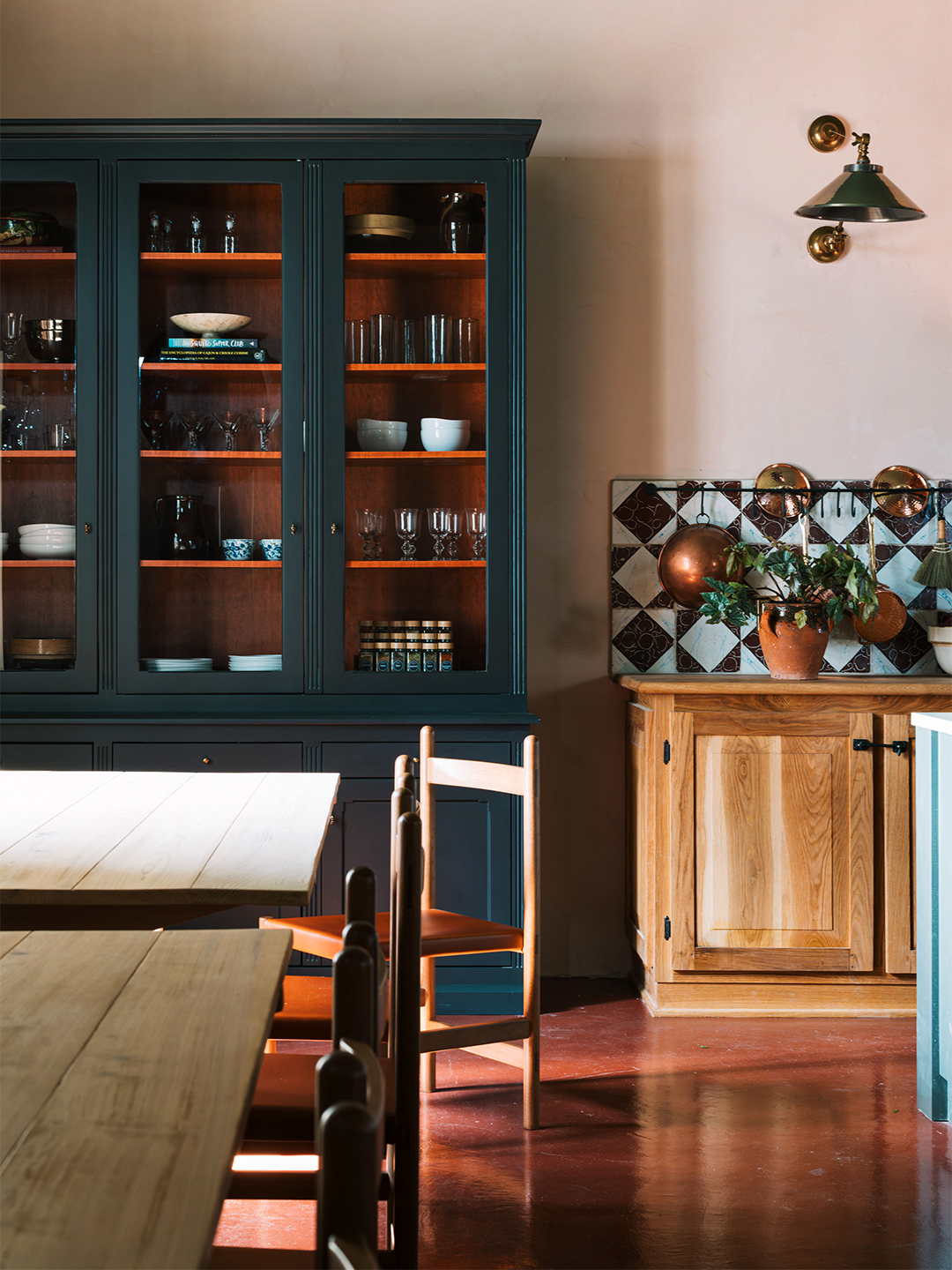
It’s a tie between the china hutch in the main house’s dining area and the built-in library in the carriage house’s entry parlor. Both were designed by Logan Killen Interiors and built by Toulouse St. Millworks. They pack in a surprising amount of storage while also acting as crown jewels in their rooms—practical, but beautiful too.
Was there a material you were particularly excited to include?
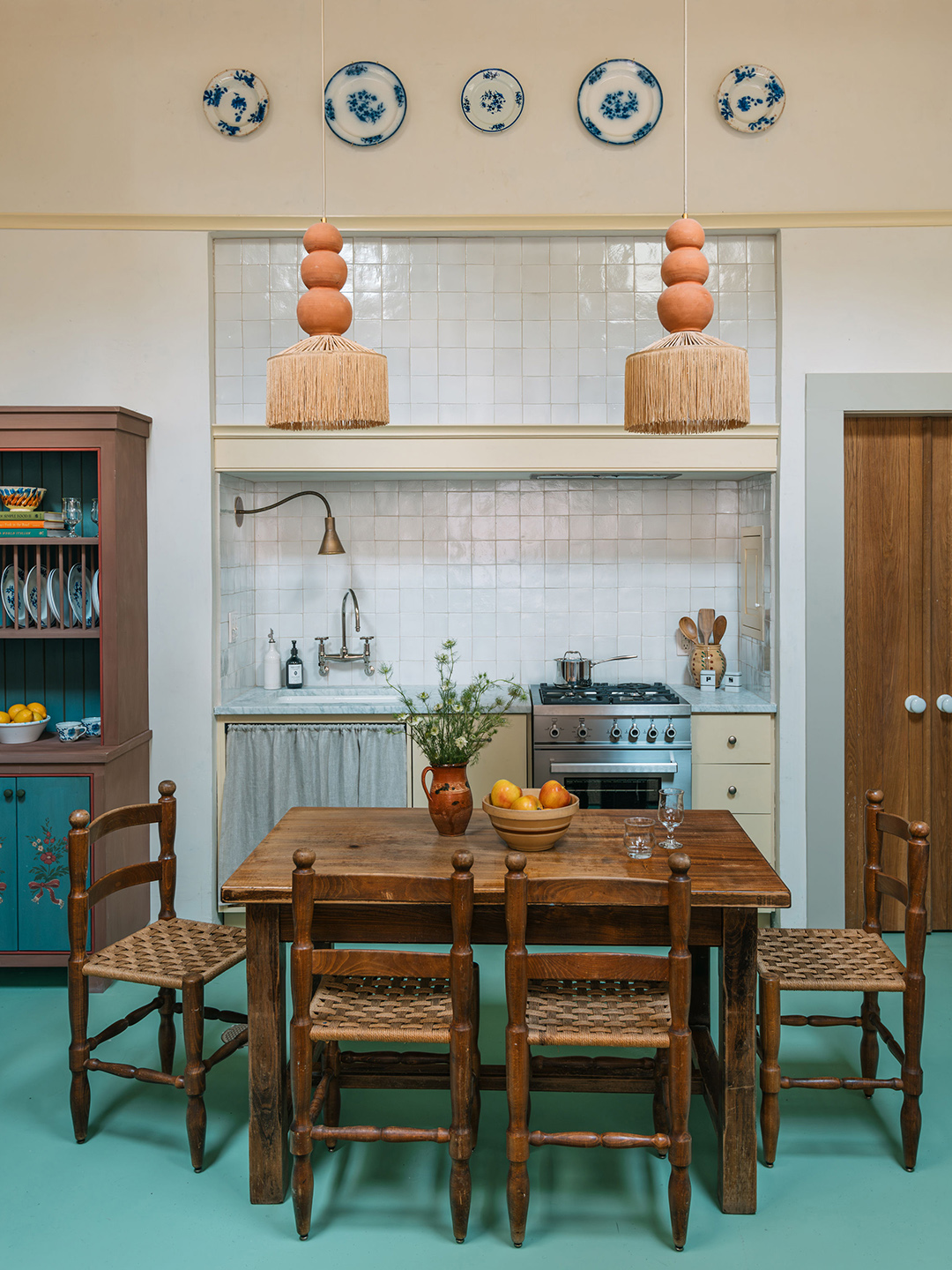
The Roman clay walls and the antique Italian tile backsplash in the main house kitchen are probably the standouts. The Roman clay gives the walls this beautiful softness that changes with the light throughout the day, while the antique tiles bring in a sense of history and texture. Together they add warmth and character without feeling overly precious—exactly the balance we were hoping for.
The color-drenched parlor in the carriage house is such a moment—what inspired the moodier approach?
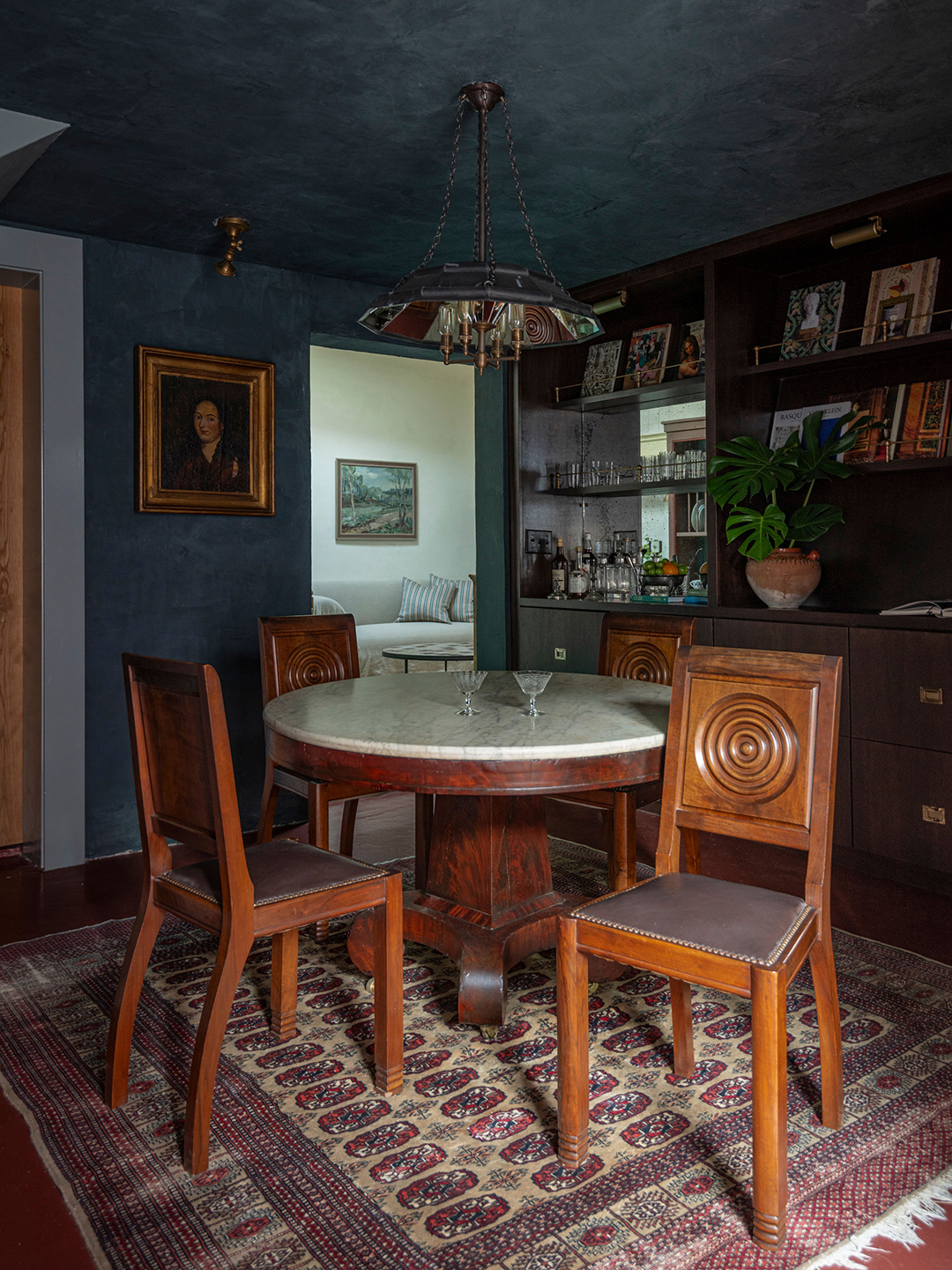
The architecture of that room doesn’t allow for much natural light, so instead of fighting it, we leaned in. We went for a darker, library-like mood and used a deep blue Roman clay finish from Portola Paints. The finish catches the light beautifully and gives the walls a depth that flat paint just can’t. We also added built-in cabinetry along one wall that works as both a library and a bar—perfect for displaying books and objects, while quietly hiding two refrigerator drawers. It means the room can shift easily from a quiet reading nook to a cozy spot for evening drinks and entertaining.
Are the pillars in the main kitchen original to the home?
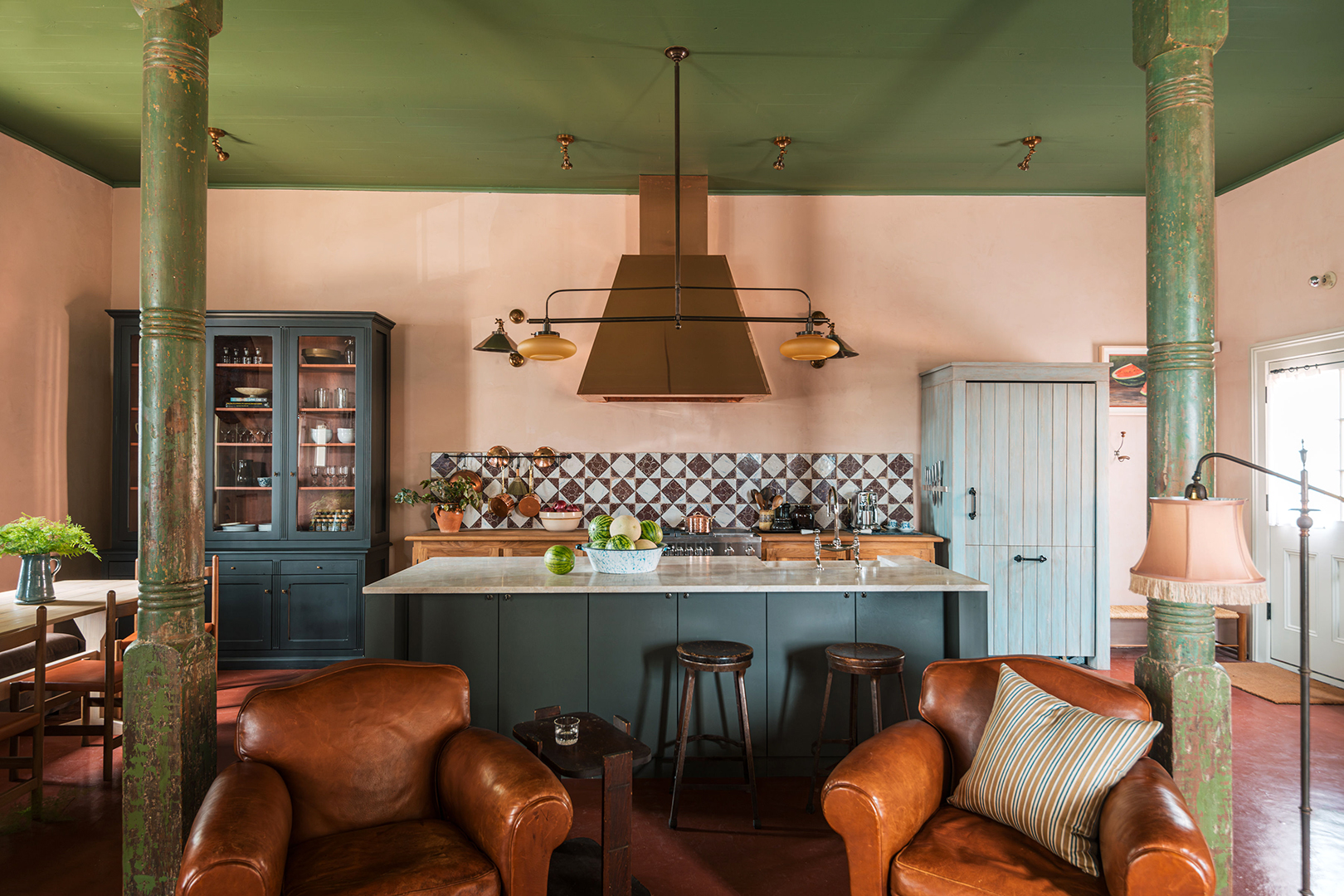
They are! We treated them as heritage elements and were careful to preserve them just as we found them. The green finish you see today is the natural result of years of patina and wear—something we chose to celebrate rather than cover up or refinish.
Speaking of original details, how about the baby blue cupboard in the kitchen?
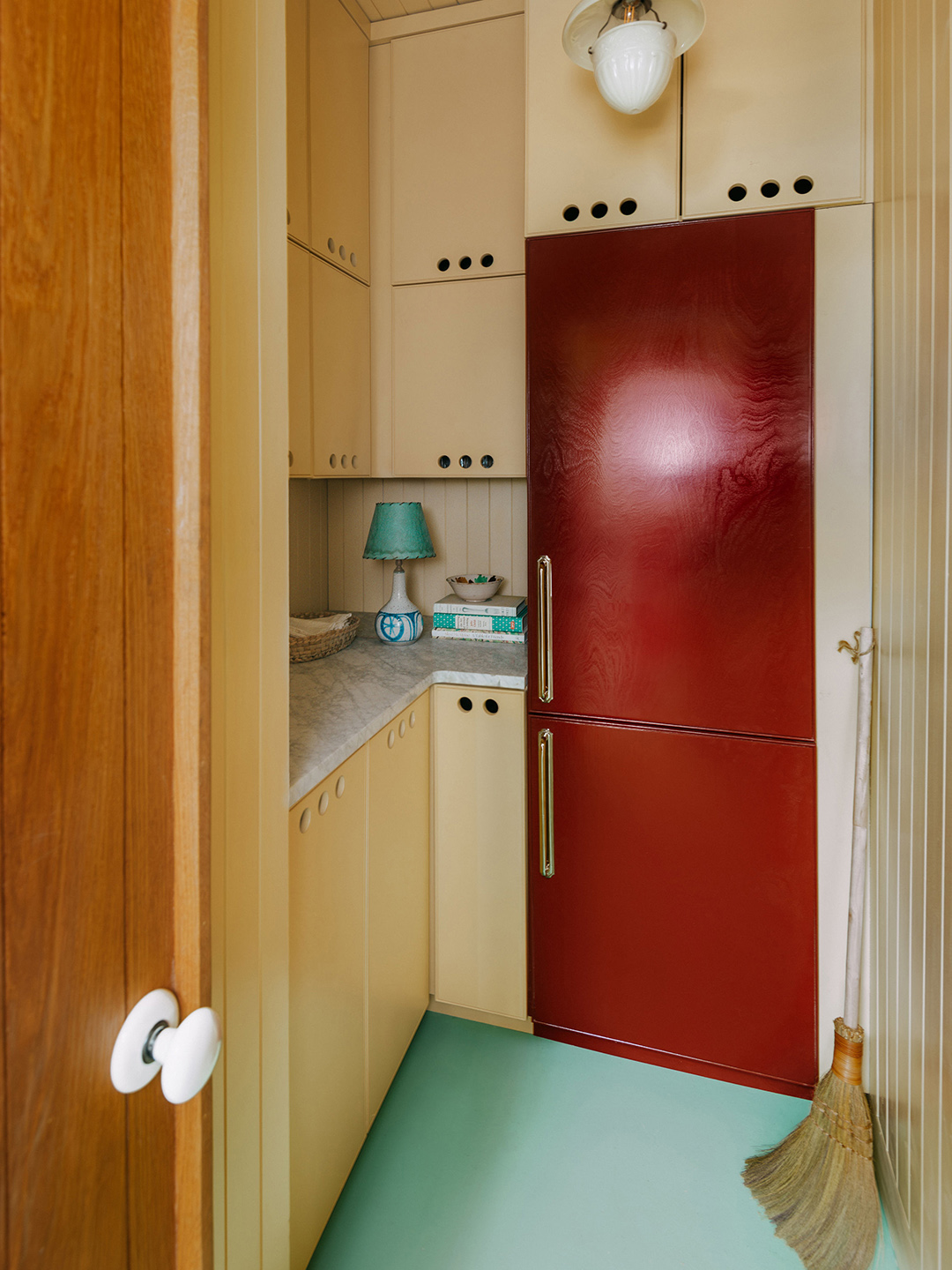
That’s actually the refrigerator—a Fisher & Paykel fridge-over-freezer unit. We had it fully clad so it reads more like a traditional old cupboard than an appliance. The cabinetry was built by Toulouse St. Millworks, and we worked with a decorative painter to give it a soft, baby blue finish.
Was there a moment where the project threw you a curveball?
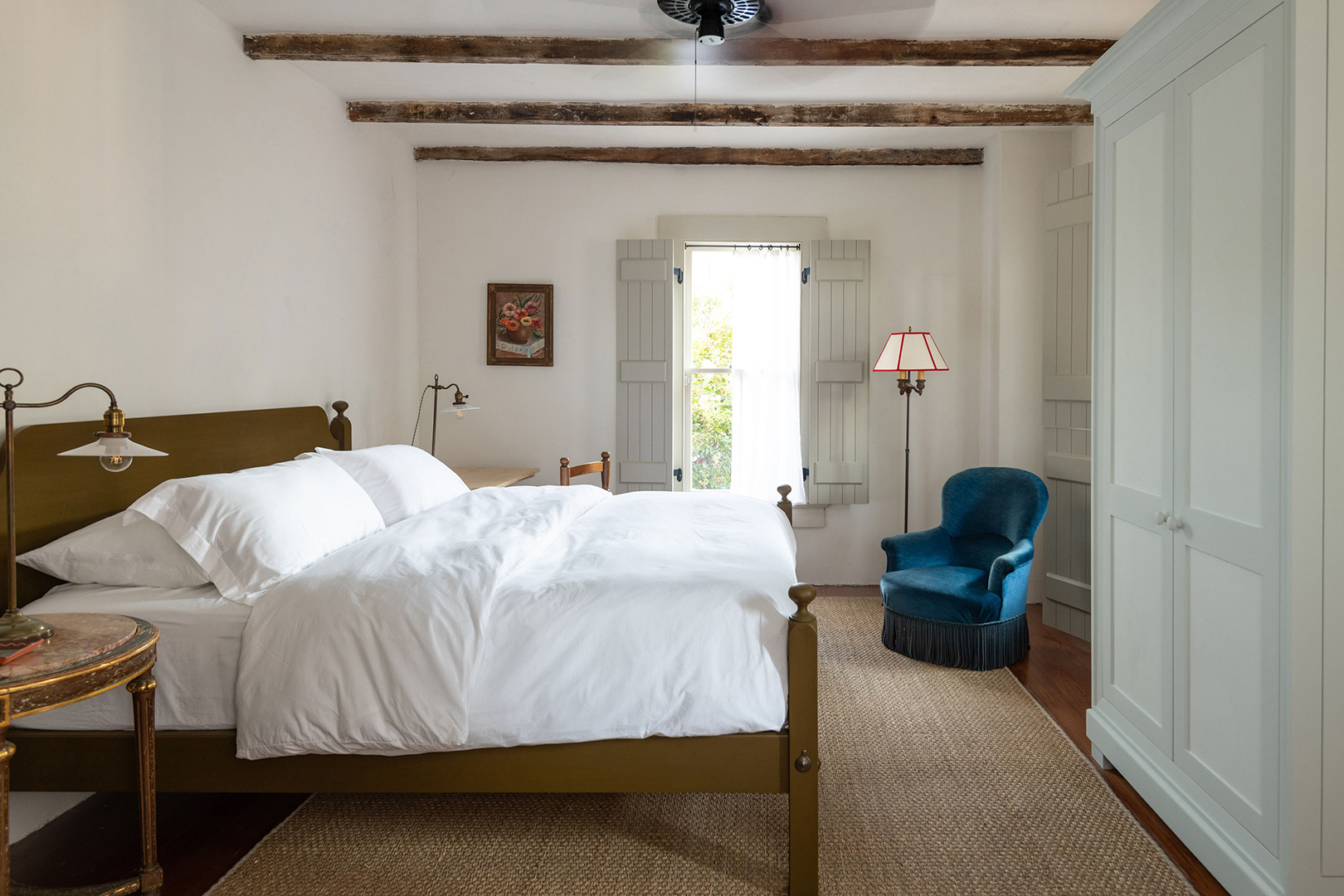
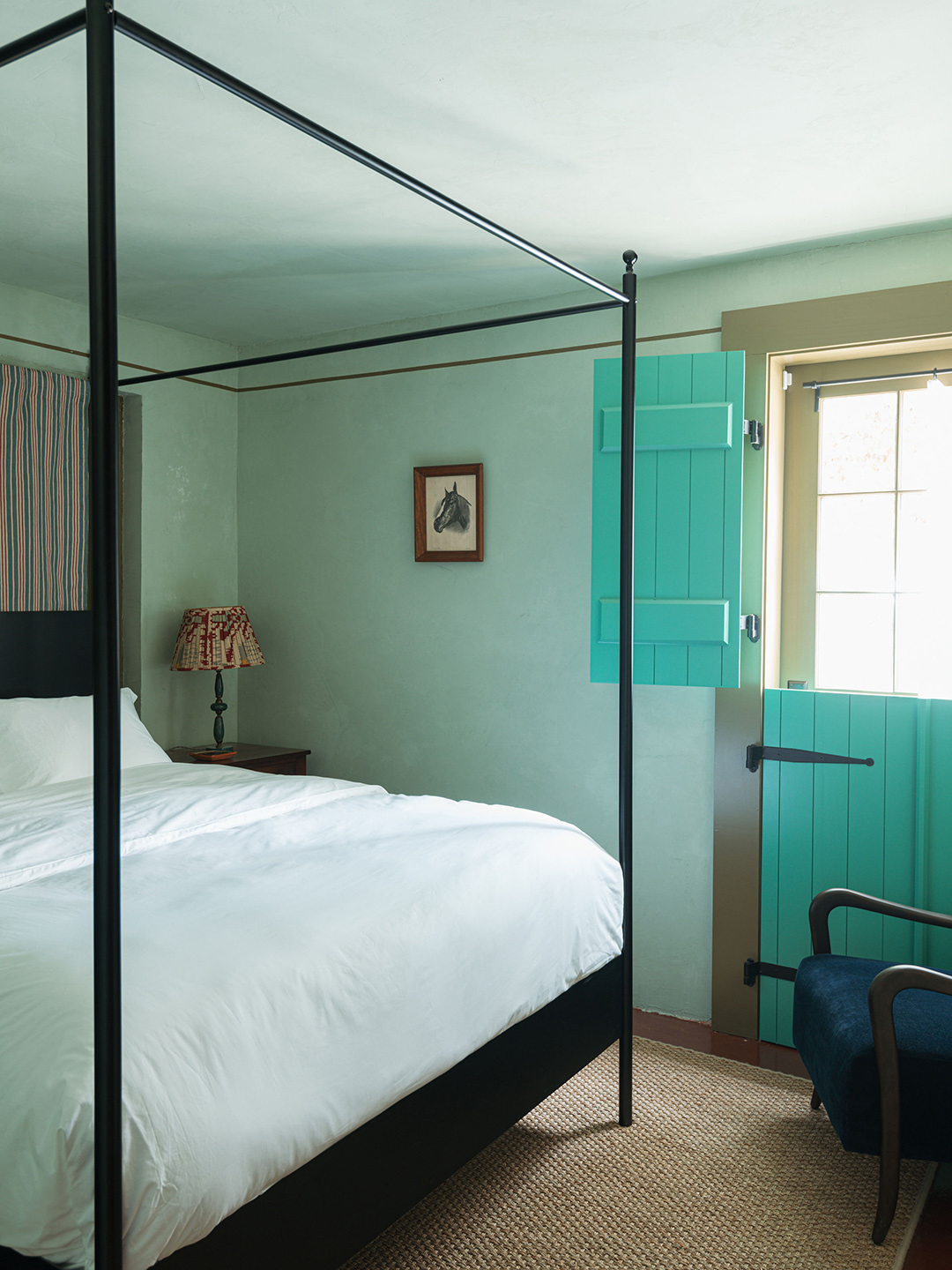
This was the first project where we plastered every wall using a traditional plaster system instead of drywall. Along with decorative finishes like Roman clay, all of the interior walls were rebuilt with the authentic plaster application. It gives the home a depth and softness, and it also helps with temperature regulation—which really matters in a climate like ours. We’d absolutely do it again, but the big lesson was timing. True plaster work is slower and more labor-intensive than drywall, so next time we’d plan for that pace from the very beginning.
Any other moments that felt especially tricky?
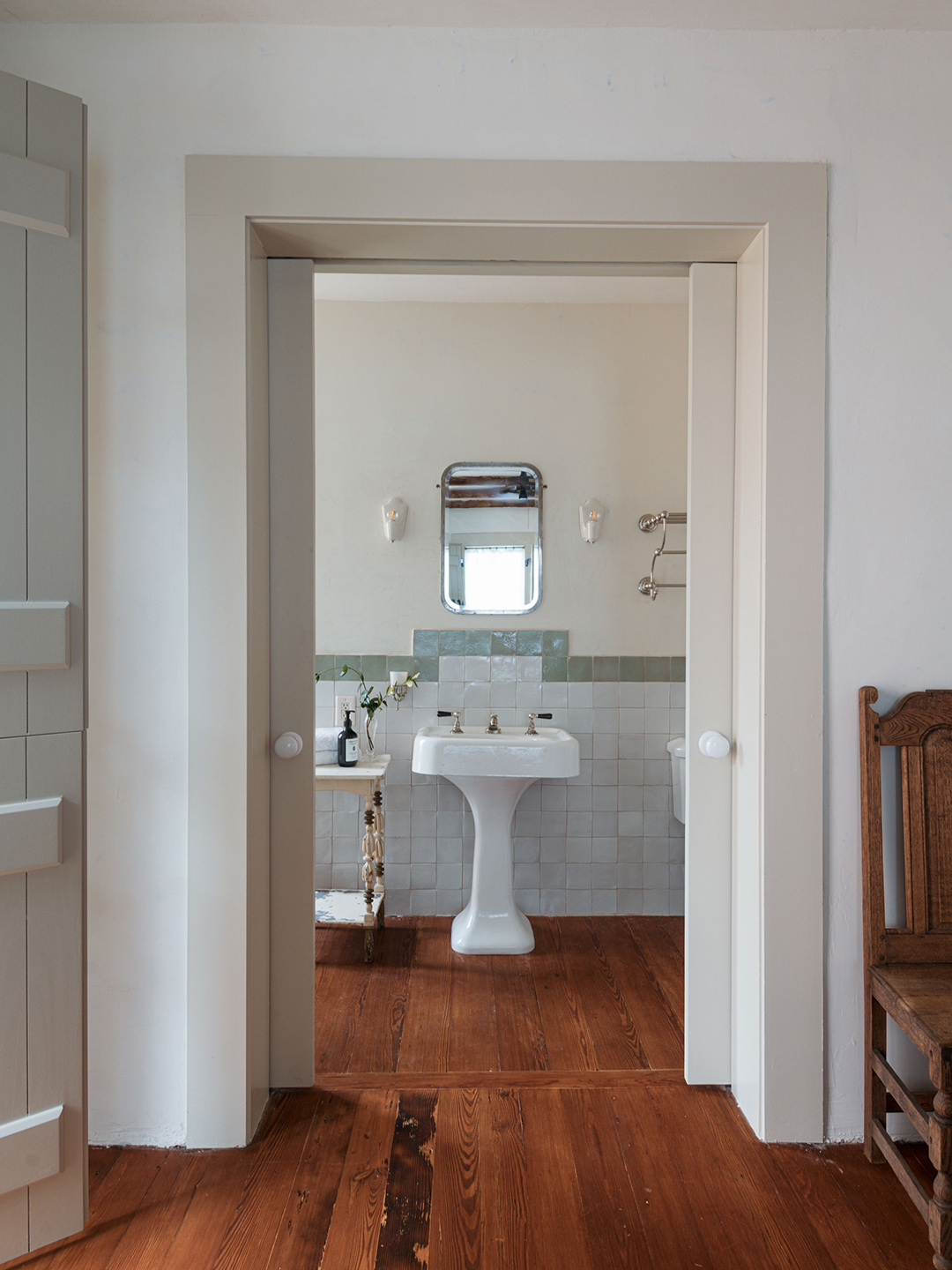
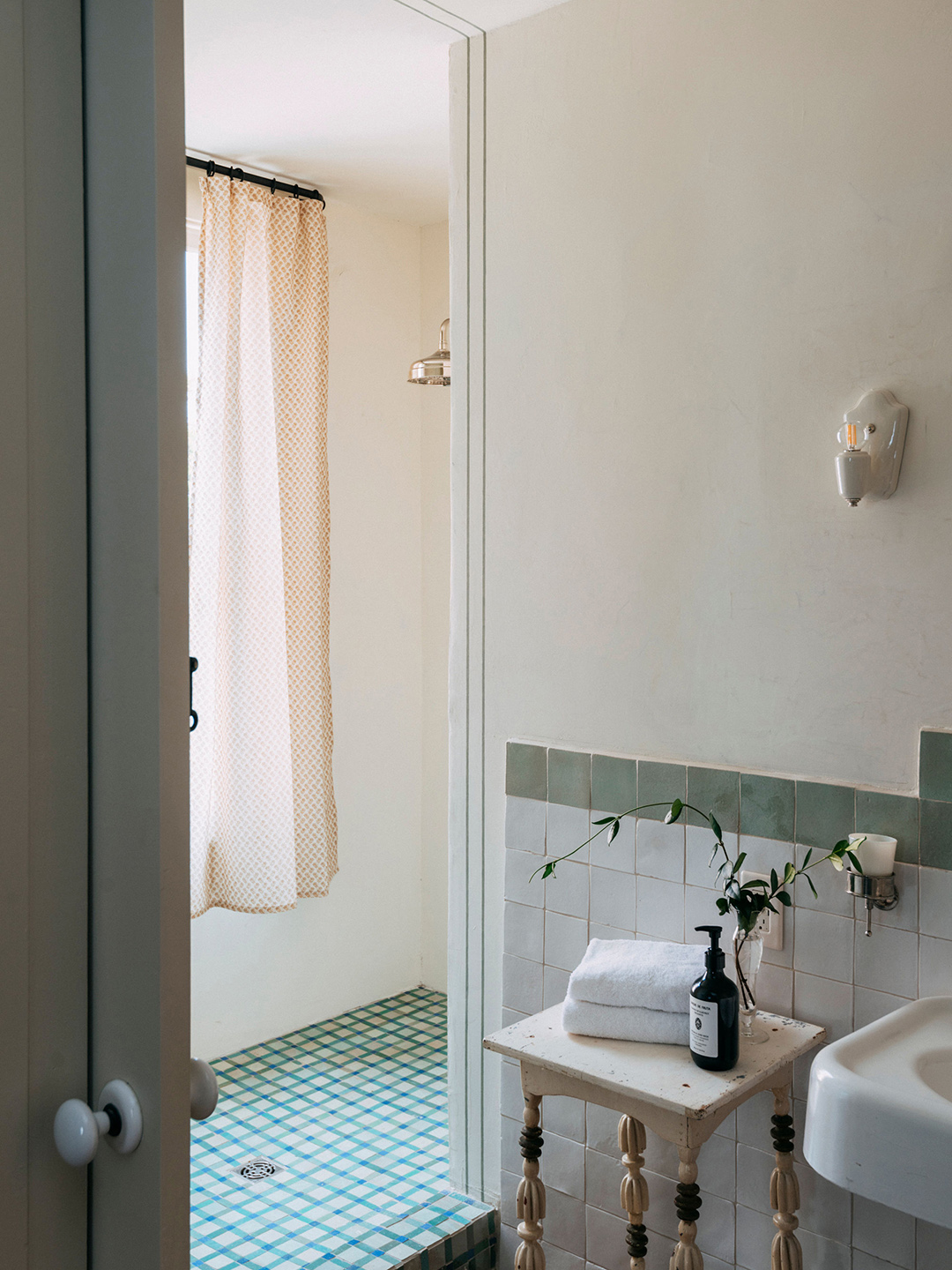
One of the biggest challenges was working within the requirements of the historic tax credit program while still creating a home that works beautifully for modern living. Every decision had to respect the building’s historic character—from preserving the original masonry and openings to making sure any new additions felt appropriate for a structure of this age. Old buildings always come with a few hidden puzzles, so we spent a lot of time figuring out things like levels, transitions, mechanical systems, and how to carefully work within those thick masonry walls.