We may earn revenue from the products available on this page and participate in affiliate programs.
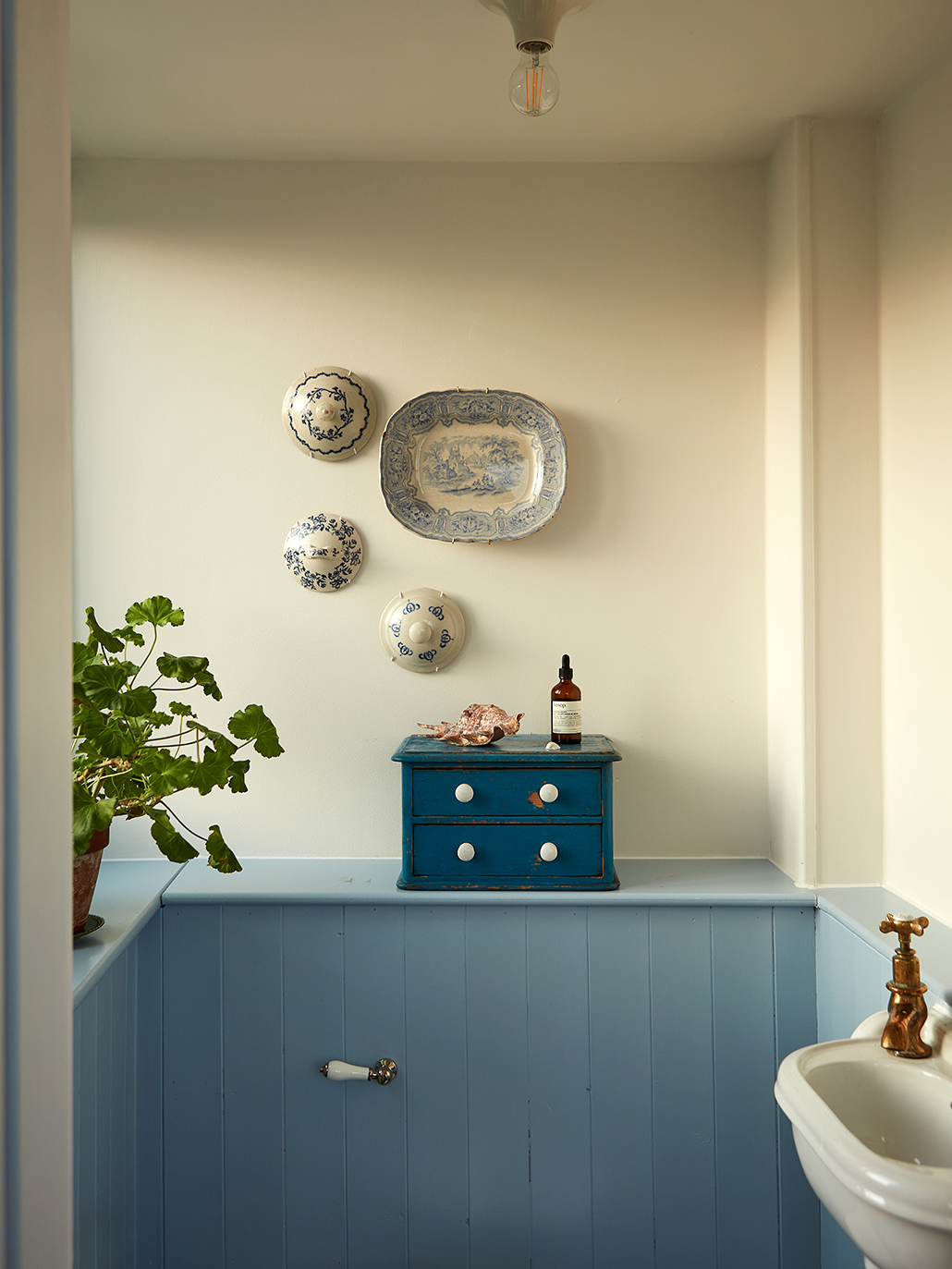
Once upon a time, a plate wall was defined by careful alignment and a perfectly balanced grid—something you’d only find in a polished, traditional home. But a looser approach is taking over. Think: organic arrangements that swap symmetry and perfectionism for irregularity, movement, and, above all, uniqueness.
This type of plate wall feels collected rather than coordinated. Plates of varying sizes, patterns, and eras are arranged in relaxed groupings that climb walls, wrap doorways, or frame everyday moments like sinks and sideboards. The appeal lies in their ingenious haphazardness—nothing looks measured or overly planned, yet the overall effect feels thoughtful and balanced. It’s a shift I’ve been noticing everywhere lately, both in the spaces I’m saving on Instagram and through the steady interest in antique and vintage plates at my own online vintage shop, Ça Marche Shop, where these pieces are increasingly being sourced with walls—not tables—in mind.
For Emily Hadley, founder of No.13 Gallery in Devon, England, accessibility is part of the draw. Plate walls, she says, are “a brilliant and affordable way to inject serious charm and character into your home without committing to a massive (and often costly) piece of art.” They’re flexible, forgiving, and easy to build over time. Start small, shift things around, add as you go.
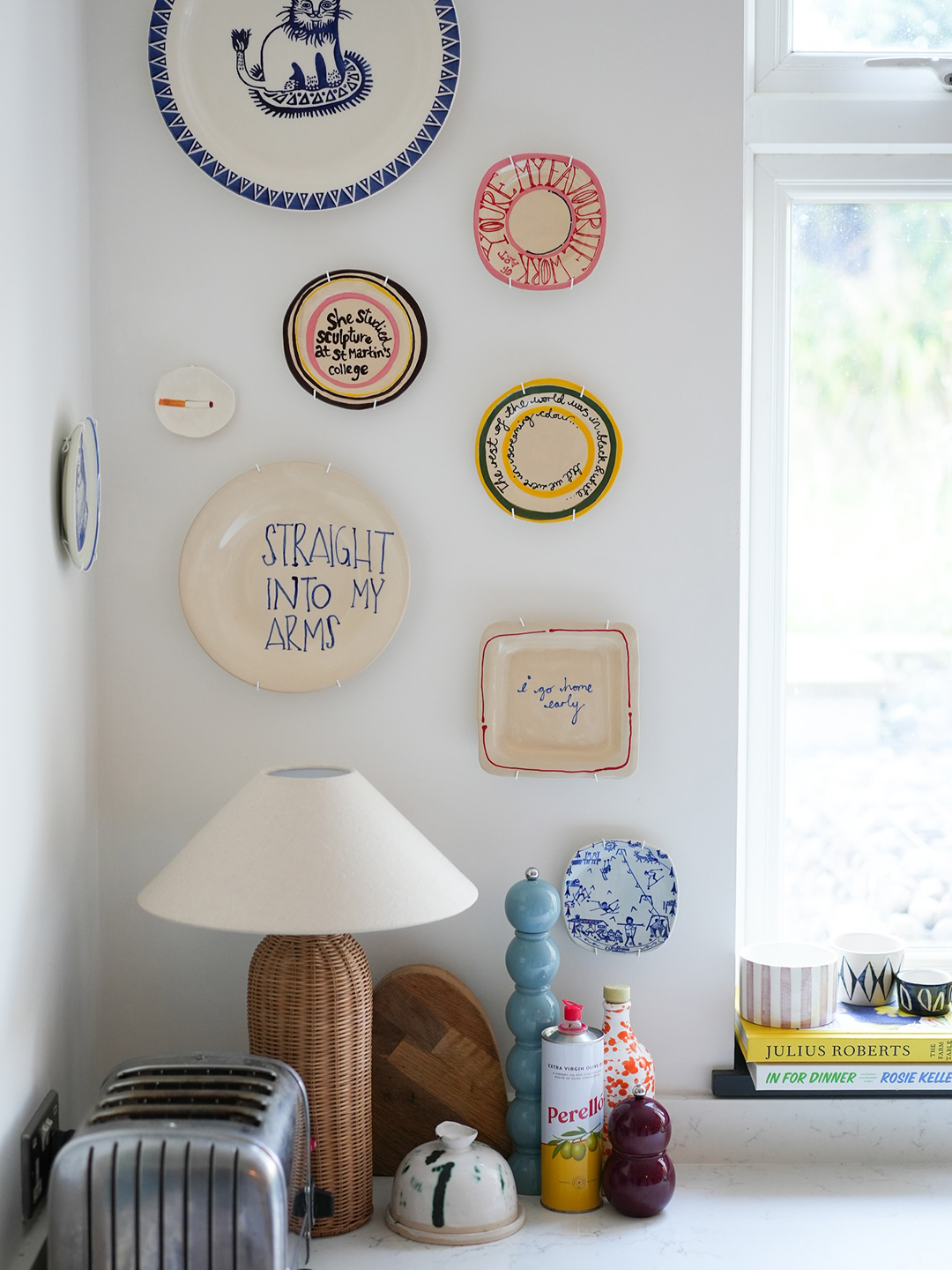
Interior stylist Mariah Rich points to another reason that these loose decorative clusters are resonating: “They introduce movement into a space,” she explains. “Your eye pauses, shifts, and lingers in a way it doesn’t with symmetry.” Plates also carry an inherent sense of history—even decorative ones suggest meals, gatherings, and everyday rituals—giving them a warmth that flat art can lack.
Perhaps most importantly, these walls don’t demand a finished result. As Rich notes, “Irregular plate walls don’t demand completion; they allow for evolution.” Below, designers and creatives share how to create one that feels organic, intentional, and perfectly unperfected.
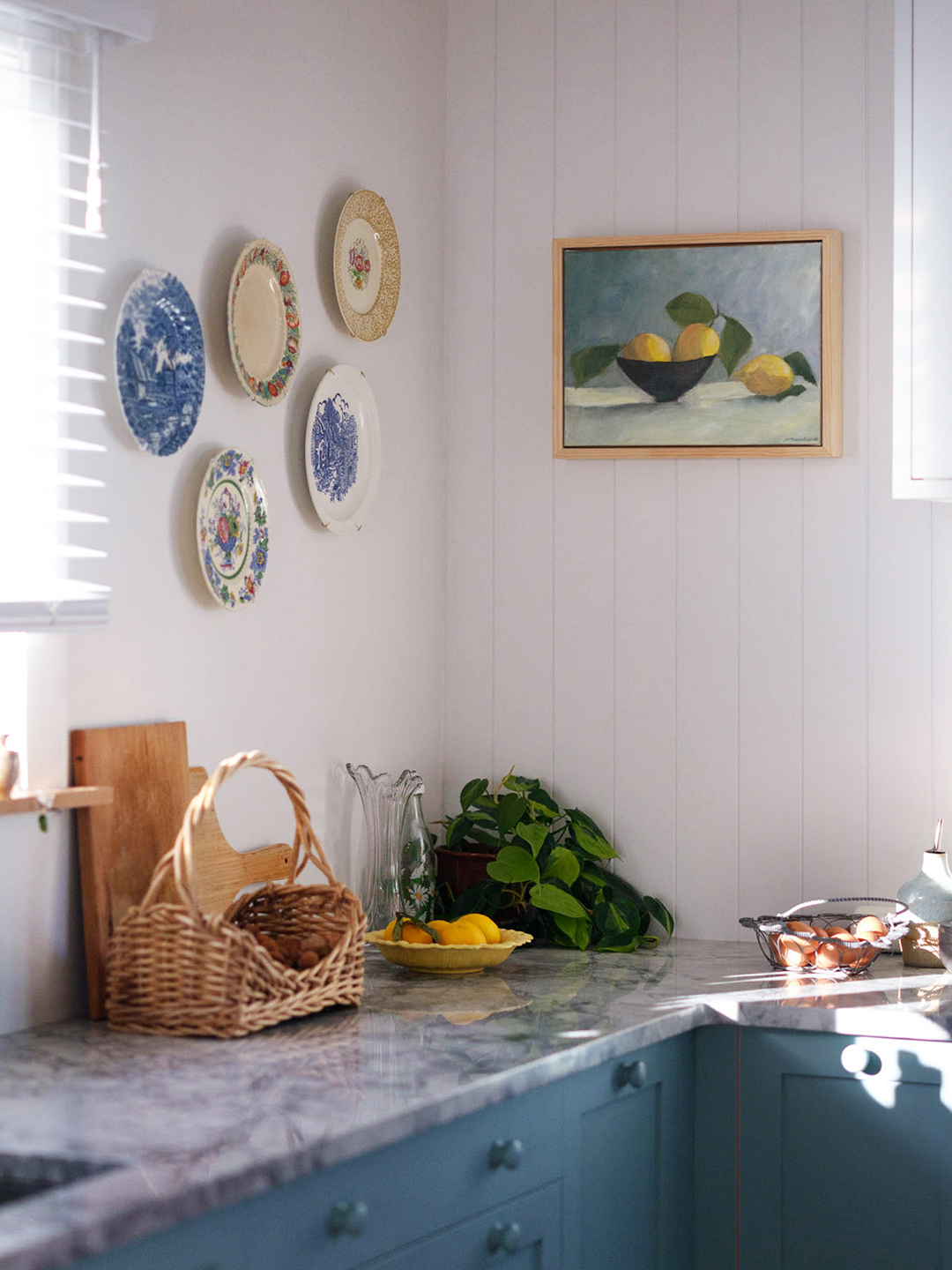
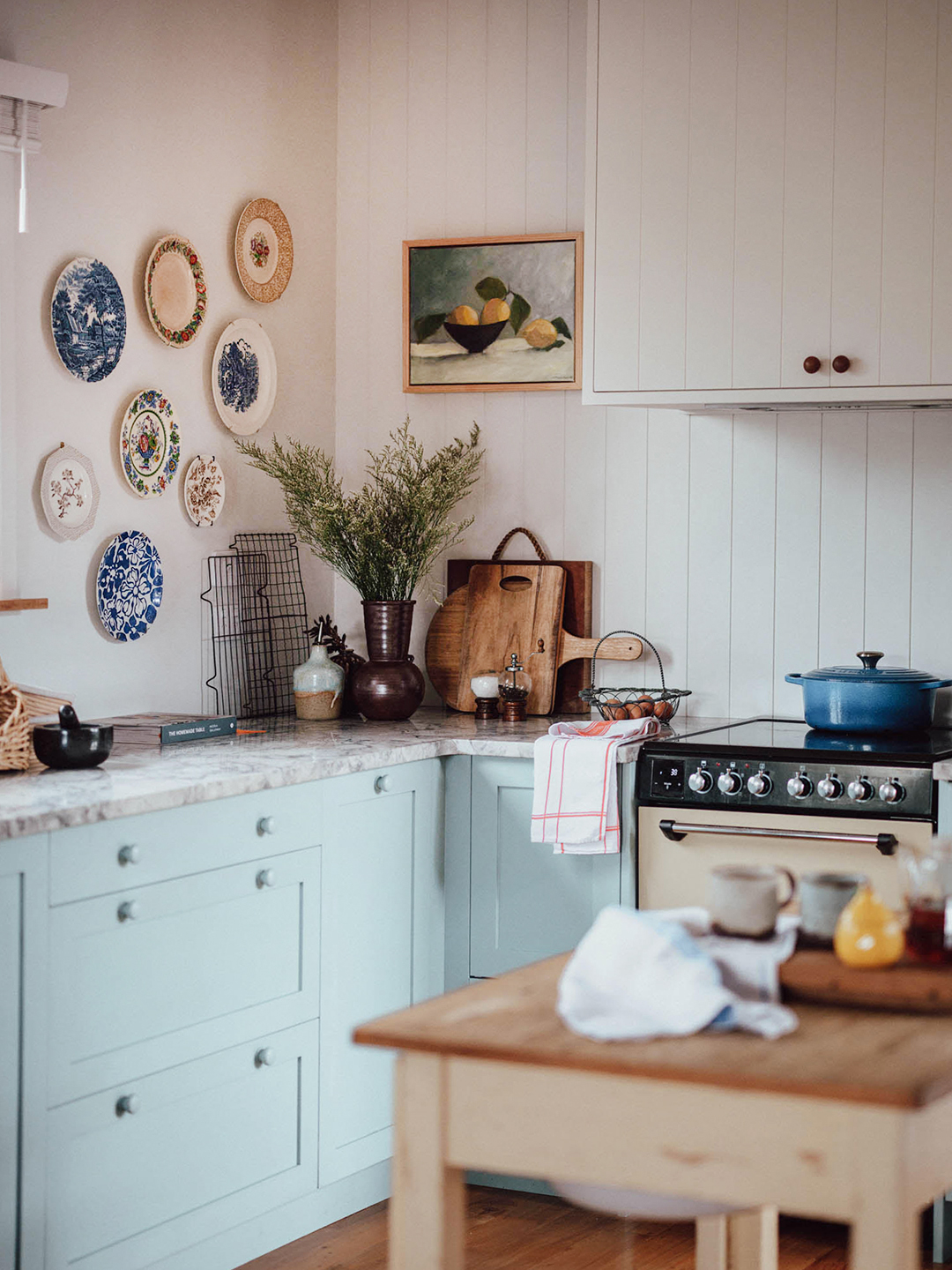
How to Create an Organic Plate Wall
1. Start with a few plates—not a full collection.
Resist the urge to complete your plate wall immediately. Veronica Ashley Rabanal, founder of Gladys Avenue Antiques & Design, recommends beginning with just three to five plates in staggered sizes and letting the composition build organically. “When everything is perfectly spaced or too rigid, you lose the personal quality that makes it feel collected over time,” she says. Thrift stores, flea markets, estate sales, charity shops, and online marketplaces like Etsy or eBay are all fair game—as is your own kitchen cabinet. Hadley agrees that the best walls come together slowly; plates that don’t make the wall can still earn their keep as jewelry trays or catchalls.
2. Pick one unifying idea, then keep it loose.
An organic plate wall shouldn’t feel random, but it also shouldn’t feel themed to death. Emily Sanford, principal designer at Sanford Collective Interiors, recommends anchoring the wall with one simple throughline—a color palette, subject matter, or motif, because “you don’t need all your plates to match perfectly, but a throughline keeps the arrangement cohesive even when individual pieces vary.”
Interior designer Dorcia Kelley often takes a similarly edited approach, working within a restrained palette so the shapes and imagery can stand out. “Keeping the palette restrained allows the form and imagery to really speak,” she says. Hadley favors color as her go-to thread, sticking to soft tones with the occasional pop, but the rule is flexible: bold, blue-and-white, or botanical all work—as long as it feels personal.
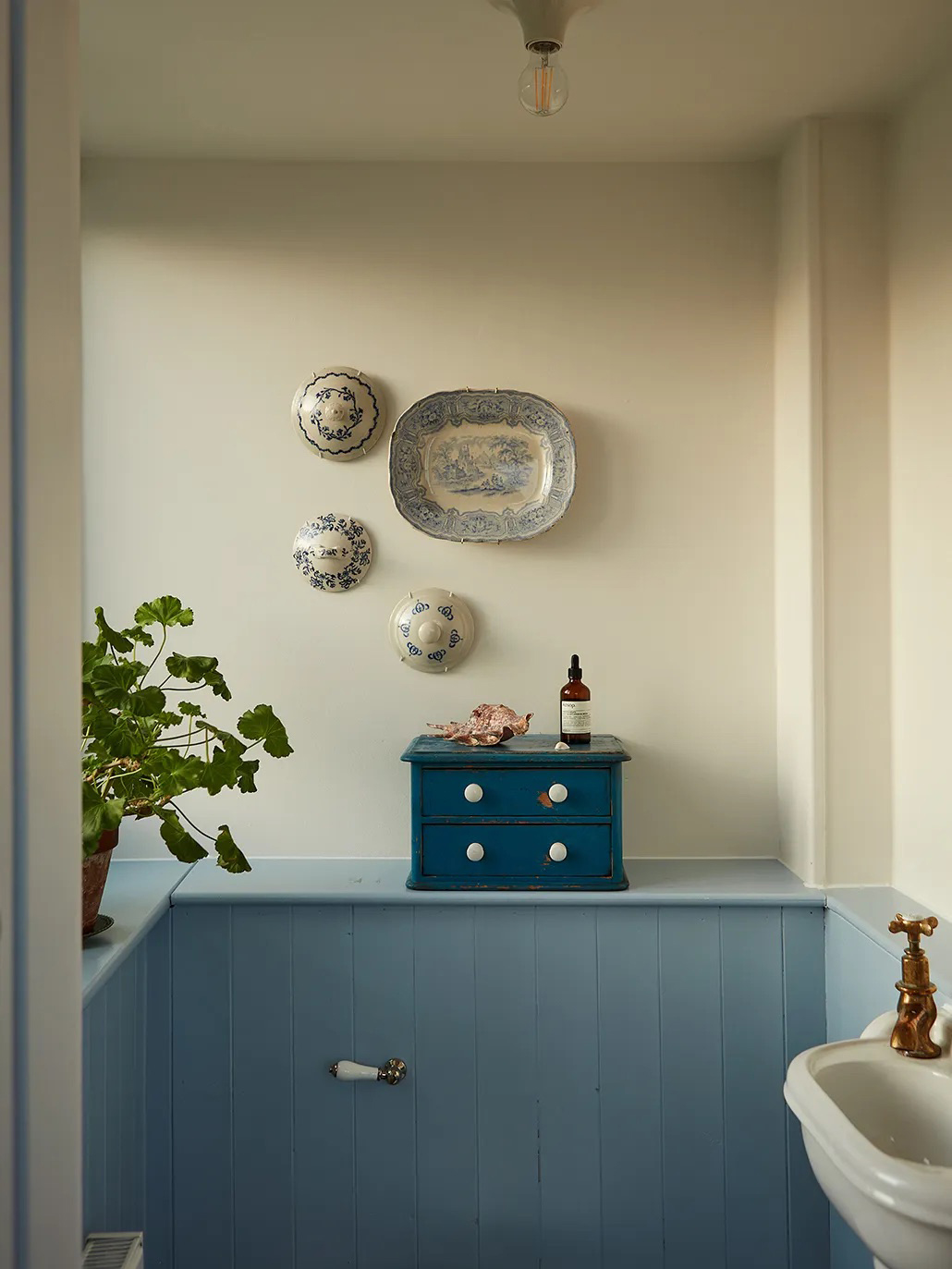
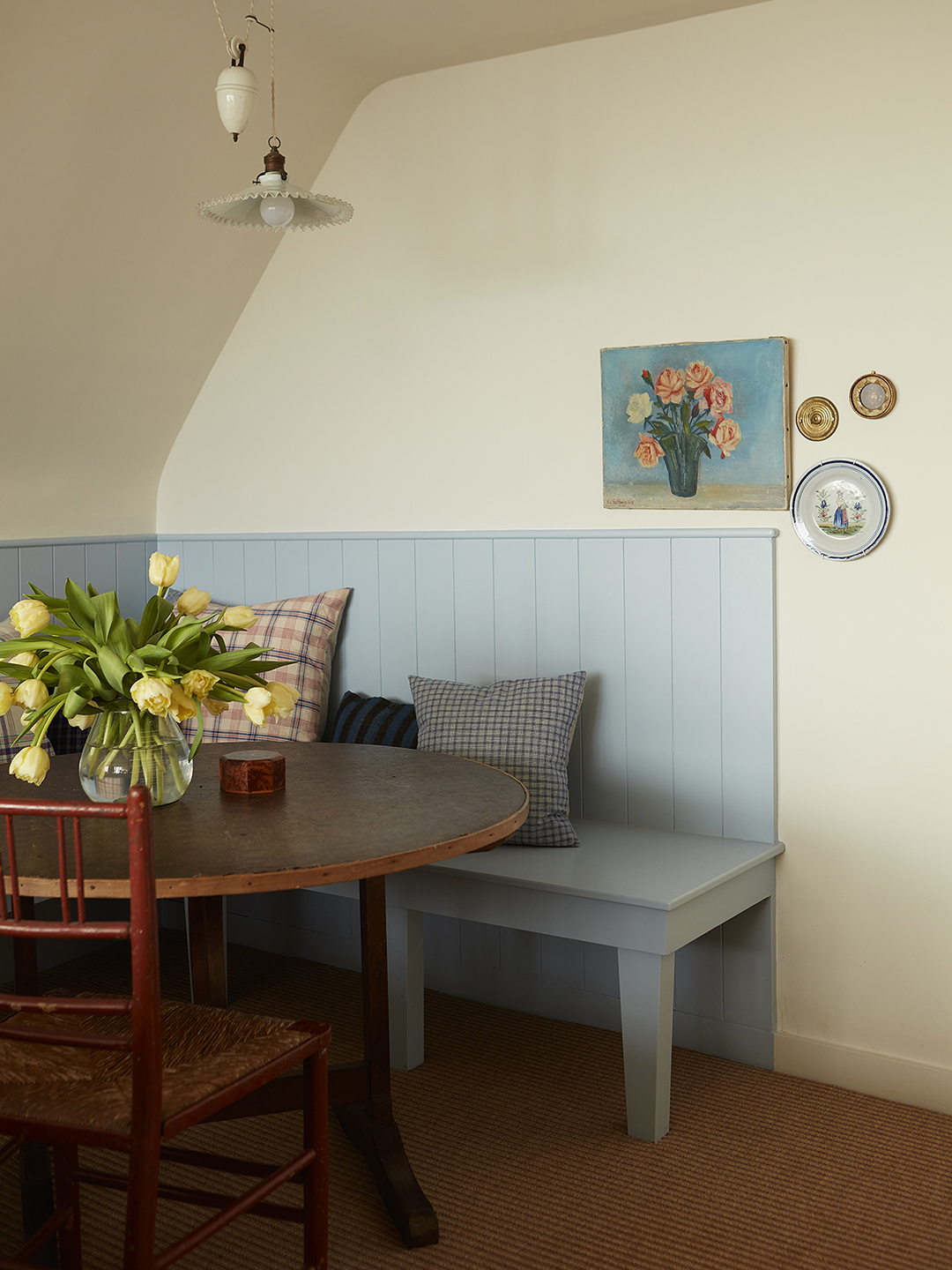
3. Mix sizes and let the wall breathe.
Variation is what gives a plate wall its rhythm. Mix large dinner plates with smaller saucers, chargers, or the occasional platter to create movement. Just as important is what you don’t hang. Rich emphasizes the role of negative space, noting that restraint keeps the wall from tipping into clutter. Plates should feel connected, not crowded.
4. Plan lightly. Very lightly.
This is not the moment for rulers and laser levels. Lay plates out on the floor, tape off the wall dimensions if it helps, and get a general sense of the shape you’re building—not a precise layout. Sanford suggests thinking about the overall silhouette rather than a grid and starting with your largest or favorite plate as the anchor. Hadley’s philosophy is even simpler: “I’m an ‘it looks right, so it is right’ kind of chap.”
5. Hang confidently—and expect to tweak.
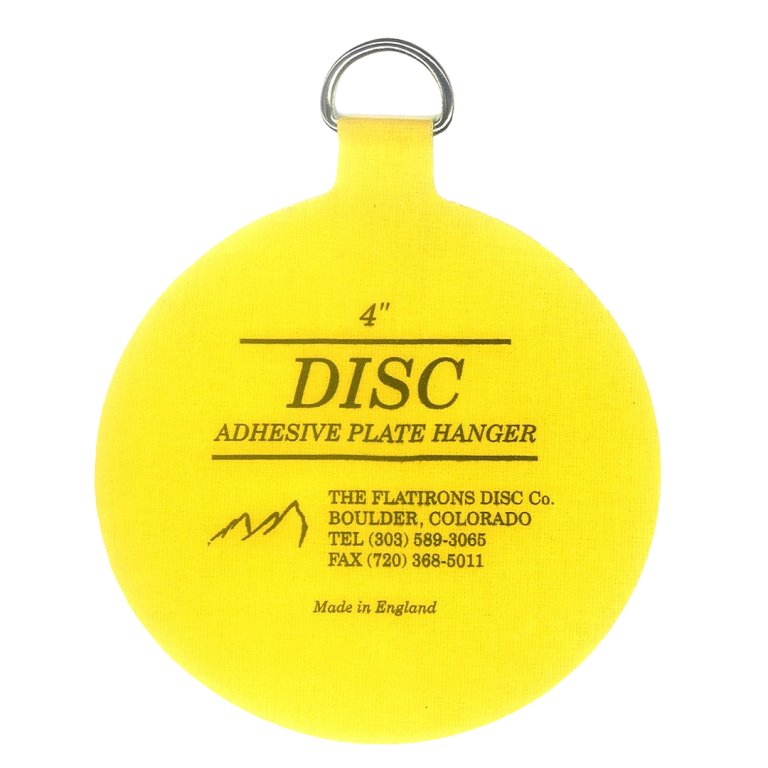
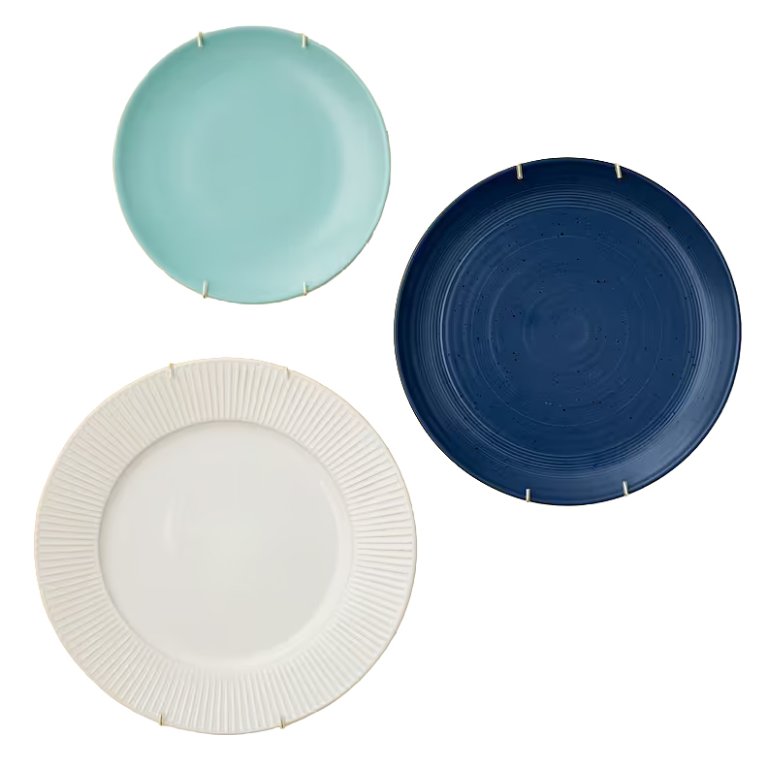
Plate discs offer an invisible look, while spring-style plate hangers allow for easy swapping. Start in the center and work outward, stepping back often to check the balance. Slightly uneven spacing is not a mistake—it’s the goal. And remember: this isn’t a one-and-done project. The beauty of a plate wall is that it can evolve, shift, and grow right along with your space.
Choose Your Hangers
Shop some of our favorite plates for display, and then choose a hanging device that works for you to get started.