
We may earn revenue from the products available on this page and participate in affiliate programs.
Talk about a dream team. Kuala Lumpur-based creative director Mandy Gioh and Malaysian interior designer Wil Ken Ee of Wunderwall recently partnered to transform Gioh’s 800-square-foot flat in Bangsar. While the initial layout leaned “hotel suite” (imagine a clean, square floorplan with the left side reserved for living and dining and the right for private areas, like the bedroom and bathroom), the end result is both “playful and personal,” says Gioh.
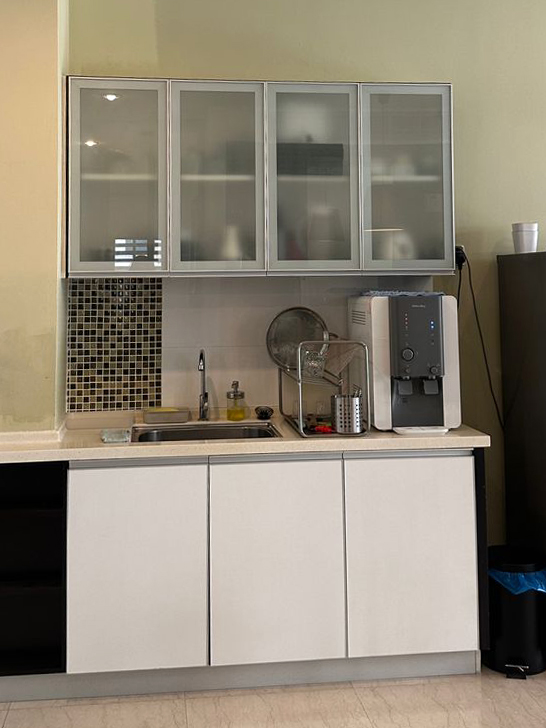
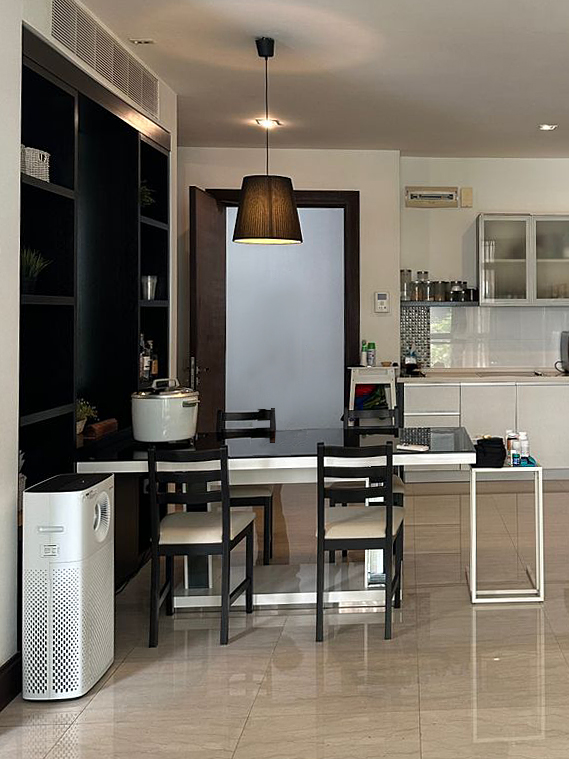
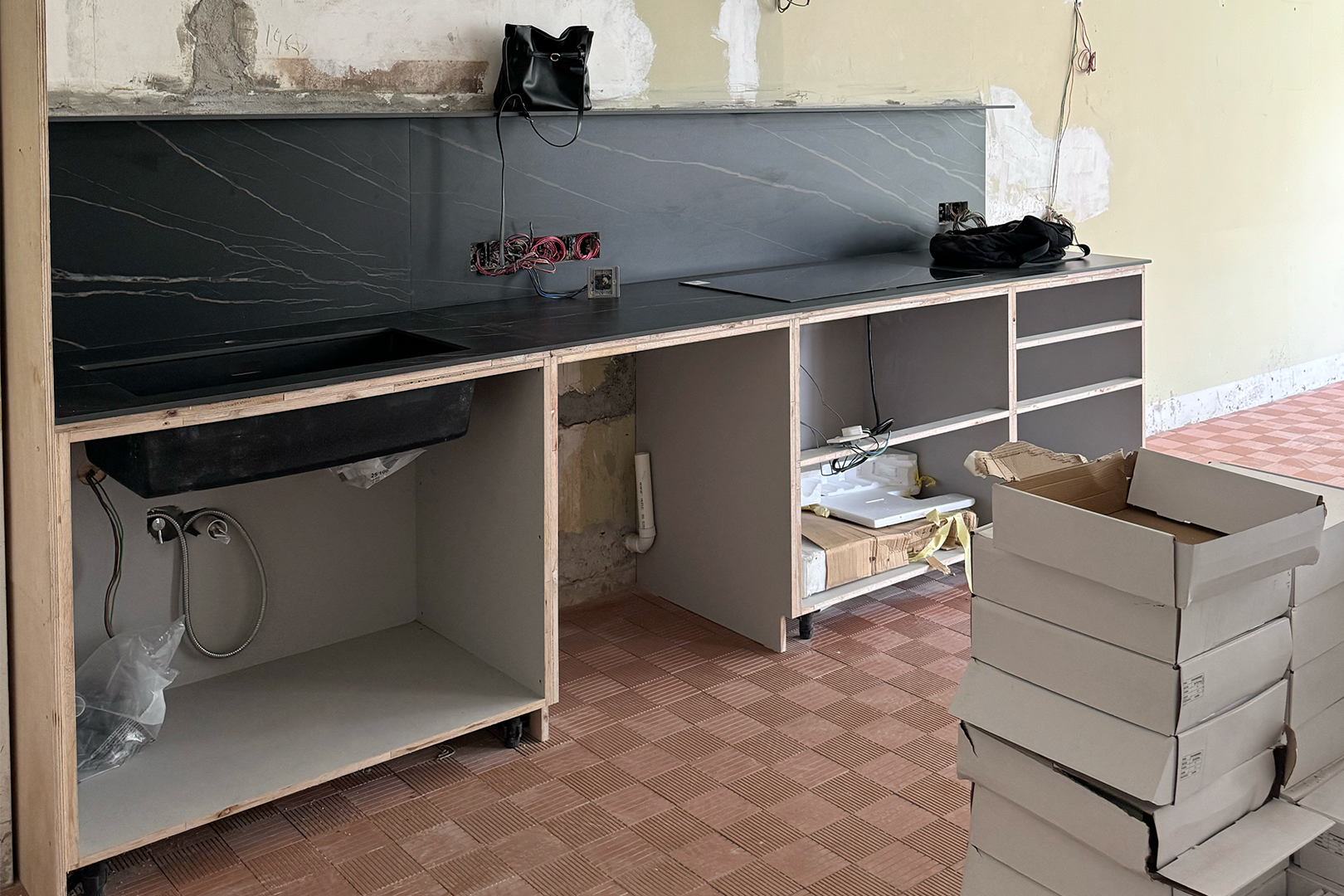
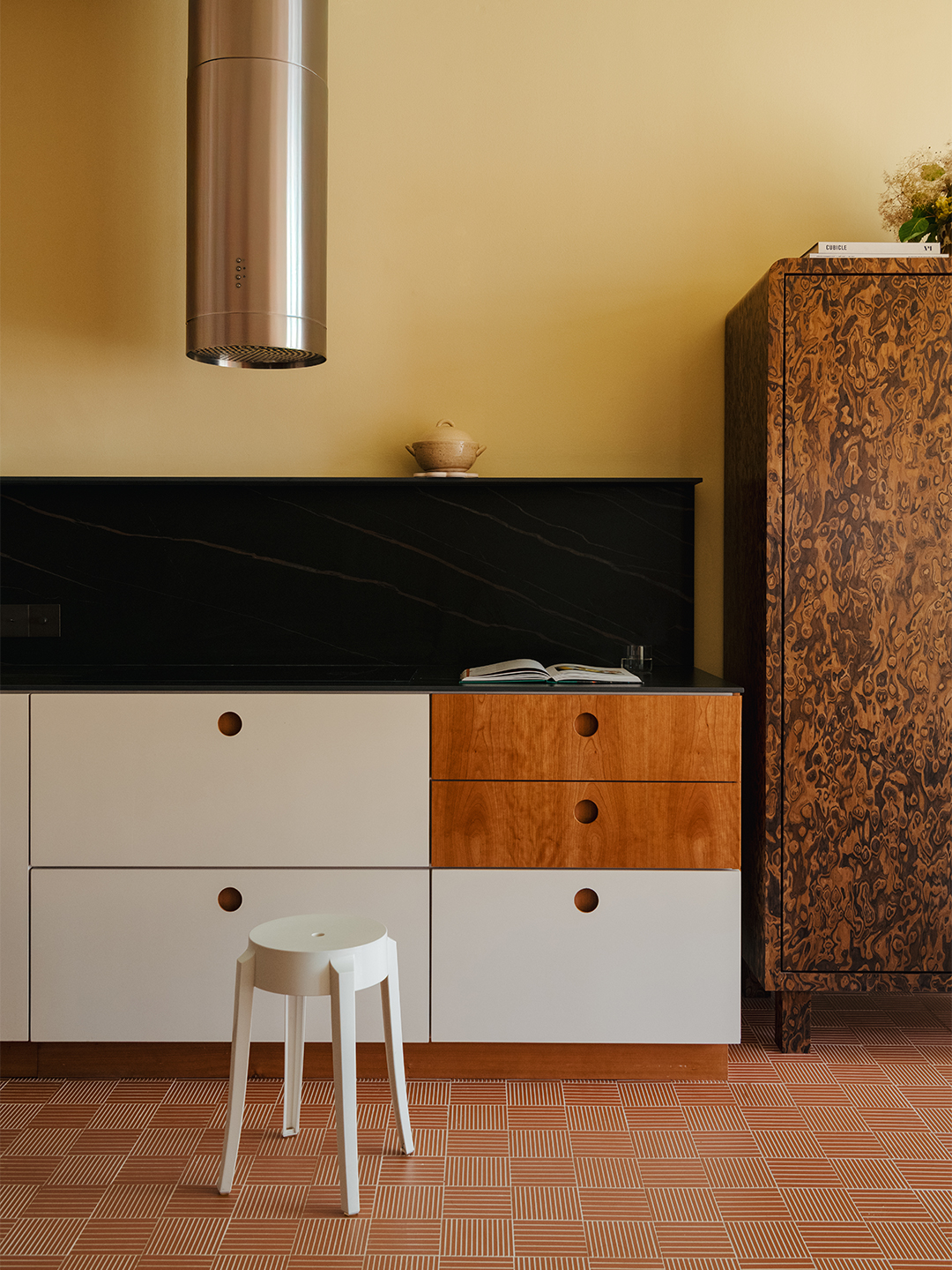
The star of the show is the kitchen, where the design team mixed midcentury nods with contemporary shapes. “I wanted the space to feel layered, like it had evolved over time,” she says. “A kitchen that doesn’t look ‘designed,’ but rather collected and warm with unique character.”
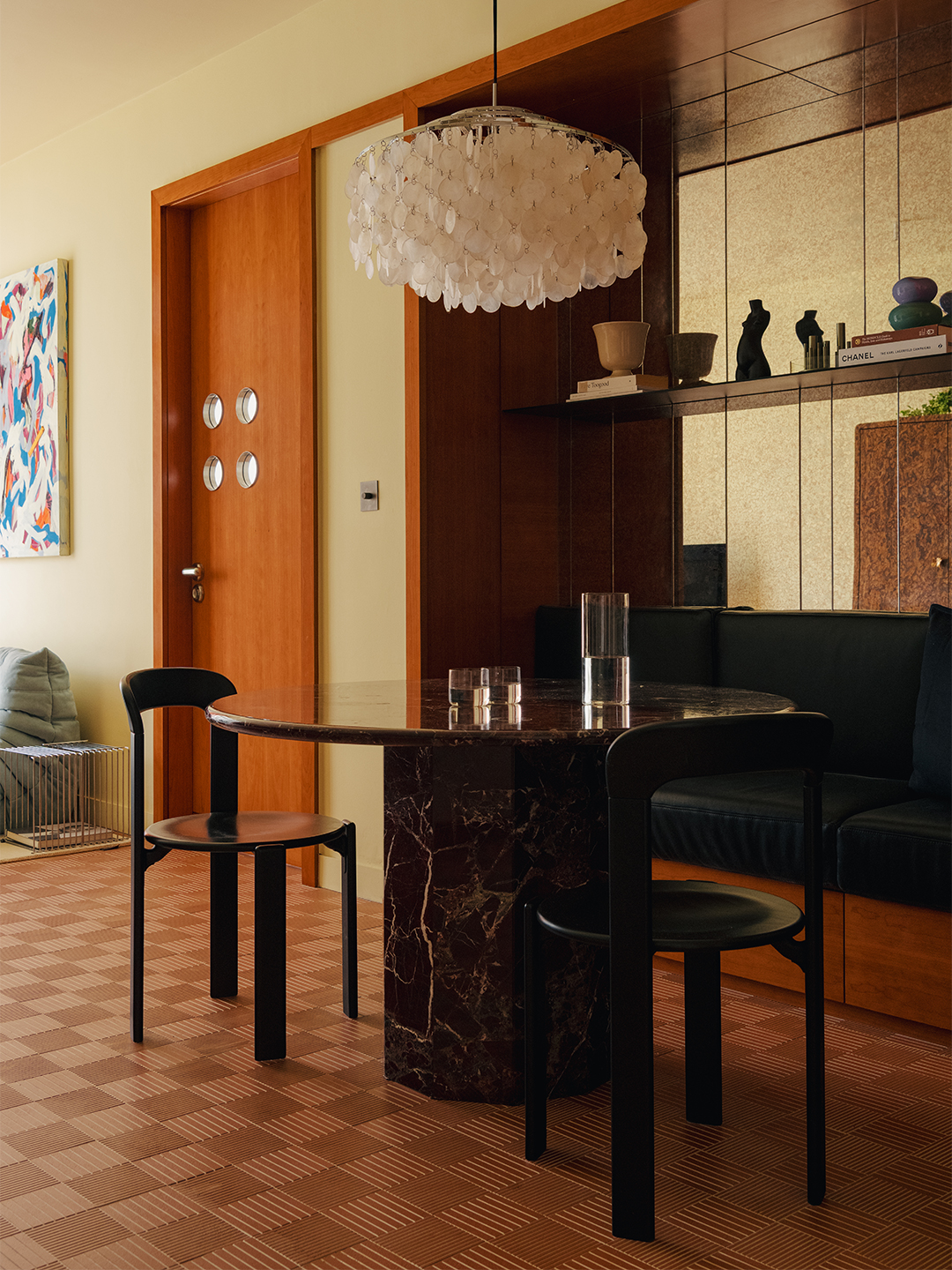
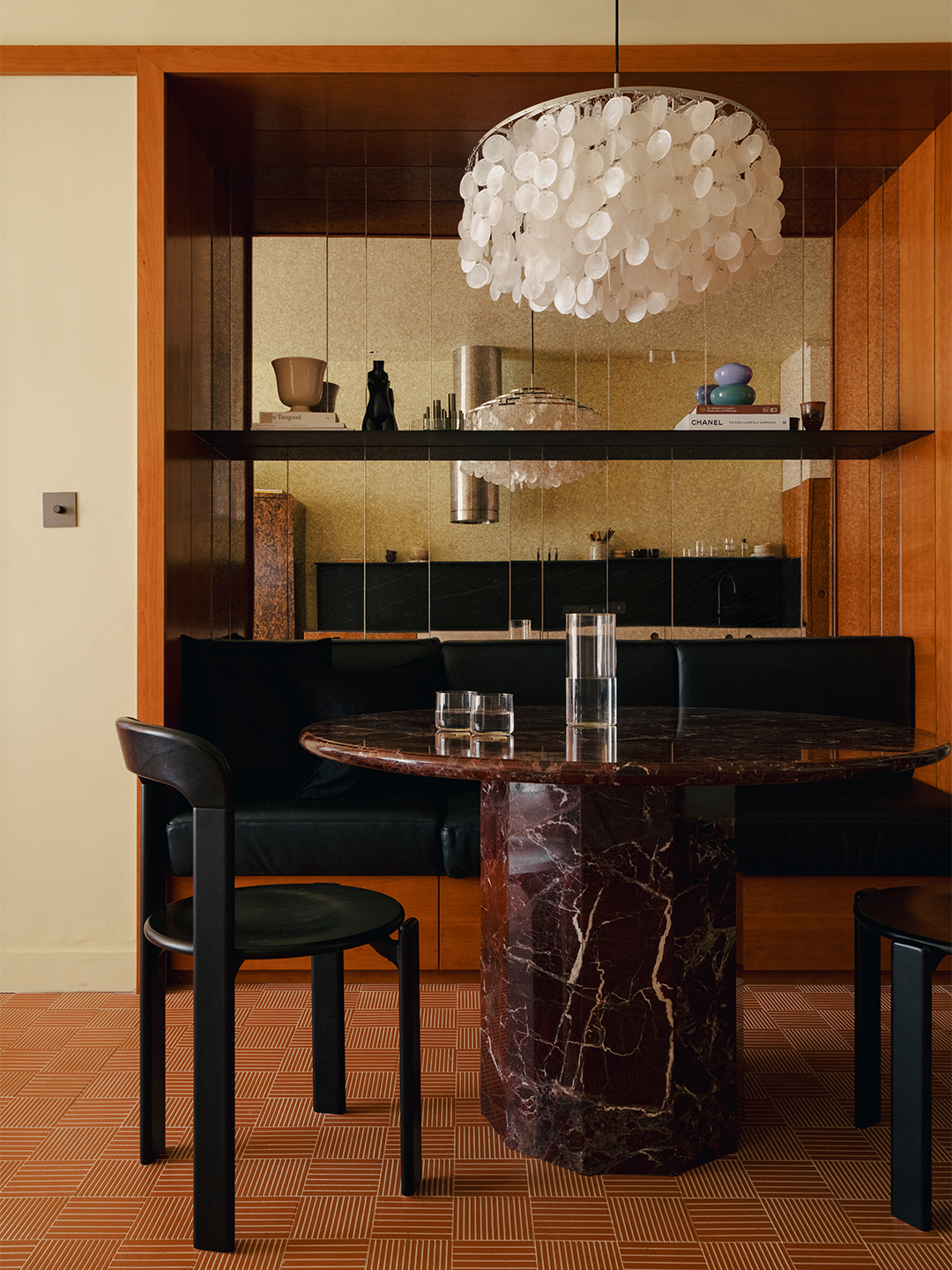
Gioh leaned into the unit’s separation and focused on thoughtfully zoning each space so that each felt intentional with its own mood. Even though no walls were knocked down, she defined the open concept kitchen by creating a dining nook that moonlights as a WFH perch.
She commissioned a custom round dining table to add “softness in a mostly linear layout” and matched its curves with a sculptural pendant by Verner Panton. The mirrored glass behind the nook makes the compact room feel twice as big (and delivers just the right hit of glam).
Curves keep showing up: A round stove hood softens the overall feel of the space. “The curve is subtle, breaks up all the straight lines, and brings a gentle rhythm to the space,” Gioh says.
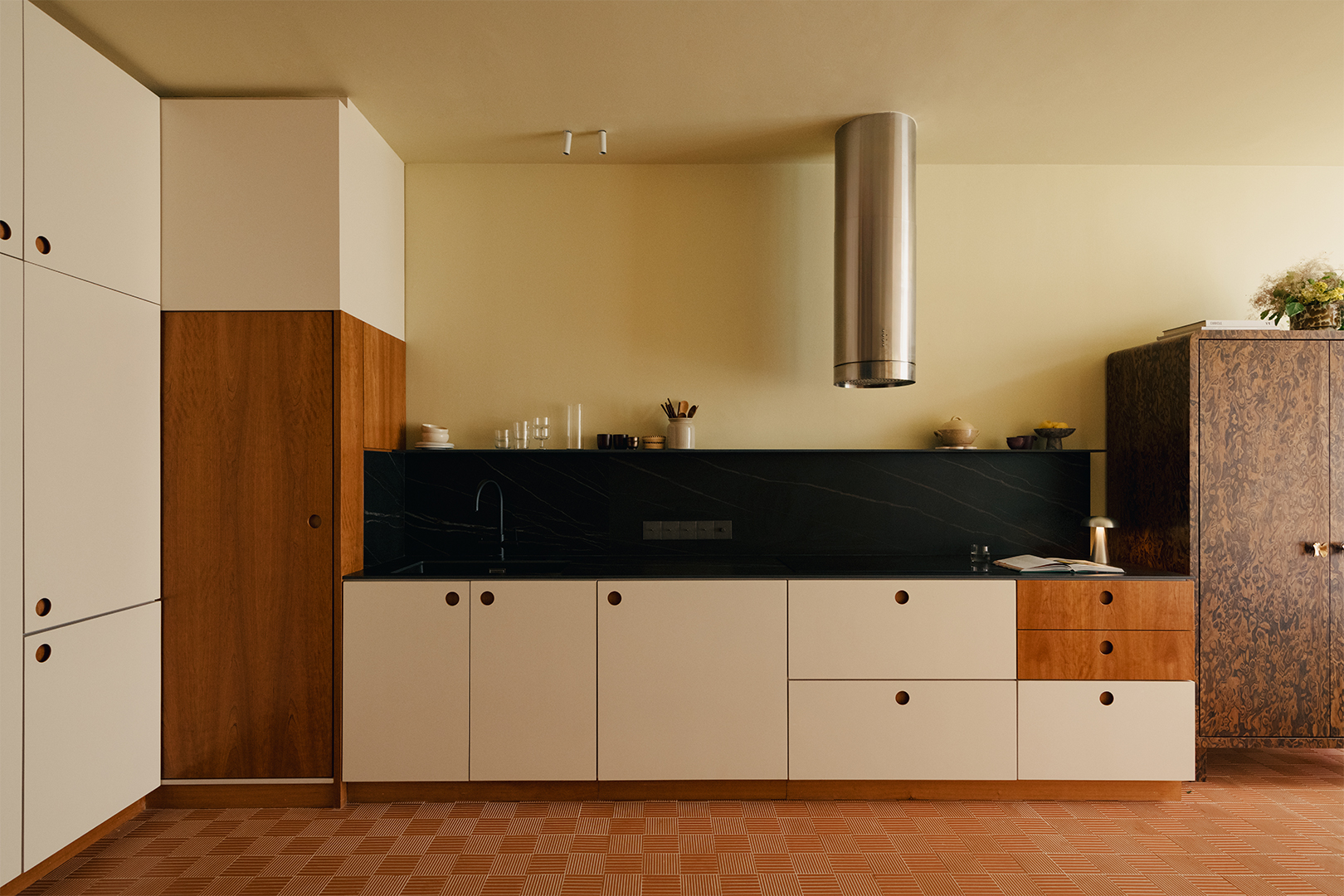
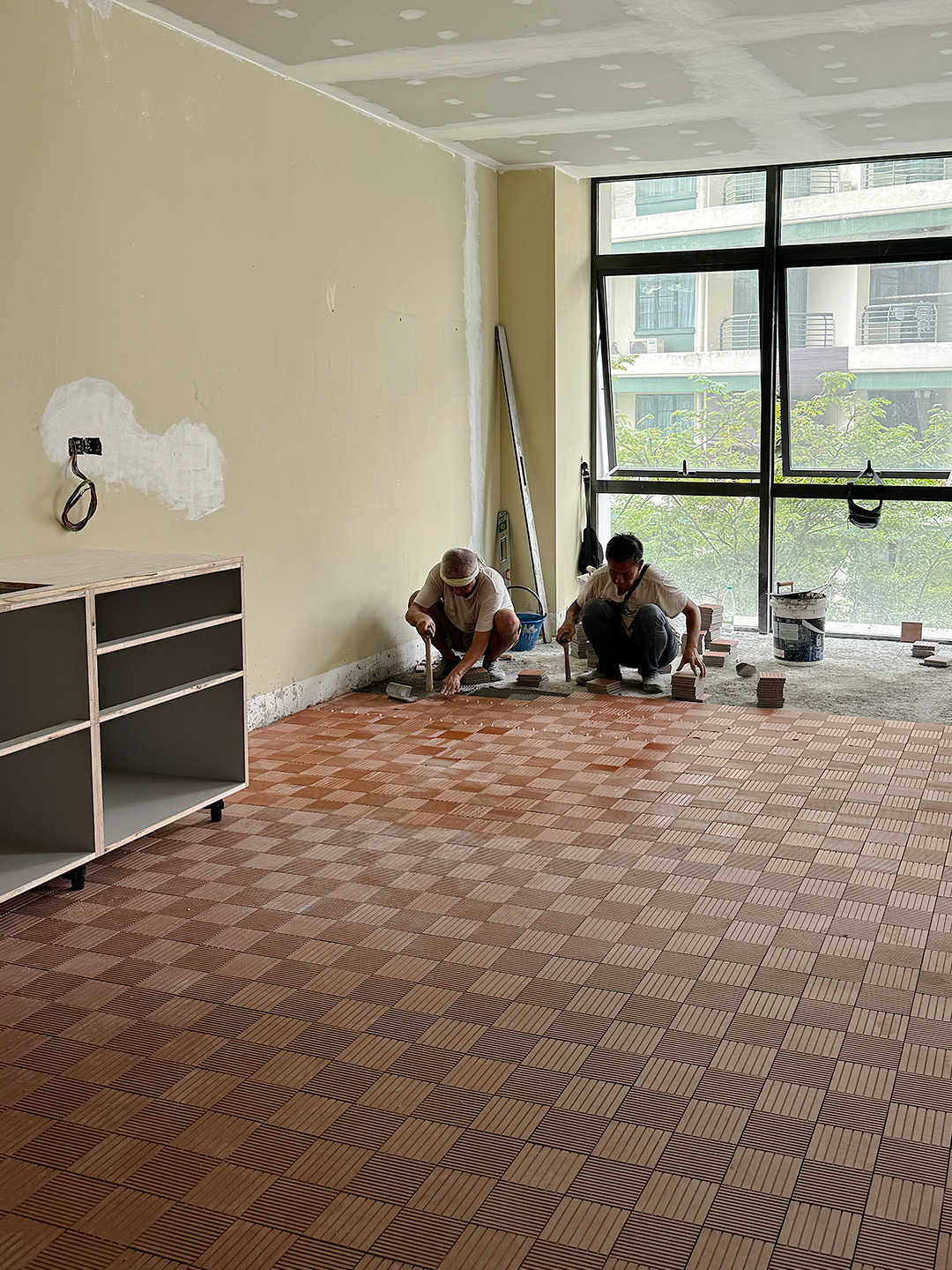
The creative director describes the Michael Anastassiades for Mutina floor tiles as a “highlight—and a modern take on brickwork.” They lend architectural dimension without overwhelming the rest of the design.
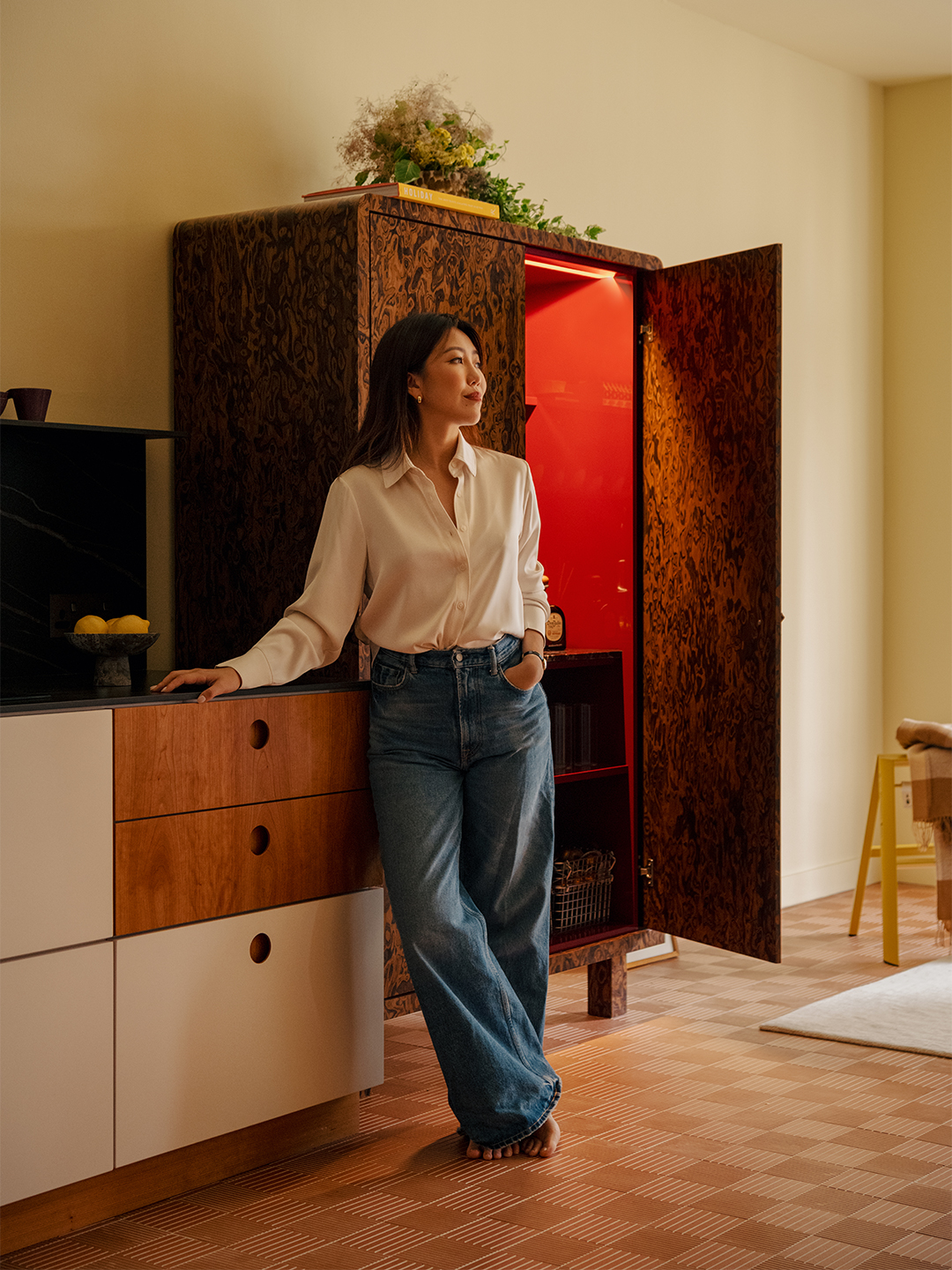
Then there’s the color. She complemented the floors with custom cabinetry in a barely-there pink, avoiding anything “too obvious,” like stark contrasts and black-and-white palettes. “I kept the paint colors quite neutral,” says Gioh. “The idea was to let the textures and materials, like the burl wood and tilework, take the spotlight. I wanted a backdrop that felt calm and cohesive, so the space could feel layered without being loud.”
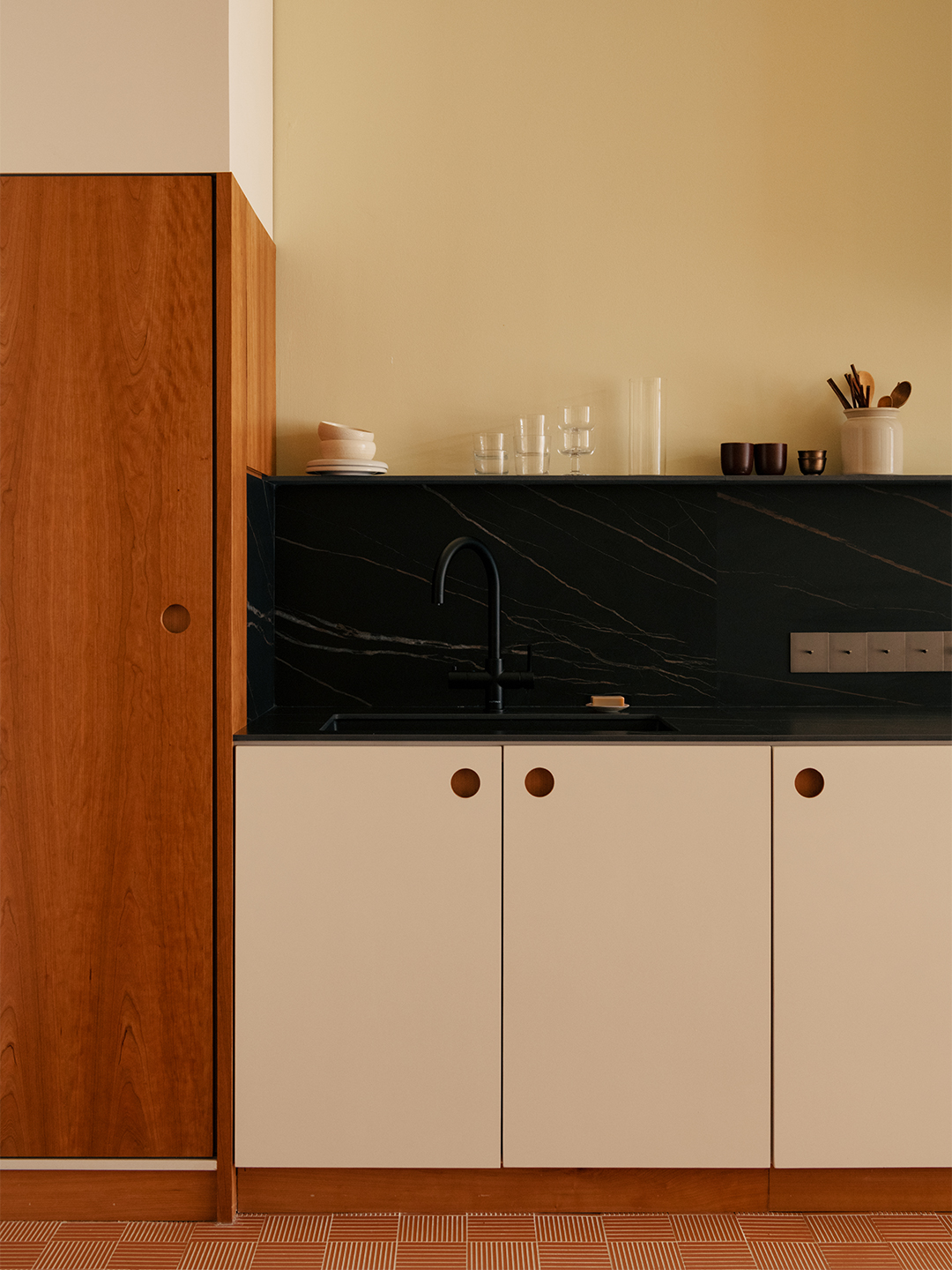
To that effect, she avoided any cabinet hardware. In a tight space, “repeating the same knobs or handles can quickly feel cluttered,” says Gioh. Going handleless kept the design clean and uninterrupted and let the materials take center stage instead.
Inspired by her grandmother’s “old kitchen cabinet, the kind you’d find in many traditional Chinese homes,” Gioh custom made a walnut burl wood curio to house her plate and decor collections. “I loved the idea of reinterpreting that memory in my own way,” she says. “While the material and shape are different, there’s still a sense of nostalgia behind it.”
Thanks to design choices that lean personal rather than conventional, “it all just works,” says Gioh. “It’s a space that doesn’t take itself too seriously. There’s definitely a sense of irreverence, but everything is considered.” The result? A space that’s subtle and statement-making at the same time.