We may earn revenue from the products available on this page and participate in affiliate programs.
Honi Roberts made a promise to the previous owner of her little cottage in Brisbane, Australia: She wouldn’t tear it down. In a neighborhood where demolishing old homes is common, preserving this one’s character felt important. But then again, so did connecting the house to yard and brightening up the dark interior; it had little relationship to the lush outdoor spaces Roberts imagined creating.
So rather than embarking on major overhaul, Roberts tapped architect Rebecca Caldwell of Maytree Studios to build a small addition, prioritizing light, views, and outdoor living. This way, Roberts could preserve as much green space as possible while still completely transforming how the property feels.
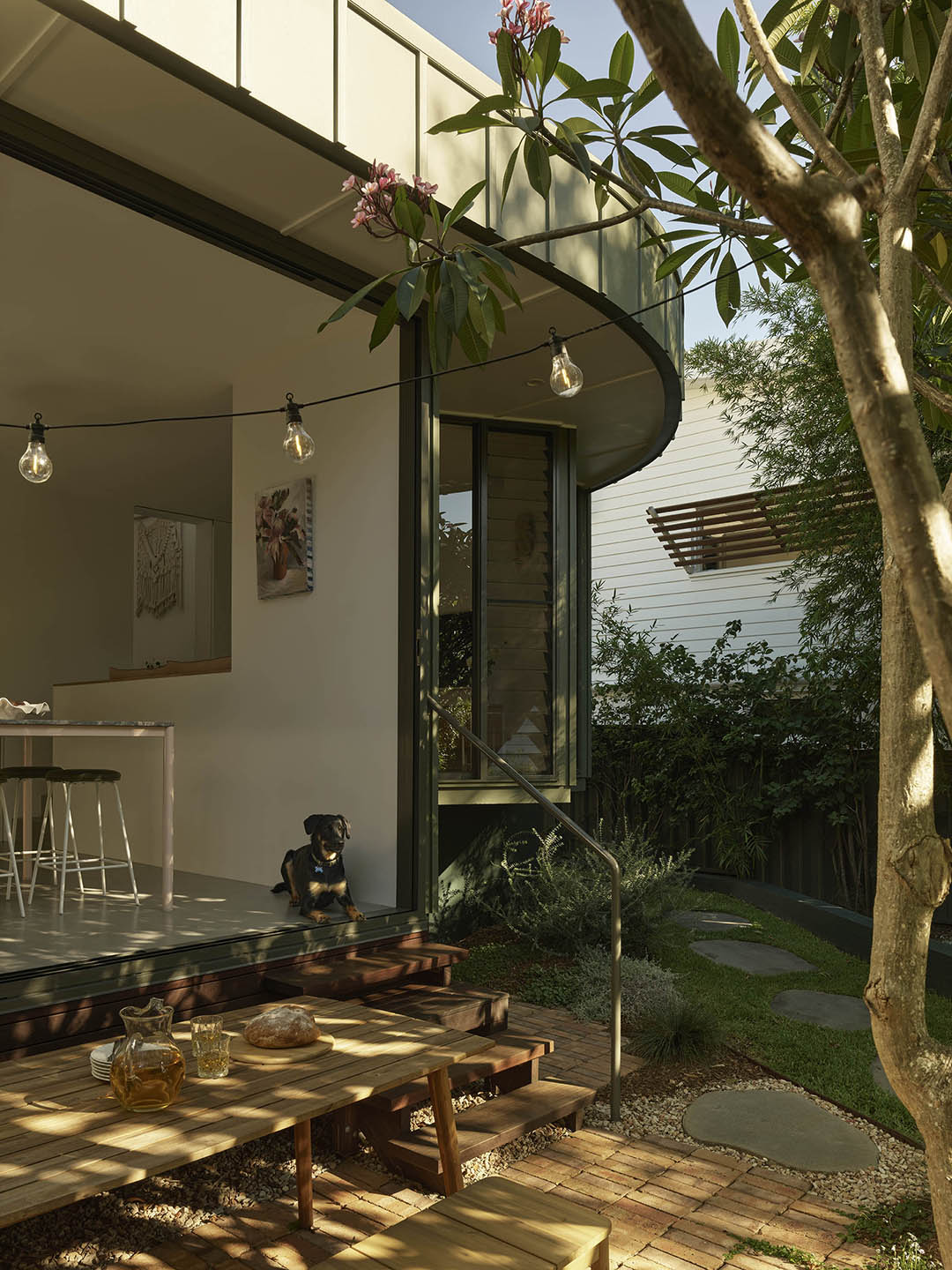
Today, the backyard isn’t something viewed from afar—it’s woven into Roberts’s everyday routine, whether she’s having breakfast on the back steps with her dog or entertaining friends beneath the frangipani tree. Here’s how it happened.
Taking Baby Steps—Literally
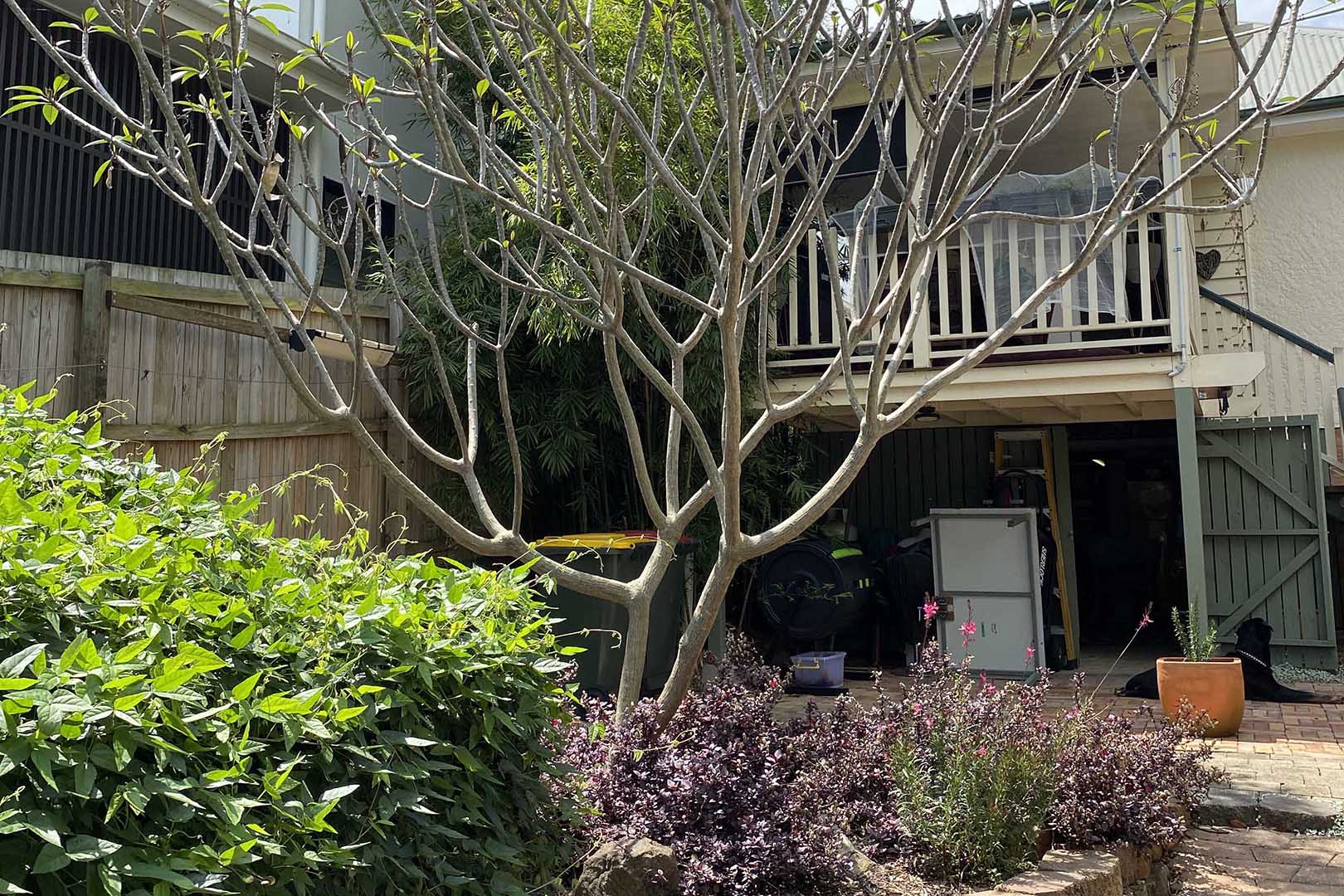
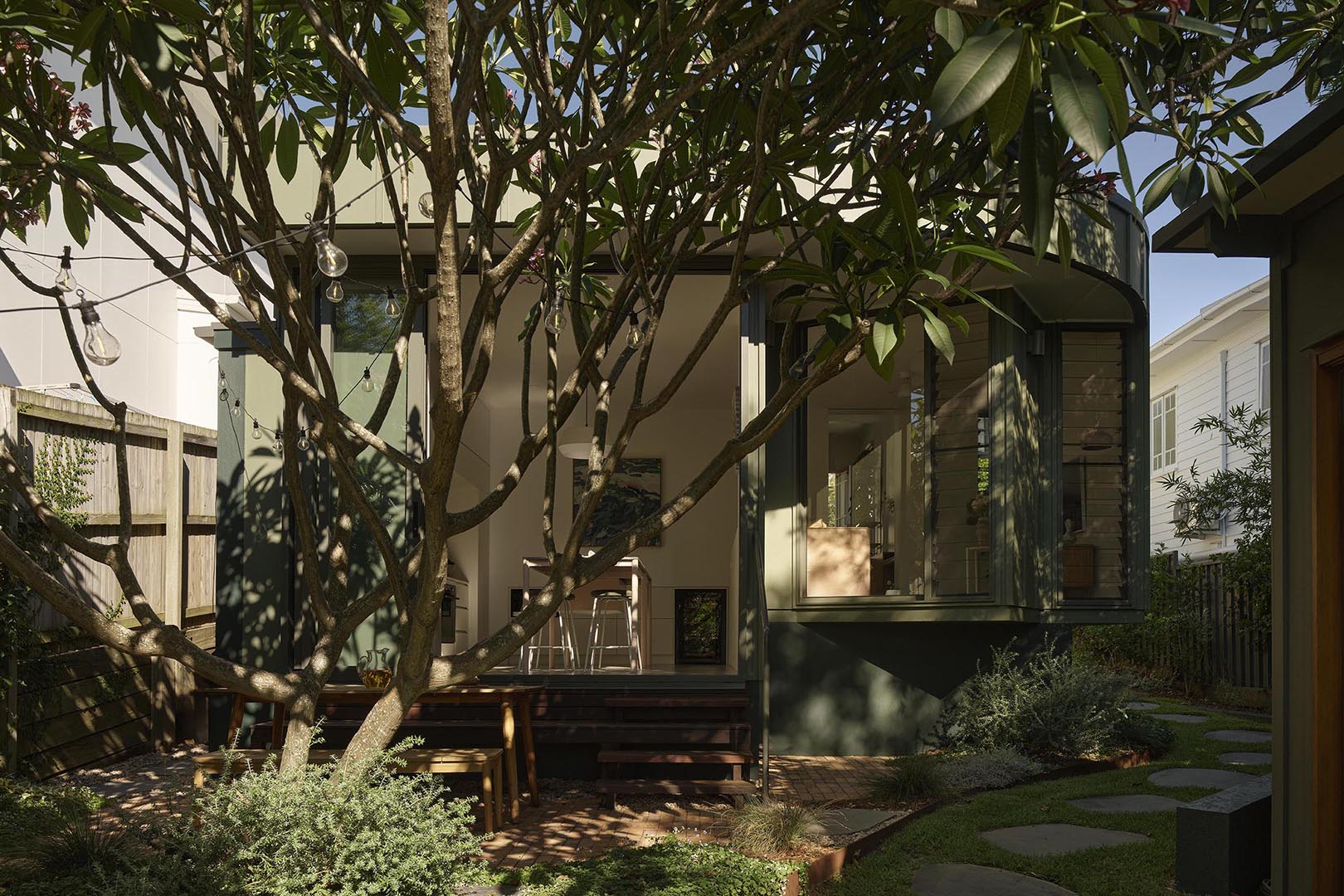
One of the biggest challenges: a full flight of stairs separated the house from the outdoor space; a small rear door opened onto an elevated deck. The design team got to work reviving the relationship between the two. With a terraced patio, they were able to reduce the transition to just a handful of steps while also creating a designated area for Roberts to sit and enjoy the garden.
Instead of Removing a Tree, Working Around It
A large, in-the-way tree could be seen as another obstacle, but here, the opposite was true. A mature frangipani became the project’s organizing feature, determining how far the addition could extend, orienting windows (it became a focal point from inside the house), and anchoring the shady outdoor lounge area.
Honoring the Front, But Modernizing the Back
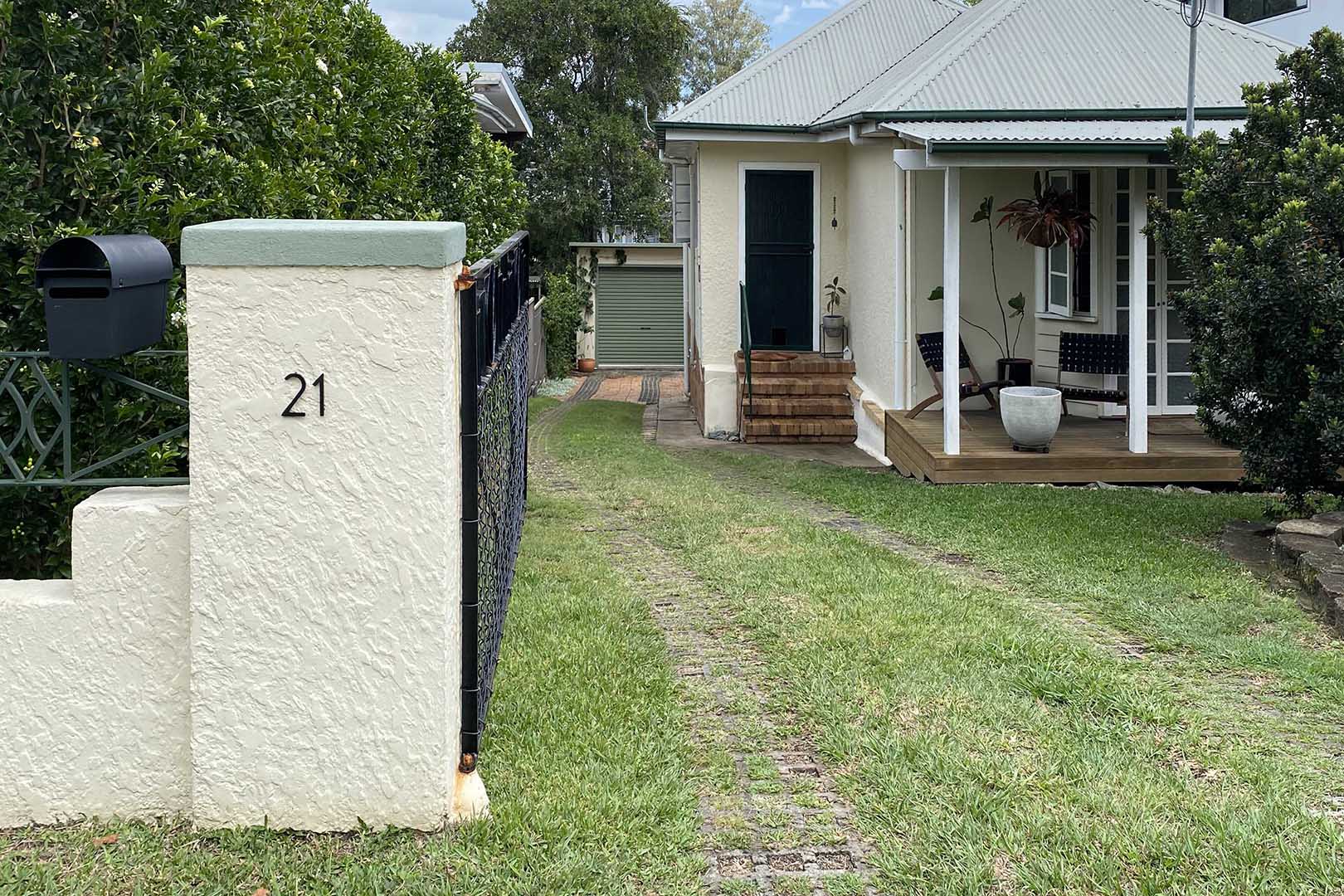
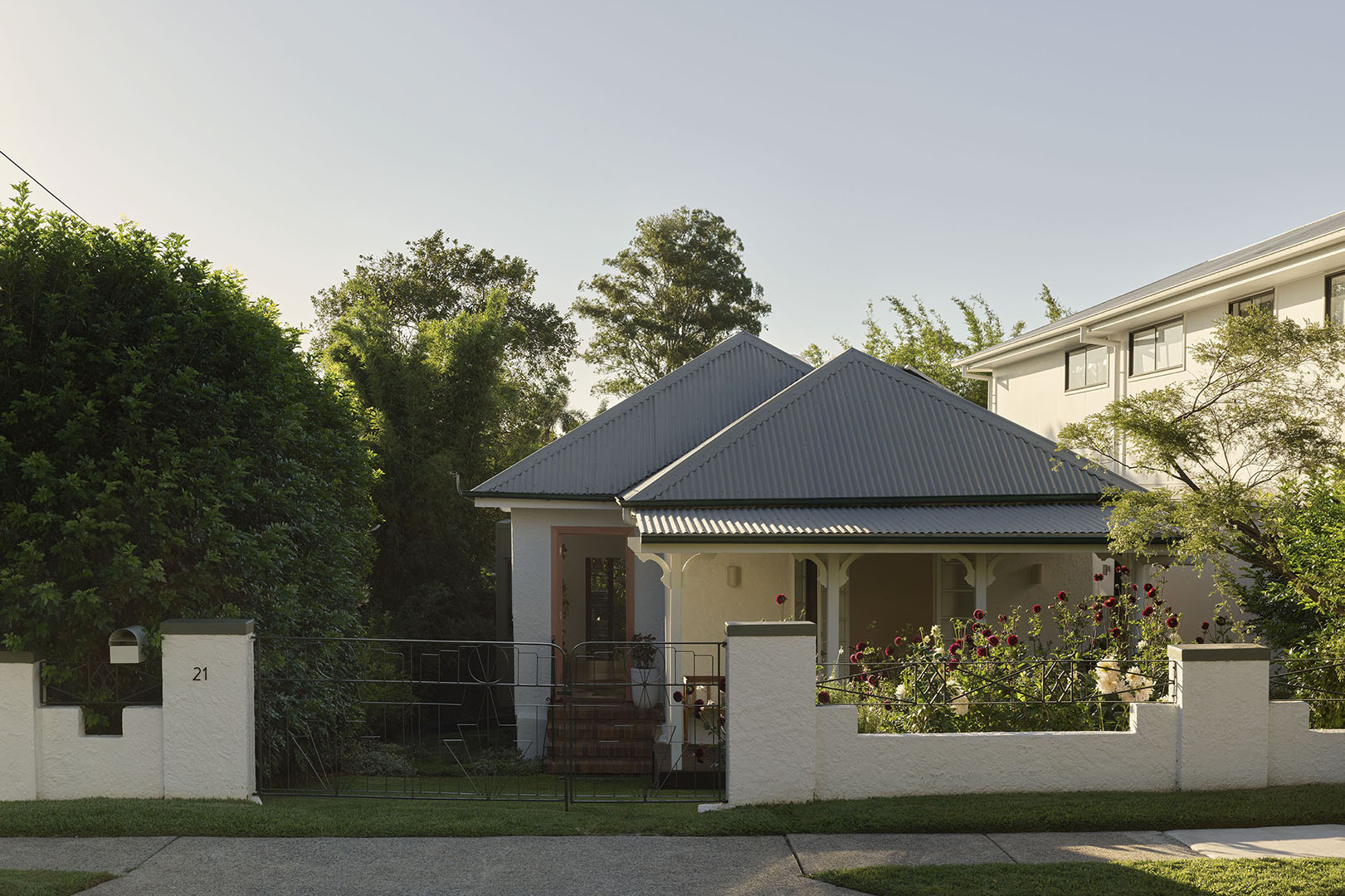
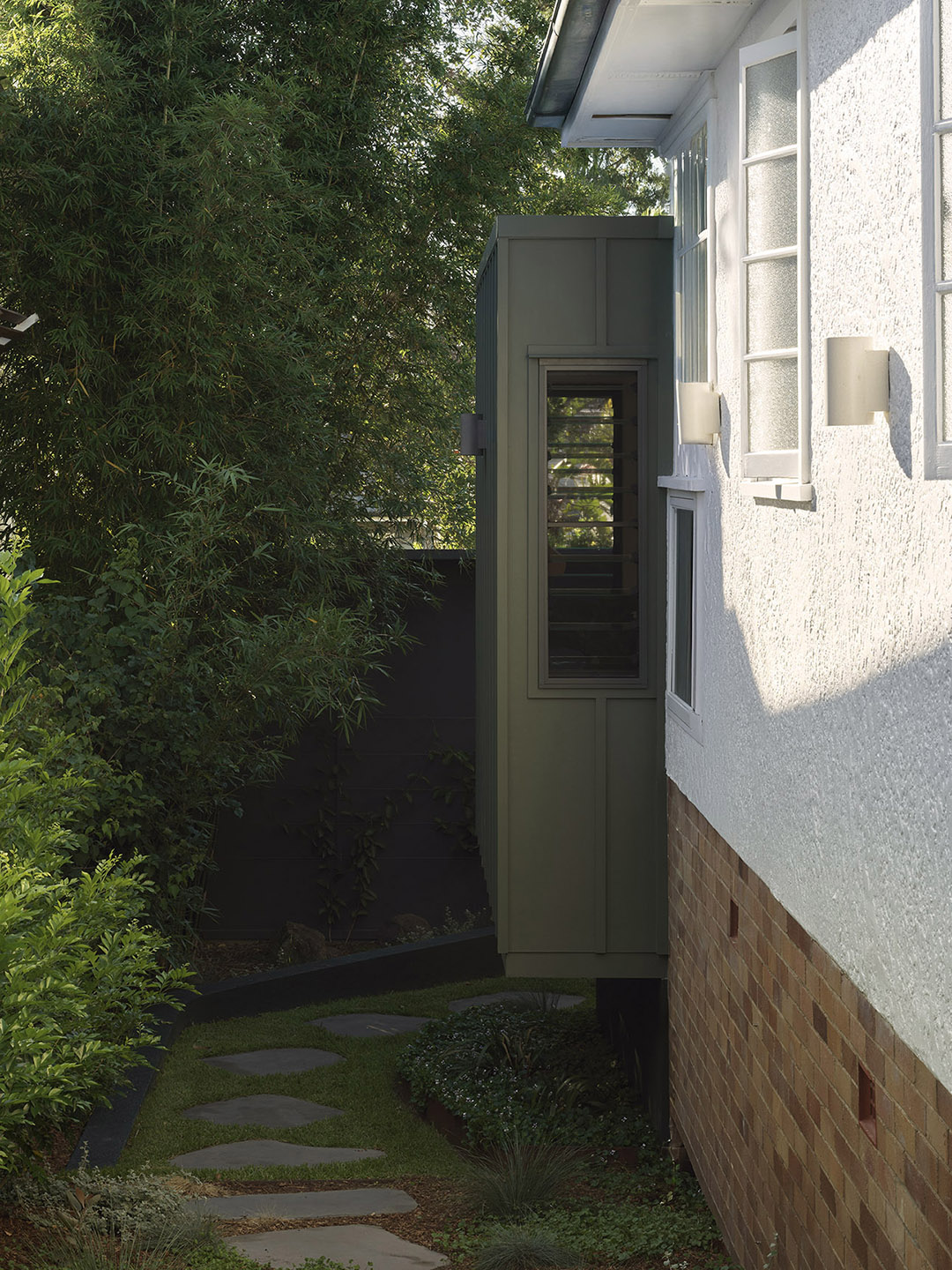
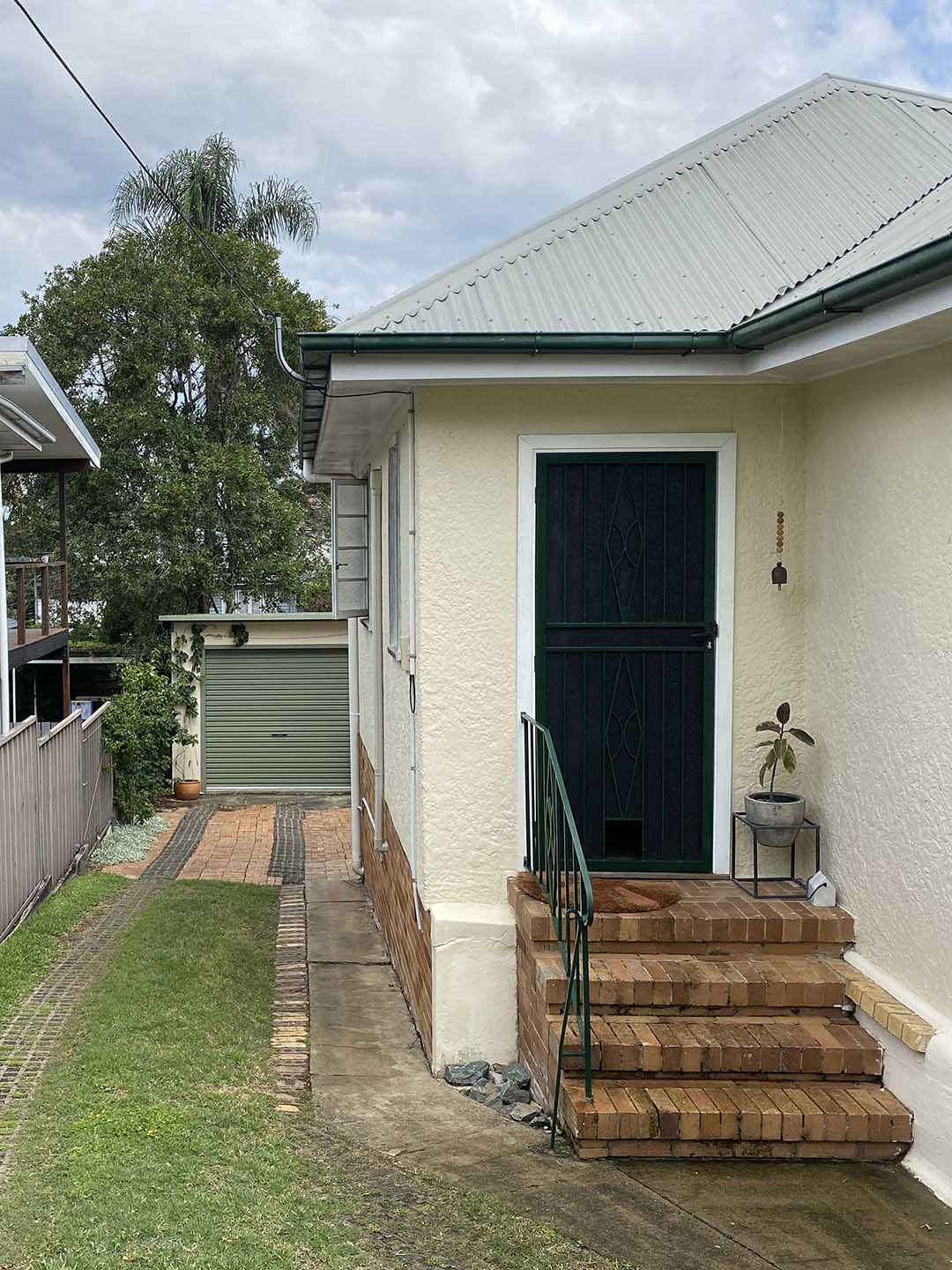
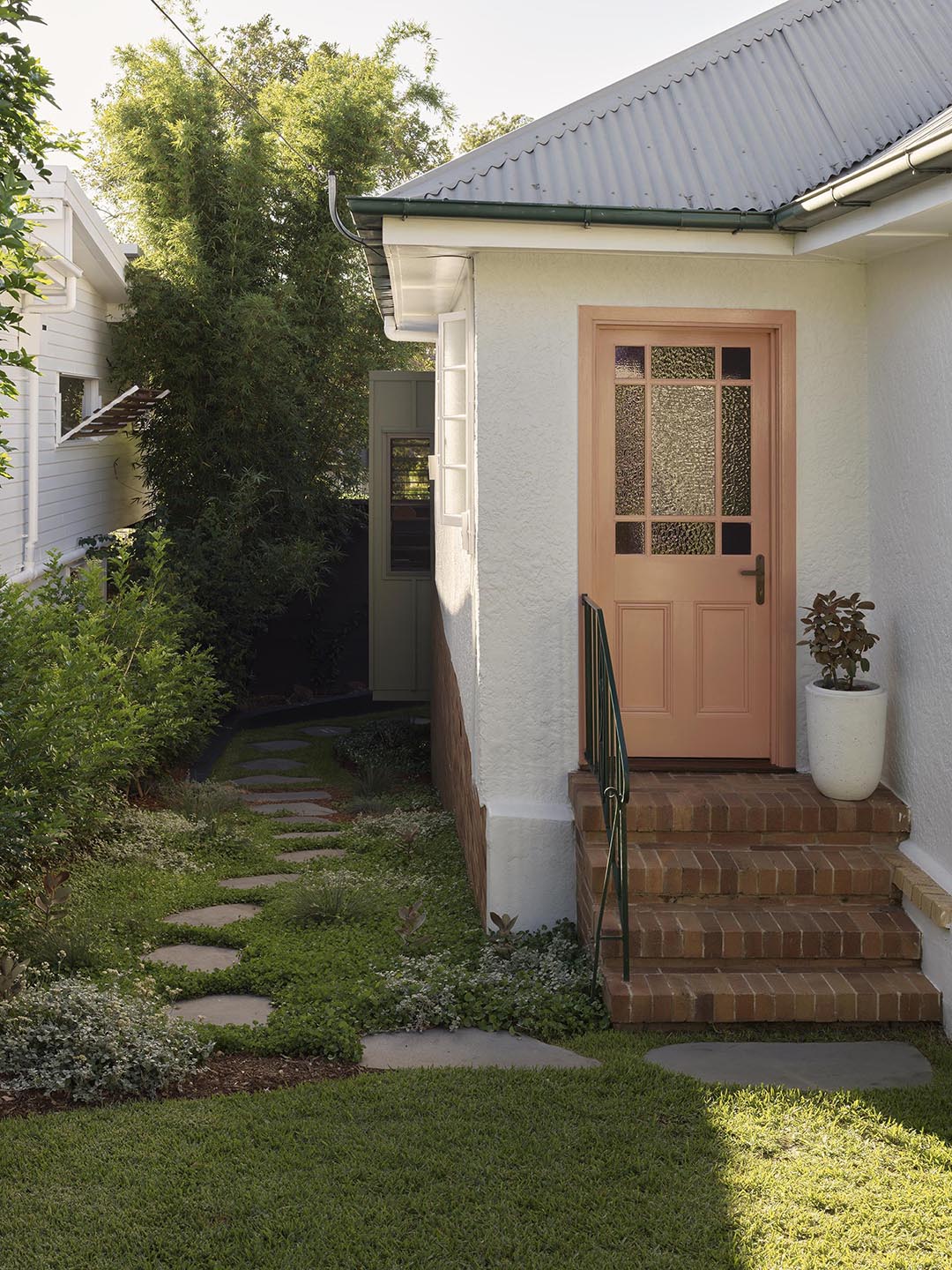
Roberts preserved the home’s original porch, as well as the stucco detailing around the bay window, adding decorative brackets to the columns to reinforce the cottage look from the street. You’d never guess that the rear has an entirely different personality, with a curved roofline, angular windows, and olive green facade that create a clear distinction between old and new.
Using the Existing Garden Lines to Inspired the New
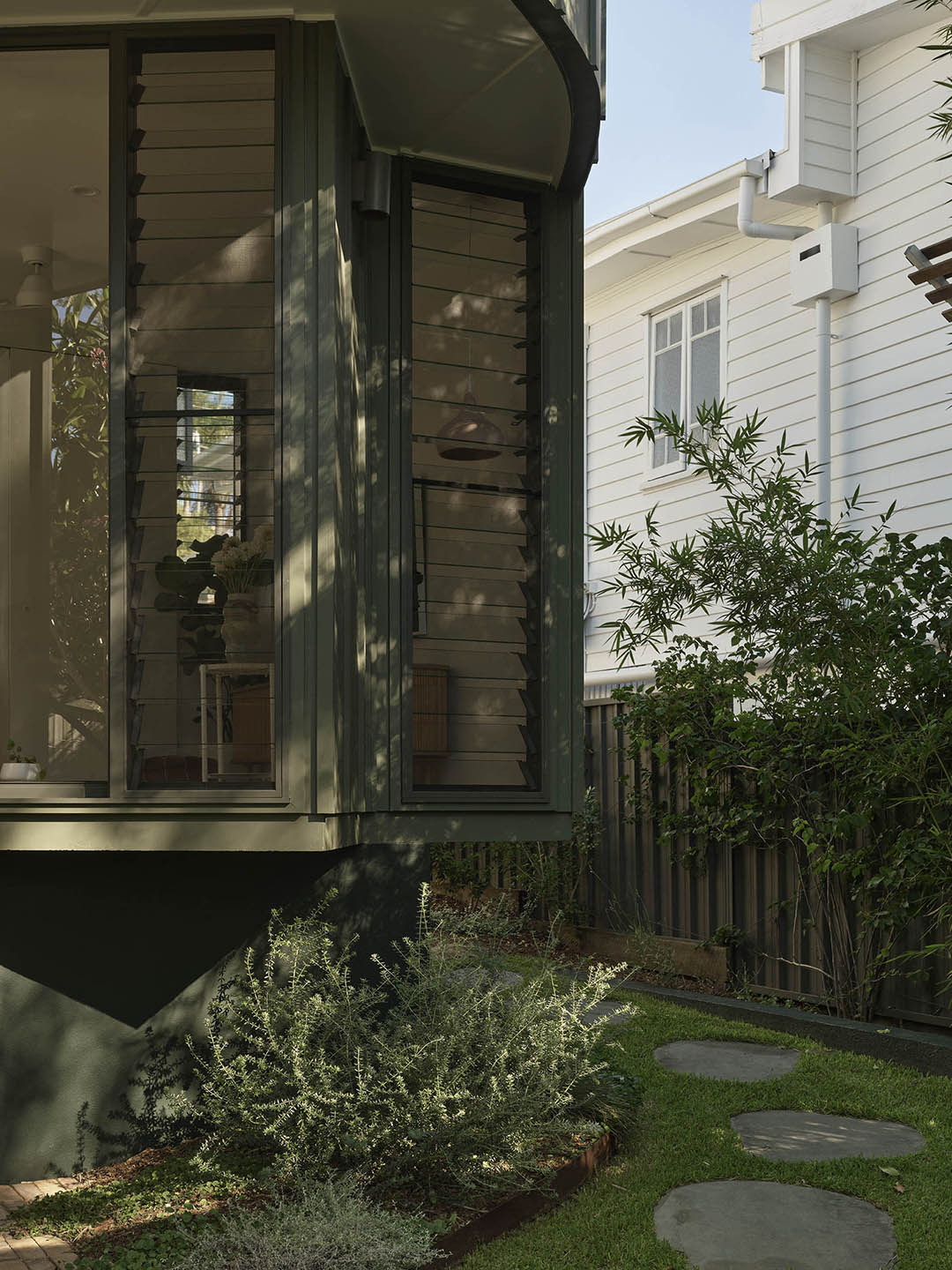
When Roberts bought the property, the yard already featured numerous curved garden beds. Instead of starting over, she kept their meandering shapes but framed them in modern corten-steel edging. The architecture of the addition now mirrors the curves, creating the impression that the landscape wraps around the home.
Designing the Garden for the Future
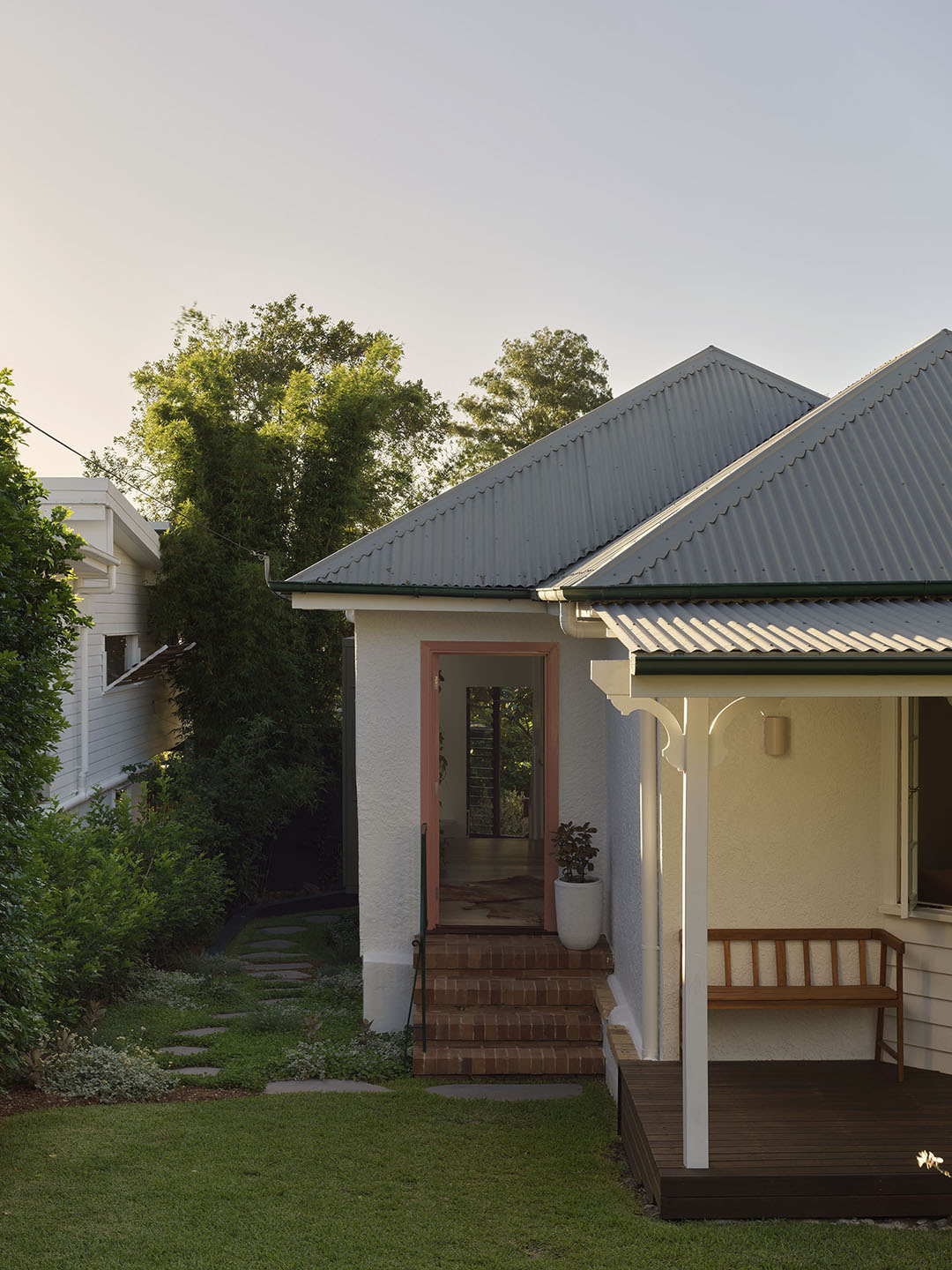
While the architecture is the framework, the planting scheme is what really brings the property to life. Roberts filled the front garden with burgundy and peach dahlias that bloom from spring through fall, then layered in camellias to ensure flowers would be present even in winter. Privacy hedges, climbing vines, fruit trees, and low-maintenance ground cover further soften the hardscape—and only get more lush as the years go by.