
We may earn revenue from the products available on this page and participate in affiliate programs.
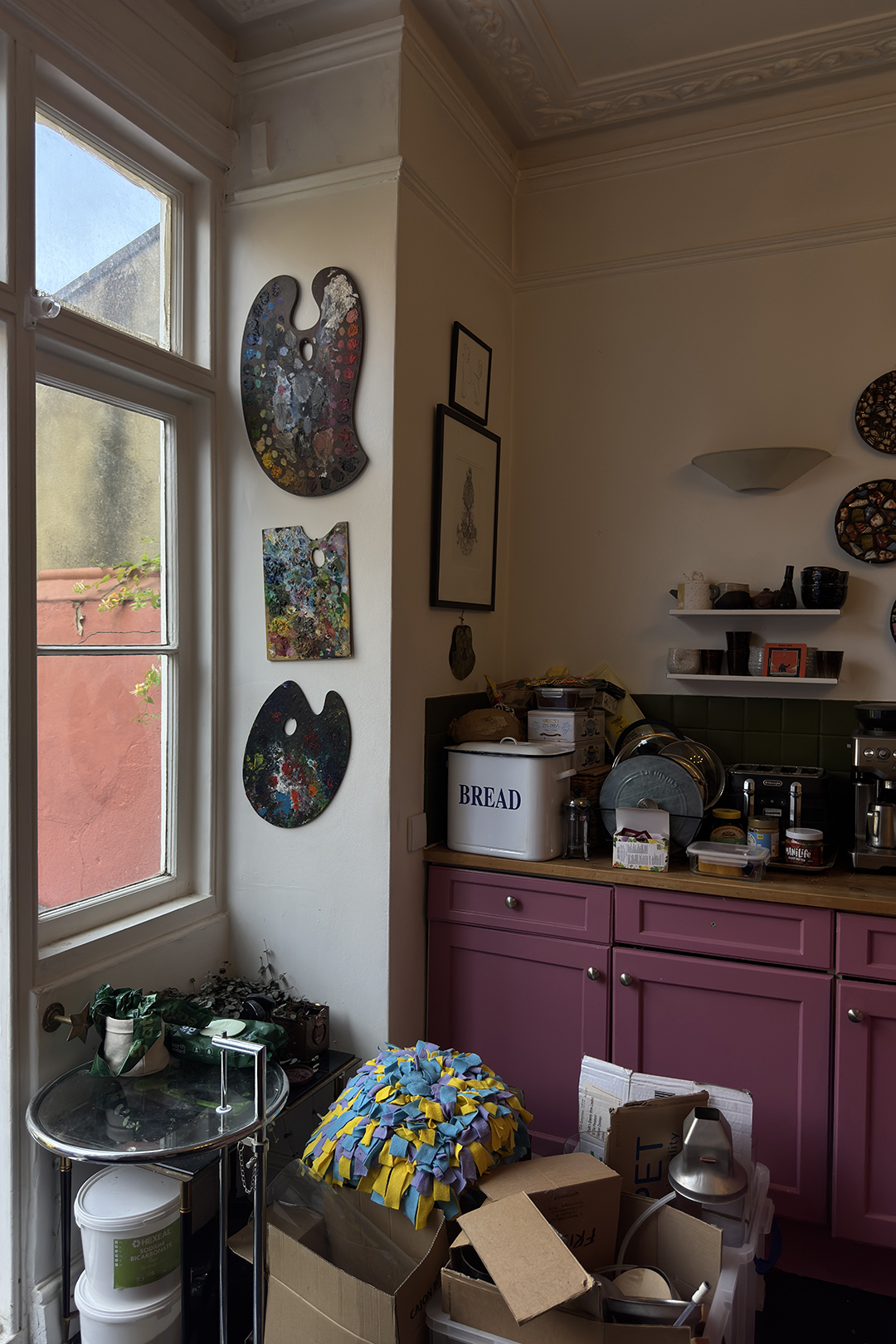
Emily Pun’s clients told her they never went into the kitchen of their London home. “It was clunky, it wasn’t really functional,” says the founder of Den, a full-service design and project management firm in the UK. “The wife, Helen, is neurodivergent, so she wanted to make it more purposeful for the way that she would like to use it.” A full revision was in order, so Pun went deep on how to make the space work architecturally before honoring the client’s refreshingly eclectic taste with the decor.
Foremost was Pun’s decision to scrap the old kitchen’s dated peninsula in favor of an open room with runs of cabinetry and appliances on either side, an extra-wide galley layout. With careful spatial planning, she was able to add an in-room dining area, additional storage, and even a washer/dryer, which freed up space to turn a nearby utility room into a powder room. Much of the room’s magic comes from features you can’t see: underfloor heating, acoustic buffers, and insulation. Here are five features that defined this renovation, and how Den executed it with her client’s needs first.
Recessed Range and Cabinetry
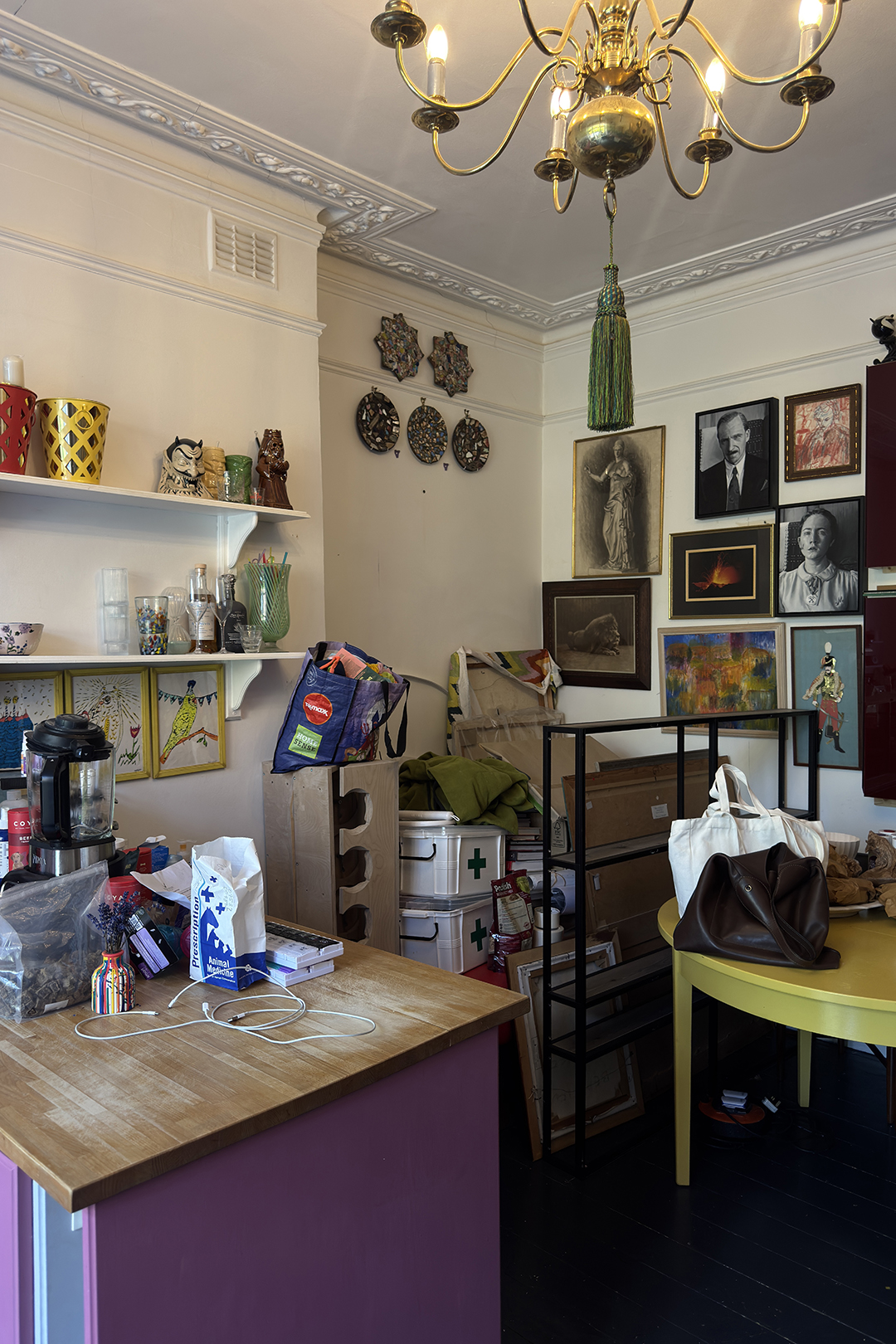
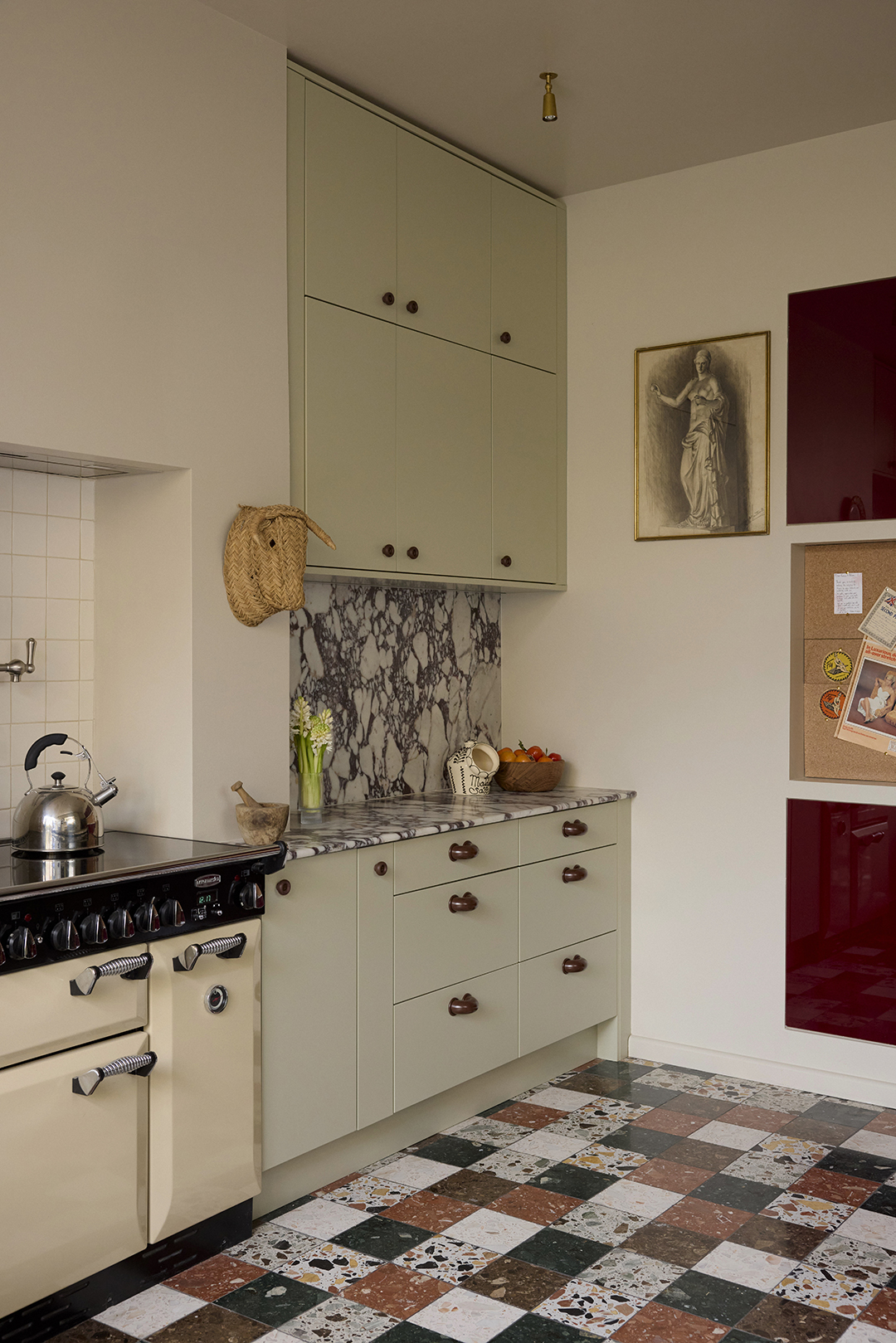
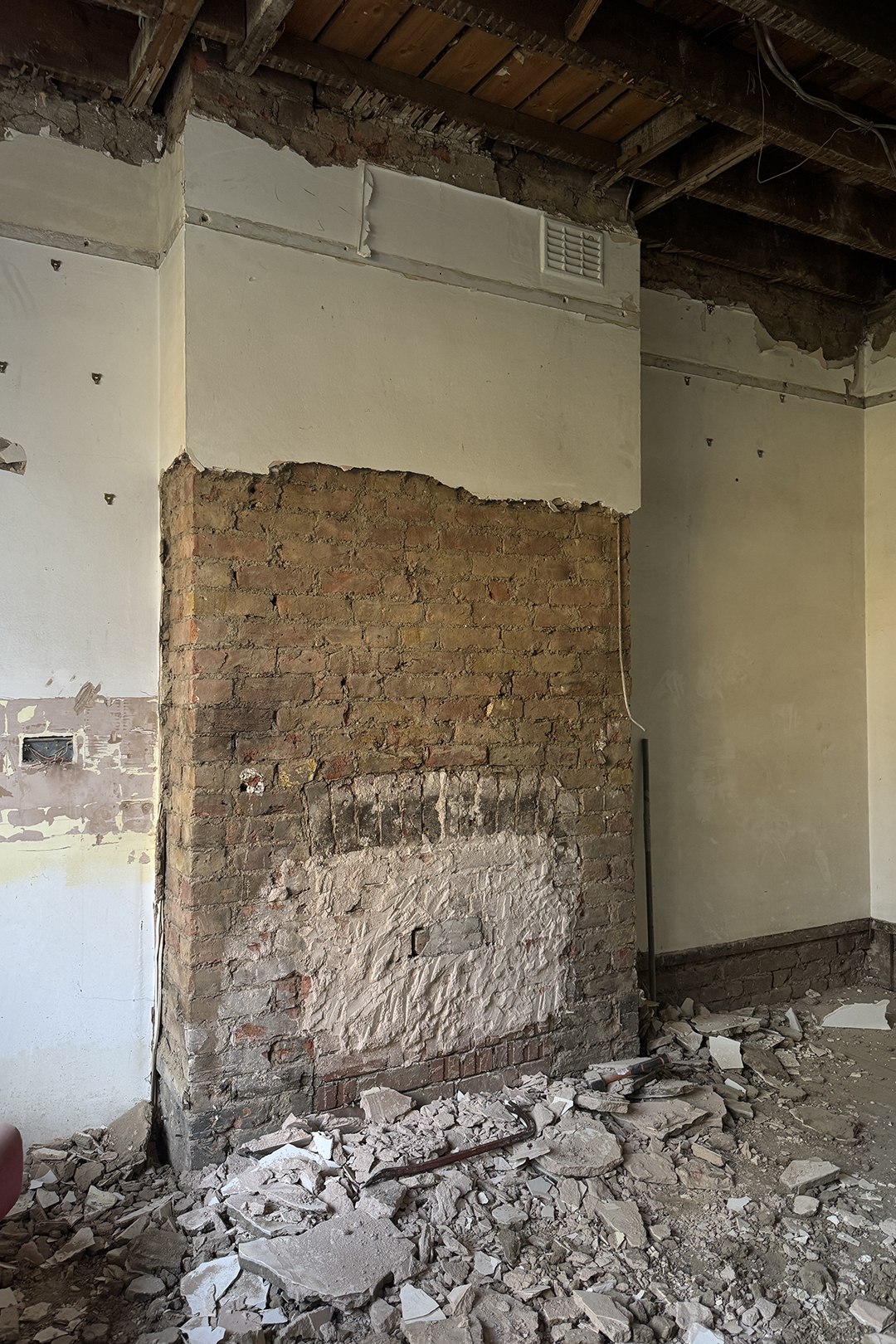
With any project Pun says function comes first, but especially in this case. “My client very much wanted to have a home for everything,” she says. “We wanted it to be more user-friendly for her to navigate on a day-to-day basis.” Pun meticulously planned where each of her client’s possessions could go and used every inch that was available to her. For example, by removing the peninsula and exposing the niche in the old chimney, Pun was able to tuck the cooking range into the recessed space; then, she made use of the sides of the chimney with half-depth cabinets that hold spices.
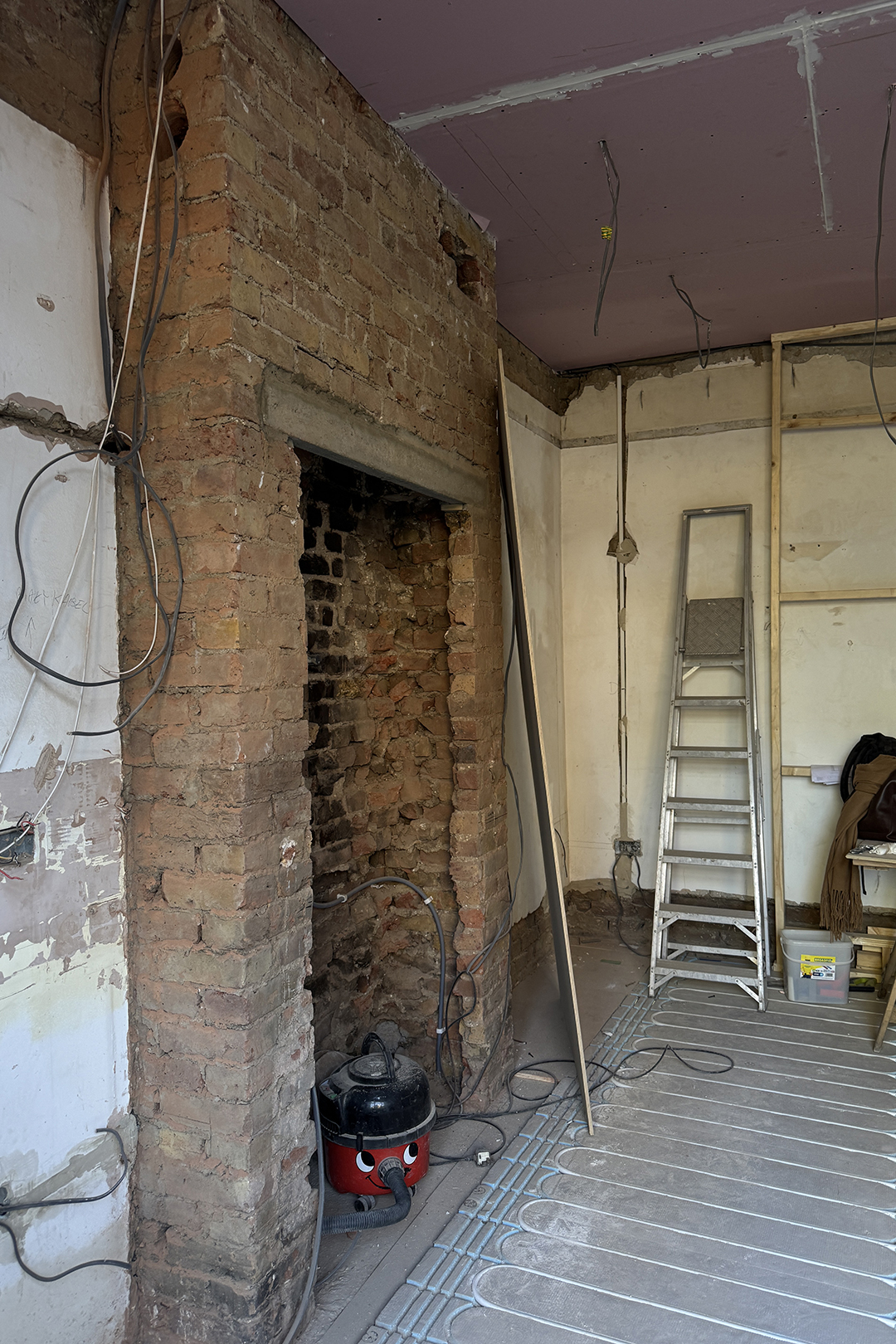
The kitchen had felt so cramped beforehand that her clients wanted to live with the new layout as-is before deciding if they would like to get a kitchen island. Pun has recommended one on wheels, for maximum flexibility, if so. Meantime, there’s plenty of perimeter storage with all the new cabinets.
Heated Terrazzo Flooring
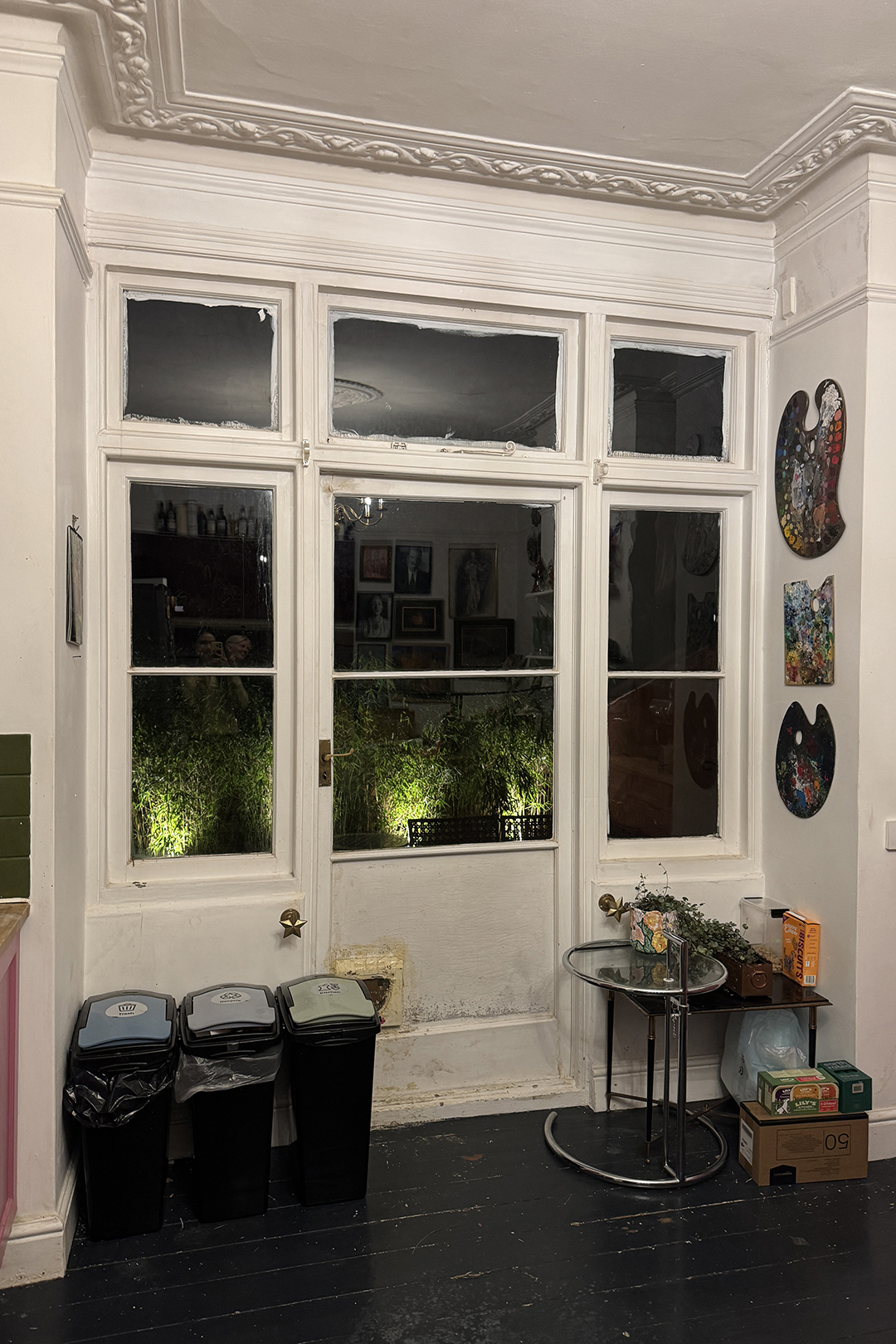
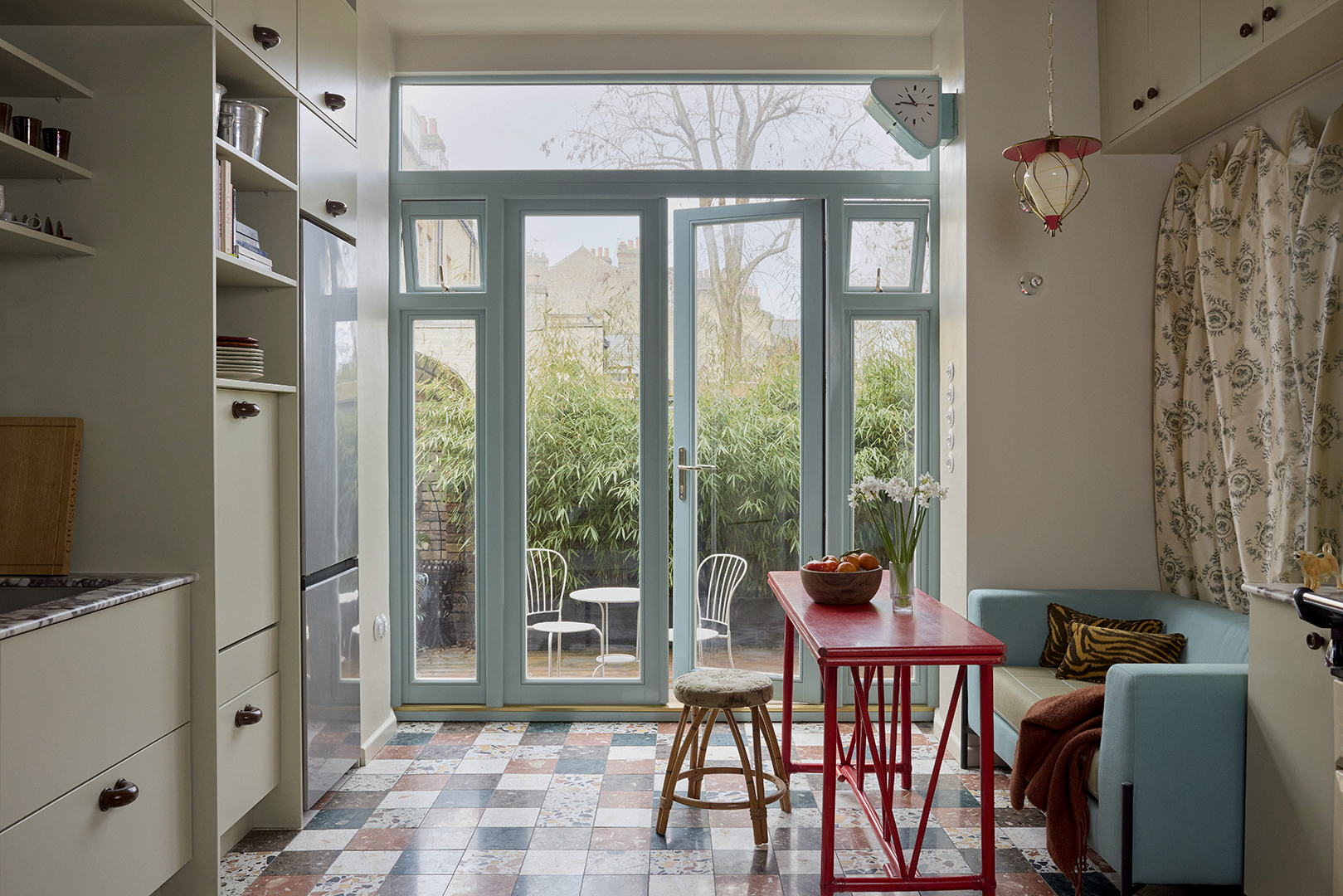
Helen has a deep love of terrazzo, so Pun decided to use it for the floor. She convinced a supplier to give her five different variations of terrazzo and cut the larger slabs down to 60-centimenter square tiles; then, she plotted out where each one would go, numbering each position. “The contractor hated me but loved it in the end,” she laughs. Underneath, they installed radiant flooring so the naturally cool surface would always be warm, a balm in drizzly London.
Many of the other design choices, including colors and materials all related back to the colors embedded in the floor tiles. The lesson: Having a strong element as an anchor can make the rest of the design decisions easier.
Macaroni Handles
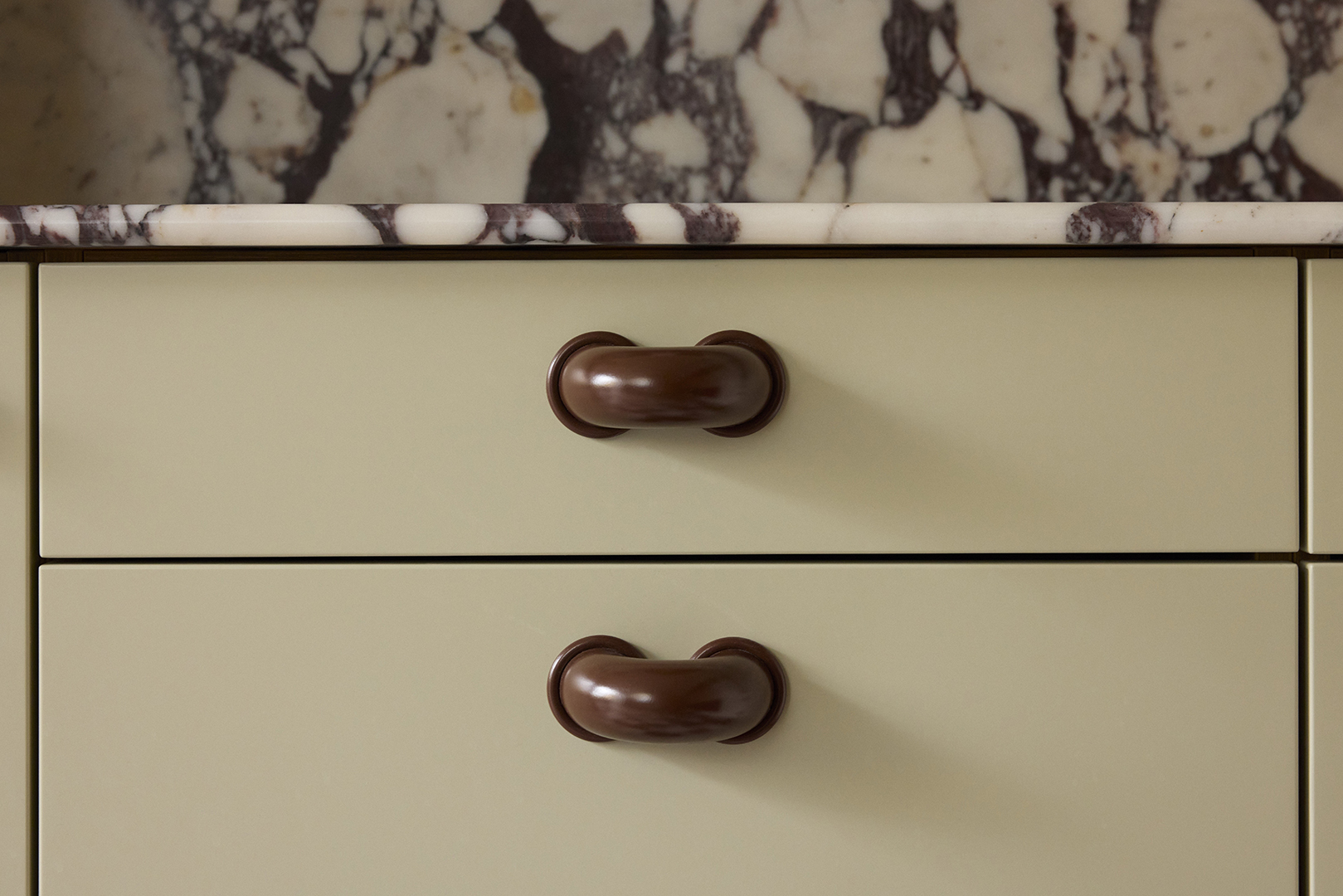
Pun’s bold floor choice meant that she had to be especially intentional with the rest of the materials selections. She opted for super-simple cabinetry profiles as a foil to the exuberant floors. Sage cabinets offer interest while subtly receding. “It’s quite a lovely color that makes the floor pop a little bit more,” Pun says. Chunky macaroni-shaped handles were selected because her client hates fiddly handles and knobs. Plus, she says, “It makes the functionality of the kitchen just a little bit more joyful.”
Calacatta Viola marble might seem like too bold a choice to pair with the patchwork terrazzo floor, but the stone’s colors pull the whole scheme together.
Upholstered Dining Bench
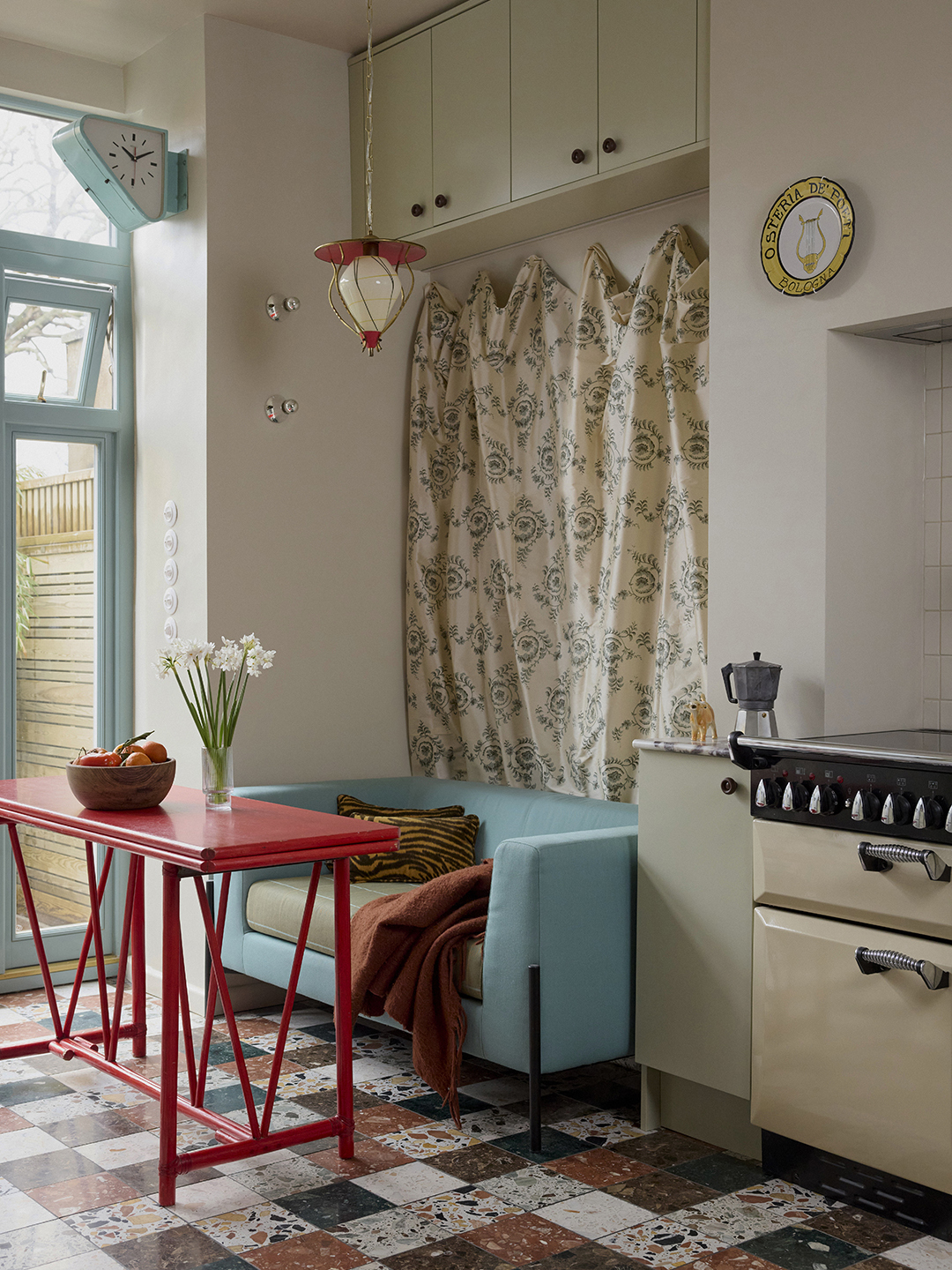
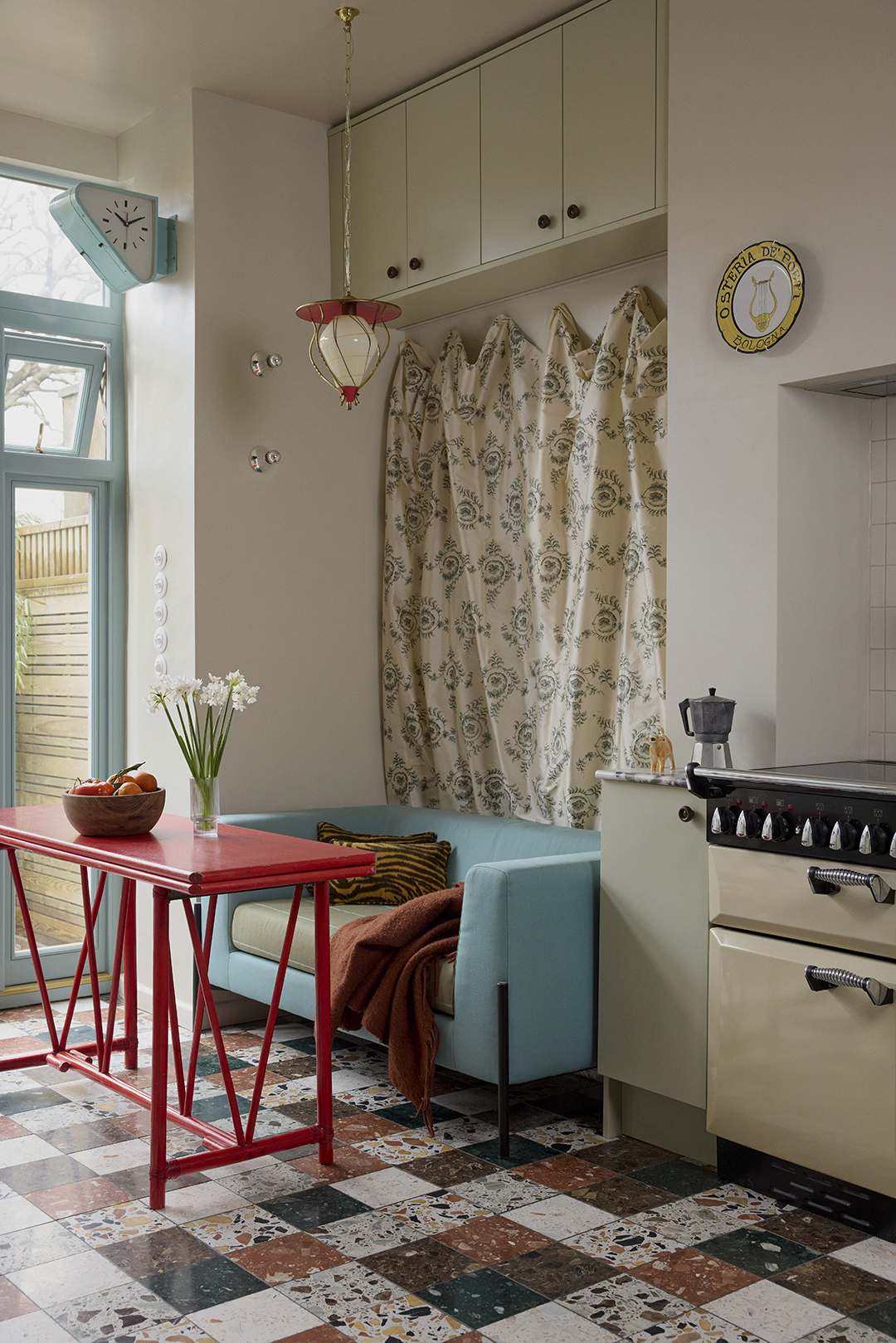
“My client has quite an eclectic style: She loves doing secondhand and eBay dives,” says Pun, who relied on used vintage finds, including the light fixture, sofa, table, and accessories to “inject a little bit more personality and life into the kitchen.” As she preferred a sofa in the dining area, Pun sourced this vintage settee and had it recovered. A red steel table, which doesn’t impede the flow of light into the room, balances out the plushness of the upholstery. The space feels like a true reflection of its owner.
Raised Dishwasher
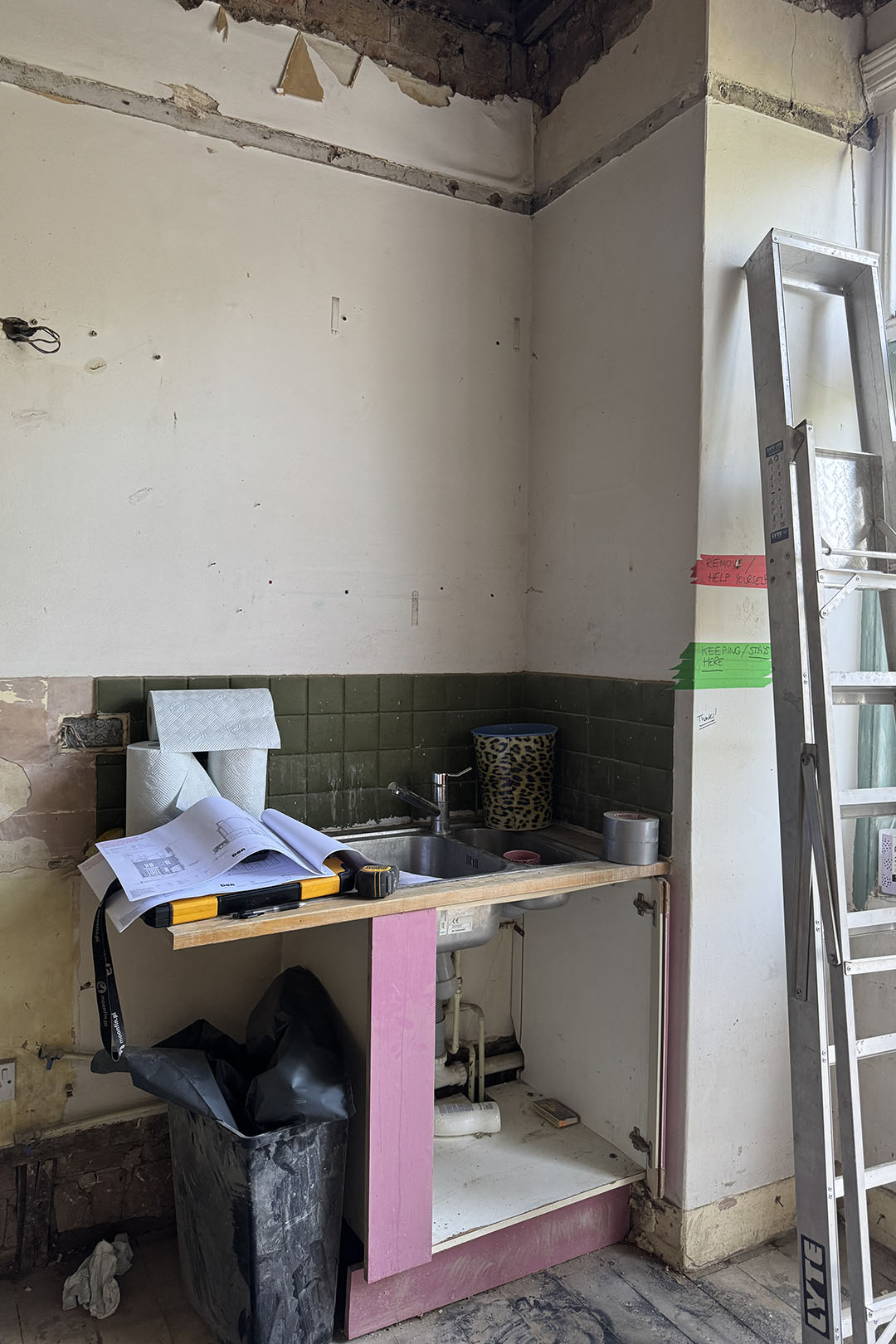
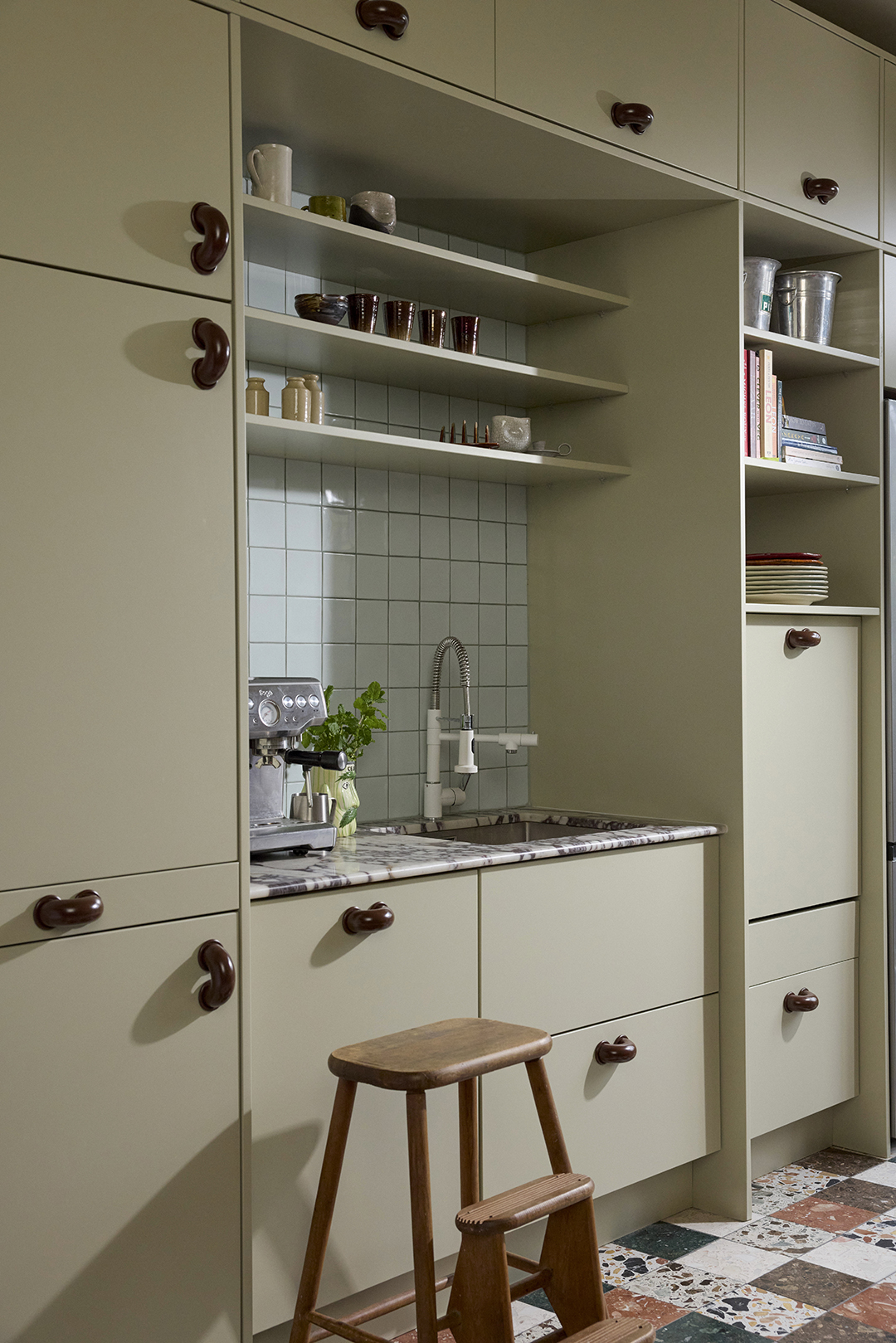
It’s standard practice for designers to hide appliances like the dishwasher and refrigerator behind doors, but Pun went further using custom cabinets to conceal much of the kitchen’s infrastructure. While the highest cabinets look like all the rest, they are not functional for storage; rather, they hide the ductwork and venting. “It’s just a little bit more integrated that way,” Pun explains. In an atypical but totally genius move, Pun specified for the dishwasher to be installed in a raised position (to the right of the sink), so her client wouldn’t have to bend down to load and unload it.
Pun is thrilled with how this kitchen turned out visually, but she says what is more rewarding was hearing that her client has started cooking more. “It sparks a lot of joy for her now,” she says. “It’s the space they use the most.”