

We may earn revenue from the products available on this page and participate in affiliate programs.
It’s been 30 years since Nate Berkus printed his first business cards and a lot has happened since then. His firm has grown to over 40 people and his family to four. He’s accumulated a roster of A-list clients (Oprah, Karlie Kloss, and Ray Romano to name a few), hosted TV shows, launched a Target line, and renovated a home in Portugal. But all along, he’s followed the same design tenets. In his latest book, Foundations: Timeless Design That Feels Personal, the pro breaks down his thought process, reveals his go-to materials, addresses frequently asked questions, and much more.
One thing Berkus has never wavered on these past three decades is his passion for organization, which is evident in the closets he’s designed for himself and his clients. He plots shoe shelves meticulously, introduces finishing touches that inspire you to hang out and stay awhile, and makes every linear foot of cabinetry count. In this condensed excerpt from Foundations, the expert shares three of his best closet design tips.
I like when a closet feels like walking into a store, a place where you can be surrounded by the beautiful things you have collected over a lifetime. It is a luxury that brings joy to your day. Some may argue that it is a lot of effort spent on a space to store things, but here is why I think it is effort well spent: whether you have a closet you walk into or a wall of wardrobes in your bedroom you reach into, how you organize your clothes and accessories makes it easier for you to express your personal style. Here are a few things you can prioritize to make this space a better place to be:
• A closet should have its own organizational language.
• Create a system and invest in products that make it easy to maintain.
• If you have the space, add at least one piece of decorative furniture.
• A soft rug or carpeting goes a long way in creating atmosphere.
Creating a Mood
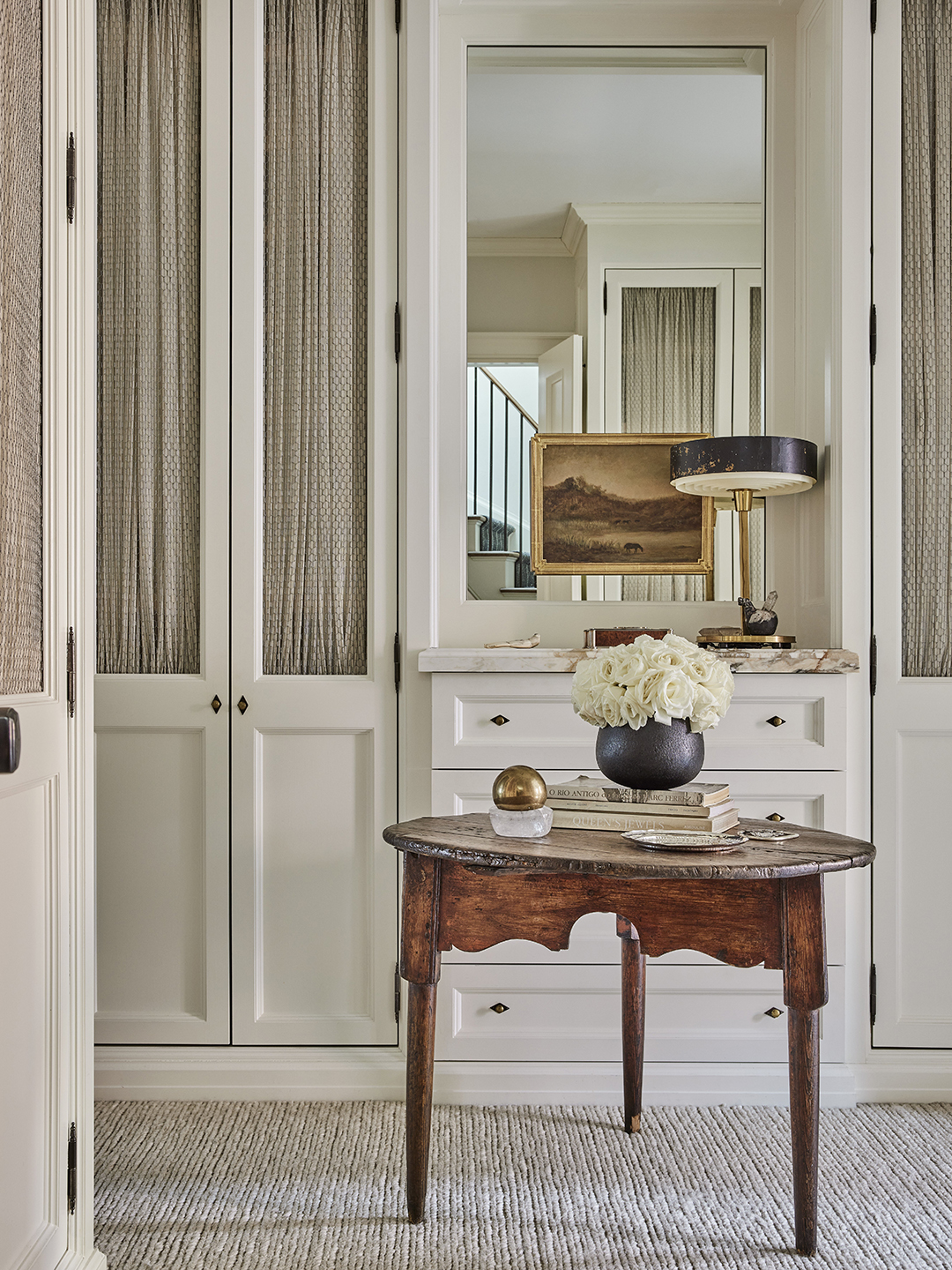
I have friends who regularly hang out in each other’s closets. There is something comfortable about a dressing room when you give it a personal point of view. Here are some of my favorite ways to create a welcoming atmosphere.
Create Somewhere Beautiful for Your Eye to Land
An arrangement of personal objects, like framed photos, feel very meaningful—a quick nod to where you’ve been as you get yourself ready for where you’re going.
Include a Comfortable Place to Sit
A single chair, a pair of benches, or a small sofa. It is a quiet spot to sit and take a call.
Prioritize Lighting
There are two goals here: functional lighting for getting dressed and atmospheric lighting (a table lamp, gallery lights) to help set a mood. You want to have both.
In Favor of the Closet Vanity
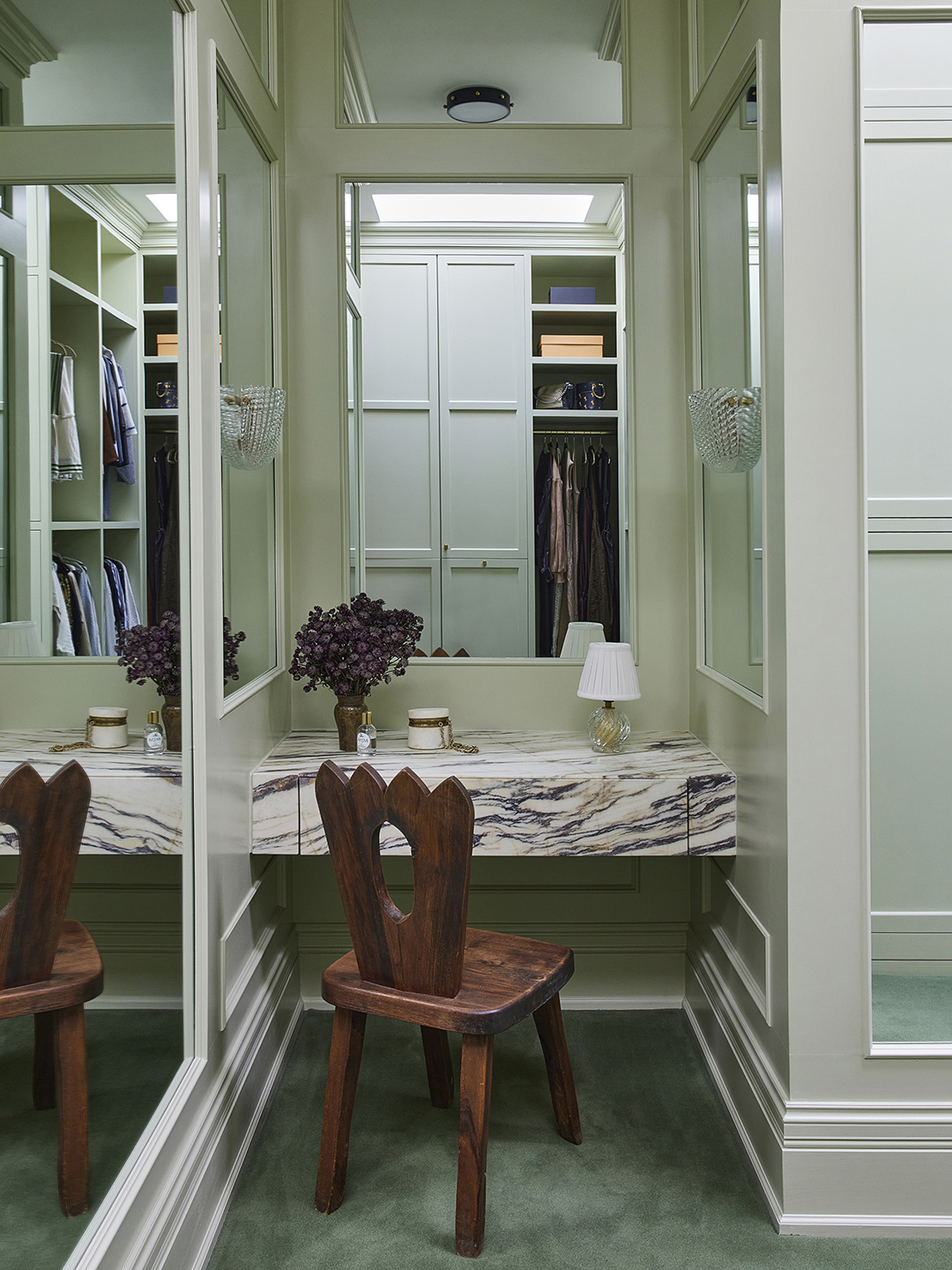
If you’ve watched classic Hollywood films from the 1920s and 1930s, they almost all include a scene where the heroine sits at an elegant vanity applying lipstick or putting on jewelry; the height of sophistication of that era. Dressing tables fell out of fashion as bathrooms grew and became more modern, fitted with cabinets, mirrors, and built-in vanities. But I have always thought that having a quiet place to retreat outside of your bathroom to prepare for your day is glamorous in an accessible way, an opportunity to create a ritual around getting ready that could shift the energy of your morning.
Don’t Be Afraid of Highly Decorative Finishes
This NYC closet, designed in the early 2000s in collaboration with architect Ahmad Sardar-Afkhami, is inspired by 1930s Art Deco grandeur with a vintage mirrored vanity, French plaster sconces, hand silver-leafed walls, and blown-glass knobs.
Use Materials Wisely
We created a floating dressing table for a young mom in Chicago [above] from marble remnants leftover from another project.
Create a Focal Point
In this home, you pass through the dressing room to get to the bedroom. When you open the door, your eye goes to this very pretty moment and not a wall of cabinetry
Building a Custom Closet
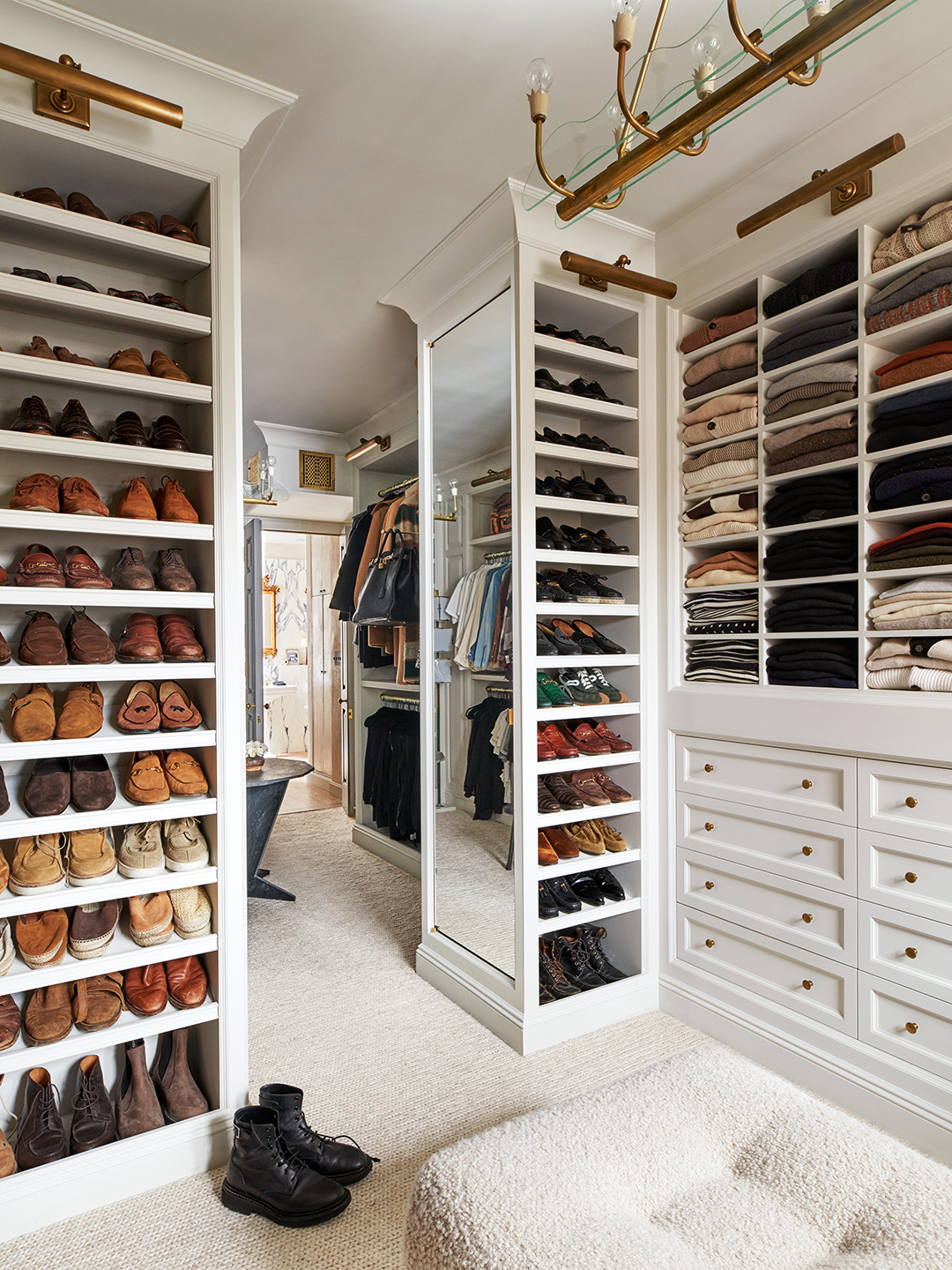
I have always found designing closets to be rewarding. The hyper-organization aligns perfectly with my triple Virgo need for order…I am someone who watches folding videos for fun. A closet can function and also be elegant. It starts with taking a detailed inventory of everything you own.
When I designed Oprah’s closet for her in the early 2000s, I measured each piece of jewelry to understand which drawer dividers I needed and how to configure them. Creating an organizational system in this way, one that makes the most of the space you have and is easy to maintain, will help you plan your closet’s framework. Here are a few other things to consider:
Consider Sight Lines
What do you see when you walk in the closet? If you look at one of my former closets, you’ll notice that my T-shirts aren’t the first thing you notice; they’re around the corner. I like to put suits or jackets at the forefront.
Maximize the Utility of Your Four Existing Walls
Can you alter the floorplan to create more storage, include an island, wing walls, or shallow shelves to make your closet even more hardworking?
A Grid of Open Shelving Is Incredibly Practical
Rectangular compartments—14.5 inches wide by 6 inches high by 13 inches deep—allow you to stack multiple sweaters or jeans that will stay neatly folded.
Find a Creative Way to Add Drawers
Whether you plan a built-in or leave an area open for a freestanding dresser, which will also give the space more style.
Take Your Storage to the Ceiling
A row of cabinets at the top of your closet is where you can store luggage and off-season clothing.
Slanted Shoe Shelves Are My Preference
But they are typically built-in. If you are rotating shoes often, I recommend adjustable flat shelves that can be moved as needed.
Include a Full-Length Mirror
Even if it’s on the back of the door.