
We may earn revenue from the products available on this page and participate in affiliate programs.
Interior designer Lauren Carlucci could see why her clients thought they were in for more of a tune-up than a takeover for their East Hampton house. The family, a New York City couple with three young daughters, had spent many long summers and festive holidays at the cedar shake-sided respite, which is perched on a leafy lot just minutes from the beach.
But, after a decade, the getaway was starting to show its age, and the interiors needed a refresh to keep up with the pace of real life. (Think: sandy toes padding in from the shore, dinners that turn into dance parties, and kids ricocheting from one room to the next.)

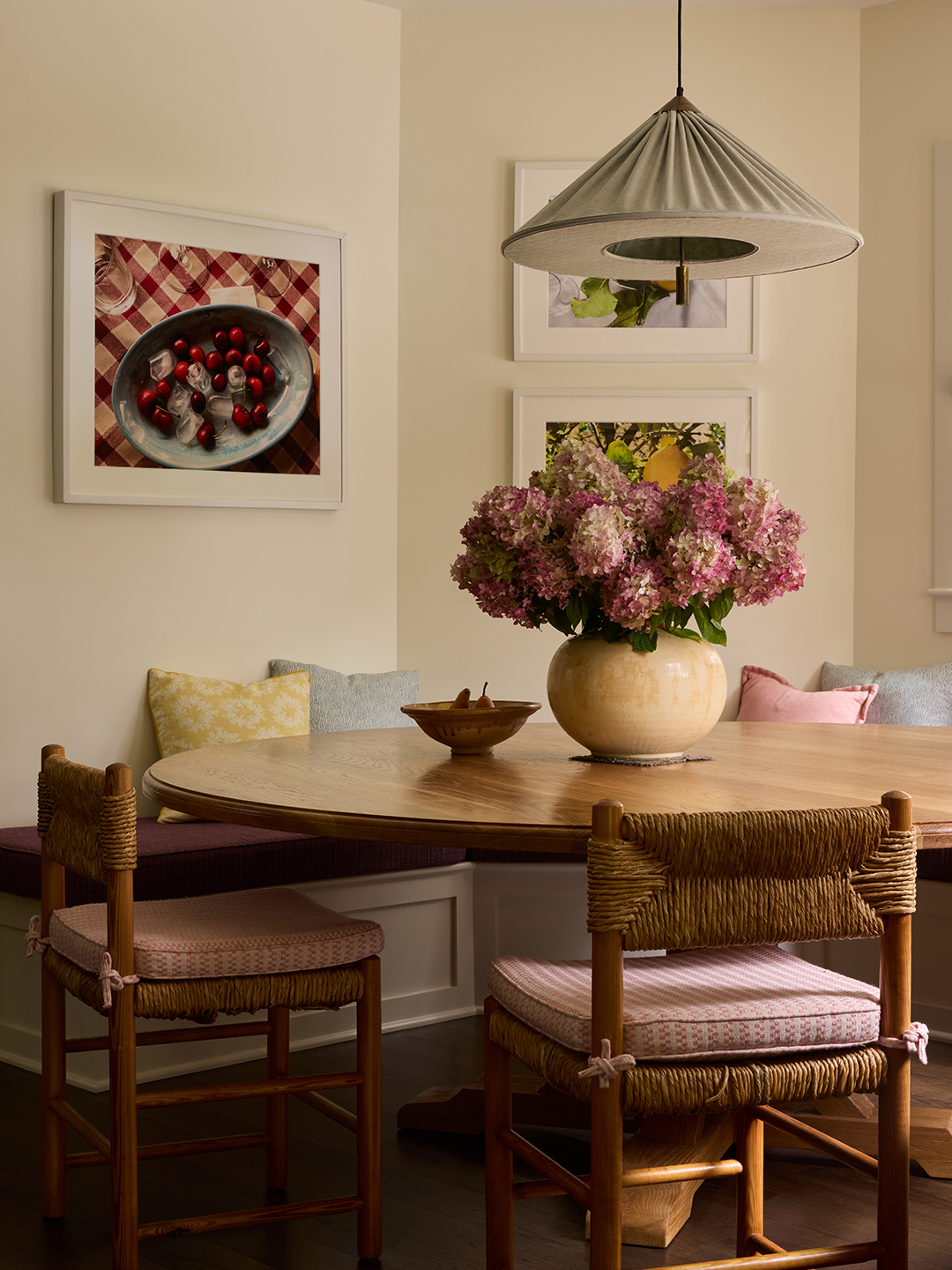
The brief started out politely: muted tones, traditional lines, nothing too loud. To Carlucci, the project had straightforward written all over it. Then came the fabric meeting—and the mood shifted entirely. Swatches hit the table and suddenly the clients were reaching for the bold stuff. Punchy florals. Happy stripes. Colors with a pulse. Seeing textiles in person changed everything for the homeowners, and the result? A pattern-happy palette that wasn’t too precious and felt immediately lived-in.
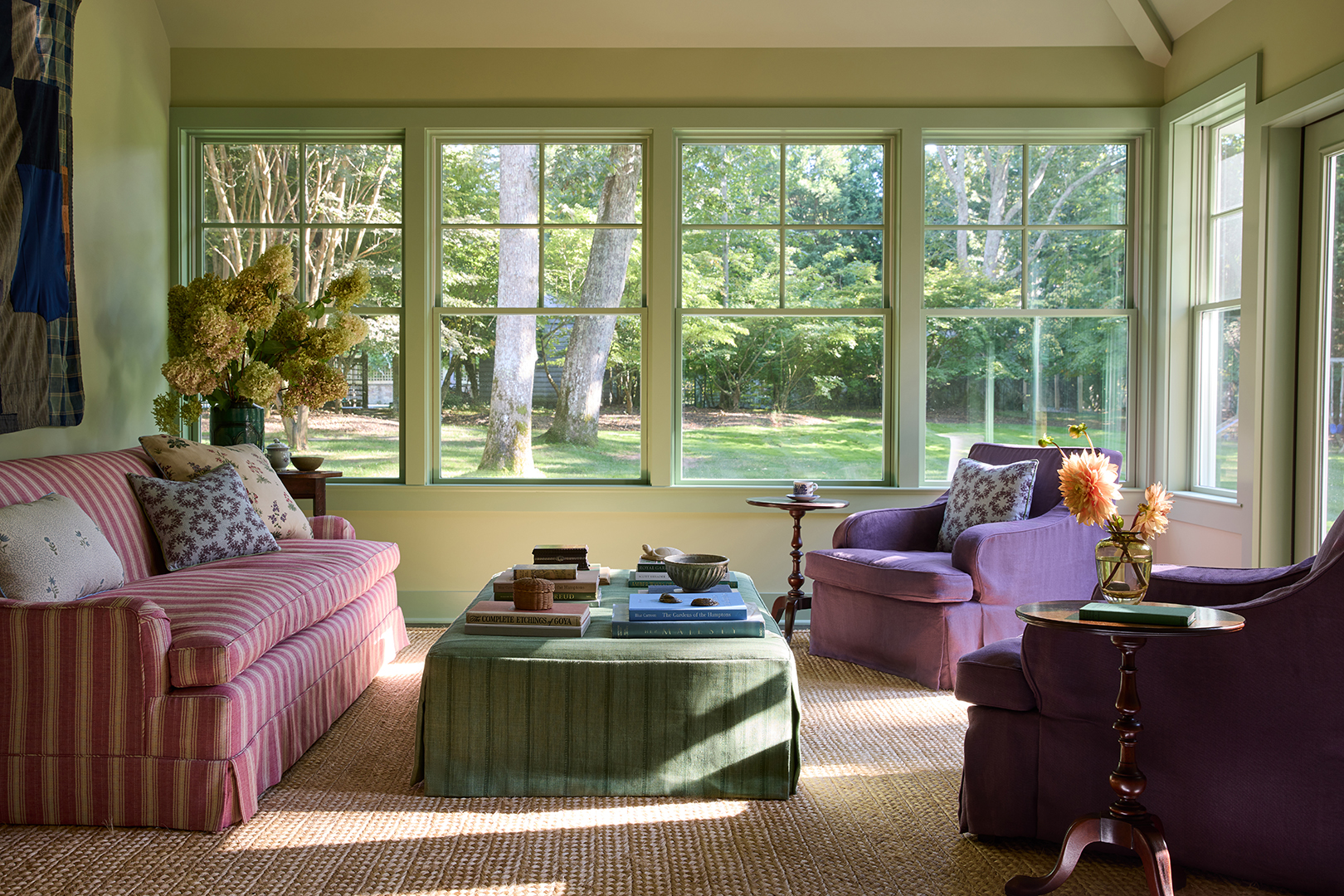
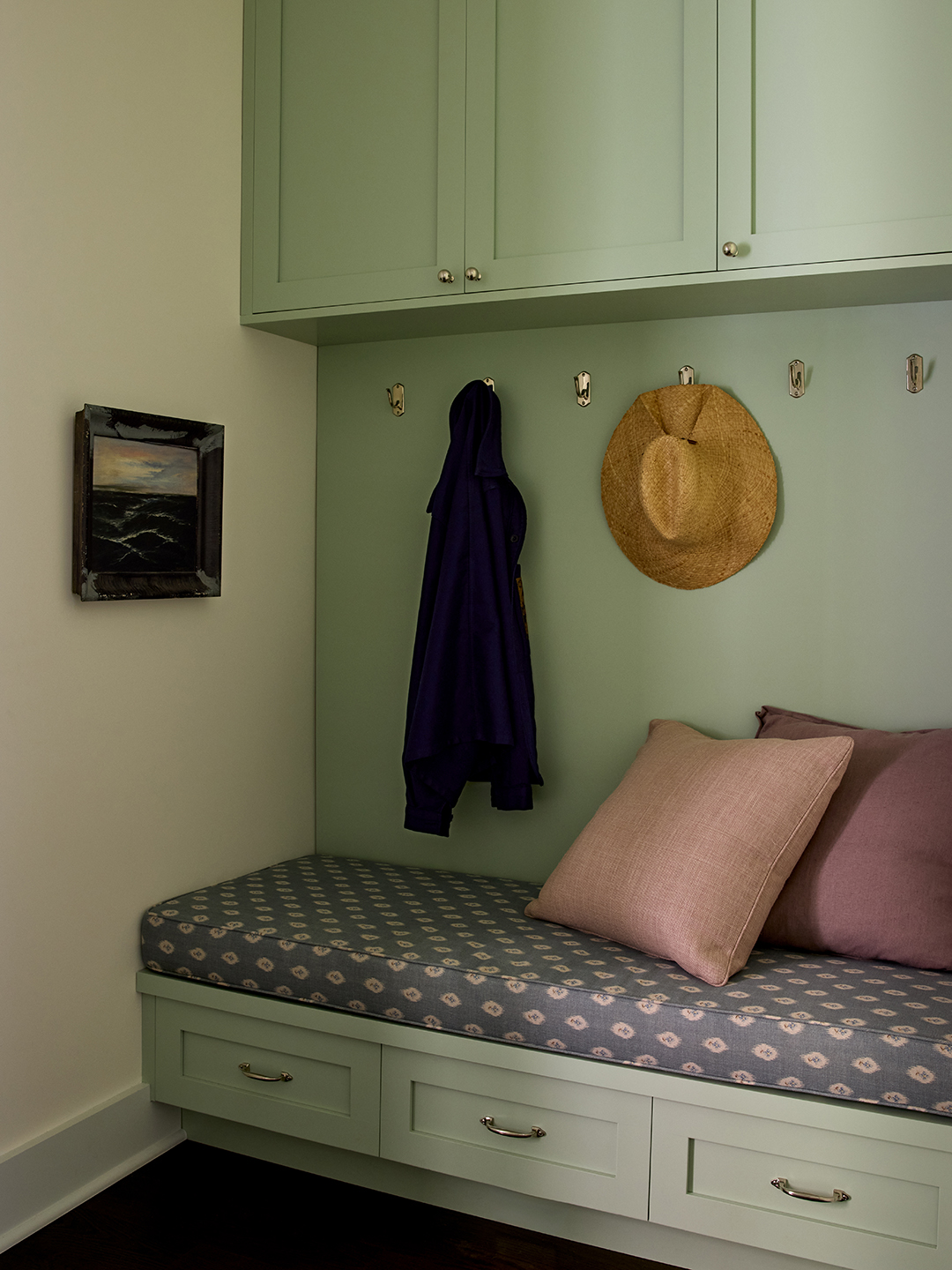
Carlucci gave the floorplan a rethink, too. The kitchen expanded into a true heart-of-the-home hub; an enclosed porch became a sun-soaked all-season room; and a warren of small, choppy spaces was refashioned into a back entry consisting of guest quarters, baths, laundry, and a petite mudroom. Ahead, the designer walks us through the finished layout, pointing to how the punched-up color and decor pulls it all together.
What was the first product you knew you’d use in this house?
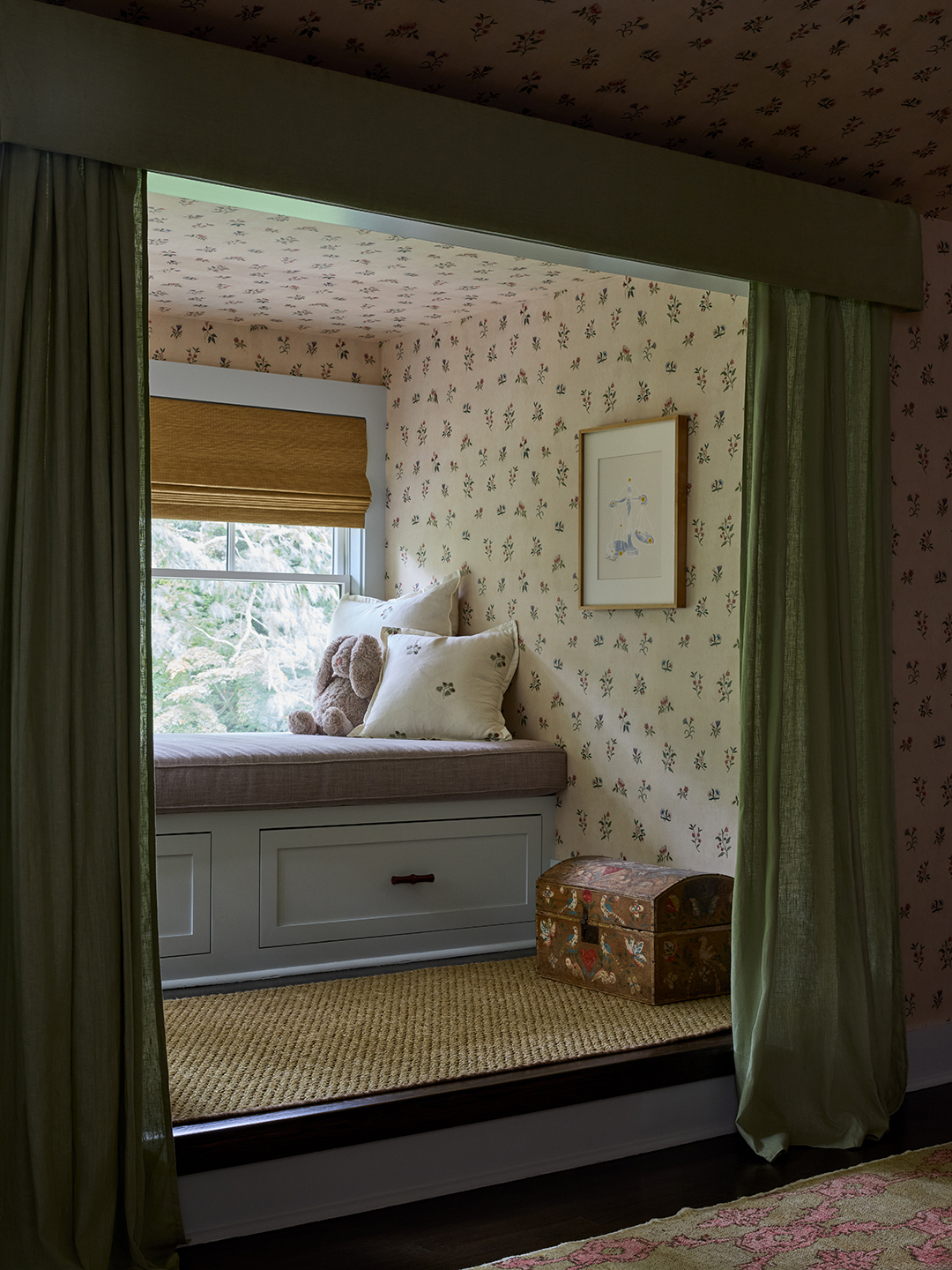
One of the very first purchases was a small-scale embroidered strawberry fabric by Chelsea Textiles, used in the twins’ bedroom (see it on the pillows in their window seat). The client fell in love immediately, because she calls the girls her “little strawberries.” That fabric set the tone for the entire project: sweet, personal, and layered with meaning.
Which design move made you gulp a little?
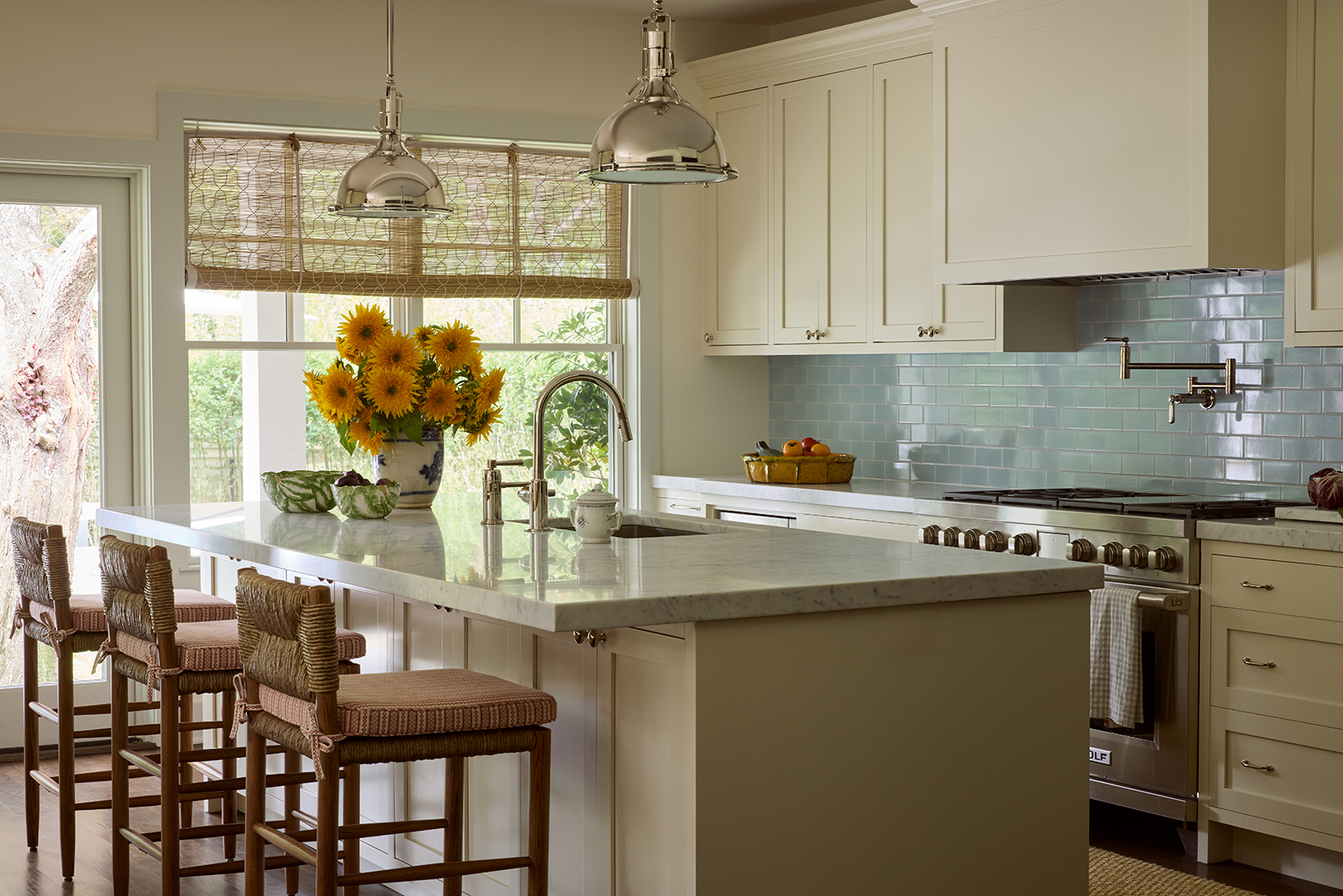
The blue tile backsplash in the kitchen felt like the biggest risk. A late pivot, it initially seemed like a leap—but without it, the kitchen might have felt too restrained compared to the rest of the home. Choosing color instead of another neutral added the right softness and tied the spaces together.
What’s the splurge you can’t stop smiling about?
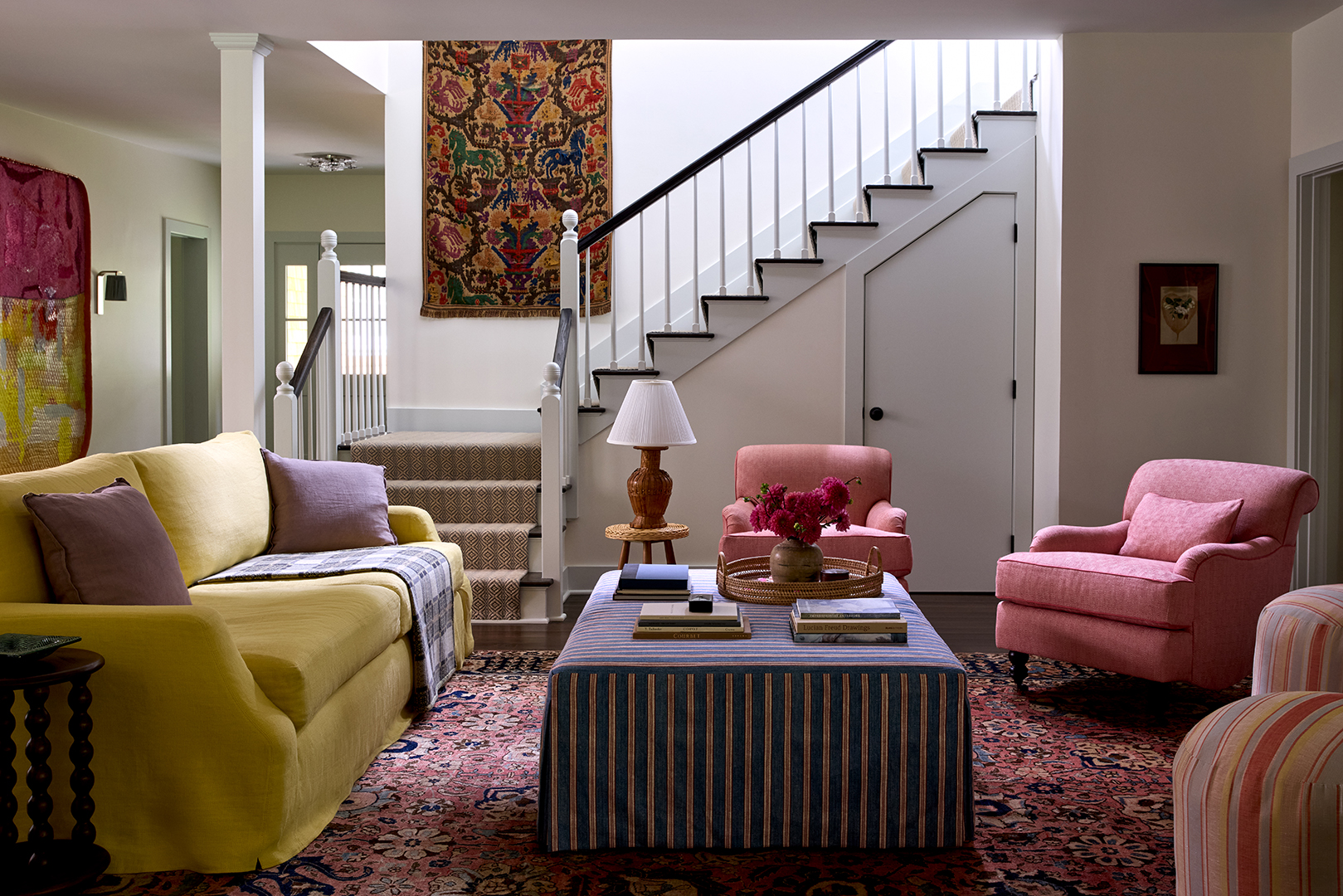
Definitely the Elizabeth Eakins stair runner. The staircase is a major visual and circulation element, and the pattern adds texture while feeling incredibly comfortable underfoot—a true functional luxury.
And the smartest save?
Thoughtfully reusing and reupholstering existing furniture instead of replacing everything. This allowed the budget to go towards customized elements while keeping the home personal, with many rugs already a part of the client’s collection.
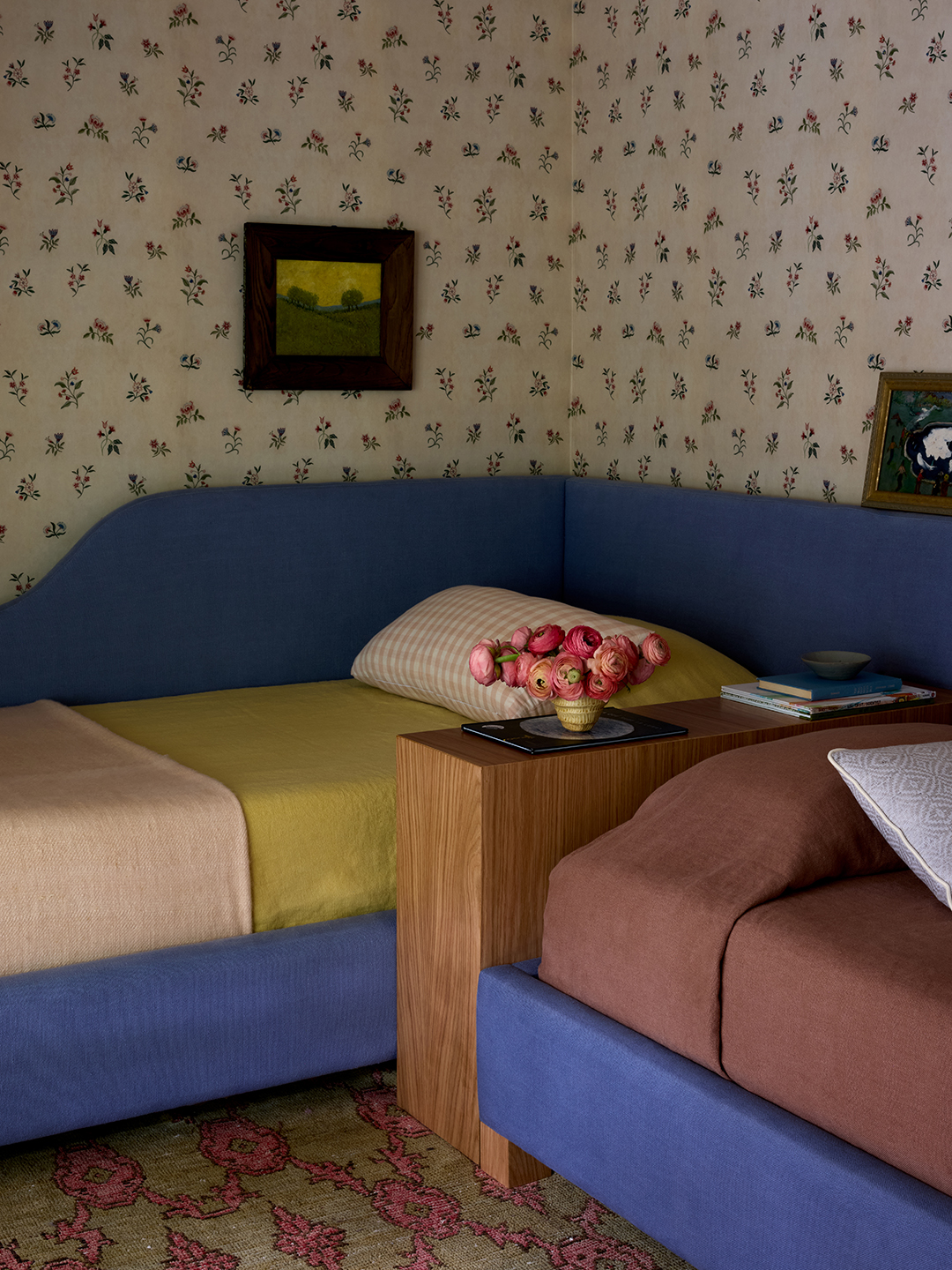
Which storage solution felt like a secret superstar?
The custom daybed bench in the twins’ room. It transformed a small alcove into a cozy reading and play spot with integrated drawers for toys and books. Draped with a lightweight weave by Volga Linen, it now moonlights as a makeshift stage, where the girls host impromptu performances—costumes optional, applause mandatory.
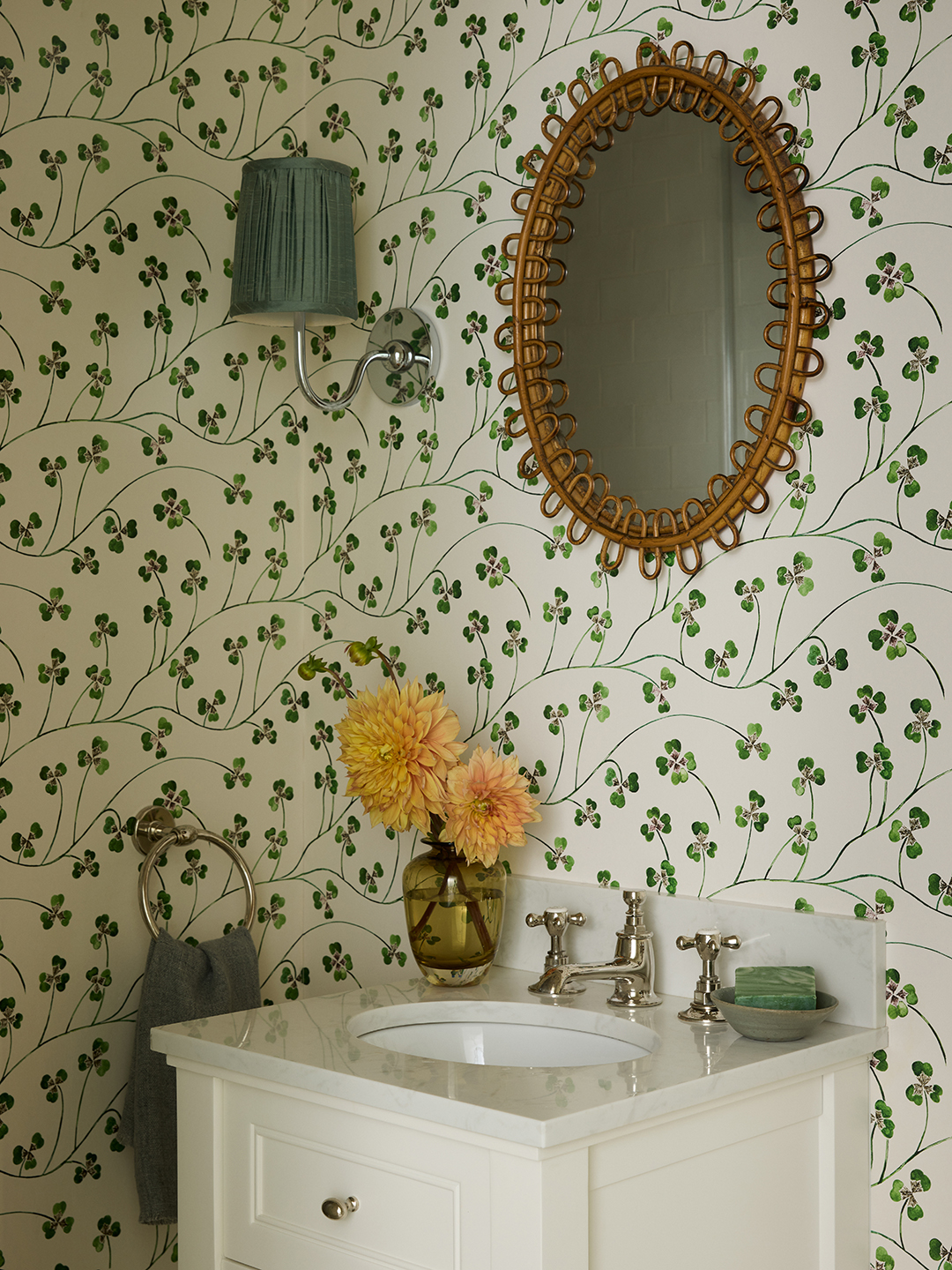
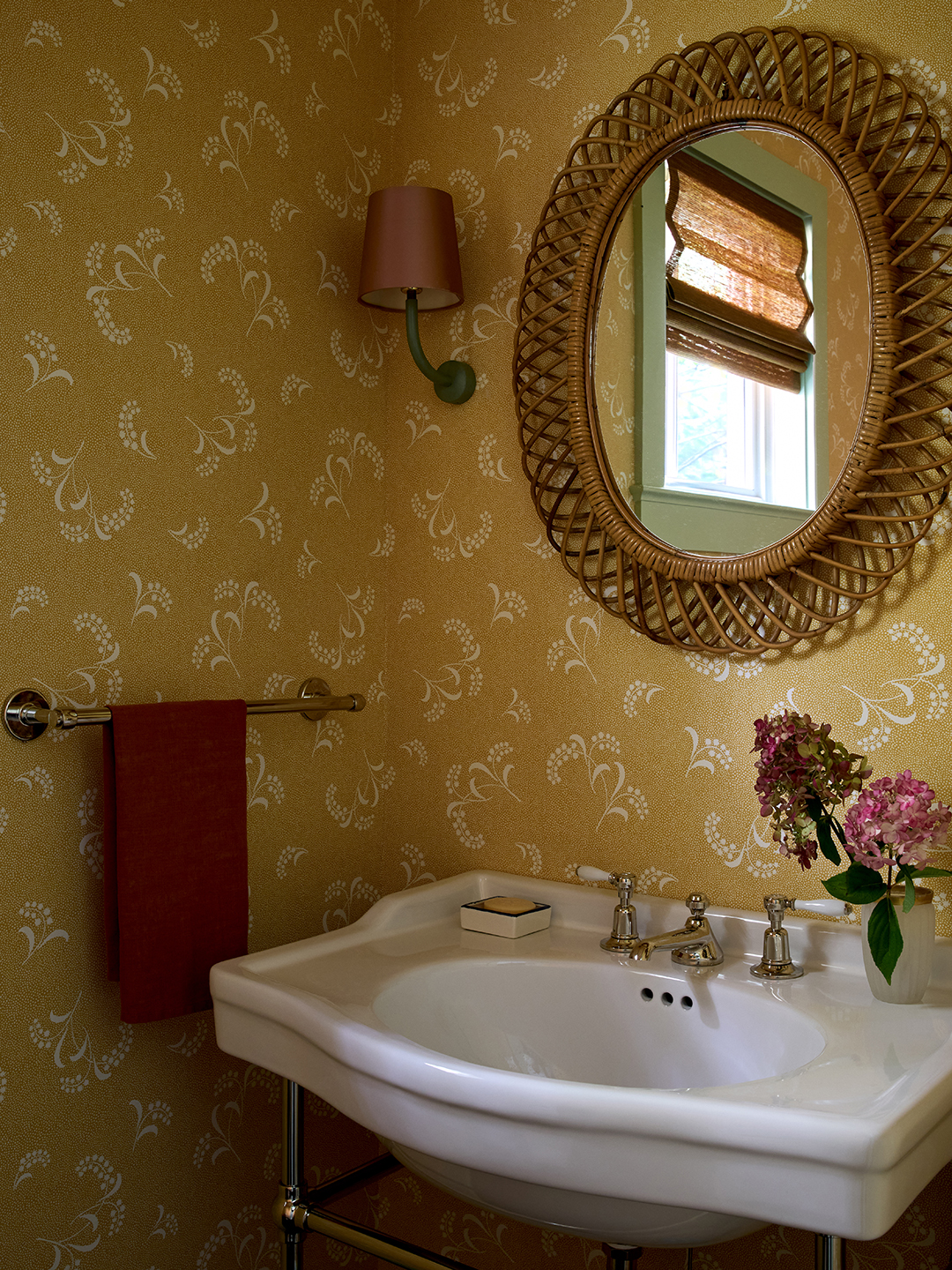
There are “lucky charm” details everywhere—what’s the story there?
The clover wallpaper and matching hardware backplates are a cheeky nod to luck. They’re dreamy and whimsical. Then there’s the yellow mimosa wallpaper. It reminded me of the bright yellow fields that blanket the Cotswolds near my mom’s house each spring. The mimosa motif has also long been associated with femininity, which felt especially fitting in a home centered around a mother and her daughters.
Any materials that made your heart skip a beat?
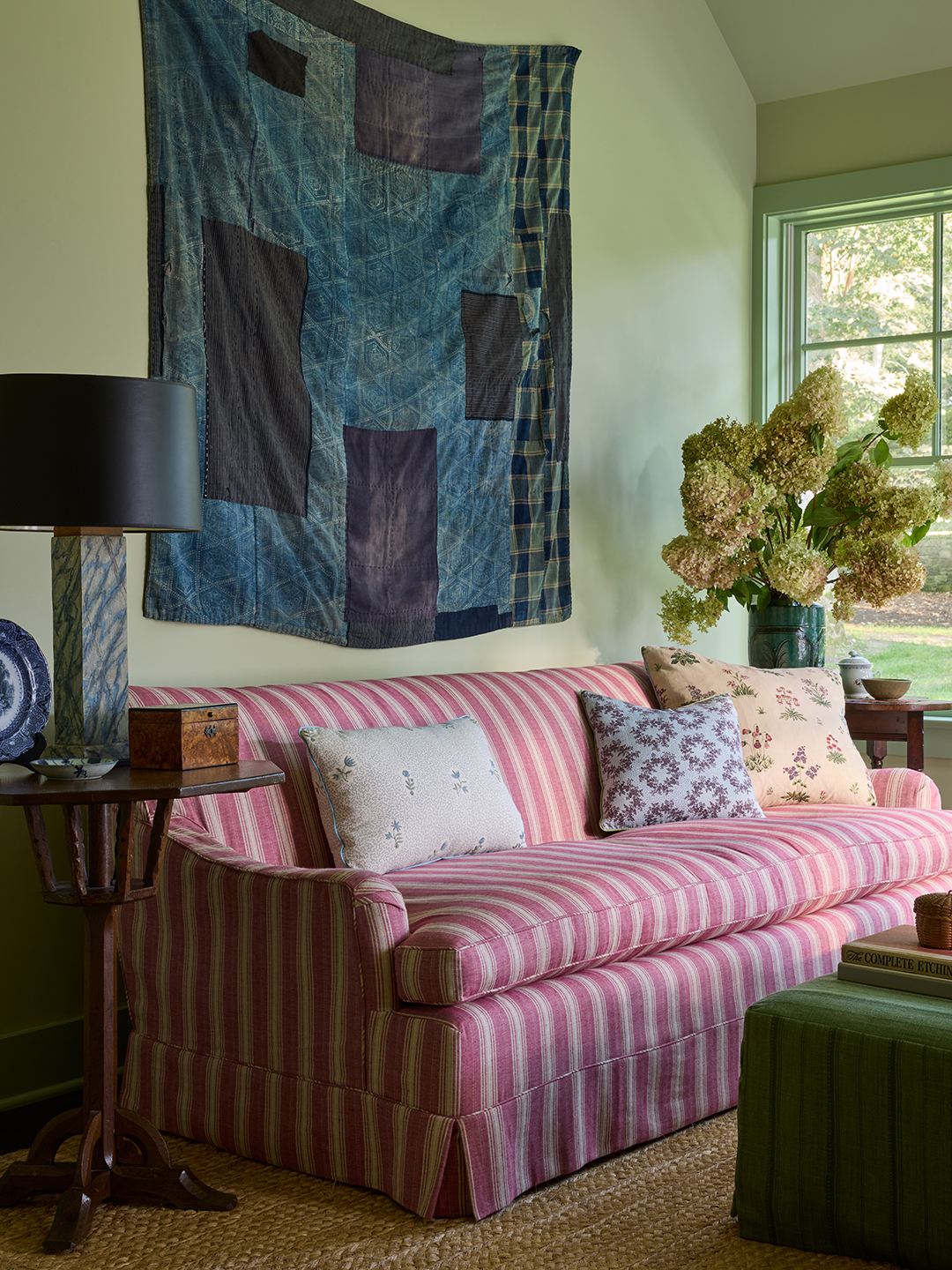
One of my favorite upholstery moments is the pink stripe fabric by Susan Deliss on the sofa. It pops against greens and blues and brings energy year-round.
And the biggest “uh-oh” moment that somehow worked out?
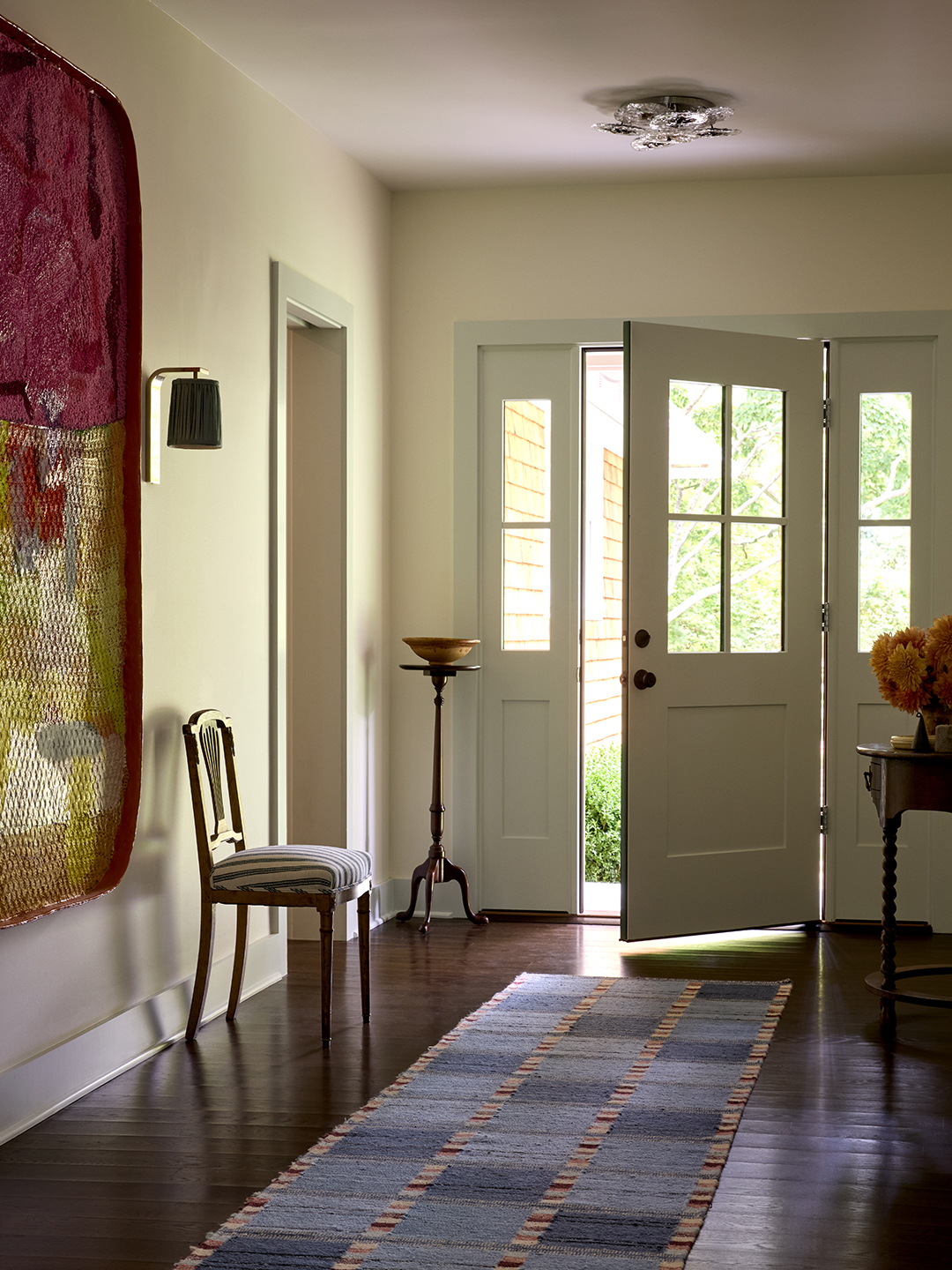
During installation, a nearly 100-pound, heavily-textured artwork slipped off the wall seconds after it went up. Thankfully, no one was hurt, but with move-in quickly approaching, it became a problem-solving sprint. My art-world experience helped, and with FaceTime guidance from the artist, a few supply runs, and careful teamwork, the piece was repaired and rehung just in time. It was a stressful moment that perfectly captured how collaborative and supportive the industry can be.