We may earn revenue from the products available on this page and participate in affiliate programs.
This story is part of Domino’s 2026 Kitchens Trend Watch. Read the entire issue here.
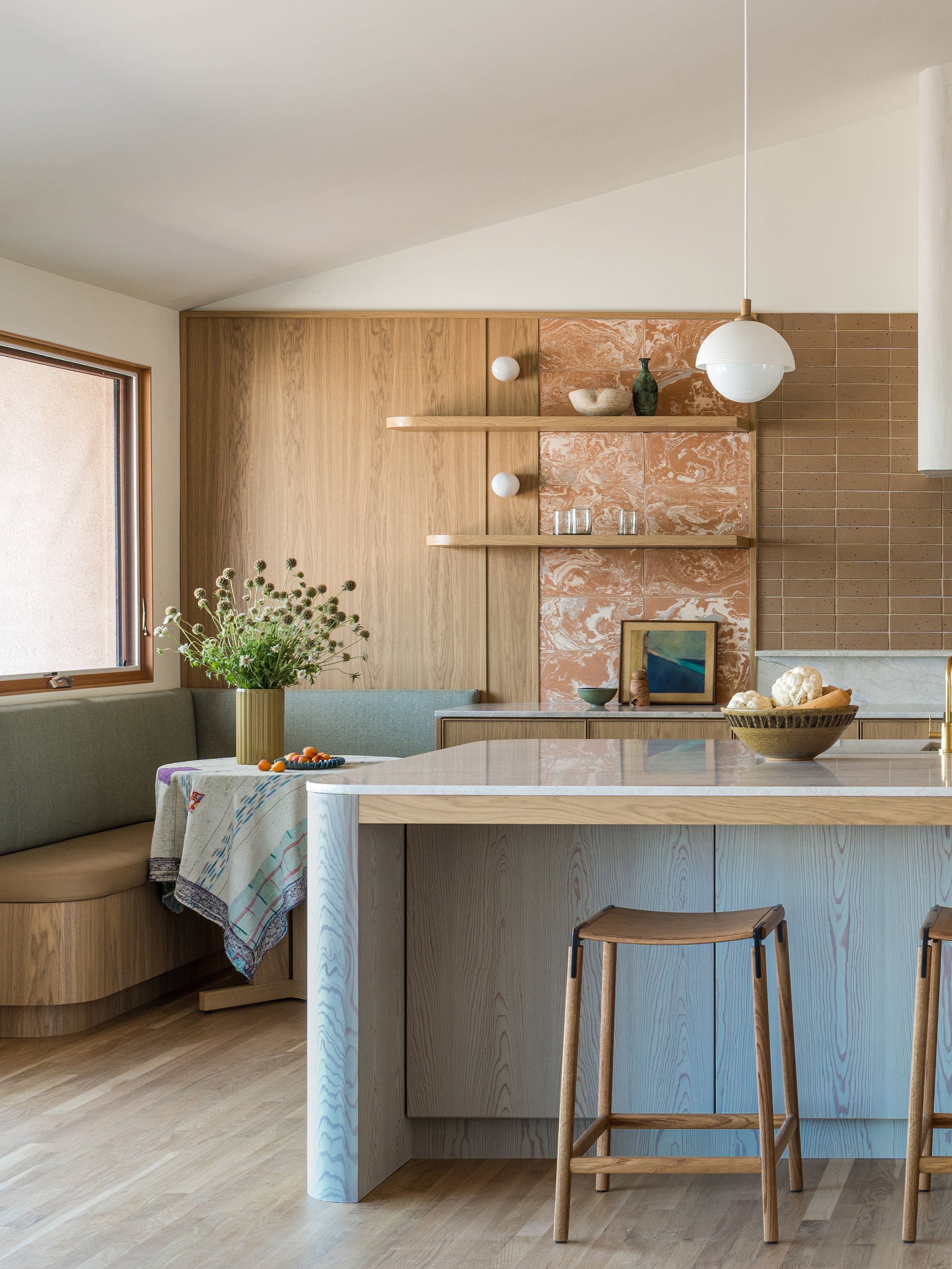
After years of either leaving wood au naturel or painting over every last inch, designers are finding a middle ground. Colored wood stains have brought an unexpected jolt of personality to the cabinets in many of our favorite kitchens this year. Moody blues, earthy reds—every shade is on the table. “It feels like a wash of color versus a flat hued application. That can mean more depth and character overall,” explains Abbie Naber of San Diego–based A. Naber Design. Inspired by Danish linseed paint company Linolie & Pigment’s vivid selection, she recently tried out the finish in a custom powder blue hue for a Carlsbad, California, project. Think of colored wood stains as the best of both worlds: all the fun of a chromatic kitchen, with the warmth and visual interest of real wood still very much in the picture. Below, Naber’s expert advice for bringing the look home.
Design Dos
…for colorful kitchen cabinets that don’t involve a lick of paint.
1. Test Directly on the Wood
Different types of wood handle pigment differently. There is definitely a needed step or two of experimentation. If you’re working with a professional, make sure they are up for the challenge and investment in getting it just right.
2. Streamline the Cabinet Profile
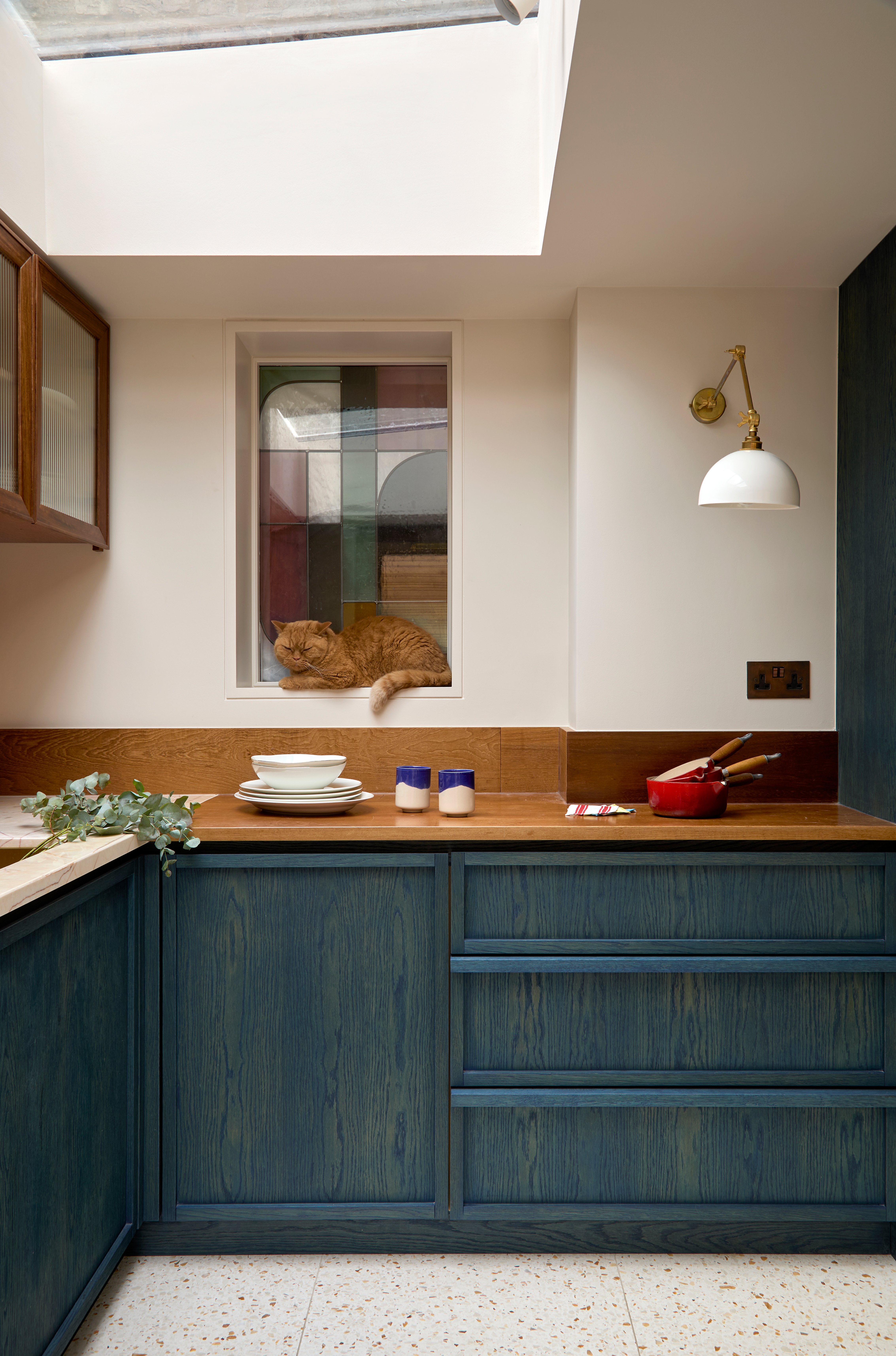
Since the wood grain is going to be exposed, the character of the grain itself is enough to showcase the stain. Keep everything else minimal with a flat front profile—simple lines with a not so simple design detail.
3. Think About Give and Take
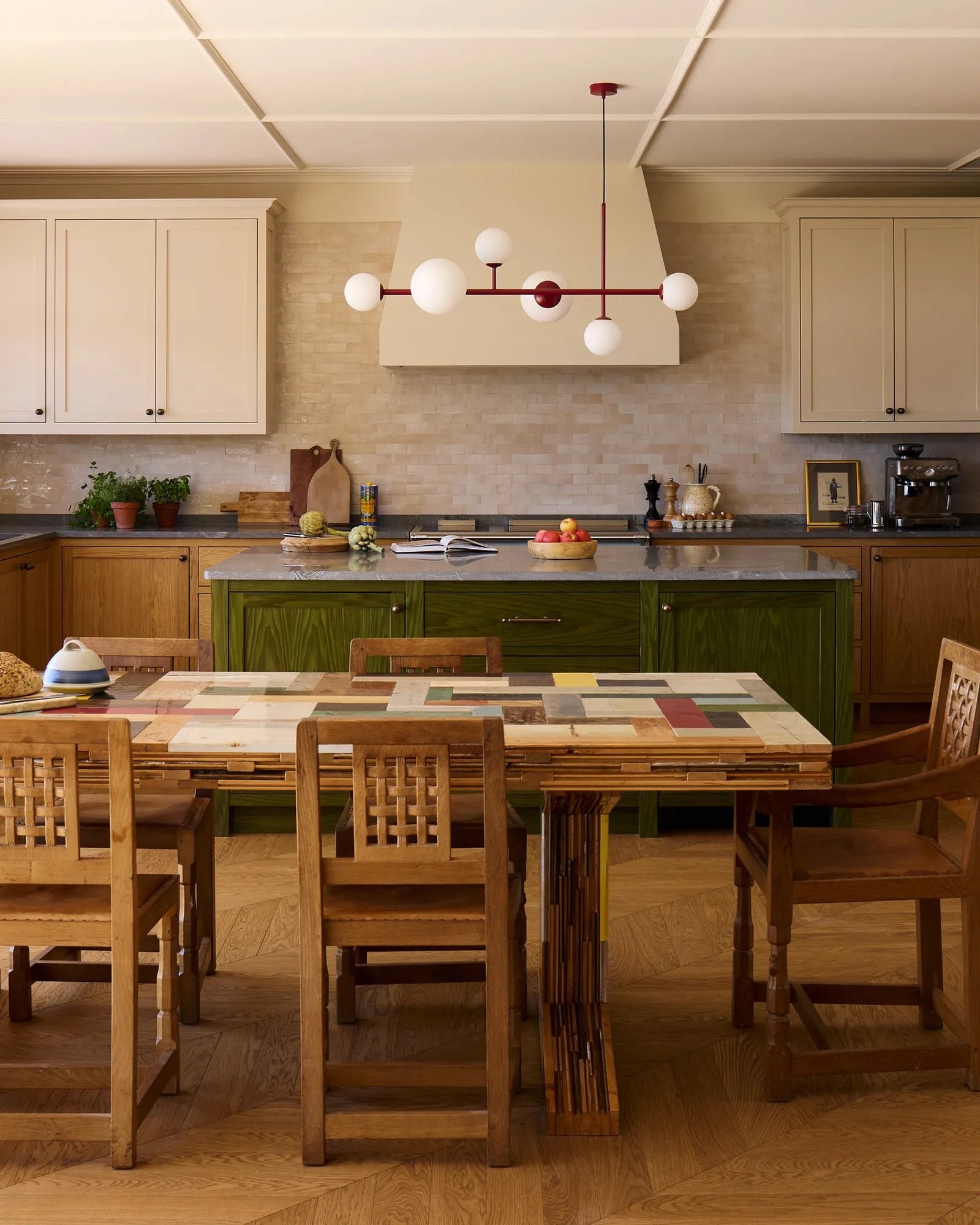
It’s all about balance and tension. In the Carlsbad kitchen, we already had so many other materials that it felt right to limit the stain to the island and balance it out with white oak cabinetry elsewhere. Choosing too many things that compete with one another is a recipe for overdesign and trendhunting. If you choose to go bold in certain areas, it’s important to pull back in other places.