
We may earn revenue from the products available on this page and participate in affiliate programs.
So your house has the quaintest pitched roof…which means your rooms upstairs have angled ceilings dropped so low that half the space is virtually unusable. What do you do? Sure, you may not be able to walk around the entire perimeter without bumping your head, but you can use every square inch in other clever ways.
Take note from these nine designers and homeowners, who have turned less-than-ideal rooflines into walk-in wardrobes, reading rooms, window nooks, secret passageways, and more. All you need is a little imagination to combine function with your asymmetrical architecture.
Cozy Up to Tight Corners
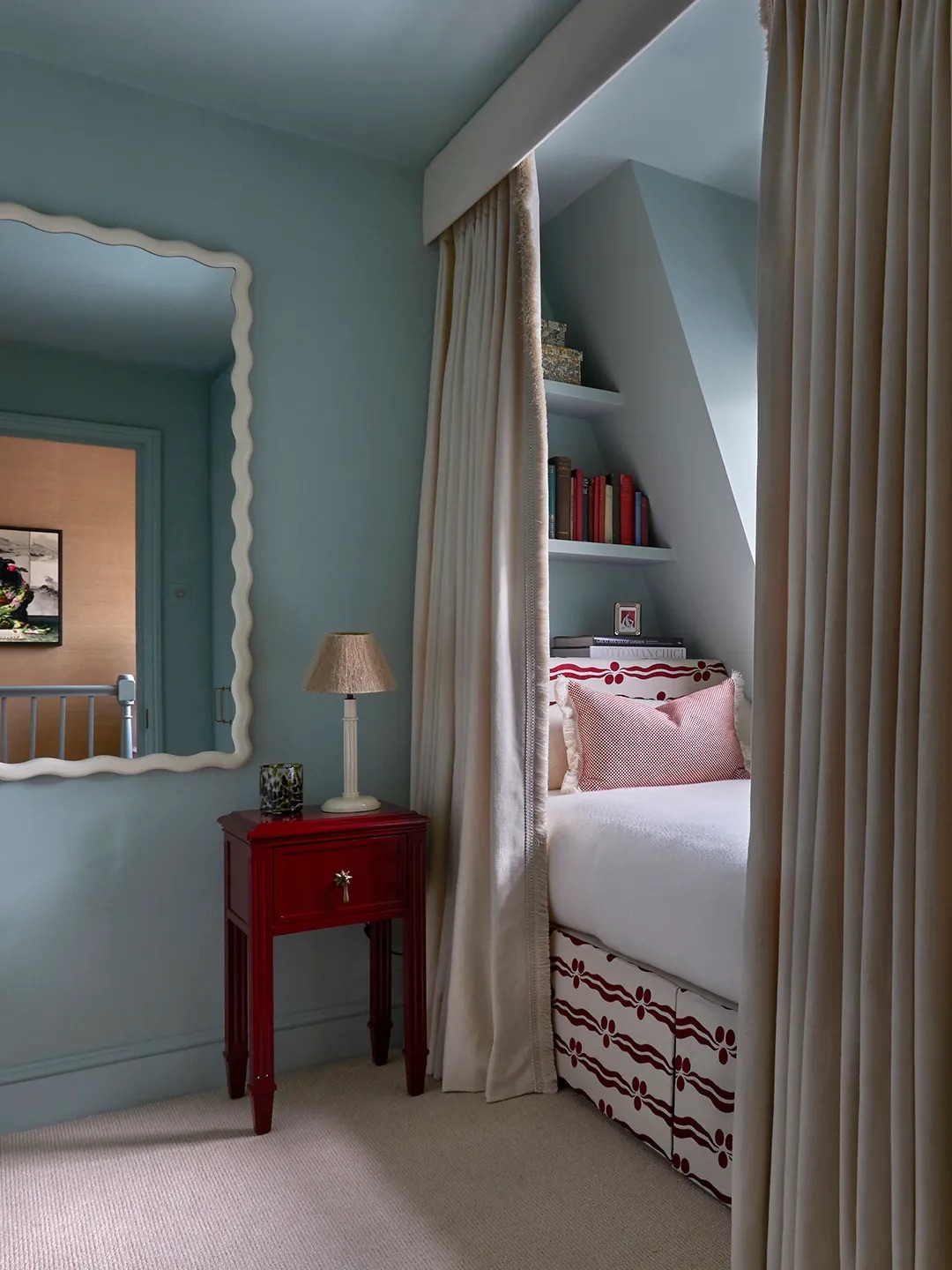
In the smaller of the two guest suites in this London Home, Trove founder Tiffany Duggan made what appears to be a built-in twin bed in the nook of the attic window but is actually a freestanding divan pushed up against the wall and framed by a valance and a layer of curtains. “It feels really cool when you’re inside there, especially since you have a little window you can look out of,” says the designer.
Situate the Shower in the Highest Peak, Part 1
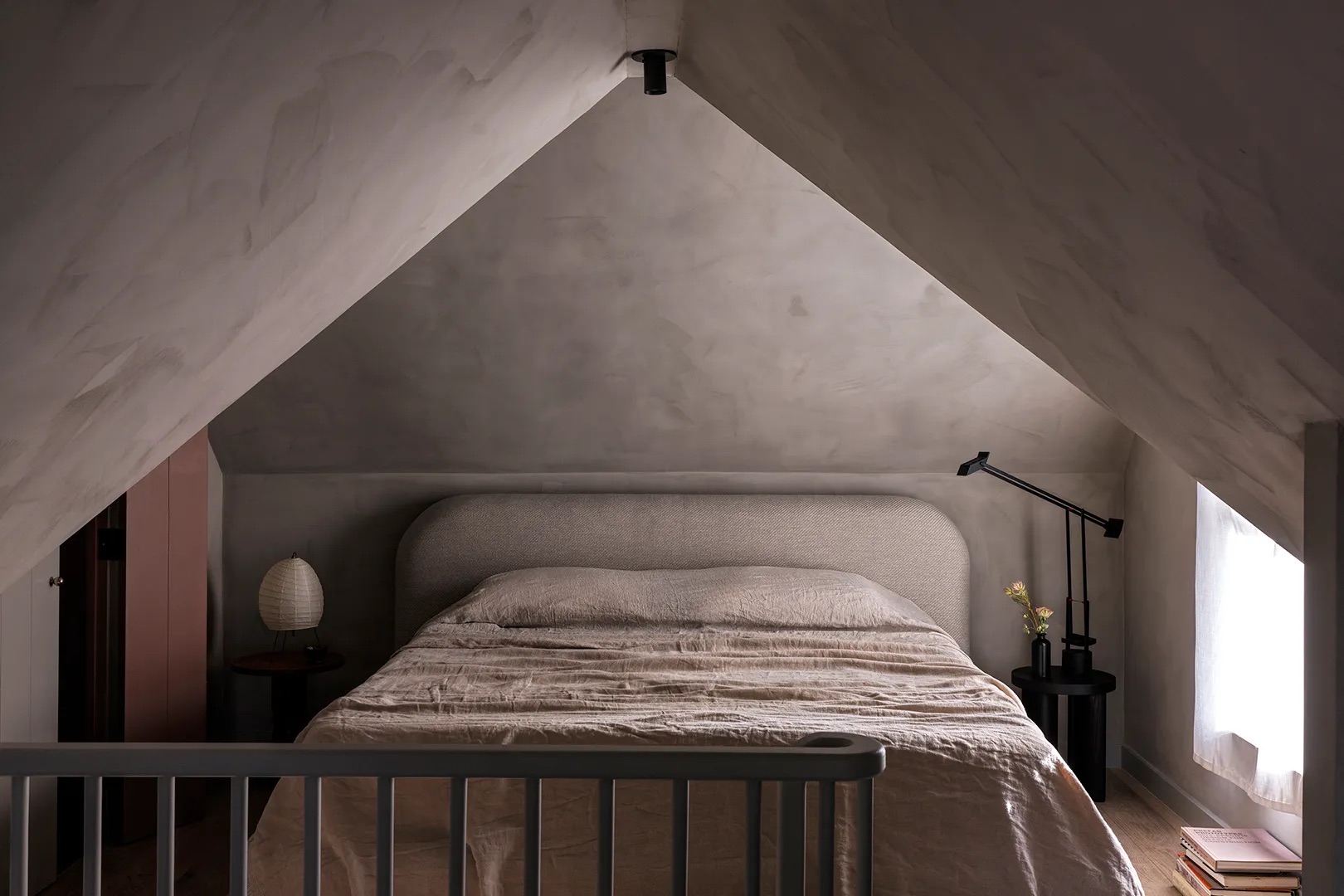
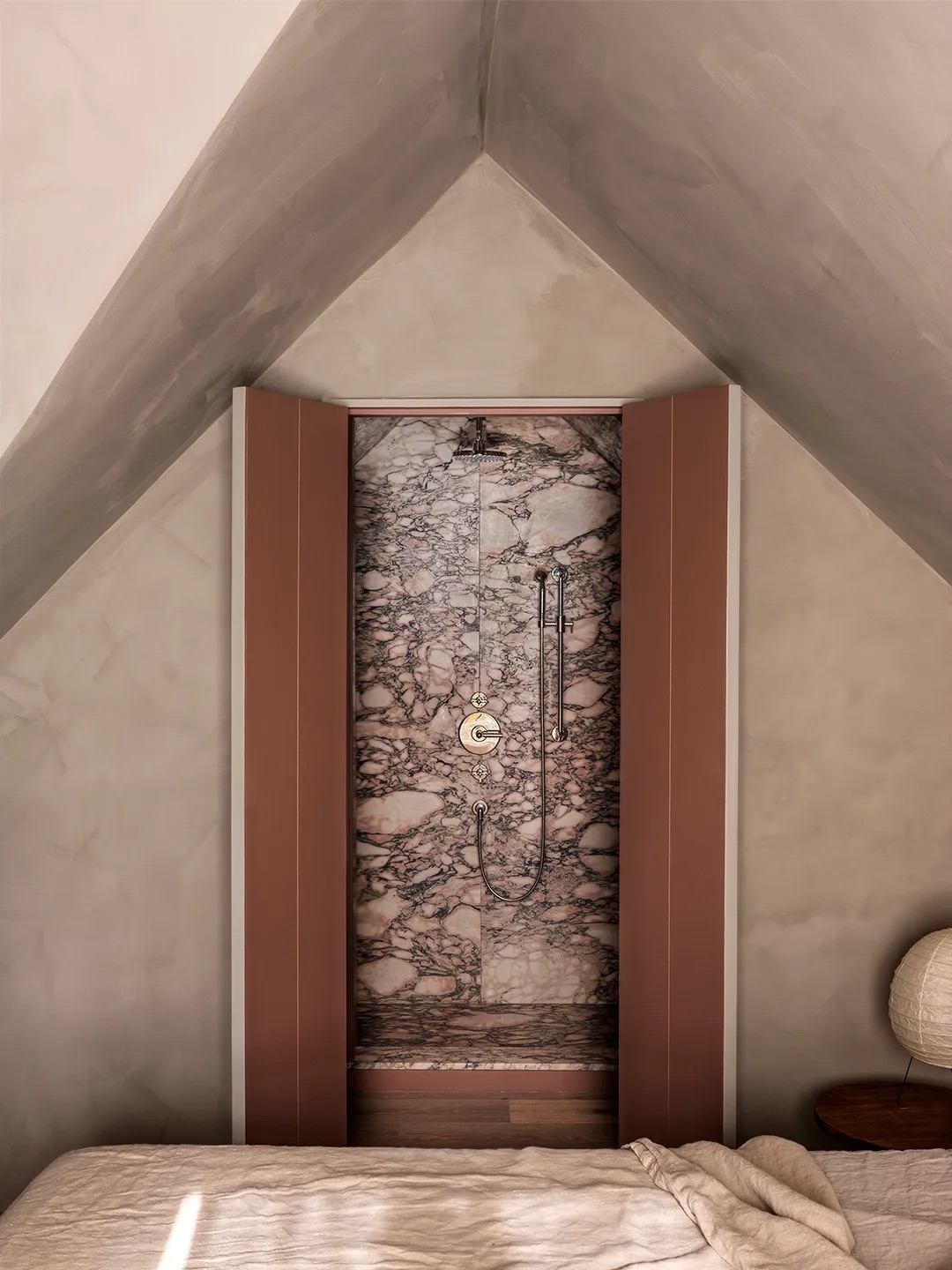
Previously, when the owners of this New York cottage entered their bathroom, they’d find two small freestanding sinks to the right and left of the door and a tub-shower tucked in the corner. To achieve a more comfortable bathing experience, their design team, Post Company, shifted the shower placement to the center of the room where the ceiling height is the tallest before cladding the whole thing in Calacatta Rosa marble.
Situate the Shower in the Highest Peak, Part 2
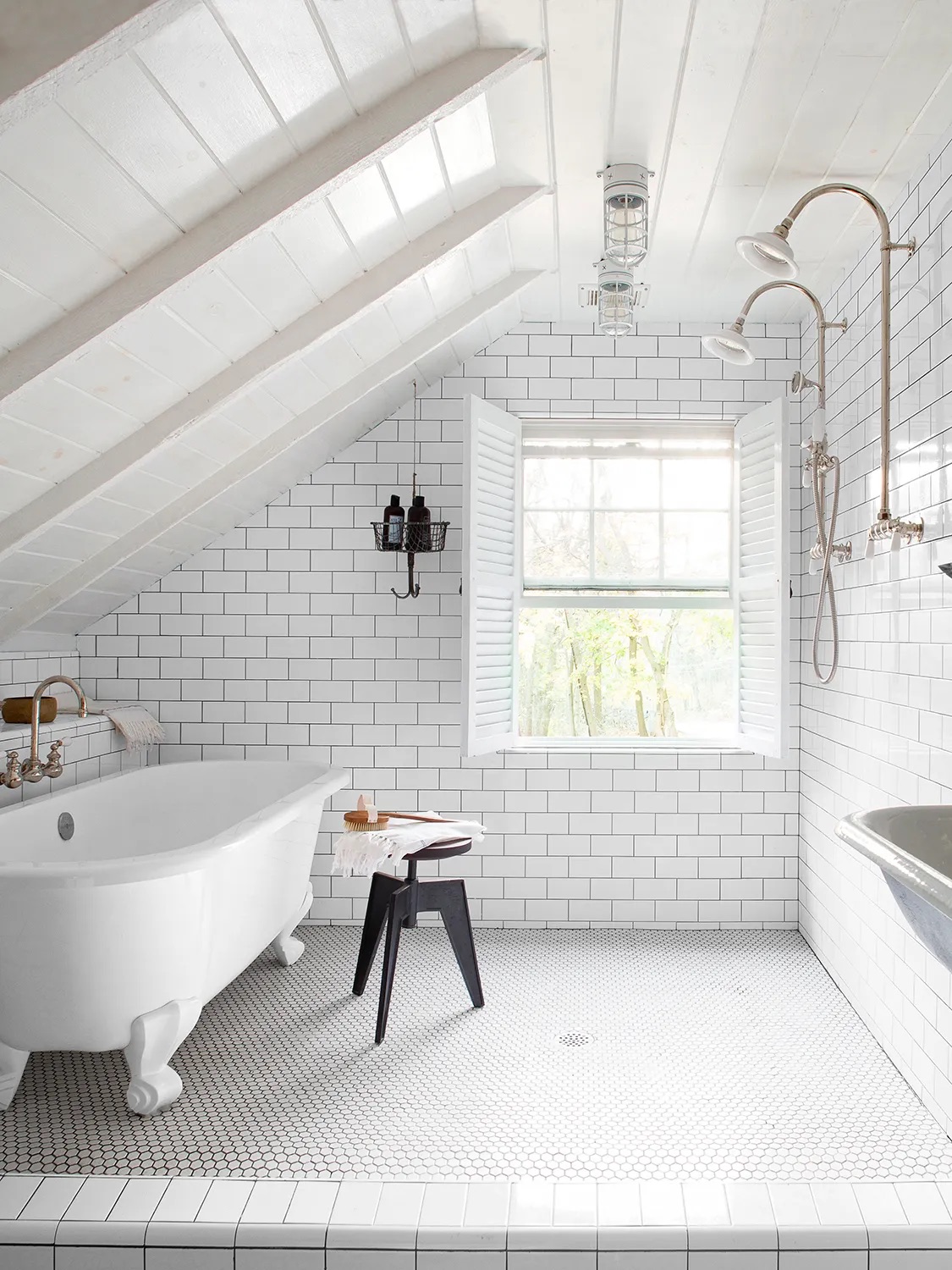
Leanne Ford’s first big design project? Turning her attic into a dreamy primary bathroom. To accomplish that, her carpenter brother Steve cut into the crawl space and took over a closet. They put the tub under the slanted roof, knowing she’d have to be a little extra careful getting in and out, and added a large window in the open-concept double-shower, complete with outdoor shutters for privacy.
Bring the Ceiling Into the Experience
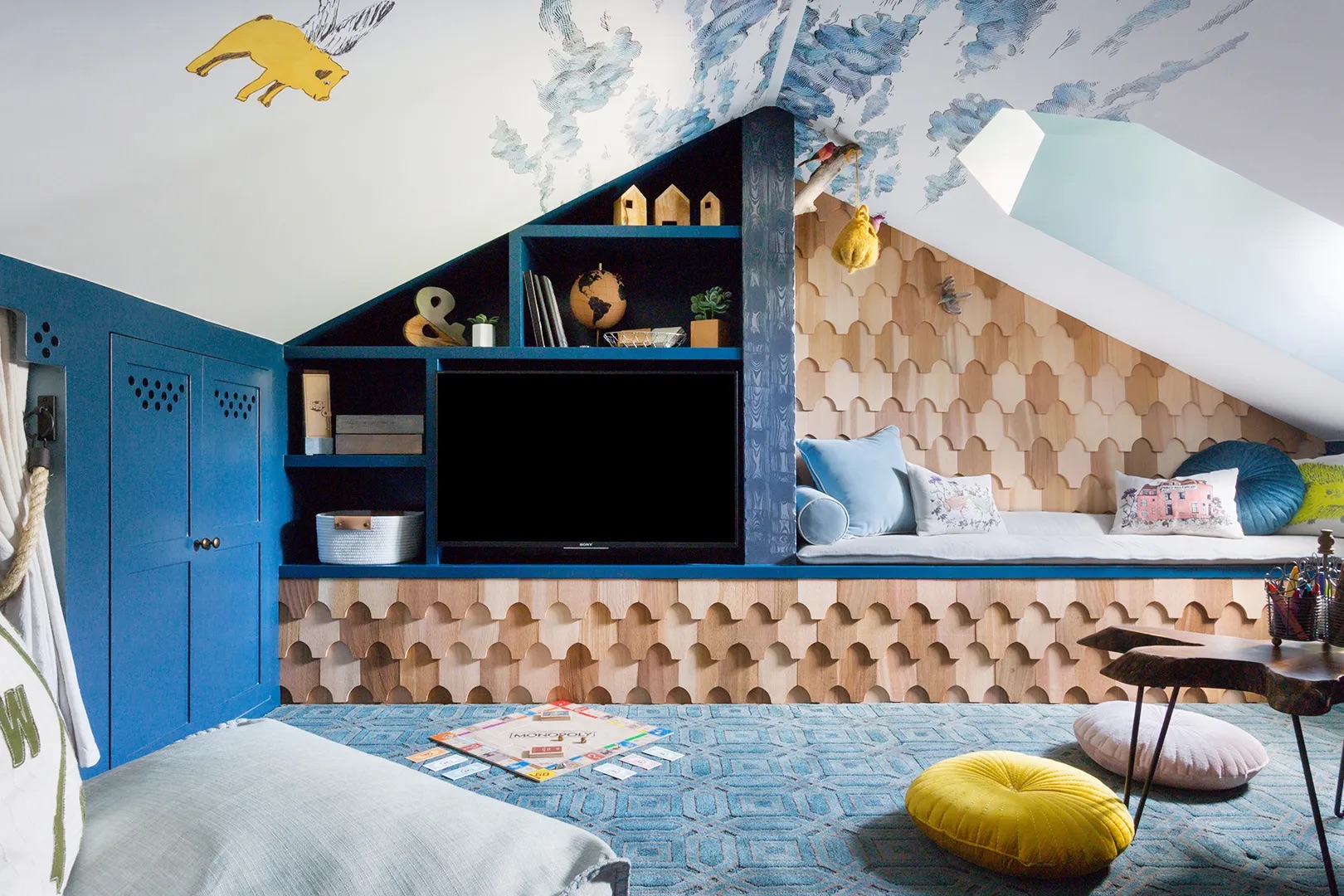
When designer Melinda Trembly’s clients reached out to her about converting their attic into a sleeping and play space for their eight grandkids and two great-grandchildren, they were ready to have some fun. After tucking two bunks under the eaves, she set about turning the blank box into a treehouse-inspired room with a cloud-themed wallpaper from Rebel Walls on the ceiling. To keep it from overwhelming the room, Trembly customized the design so the clouds gather at the ceiling’s peak and fade out to white at the base.
Take a Little Off the Top
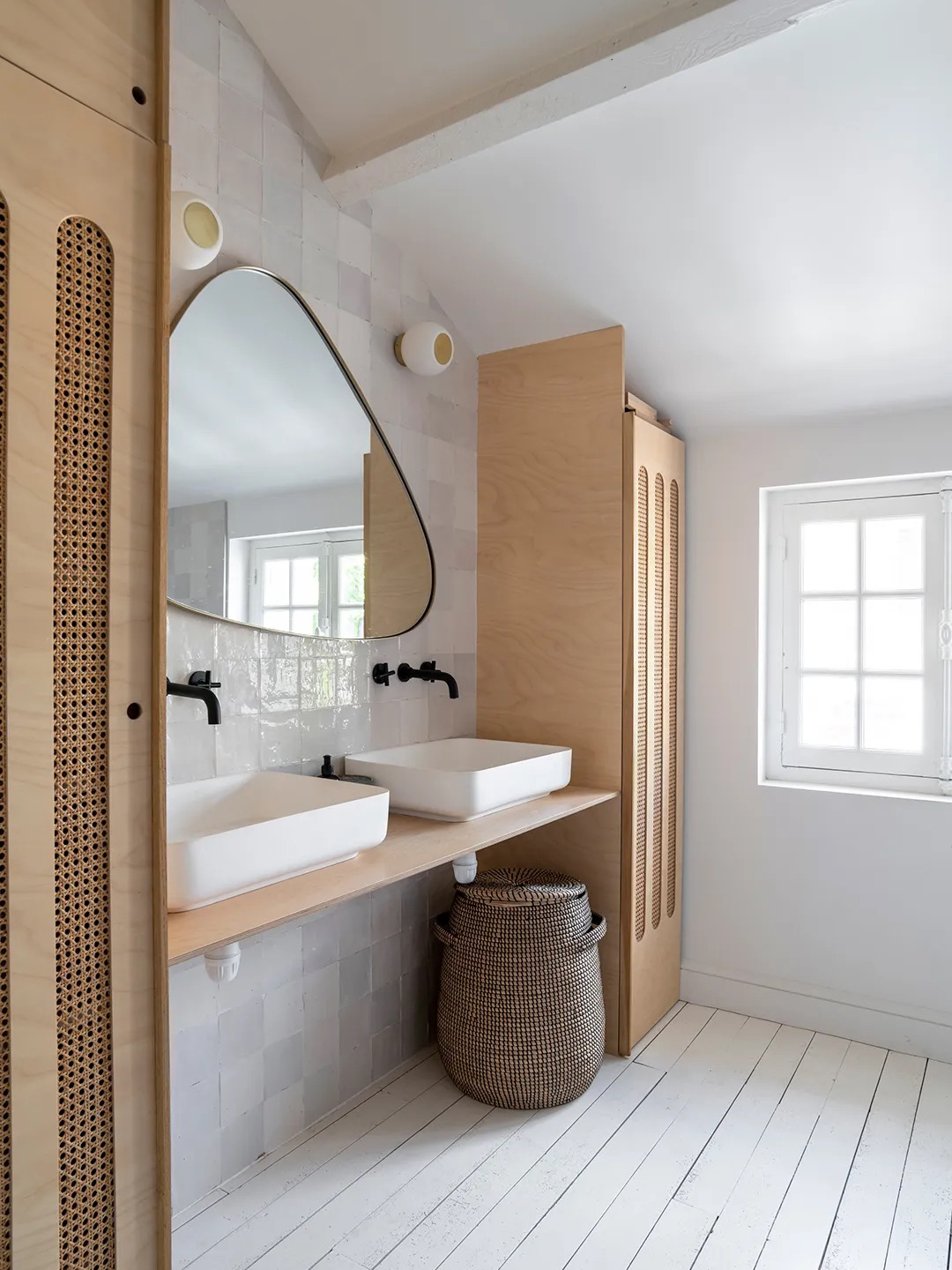
French cabinet makers Romain and Loanah Faget packed their bathroom with storage by creating custom cupboards that fit perfectly underneath the sloped ceilings. Sure, one is taller than the other, but what the room lacks in symmetry, it makes up for in hidden nooks to tuck away spare toothbrushes and bath toys for their little ones.
Ask Your Sofa to Hide the HVAC
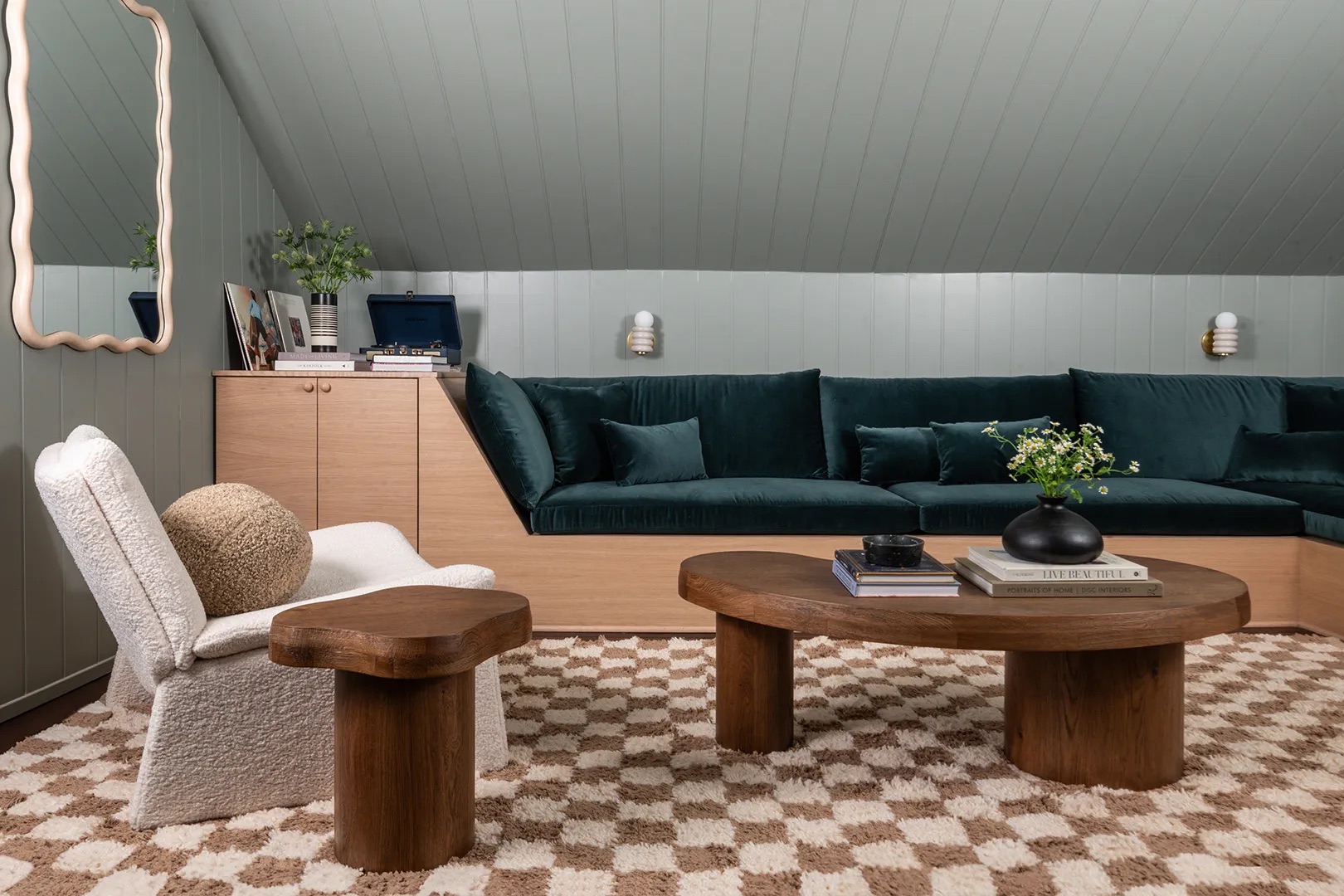
Carli Kessler designed a sofa for her Ohio clients that not only can fit six to seen people comfortably, but the custom couch is one with a cabinet that hides the HVAC system and serves as a platform for a record player. There were two key details that allowed her to work within the awkward attic space. First, she bumped the cushions out from the wall by about six inches to ensure no one accidentally hits their head on the ceiling when they get up. Then, to disguise a few visible gaps along the floors (they’re from the early 1900s, so naturally they’re a bit crooked), she tacked a small strip of molding onto the base of the structure.
Recharge at Night, Literally
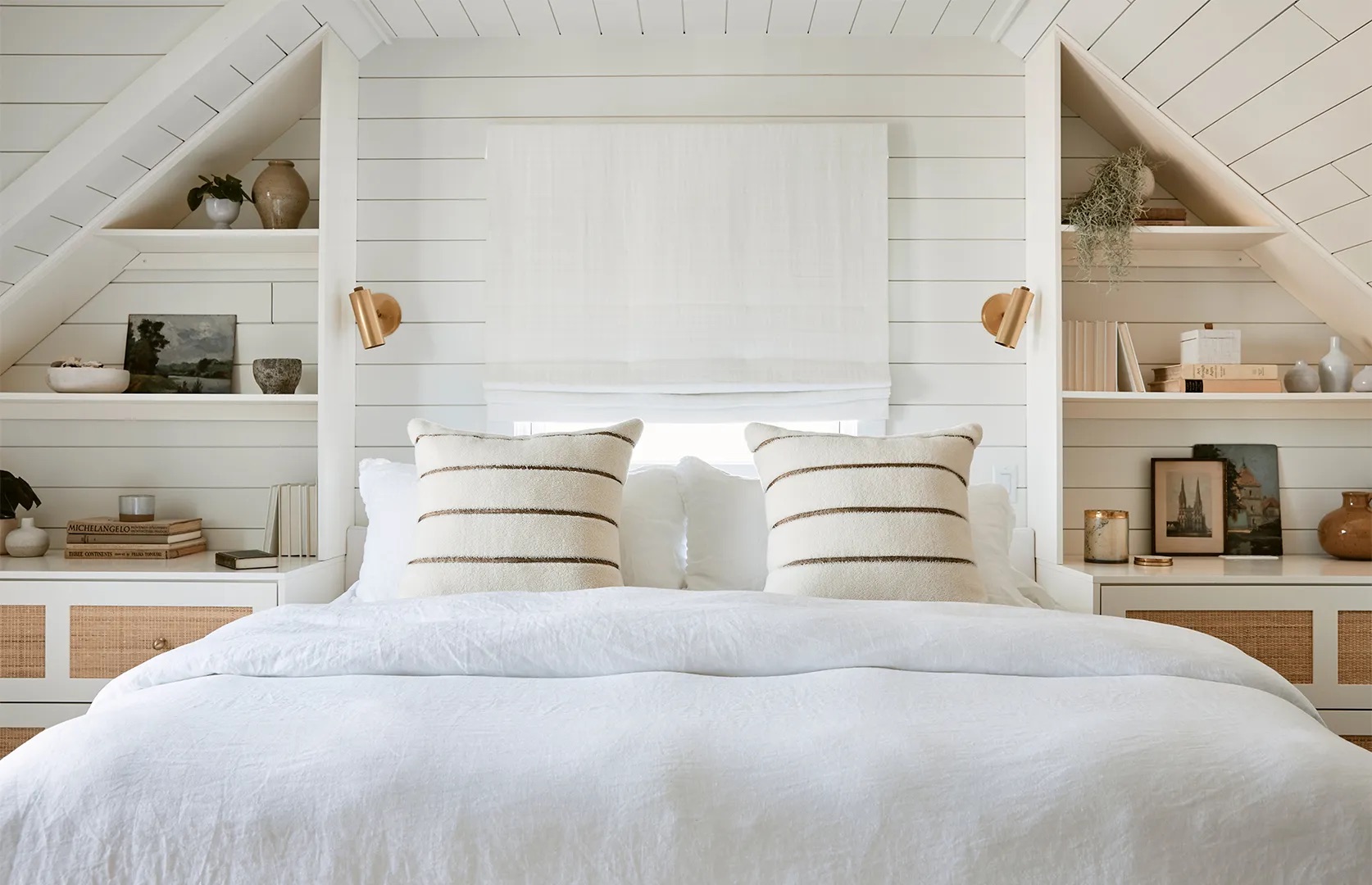
OAK Design Project went the extra mile with the electrical plan in this Jersey shore beach house by working outlets into (almost) every last surface. The oversize nightstands that double as dressers in the main bedroom? They feature plug-in stations so the owners can easily juice up their devices after sitting by the water all day.
Use It as an Opportunity for Storage
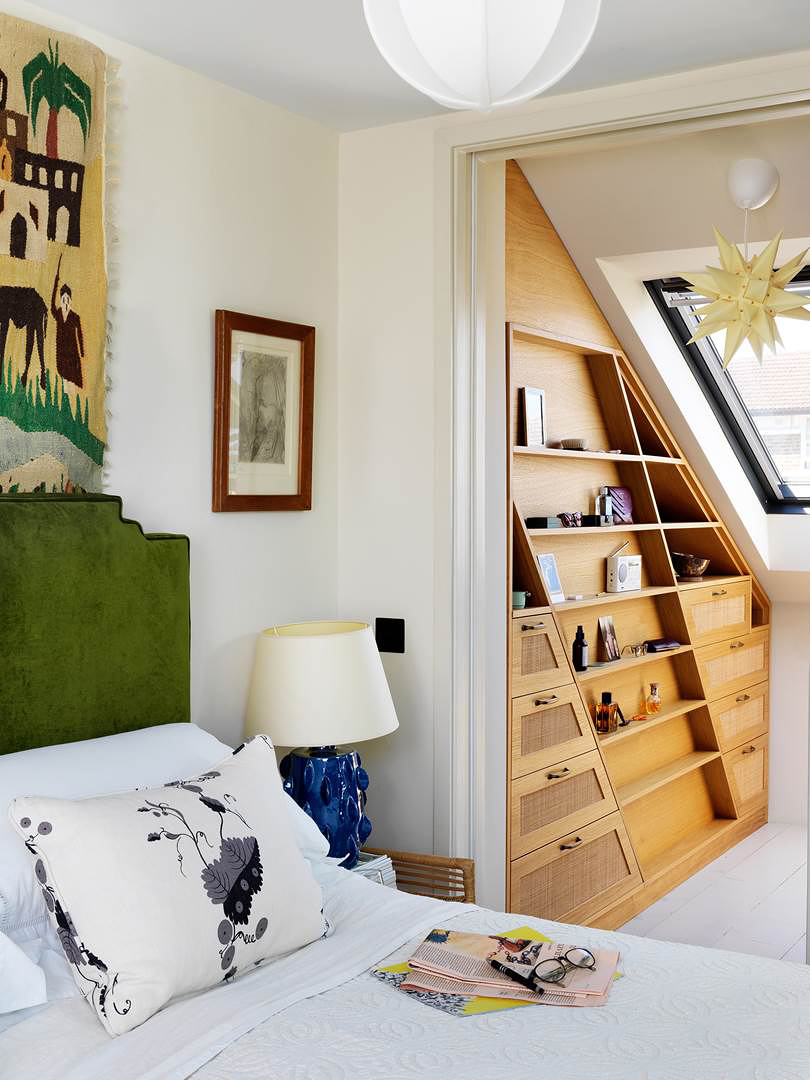
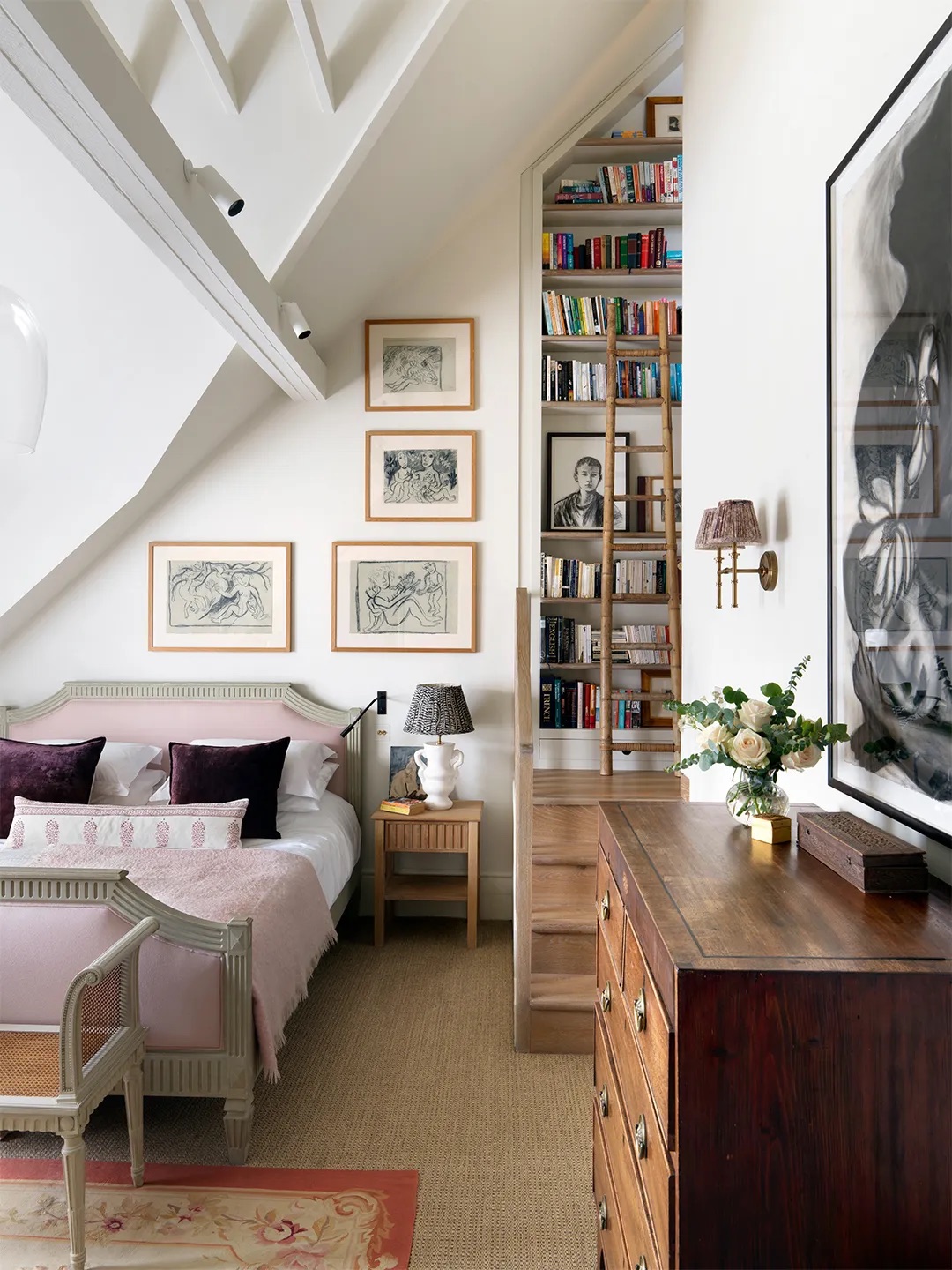
In this London Victorian terrace house, designer Beata Heuman extended her client’s main bedroom into the roof cavity to add as much storage as possible, creating a compact dressing room. The diagonal angles of the built-in closet are a result of working around a sloped chimney stack that runs behind the narrowest shelves (and allows for deeper drawers on either side).
Let Go of a Smidge of Square Footage
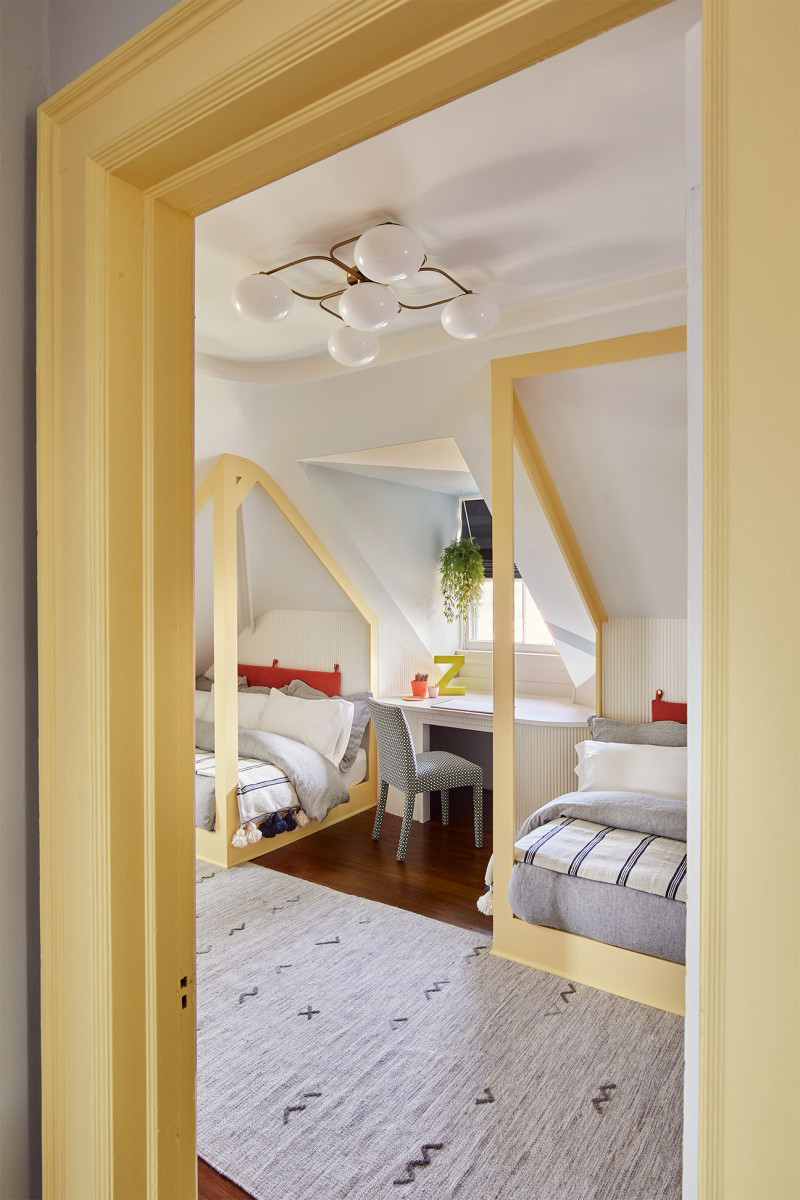
Syeda and Michael Lewis’s son’s room on the top floor of their 1800 Colonial Revival in Park Hill, New York, had a sloped ceiling that almost reached the floor, making furniture layouts extremely challenging. That is until Blair Moore of Moore House Design came up with the idea of enclosing a portion of the space. The move lost them a few square feet, but they gained a headboard-height wall. Canopy bed frames hug the room’s awkward angles, making them feel intentional. The best part: A portal under the desk brings their son behind the faux wall into a Narnia-esque, kid-friendly cubby.
Keep an Open Mind
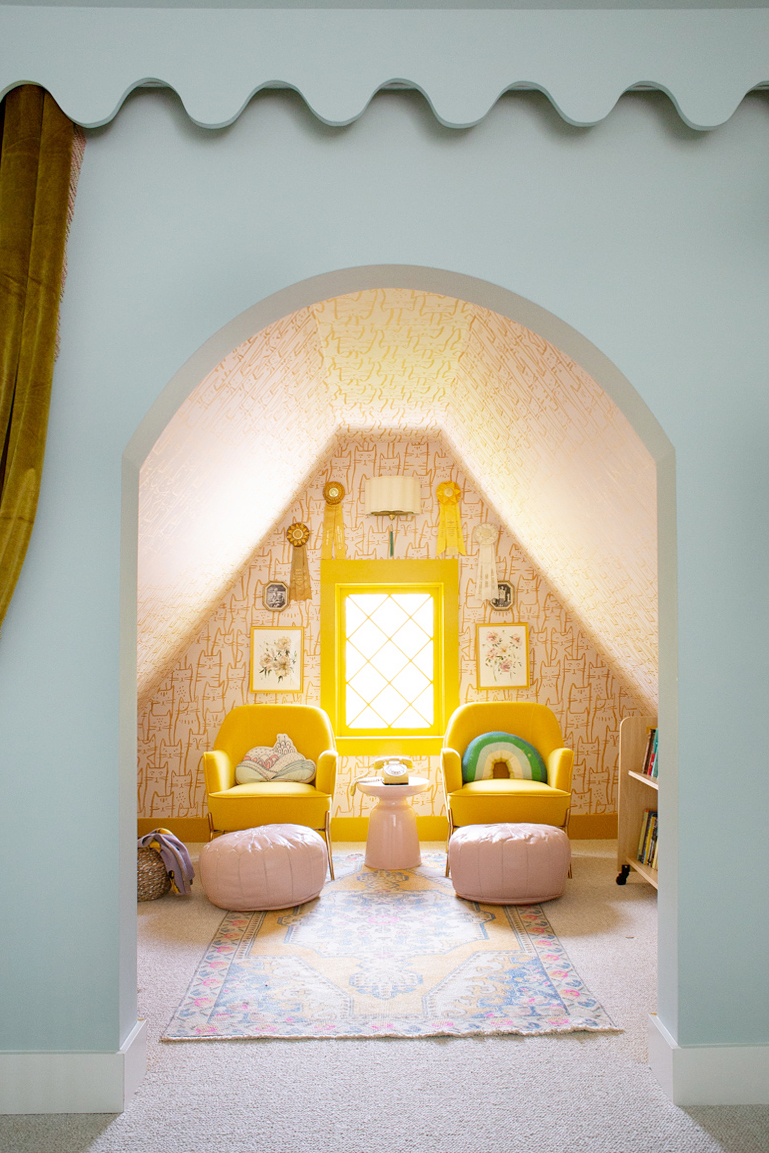
When Joni Lay approved the plans for a second-story extension on her Atlanta house, she planned to turn the pitched nook next to her daughters’ room into a walk-in closet. But when she entered the space for the first time, it was clear that the sloped angles wouldn’t work with standard wardrobe heights—and she didn’t want to block the window. So she turned the niche into a kids’ reading room instead, using low bookcases on wheels to maximize floor space for sprawling out.
Break From Tradition
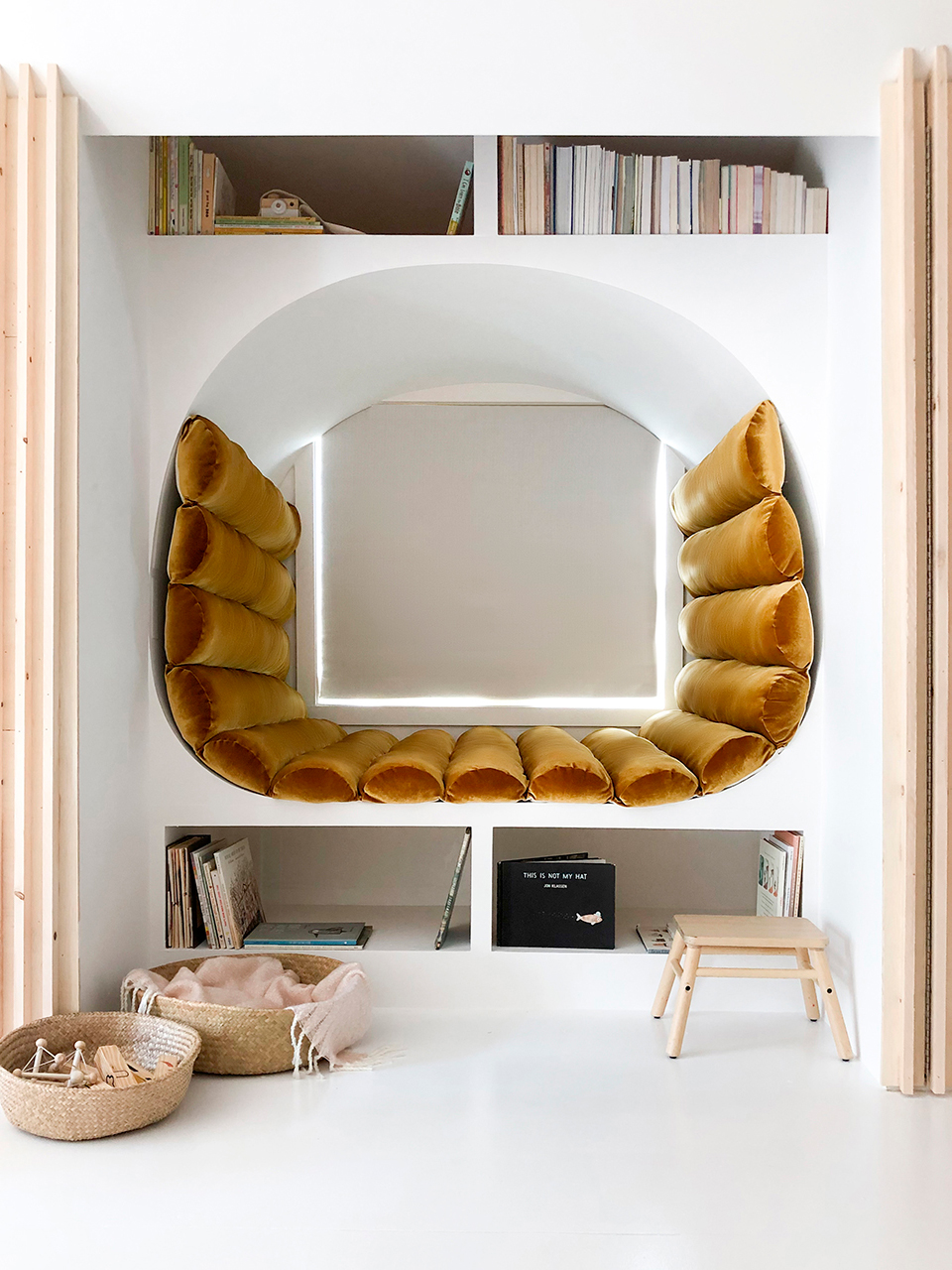
Sloped ceilings didn’t deter Karla and Ray Graves from building a dream playroom for their three boys in their Birmingham, Alabama, cottage. They carved out a circular enclave to frame the window under the eaves, padding it with a rust-colored velvet cushion that runs up the walls on either side for optimal coziness. Open storage above and below houses their ever-growing book collection.