We may earn revenue from the products available on this page and participate in affiliate programs.
Presented by
For more than 100 years, Trane has offered HVAC tools and services that help you achieve your ultimate at-home comfort all year round.
For new homeowners and renovators alike, installing an HVAC doesn’t top the design to-do list like choosing kitchen cabinet paint colors or cool curtain fabrics (a.k.a. the fun stuff). Still, finding the right HVAC for your home is exactly the kind of task your future self will thank you for well into the next decade.
To guide us through the ins and outs of heat pumps, air conditioners, air purifiers, and beyond, we tapped HGTV regular Anthony Carrino for his expert advice. As a seasoned designer, project manager, and Trane partner—the trusted, century-old company that continues to be a world industry leader for providing innovative HVAC solutions—Carrino is well-versed in every detail you might need to know. Here’s what he tells clients who are starting their search:
- Get precise with sizing. A proper load calculation accounts for your insulation, windows, ceiling height, and sun exposure, not just square footage. An oversized system could short cycle, which means poor humidity control and a shorter equipment lifespan. Bigger is not always better.
- Learn the ratings, briefly. SEER2 measures cooling efficiency, HSPF2 measures heating efficiency for heat pumps, and AFUE measures furnace efficiency. While no single rating tells the whole story, higher efficiency ratings can be a useful indicator of a system’s potential to help reduce energy use and support a more efficient home.
- Think in systems, not units. Your outdoor unit, indoor coil, air handler or furnace, and thermostat all need to be matched and sized together. Mismatched components are one of the most common reasons a new system underperforms.
Curious to learn more? Read on as he shares helpful HVAC insights for every kind of home, including the Trane products he uses and recommends.

What are some things to consider when choosing a HVAC system for a home in different climates?
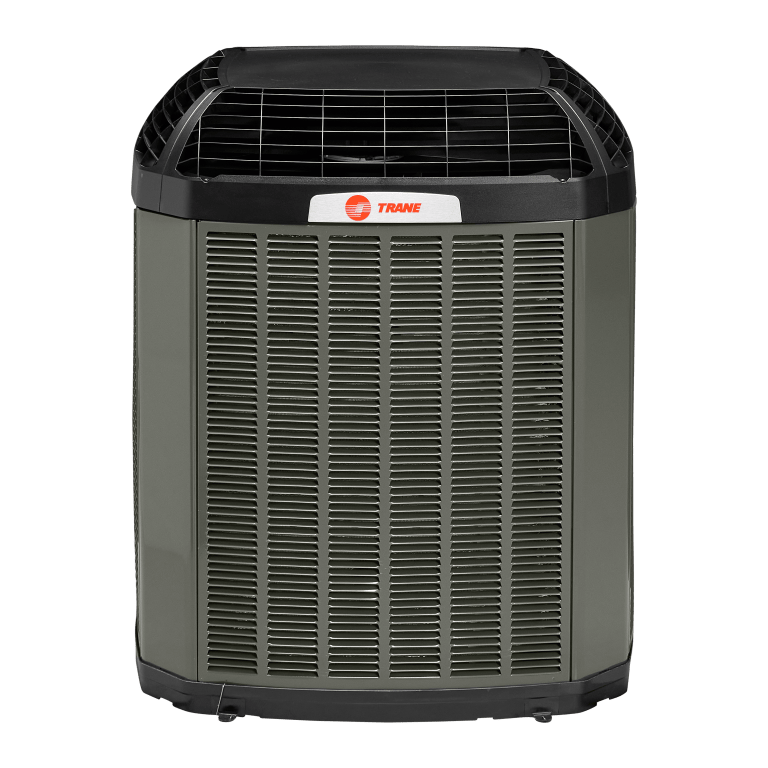
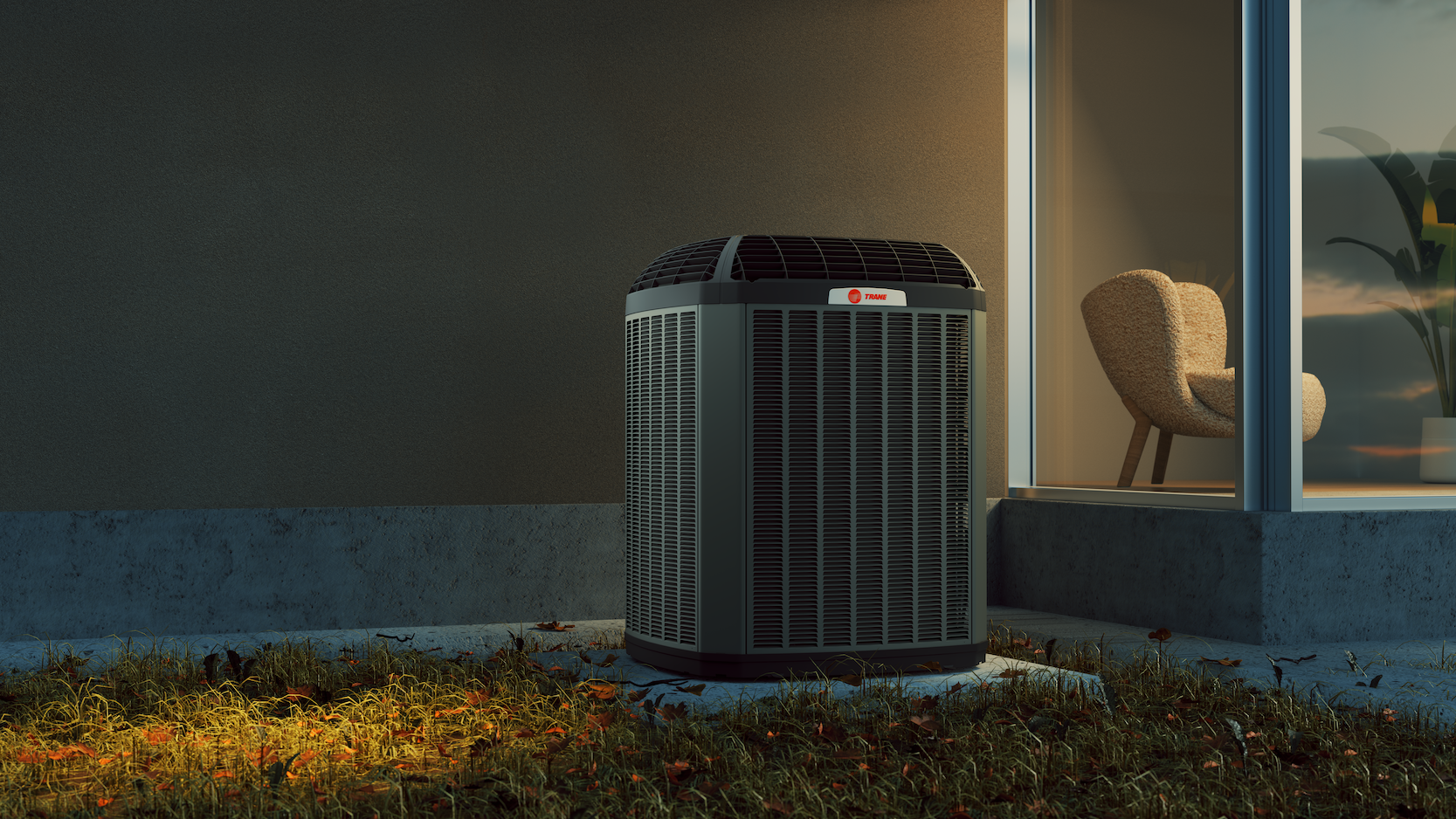
People assume “hot climate” and “cold climate” call for completely different equipment. Increasingly, they don’t. Take the Trane 20 TruComfort Cold Climate Heat Pump with WeatherGuard. Despite the name, I recommend the same unit for both ends of the spectrum, for different reasons:
In a hot climate:
- Your dealer would size your heat pump prioritizing your cooling load first. What matters most is how it handles humidity, not just temperature. A variable speed compressor runs longer at lower speeds instead of blasting on and off, which pulls more moisture out of the air and keeps a house from feeling clammy at 74°F.
In a cold climate:
- This is where “cold climate heat pump” earns its name. This unit maintains 100% heating capacity down to 5°F and continues operating in temperatures as low as -20°F, which used to be the whole argument for keeping a backup furnace.
- If you’re somewhere with genuine deep freezes, I’d still pair it with a furnace as a dual-fuel backup. This system automatically switches to the furnace only when temperatures drop low enough. You get the efficiency of a heat pump for most of the year and the raw heating power of a furnace for the coldest stretches. It’s a smart middle ground for anyone in a true four-season climate who isn’t ready to go fully electric, or who wants the backup.
Same heat pump, two very different jobs, one piece of variable speed technology solving both.

What should homeowners renovating an older property keep in mind for HVAC installation?
Older homes are their own animal, and HVAC is usually where the surprises live. A few things I check before any renovation:
- Ductwork condition and sizing. Old ducts were sized for old equipment. A new high-efficiency system paired with undersized or leaky ductwork will never perform to spec, no matter how good the equipment is.
- Electrical capacity. Heat pumps and variable speed systems draw differently than what a 1920s panel was built for. Confirm panel and circuit capacity early in the planning process so you don’t get a potentially expensive surprise mid-renovation.
- No ductwork at all. This is where a ductless mini split system earns its keep. Additions, converted attics, finished basements, or anywhere ductwork was never run—that’s exactly the situation mini splits solve, without having to tear open walls or ceilings to run trunk lines.
- Where the outdoor unit actually goes. Historic facades, tight side yards, and HOA or landmark restrictions can all limit where a condenser can sit. Sort that out with your contractor before you fall in love with a layout.
A renovation gives you one real shot to fix decades of HVAC compromises. Don’t just replace what was there. Size and plan for what the house needs now.
What are some options for homeowners who are starting from scratch with a new build?
New construction is the one time you get to build the HVAC system into the house instead of working around it, so use that leverage. A few things worth exploring:
- Central ducted systems with zoning. If you’re framing walls anyway, this is the moment to plan zoning and separate temperature control for different areas or floors, with none of the retrofit cost later.
- Smart home integration. Wire for a smart thermostat and plan low-voltage runs during framing. Retrofitting is possible, but it’s so much easier as part of the original plan.
- Whole home indoor air quality. Humidifiers, dehumidifiers, and air purification are far easier and cheaper to integrate into new ductwork than to add after the fact. I have a Trane CleanEffects Whole Home Air Cleaner in my home, and I highly recommend it.
- Don’t oversize just because you can. New builds are tighter and better insulated than older housing stock. A properly done load calculation on new construction often comes back smaller than people expect. Let the numbers drive the decision, not instinct.
One of the biggest advantages of new construction is that you can get your HVAC contractor in the room during the design process, not after the walls are up.

Are there any new smart home developments in HVAC technology?
Most people think a smart thermostat means ripping out their whole system for something proprietary. That’s not true anymore, and it’s probably the single most useful thing I tell clients.
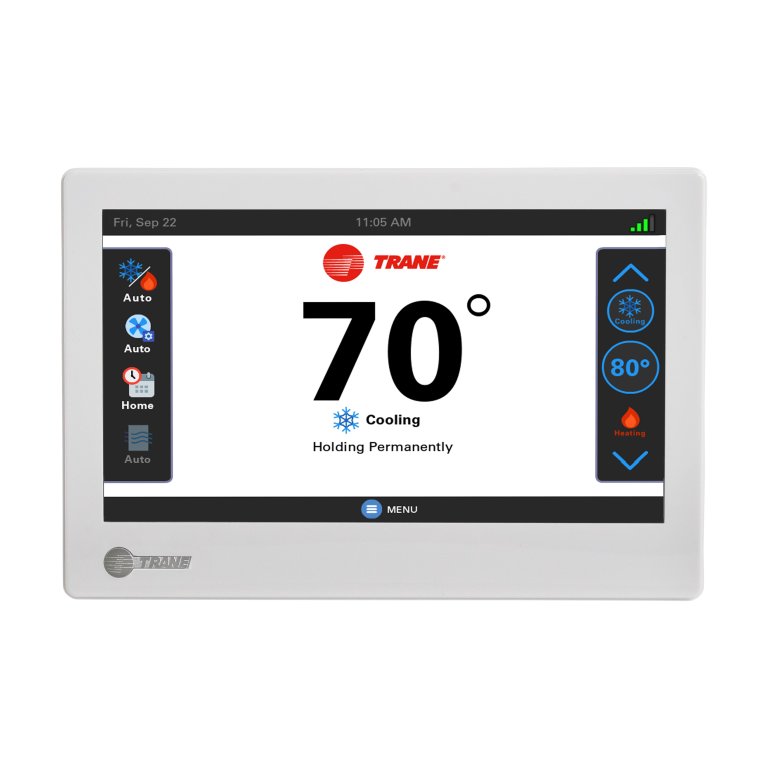
The Trane Priority Smart Thermostat is built to work with standard 24 volt wiring, the wiring most HVAC systems in the U.S. already have. Through the Trane Home App, homeowners can access scheduling, geofencing, and remote system control. They can also opt into Trane Remote Diagnostics, which allows their preferred dealer to monitor system performance, receive alerts, and help troubleshoot issues remotely.
That matters because it separates two decisions people usually lump together: replacing your HVAC system and getting smart controls. If your system still has life left in it but your thermostat is a decade-old plastic dial, you don’t have to wait for a full replacement. You can upgrade to the thermostat now and carry it forward when you eventually replace the full system. It’s a small detail, but it’s the kind that saves you real money and a lot of confusion.

Is there anything you need to have set up in your home prior to installing an HVAC?
This is the question nobody asks until the installer shows up and asks it for them.
Outdoors:
- A level, stable pad for the condenser, usually poured concrete or composite, with clearance on all sides (typically 12 to 24 inches minimum) for airflow and service access.
- Ideally somewhere covered and dry, or at least somewhere it won’t catch runoff from a gutter or downspout directly onto the unit.
- Confirm setback distance from property lines and any local noise ordinances. Every municipality is a little different.
Indoors:
- Clear access to the furnace, air handler, or mechanical closet. If a technician needs to move furniture or crawl through storage to reach the unit, solve that before install day, not during it.
- Confirm electrical capacity, especially for heat pumps or anything upgrading beyond what the existing panel was built for.
- Plan for the condensate line, most notably for anything installed in an attic or above finished living space. Nobody wants to find out about that the hard way.
Get these squared away before your installer arrives and the whole process moves faster, with fewer surprises and fewer change orders.

How can homeowners optimize the efficiency and longevity of their HVAC system?
The equipment matters, plus consistent maintenance and monitoring to keep a system running well for 15 to 20 years. Here are a few habits that actually move the needle:
- Change or clean your filter on schedule. The cheapest, most ignored maintenance item in the entire house. A clogged filter makes every other component work harder. Change them or clean them every quarter.
- Use your smart thermostat’s scheduling, not just the manual override. The energy savings are real, and consistent scheduling reduces wear from constant temperature swings.
- Opt into system monitoring through the Trane Home App. People often skip this step because it sounds unnecessary. But it lets your dealer see run times, performance trends, and early warning signs of a problem before you’d notice anything at all. Instead of finding out your system failed on the hottest day of the year, your dealer calls you first. This is one of the big benefits of working with Trane Certified Professionals.
- Keep the outdoor unit clear. Debris, overgrown landscaping, and snow build-up around the condenser all reduce airflow and efficiency.
- Schedule a professional tune-up annually. Do this ideally once for cooling season and once for heating season, if you run a hybrid system.

Is there anything else a homeowner should have on their HVAC radar?
Most people think about heating and cooling and completely forget about what they’re actually breathing. A whole home air purifier like Trane CleanEffects filters out a genuinely surprising amount, down to particles smaller than a fraction of a human hair, well beyond what a standard filter catches. If anyone in the house deals with allergies, or you just want cleaner air without buying five separate portable units for five rooms, this is worth a real conversation with your dealer. Like with any home improvement decision, your choice will be easy when you’ve done your homework.
Find a Trane-certified HVAC pro near you.