
We may earn revenue from the products available on this page and participate in affiliate programs.
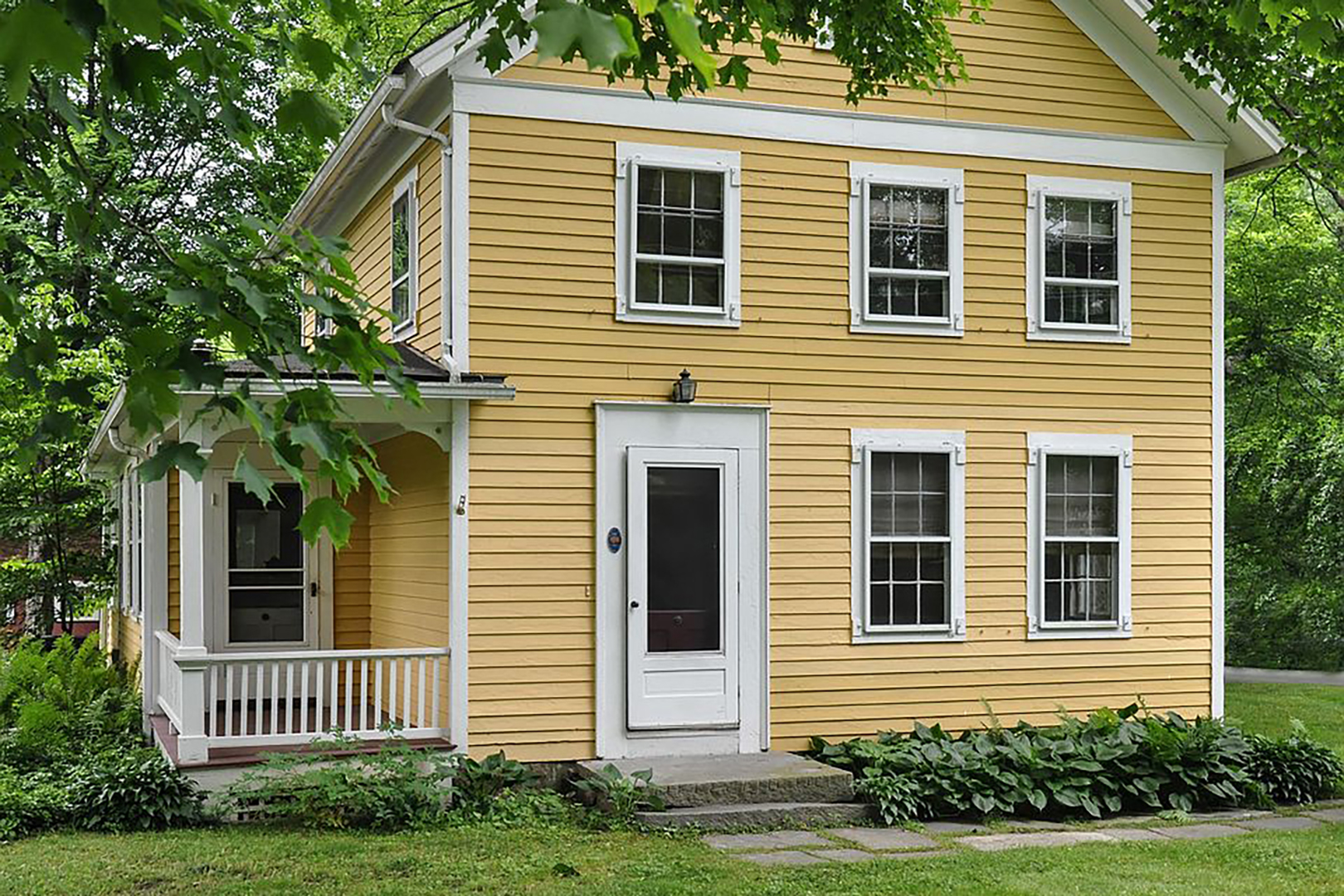
We first spotted Taylor Swaim’s nearly 200-year-old Litchfield County, Connecticut, home the way any self-respecting design nerd would—on TikTok. One post about her front porch project had us deep-diving her feed. When she bought the place in 2021, the exterior was painted a cheery bright yellow—very on trend this year, but Swaim thought it felt a little severe and distracted from the home’s architectural details. “It also didn’t have much presence,” she recalls. “It felt like you were looking at a side door or a side entrance.”
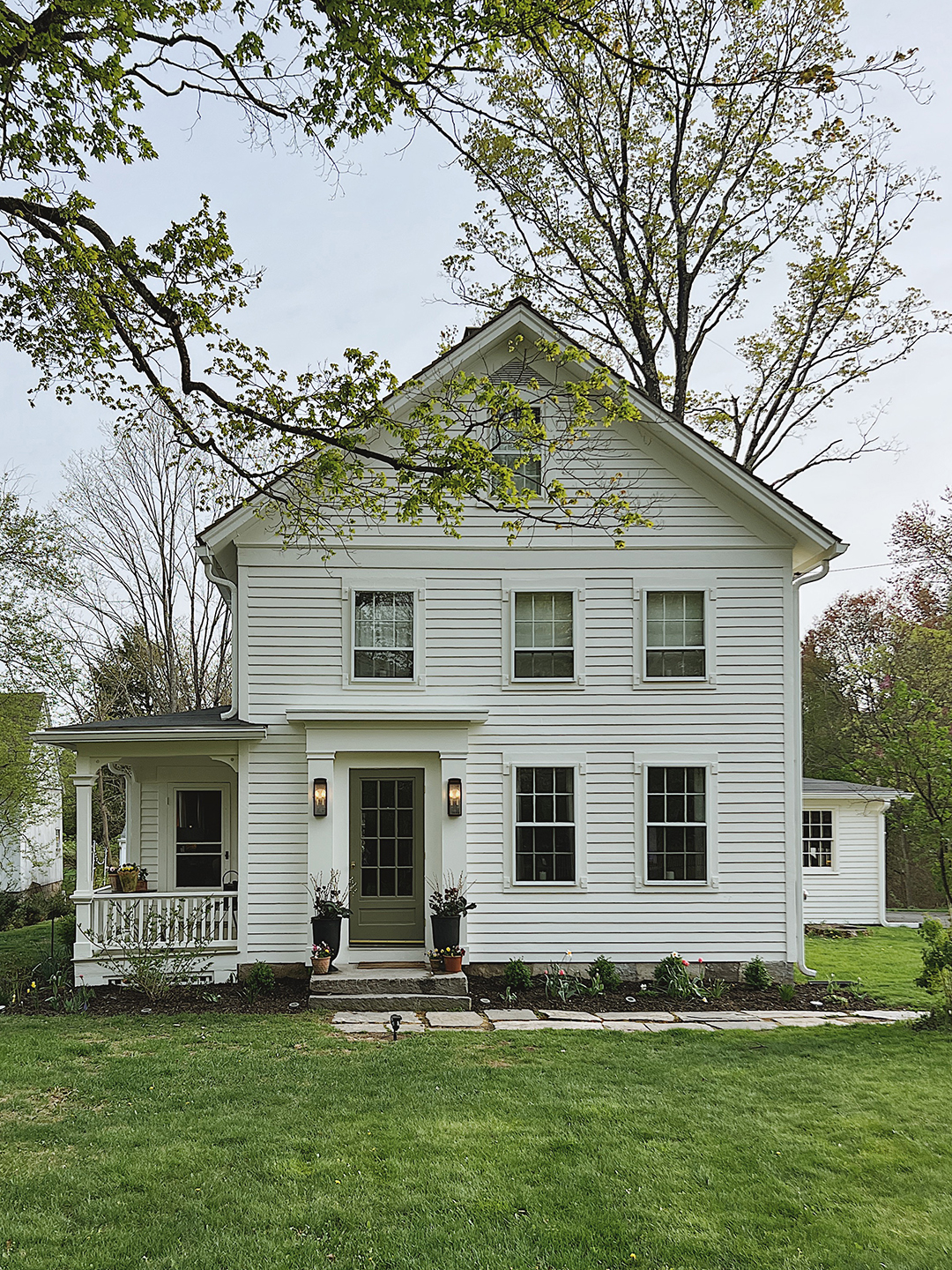
Roughly four years later, she finally gave the historic Greek Revival a facelift, leaving her stamp on the place while staying true to its roots. And yes, there were funny moments, freakouts, and the kind of small-town drama you’d expect.
Staying True to the Home’s History
“I discovered that at some point in the Victorian era, a porch was added to the front of the house, and I think that’s when the original trim work was removed. The porch likely fell into disrepair and was removed, but they never re-added the 1800s Greek Revival trim. So with the facelift, my aim was to restore the house to what it may have looked like when originally built.
In that era, typically the same carpenter did both the interior and exterior trim, and since the home still has an original fireplace mantel, I had my friend who’s an architect replicate the proportions and details of the mantel to create the plan for the trim around the front door.”
Working Through Approvals
“As a first-time home buyer and as someone who’s never lived in a historical district, I was pretty naive going into the historical approval process. I thought it would take a couple of weeks, but because my house is a unique case that requires both state and local approval for changes, it actually took about seven months.
My first step was working with the state historical group Preservation Connecticut. Again, I worked with an architect to create a rendering, and we went through several rounds of back and forth just to make sure it fit their criteria. One thing that was really interesting: I originally thought the new trim should look as much like it came from the 1800s as possible, but the preservation group wants a historian to be able to tell that the trim work isn’t original to the house. It’s a really fine balance of not wanting to be deceitful about historic preservation. This approval alone took upwards of five months.
I then worked with my local historic district, which was faster, especially because I had already achieved approval at the state level. That process reminded me a bit of the town hall meetings from Gilmore Girls. It was really funny! They had a public meeting where people from town got to vote on whether or not to approve my plan. Needless to say, I got my approval.”
Picking Paint Colors and Fixtures
“In a perfect world, I would have done the trim work first, then had the team paint the house. But because approvals for the trim took longer than expected and I’d already booked the painters, they came and did that in the fall, then returned in the spring to work on the trim.
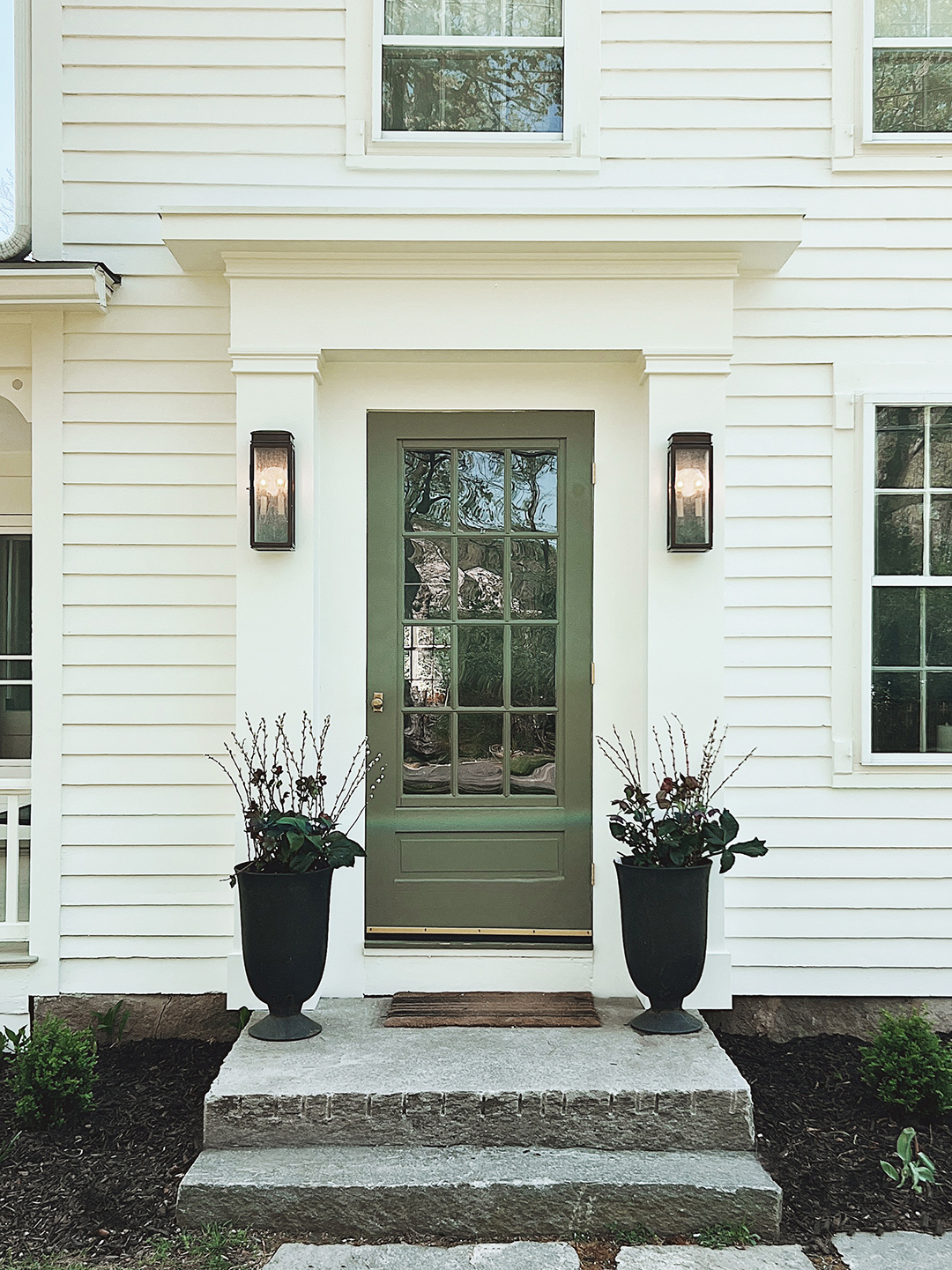
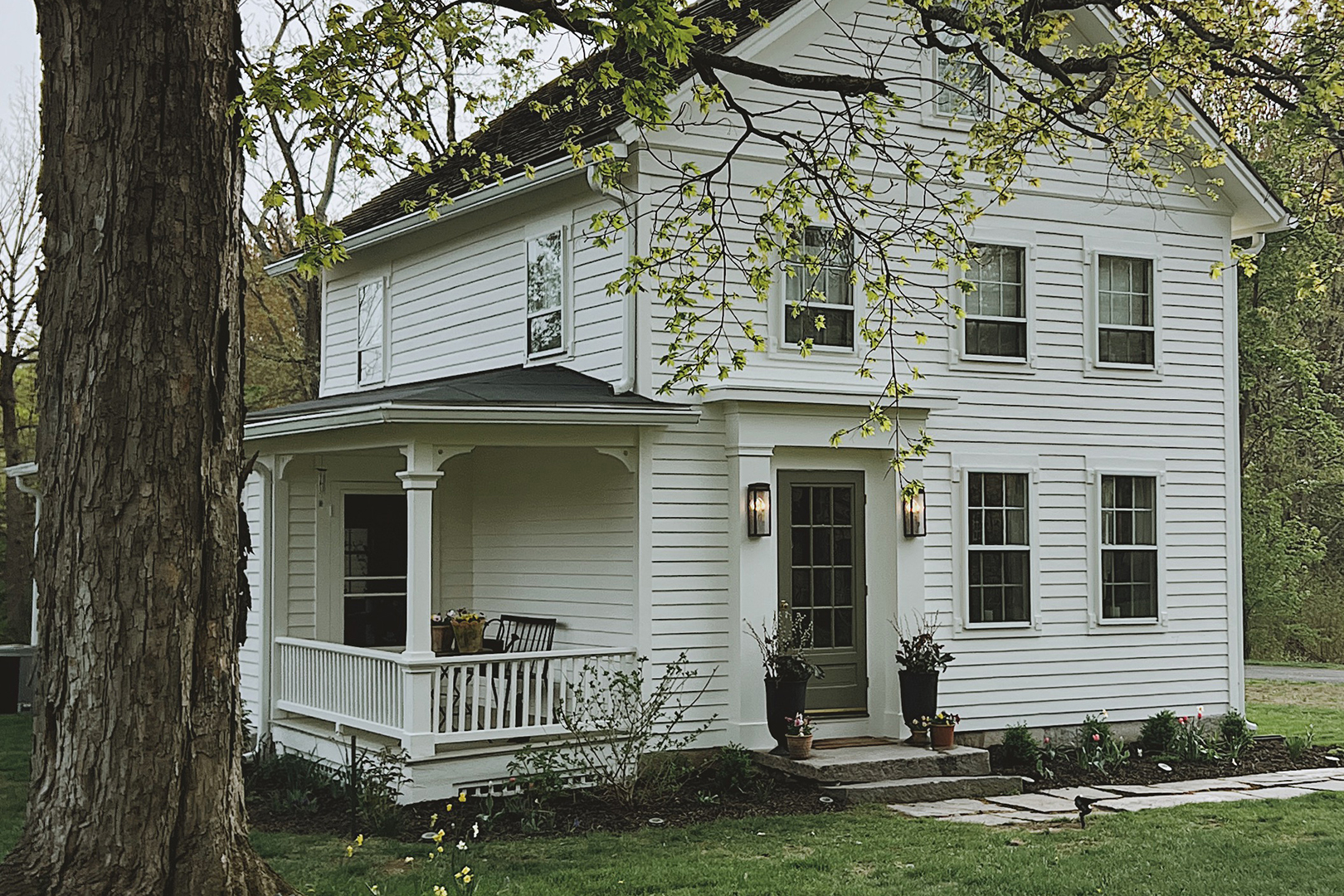
As for color, bright white New England homes are pretty standard around here, but I always find that to be a little severe, so I went with a warmer white, something with a little softness to it. That’s why I chose Swiss Coffee by Benjamin Moore. For the front door color, I went with Sussex Green by Benjamin Moore—a very muddy brown-green, which is a color I personally gravitate to a lot inside the house. It feels very earthy, and I’m surrounded by a lot of trees, so I felt like it was a natural choice for the door color.
For the lighting, I picked bronze lantern-style fixtures by Generation Lighting, which match the bronze hardware on the door. I then added planters by Smith and Hawken for Target, which I filled with hellebores in the spring and Midnight Rose Coral Bells in the summer.”
Staying Calm During Construction
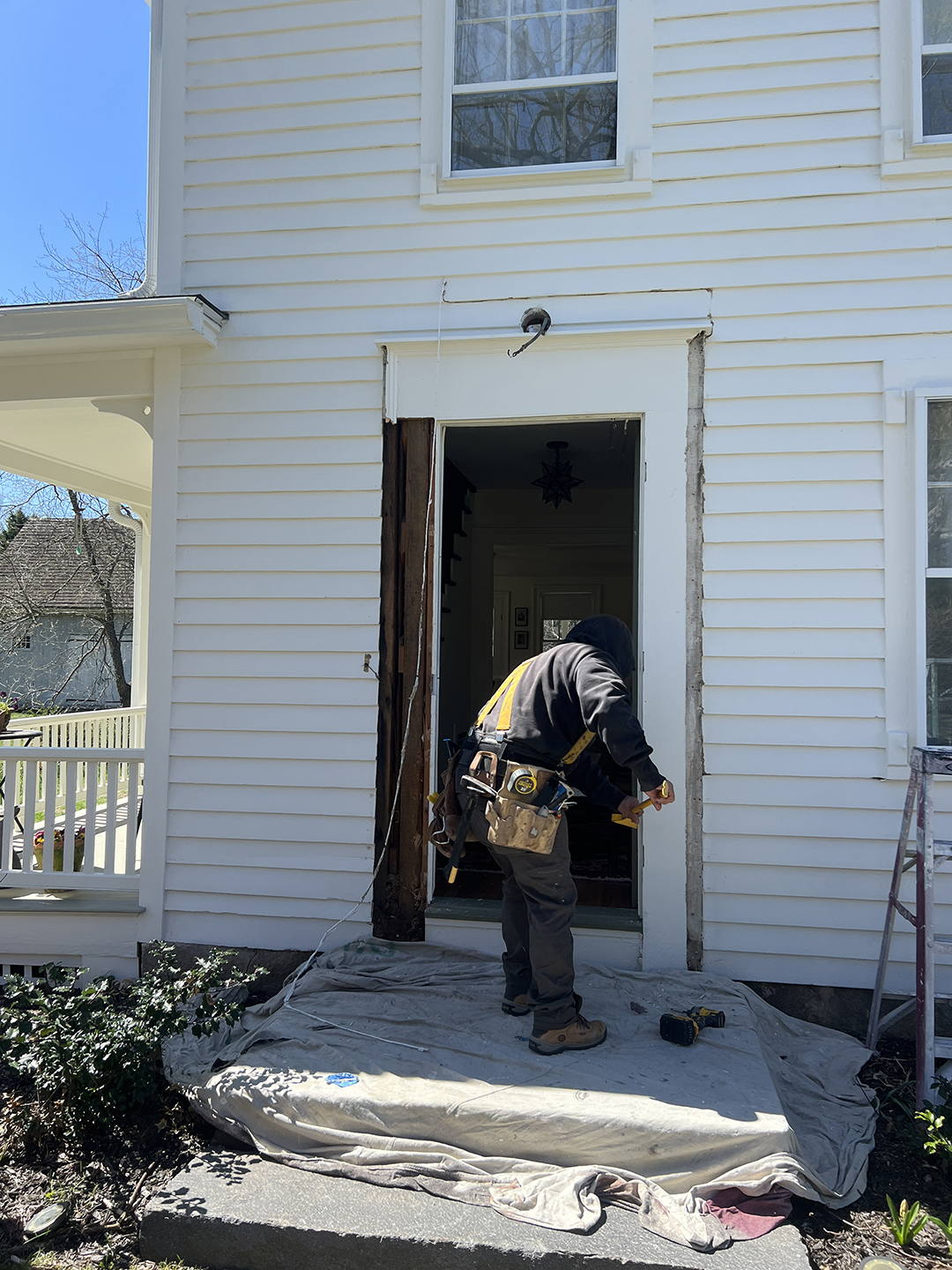
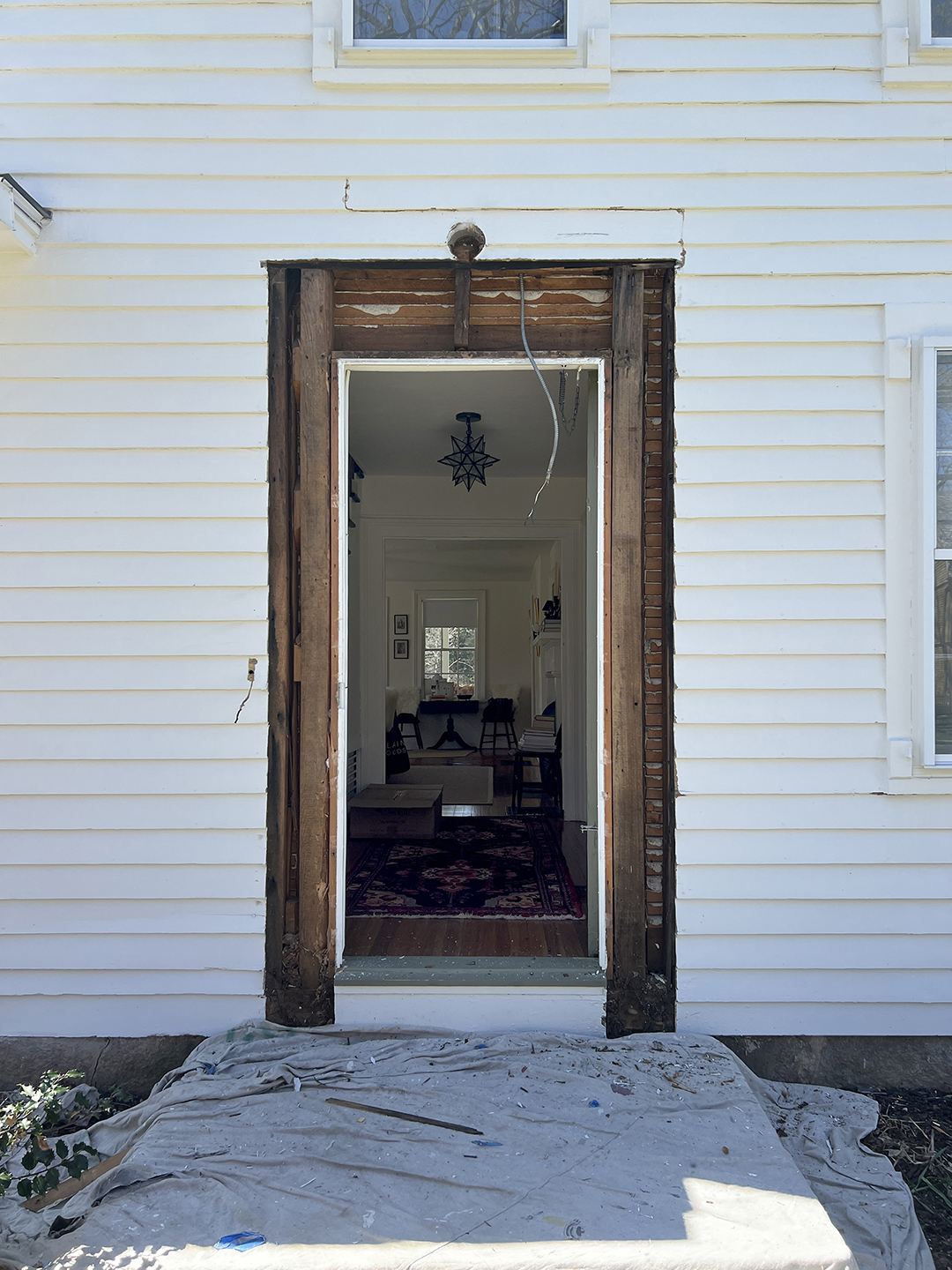
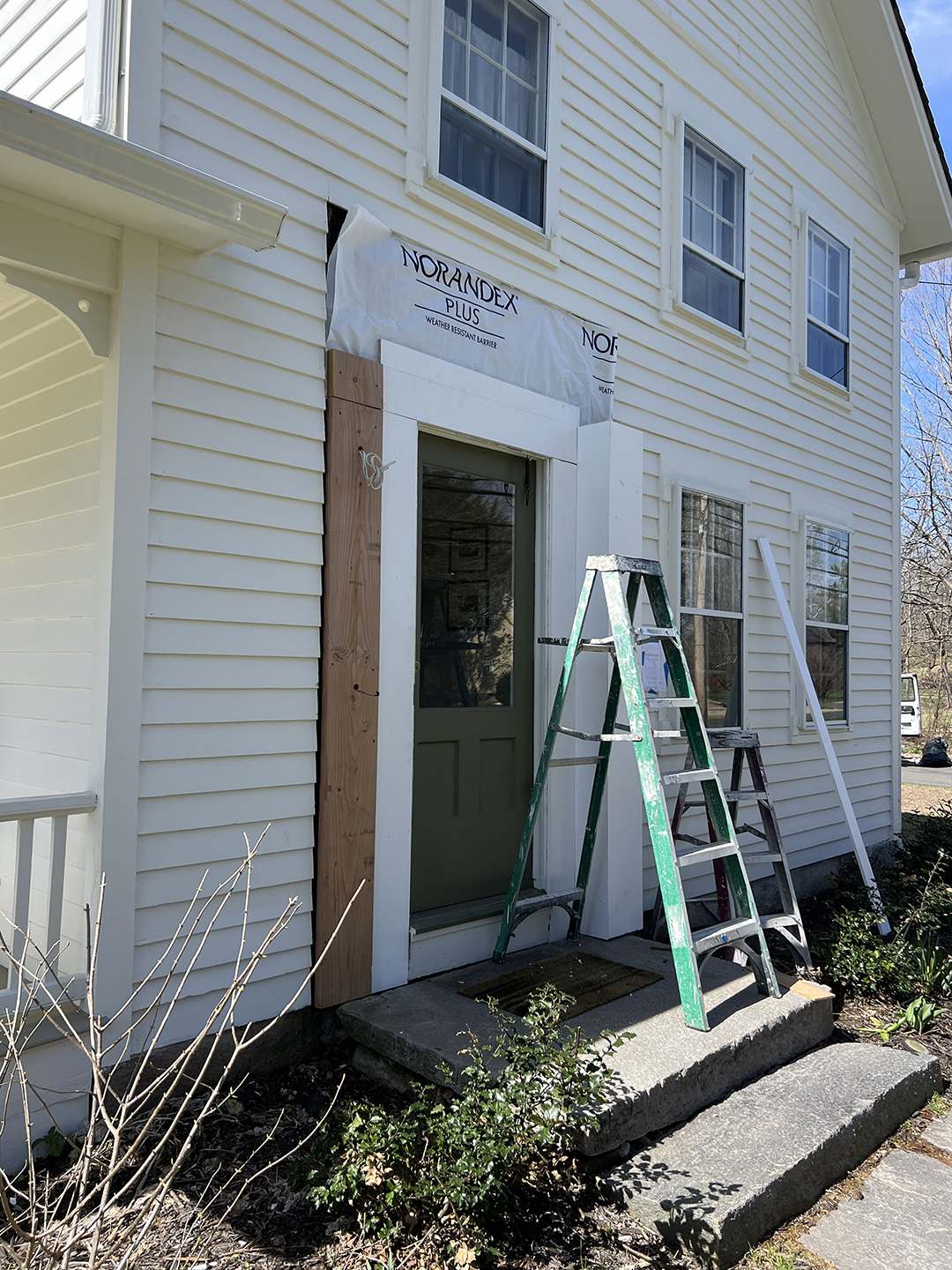
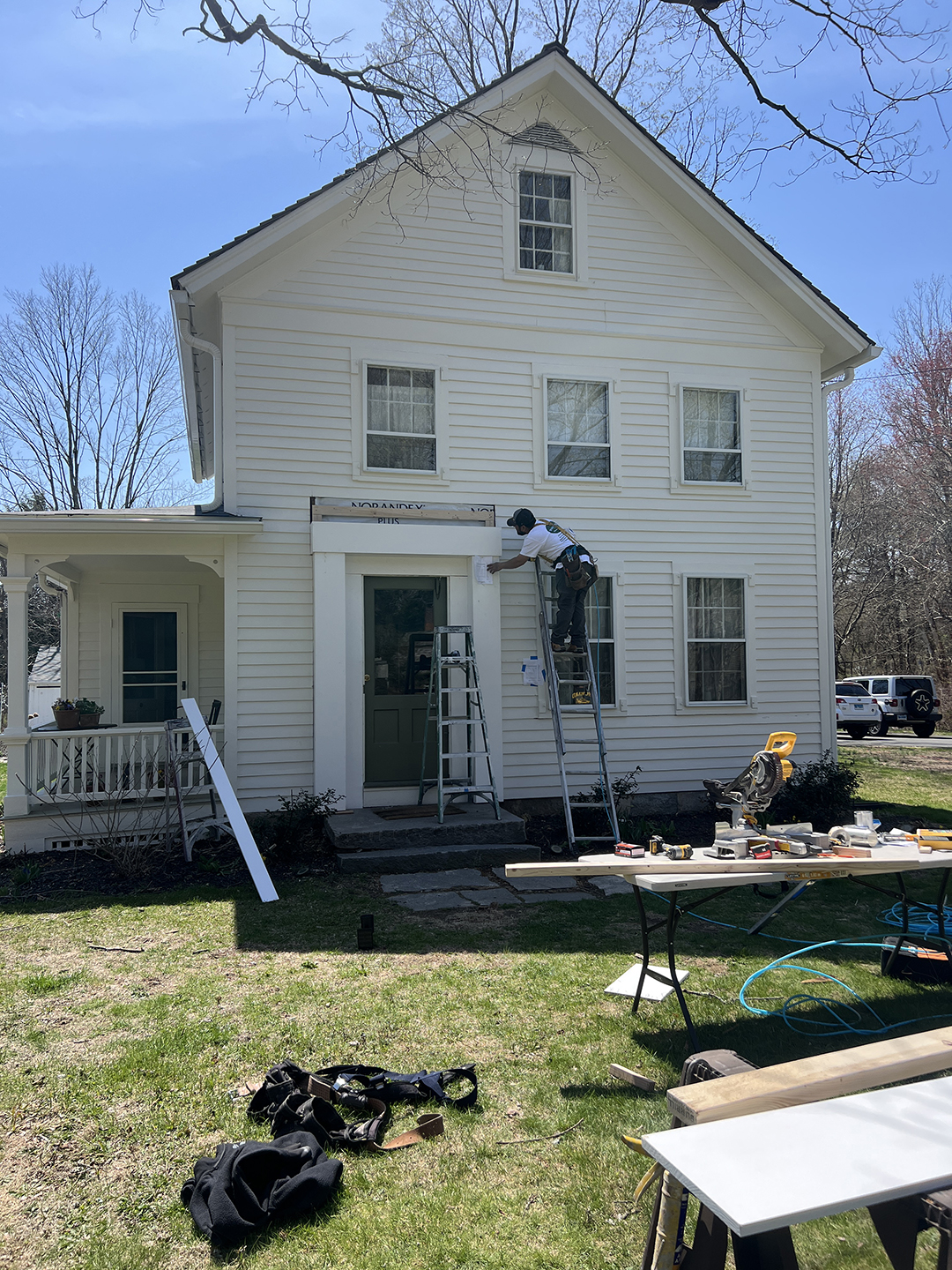
“The construction phase, which only lasted three or four days, was pretty terrifying. I had been really excited to do this project ever since I moved in, and my gut told me that the house needed it to add back a little character. But when you cut into a 200-year-old house, you can basically see the interior walls on the other side; there’s no insulation. I thought, oh my god, am I making a mistake? What if this damages the house? But ultimately, I had faith in my architects. By the time we got toward the end, all of my fears subsided and I could see the light at the end of the tunnel.”
Enjoying the Finished Look
“When you buy an older home—or any home, really—if you have a vision for it, until you get to execute on that, I don’t know that it ever truly feels like your house.This house has had so many years behind it and so many different lives, and I feel really privileged to say that I got to put my little stamp on it.”