We may earn revenue from the products available on this page and participate in affiliate programs.
In her new monograph, Tamsin Johnson: Contrast, Space, Harmony (Rizzoli, March 17), the Australian designer showcases some of her latest projects from all over the world. Johnson is known for ability to source truly unique and storied antiques, and deftly layers them into these homes in a way that adds both sophistication and relatability. You’re welcome here, they say. Below, Johnson shares the story of an idiosyncratic lakefront house in Queensland with a fascinating history, drawn directly from the pages of the book.
During my childhood, one of Australia’s classic films, The Castle (1997), made famous the line, “How’s the serenity?” It has been part of the Aussie vernacular ever since, and when I first arrived at this sleepy lakeside outpost in rural Queensland, it sprang to mind instantly.
The house itself resembled a film set, a two-story louvered weatherboard, a curious mix of Queenslander and Bahamian bungalow. Just looking at it evoked a storied past—a hundred plus years of comings and goings, creative types mingling in the garden, a record player spinning (a famous pianist inhabited the house for years, and folklore has it that the Rolling Stones once attended a party there). I could believe it all. For all its old-world charm, the house had a quiet gravitas. Its obscure name, Le Bateau Ivre (The Drunken Boat)—named for the Arthur Rimbaud poem—only added to its mystique.
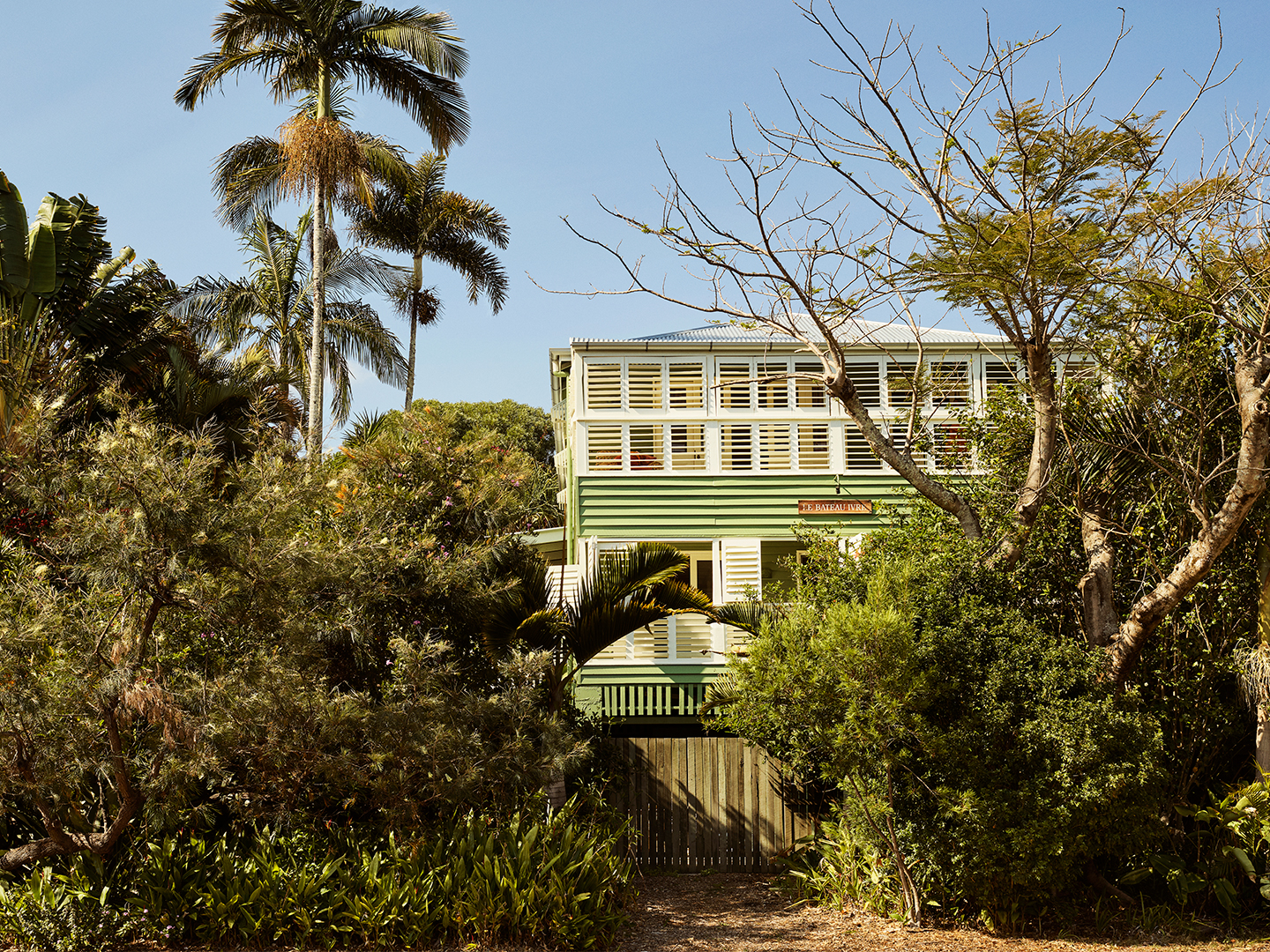
The new owners had fallen in love with its position, perched on the placid shores of the largest lake on the Noosa River, as well as its energy that hinted at bygone days. Happily, they are long-time friends and collaborators of mine, so I had a strong understanding of their distinct, idiosyncratic sense of style, their penchant for color and texture, and their love of laid-back ease and the natural world.
They wanted a sanctuary for their growing family, which necessitated an interior design that was functional and versatile as well as beautiful, and a special destination befitting international guests. They are a couple who have lived around the world and have collected friends from all over. The remote locale meant little cellular coverage, a serendipitous development given the owners’ values, so layers, nooks, and recreational spaces would be an essential part of the design.
The dwelling had stood in its original form since the early twentieth century and had withstood the elements. The idea was to preserve what was there architecturally, through a restoration that was equal parts fresh and nostalgic.
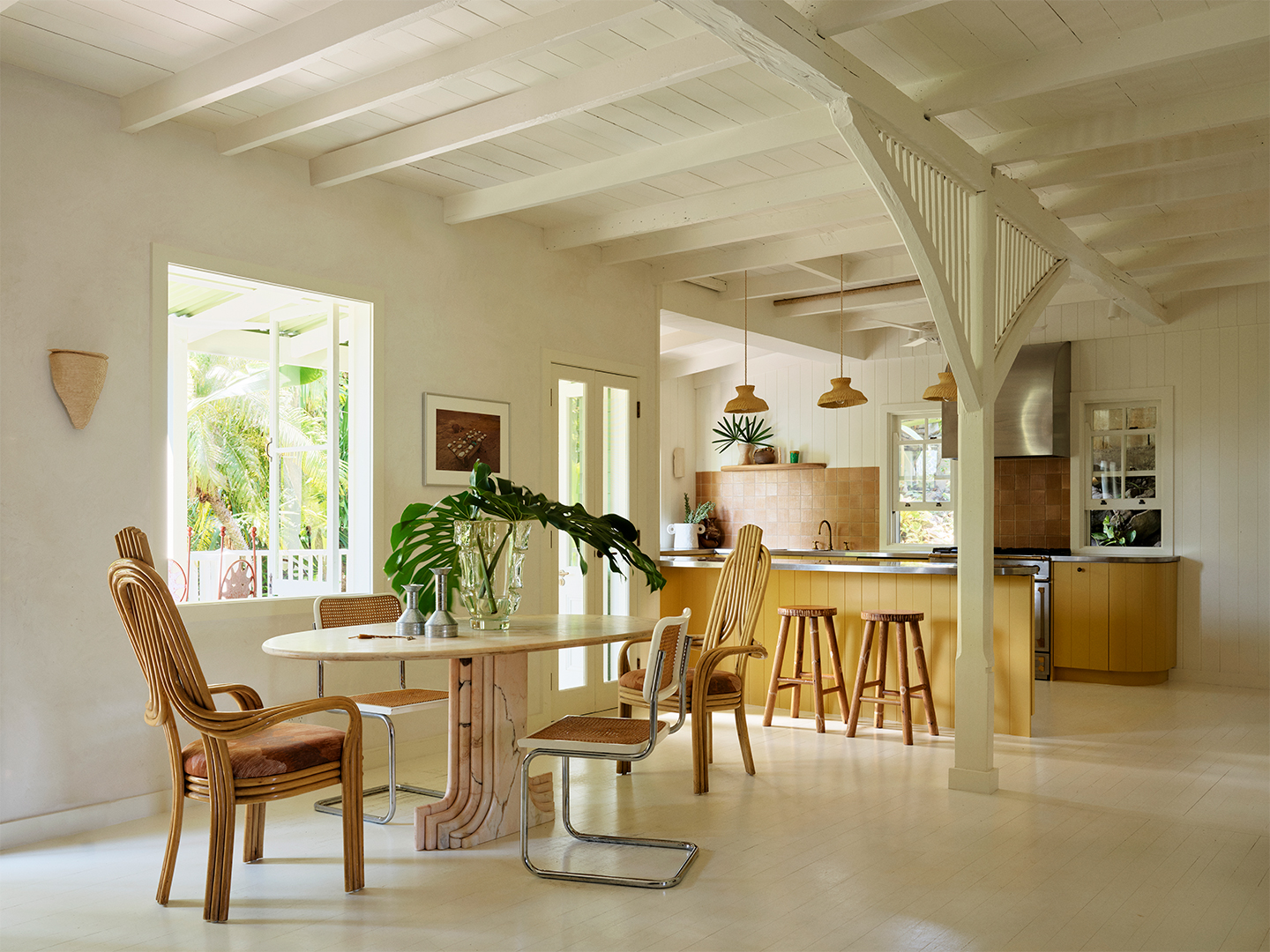
The interior, dated and closed off to possibility, was opened completely to allow flow between the kitchen and living areas. Lime-washed vertical timber walls take their cue from the external weatherboard to create a boathouse feel, while natural fibers and finishes in earthy tones mimic the outside environment.
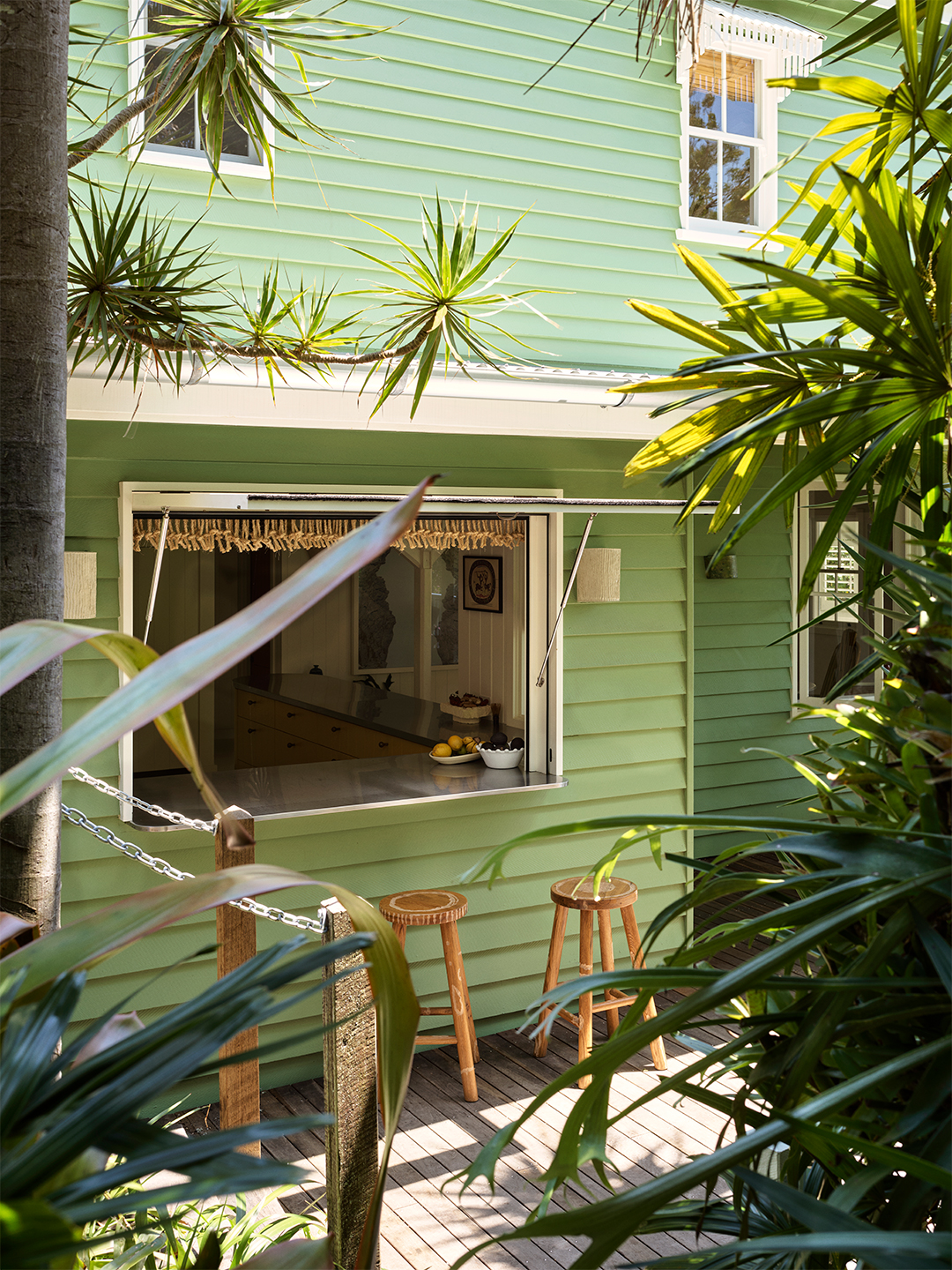
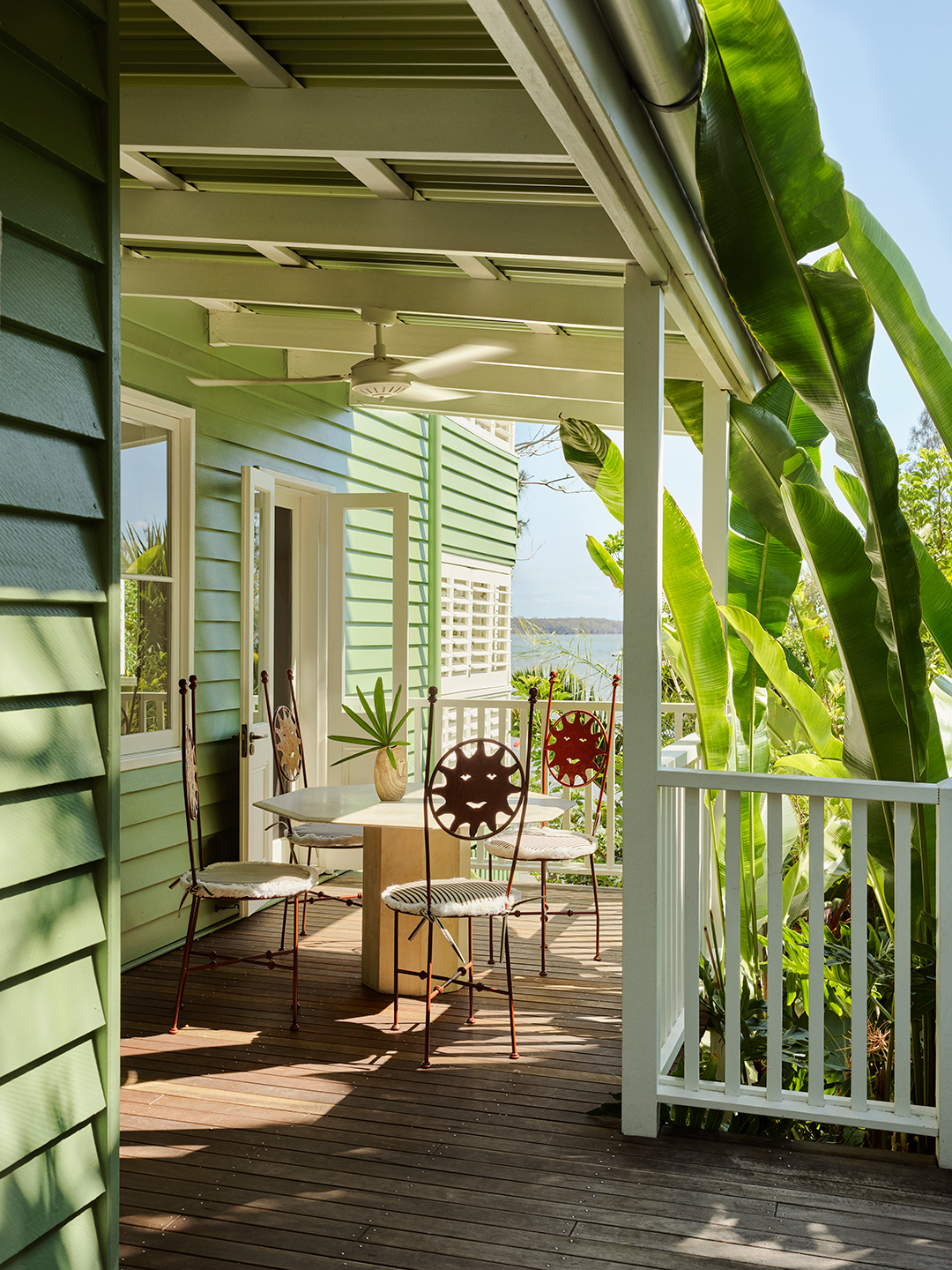
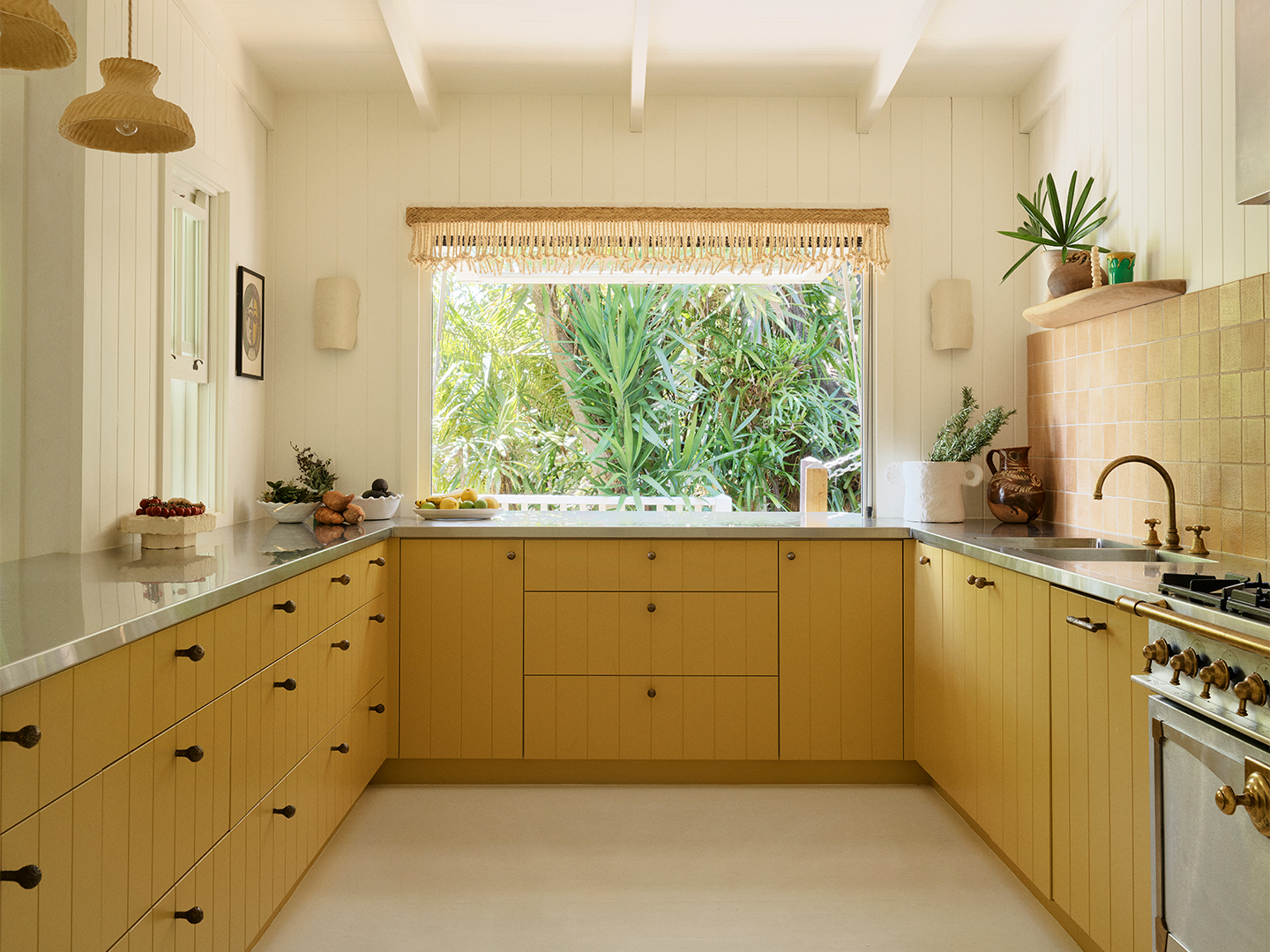
In the kitchen, the backdrop of family gatherings and ayurvedic cooking, handmade terracotta tiles, ceramic pendant lights, and a sconce from artist Ben Mazey form an organic grouping. Bespoke solid-timber stools by Byron Bay artist Lex Williams alongside sash windows lend a retro charm, and contrast beautifully with the sleek utility of the stainless-steel countertop and range hood. At the breakfast terrace off the kitchen, a slow-moving fan hovers over a travertine table while preserved rust-finish sun chairs with fringed striped cushions sit on local jarrah timber flooring. The fetching pea-green exterior is at once striking and calming.
Over in the dining room, a pink marble dining table by Carlo Scarpa, Cesca dining chairs by Marcel Breuer, and an Axel Enthoven bamboo chair offer an international perspective, in a comfortable symbiosis with more local elements. A single palm frond is resplendent in a 1950s Murano vase, intent on bringing nature back in, and sits alongside a pair of steel candlesticks from Fabien Cappello.
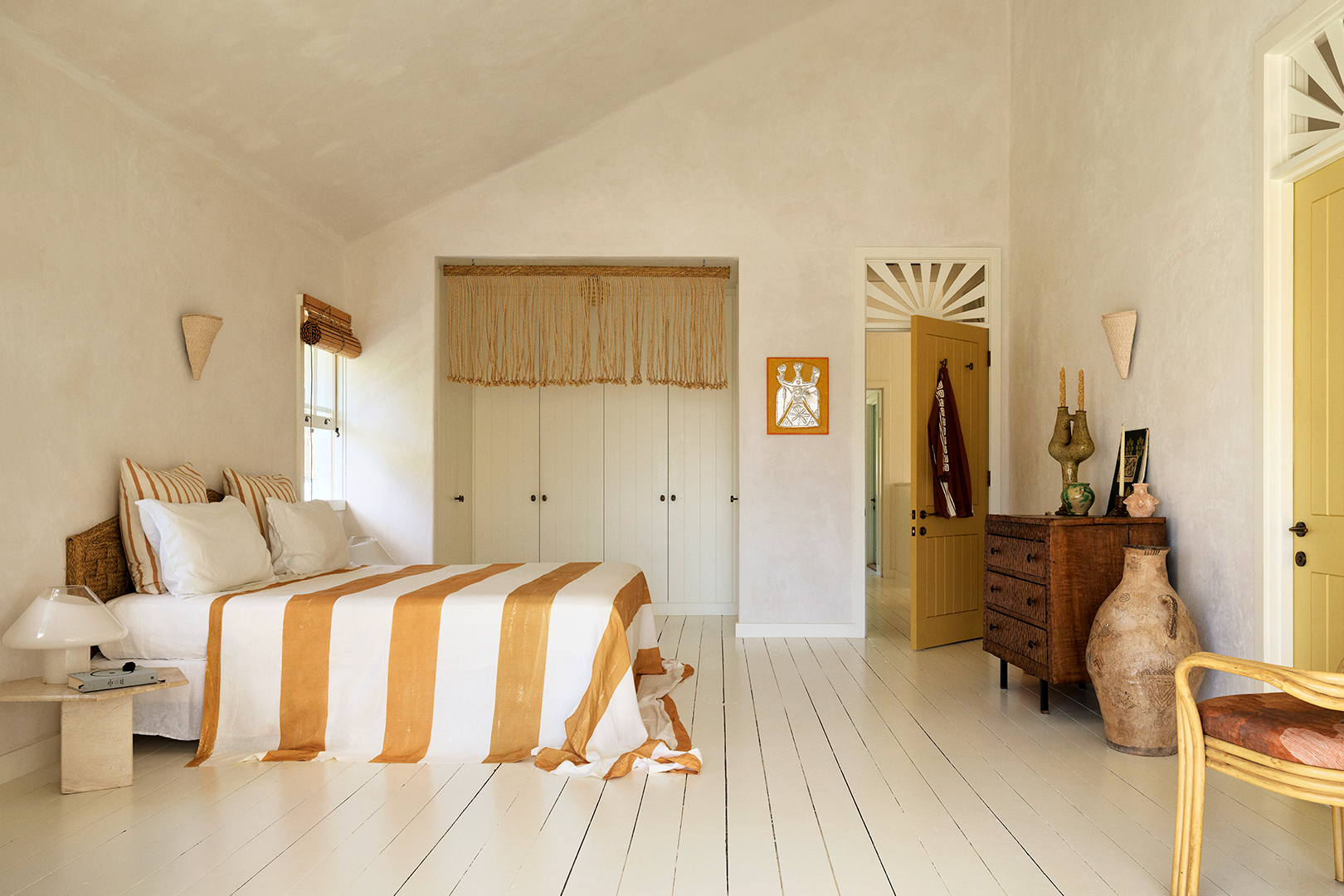
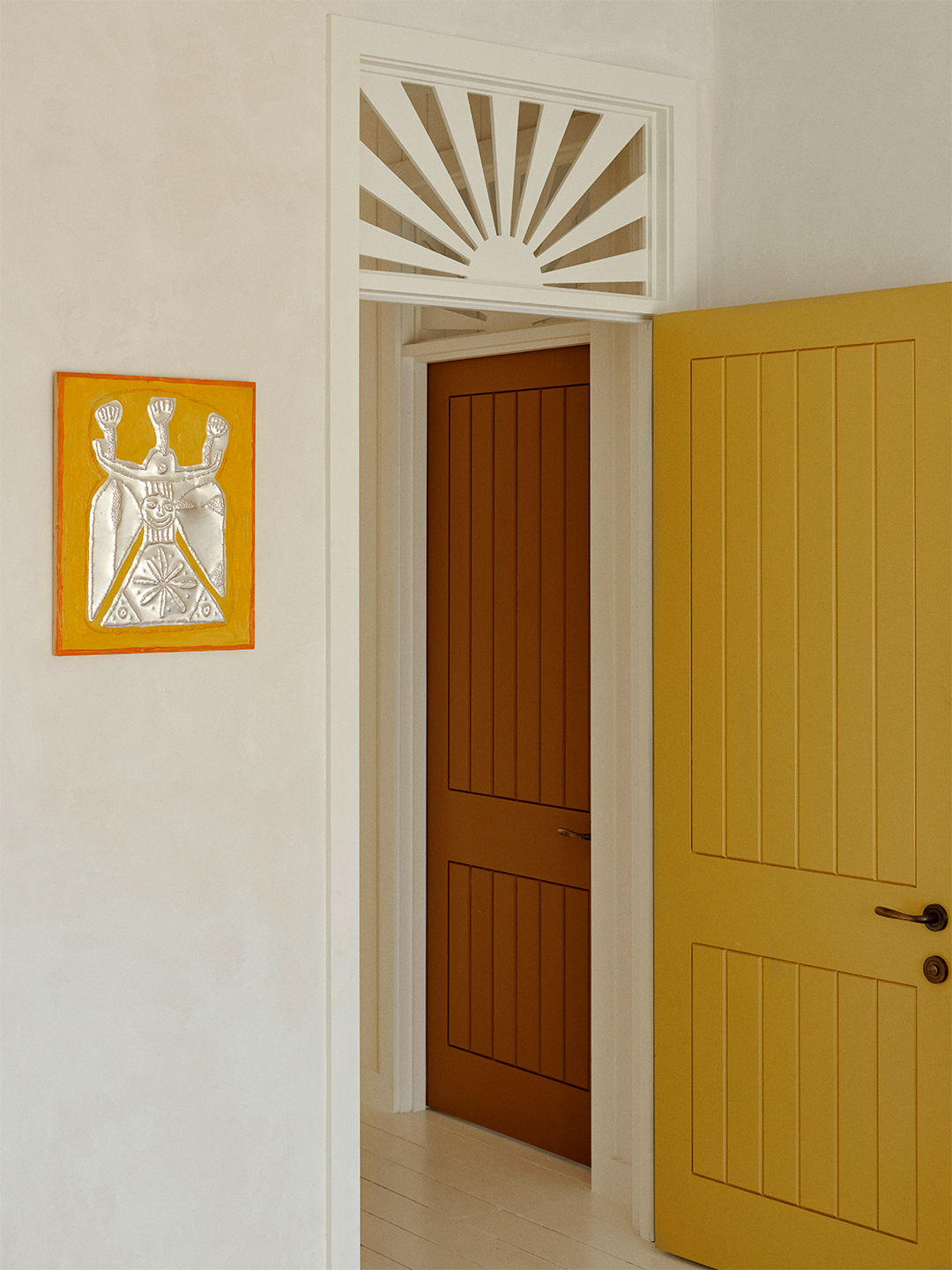
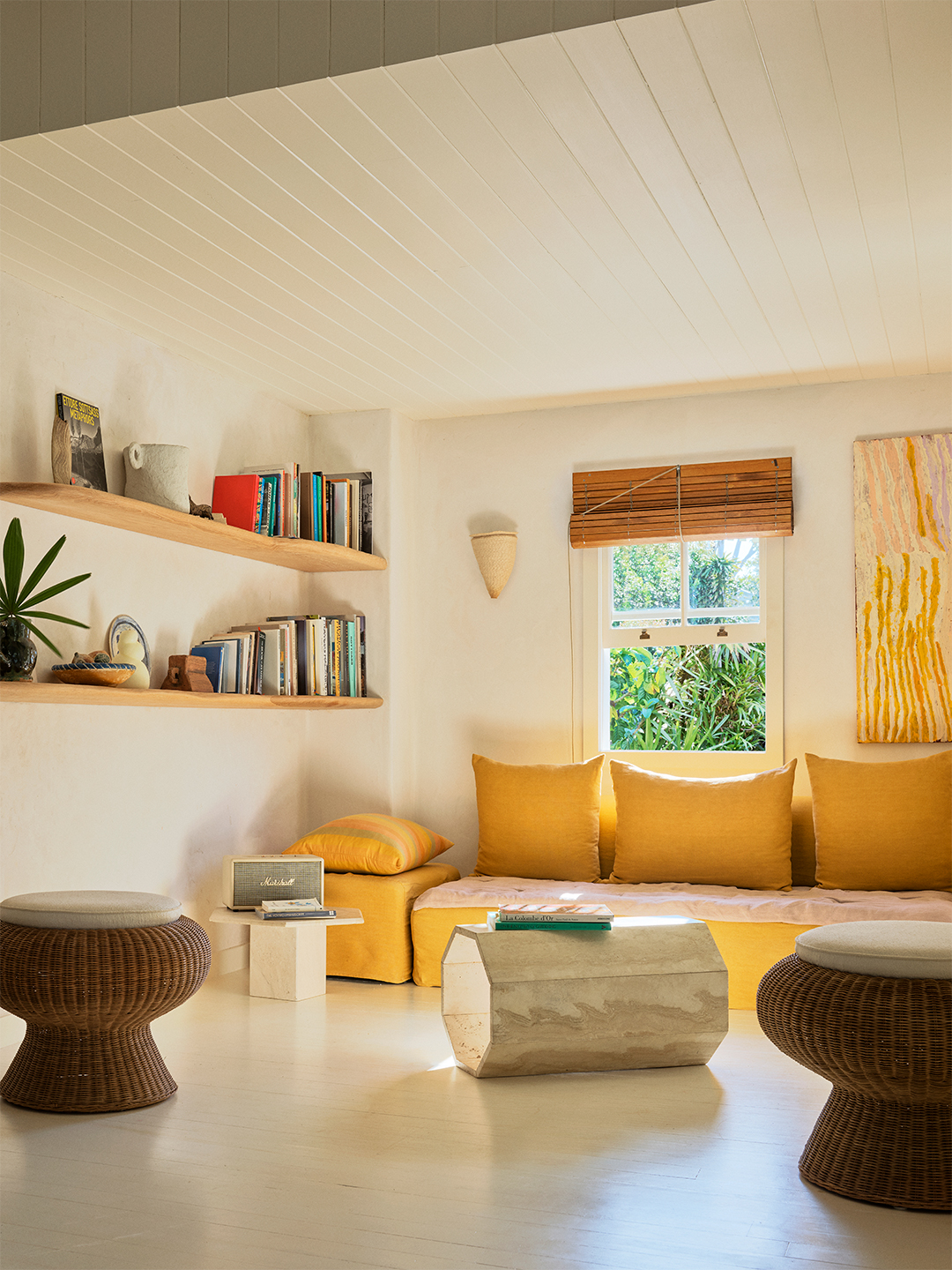
The theme of combining worlds continues throughout, as does an emphasis on custom artisanal design, another objective close to the owners’ hearts. Each internal door is latticed solid timber and displays a carved sun motif in the frame, a nod to the Vedic tradition of saluting the sun. In the main bedroom, Indian rattan blinds, striped bed linen from Morocco,a woven rattan headboard, and a dimpled oak cabinet with turned-wood hardware are texturally appealing. Mid-century travertine side tables from France and Murano bedside lamps are a quietly sophisticated counter to more idiosyncratic pieces: an aluminum artwork by Australian artist Magnus Reid, an etched wall sconce by South African ceramicist Ceri Müller, and a vignette of objets d’art atop the cabinetry—an ode to the owners’ wanderlust.
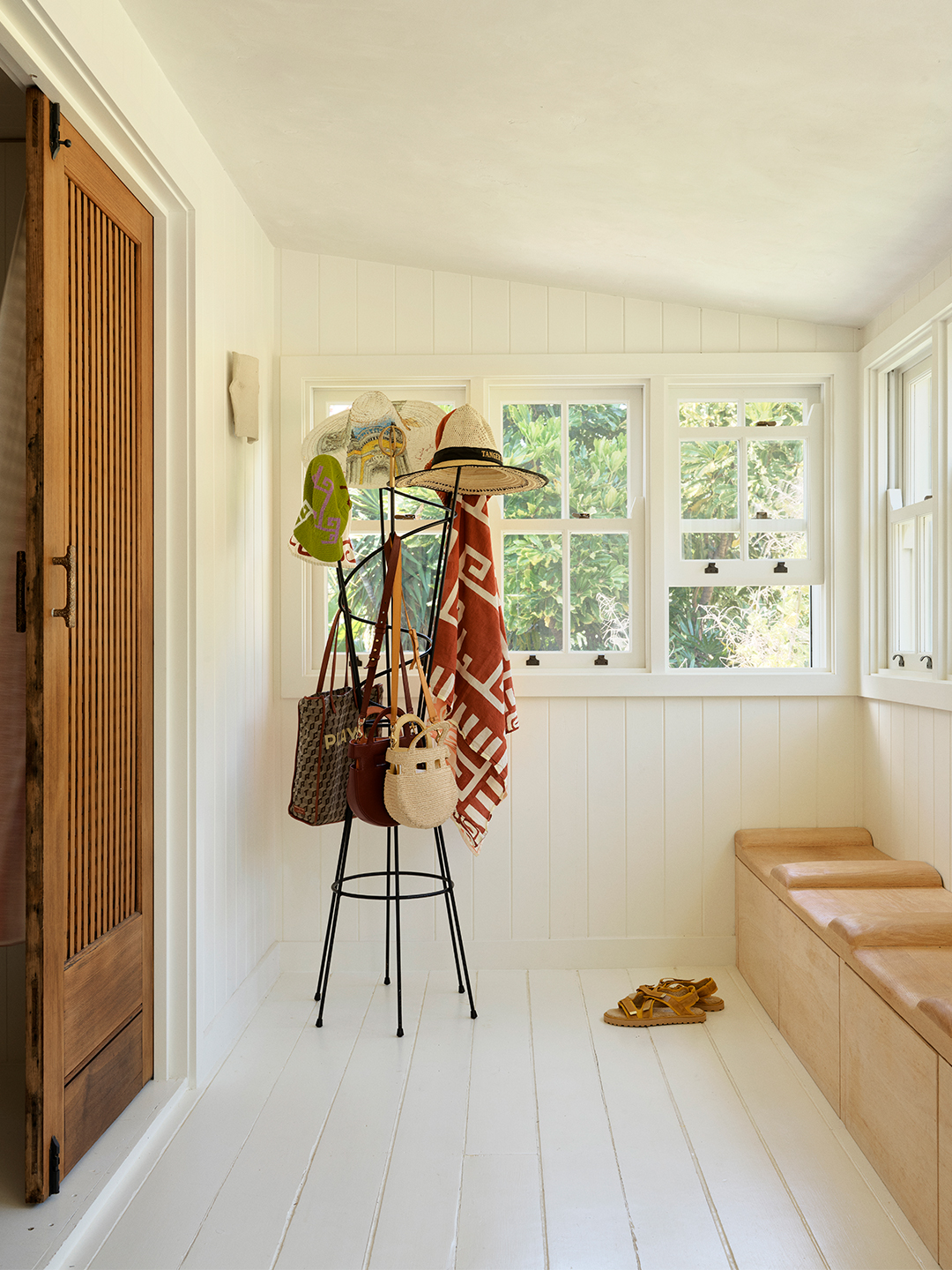
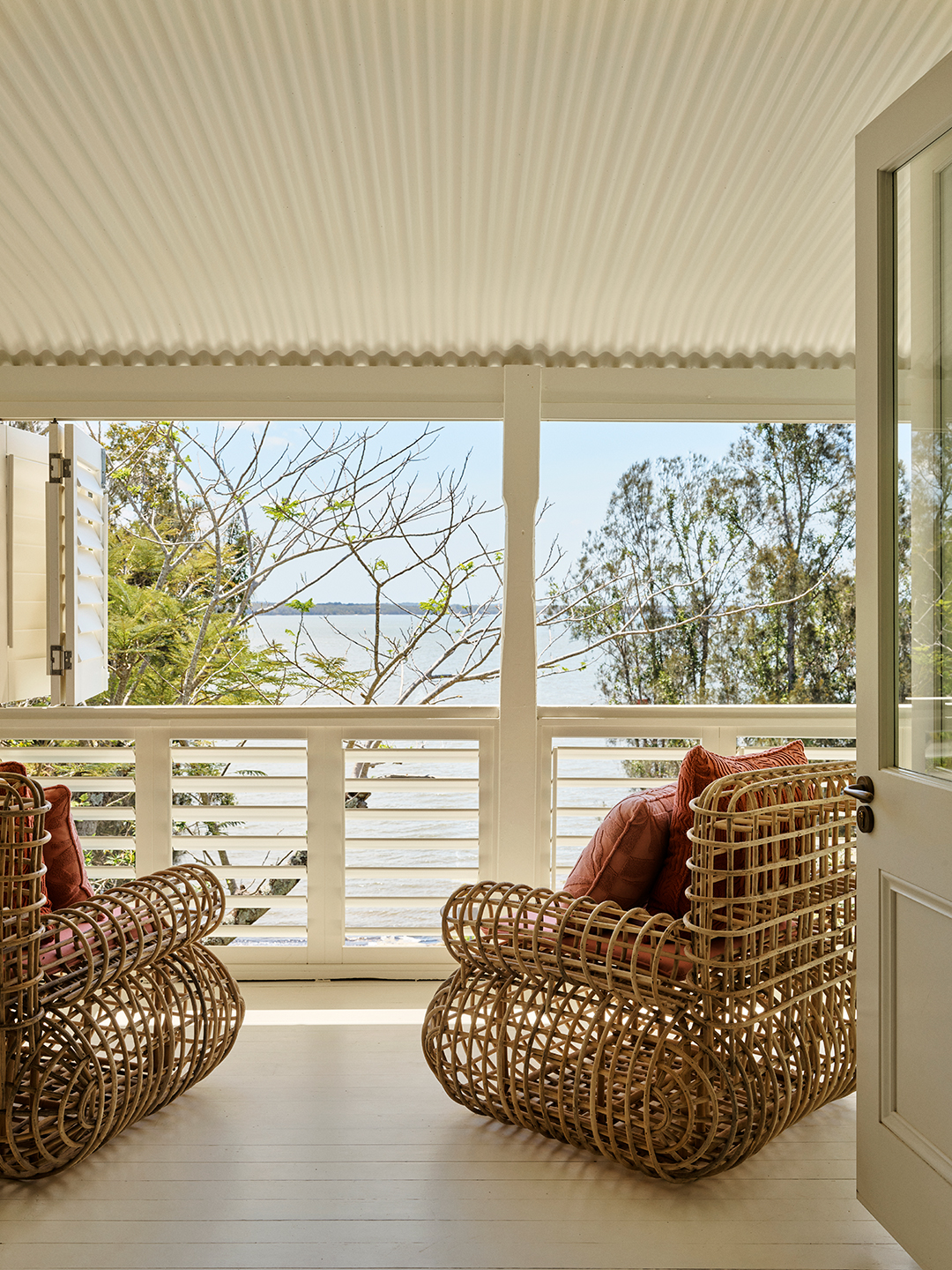
In an enclosed veranda off the bedroom, interior shutters and a white-gloss corrugated roof allow the tranquil views to take center stage. In another enclosed terrace space, the contemporary curves of a custom timber banquette interact with more traditional features: painted timber floors, latticed doors, and sash windows.
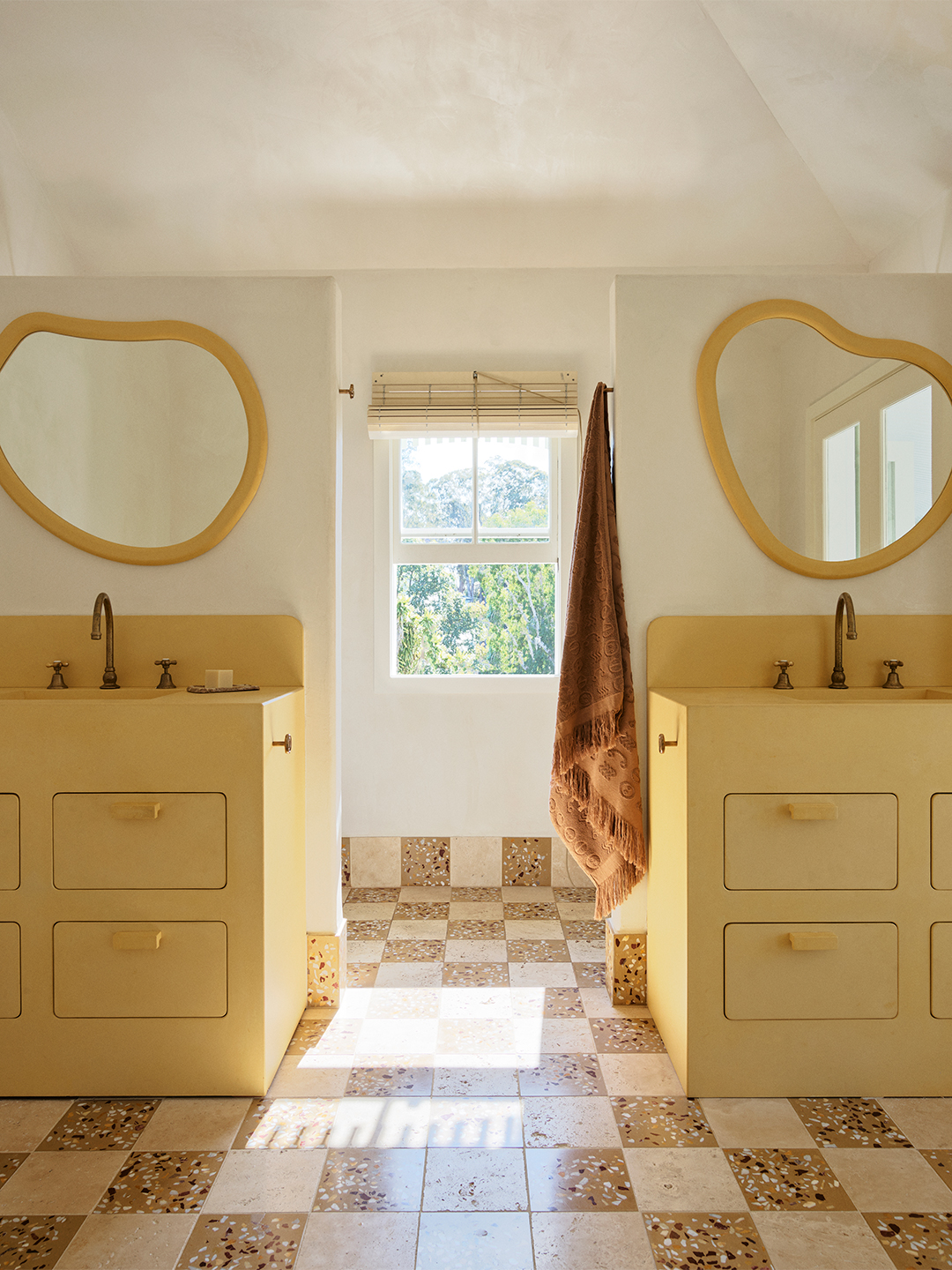
A palette somewhere between lemon and sunflower in the main bathroom is a nod to the light-flooded aspect. Will Cooper designed the eye-catching terrazzo color-pop tiles, which, paired with a travertine tile, are laid throughout in a checkerboard pattern. The vanities and whimsical asymmetrical mirrors are naturally dyed concrete, at once solid and organic, while aged-brass Astra Walker hardware speaks to the house’s heritage.
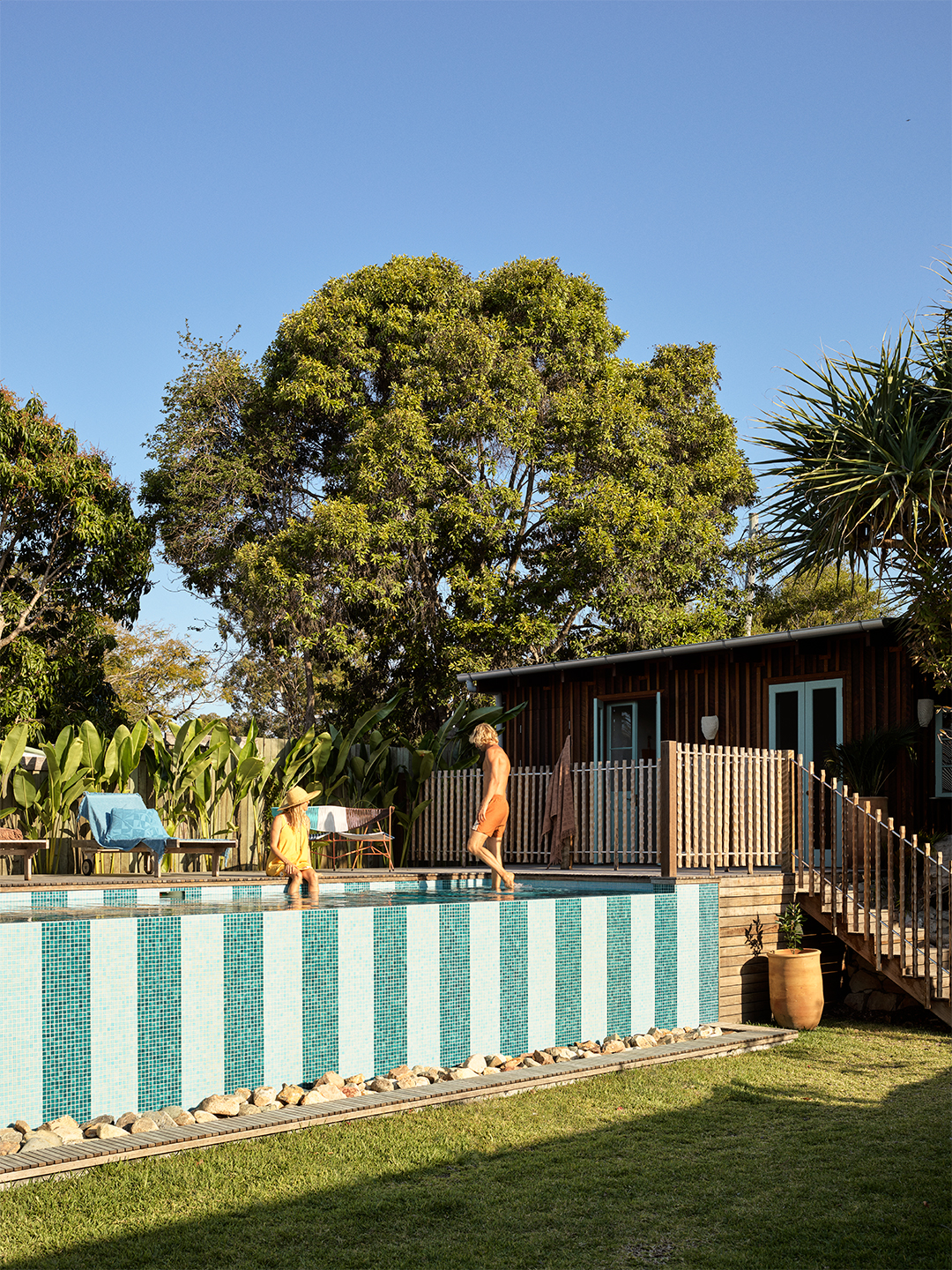
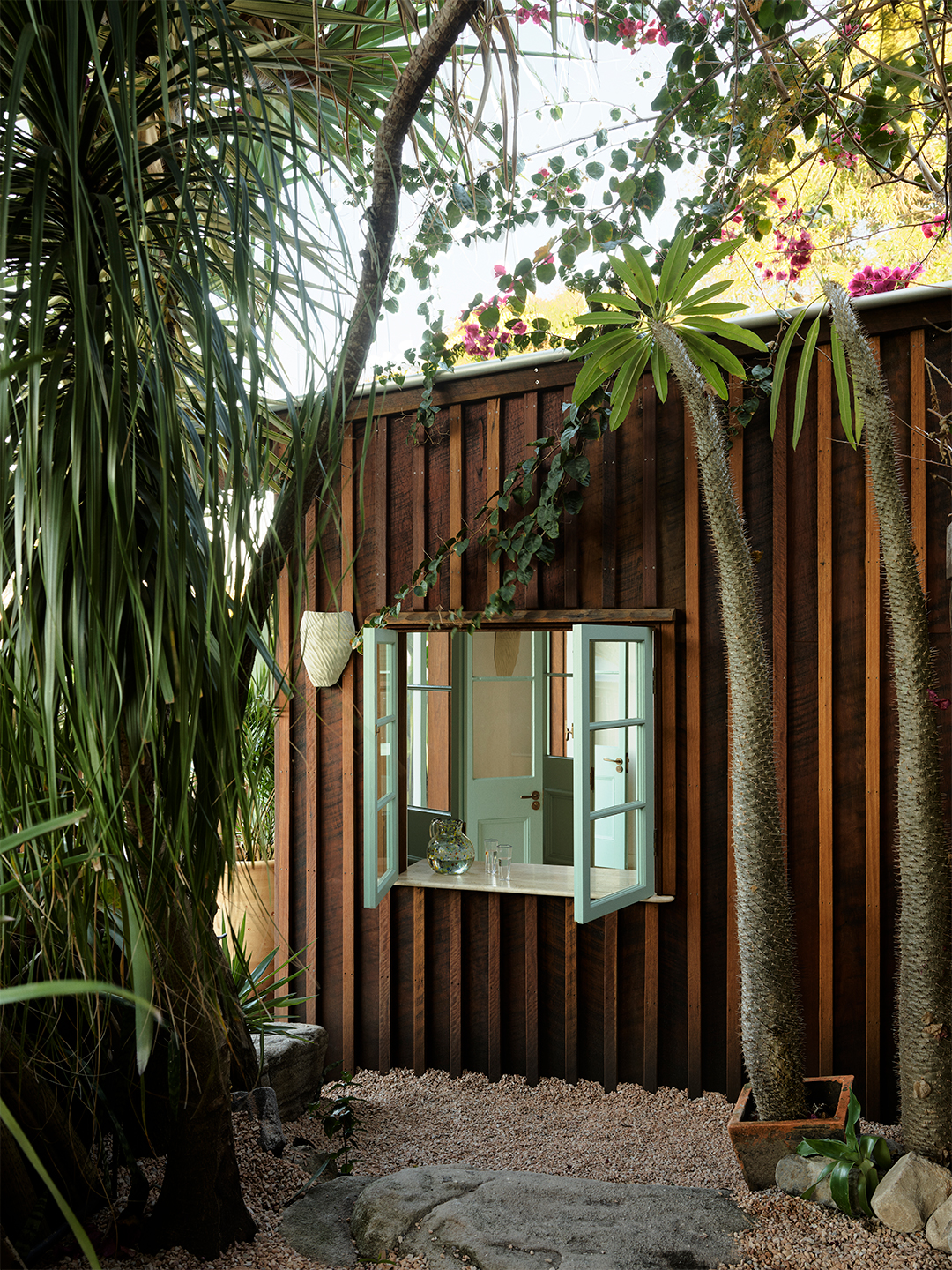
Stepping outside into the bird call and gentle chatter that reaches the house from lakeside sunbathers, one appreciates the distinctive green of the house that accentuates the brilliant purple of tumbling bougainvillea. The house looks as if it has been there forever: a deeply appealing notion, and a deeply personal home, with a look and rhythm not easily replicated.