
We may earn revenue from the products available on this page and participate in affiliate programs.
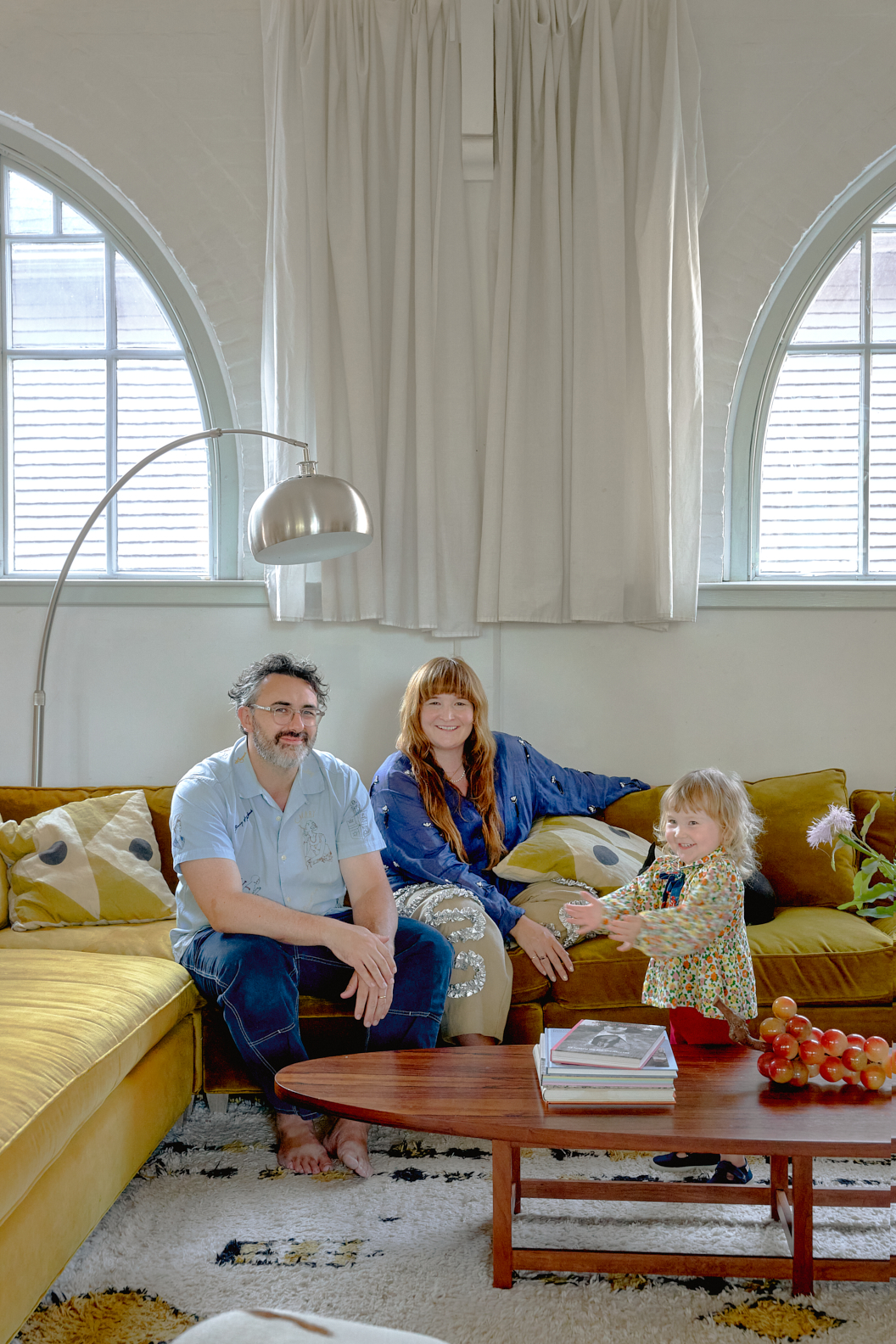
When artists Lindy McDonough and Conor MacKean bought a circa-1886 former voting hall in Pawtucket, Rhode Island, they knew they were inheriting a slice of local lore. Not only had it served as a polling place, a school, and an American Legion post in its 140-year-old history, it has also been home to generations of professors at The Rhode Island School of Design (RISD), where McDonough studied. In the decade since they moved in, they’ve cultivated a space crafted by hand, filled with artist friends, and brought fully to life by their warm, bear hug energy.
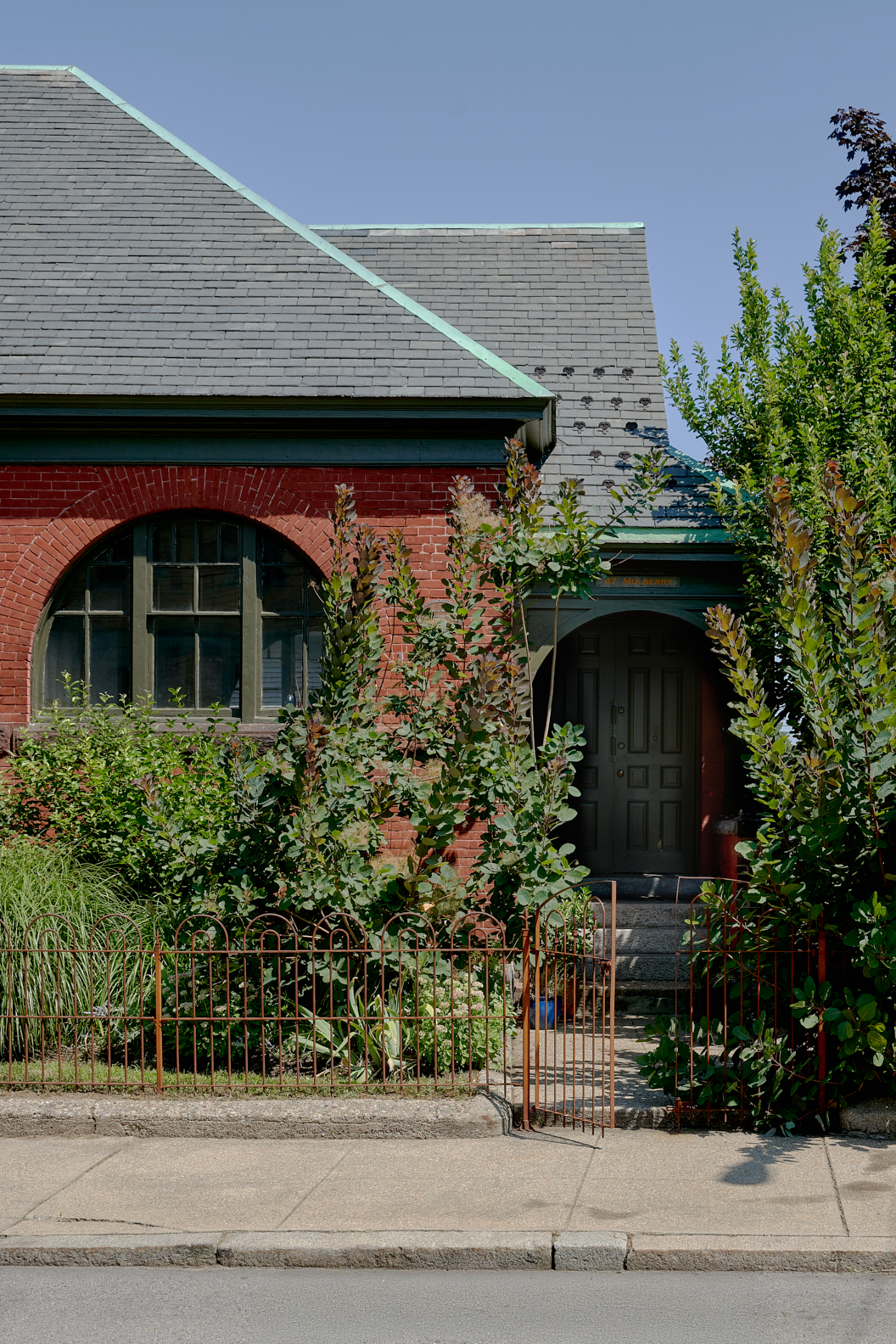
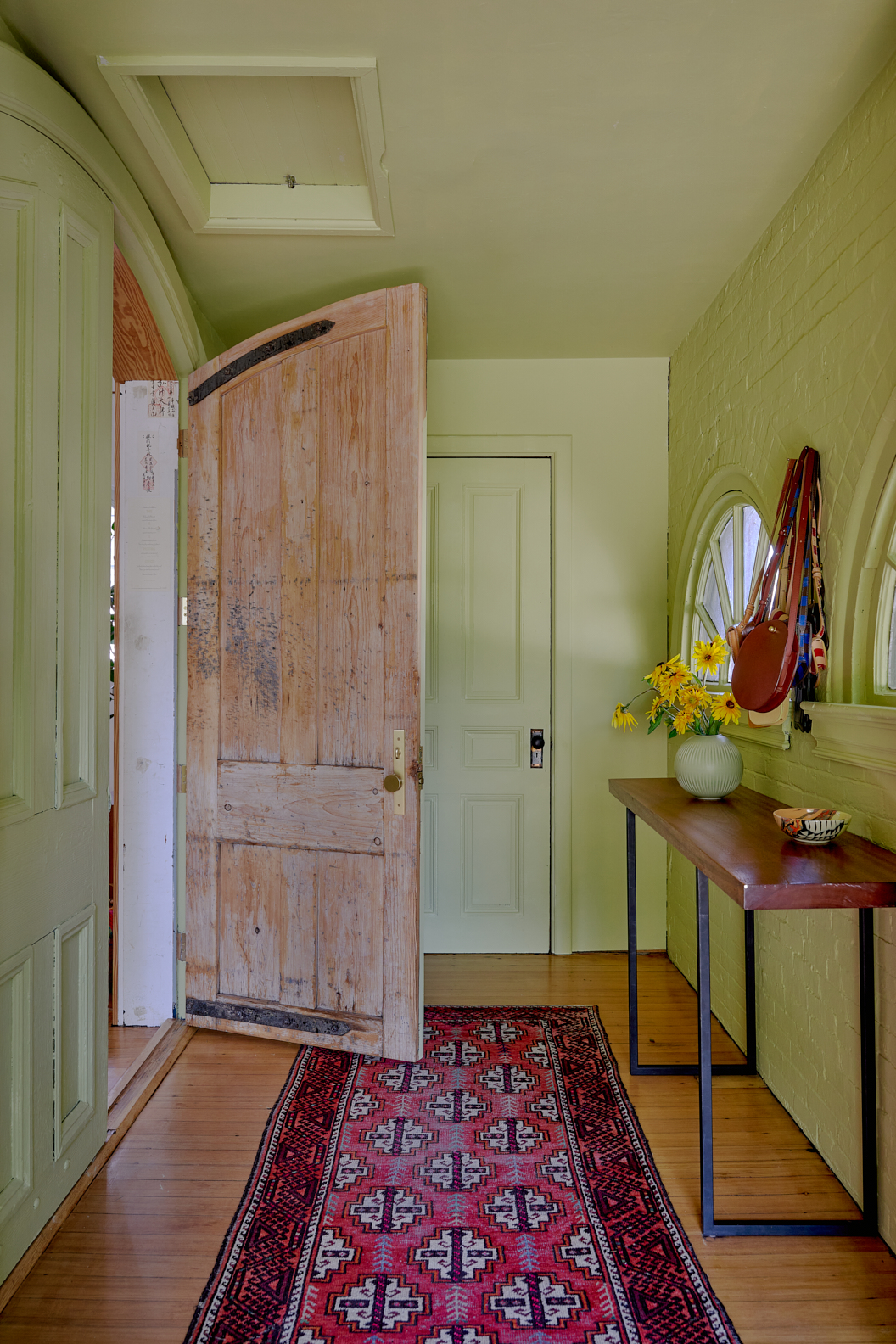
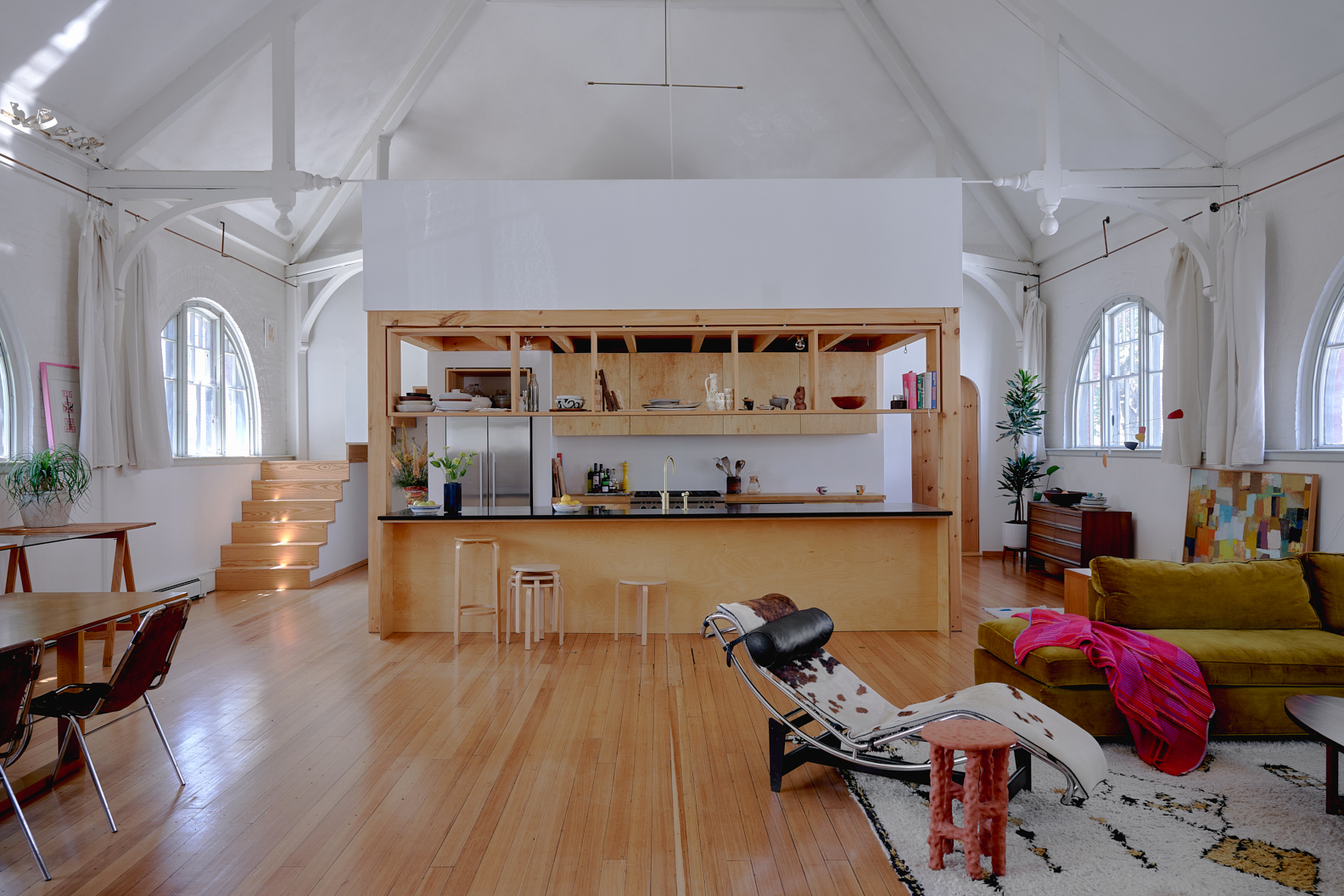
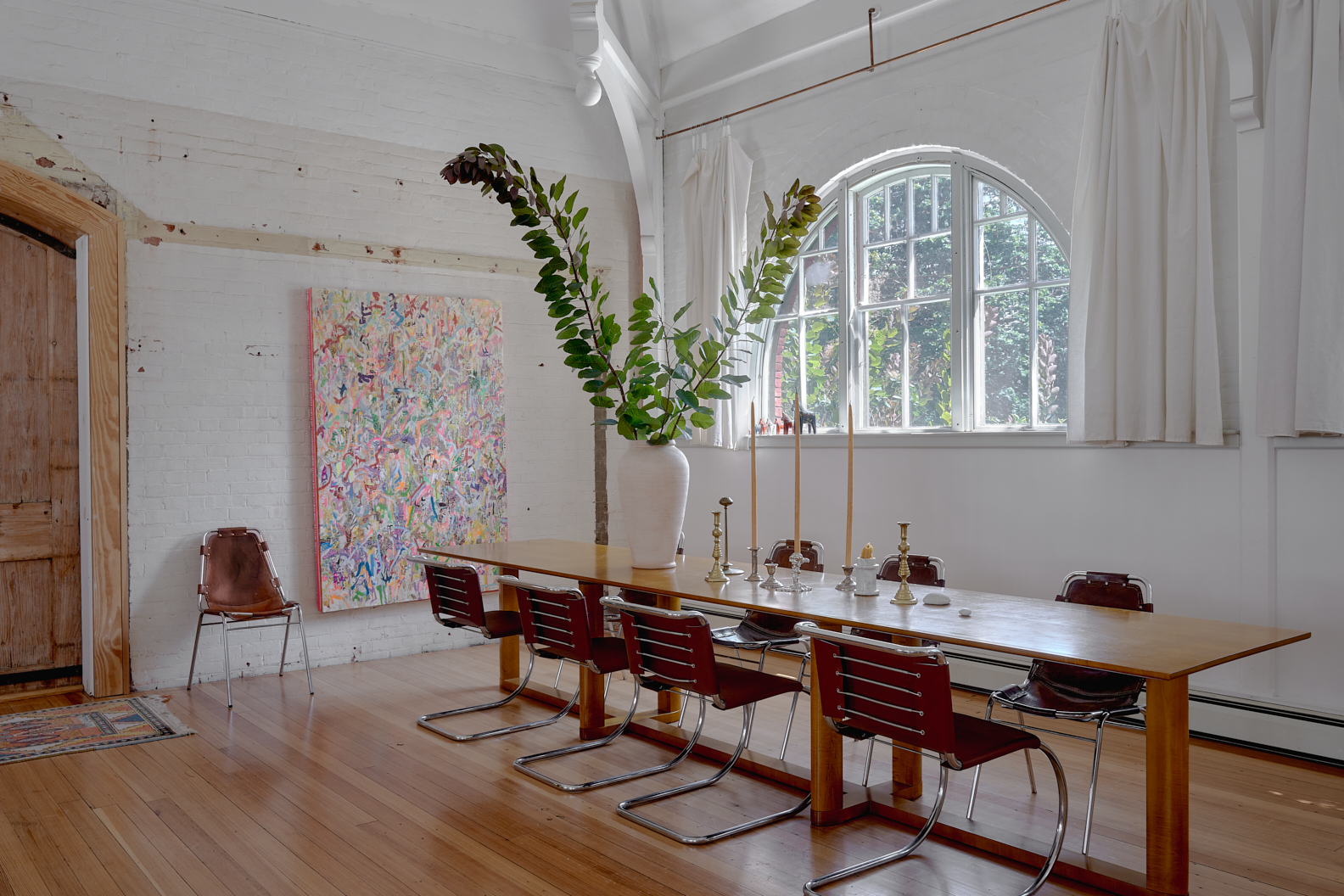
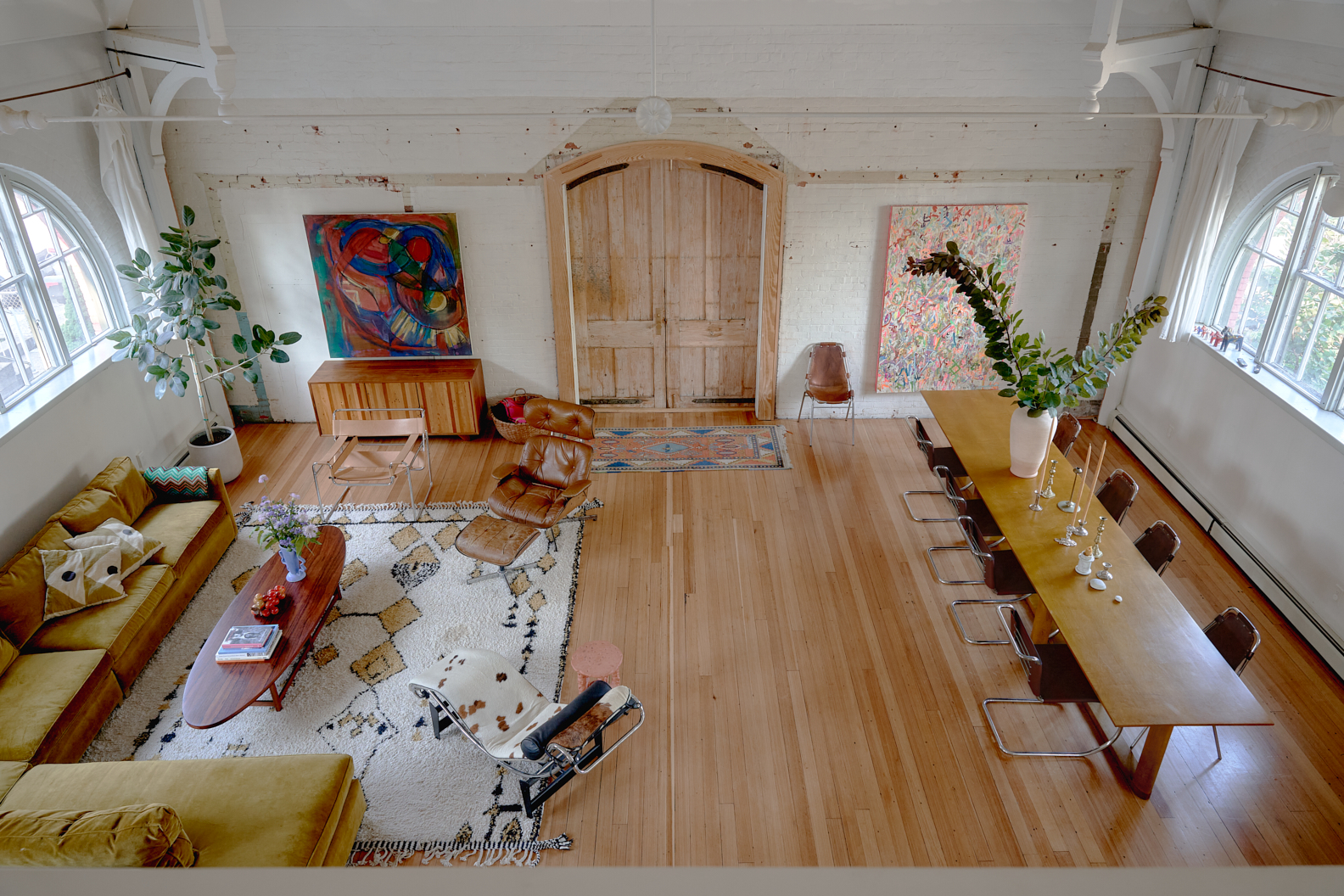
McDonough and MacKean are the co-founders of Lindquist Object, a Providence-based brand specializing in naturally-dyed leather goods. The late spring day that I’m visiting their workshop, everyone’s buzzing. While McDonough drives us over to Pawtucket so I can get a peek of their home, she lets me in on a secret: Beyonce is going to be wearing a Lindquist-made piece during an upcoming Cowboy Carter performance. We chatter on about the impending concert date while strolling through two eight-foot-tall curved doors. On the other side, I’m greeted by a soaring vaulted ceiling and towering arched windows. The great room, akin to a house of worship, is filled with so much natural light that it’s no wonder artists have been drawn to it for decades.
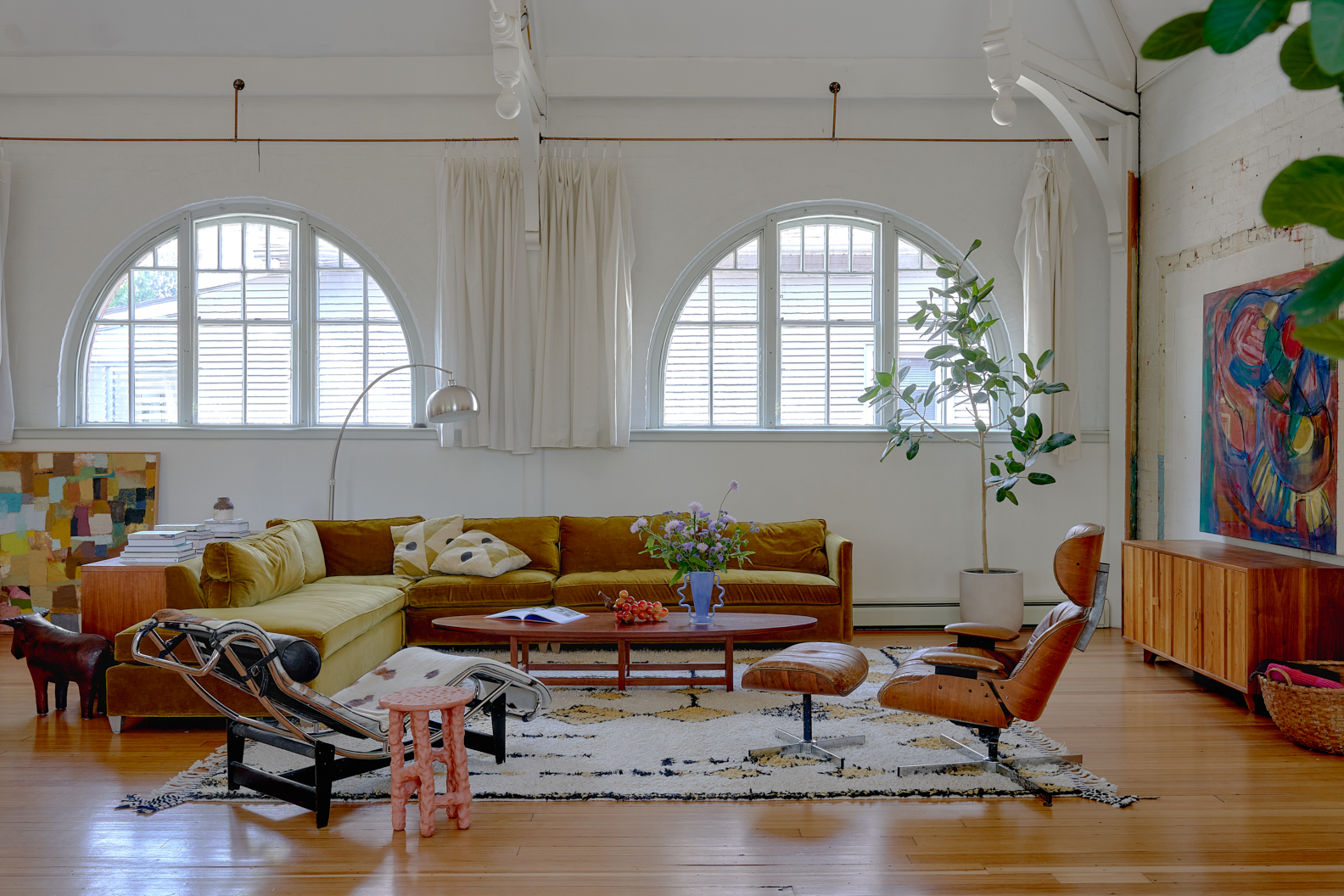
“It echoes a religious space, but it was always a municipal building,” McDonough says of the William R. Walker & Son-designed structure, dubbed the Fifth Ward Wardroom (it’s been on the National Register of Historic Places since the ’80s). For all of its current charm, the couple didn’t inherit it in this state. The most recent owner before them had used it as a printmaking studio, but McDonough and MacKean weren’t going to activate their own artistic practices in the expansive, airy space; they were going to live there.
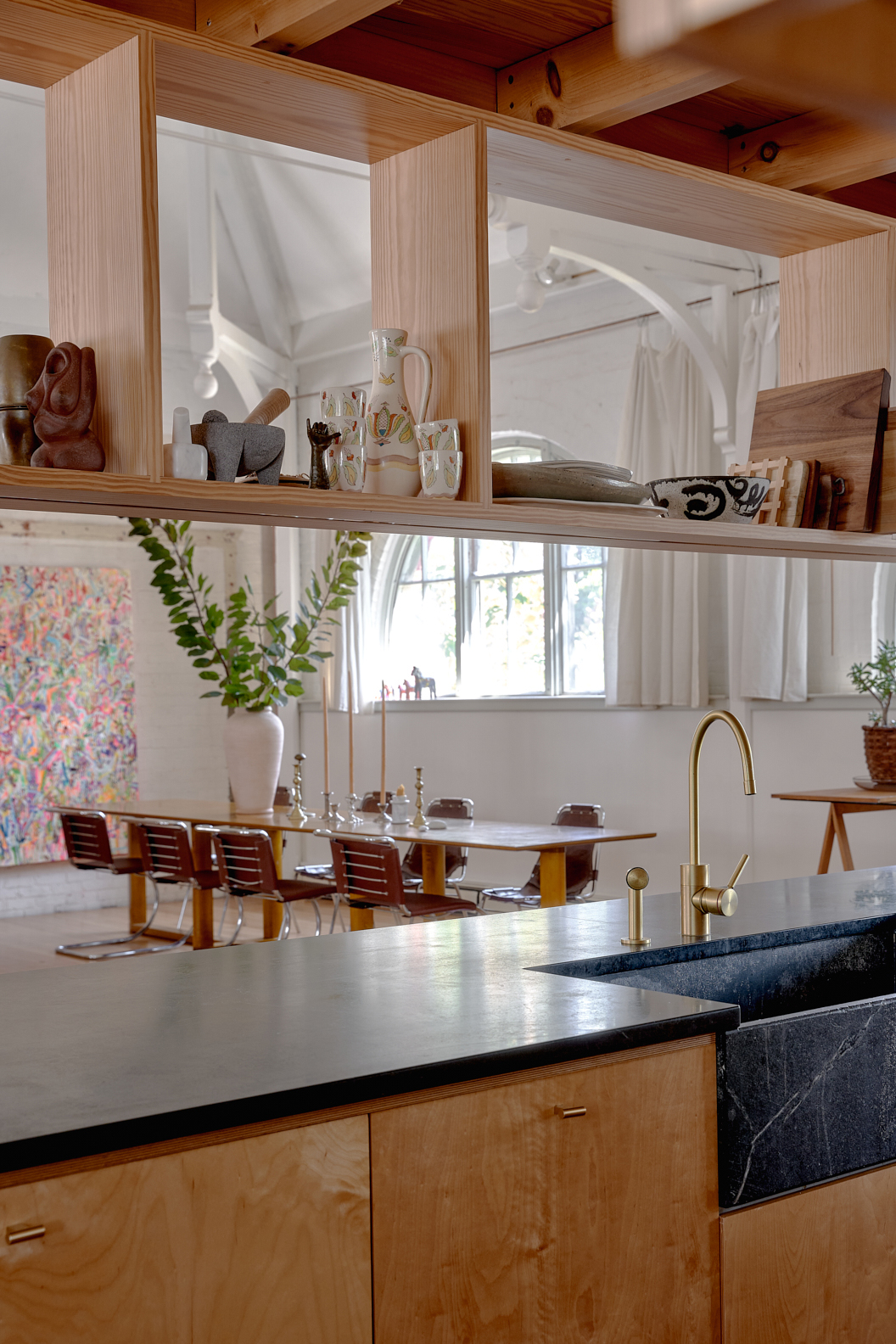
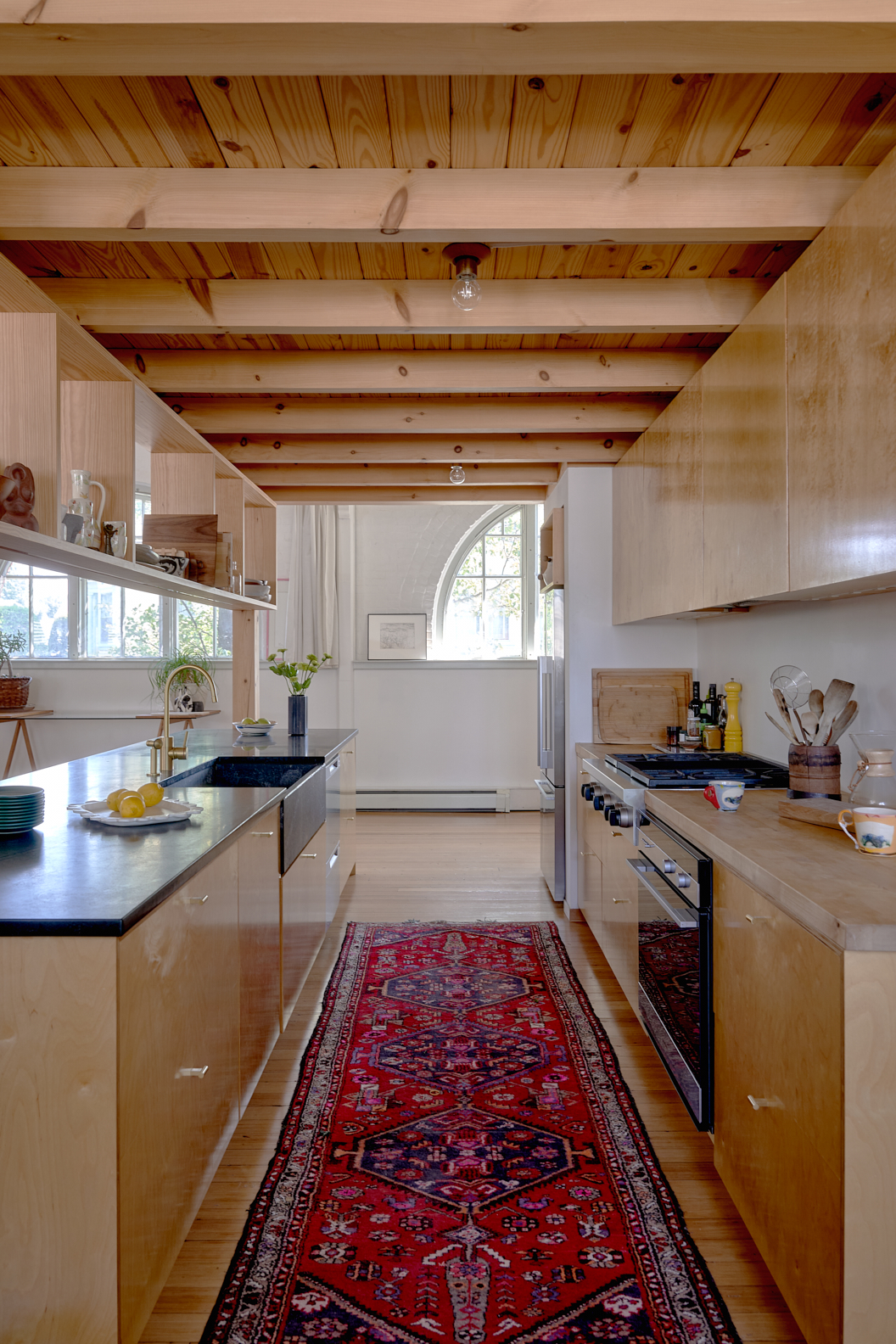
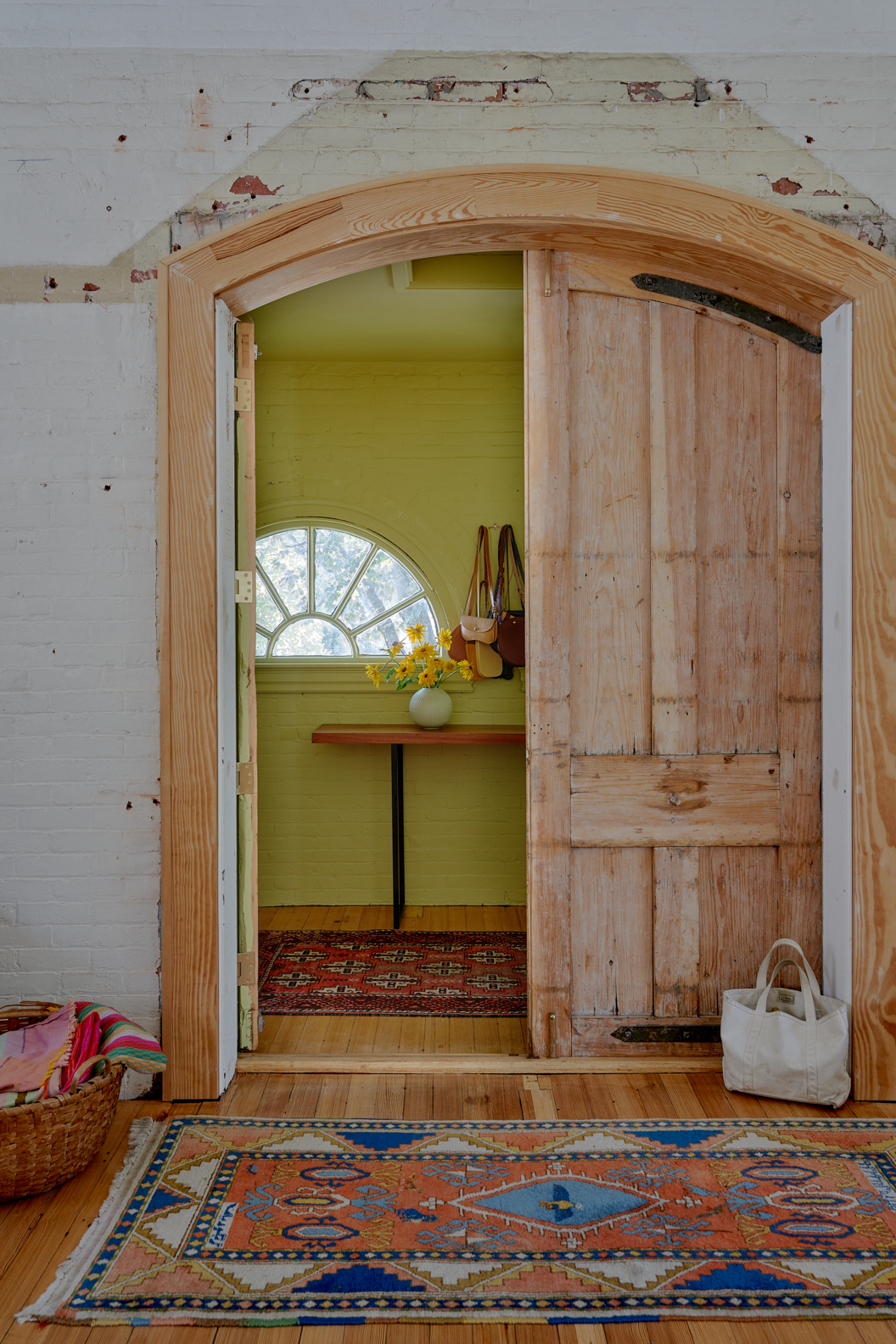
To guide their renovations, the pair tapped two friends who had also attended RISD, architect Anastasia Laurenzi and Michael Larsen of Oblique Studio, who employed humble materials, embraced wabi-sabi, and ushered the building into a more liveable arrangement. Even after adding a kitchen that supports a lofted bedroom, a powder room, laundry area, and a full bathroom, they retained the character and quirks that they fell in love with in the first place. “We wanted things to feel like they’ve been there for a long time,” McDonough says, noting the 1880s front doors sourced from a factory in Rhode Island. “No one can believe that they aren’t original.”
The heart pine floors have always been there, though, now slicked with a water-based finish and just a coat of oil to keep things light, yet durable. That combo is ideal with their dog, Hugo, and toddler, Ulla, regularly scooting around the 14-foot-long dining table on her wooden bike. “We started this as Connor and I, just the two of us, and now we have our Ulla,” McDonough says. “It’s evolved in a different way.”
The minimal kitchen was constructed using timber framing and traditional Japanese joinery, they saved the original soapstone sink and MacKean crafted the cabinets himself from marine-grade plywood. “We used a lot of plywood and some beautiful pines that had a utilitarian aspect,” McDonough says. She adds that Larsen came in years later to add dovetails to any cracks.
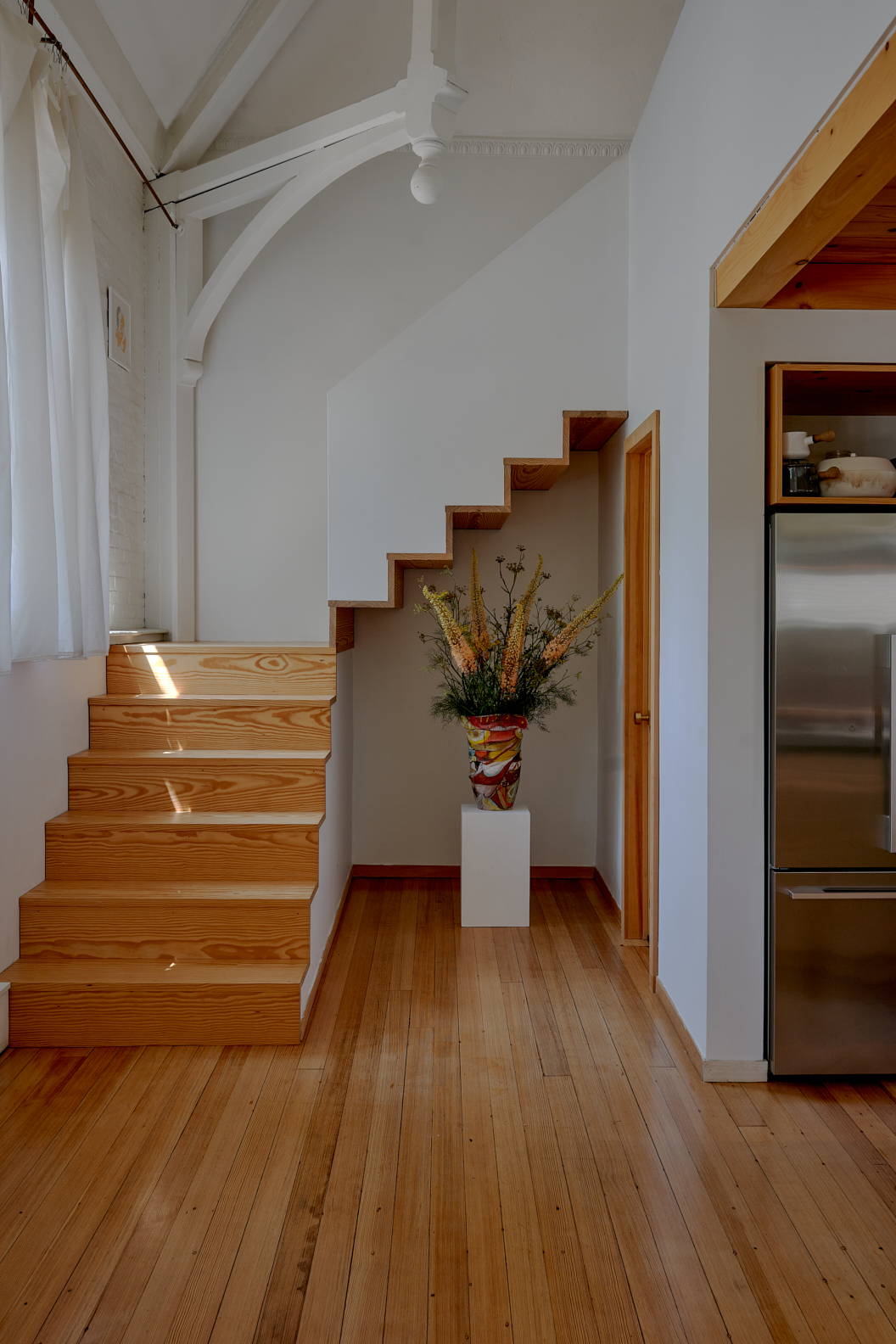
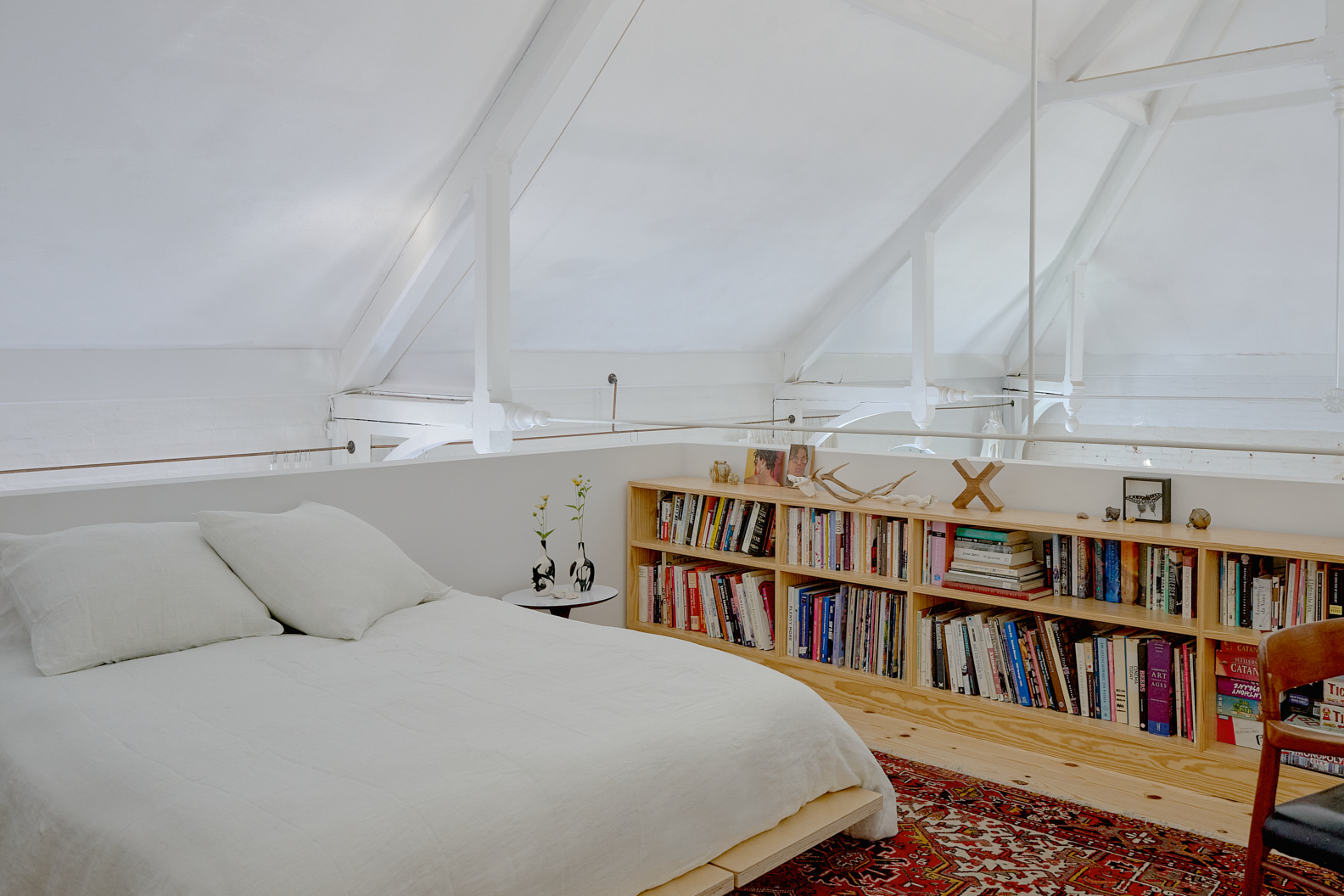
Atop the cooking zone is McDonough and MacKean’s lofted bedroom, which is reached by an M.C. Escher-esque stairway dreamt up by McDonough. “I really wanted a staircase that was both the same on top and on bottom,” she says, acknowledging that her request to Larsen was a little off the wall. “He welded this amazing metal structure that holds the staircase so it’s so strong and so durable.” The loft’s pine flooring is actually decking, and it has a dual purpose, creating the ceiling for the kitchen downstairs, too.
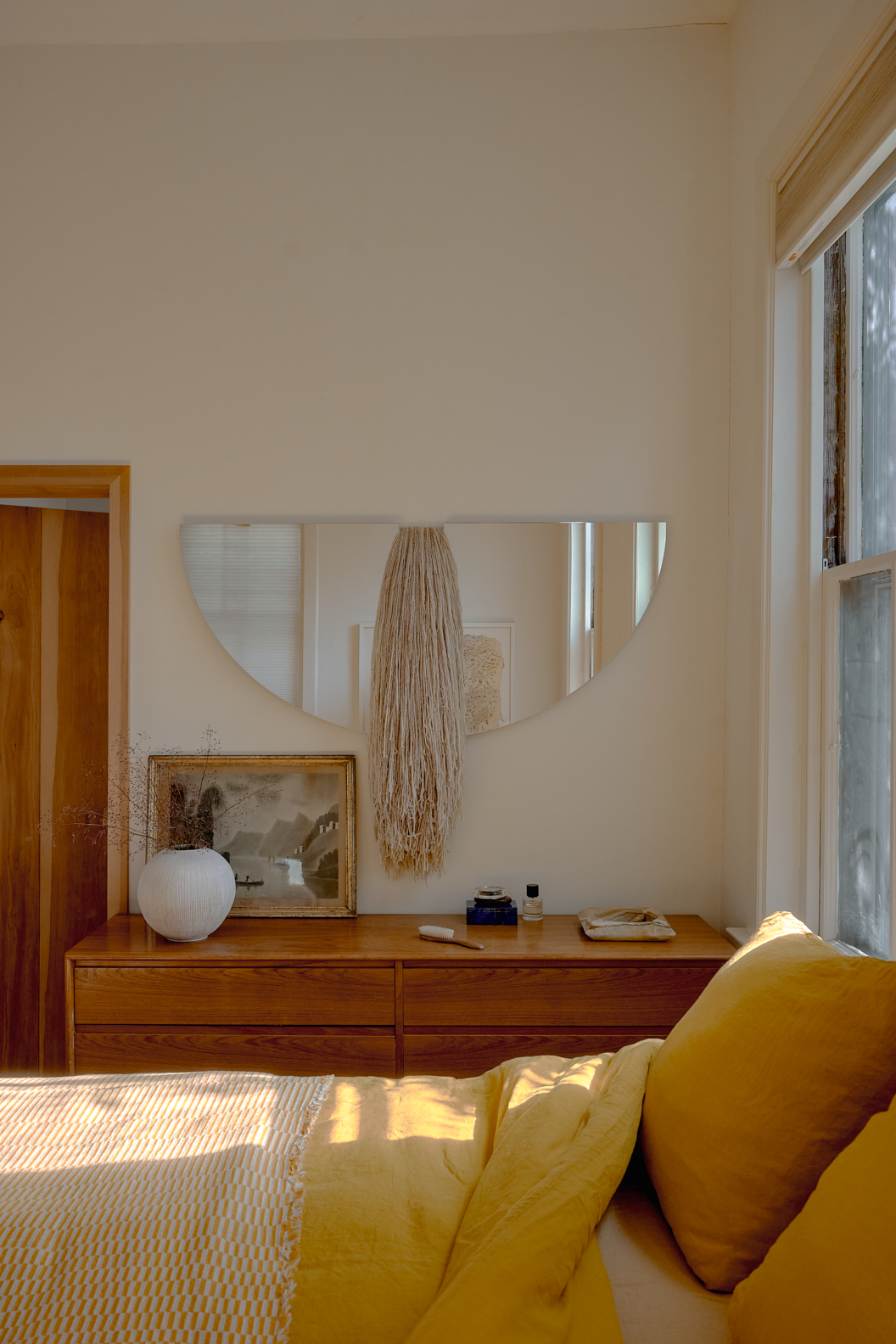
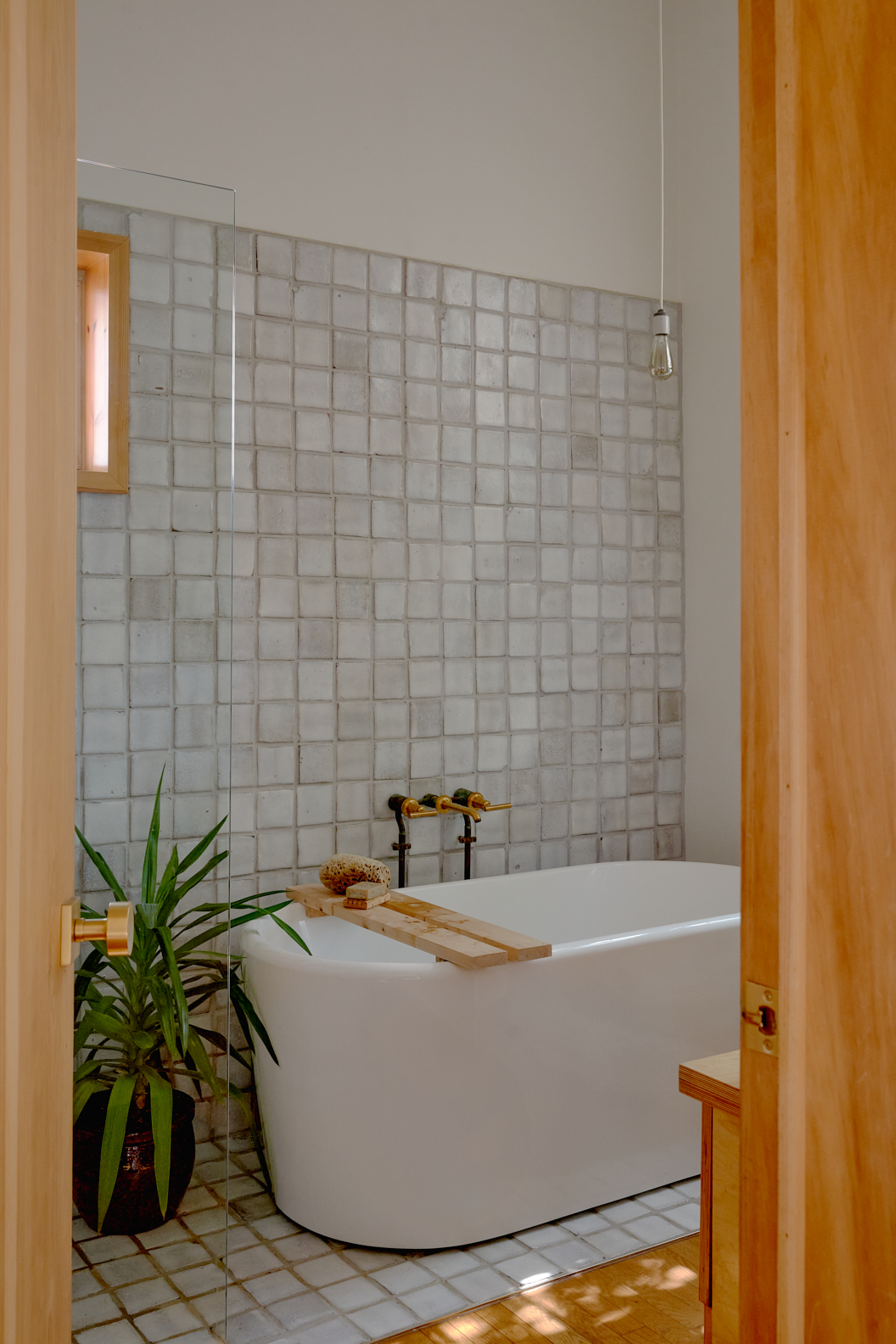
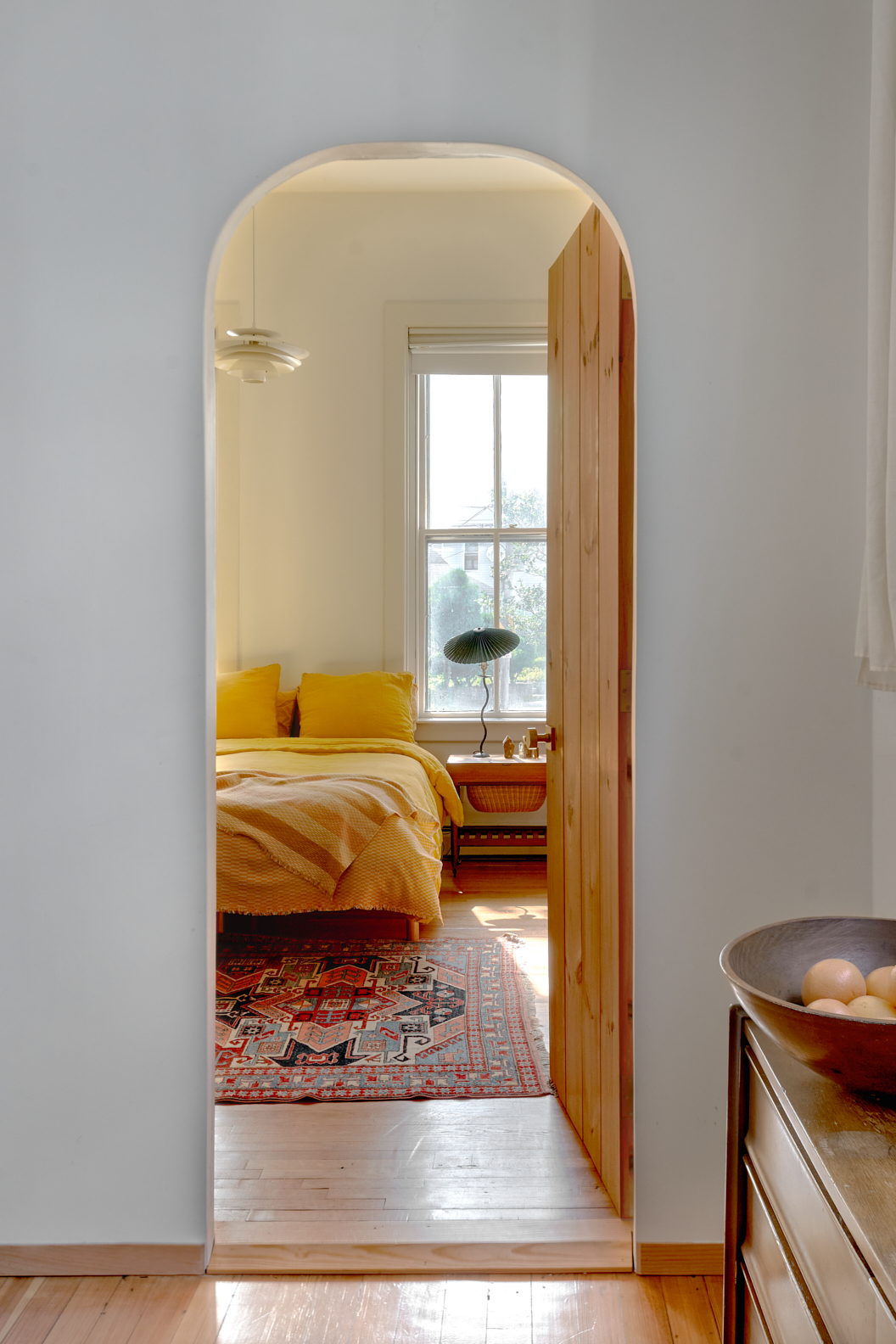
Skirt around the other side of the loft and, through the original arched doorway, is another bedroom, which was split to create a full bathroom complete with a freestanding tub and separate shower. The vintage milky gray tile was a happy accident, sourced from a bar belonging to a friend’s mom. And with such a finite amount available, and no desire to move plumbing, Larsen devised a brass piece to bridge the gap between the tile and wood floor.
His solution echoes the ethos that McDonough and MacKean bring to their work at Lindquist, too; that patina comes with living, whether that’s on a leather bag or in a home. “It’s fun to look at some of the stuff that we did 10 years ago,” McDonough reminisces. “To see it age, wear in. It’s amazing, and I still love it so much.” Theirs is just another chapter in the long history of the Fifth Ward Wardroom.