We may earn revenue from the products available on this page and participate in affiliate programs.
Just minutes from the beach in Encinitas, California, designers Christina Valencia and Kele Dobrinski saw possibility where others might’ve seen a “’90s box” devoid of architectural interest. Its neutrality was the appeal for the couple, founders of creative studio Colossus Mfg and AI interior design app Madespace who have spent years renovating historic properties for clients, “We’re used to taking homes that have so much character and trying to modernize them,” Valencia explains. “This was the opposite: How do we give this house character when it really didn’t have much to start with?”
The timing also felt right. After several years living in Sacramento, California, including a stint filming an HGTV series, the family was ready for a shift. With Valencia growing up in San Diego, and Dobrinski attending college there, a move south felt all the more like a natural return.
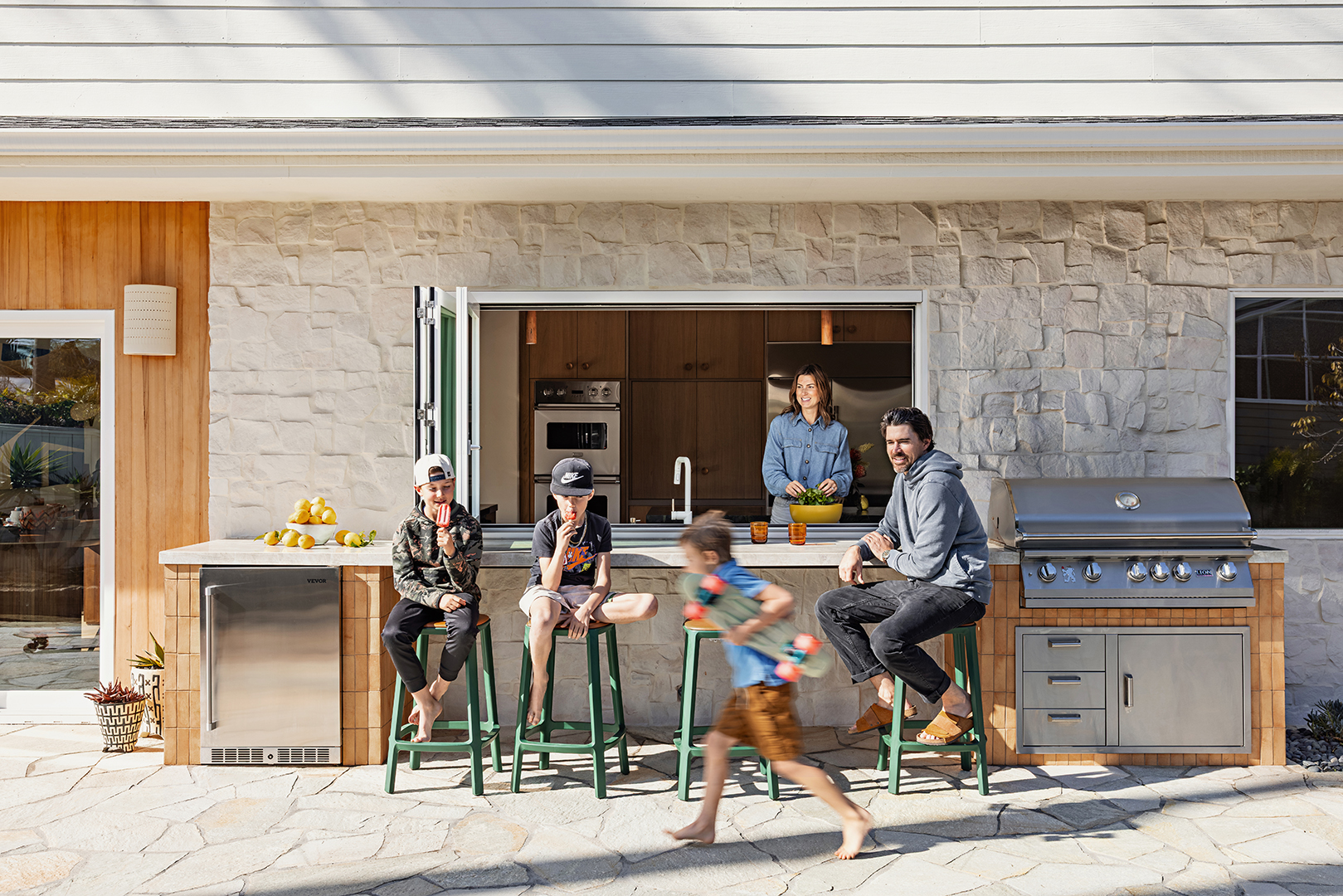
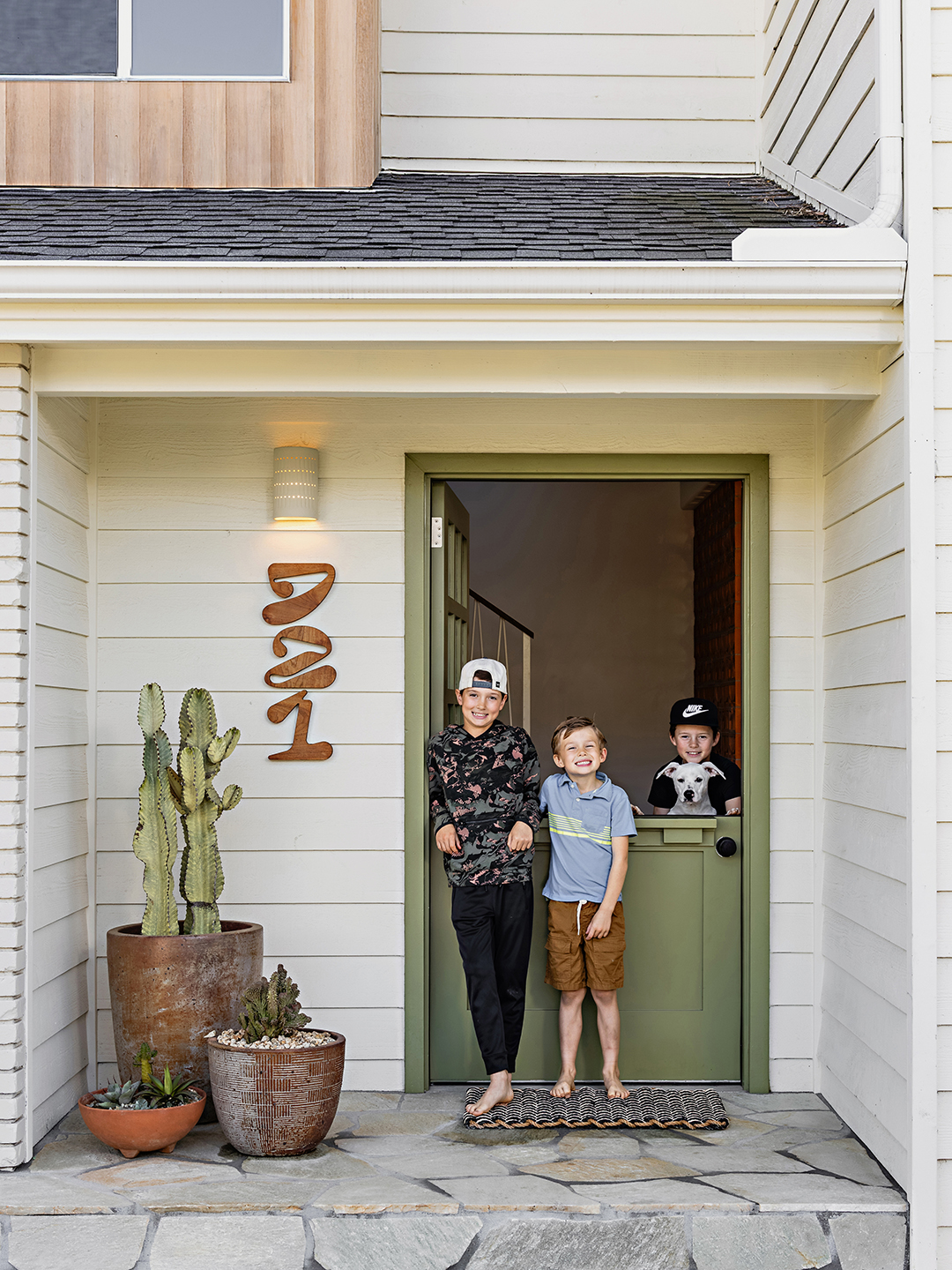
“San Diego has a lot of the entrepreneurial energy of Los Angeles,” Valencia says, “but it’s more laid back.” Encinitas, in particular, offered the creative, community-driven life they craved. For Dobrinski, though, one perk stood above all others: “My goal was to find somewhere where I could throw my surfboard on a bike and ride to the beach,” he says. “When we walked into this house, I knew it checked that box.”
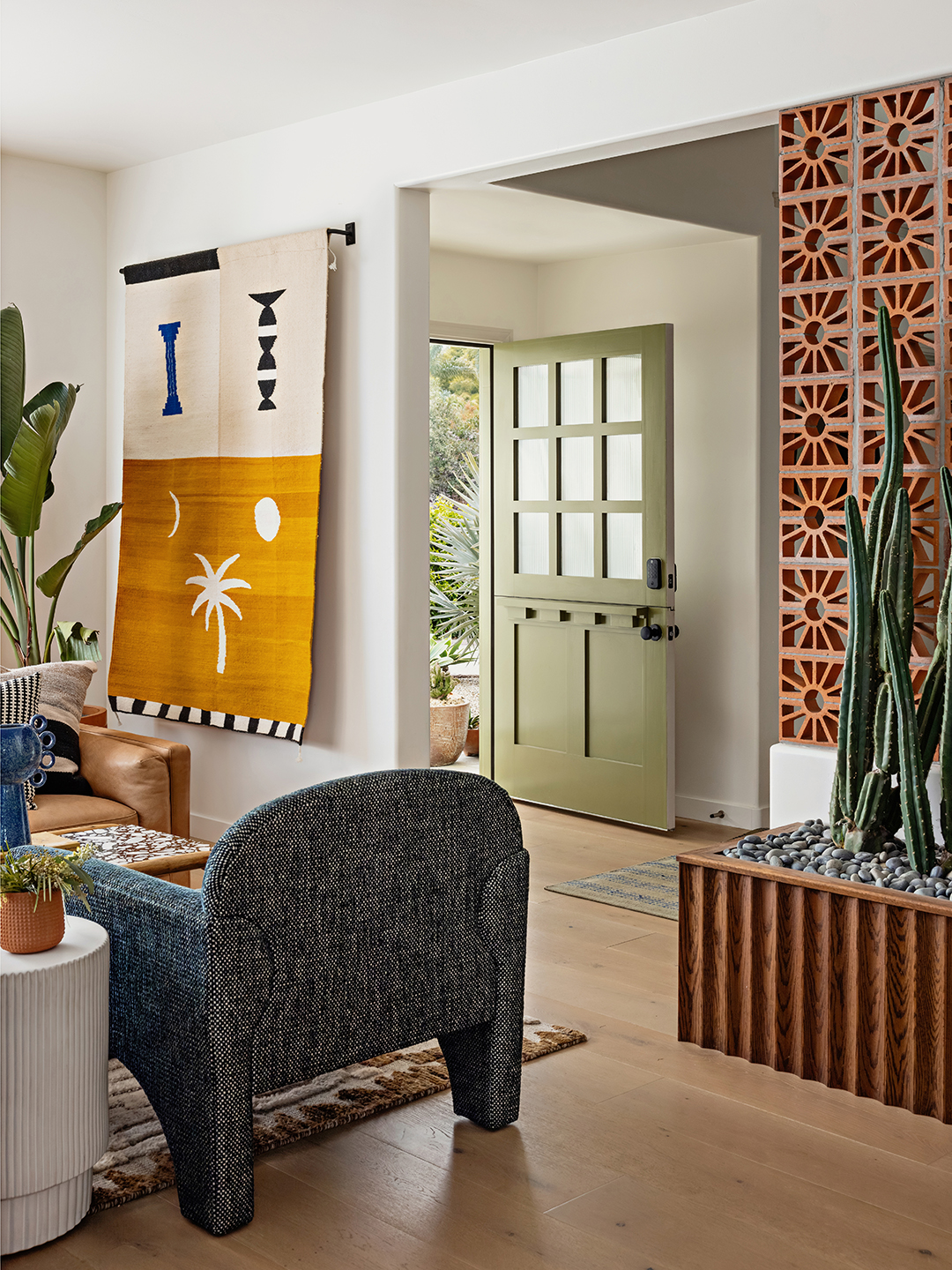
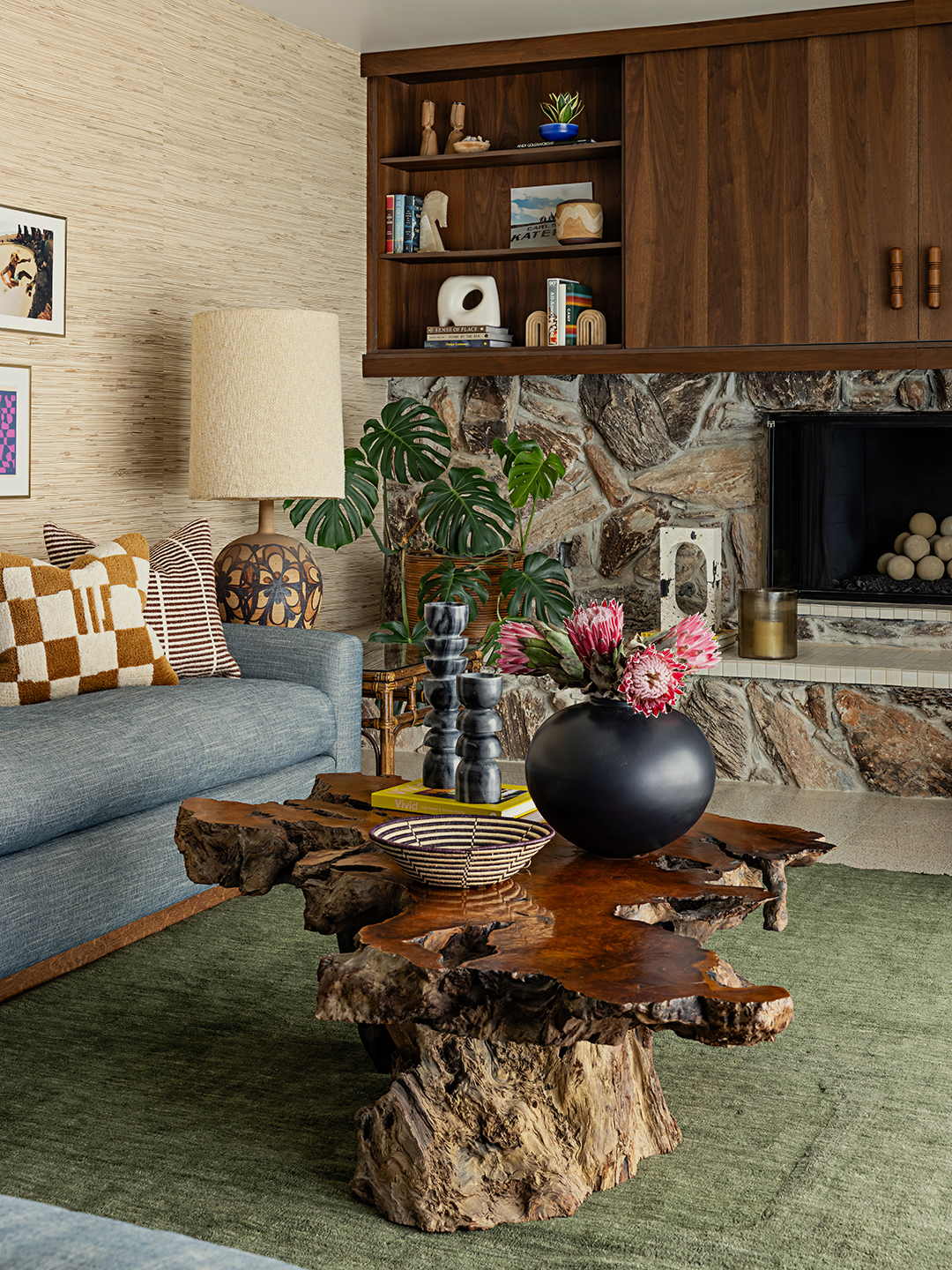
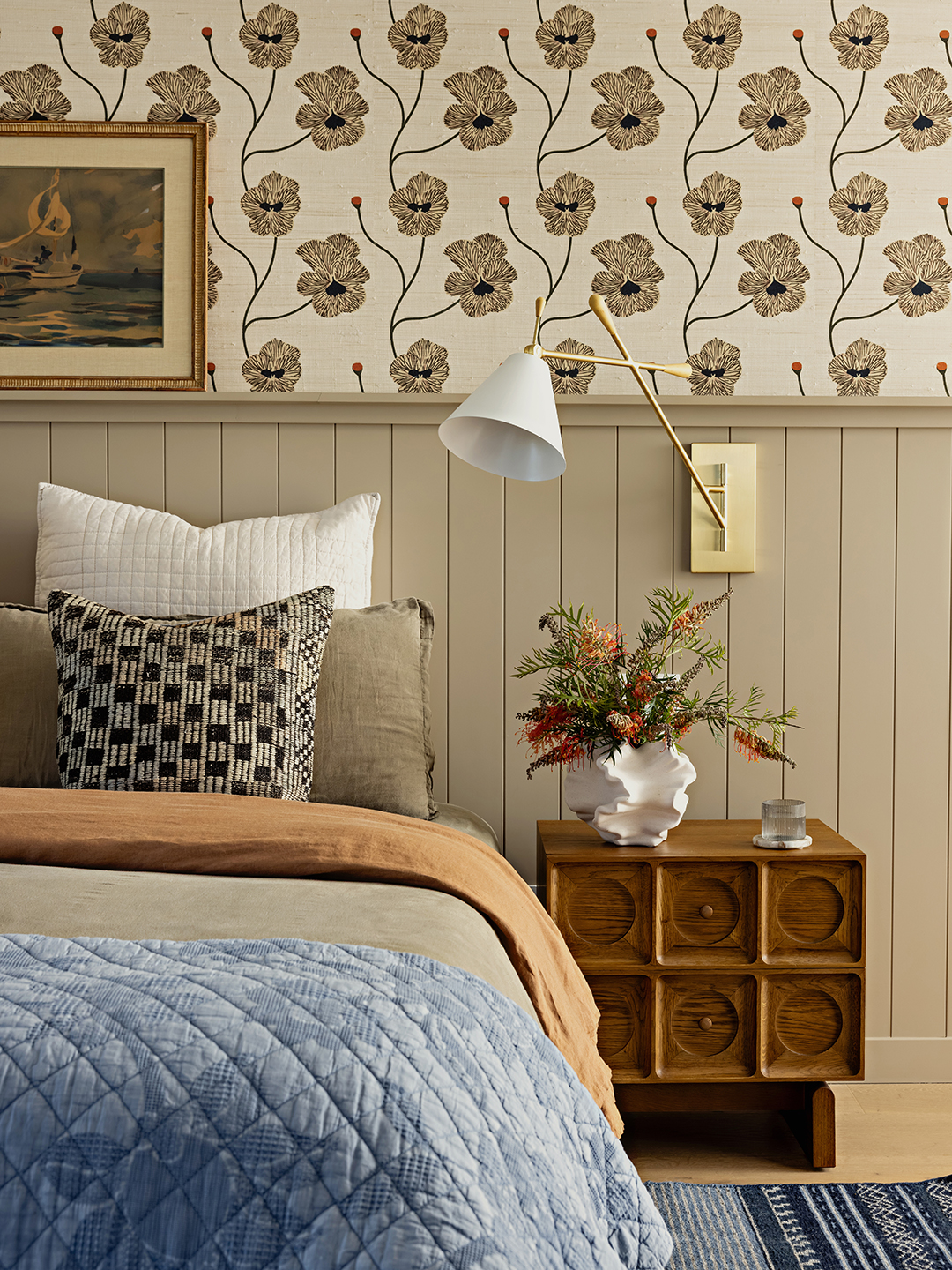
Valencia and Dobrinski were free to build a design language from scratch, pulling inspiration came from several directions: mid-century architecture, California surf culture, and the colors and textures of Mexican spaces. “We kept coming back to this idea of a mid-century surf shack,” Valencia says. “Something youthful, beachy, and relaxed, but layered with materials and influences that felt personal to us.”
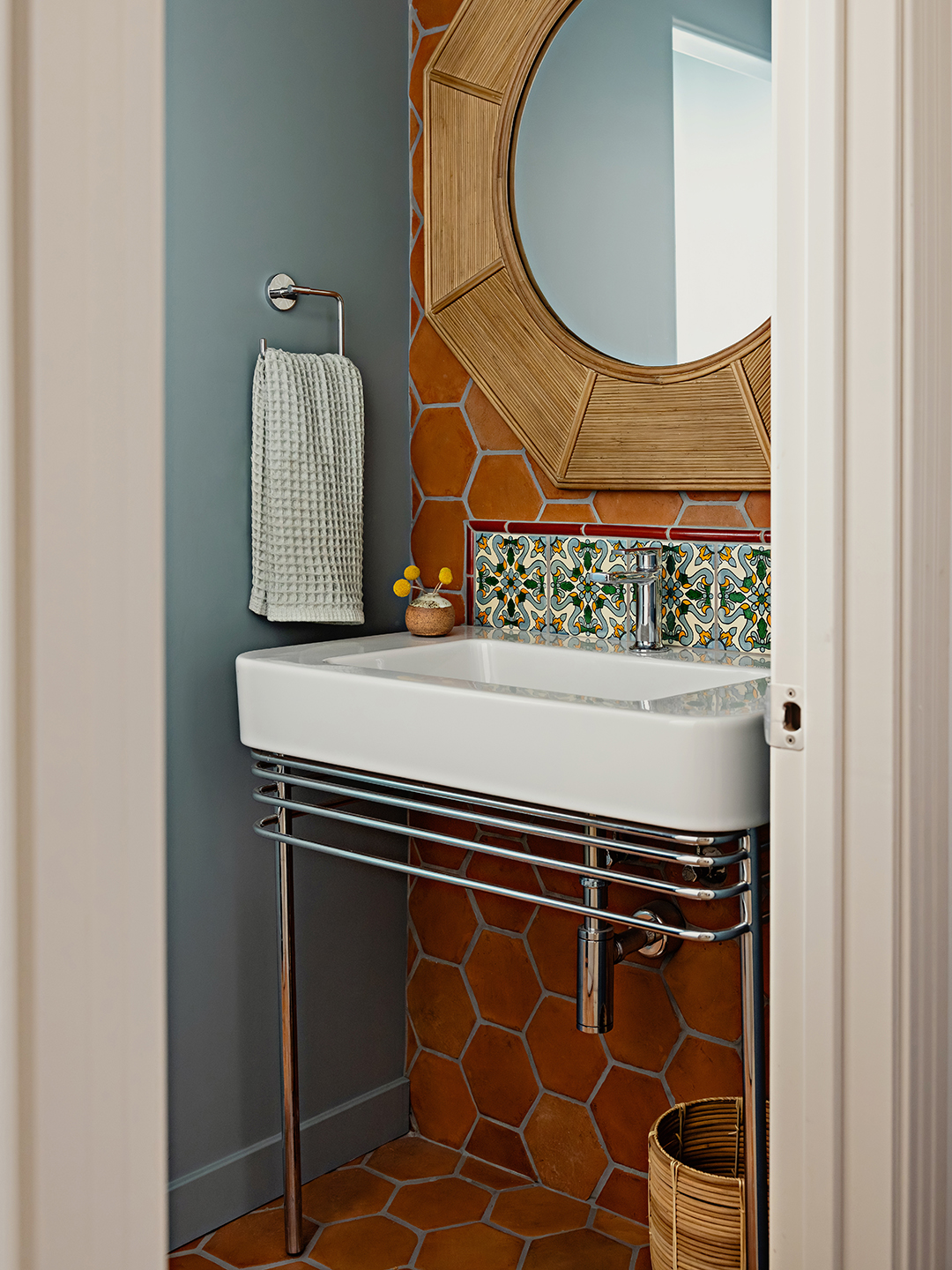
With Mexico just across the border, regional influences, from Oaxacan tilework to earthy color palettes, naturally informed the home’s material choices. “We noticed when we moved here that there’s still a lot of very white, coastal interiors,” Valencia says. “But we’re drawn to spaces that feel a little more collected and lived-in.”
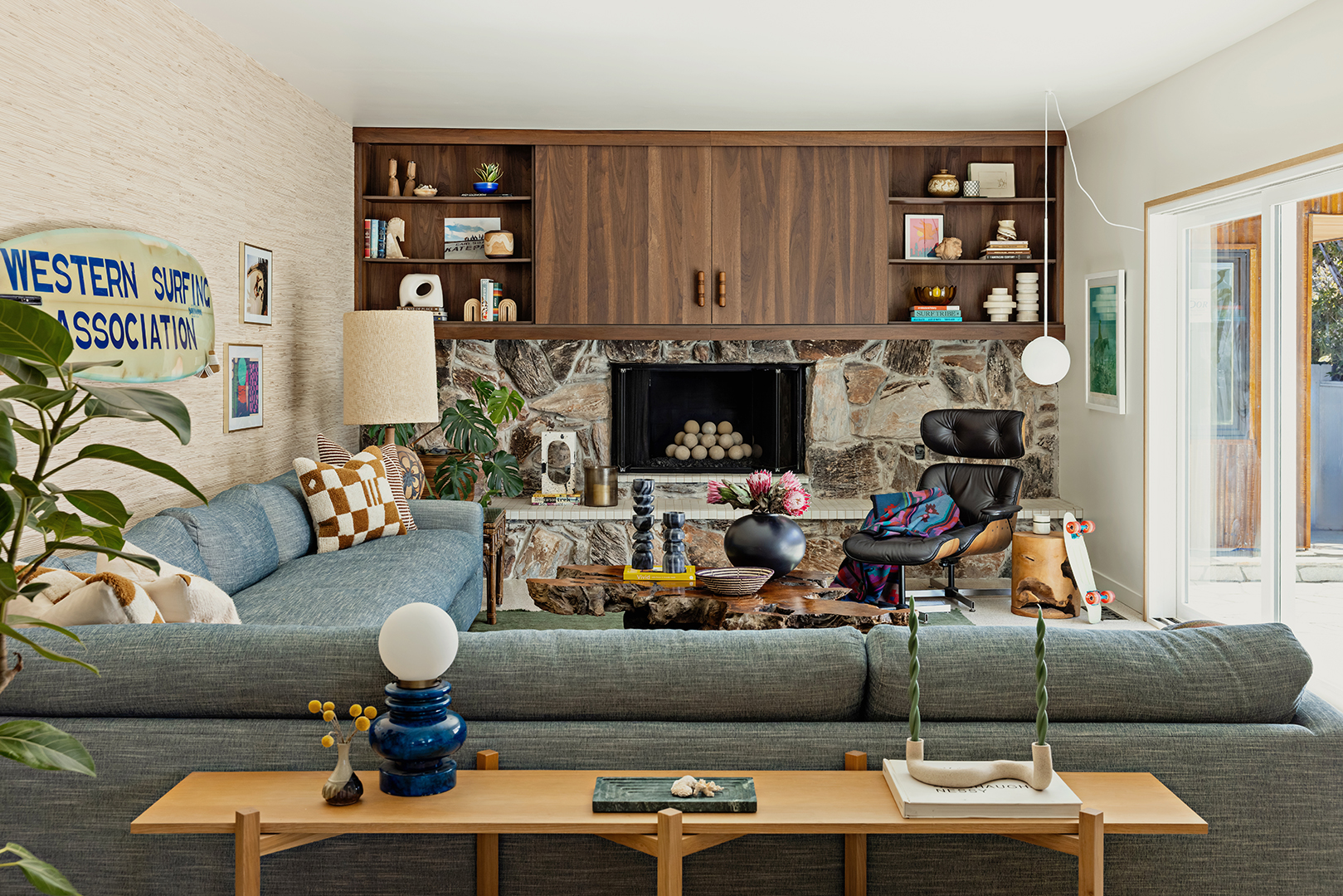
One architectural feature that did exist when the couple found the house? A massive rock fireplace in the living room. Rather than remove the surround entirely, Valencia and Dobrinski chose to reinterpret it. Scaling back the rock, tiling the upper section, and introducing warm wood cabinetry lightened its visual weight. . Hidden behind sliding doors is a television, an idea the designers have been refining for years. “It’s nice not to have to stare at a black box when the TV is off,” Dobrinski says.
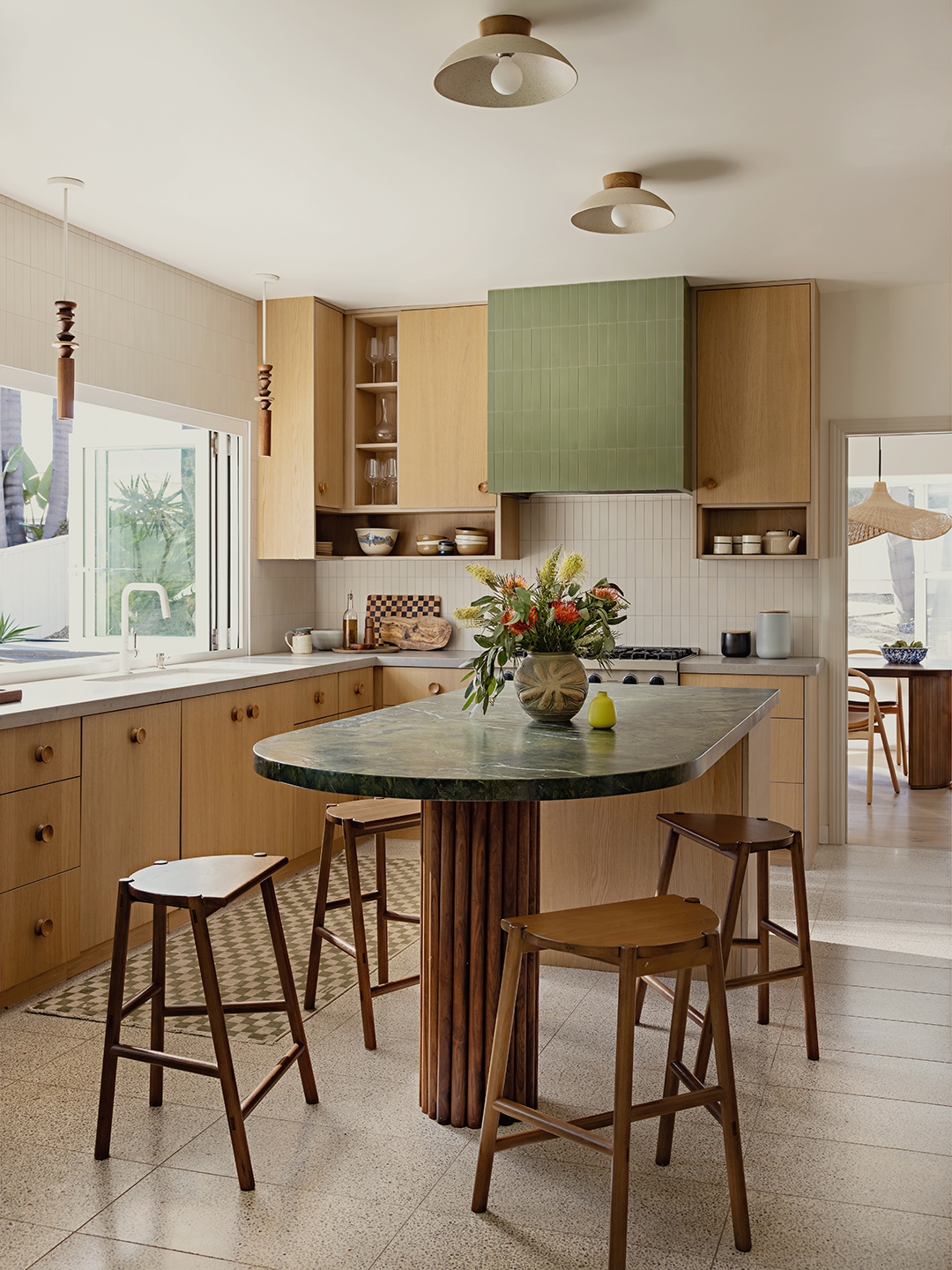
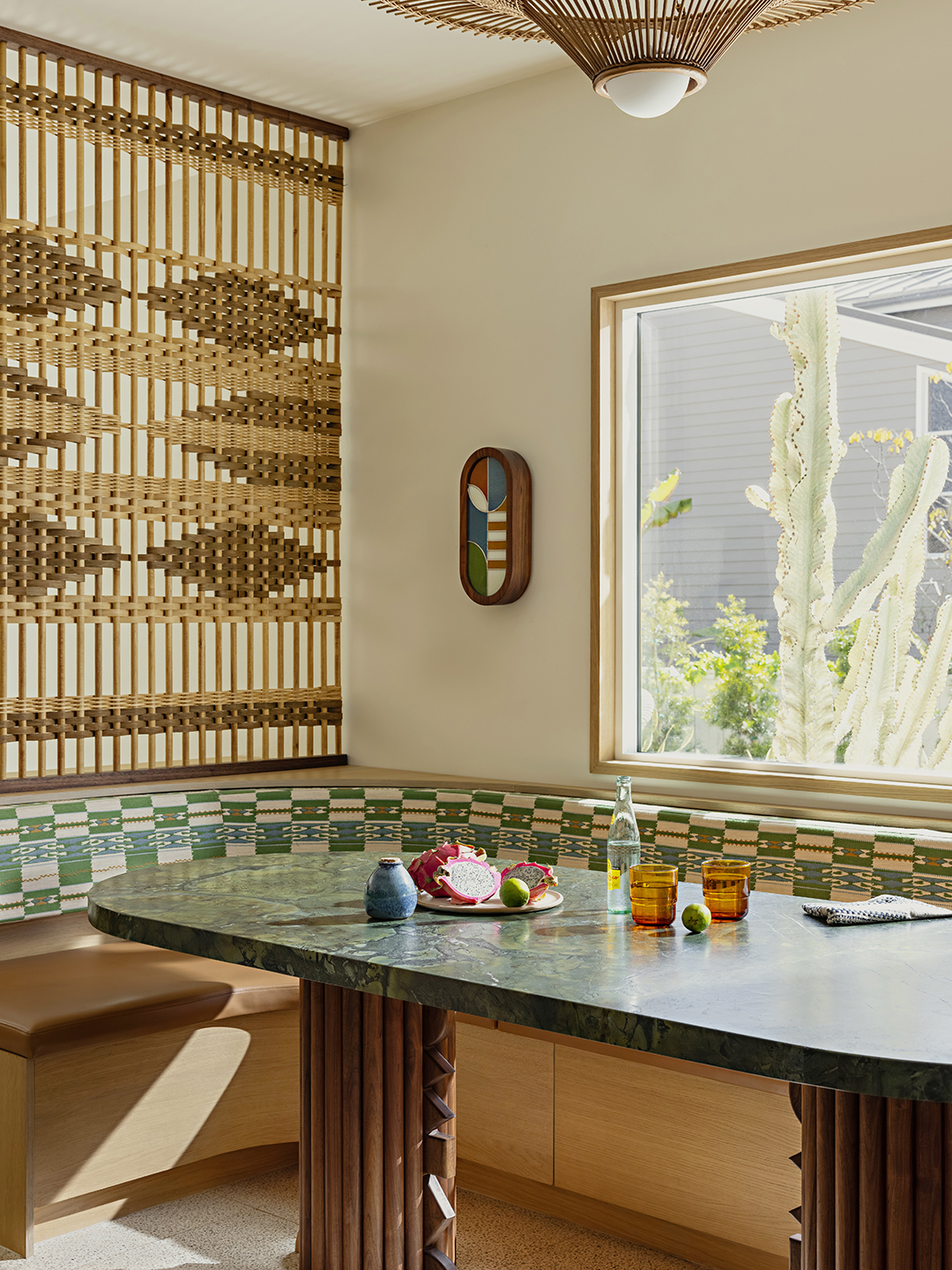
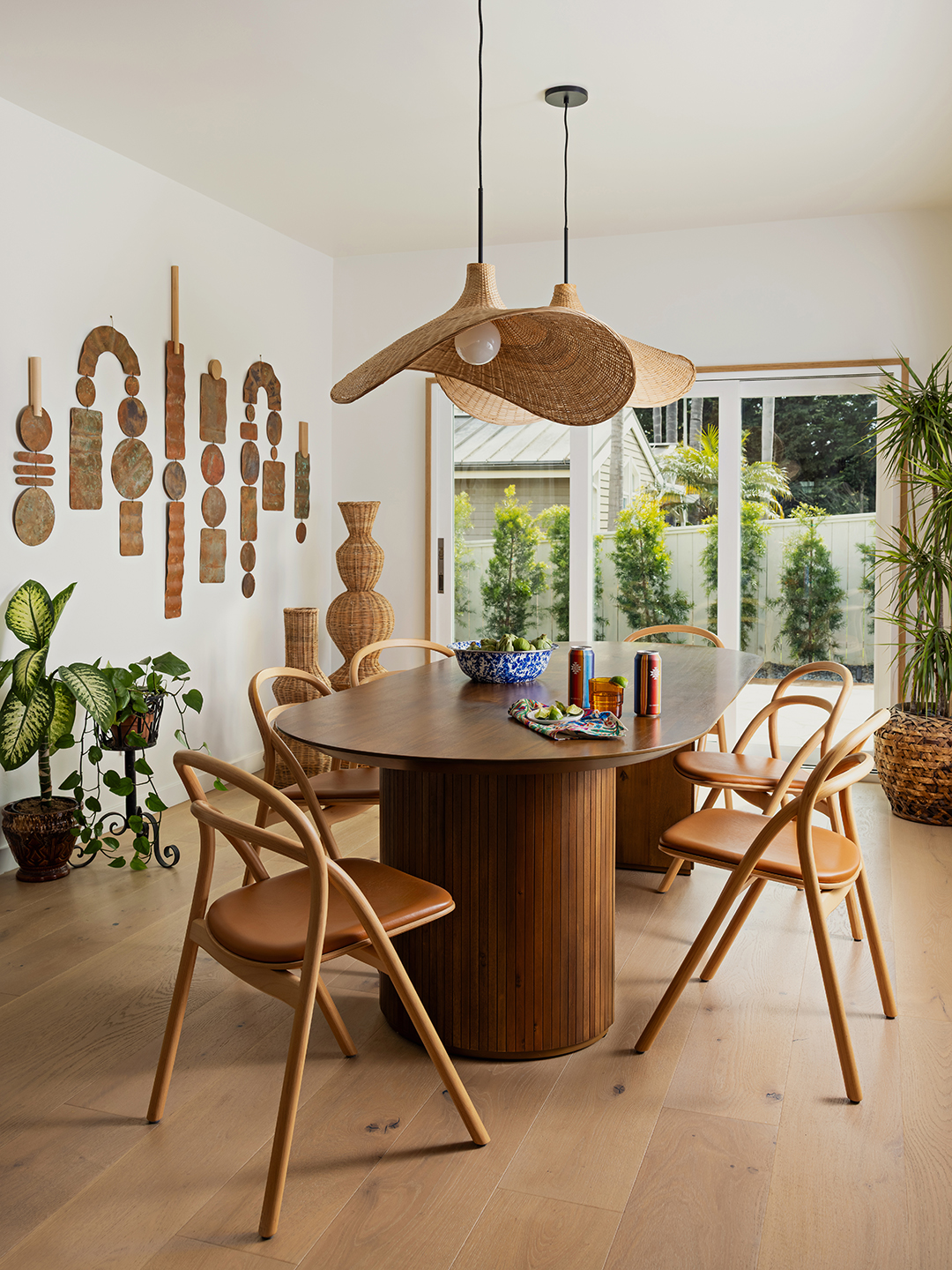
Surprisingly, little structural work was required. Aside from opening up the back of the house to amplify the indoor-outdoor connection, most of the changes came through surface materials rather than major construction. “This project really shows how much tile, wallpaper, and texture can transform a space,” Valencia says.
A sculptural breeze-block wall near the staircase illustrates the point. Designed with a sunburst pattern, the pieces required meticulous alignment, so much so that the team rebuilt it multiple times. “The grout lines had to be exactly right or the whole pattern looked off,” Valencia share. “It was definitely a learning moment.”
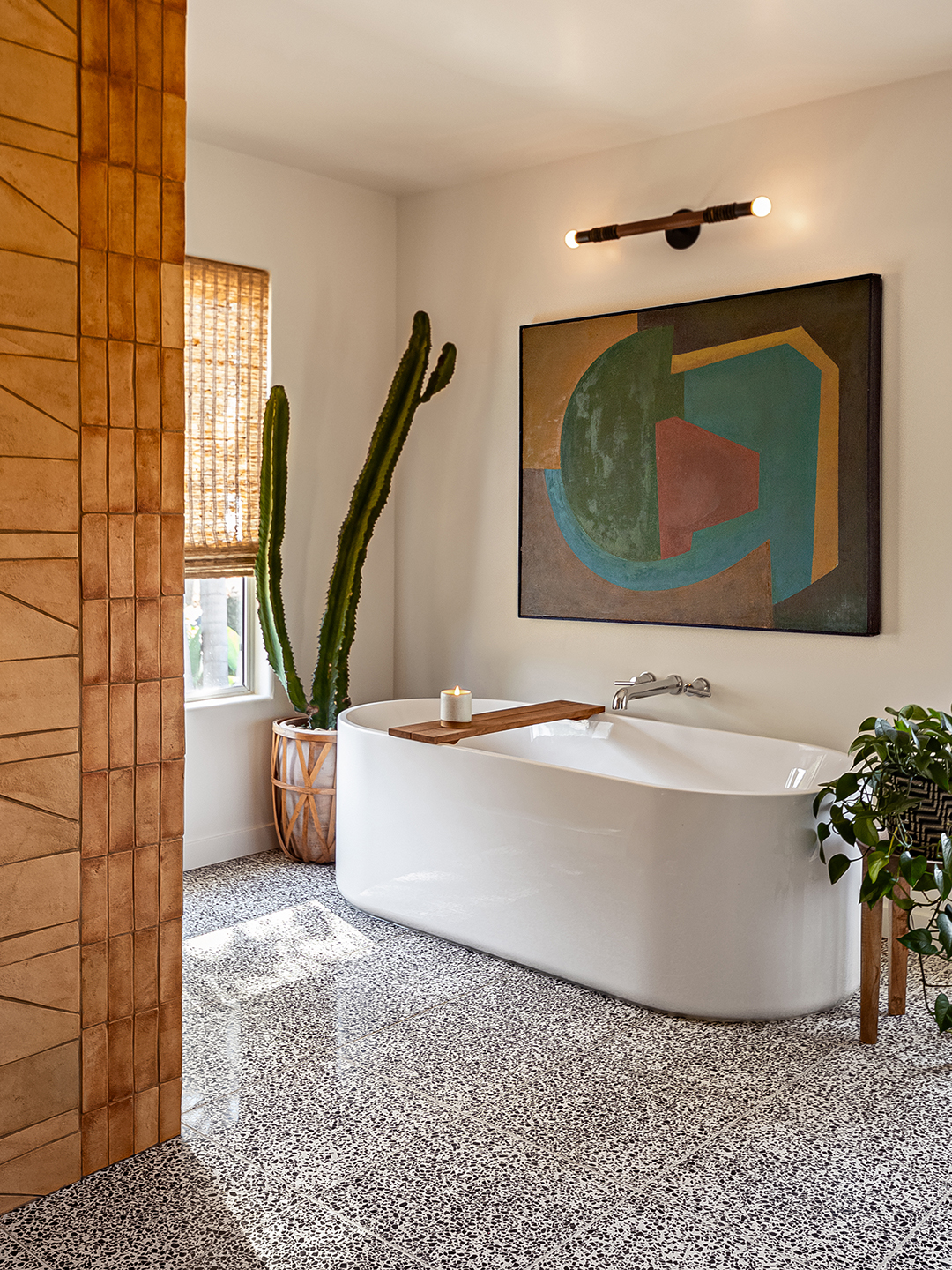
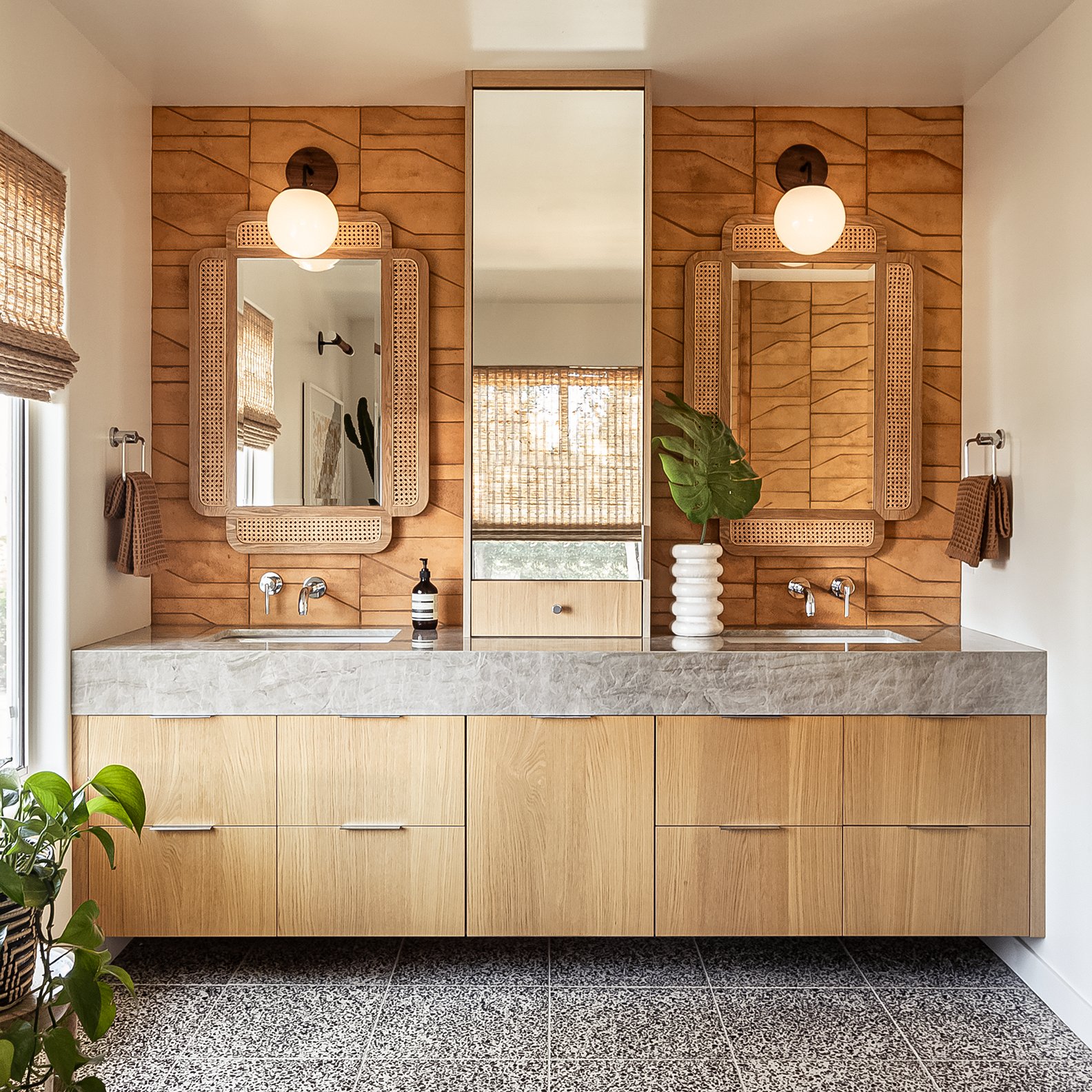
Elsewhere, the designers experimented with new forms, like the curved shower in the primary bathroom inspired by travels abroad. Then there’s the woven divider in the breakfast nook that echoes a patterned rug.
Although the renovation moved quickly, Valencia and Dobrinski never expected the house to feel “finished.” Like many designer homes, the space is meant to evolve over time. “I still want it to get funkier,” Valencia says with a laugh. “We’re always going to flea markets, swapping things out, layering new pieces in.”