
We may earn revenue from the products available on this page and participate in affiliate programs.
A beautiful kitchen that doesn’t function seamlessly, or have enough space for your stuff, isn’t justifiable. Our highest aim at Artichoke, the Somerset, U.K.–based studio where I’m lead concept designer, is to build spaces that work so well—and are so in harmony with the house—that you would never think to change anything. With that in mind, one of the pivotal stages when we’re creating a kitchen is vetting the layout against something we call the aid memoir: a list of the hundreds of kitchen items that belong to a homeowner, from pots to peelers to barware and beyond. Designs don’t pass until we’ve identified where every single one of those objects is going to go.
At the same time, we don’t ever want a kitchen to look like storage led the process, with cabinets all over the place. Over time, we’ve developed an arsenal of tricks for sneaking in different types of smart storage without compromising aesthetically. Below, you’ll find some of our greatest hits.
The Cutting Board That Hides a Compost Chute
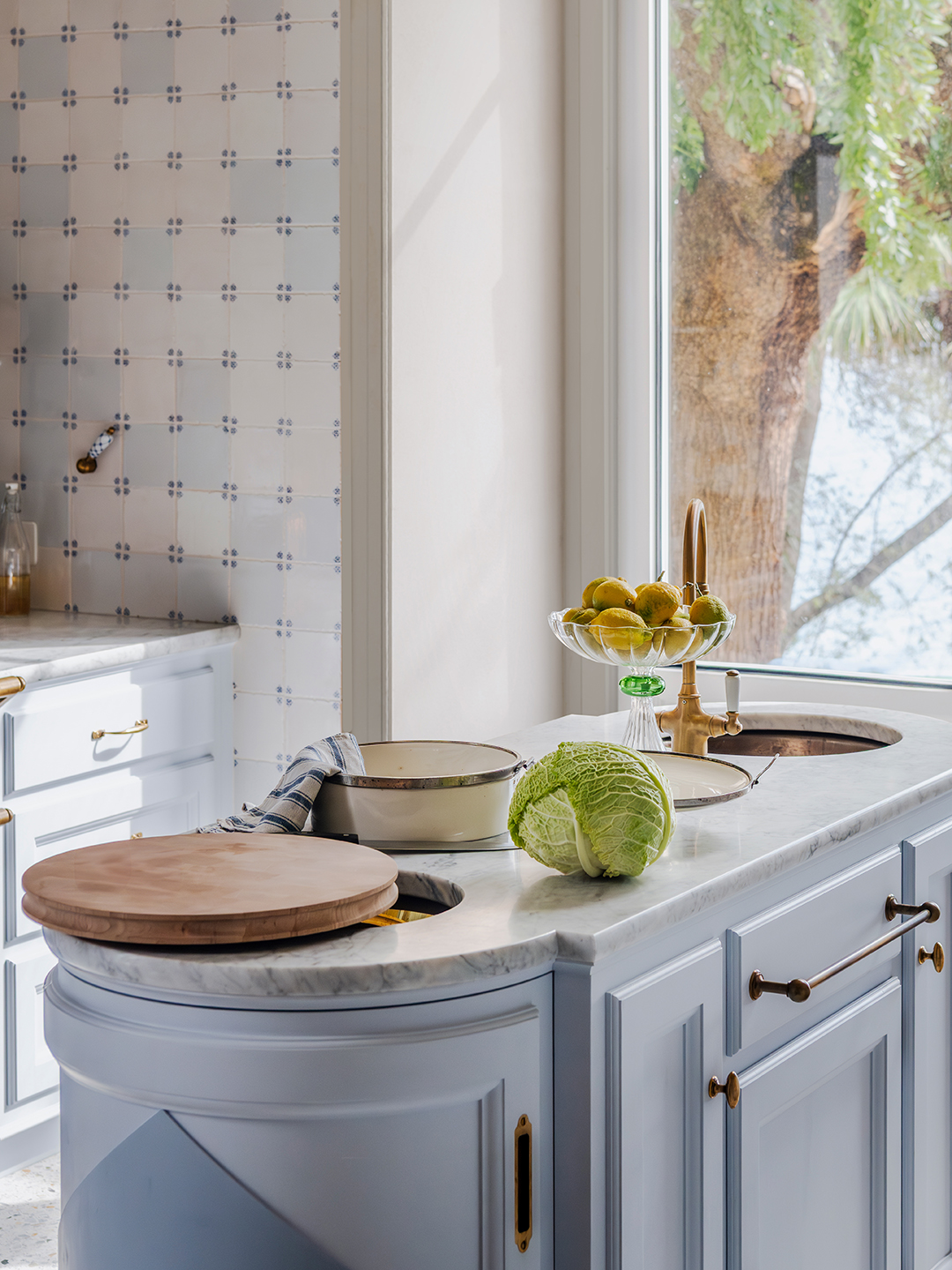
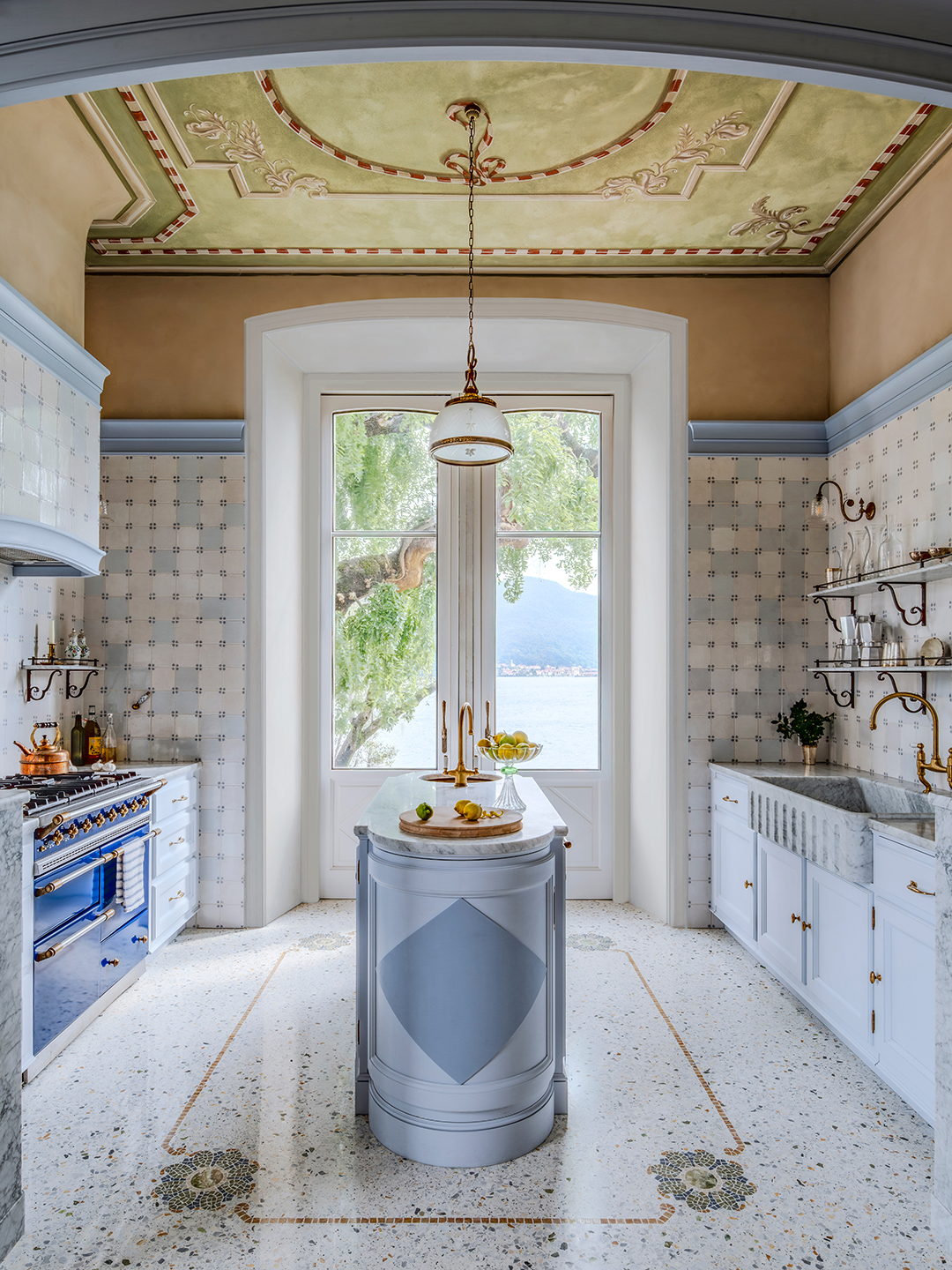
In this kitchen, the island was quite small and there wasn’t much space for preparation. We ended up creating these half-circle ends. The sink is at one side, and a round cutting board at the other, which is also the lid to the compost chute: We incorporated a bespoke brass track that discreetly slides the board to the side. It can also be lifted up, so after you chop your tomatoes, you just tilt the cutting board and the scraps slide down a brass shoot into a melamine bin without any weird, drippy little corners for anything to collect in. To remove the bin, you open the curved door at that end of the island.
The Adjustable Oak Vegetable Rack
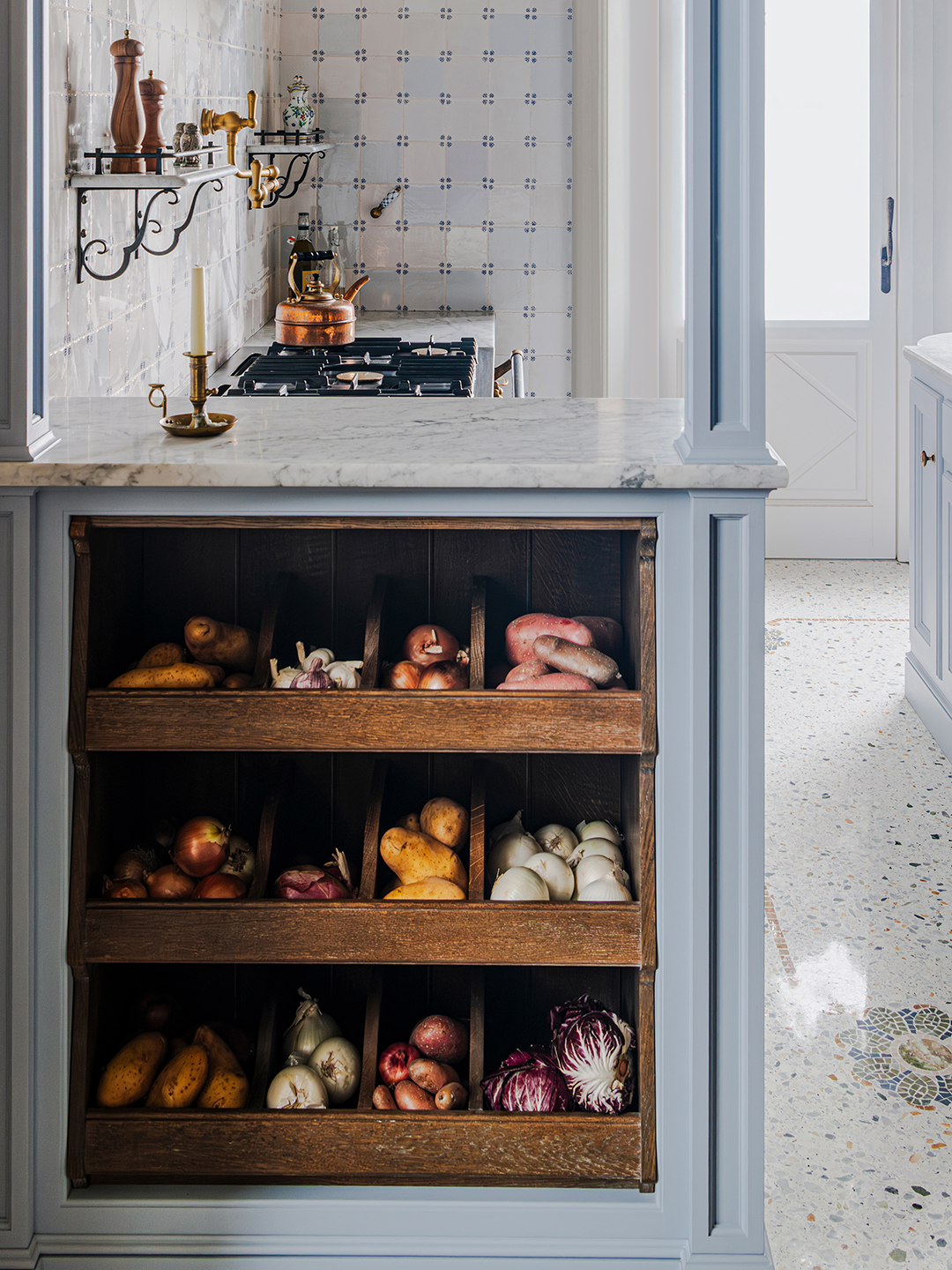
This is from the same kitchen as the compost bin, a villa in Lake Maggiore, Italy—the client loves skipping down to the local market with a basket, bringing back beautiful produce, and putting everything away in his oak vegetable rack. We designed it so the little dividers can move—if you need a bigger compartment for potatoes and a smaller one for shallots, it’s easy to customize. This market rack is obviously very useful, flexible storage for someone who uses fresh produce up pretty quickly. But there’s also something wonderfully painterly about this little corner: a place to display lovely oranges with the leaves still attached next to a gorgeous burgundy radicchio.
The Bar Cabinet That Disappears
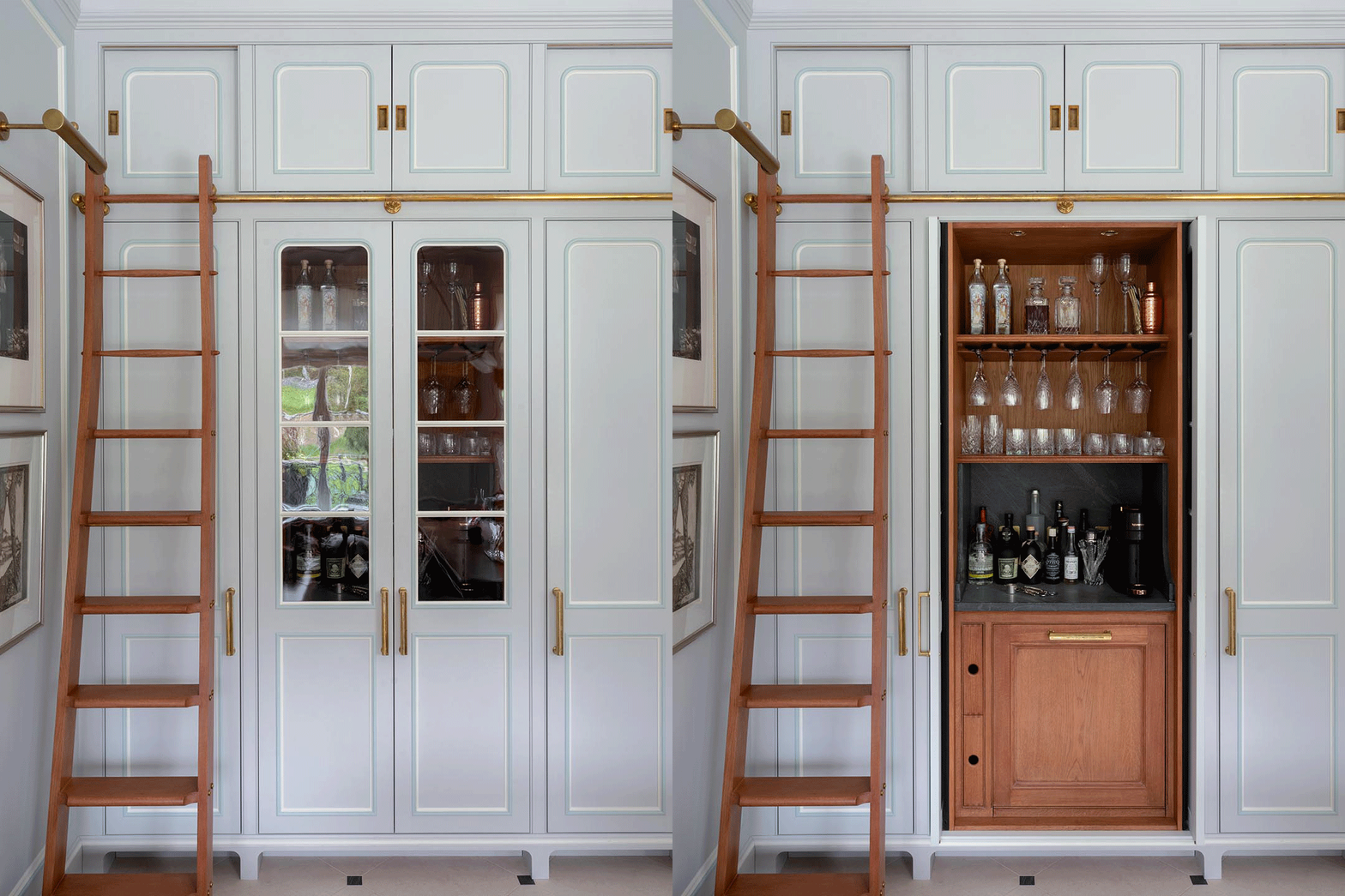
We decided that this bar cabinet, in a historic Swiss estate, should have glass fronts to break up the series of doors. And while the built-in bar area with devoted space for glassware and necessities for cocktail concoctions is itself a storage solution, it’s the fold-back doors that are especially satisfying. “Flapping around” is a phrase that goes around our office quite a bit—like, “that’s just going to flap around”—and creating space for the doors themselves to disappear helps to solve it. But here, you can just leave the doors open if you want the bar to remain accessible.
The Cutlery Tray That Maximizes Drawer Space
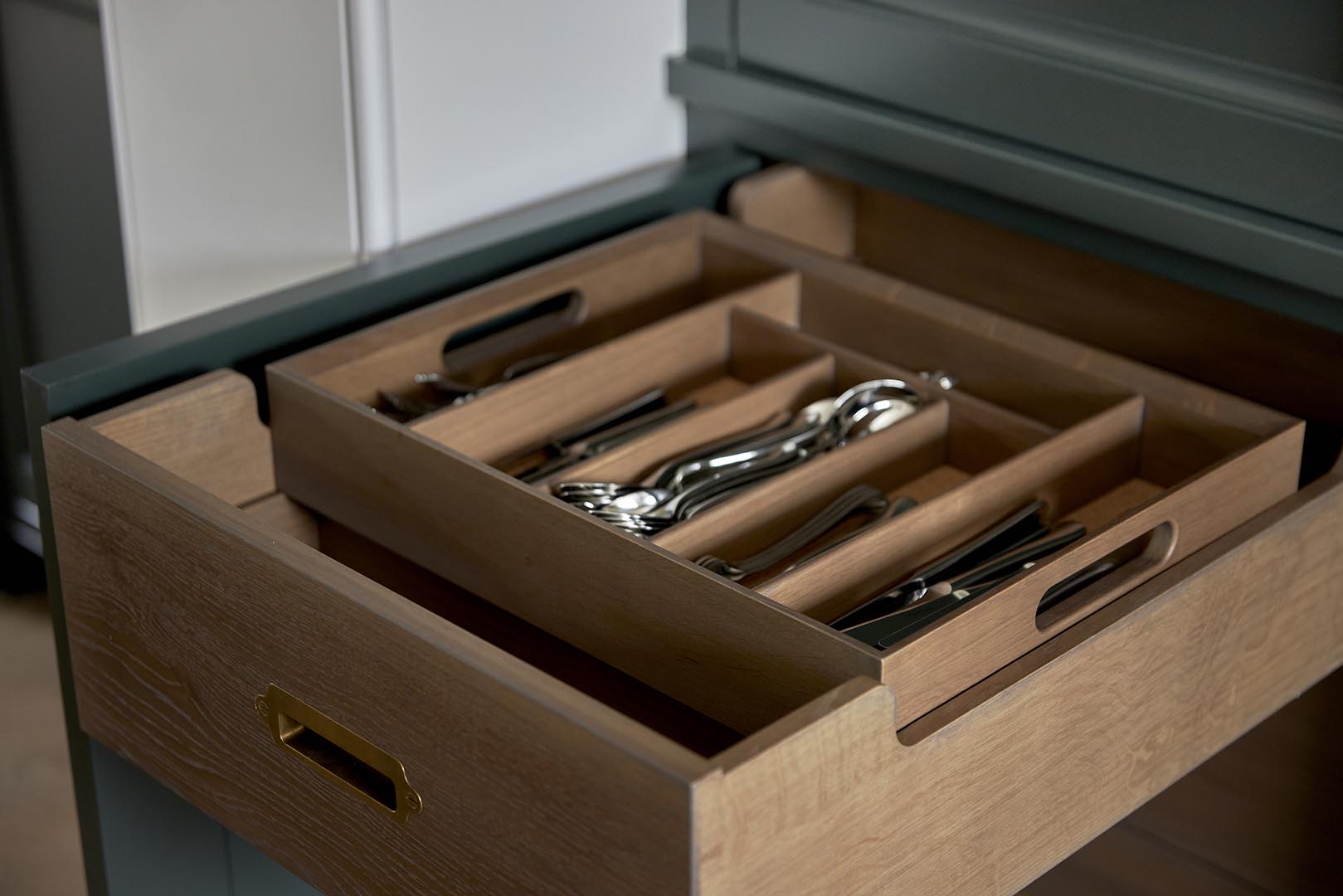
We rely on these trays a lot, especially for islands and cook tables, which often have deep drawers. They are almost like a little mezzanine inside the drawer: Store cutlery or silverware in the removable tray on top, and then keep things below them, like your foils and such. There’s a little lip around the side of the drawer that holds the tray, making it easy to lift in and out. We do another version of this, too: a knife block that slides within the drawer so you can easily access the space beneath it.
The Appliance Garage Tucked Into a Corner
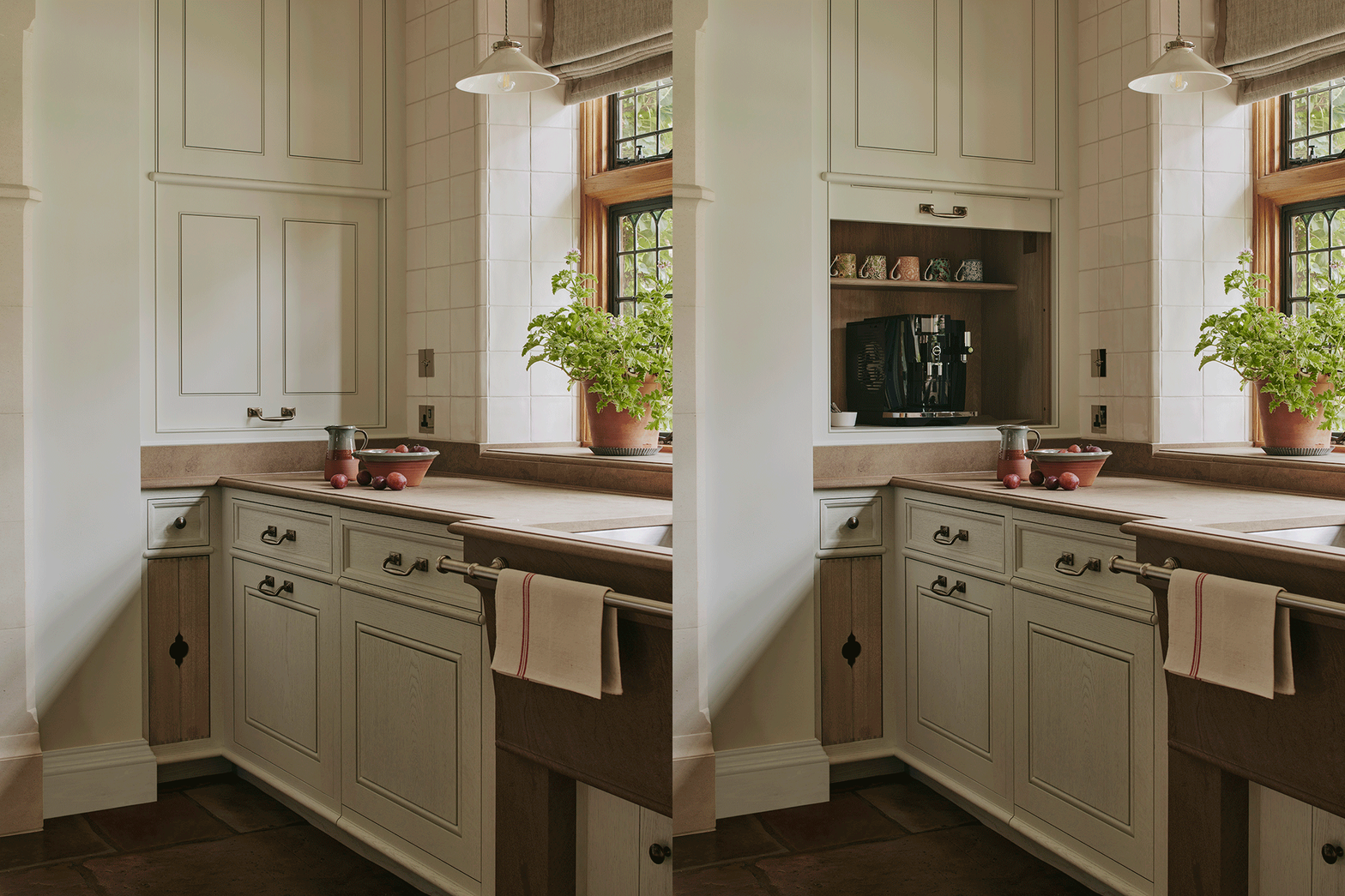
A dumb waiter is like a little elevator for transporting food and beverages, and an element that’s common enough in grand old historic estates like this grade II house in Cheshire. In this case, we sort of combined the look of a dumb waiter with the functionality of an appliance garage. It worked with the layout because we had cabinetry running along one wall and a counter running into it at the corner, so this was a good use of that otherwise dead space. Instead of a hinging door, which would have been disruptive, the door of this coffee bar cabinet slides upward. When it’s back down, voila, the coffee area disappears.
The Pull-Out Coffee Shelf
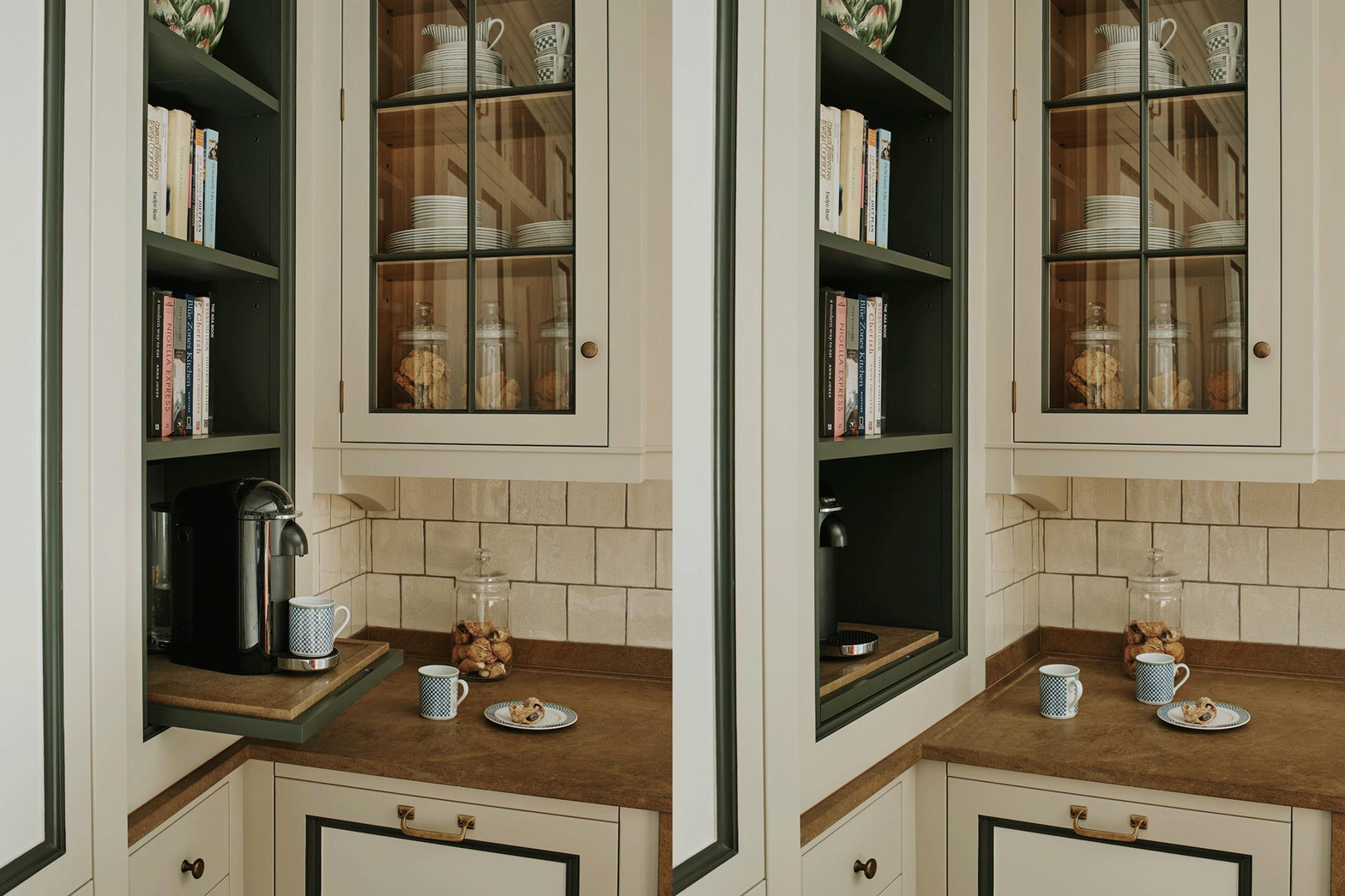
When we carve out space for a small appliance, we are also thinking about the everyday, practical maintenance. In the case of this little espresso machine, we were considering how the client would go about changing the water, which is much easier if you can just slide the shelf outward. Also, even though it’s open storage, when it’s put away, the machine also disappears a bit, and there’s no flappy door to fuss with—actually, eliminating “flappiness” may be the overarching theme of sneaky storage.
The Niche That Crops Up Wherever Necessary
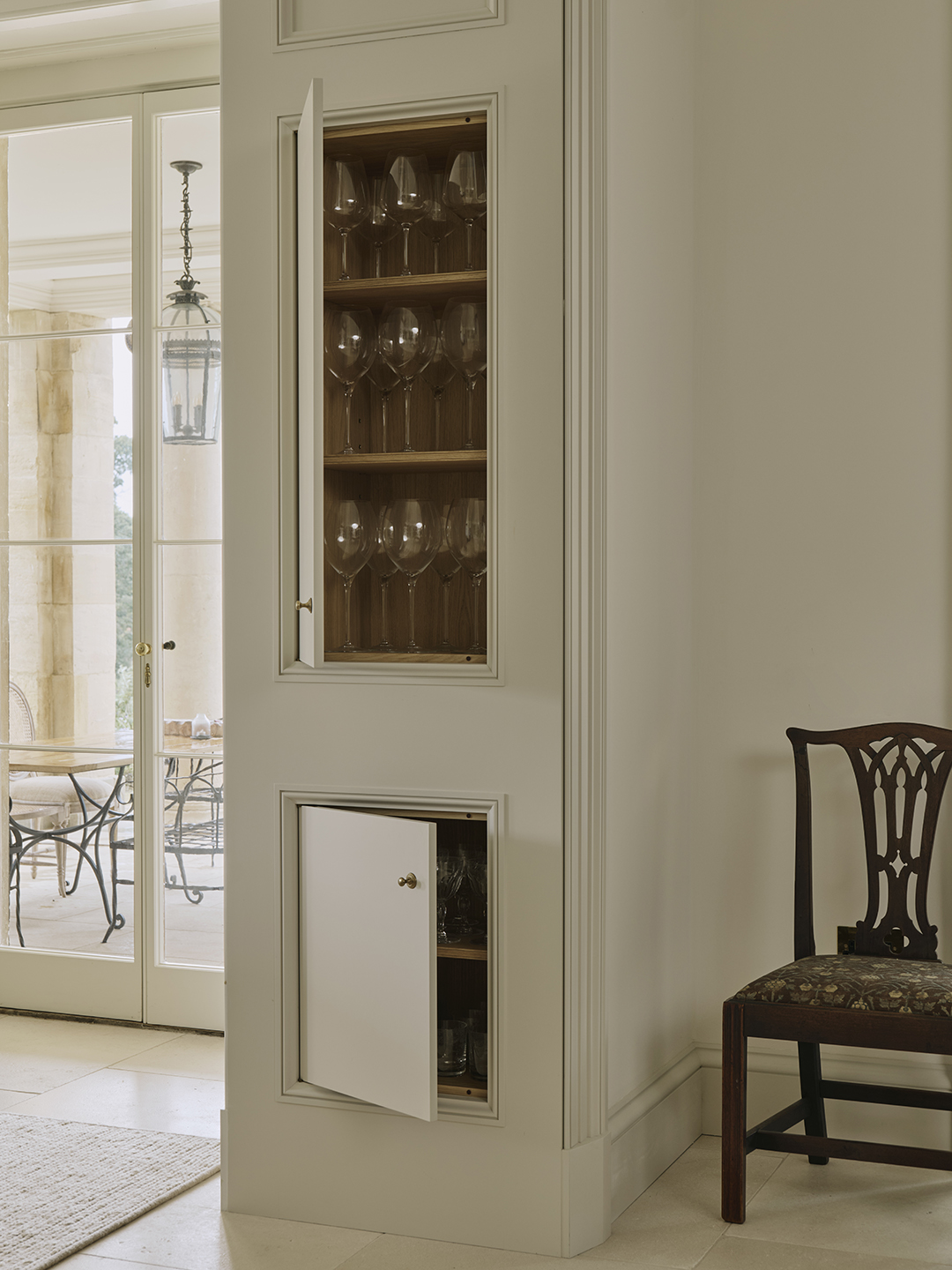
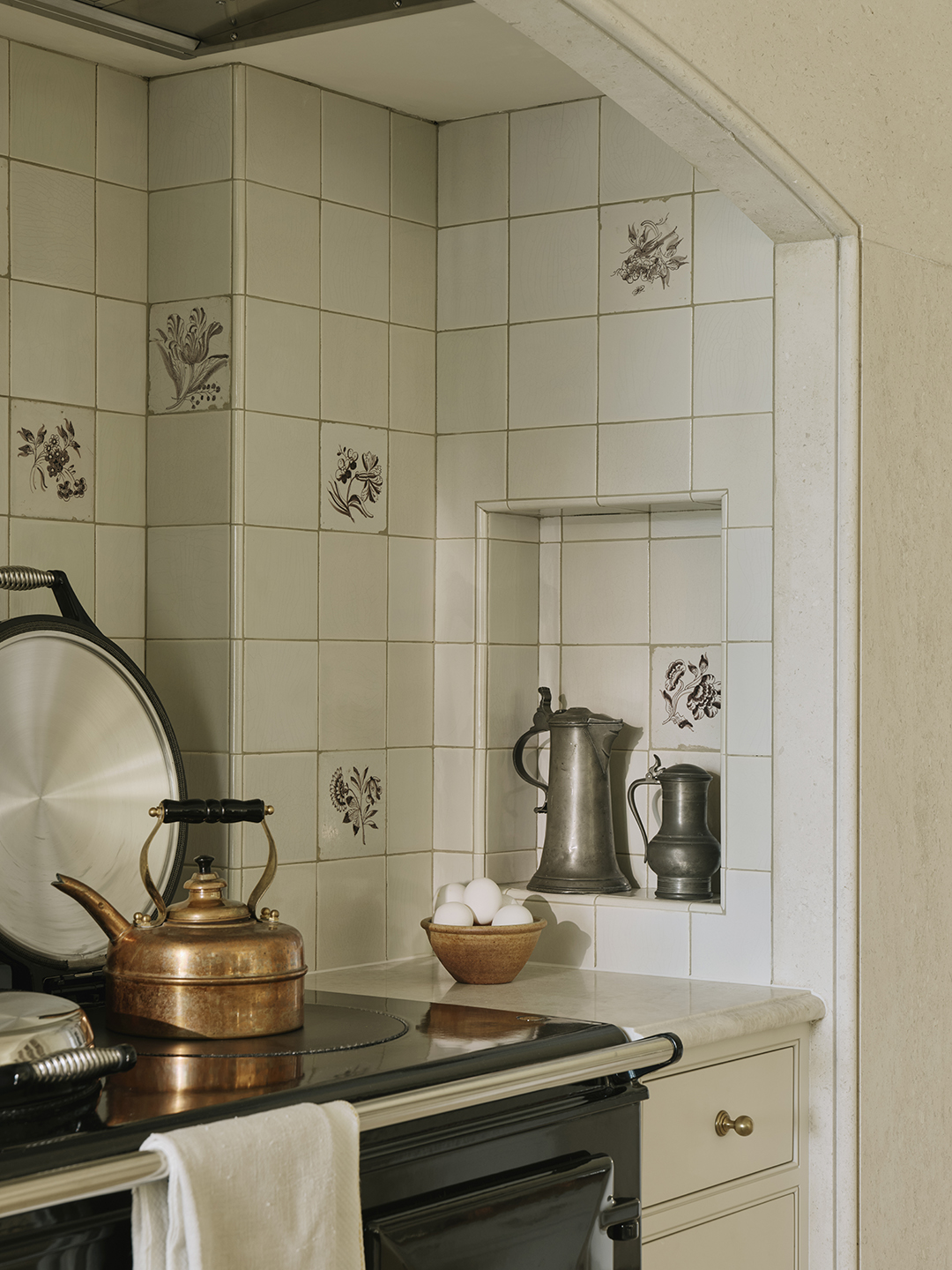
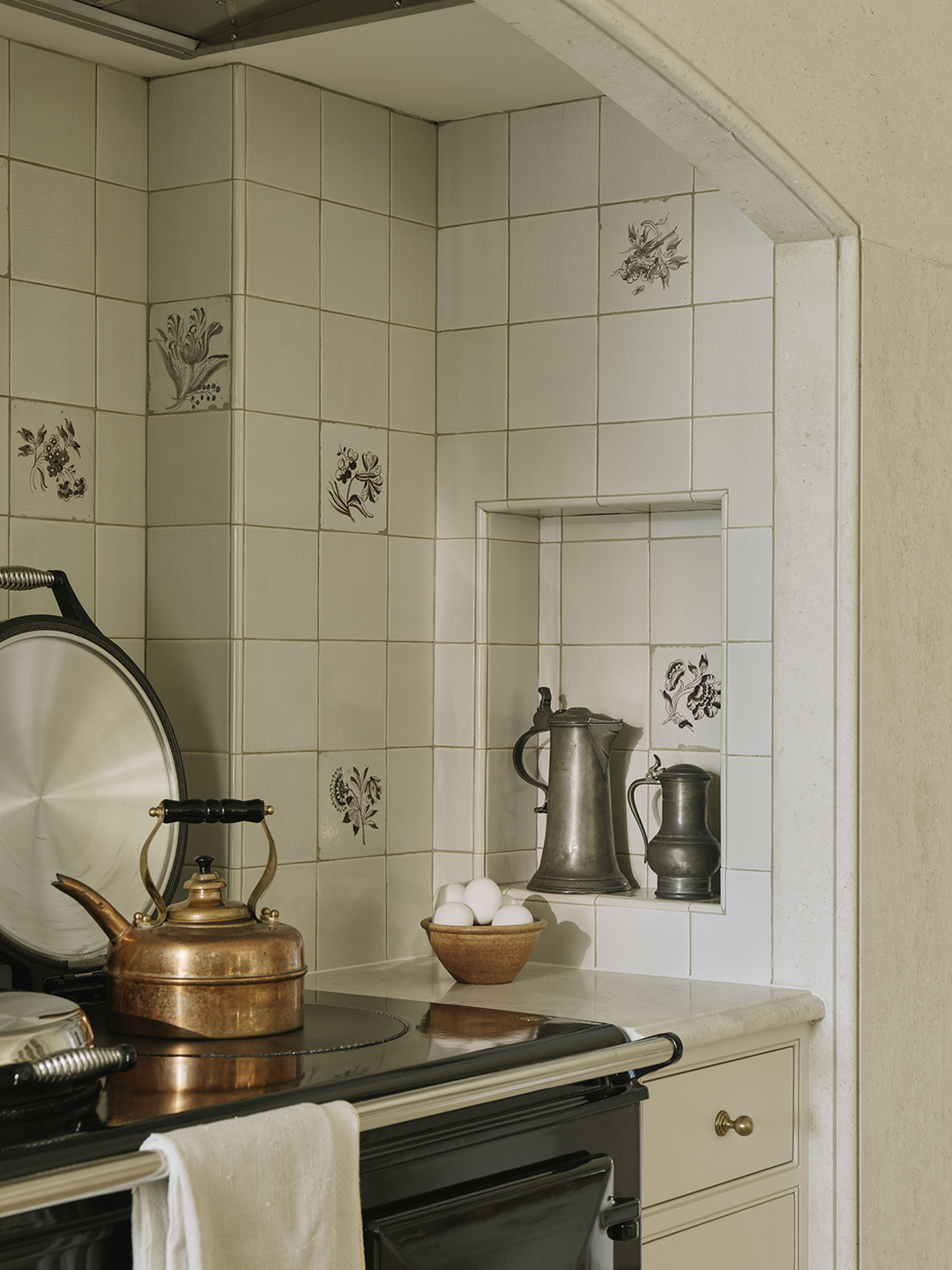
This goes back to the aid memoir strategy. Our process is also about making room for beautiful items to be on display without being in the way, as well as creating storage solutions that blend with the room. Our starting point is always the architecture: For instance, we used this wall cavity inside a range alcove as a little tiled niche for kettles, olive oil—items you would want close at hand but tucked a bit away.
In the case of those wine glass cabinets, we have a framed entryway to the room that creates context for a paneled passage. We were able to use the cavity of the passage for cabinets, and they all-but disappear because the doors themselves are fitted within the molding.
The Workhorse Larder
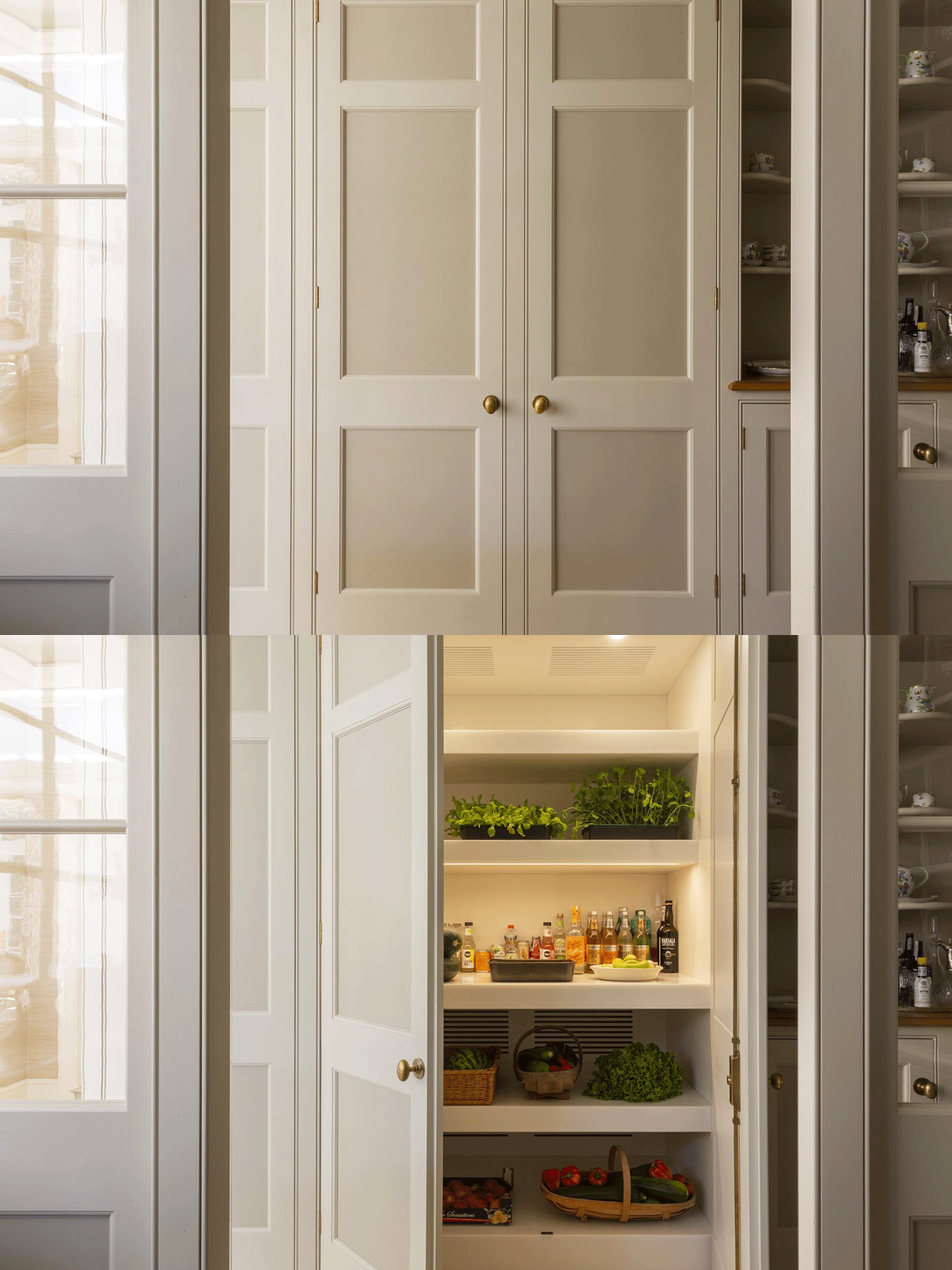
The hardest thing to do when you’re creating a beautiful kitchen is finding room for the fridge. It’s like this enormous phone booth that you have to find space for, so one thing we do sometimes is divide out the cold storage. If you create a dedicated space for things that often wind up in the fridge but don’t have to be refrigerated, and then the fridge itself can be slimmer. The shelves in this larder are lined in Corian, cool-to-the-touch and easy to clean, but you could tile them or use marble instead.