
We may earn revenue from the products available on this page and participate in affiliate programs.
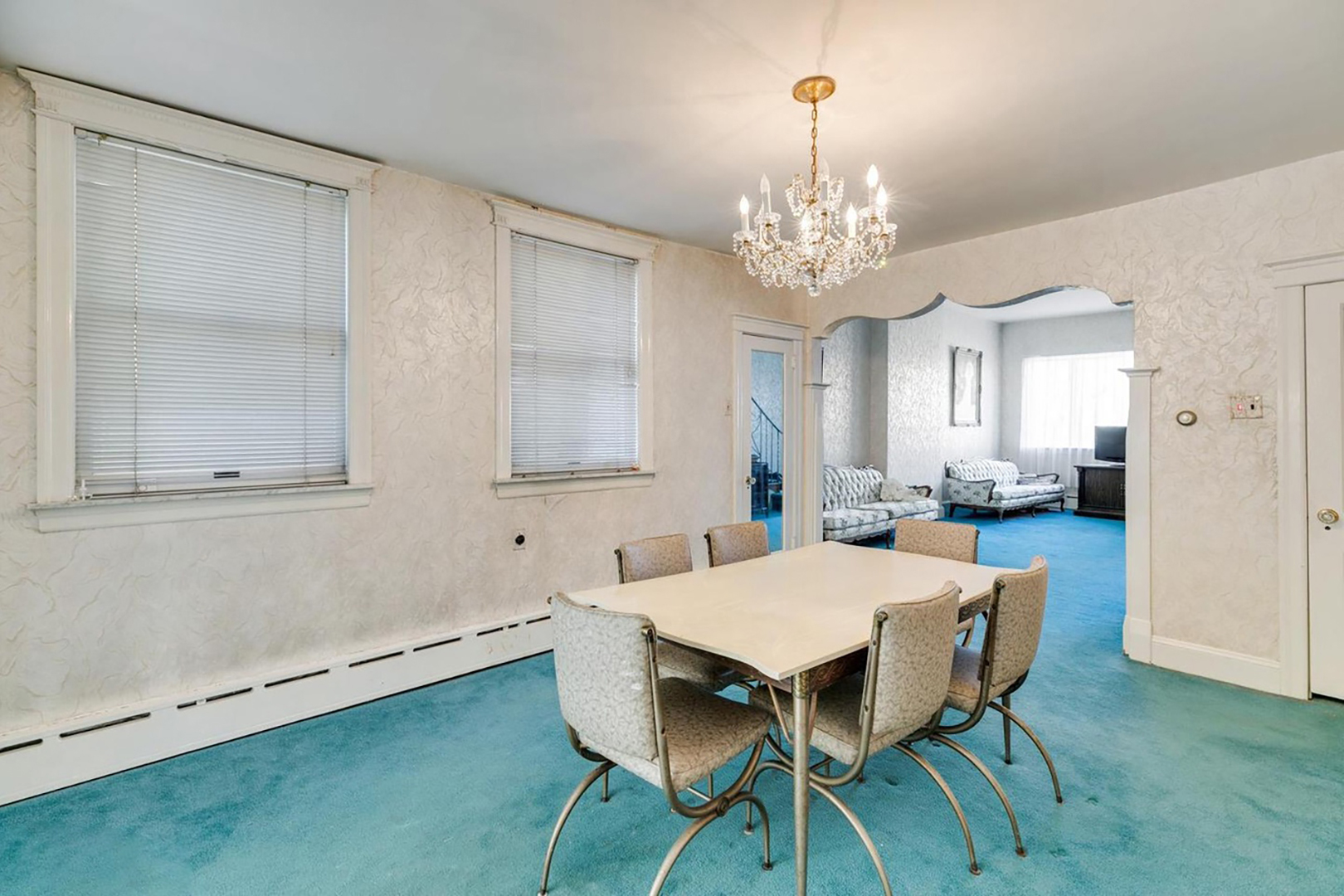
Two and a half years ago, interior designer Sary Em and architect Eric Heidel—the duo behind Philadelphia-based (Re)work Architecture and Design—embarked on a top-to-bottom renovation of a rowhouse so retro, it landed on the South Philly Time Capsules Instagram feed. Walking into the 2,800-square-foot home—untouched since the ’60s—felt like stepping out of a time machine. And while there’s always hope that ripping up dingy teal carpet from the Johnson administration might reveal hidden treasure, Em and Heidel weren’t so lucky.
The updates were major: excavating the basement to gain 12 inches of ceiling height, building an addition, and completely reimagining the flow of the first floor. The young couple who bought the house had just one request: “They wanted a space to entertain and make their forever home,” Em says. A few pieces of inherited furniture helped steer the aesthetic, but otherwise, the design team had plenty of creative license.

One standout detail they saved? The Tofani front door with a keyhole cutout. A hallmark of local mid-century rowhomes—crafted by the now defunct Tofani Door Company a few blocks away—these sculptural entries have earned a cult following. This one even sparked a Reddit thread after a neighbor left a note asking the homeowners not to paint it. Spoiler: they did. The door got a thoughtful, era-respecting upgrade—one that matches the care given to the rest of the house. Now it’s teal, just like the original carpet. Read on to see how, with a little vision (and a lot of demo), Em and Heidel turned it into a home that balances nostalgia and now.
Where Game Night and Dinner Party Collide
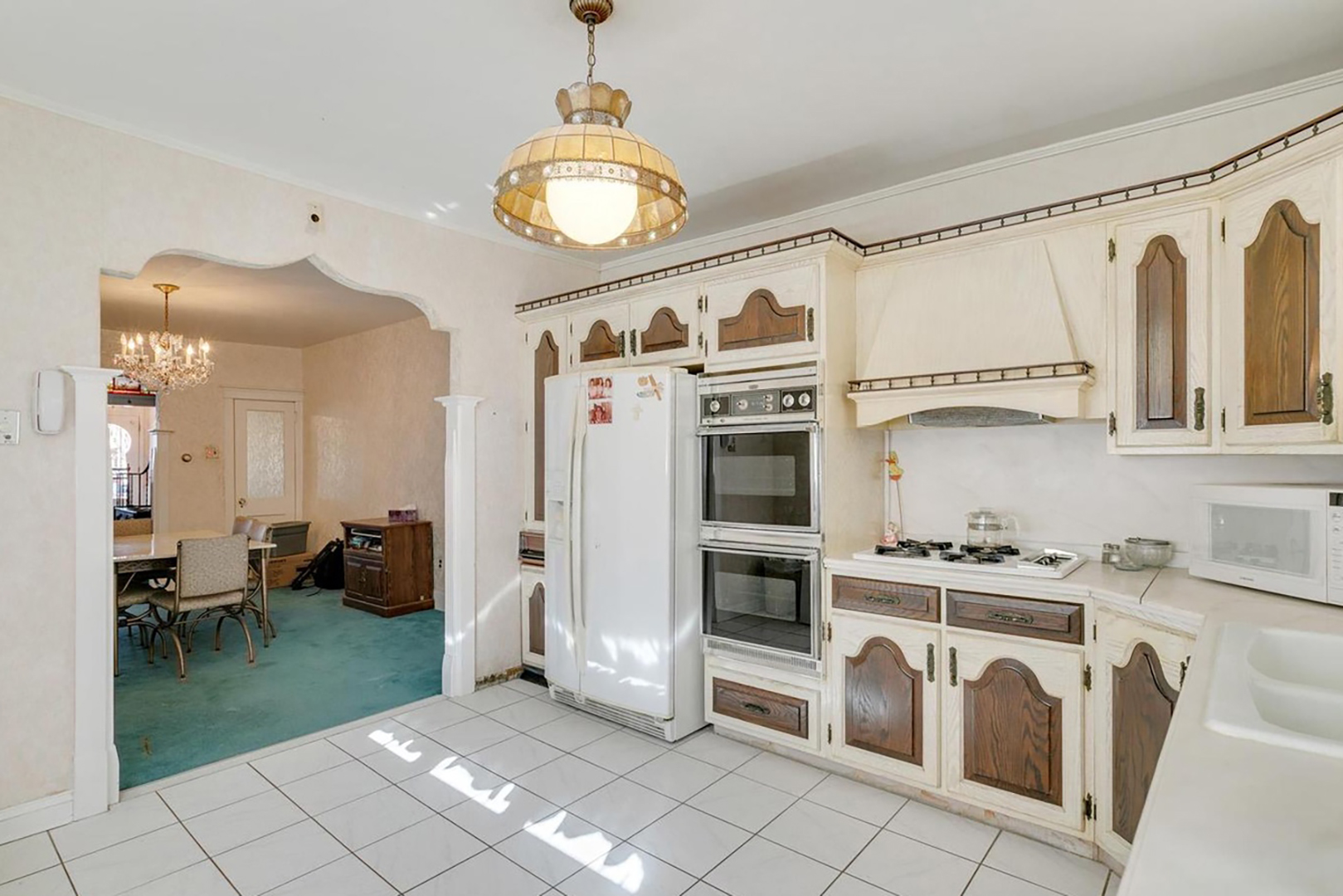
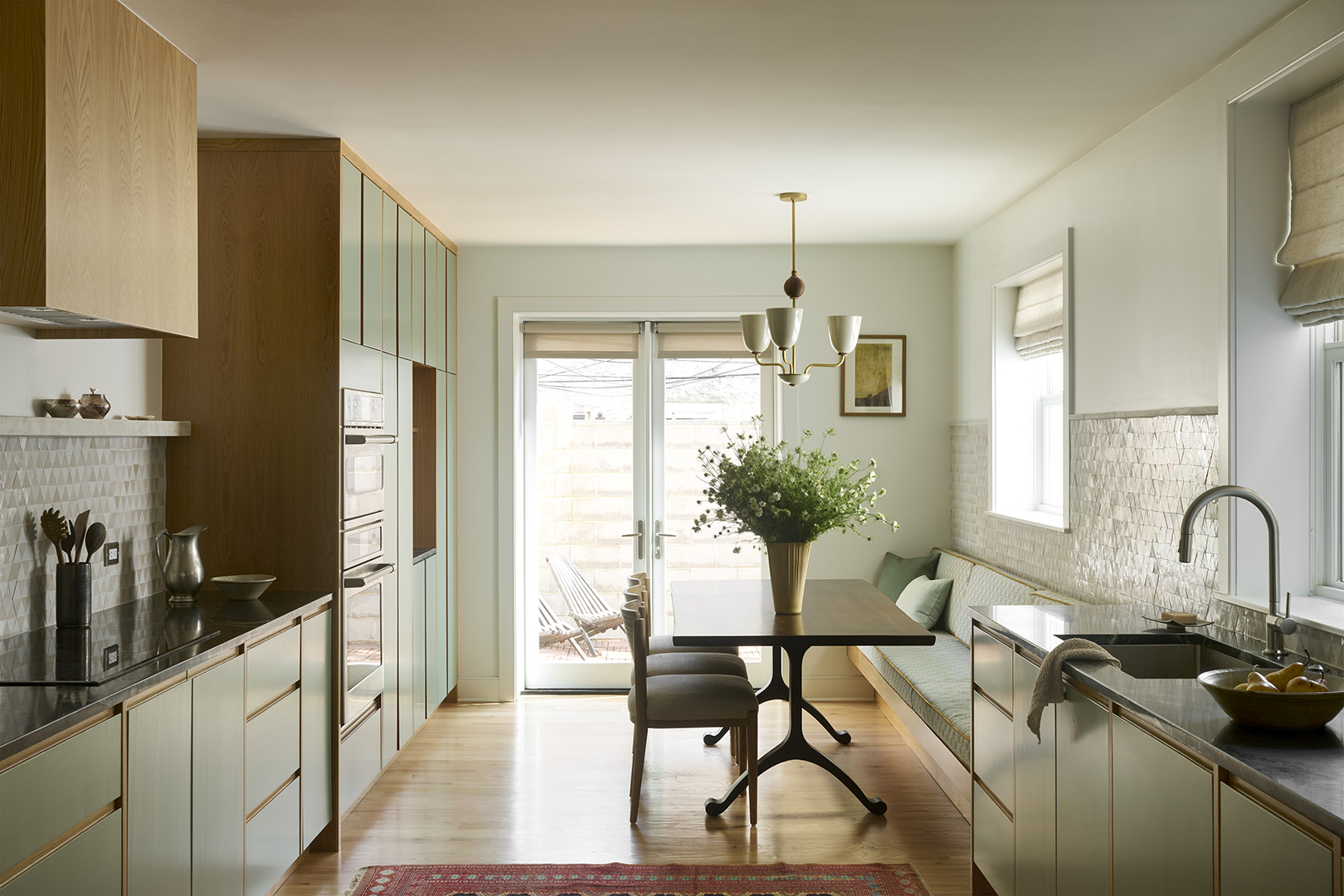
The clients are avid entertainers—with the board game collection to prove it. Despite their love of hosting, the couple didn’t feel the need for a formal dining room, so Em and Heidel removed the division in favor of a spacious eat-in kitchen.
“They wanted the kitchen to have some connection to the living room, so we ended up moving the main work areas of the kitchen closer to the living room,” Heidel says. Custom cabinets in Benjamin Moore’s Grenadier Pond, a Lostine chandelier, and a banquette with an oversized table give the space a cool, welcoming vibe. Windows on the back wall were swapped for French doors that open to the patio, flooding the space with light.
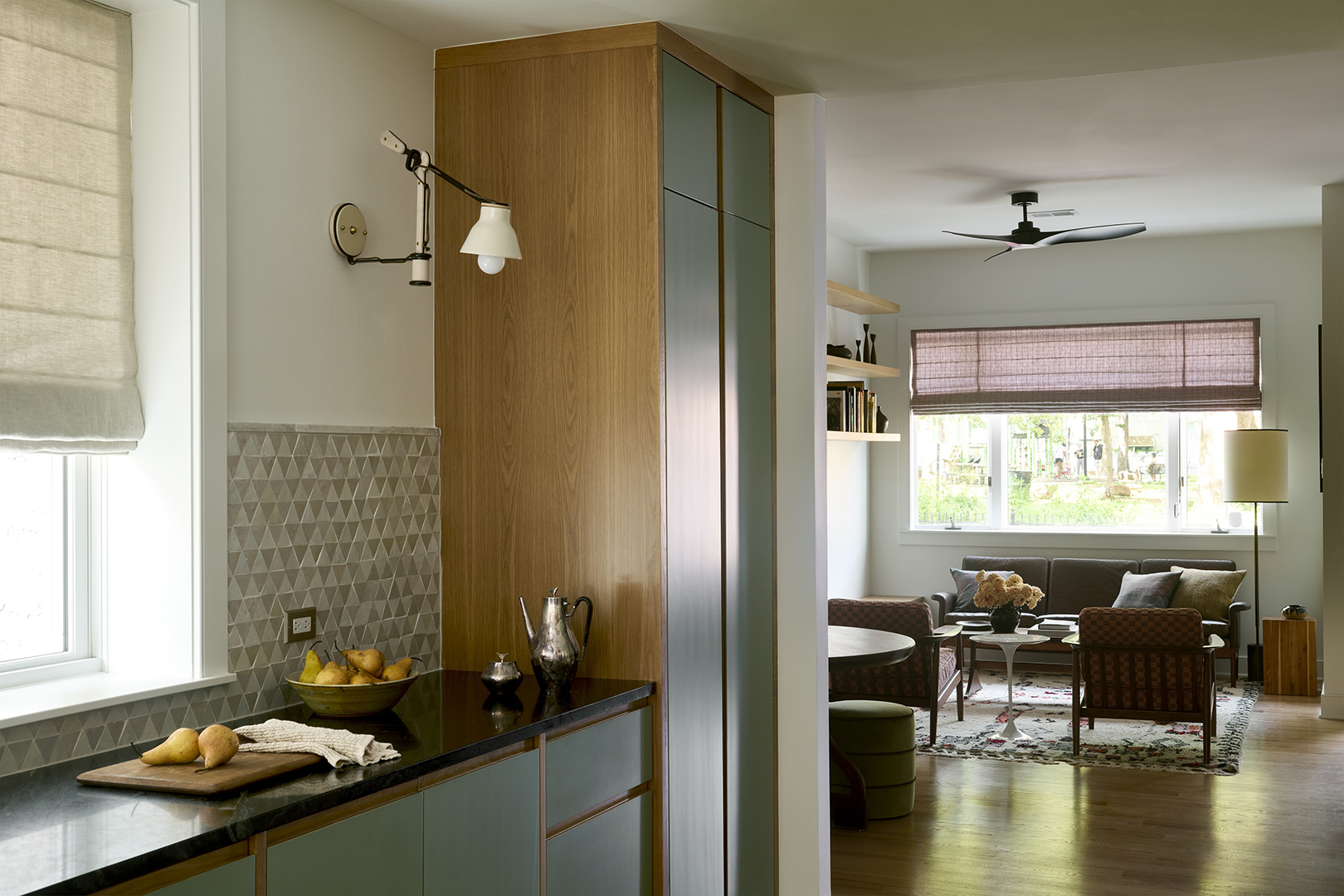
The existing chimney created a natural divide in the living room. The front half is designed for classic, laid-back entertaining, with built-ins flanking the TV and a cozy conversation area. The other half is anchored by a vintage gaming table inherited from one of the owner’s grandmothers, surrounded by custom stools and a built-in banquette—perfect for late-night poker or listening to records.
From Boarding House to Dreamy Primary Suite
The third floor originally housed a kitchenette and living area (“It used to be common to take in boarders,” Heidel notes), but the team added an extension and reconfigured the layout. “They wanted a true suite with a pretty big bedroom, a walk-in closet, and then a bathroom,” Em says. They also added a deck and a custom coffee station, so the couple could pour a cup and step outside without heading down to the kitchen.
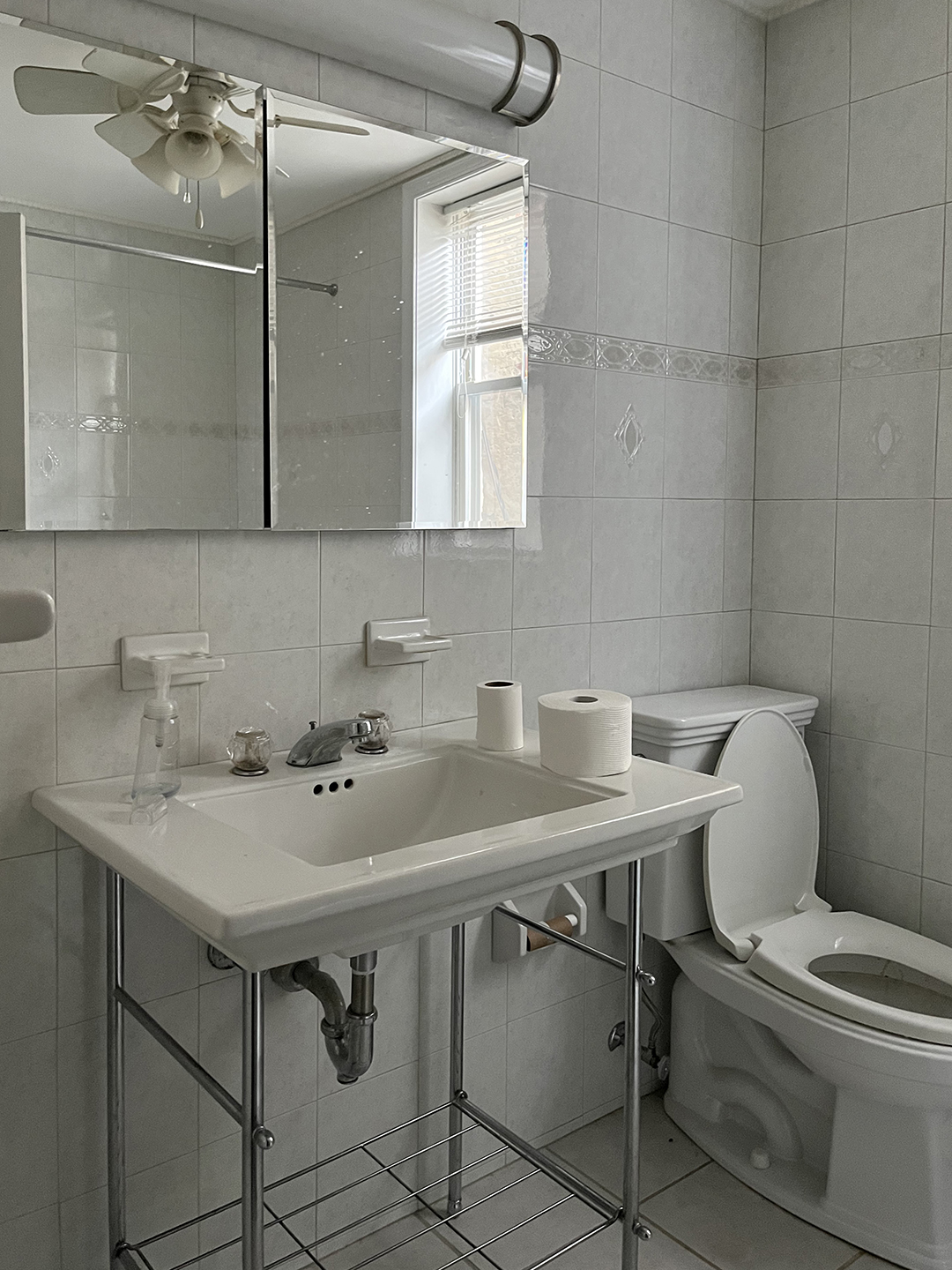
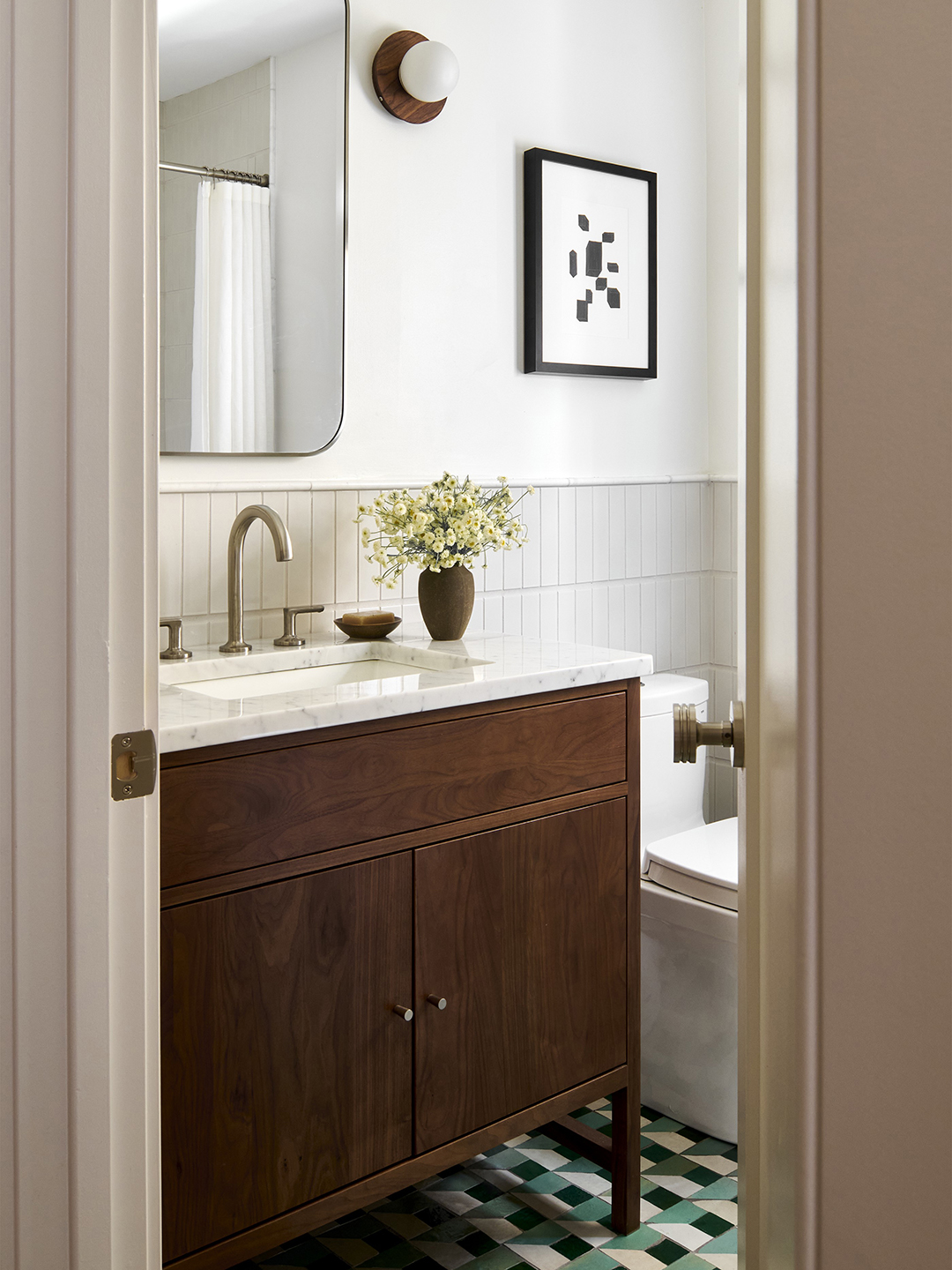
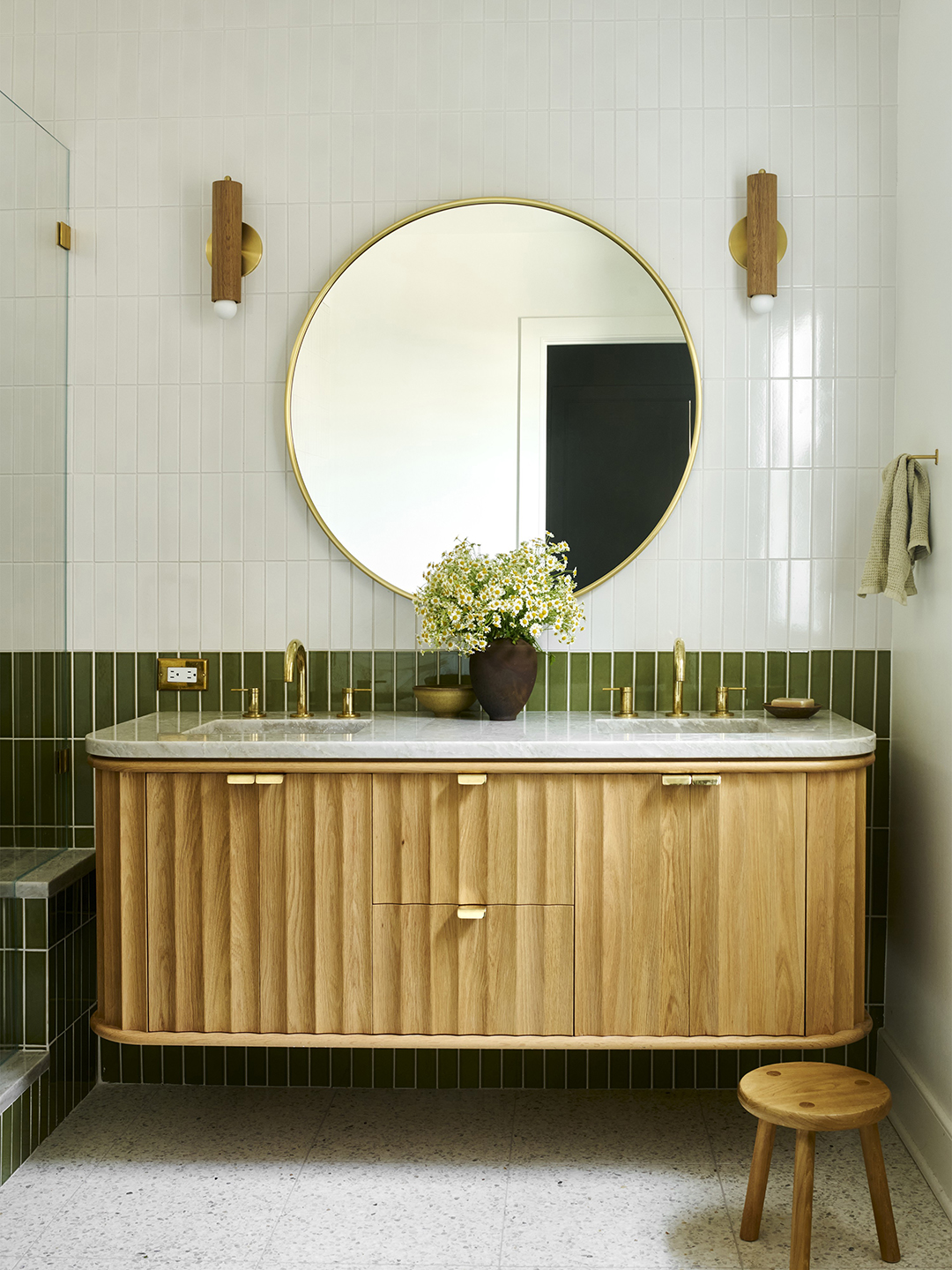
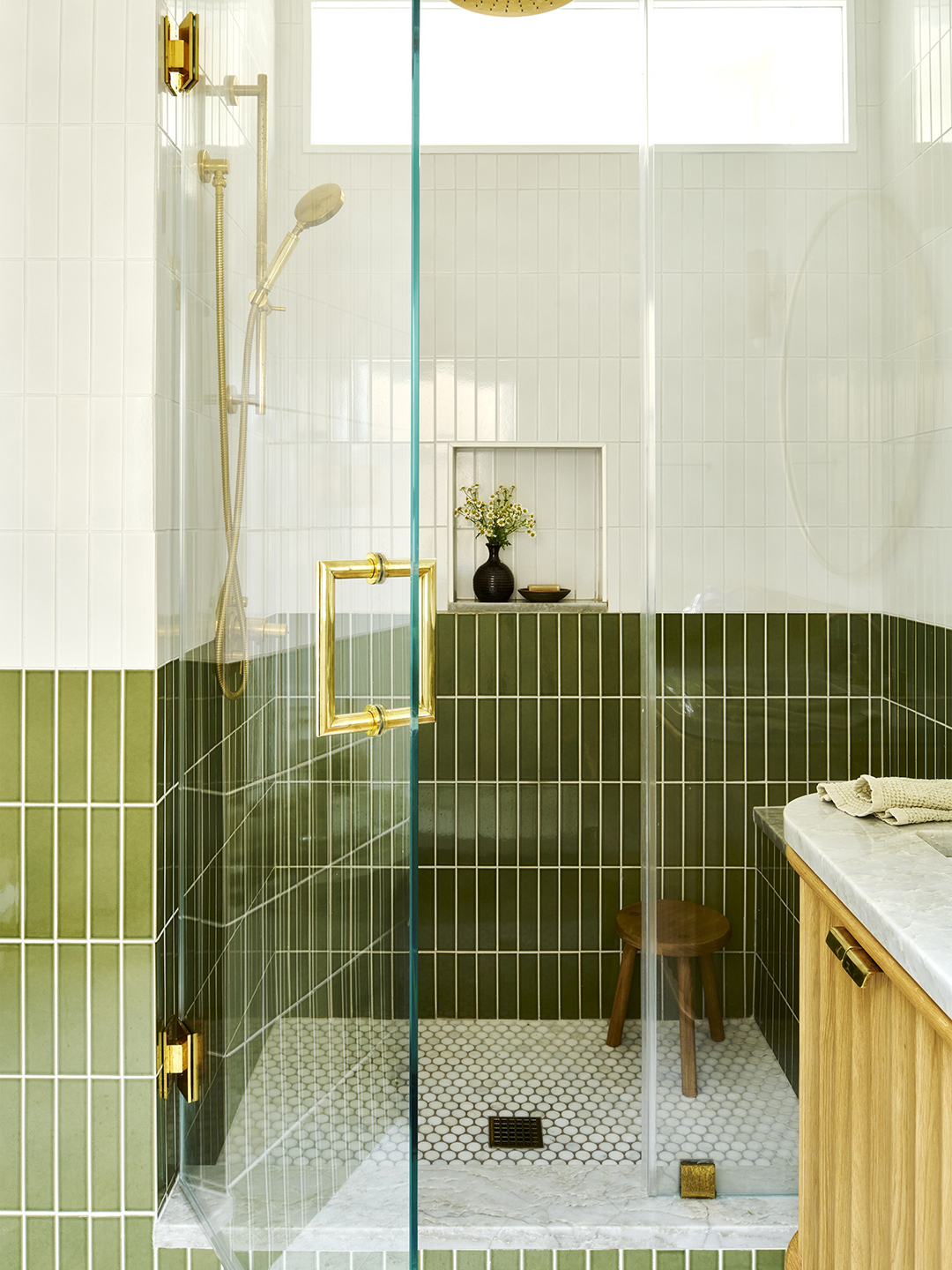
The new, much larger bathroom features handmade green and white tile and a custom vanity. To boost natural light, they installed an interior transom window in the shower, which borrows sunshine from the deck. Downstairs, the second-floor bathroom also got a refresh, with a new custom vanity and floor tile. The old metal cabinets from the third-floor kitchenette were salvaged and repurposed in the second-floor laundry room.
Keeping Tabs on the Bar
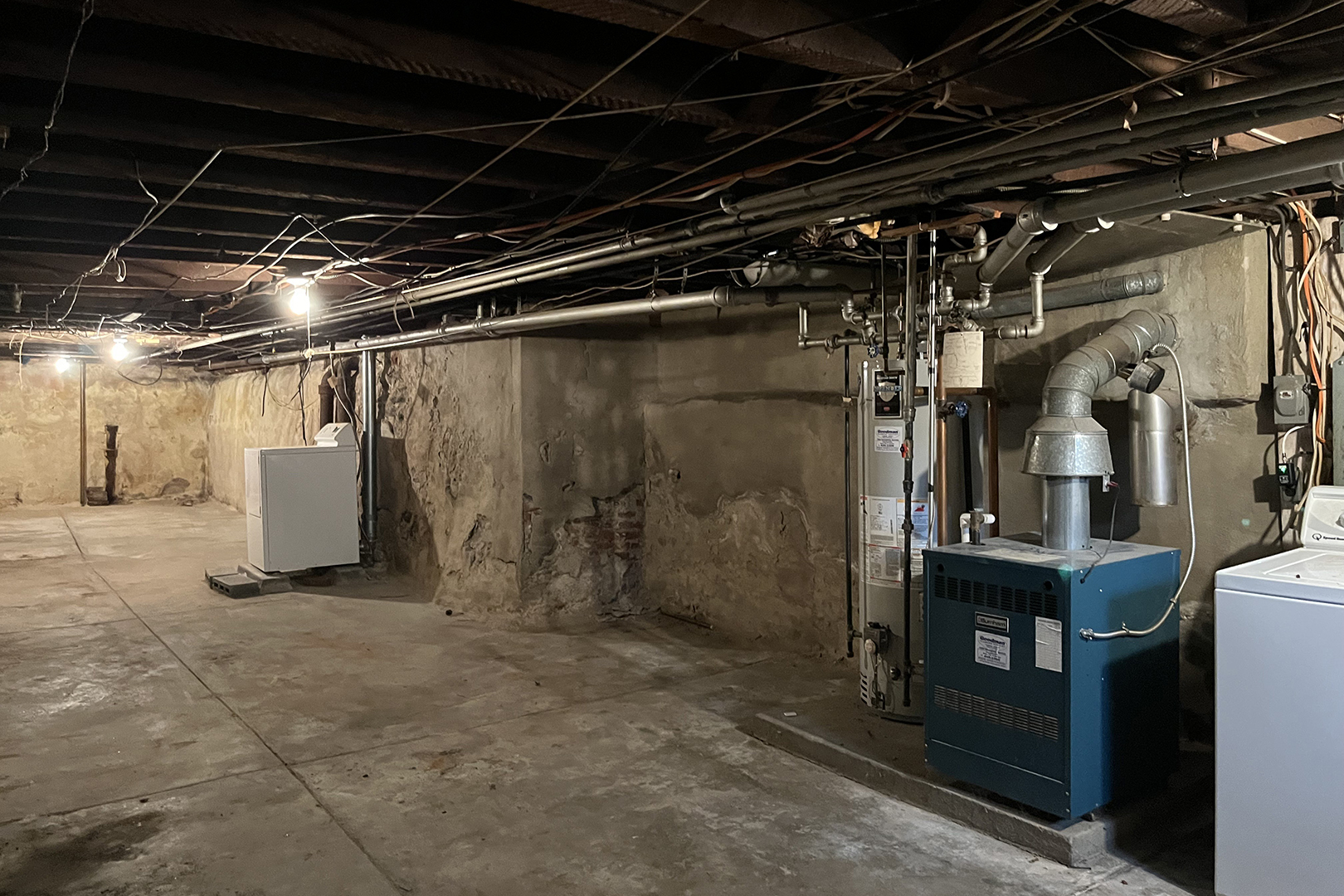
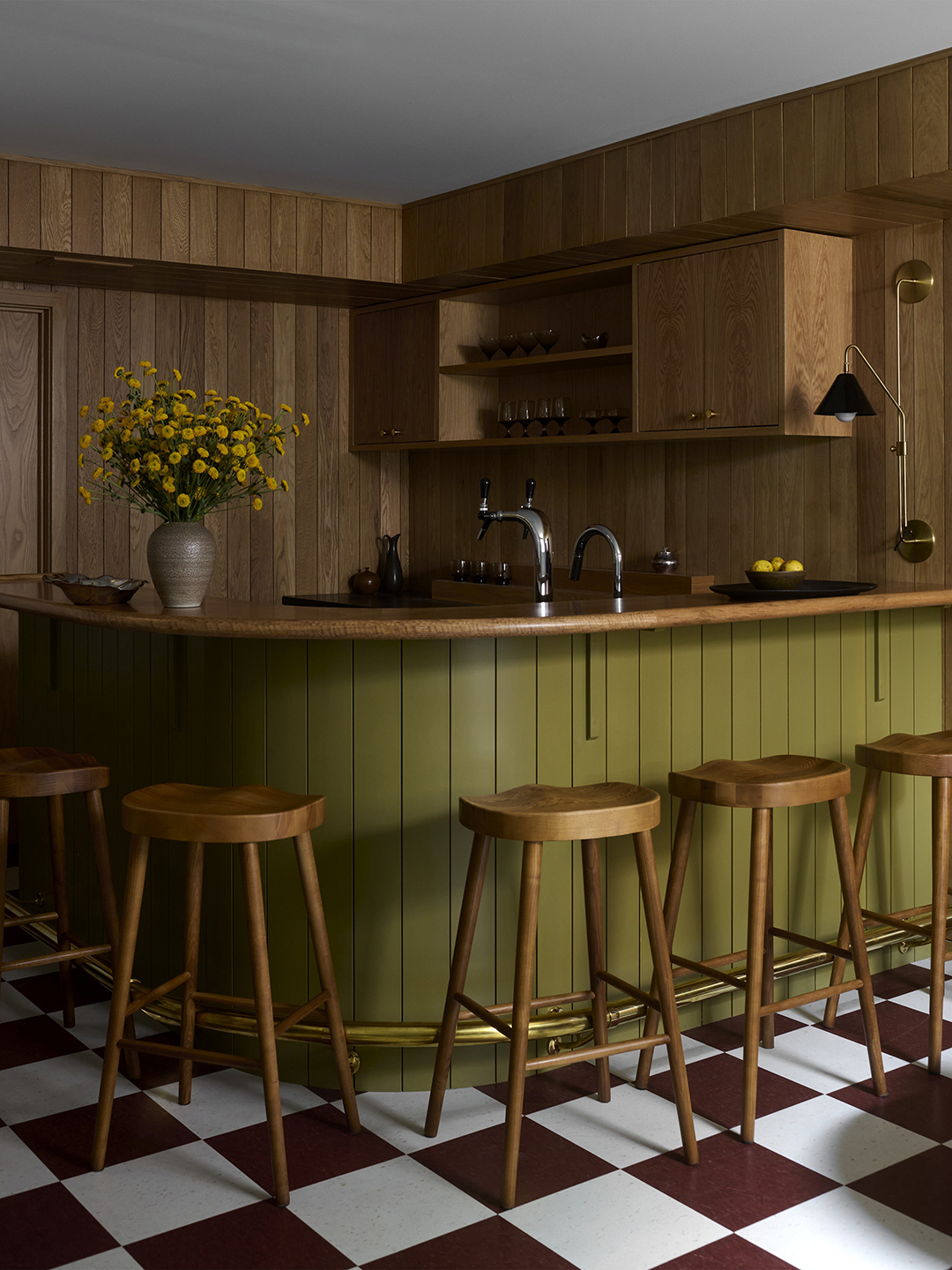
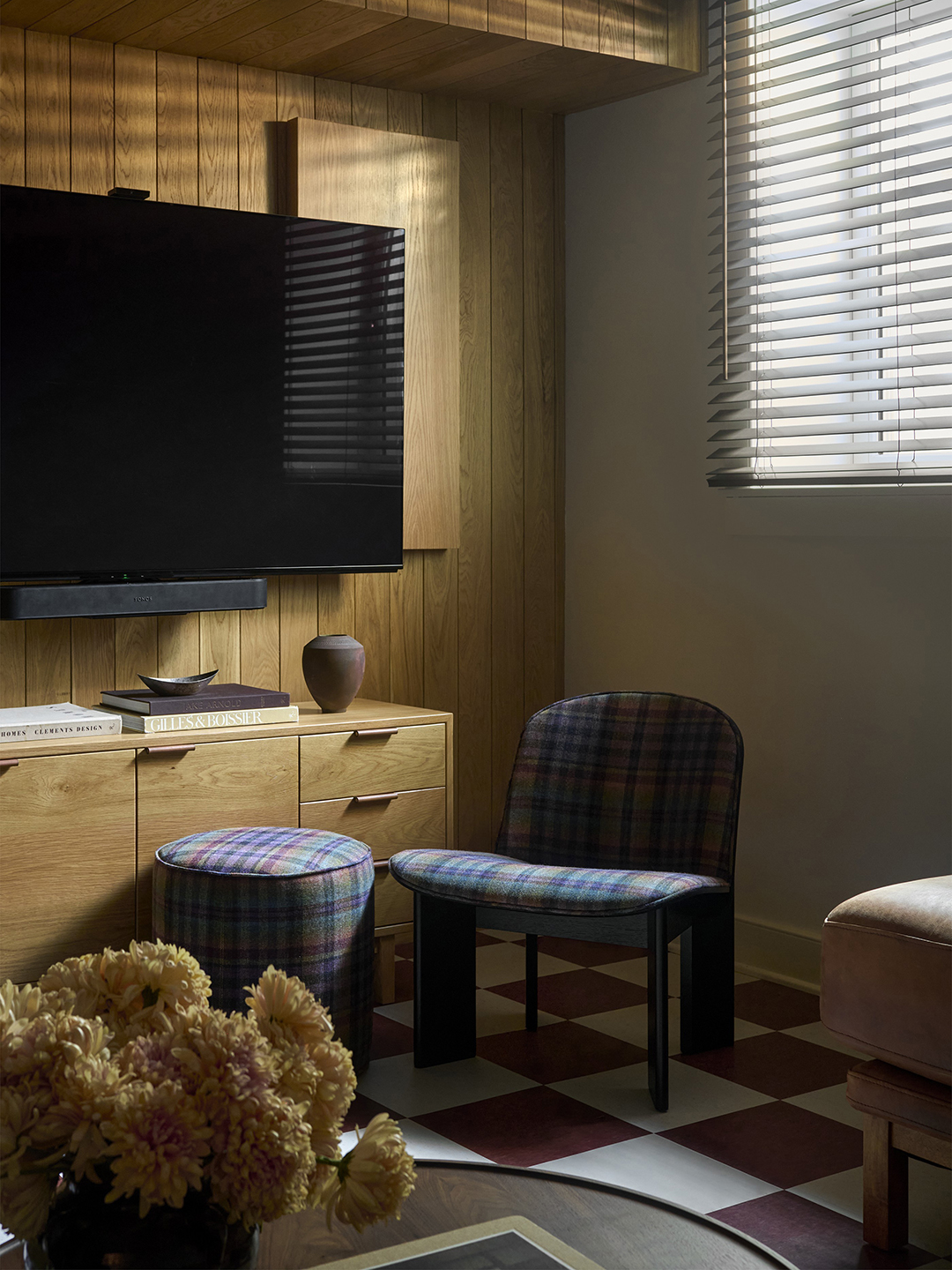
When it came time to transform an unfinished basement into a bar worthy of the finest martinis, Em and Heidel were given two directives: channel Twin Peaks and include over 80 linear feet of storage. A David Lynch–inspired space could get weird very quickly, but the (Re)work team kept it inviting. The VCT tile floor nods to both the show and classic mid-century design, while oak paneling adds warmth and a vintage feel. The custom-built bar, painted Benjamin Moore’s Savannah Shade, brings an earthy moodiness. It’s fully outfitted with an ice maker, fridge, seltzer hook-up—the works.
“The main area isn’t that weird,” Em says. “But if you go into the powder room, that wallpaper is kind of crazy when you’re surrounded by it.” The powder room is completely wrapped in Noto Wallpaper from Clarence House, with a black marble sink. It’s the kind of space that surprises you—in the best way. “I love the basement!” Em laughs. Heidel agrees: “It’s the biggest transformation—it’s just so cool.”