
We may earn revenue from the products available on this page and participate in affiliate programs.
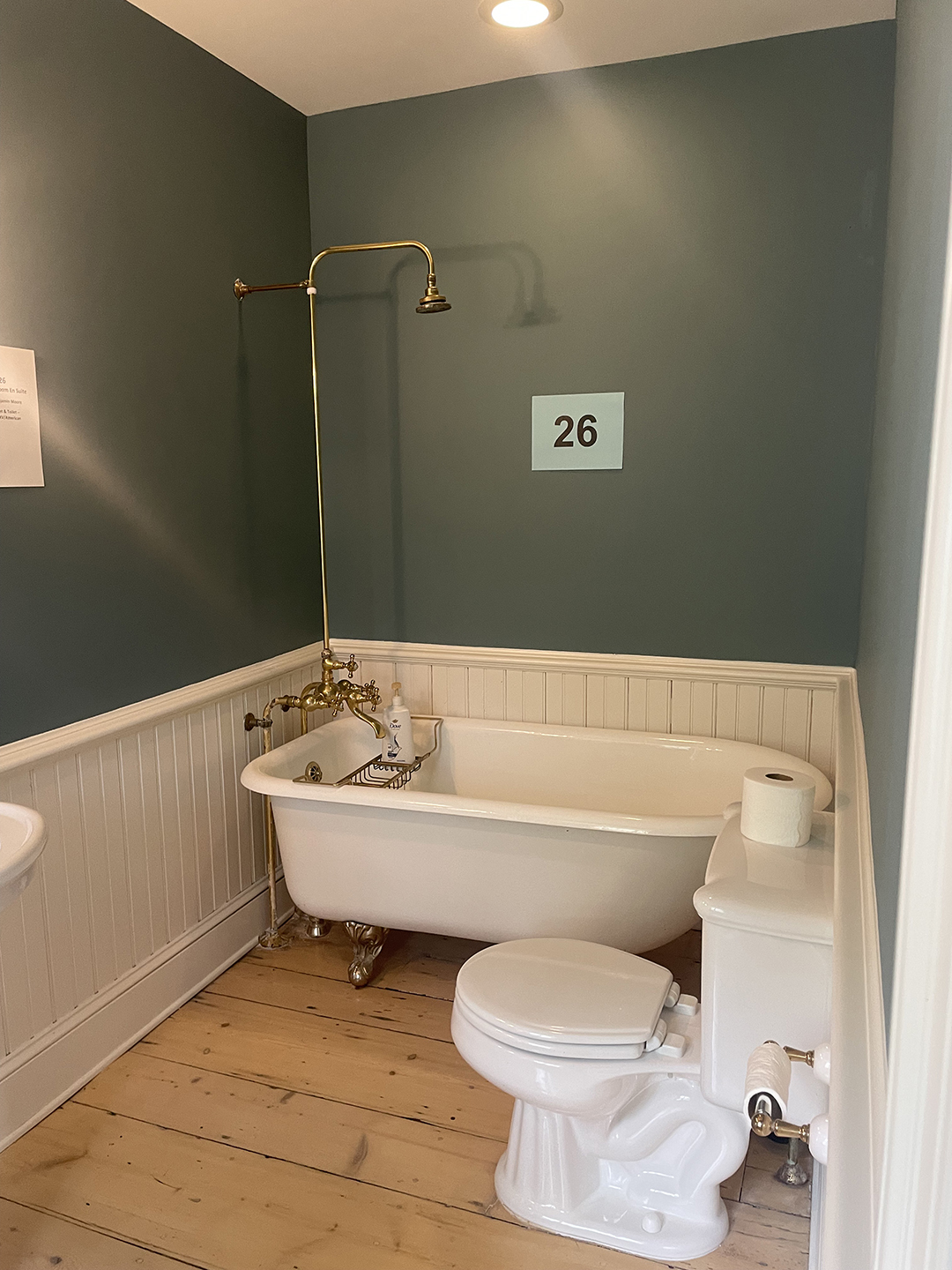
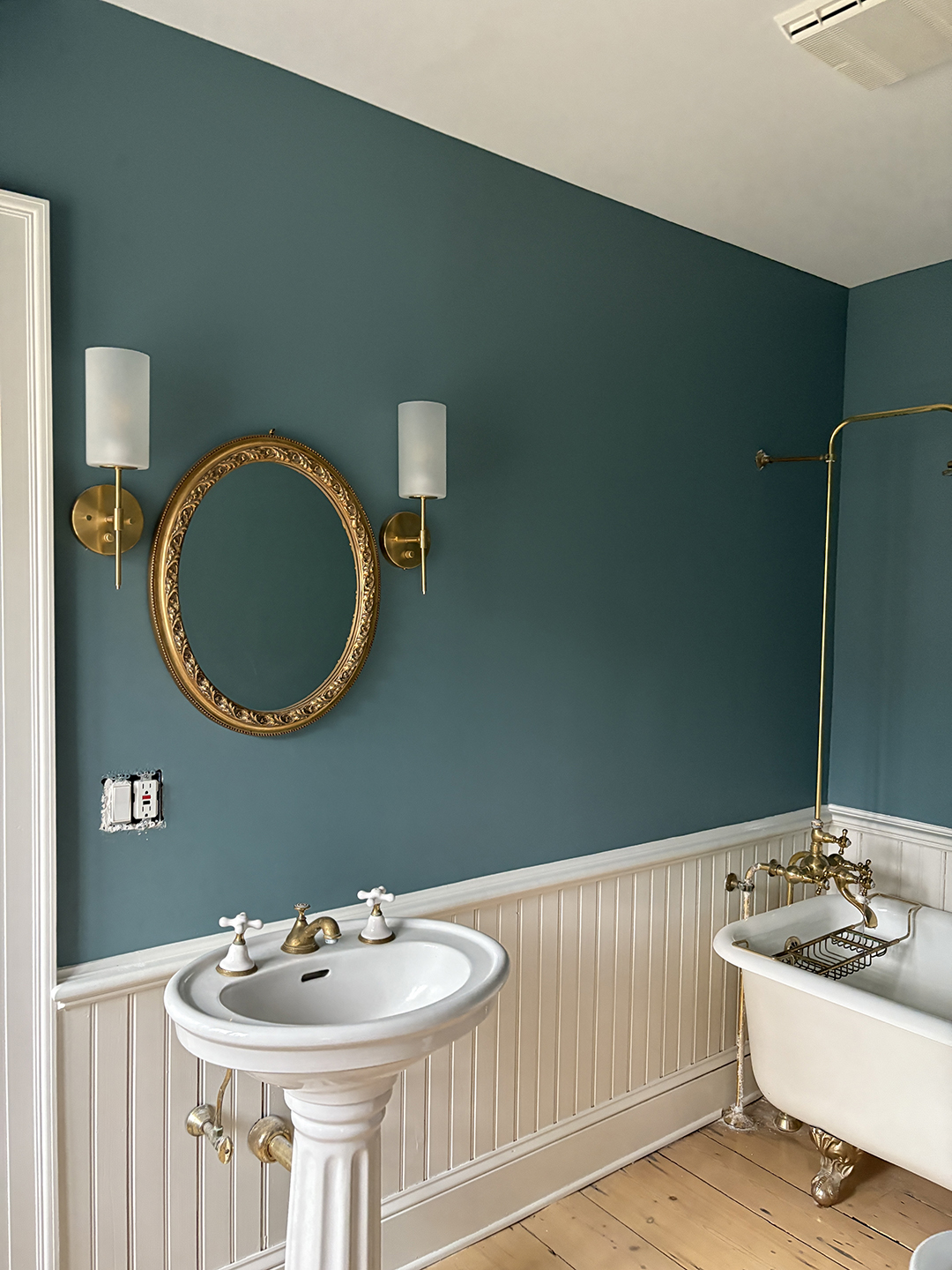
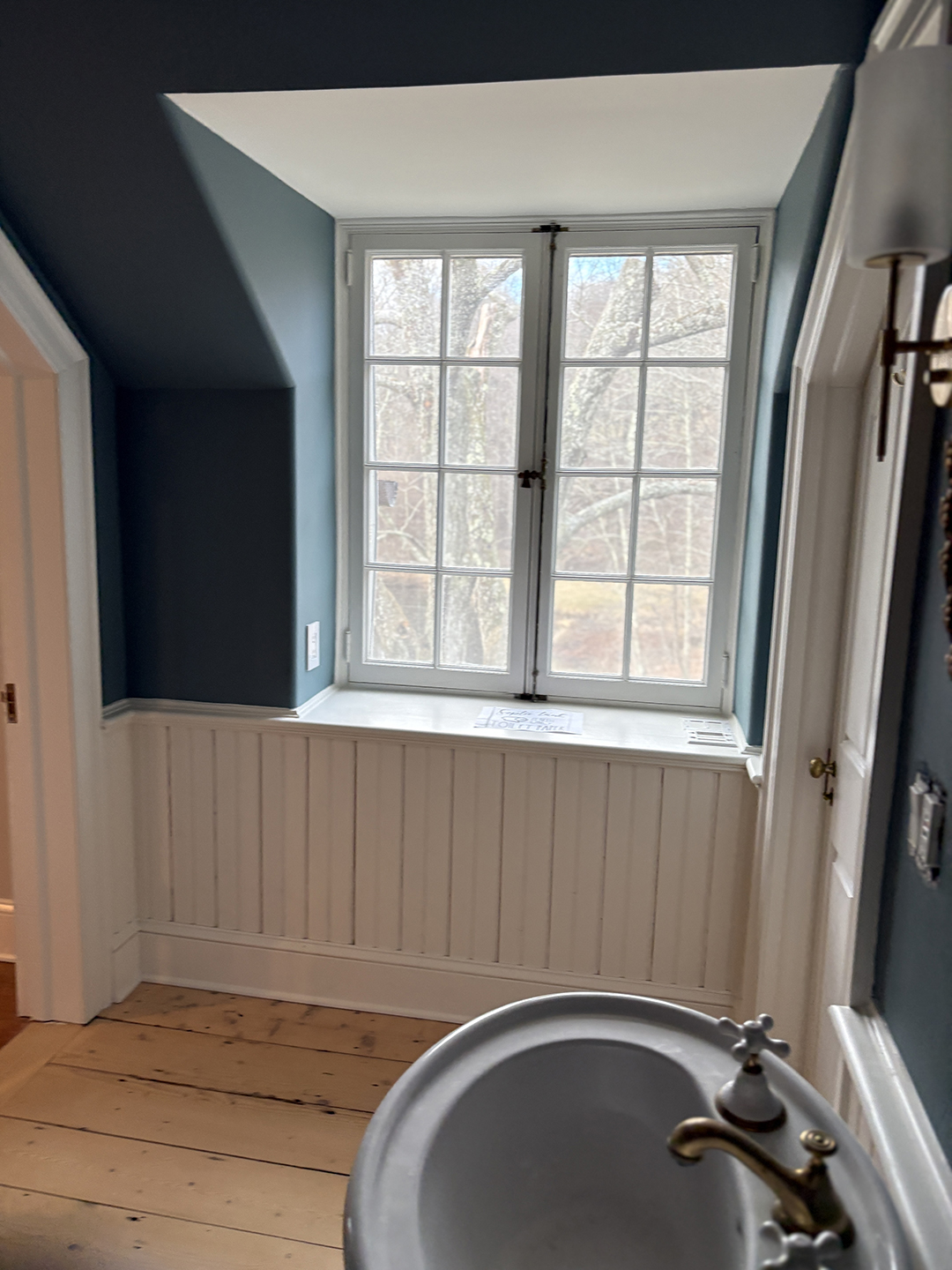
With a cast-iron clawfoot tub, antique wainscoting, and original wide-plank pine floors, the bathroom certainly had its merits. But that’s where they stopped. Tucked inside a 1700s house, the room had been painted a drab gray-green and left largely unadorned. “It felt outdated—and not in a charming way. It felt a little dingy,” explains interior designer Hillary Cohen of HCO interiors, who was tasked with updating the space. “We leaned into the charm, but we certainly didn’t want to erase its history.”
Keeping the tub, wall paneling, and floors intact, Cohen came up with a plan to give the bathroom a major stylistic upgrade with only the tiniest renovation interventions. This would not be a gut job. Read on to see how Cohen transformed this space with her decorator’s eye, and borrow some ideas for your own low-reno upgrade.
Make Your Wallpaper Water-Resistant
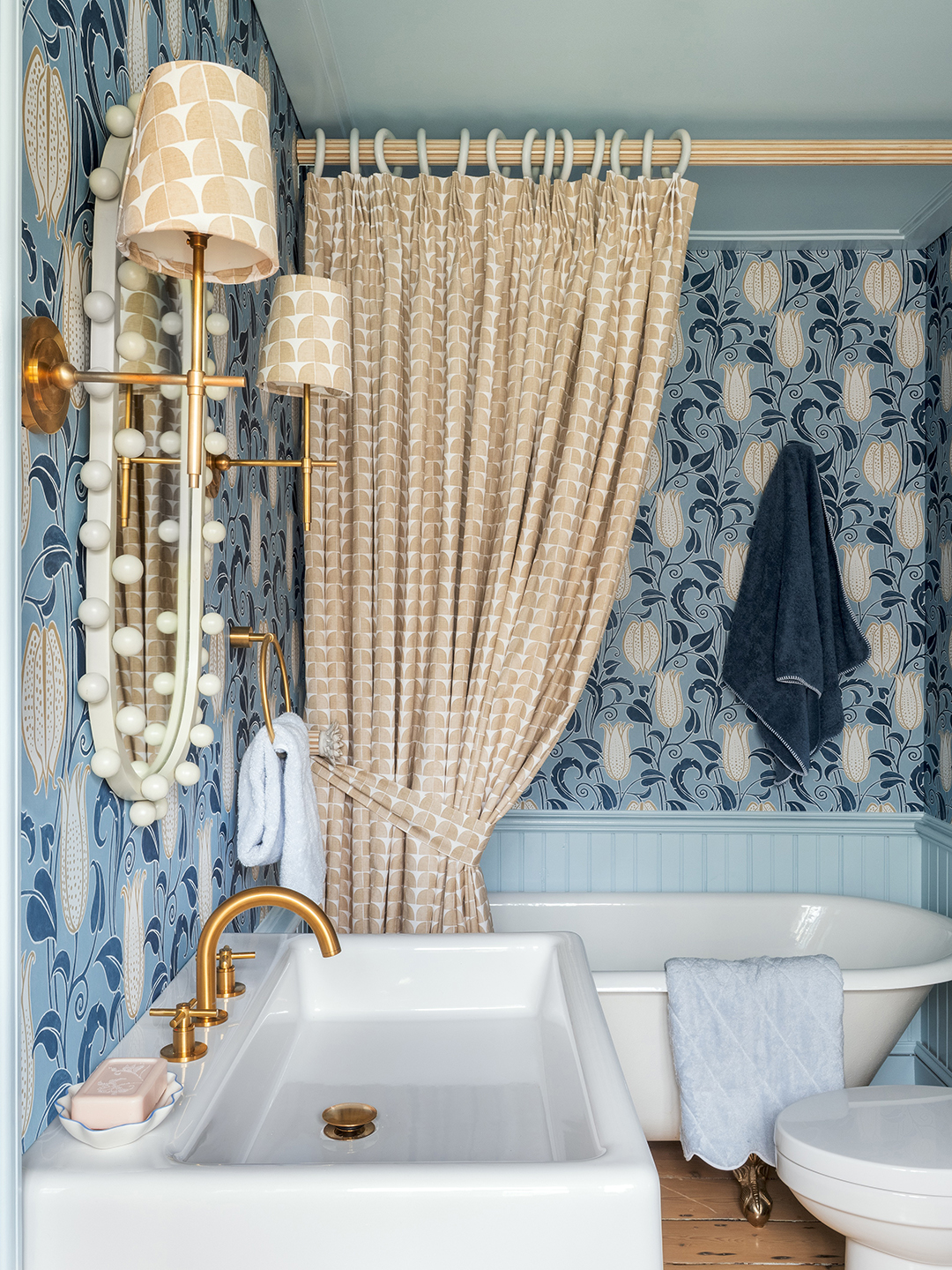
“When I saw the wallpaper, I was done. I had the whole room in my head,” Cohen recalls. Her installer suggested sealing the wallpaper near the tub with a clear coat of Polyvine Decorators Varnish—it wouldn’t make the wallpaper waterproof, but it would offer some protection against errant drops. “It has a slight sheen to it, but it’s very subtle,” Cohen says. The only issue? An uneven ceiling line due to the 1700s construction of the house, which meant there was no clean 90º corner in which to start the wallpaper. Cohen fixed this by adding a flat molding to the ceiling, instead of the usual crown molding that lies flat against the wall. This crisp edge created a place for the wallpaper to begin, and clearly delineated the papered from unpapered areas.
Install a Floor-to-Ceiling Shower Curtain
Instead of opting for the usual clawfoot tub shower curtain enclosure, which can look messy even on a good day, Cohen got creative: She mounted a curtain rod along the wall where the tub sits, positioning it at ceiling height (8 feet high) instead of the standard 75”, and had a seamstress make a custom curtain using a Thibaut fabric and a mildew-proof liner to fit the space.
The result is more of a partition than a typical shower curtain—not only does it elevate the look of the tub niche, but it also gives the person showering a little more elbow room (the bather just needs to angle the showerhead down to minimize splashing).
Have a Plumber Swap Out the Sink
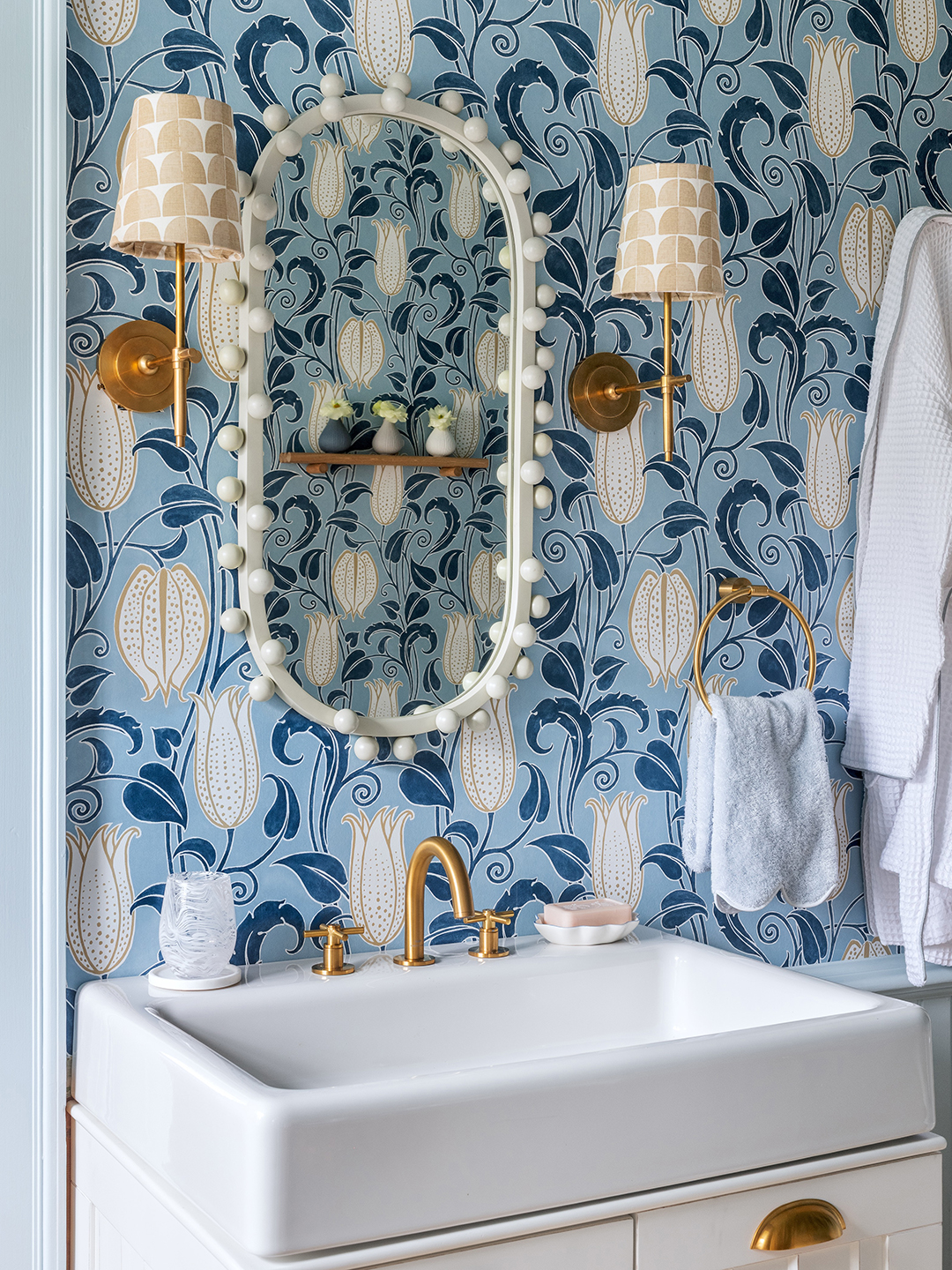
Trading the pedestal sink for a vanity required the help of a plumber, but it was worth it to get the much-needed storage into this space. “If you don’t have to move the plumbing, it’s super easy to switch out the sink,” Cohen explains. They did have to remove some of the baseboard molding and beadboard to get the vanity to sit flush against the wall, however. New sconces from Visual Comfort and an elongated mirror better suit the new proportions of the new (much wider) sink.
Pick Playful Accessories
Cohen selected this oval mirror from TOV because she liked the unusual “bubbles” design, which also felt apt for the room with a clawfoot tub. The white finish fits right in with all the porcelain in the room. The new scones are topped with shades made from the same Thibaut fabric that was used for the curtains.
Go For It With Color and Pattern
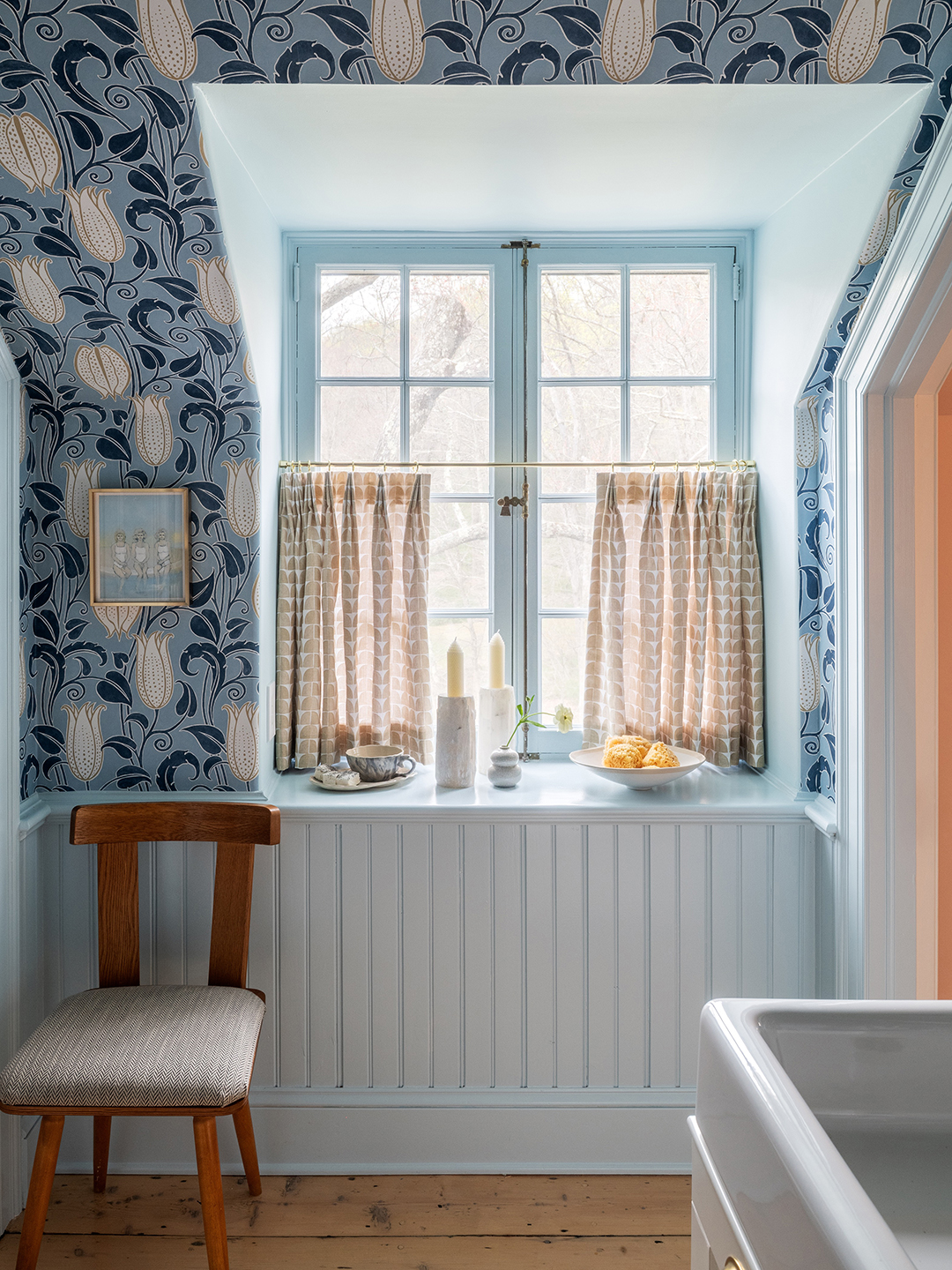
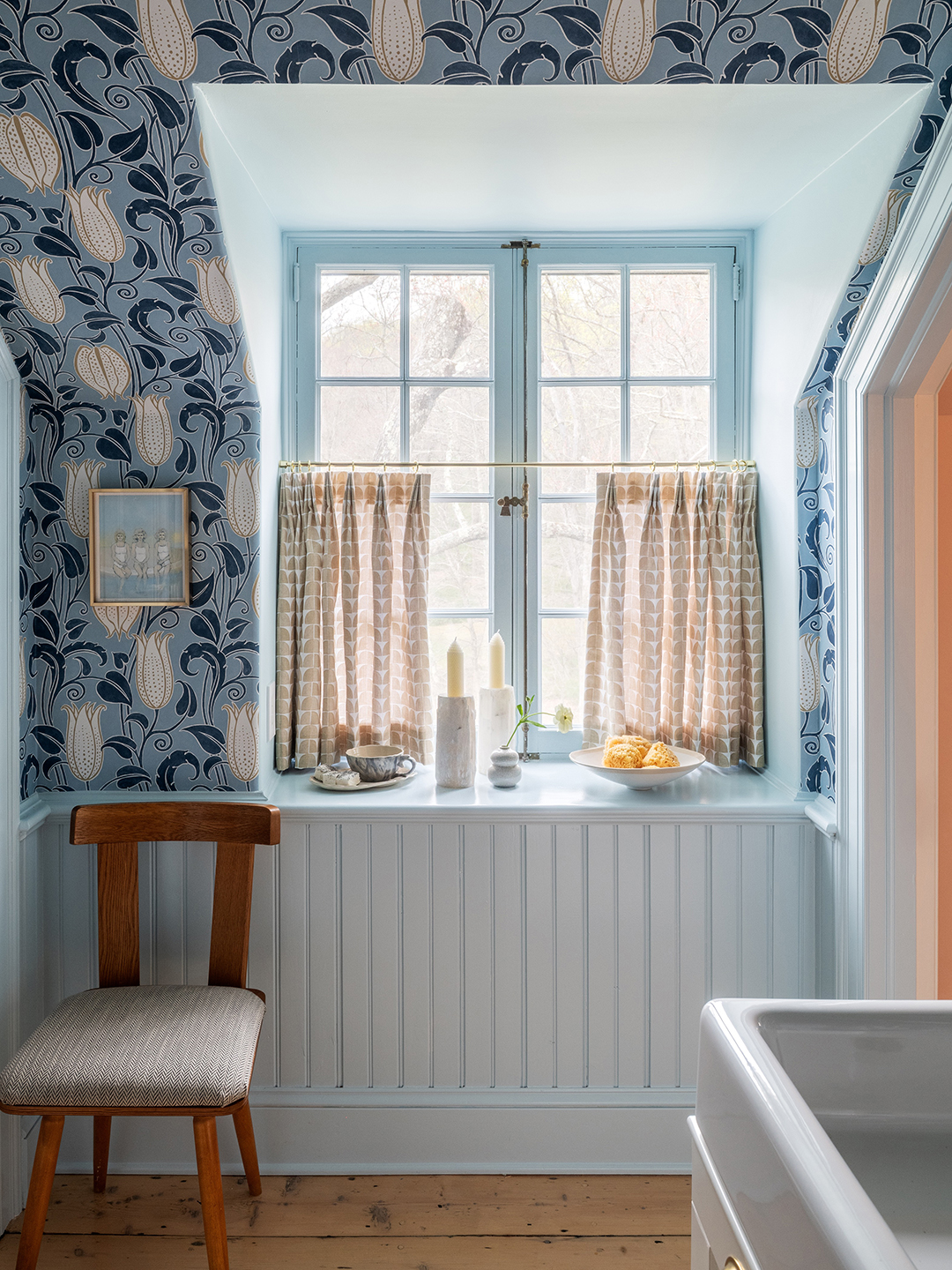
In order to make the bold wallpaper feel right in the room, Cohen had the wainscoting and trim painted a lively pale blue, Benjamin Moore Polar Sky. Even the window mullions got doused in the color. “Bathrooms are a great place to kind of be a little bit braver with color,” says Cohen. “I think we’ve gotten so monotone in a lot of designs.” She used a semigloss paint around the window well to reflect more light into the room.
The same strategy was applied to the wallpaper, which continues onto the angled part of the wall. “I think when you stop it at that low corner, I think it really shortens the room,” she explains. “My installer was nervous about it, but it makes a huge impact when you’re in the space.”
Add Privacy Using Café Curtains
The bathroom needed a bit of privacy, but Cohen loved the old window opposite the tub—and the view. “We thought a cafe curtain treatment was the perfect way to give privacy, but also allow the maximum light into this older home,” says Cohen, who had them made to match the shower curtain. The pinch pleat construction of the curtains adds extra charm.