
We may earn revenue from the products available on this page and participate in affiliate programs.
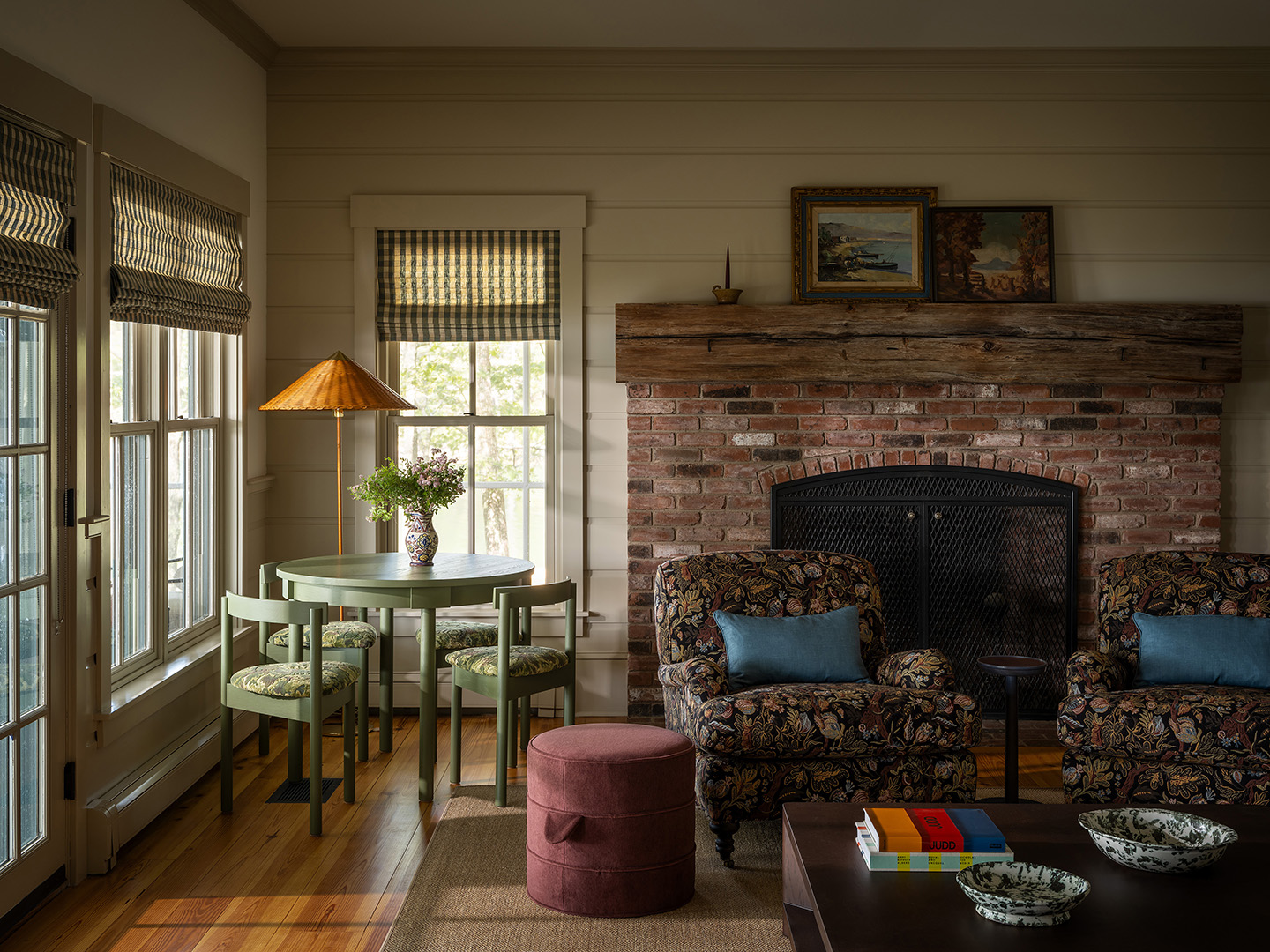
When a young Brooklyn-based family asked Heidi Lachapelle and Katie Judkins, the cofounders of Heidi Lachapelle Interiors, if they could have their summer home in Georgetown, Maine, move-in ready in just six months, the designers were unfazed. The house, which is situated on a pine-covered peninsula overlooking a harbor, was setting them up for success. While it was constructed in the early 2000s, the builders had taken the time to put in historical-inspired details (think: wood paneling, French doors, and thick window trim. That, along with the fact that the homeowners had given them sweeping agency to do whatever they wanted, gave Lachapelle and Judkins the confidence to meet their July Fourth deadline.
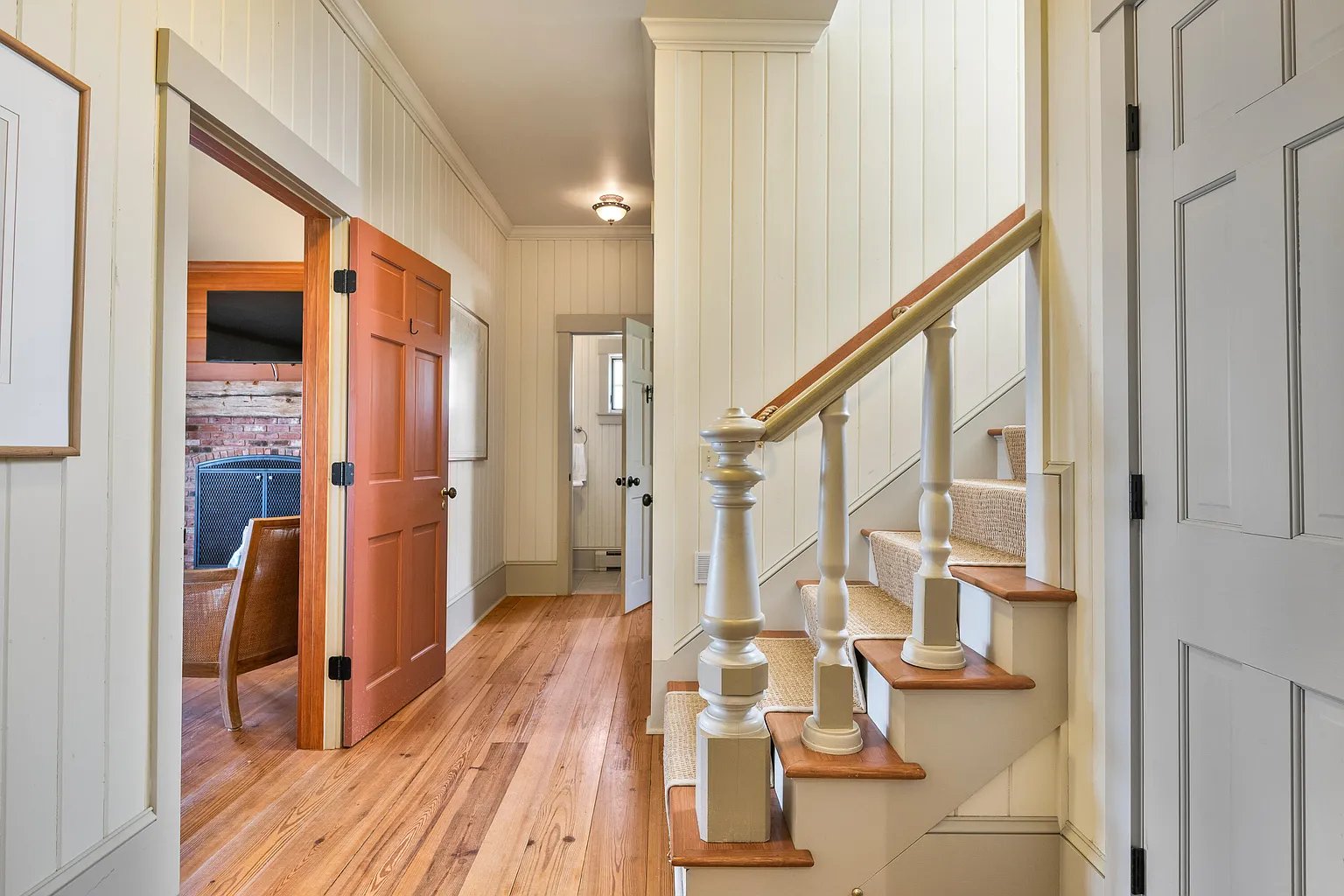
The first step was to get the flow right, which included nixing the fussy columns in the dining room, closing off a wall in the living room, and adding a full bathroom to the third floor. But it was a fresh paint palette, modern light fixtures, and new furniture that really made the house look totally different. “We tidied everything up a little bit; made everything stand a little straighter and look a bit more cohesive,” says Lachapelle. Ahead, the designers take us behind the scenes of the project.
A Functional Kitchen Layout
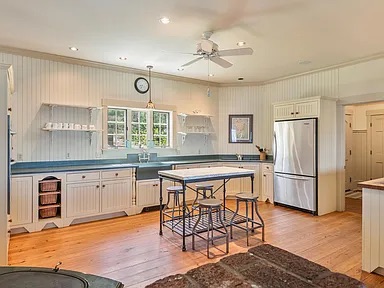
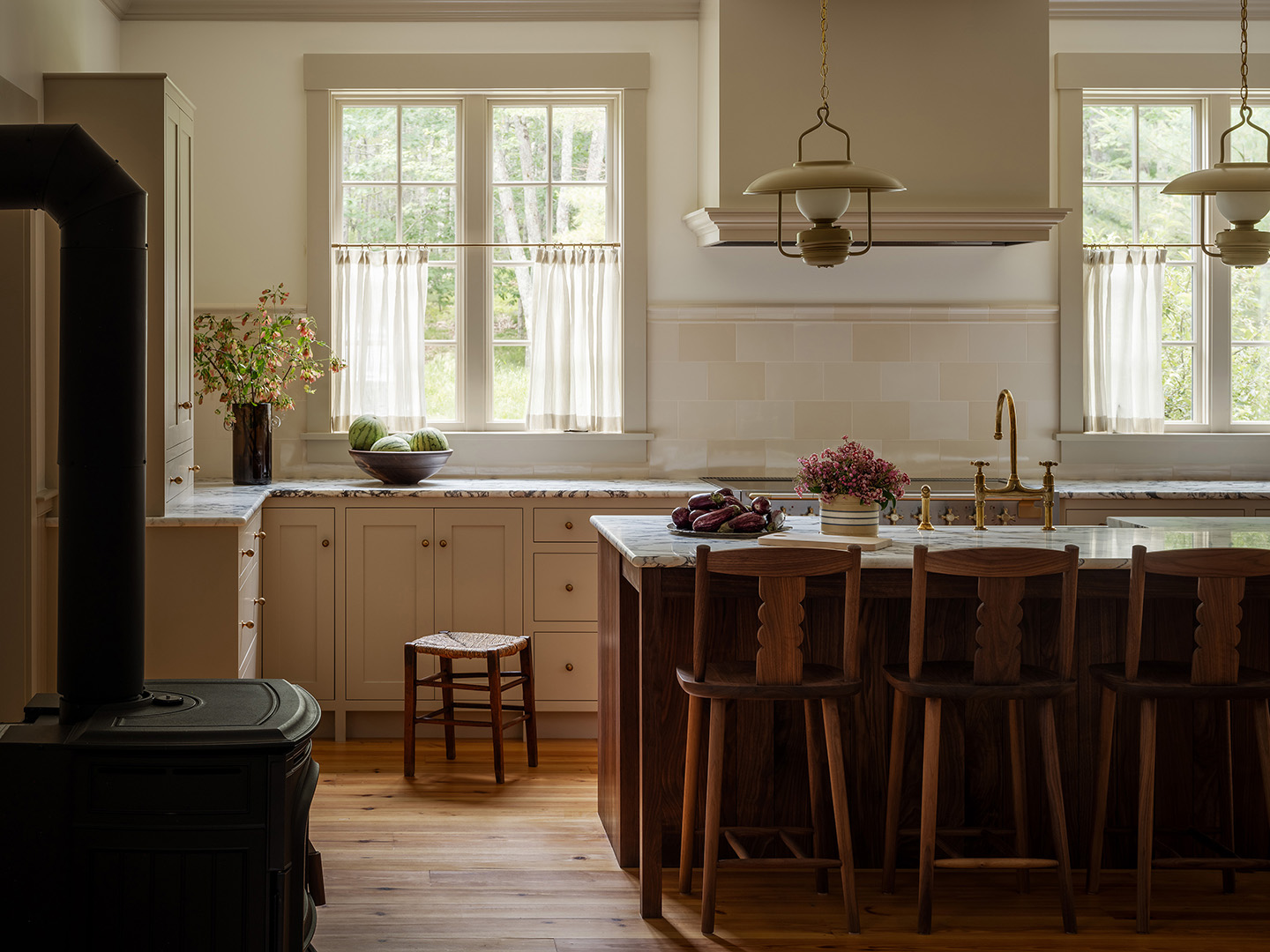
Before, you could get your day’s worth of steps just by cooking in the kitchen: the refrigerator, sink, and stove were all a little too spread out. Lachapelle and Judkins reoriented the appliances to create a functional “kitchen work triangle,” situating the sink on the new island and centering the range across from the sink.
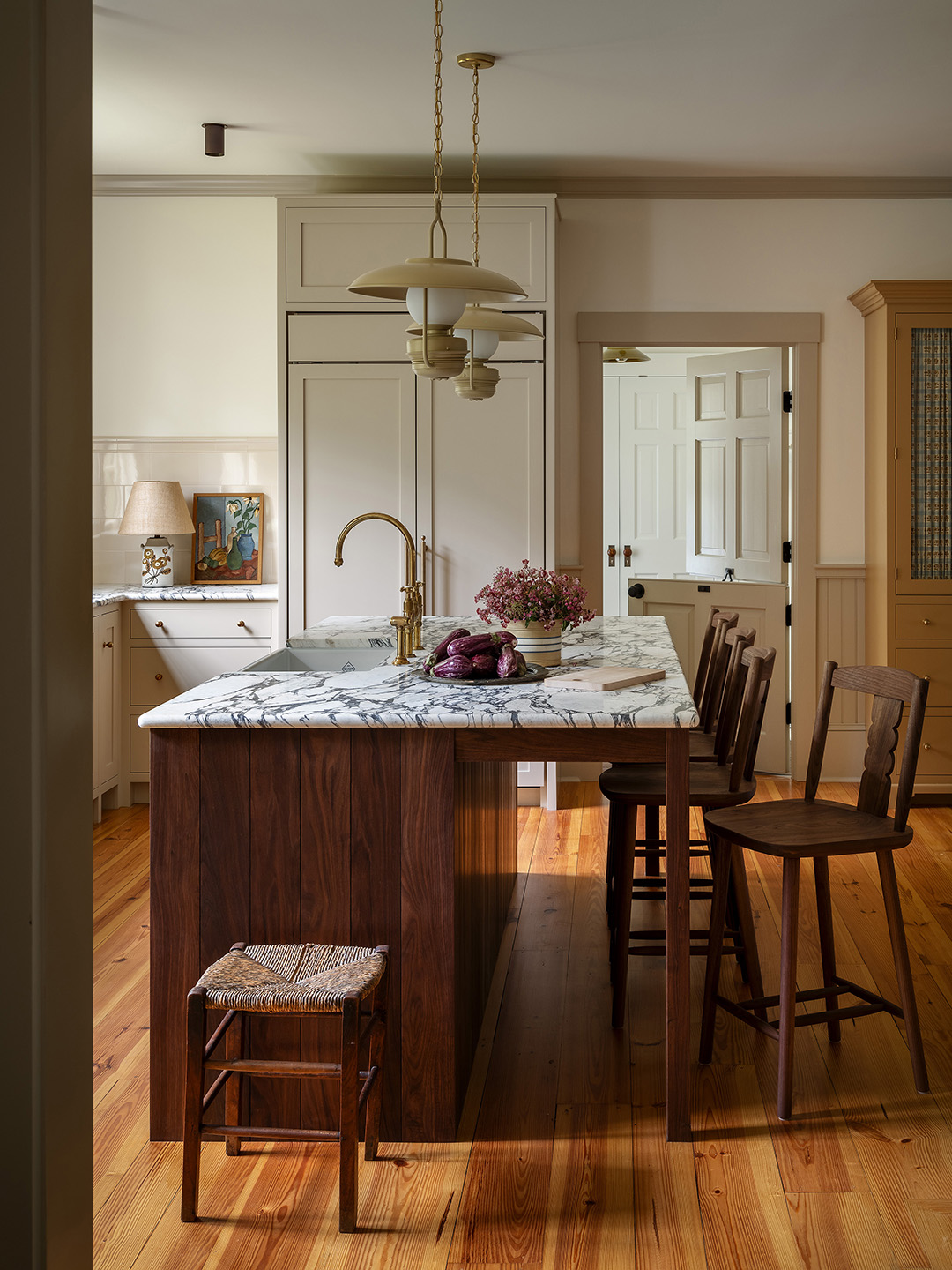
The fridge stayed in its same spot but was paneled to blend in with the new cabinetry. Another big win: adding a second window to the north-facing room to try to maximize as much natural light as possible.
An Old-Meets-New Dining Area
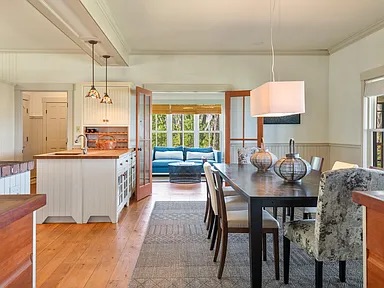
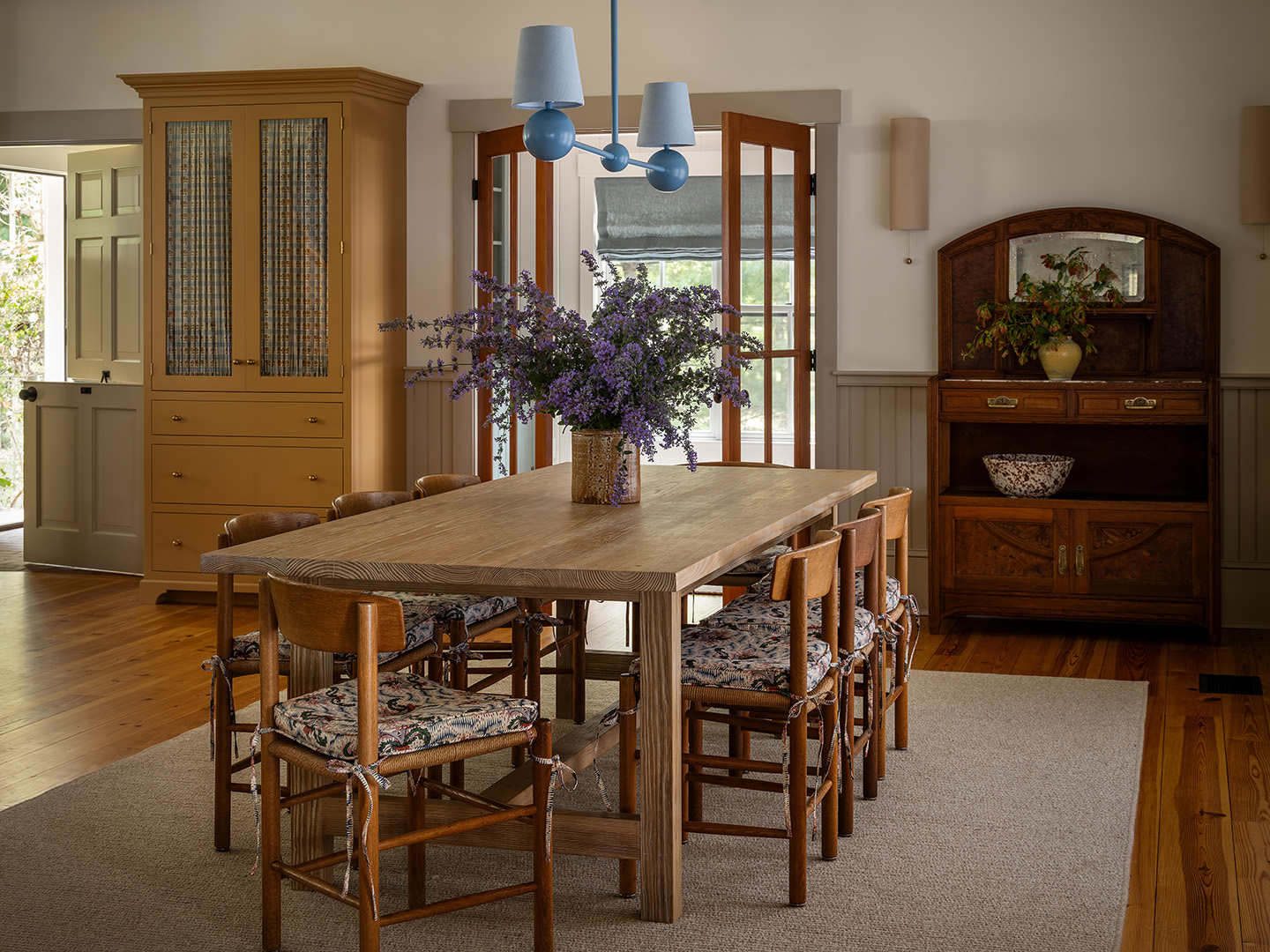
The large yellow cabinet is a case against going wild with built-ins. The piece is outfitted inside with a walnut countertop and serves as a coffee bar. “We wanted it to look like furniture but still be really practical,” says Lachapelle. To balance out some of the cottage-y details in the house—the Dutch door, the original shiplap paneling, the antique storage—the designers stuck to light fixtures with modern silhouettes and colors like Workstead’s sky blue Bole Pendant.
A Living Room Prime for Lounging
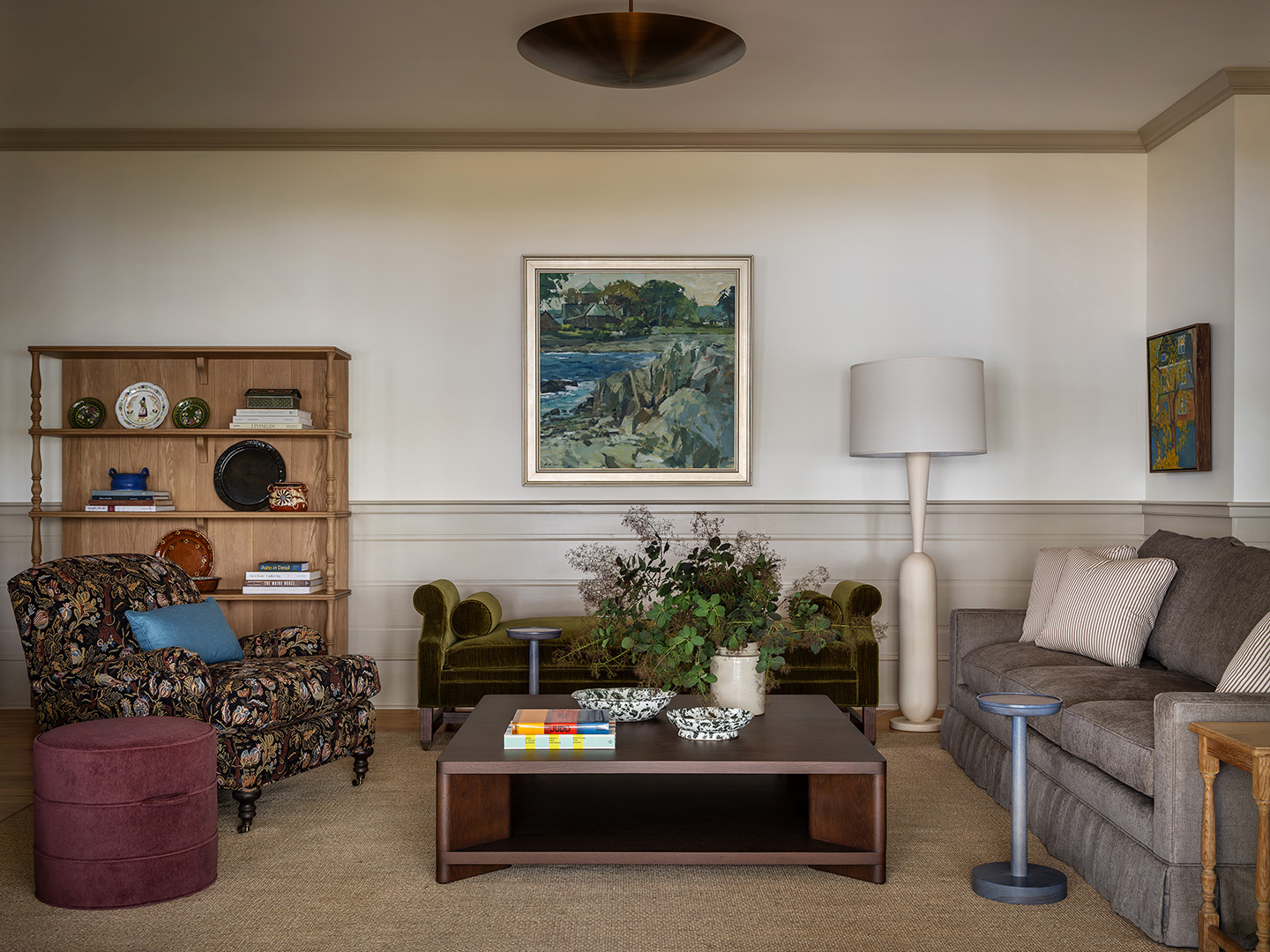
The living room wall where a landscape painting now hangs used to be a doorway that emptied into the hall. “It really didn’t serve a ton of purpose,” says Lachapelle. By closing it off, the designers were able to get a lot more out of their furniture floor plan, offering a daybed, armchairs, sofa, and games table. The plethora of seating options also created an opportunity to introduce even more color and pattern to the room.
A Zen Bedroom Refresh
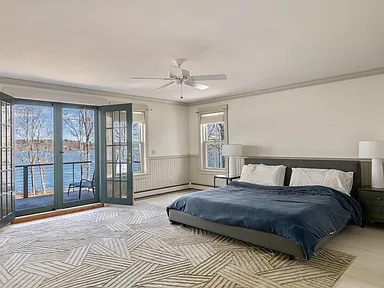
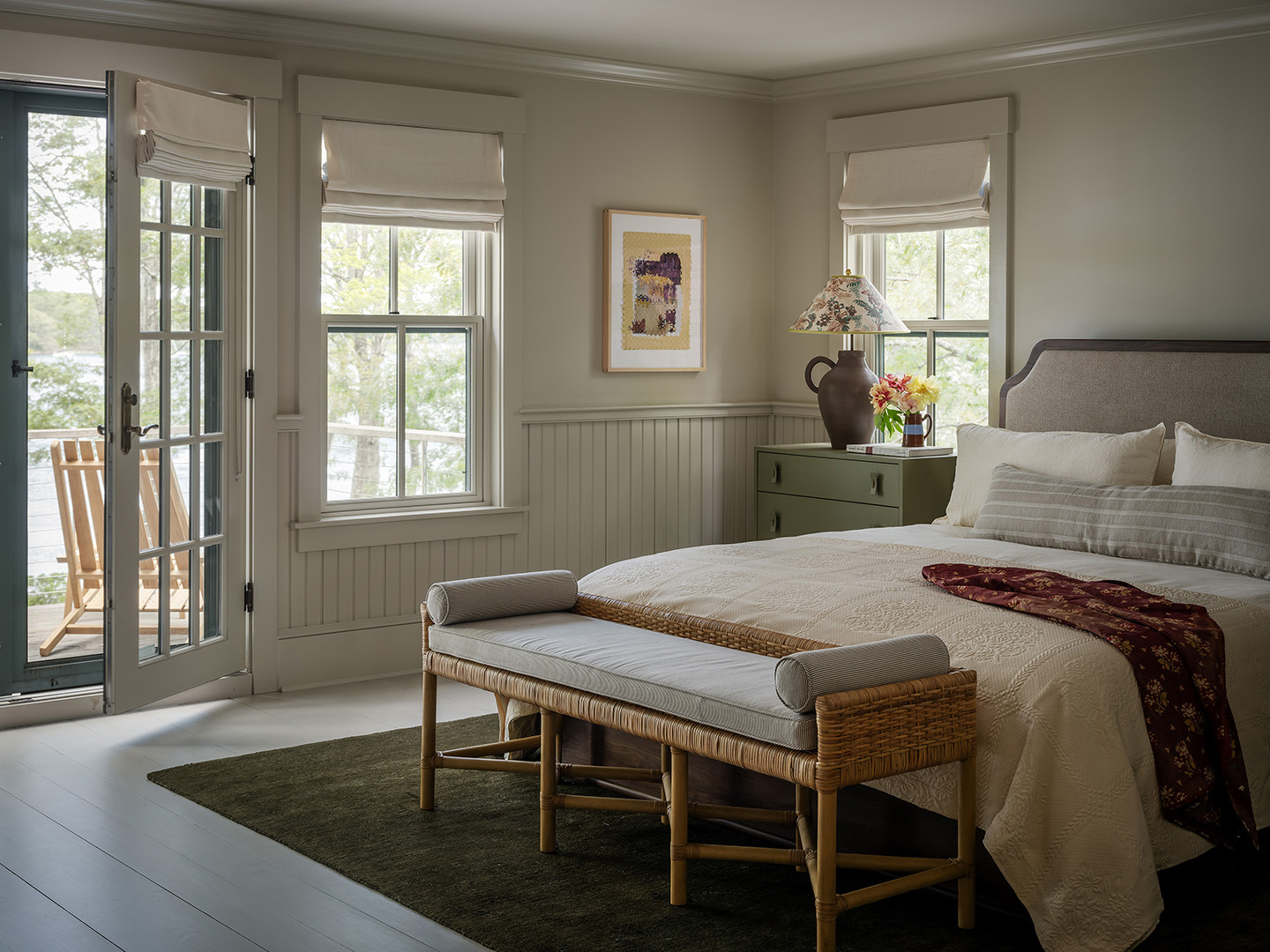
Contrasting trim has its time and place, but when it comes to designing a serene bedroom, the designers like to stick to just one hue. “It feels more ethereal and moody,” Lachapelle says. Knowing that the color, Farrow & Ball’s Stony Ground, was relatively neutral, they had fun elsewhere, wrapping a sofa in Schumacher’s Tree of Life fabric (a pattern Lachapelle has in her own home) and putting an olive green rug under the bed.
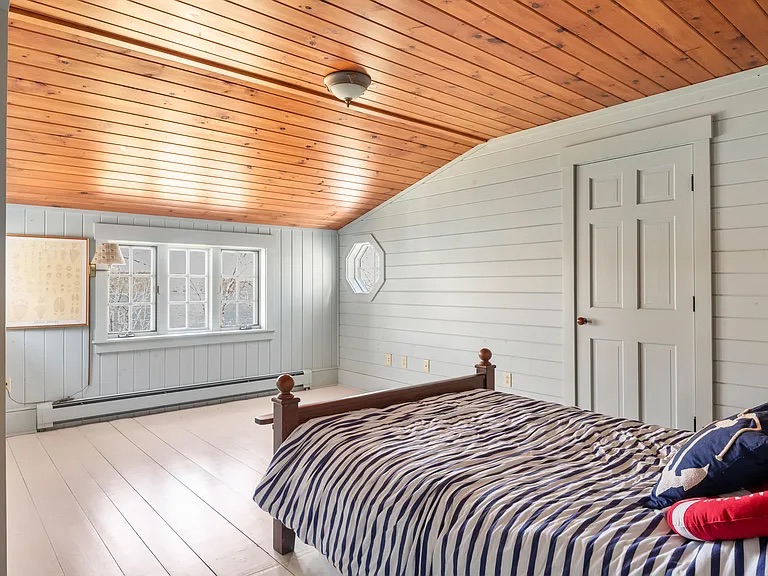
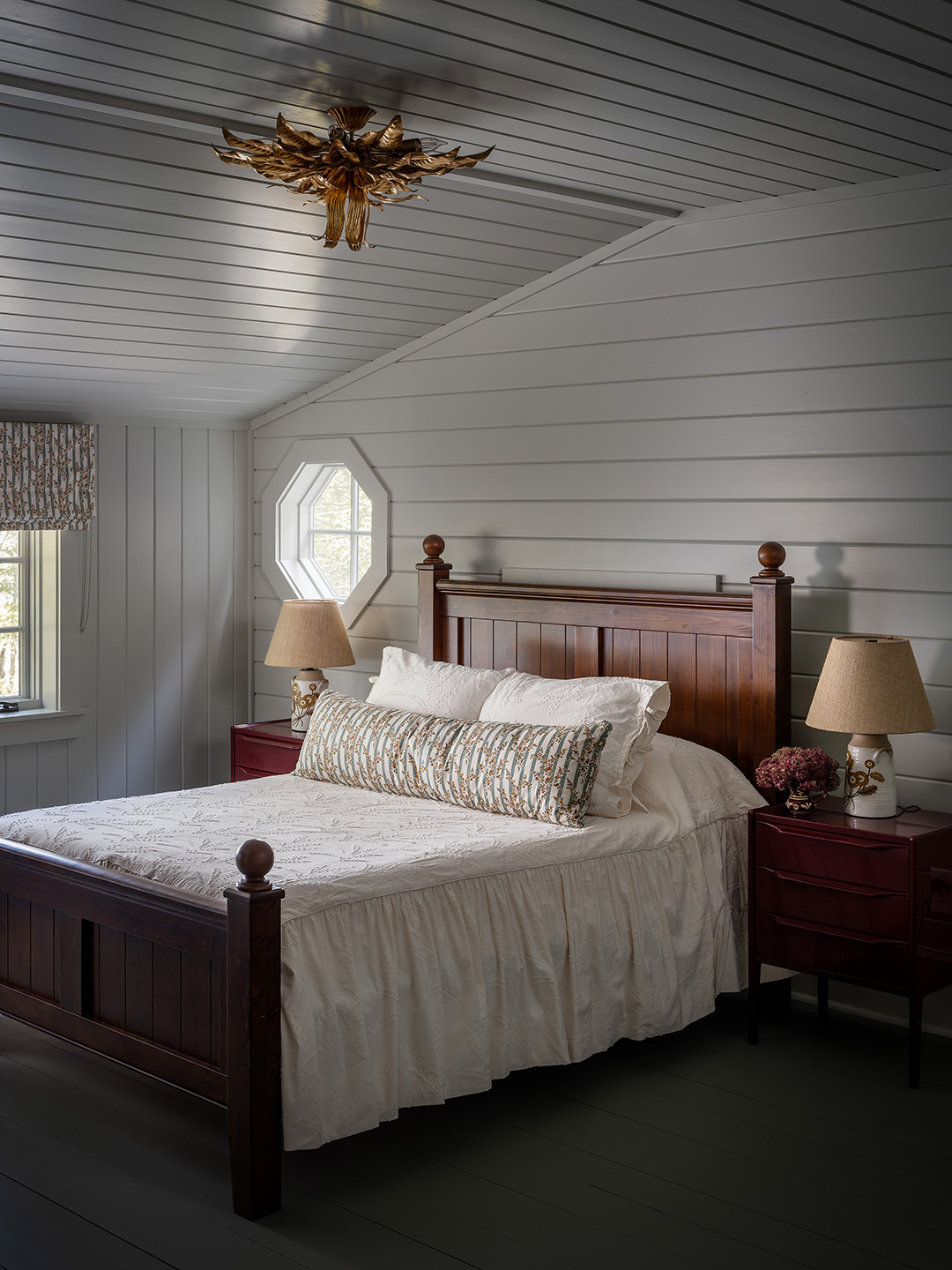
Color drenching was also an instant way to refresh the guest bedrooms without having to re-do any of the existing woodwork. “Visually, it’s calmer. And it’s budget-friendly,” says Judkins.
A Bathroom with Symmetry
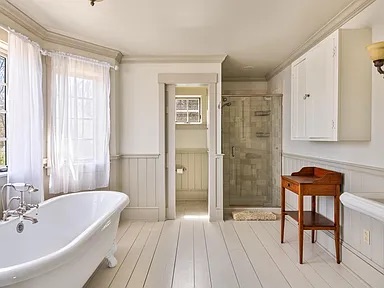
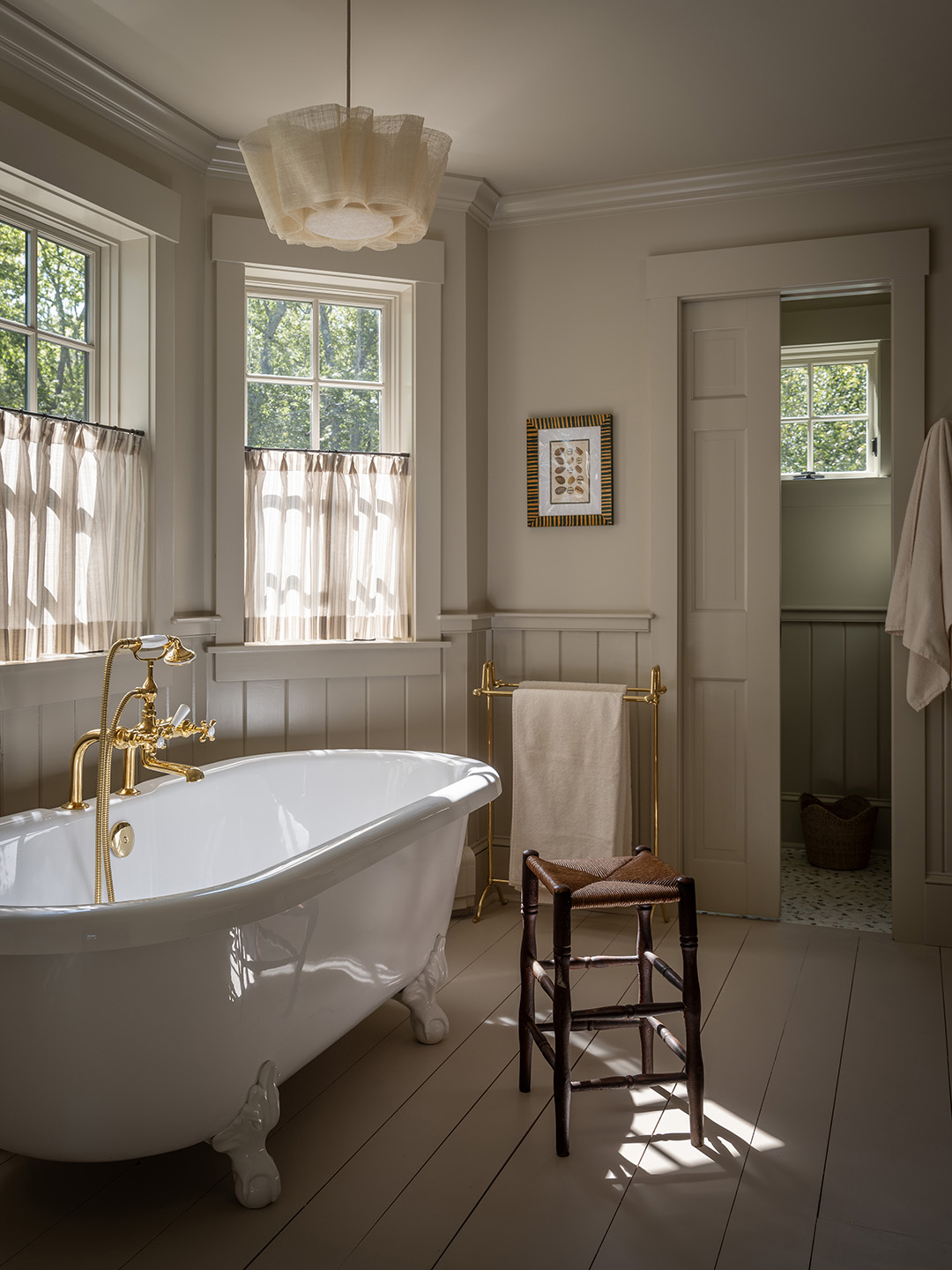
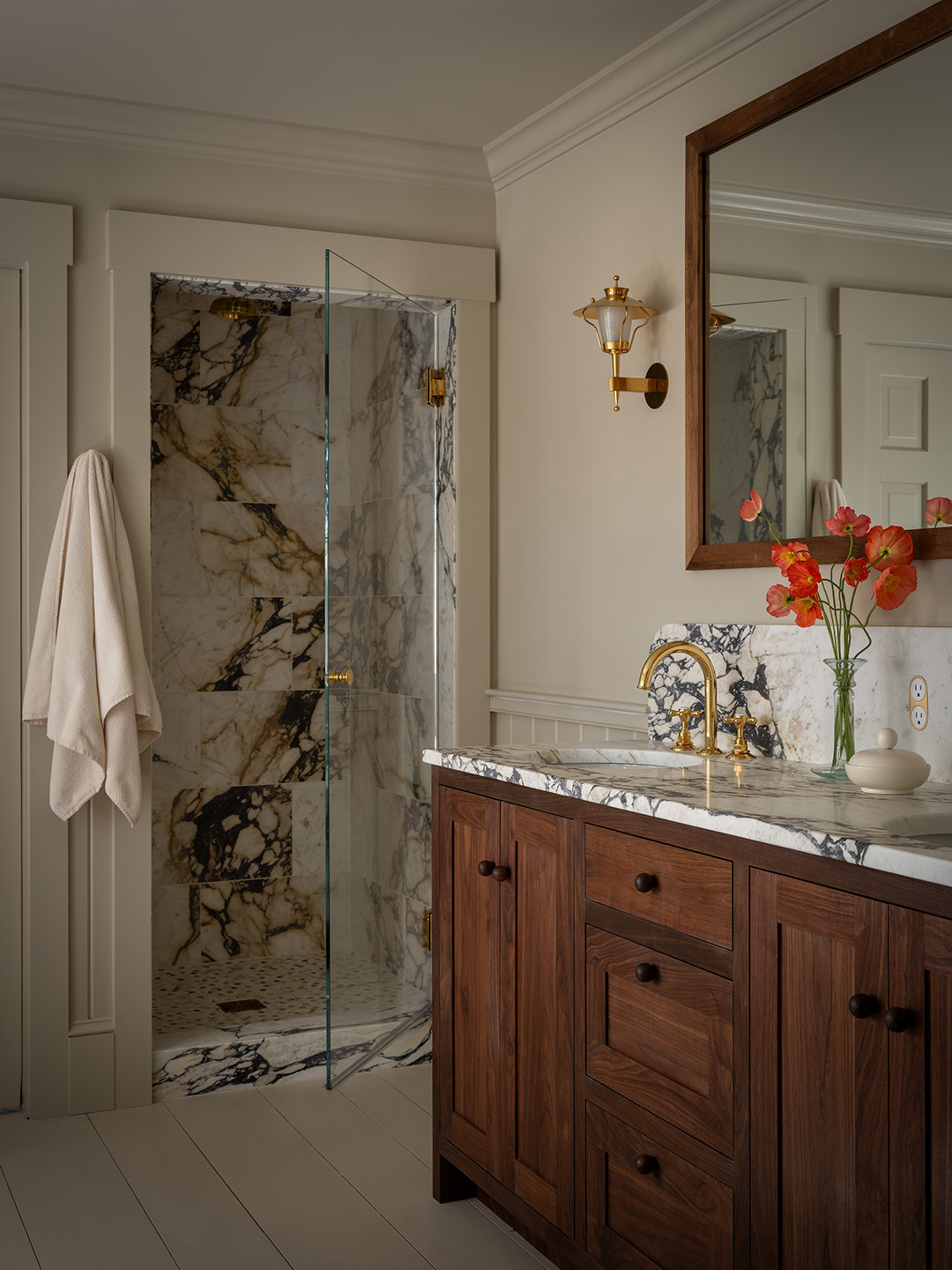
The fact that there was a little pedestal sink in the generously sized primary bathroom left the designers confused. In its place, they built a double vanity. The shower stall was also looking a little like an afterthought shoved in the corner. To make it feel purposeful, they made the opening and water closet doorway symmetrical and then clad the shower in 12×24″ Calacatta Viola marble tile to match the vanity countertops.
A Timeless Take on Kids’ Rooms
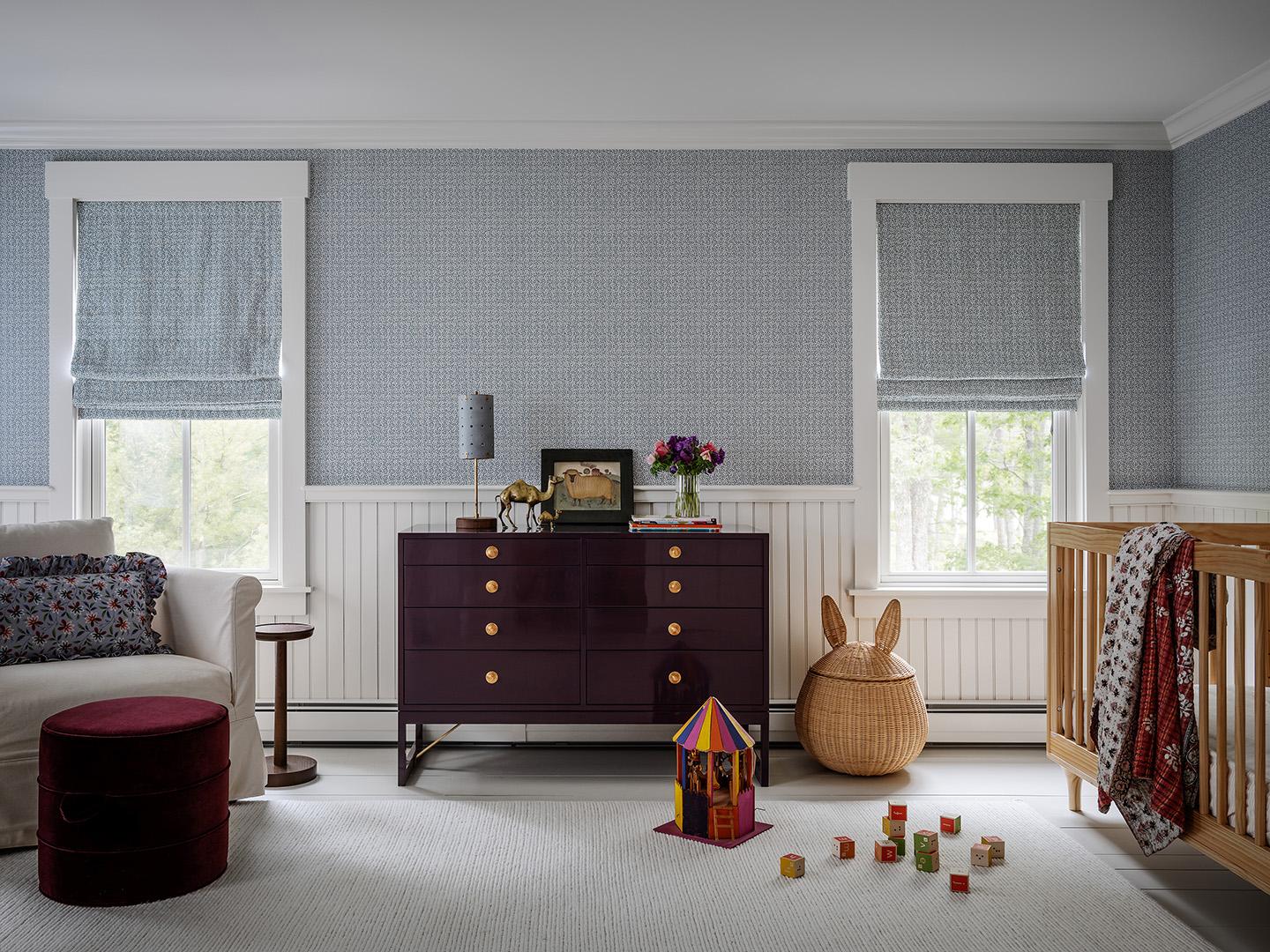
While matching the window treatments and wallpaper—Soane’s Wilton Vine—brought some whimsy to the nursery, the designers chose a print that felt like it could age with the couple’s daughter. “It creates a clean look,” says Judkins. “With the painted floors, it’s a nice, airy room to be in.”
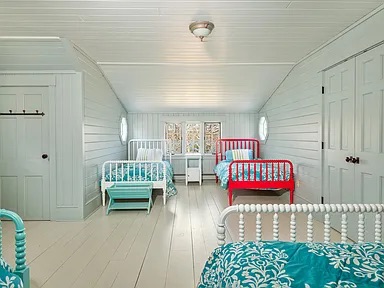
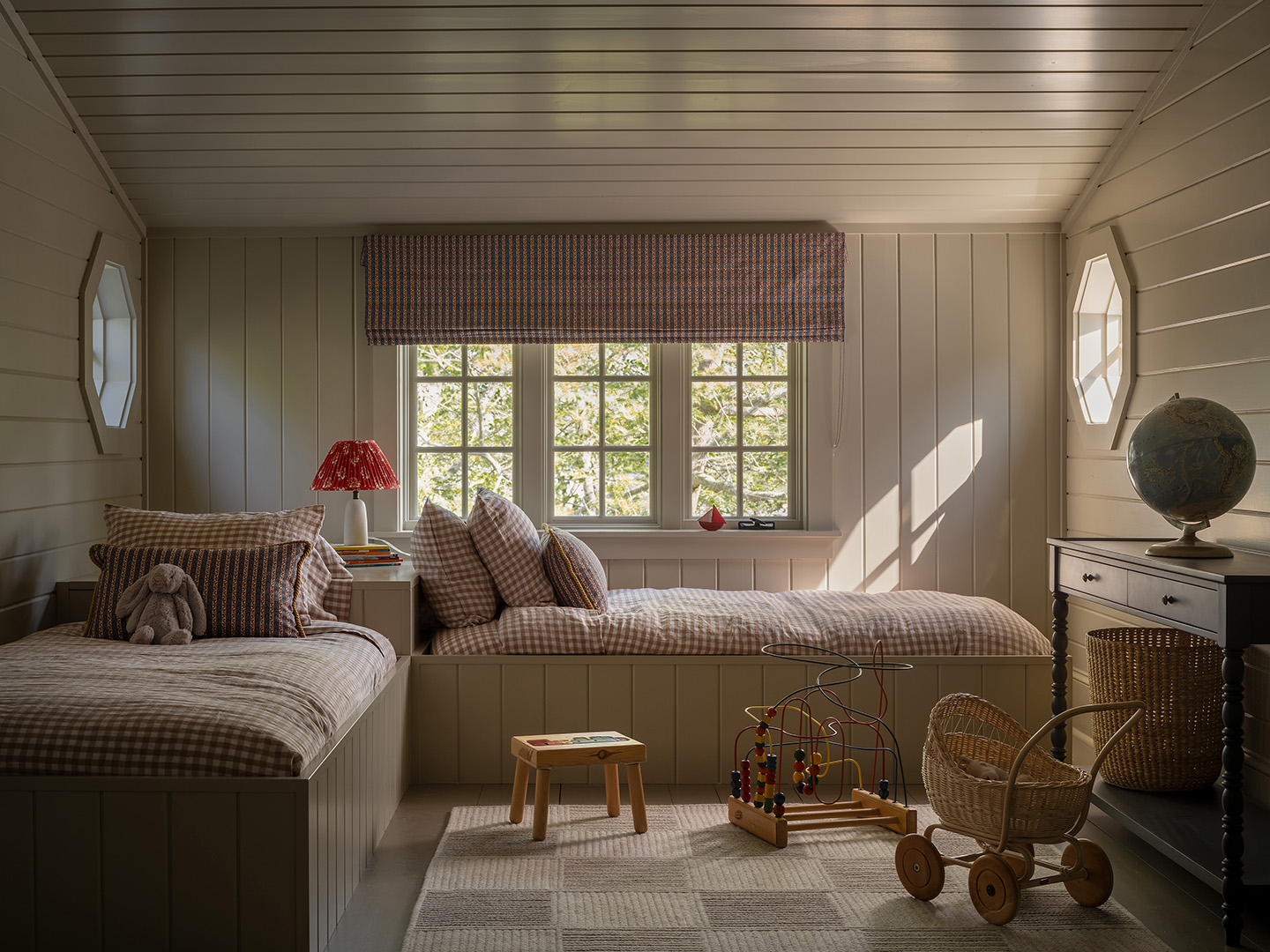
In the third floor bunk room, the designers kept the existing panel theme going by building out four twin beds clad in boards. Making them permanent structures frees up floor space for play and lets the mattresses double as daybeds when the kids are watching TV. “Before it was a big room with furniture floating everywhere. Now it feels more integrated and purposeful,” says Lachapelle. With their July Fourth deadline looming, it was the most satisfying space to complete.