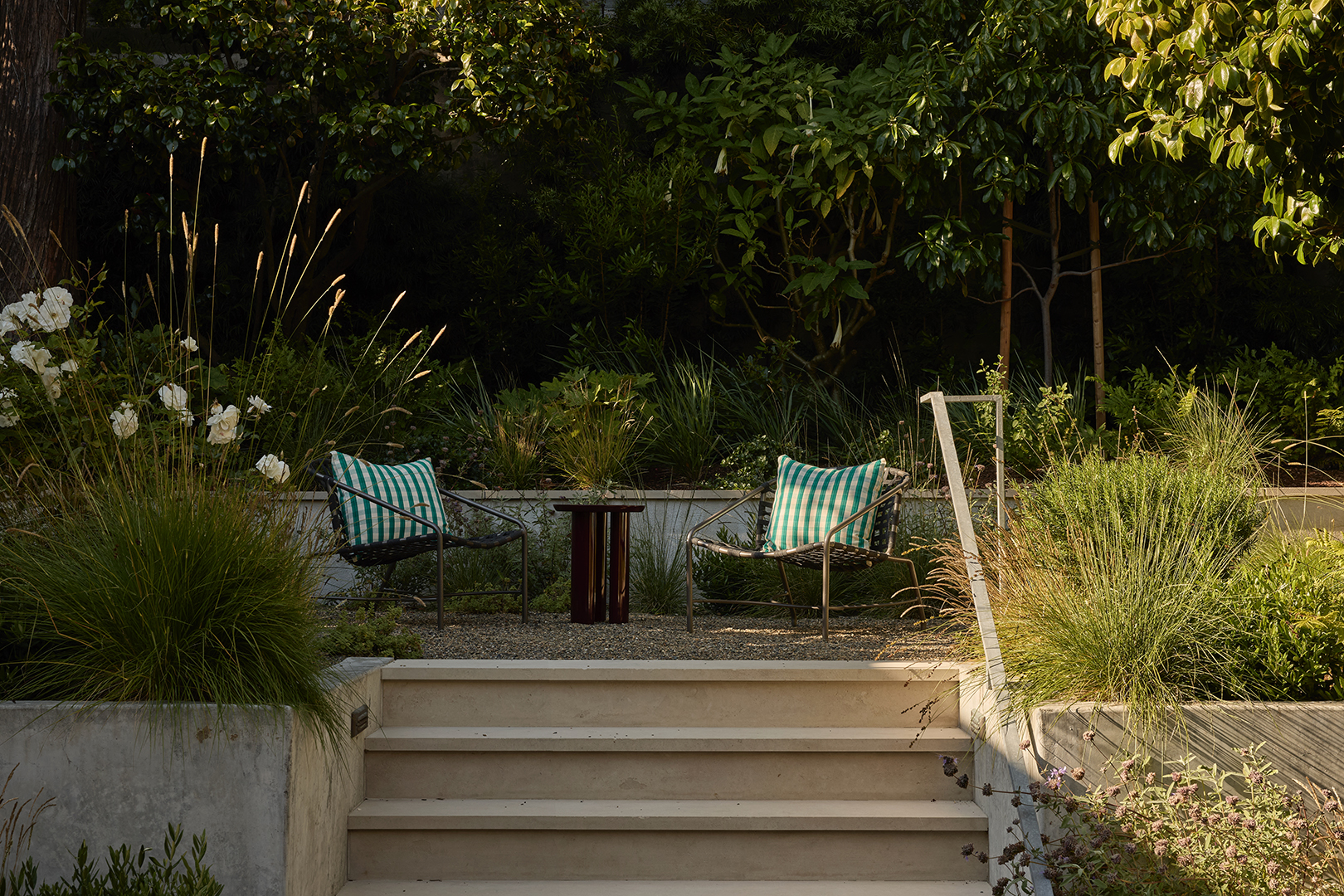
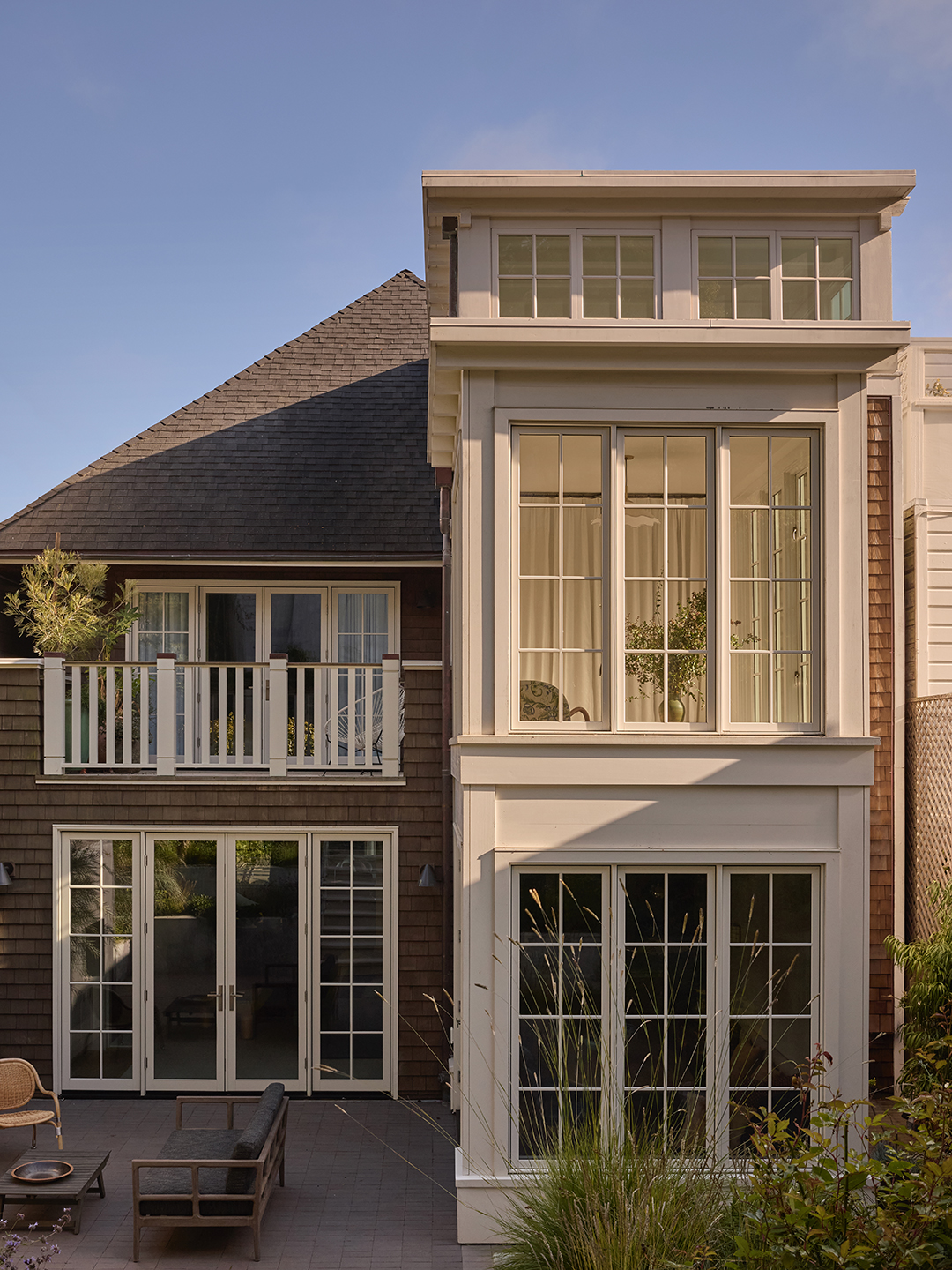
We may earn revenue from the products available on this page and participate in affiliate programs.
Whole home renovations are notorious for unexpected delays—but in the case of this century-old farmhouse in San Francisco’s tony Pacific Heights neighborhood, the sweeping transformation came together in a matter of months. The owners, a human rights professor and tech executive, along with their teenage children, had been house hunting for a year and were eager to finally get settled.

Their contract on another property had just fallen through when the family came across this one. It wasn’t even for sale, just listed as a rental. Boldly, the couple made an offer to buy it, and the owner, much to their delight, accepted. From there, a whirlwind: “They got the keys, moved in two weeks later, stayed for a week, and then decamped to their beach house,” recalls Studio Roene founder Julia Sobrepeña King, who started discussing a fresh design scheme for the house with the couple even before as they closed. After a sprint of planning, she got the go-ahead—and had six weeks to get the place move-back-in ready.
The brief: to comprehensively redesign the 4,000-square-foot historic property in a way that reflected the needs of a modern four-person family, balancing color and pattern with a sense of quietude and ease. Thankfully, there was no need to overhaul the floor plan or majorly rework plumbing, two aspects of a renovation that would have almost certainly thrown off the timeline and budget. Updates by the most recent owners had given the house a modern farmhouse feel that the family wanted to remove completely—think, an overly liberal use of shiplap, basic greyscale finishes, and a kitchen that was functional enough but the epitome of generic.
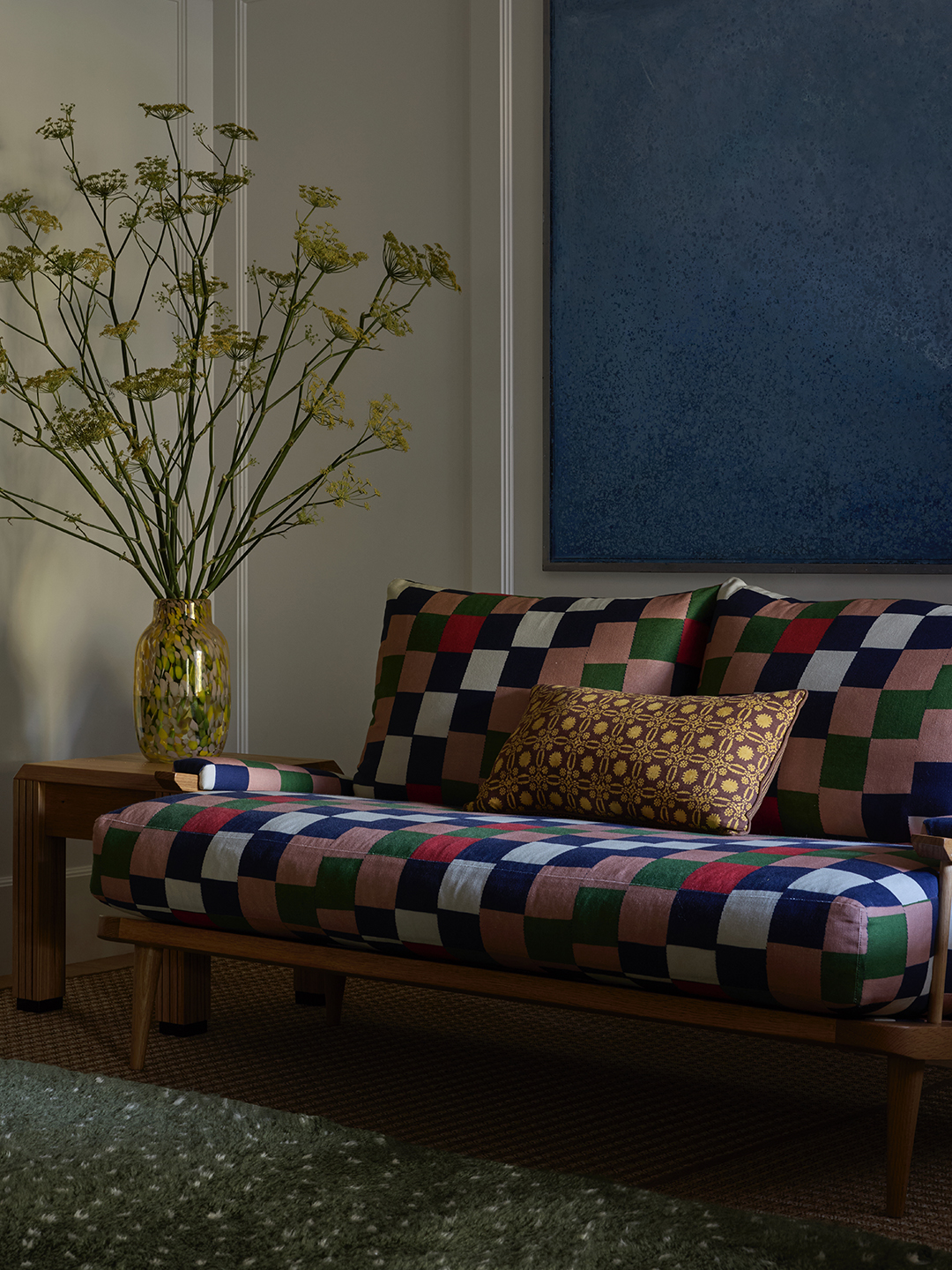
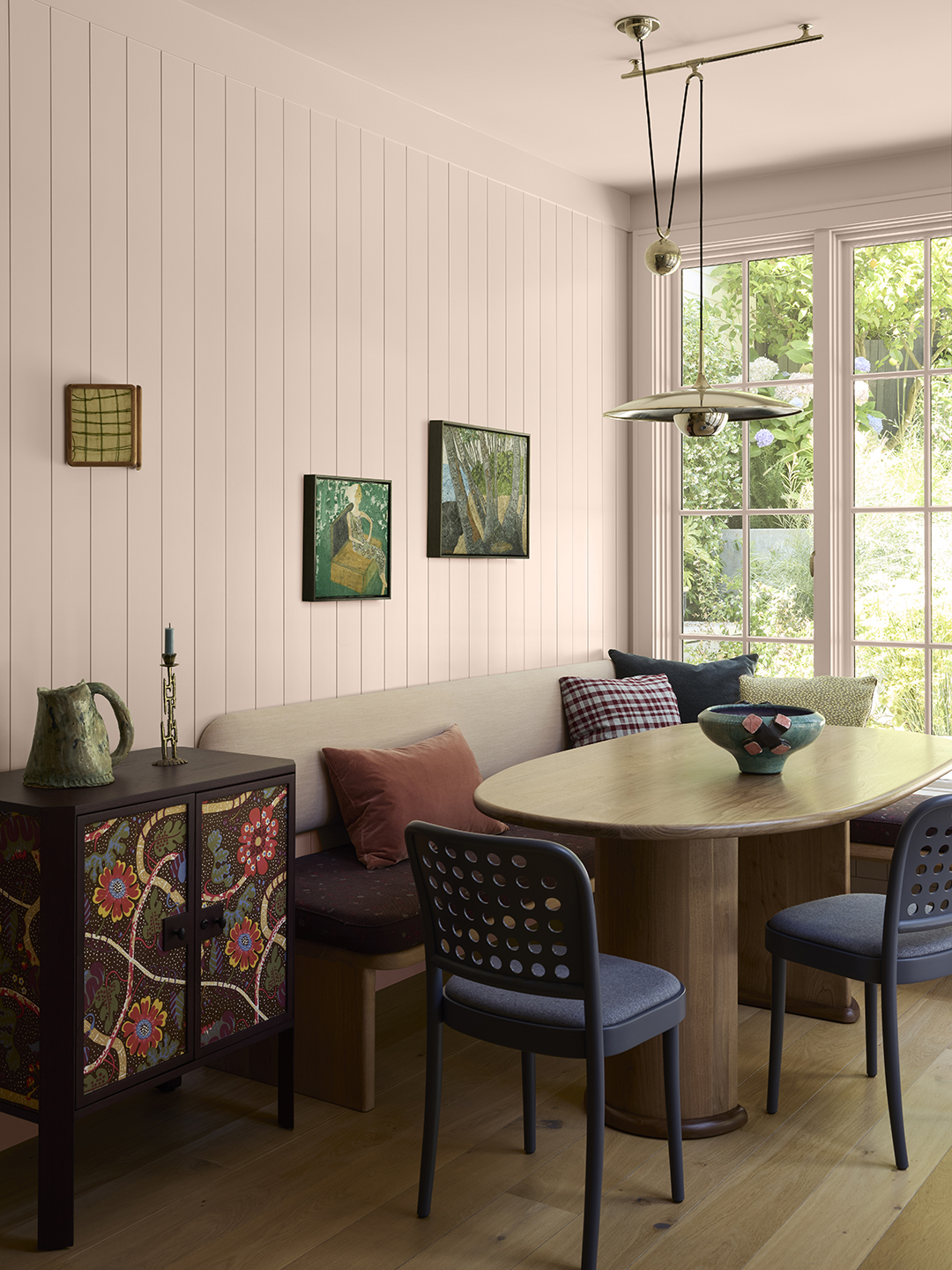
Sobrepeña King began by establishing a new palette. “Our concept for the color story was a spring garden seen through San Francisco’s fog—soft, moody hues, punctuated by bold, graphic moments,” she explains. Shades of green, muted pink, powdery blue, and dusty lavender now give the house an entirely new personality. It’s particularly evident in the breakfast area off the kitchen, where a custom oval table, banquette, and small bar cabinet papered in Josef Svenst’s iconic “Mirakel” print plays off a custom deep burgundy stain on white oak wood. No part of the home is predictable or impersonal anymore. Walking through the rooms is like stepping through a private garden on a misty morning.
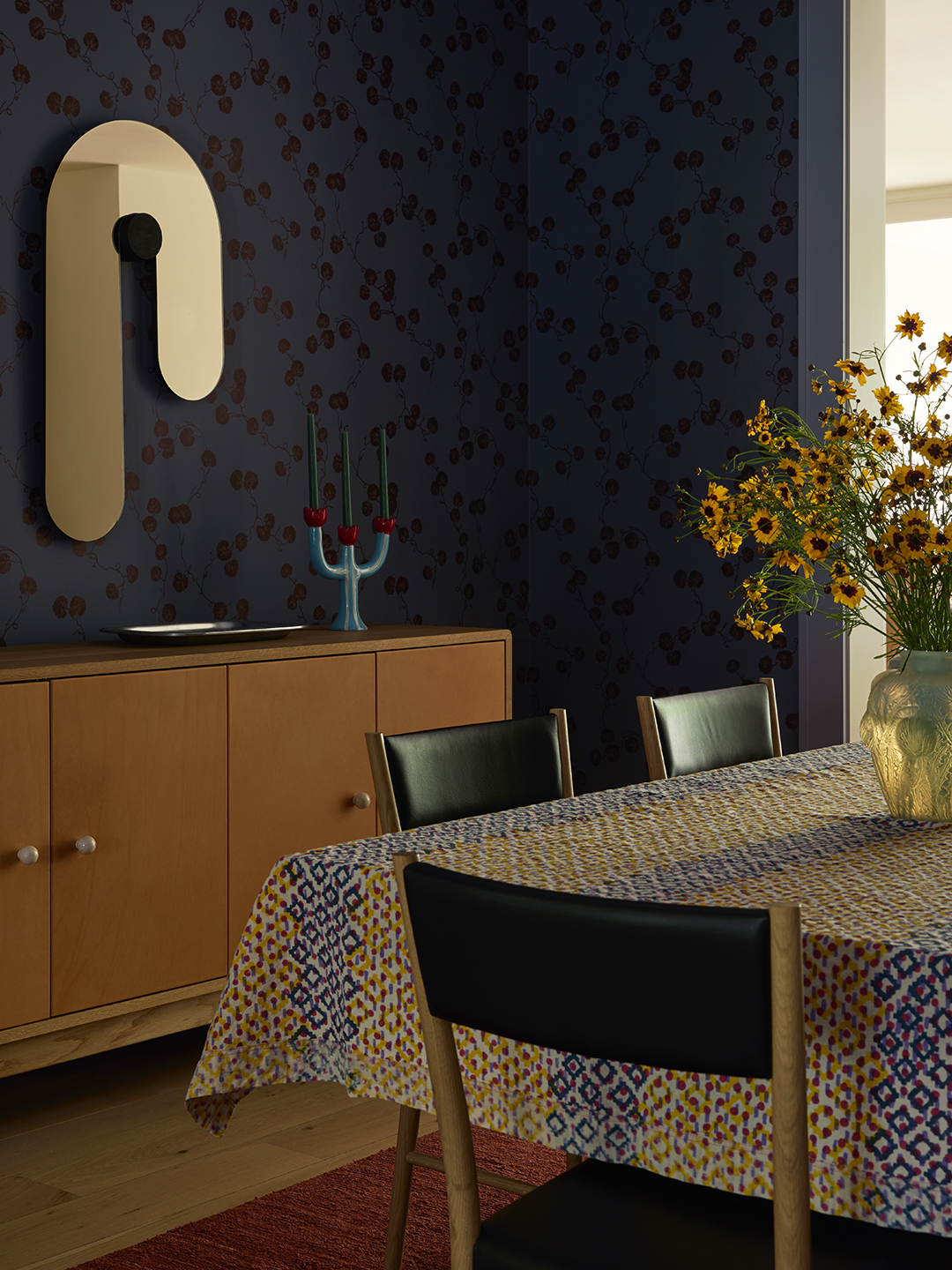
Some compromise was required to get to this point. “The husband is more minimalist—he likes color but was worried about it being overwhelming—and the wife was drawn to more texture and inspired by Swedish design,” says Sobrepeña King. Ultimately, she was able to incorporate vibrant textiles, eclectic artwork, and patterned wallcoverings into the home. In the dining room, Zak and Fox’s “Hedera” wallpaper envelopes dinner guests in an inky navy, and the kitchen glows green.
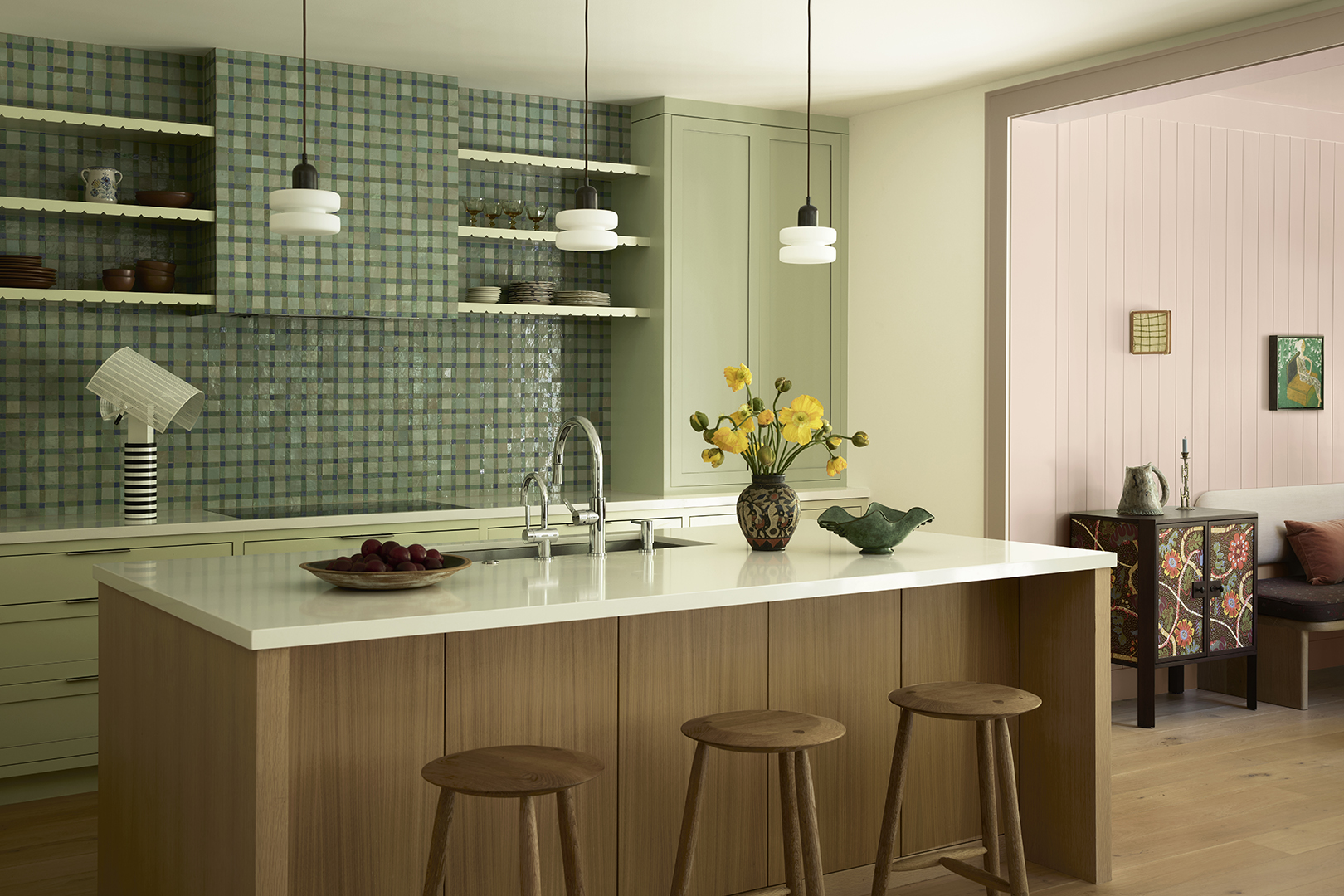
“When we started, there was a massive hood, white marble, subway tile, and white cabinetry in the kitchen,” explains Sobrepeña King. To save time and money, she kept the lower and the upper side cabinets, removing and pro-spraying them on-site. Then, a decorative artist, Rafael Arana, hand-painted thin burgundy borders along the inner edges of the stiles and door rails.
We then had a decorative artist (Rafael Arana) hand-paint thin burgundy borders along the inner edges of the stiles and rails of the doors.
The countertops and the island were also deemed fine as-is, but the range hood was removed, swapped out for an integrated frame that created an architectural structure for open shelving; the new exhaust setup disappears into a grid of zellige—which was selected, in part, because the tile was in stock and ready to ship.
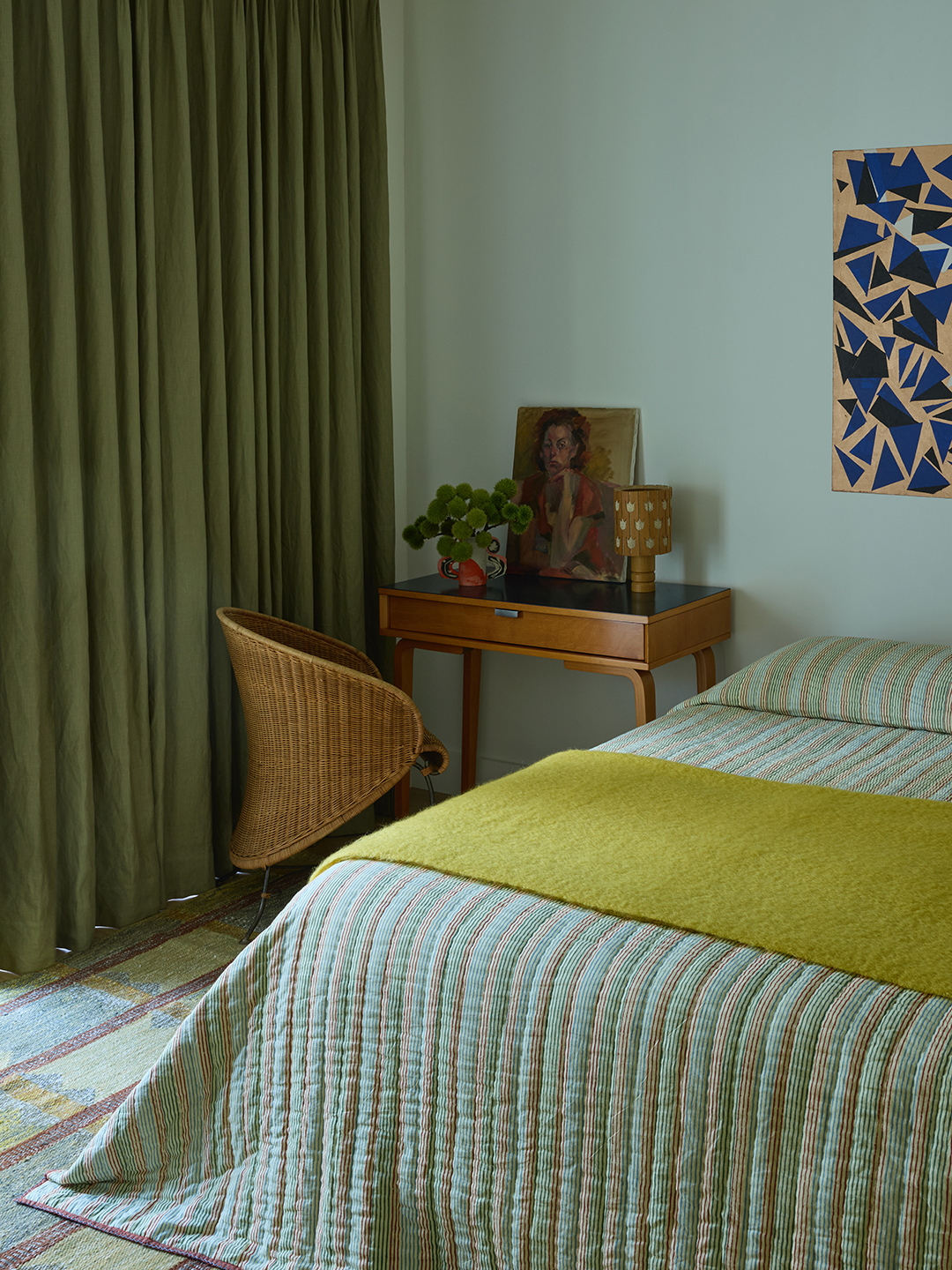
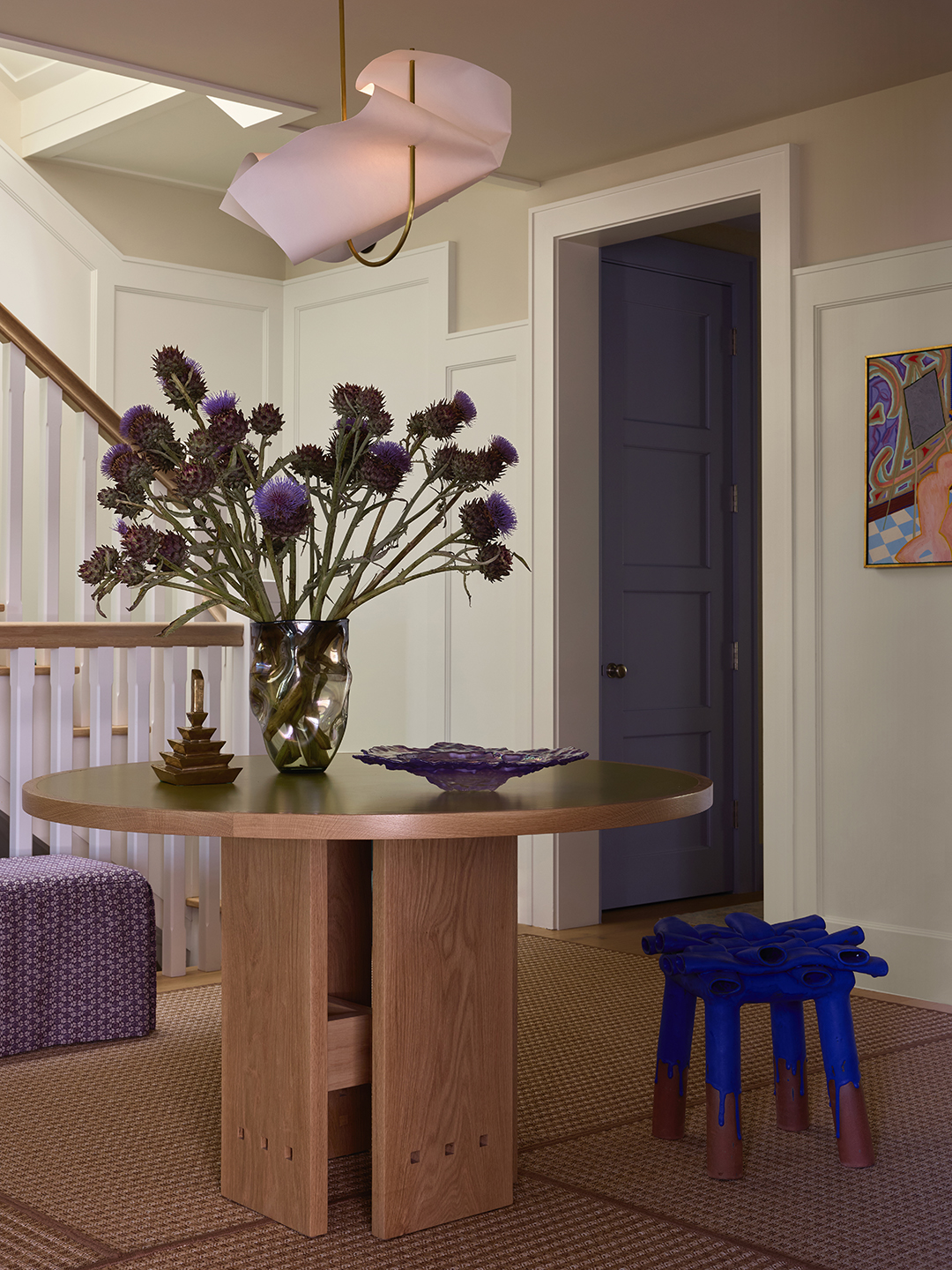
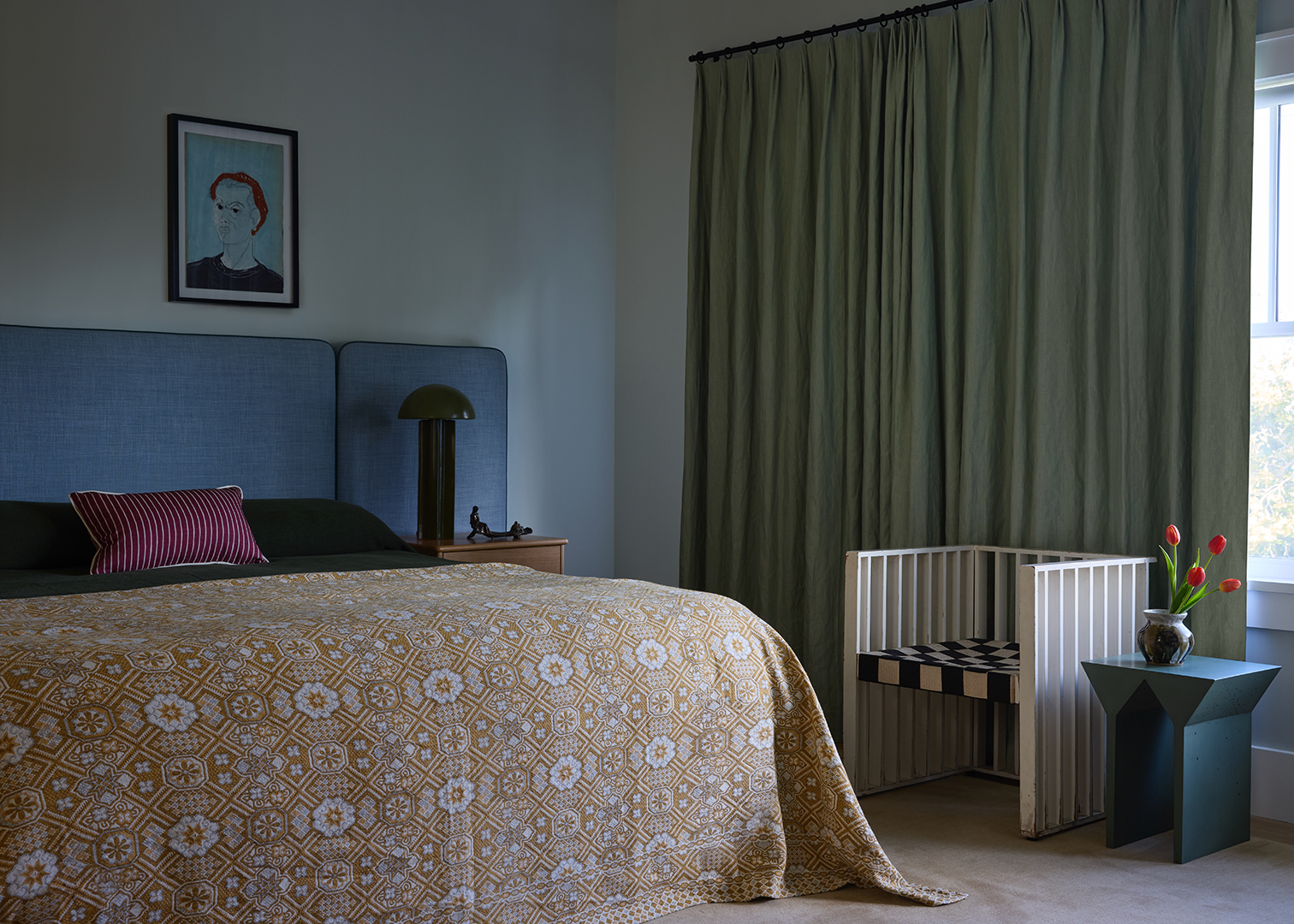
As for furniture and lighting, Sobrepeña King went both high and low, newly fabricated and vintage, incorporating sconces from Schoolhouse and Lambert & Fils along with custom pieces, like the sculptural lantern in the foyer by White Dirt Studio. The clients already had a trove of lovely furniture and an extensive art collection, so the designer found a home for every item in the new place and filled in the gaps with vintage finds and some specific commissioned works.
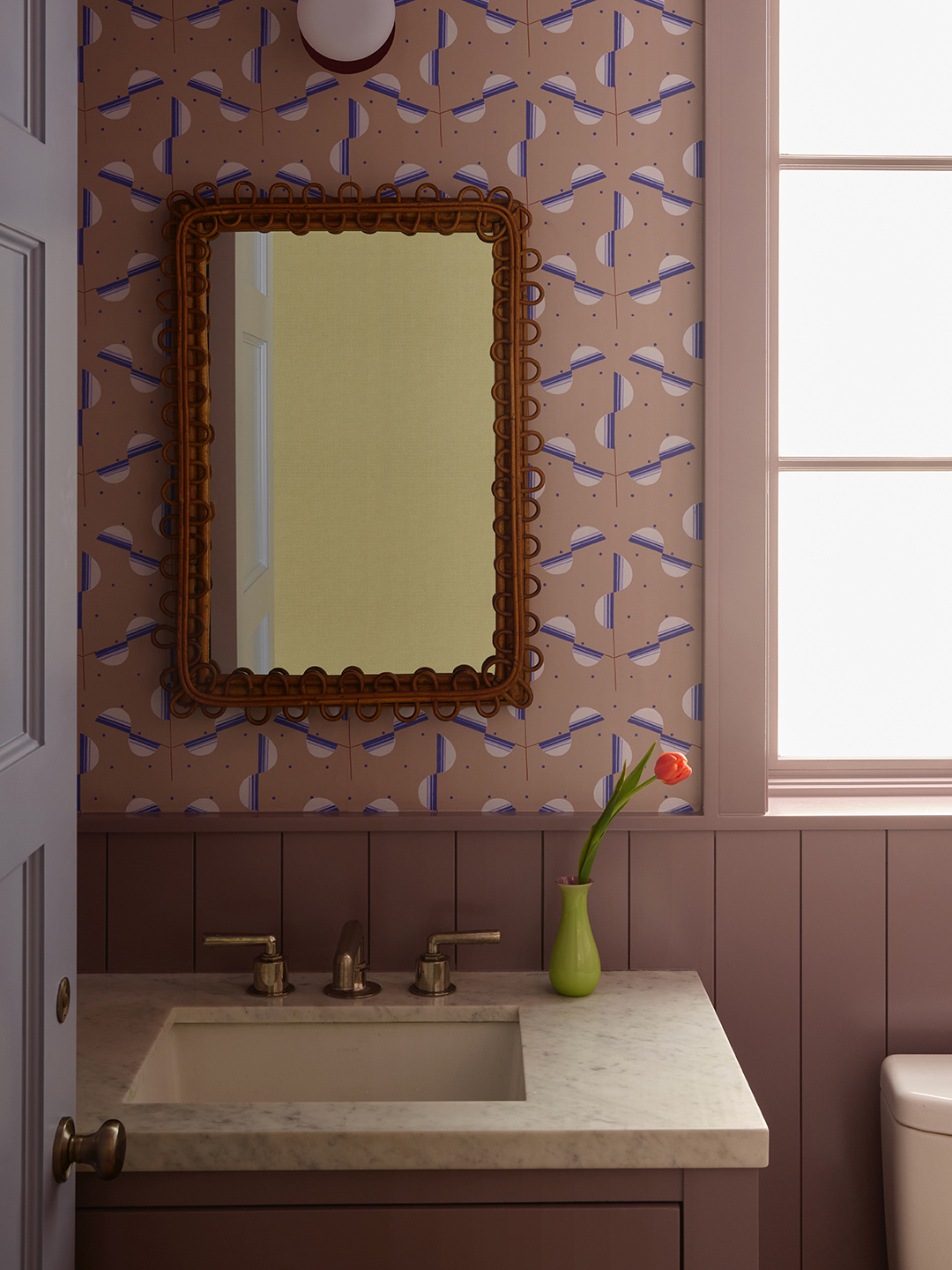
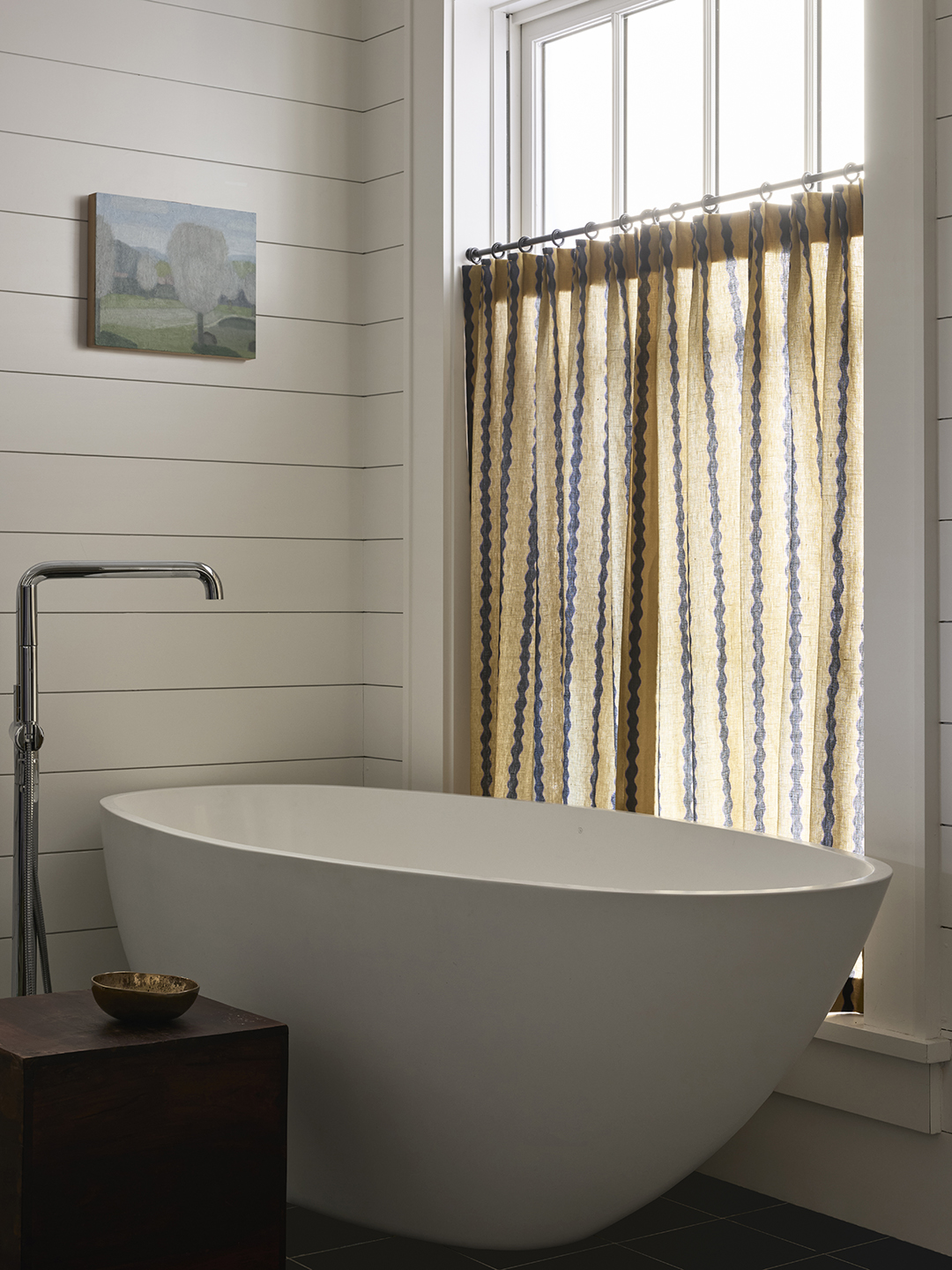
“You want to love everything in your house and you want these things to speak to each other,” Sobrepeña King often tells her clients. “If you’re buying things too fast, all off the shelf, you’re not going to get a unique room.” That was the temptation on such a short timeline, but by putting in the custom orders early—and limiting demo to only a few critically important areas, like the kitchen—she was able to give this home a swift but bespoke revamp. When the clients returned to the Bay Area after six weeks, the vibe had changed completely: It finally felt like home.