We may earn revenue from the products available on this page and participate in affiliate programs.
Ask anyone who knows Ika Ramel and Sanna Nathanson, and they’ll swear that the Stockholm-based designers are 1950s souls living in millennial bodies. “We just love anything old,” says Ramel—and by anything, she mostly means homes. So when a father and his three children invited the Studio Ramson founders to reimagine their single-story midcentury house along Sweden’s southwestern coast, it felt less like a commission and more like fate.
“They wanted the house to feel fresh without losing its soul,” shares Nathanson. And they had good reason: Designed by renowned Swedish architect Hakon Ahlberg in 1954, the architecture hadn’t been touched in decades. “When the original owner passed away, the house came up for sale for the very first time, and our client immediately felt drawn to its history and unique atmosphere,” Ramel reflects. But for every upside—a functional layout, six generous bedrooms, nature at every turn—there was a downside to match. “The materials and functions just felt frozen in time, and it was clear we needed to wake the house up again,” recalls Nathanson.

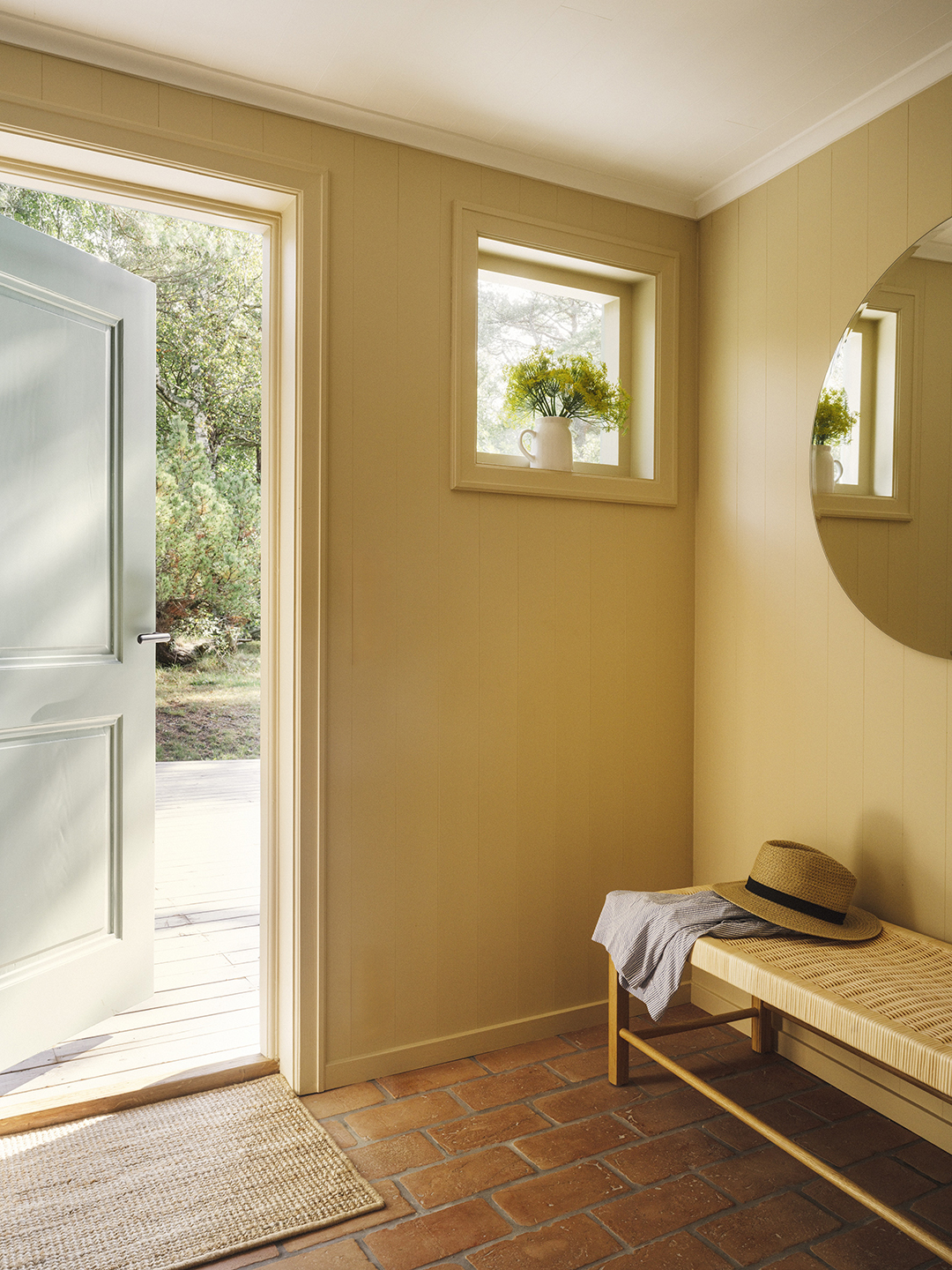
What followed was equal parts addition and subtraction, carried out in collaboration with architect and builder Tobias Ossmark, the owner’s cousin. Out went the tired wooden floors; in came sturdy timber planks. Boring white carpets were banished.
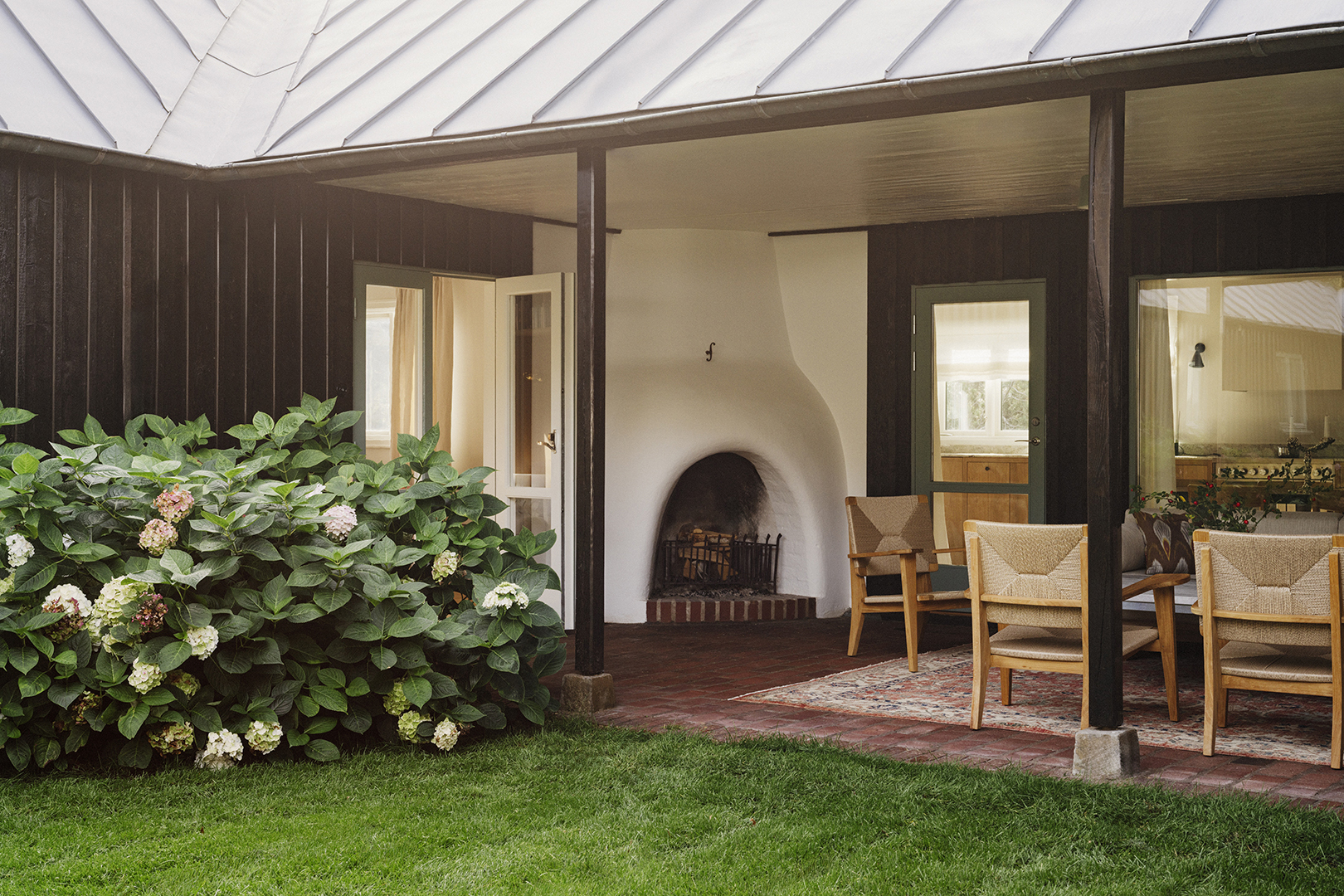
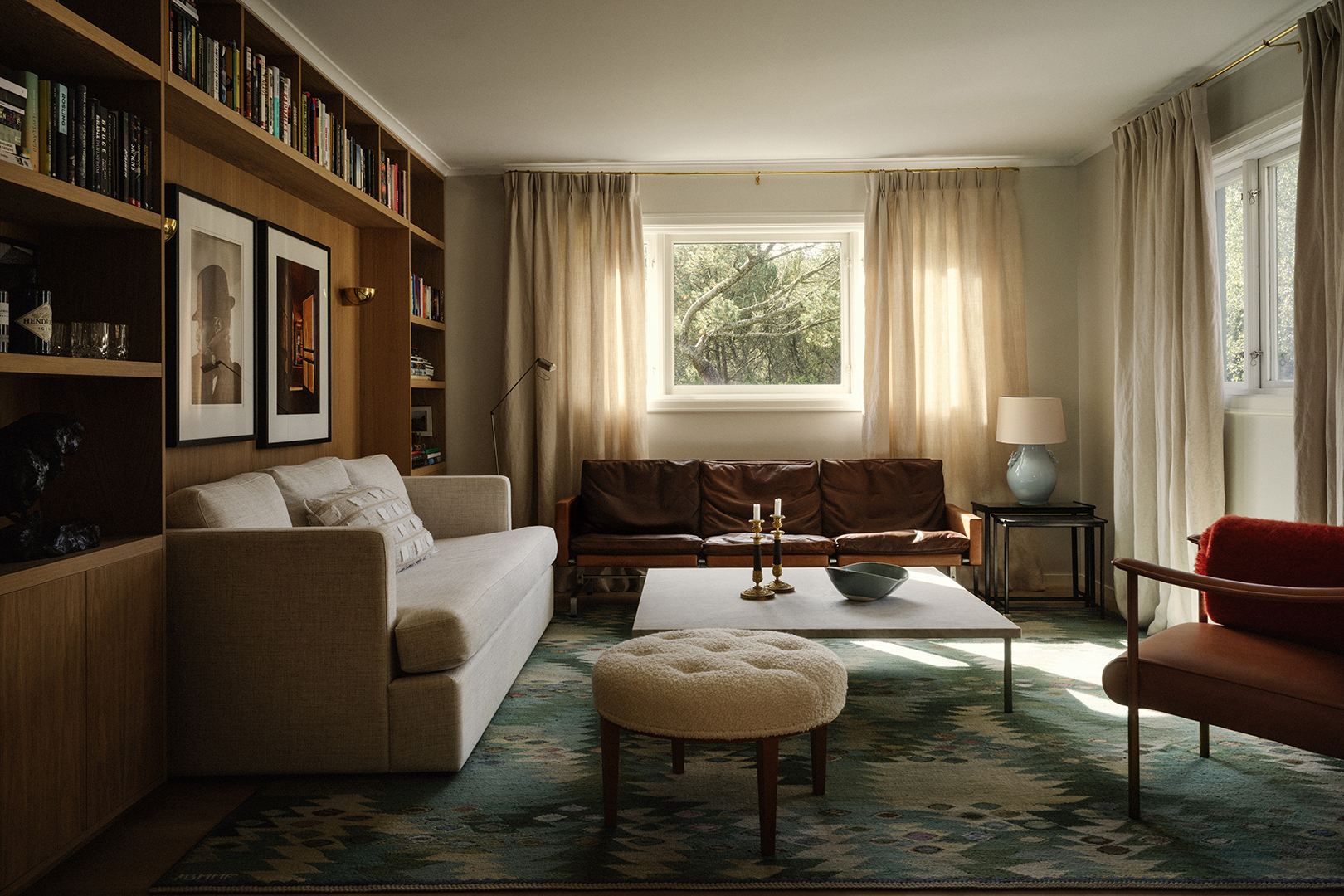
The designers had a rule for anything new they brought in: it had to feel like it had always belonged. Take the Märta Måås-Fjetterström rug in the sitting room, or the vintage leather sofa and nest of three tables by Nils Fougstedt, which sit so comfortably within the space they read less as additions and more as quiet inheritances. They also considered everyday practicalities: the kitchen is big enough to host 20, a series of enormous windows frame vistas of the sea, and, in true Scandinavian fashion, the covered patio boasts a fully functioning fireplace and lounge area. Ahead, Ramel and Nathanson give us the lowdown on how they brought the home into the present without erasing its past.
What was the very first thing you bought for the project?
Ramel: A handwoven Märta Måås-Fjetterström rug for the living room. Its craftsmanship and heritage felt perfectly in tune with the house’s history. Soon after, we sourced a rare vintage lamp in the U.K., a piece that immediately brought the home to life.
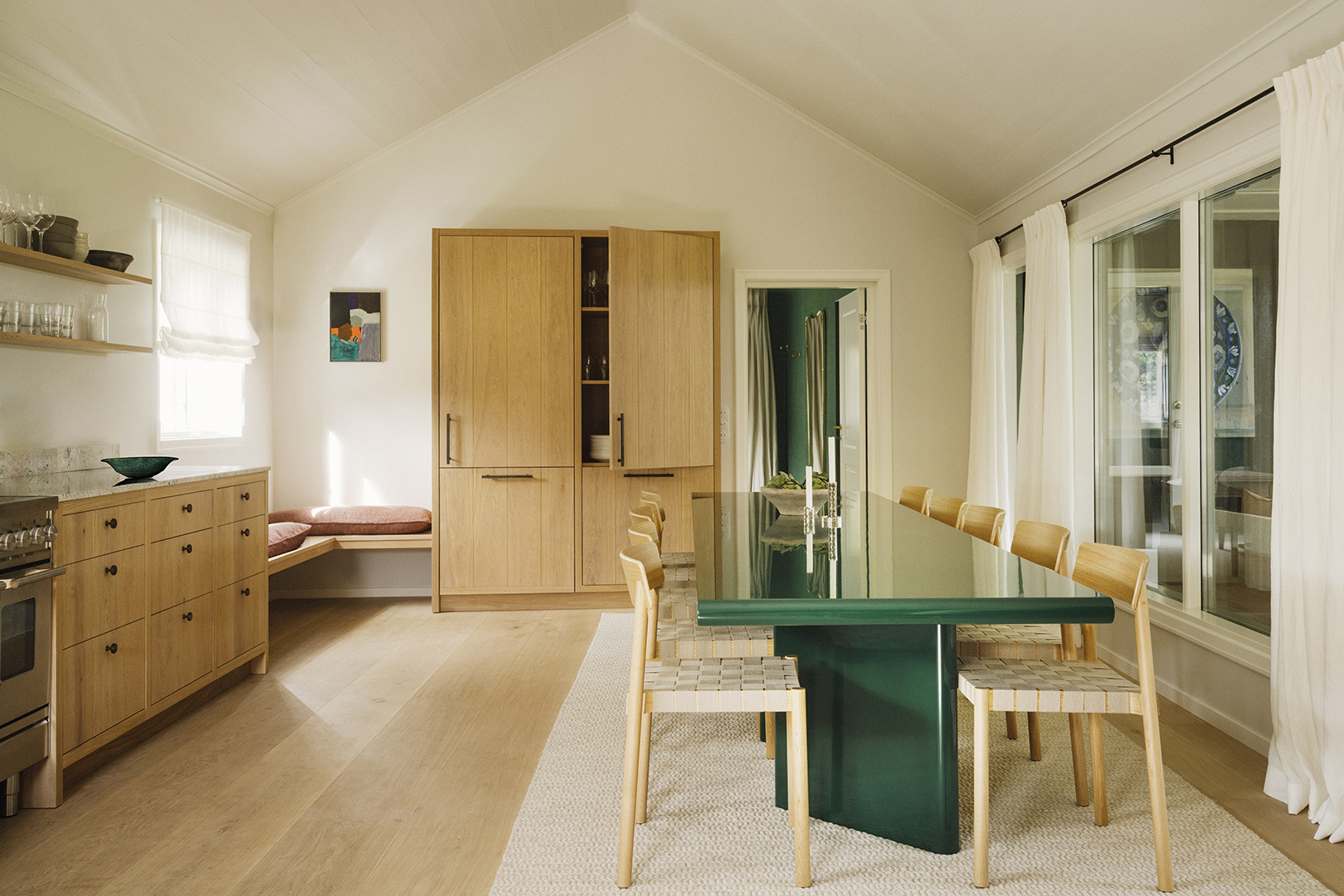
Where did you find the emerald-toned dining table, and what is it made of?
Nathanson: The dining table is from a Swedish supplier called Artilleriet. It’s a lacquered wooden table, and the rich emerald tone adds depth and character to the dining space.
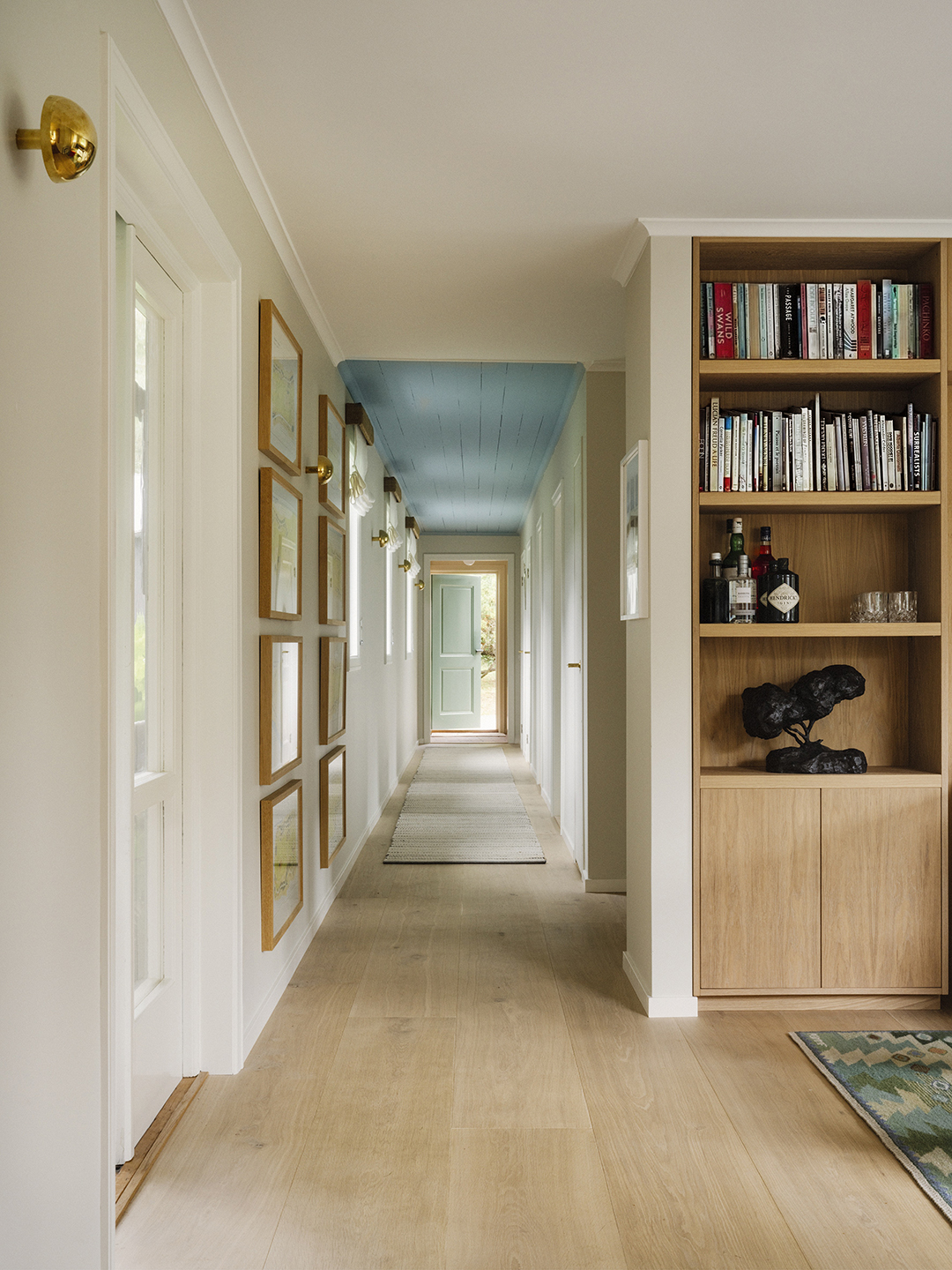
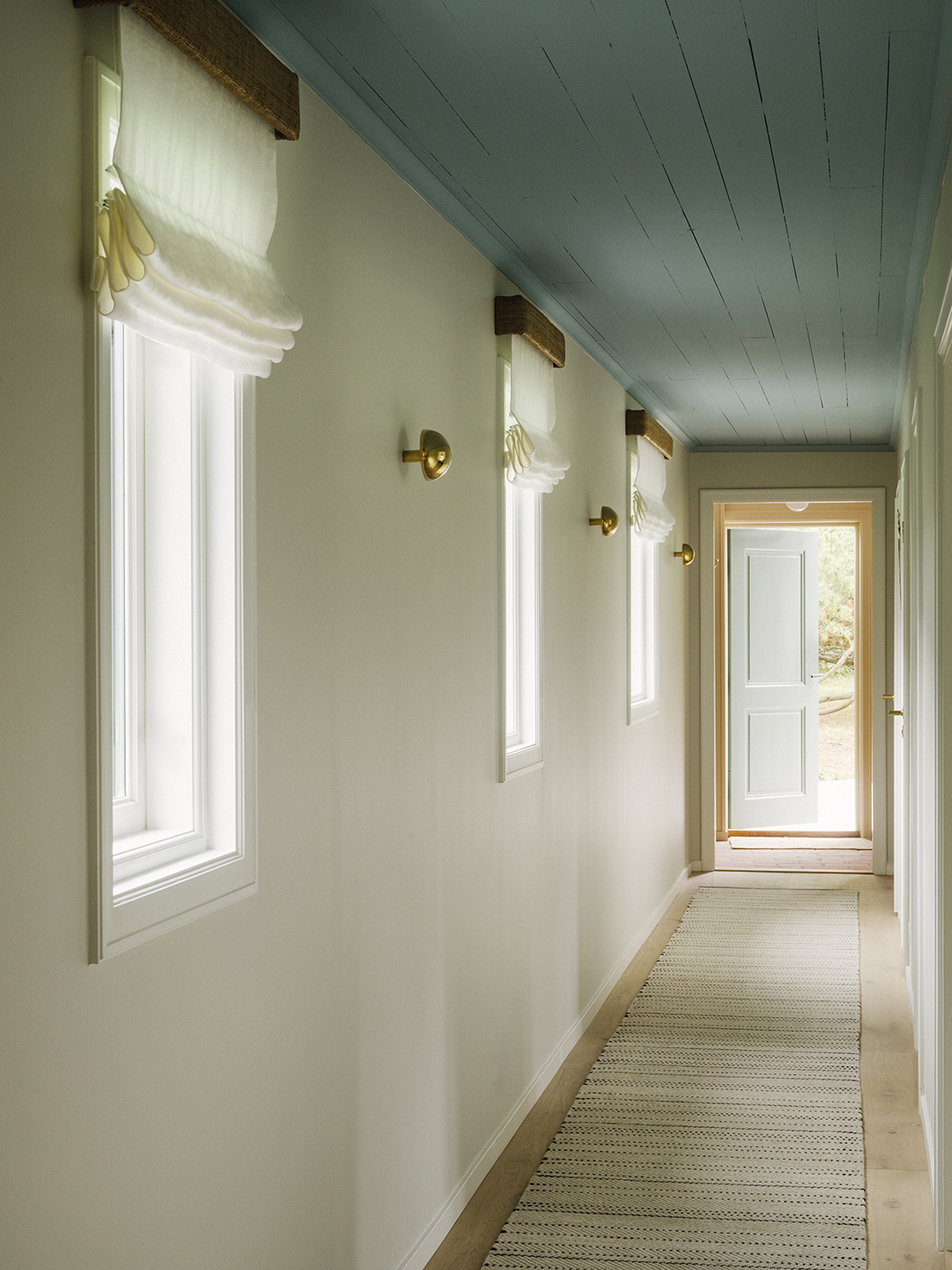
What’s the story behind the painted hallway ceiling?
Ramel: We wanted to make a subtle statement out of the corridor, rather than treating it as a purely transitional space. The sky blue ceiling adds a soft, unexpected moment and works beautifully with the overall feeling of the house—rather like a gentle summer’s day. It brings lightness and calm, and gently sets the tone as you move through the home.
What design choice would you never repeat?
Nathanson: This was a remarkably smooth project. The only slightly nerve-wracking moment was installing a very large TV hidden in the ceiling of the outdoor room. It was technically complex, but the result was seamless and discreet.
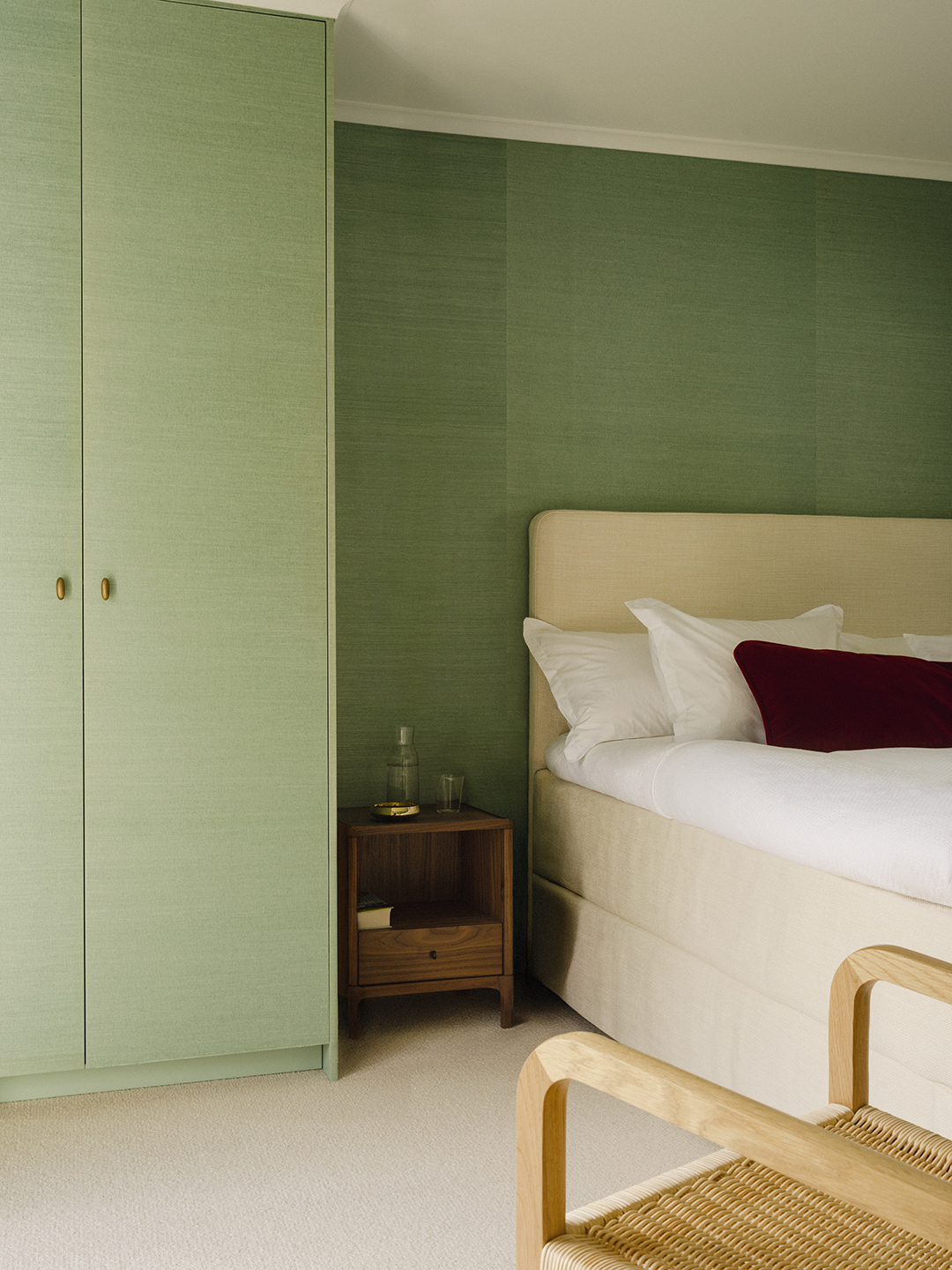
What piece of storage felt like a real game-changer for your client?
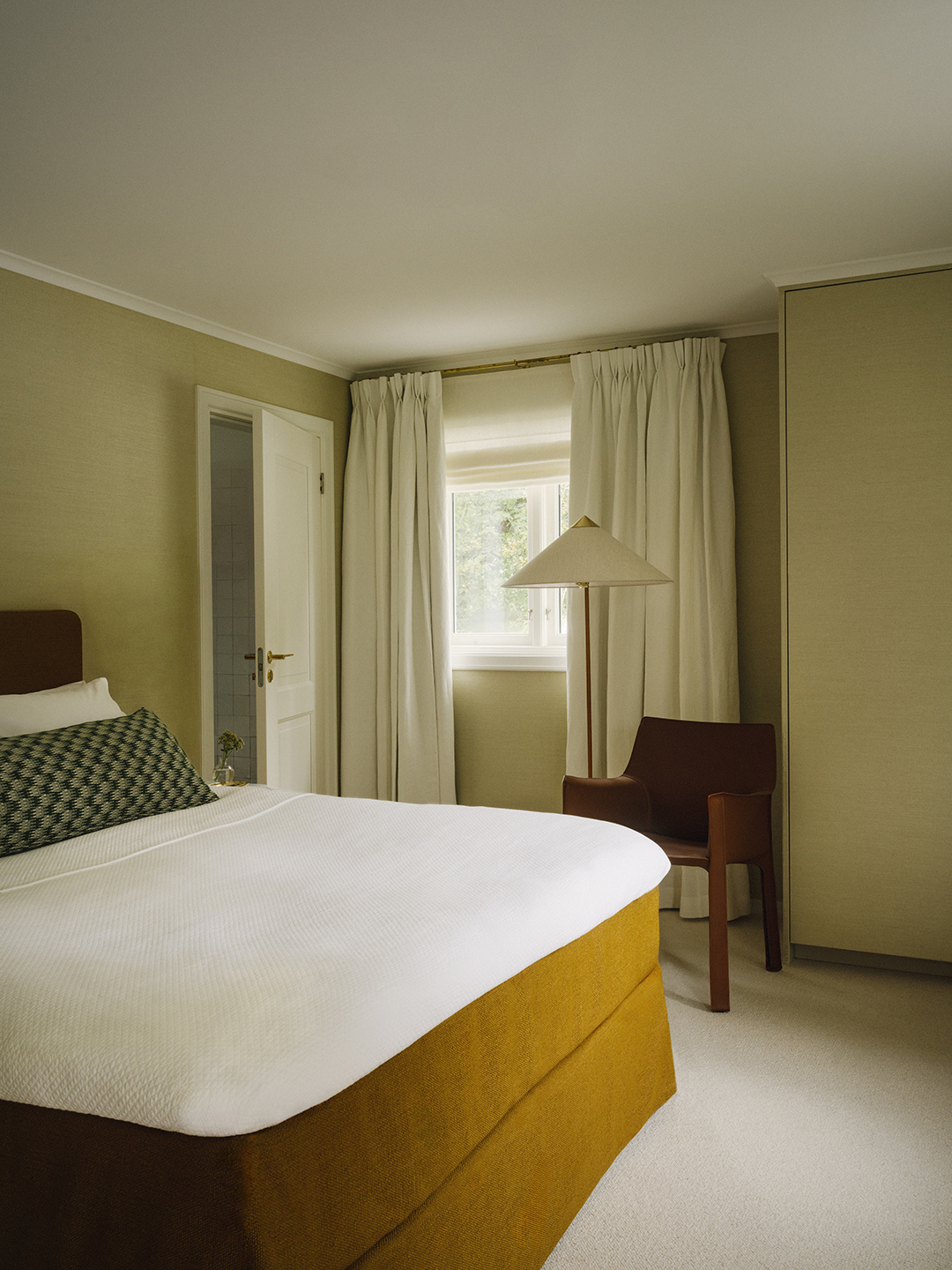
Nathanson: The custom-built wardrobes we designed for the bedrooms. They integrate seamlessly into the architecture and bring a calm, orderly backdrop that allows the furniture and light to take center stage.
What was one thing you didn’t mind removing?
Ramel: When we arrived, many rooms were covered with newly installed white carpets, which felt disconnected from the house’s character. Replacing them with more tactile, timeless surfaces re-established a genuine sense of place.
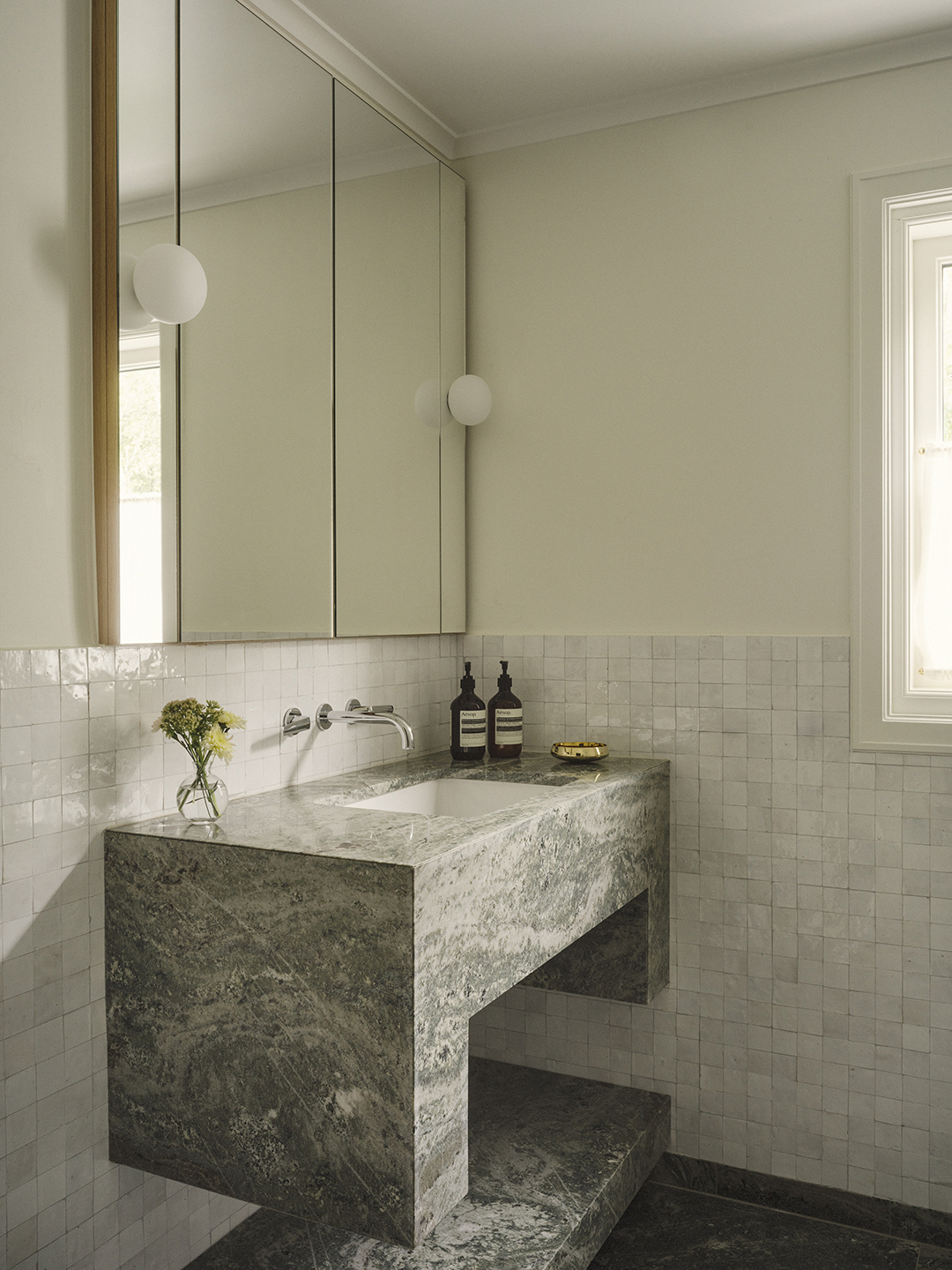
What was your biggest splurge?
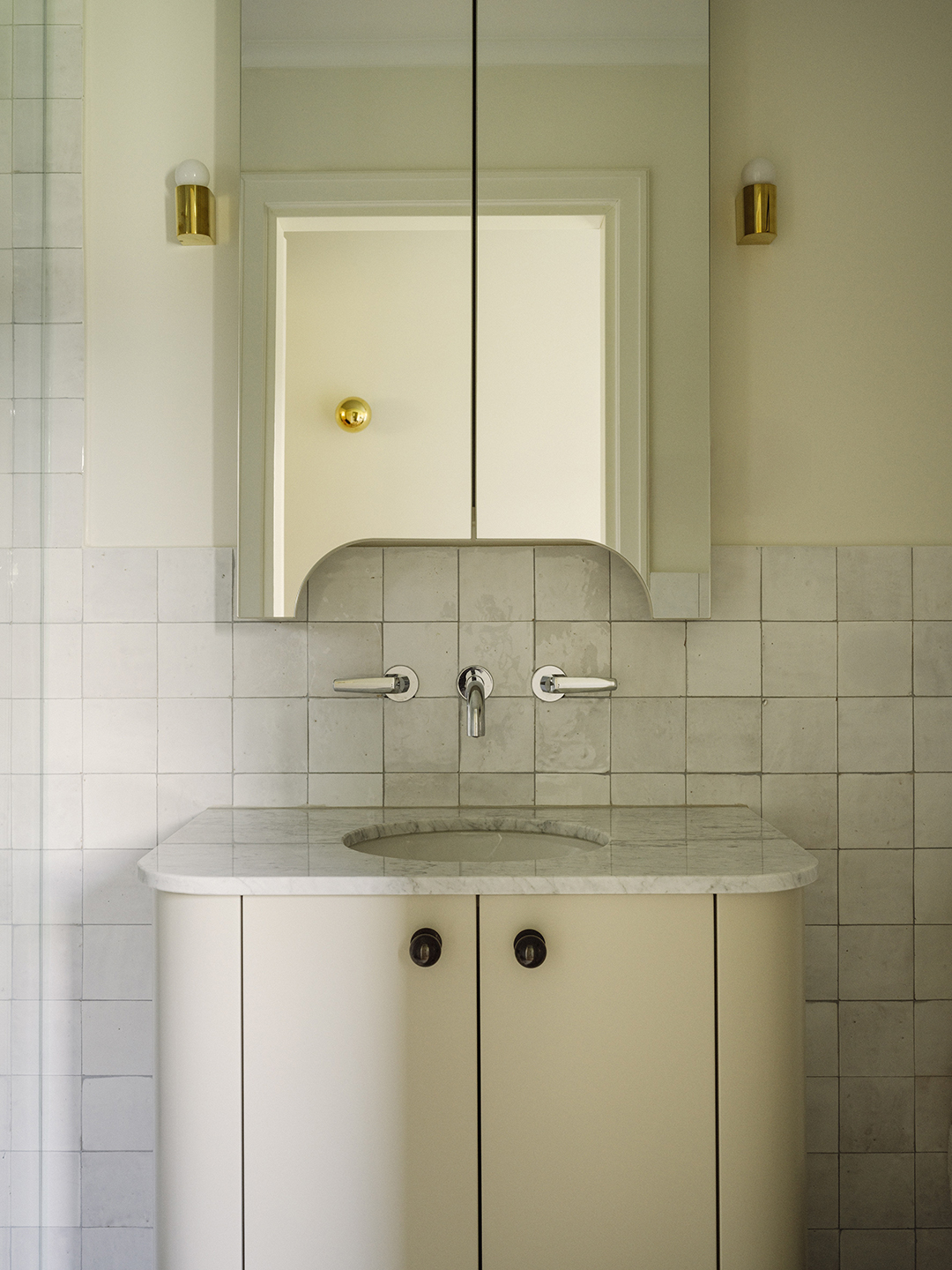
Ramel: The ensuite bathrooms for every bedroom. It was a bold investment, but it elevated the family’s way of living and gave each member their own private retreat within the house.
What design decision felt like the biggest risk?
Nathanson: In many ways, the project felt harmonious rather than risky. The biggest leap was probably encouraging the client to move beyond the entirely gray-and-white palette he was used to and to embrace textures and tones that give the house more warmth and depth.