
We may earn revenue from the products available on this page and participate in affiliate programs.
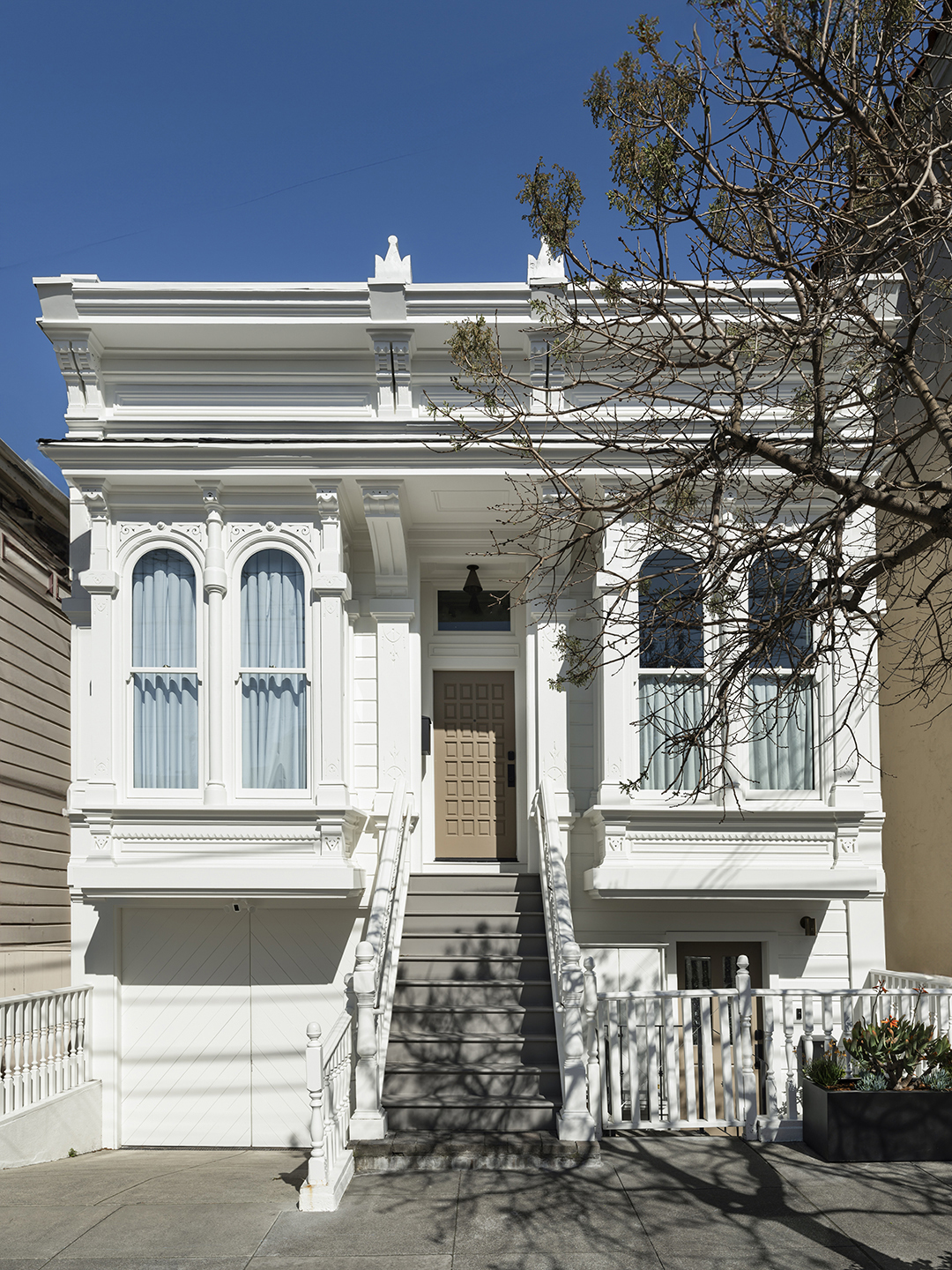
When Julia Miller first heard from her San Francisco-based client, it was actually to get names of other designers. “She said, ‘I love your work but I’m in San Francisco, do you have anyone local you can recommend?’” recalls Miller, who runs her firm Yond Interiors out of Minneapolis. “I was like, ‘I can do your project!’” It was the height of the pandemic; most designers were doing their jobs remotely. Plus, it would be a long time before Miller was picking out sofa fabric samples—first, they had to make sense of the Victorian home’s layout and tack on a second-level addition, a two-year endeavor.
Yond Interiors got to work, collaborating with architect Killian O’Sullivan and Larkspur Builders to preserve what charm remained; the home had been through quite a few unfortunate renovations in the past that washed away its historical details. In the front of the house, they were able to restore or, in some instances, recreate, the original trim profiles. But the back half was an opportunity to go more contemporary: a steel office door, a carbonated water dispenser, built-in wardrobes galore (shoutout to Workhorse Cabinetry).
We asked the Miller to recap the four-year-long project and share what it took to create an airy, calming space for a busy family of five.
What was the biggest design challenge you faced?
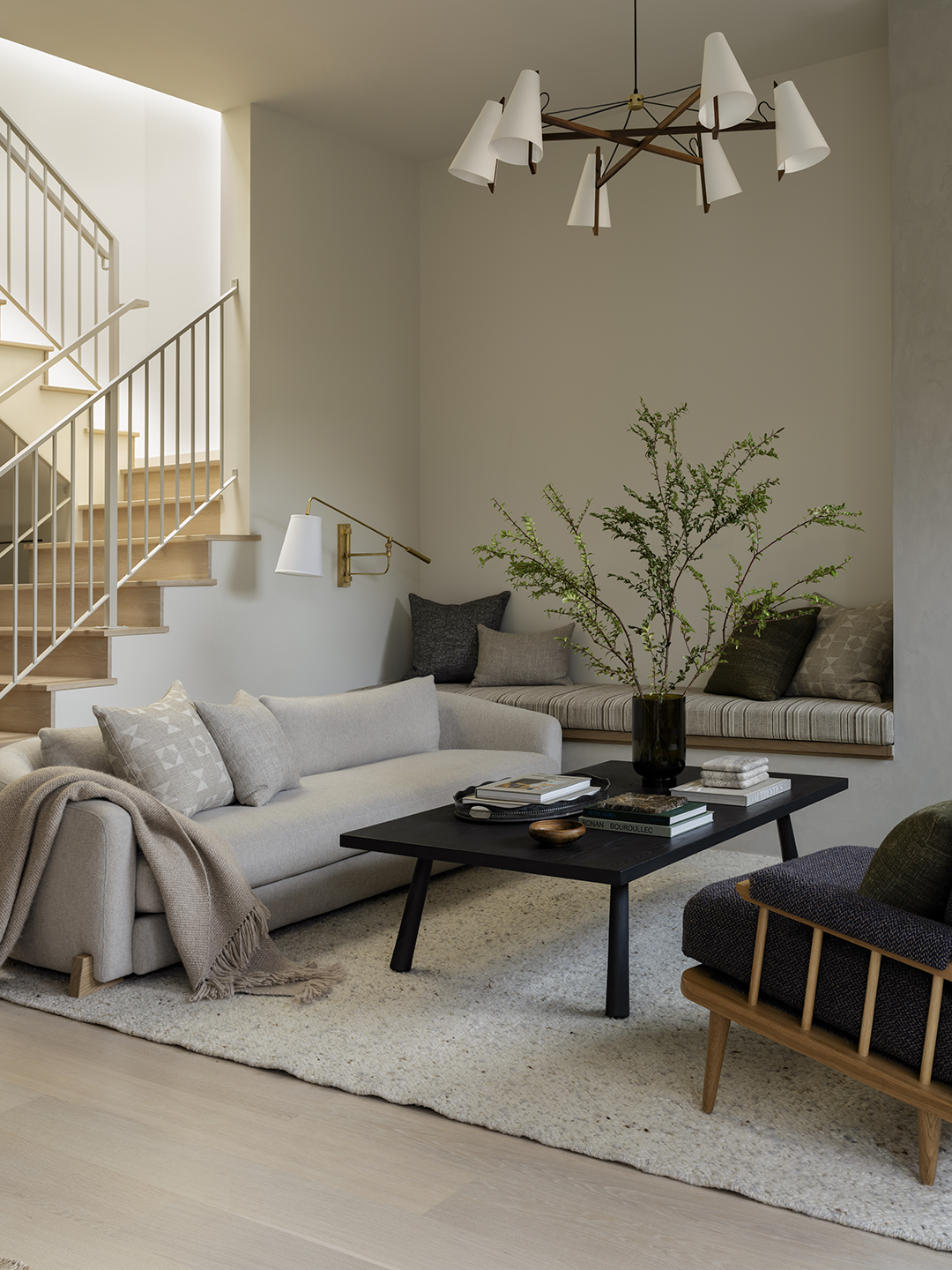
Respecting the front half of this Victorian, because the clients loved the architecture, but [knowing] they also didn’t need a full-on Victorian house; they liked clean lines. For us, it was an effort to bring together their aesthetic and their needs, while also trying to respect the home’s roots.
Which rooms got the most attention?
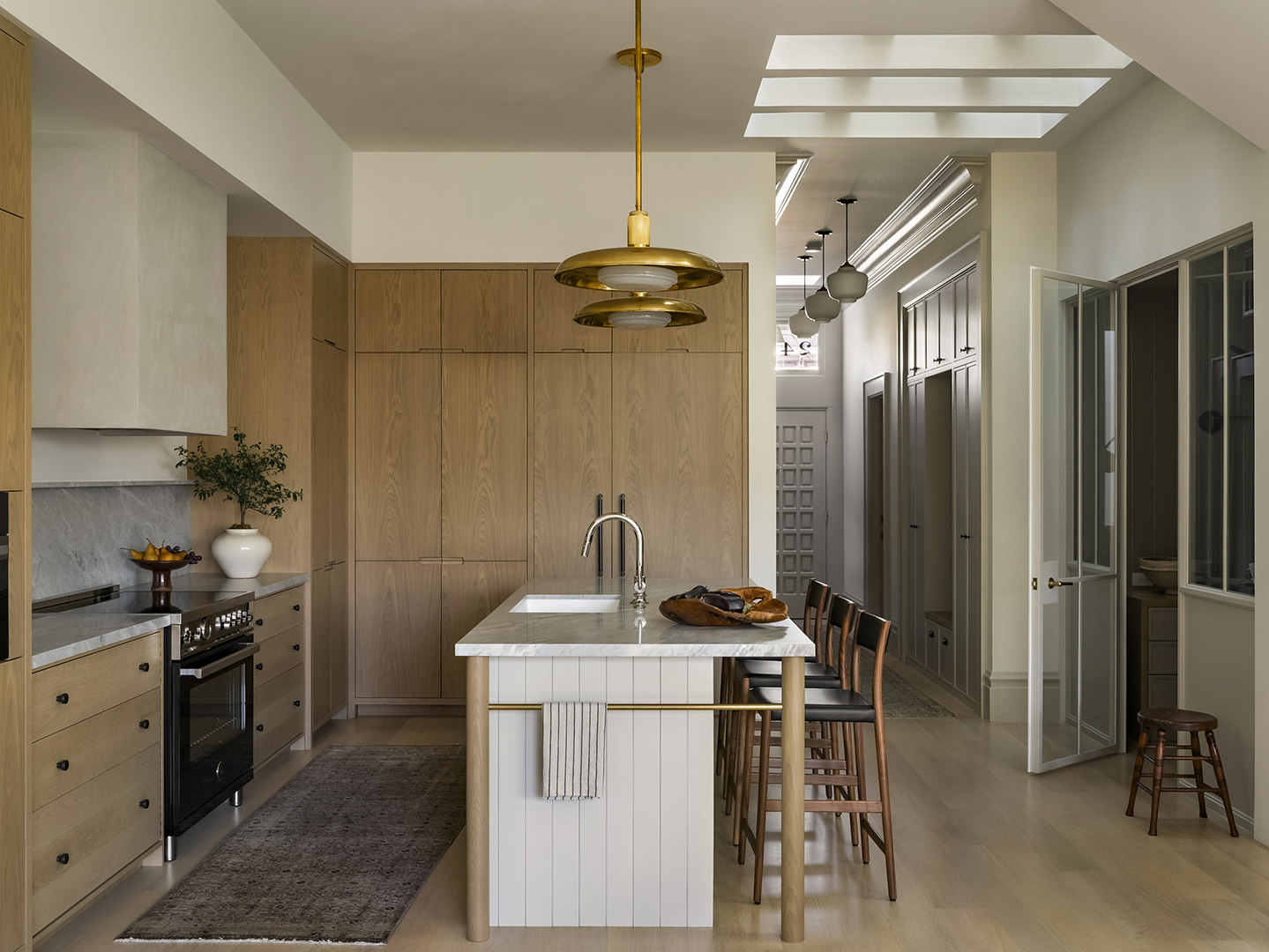
The kitchen was the space we agonized over the most in terms of layout. We cleaned things up and gave them quite a bit more storage with full height pantries next to the fridge and freezer. We also gave them a good amount of breathing room by not having uppers right near to the stove. Instead, we designed a wall of cabinetry in the adjacent dining area. We were even able to get a nine-foot-long island in there, too.
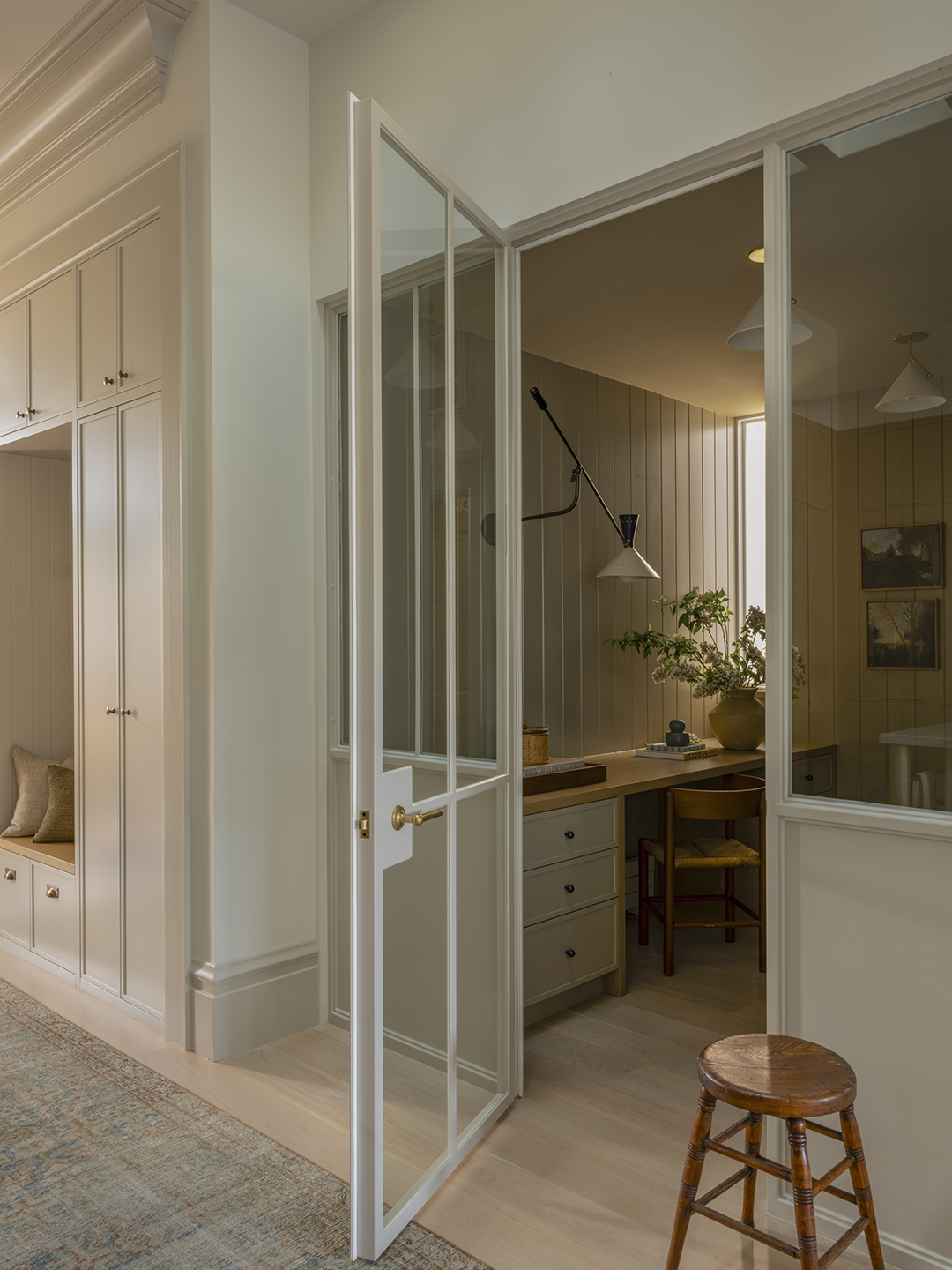
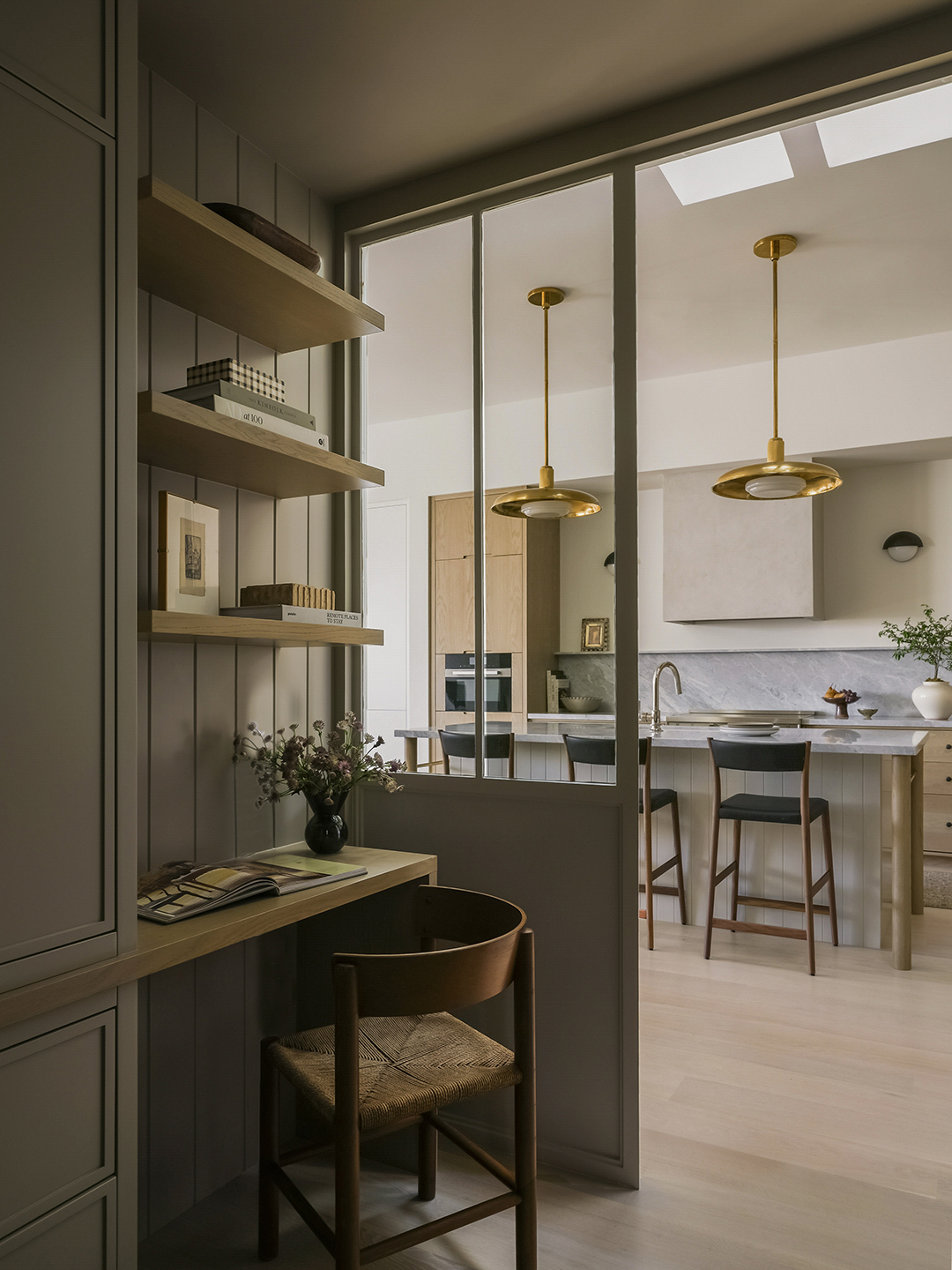
We’re most proud of the office. The wife wanted a workspace that was close to the family, so we came up with this greenhouse-like room off the kitchen. She can shut the door and have a private conversation but she can also be seen. Situating that under the stairs maximized the footprint pretty amazingly.
What storage addition felt like the biggest game-changer?
In the entryway, there’s a little bench with storage that serves as the mudroom. It gives them a place to hang their coats and drop backpacks, which was our biggest challenge with this footprint—when you entered the house, you walked right into the living room.
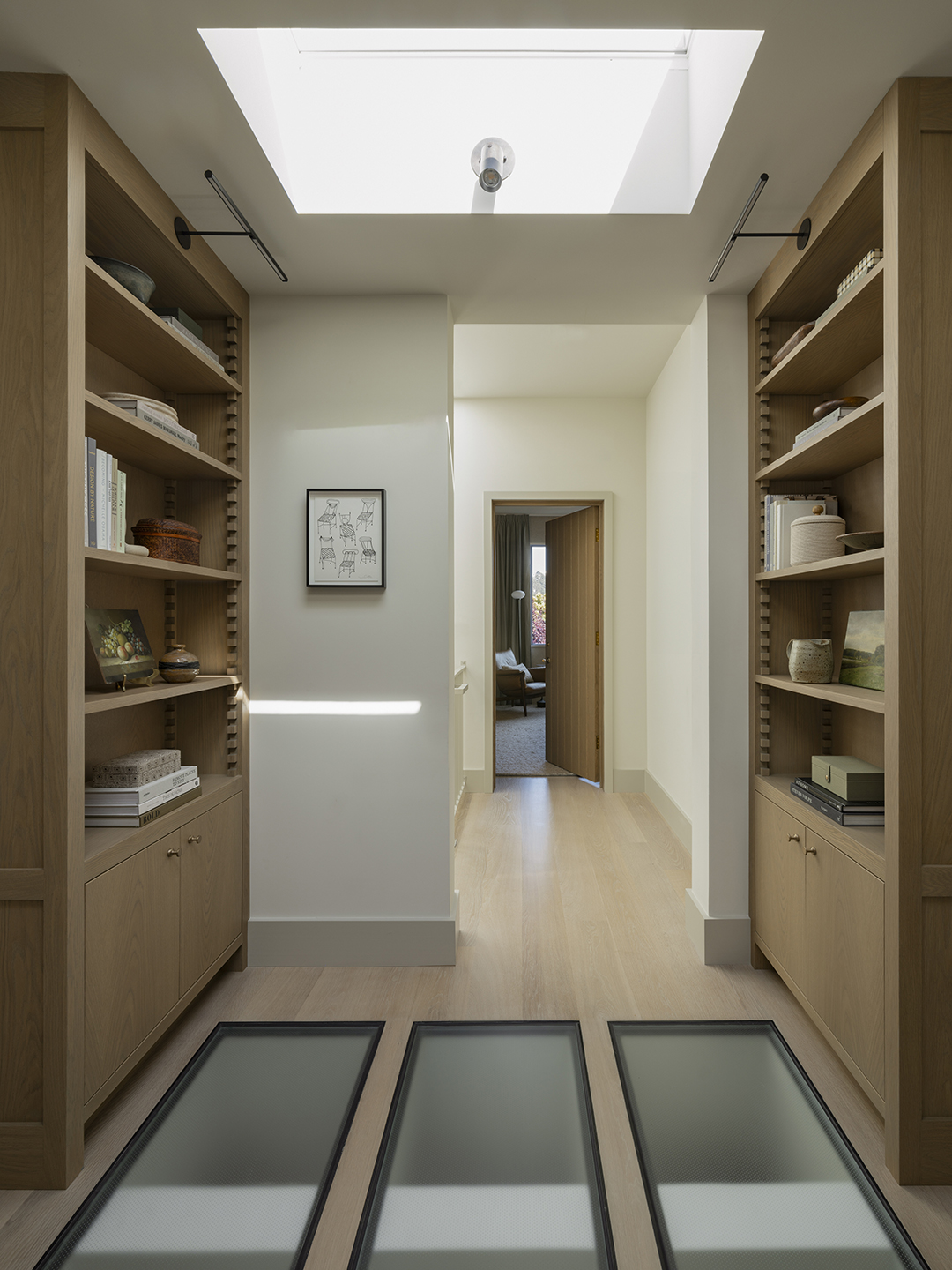
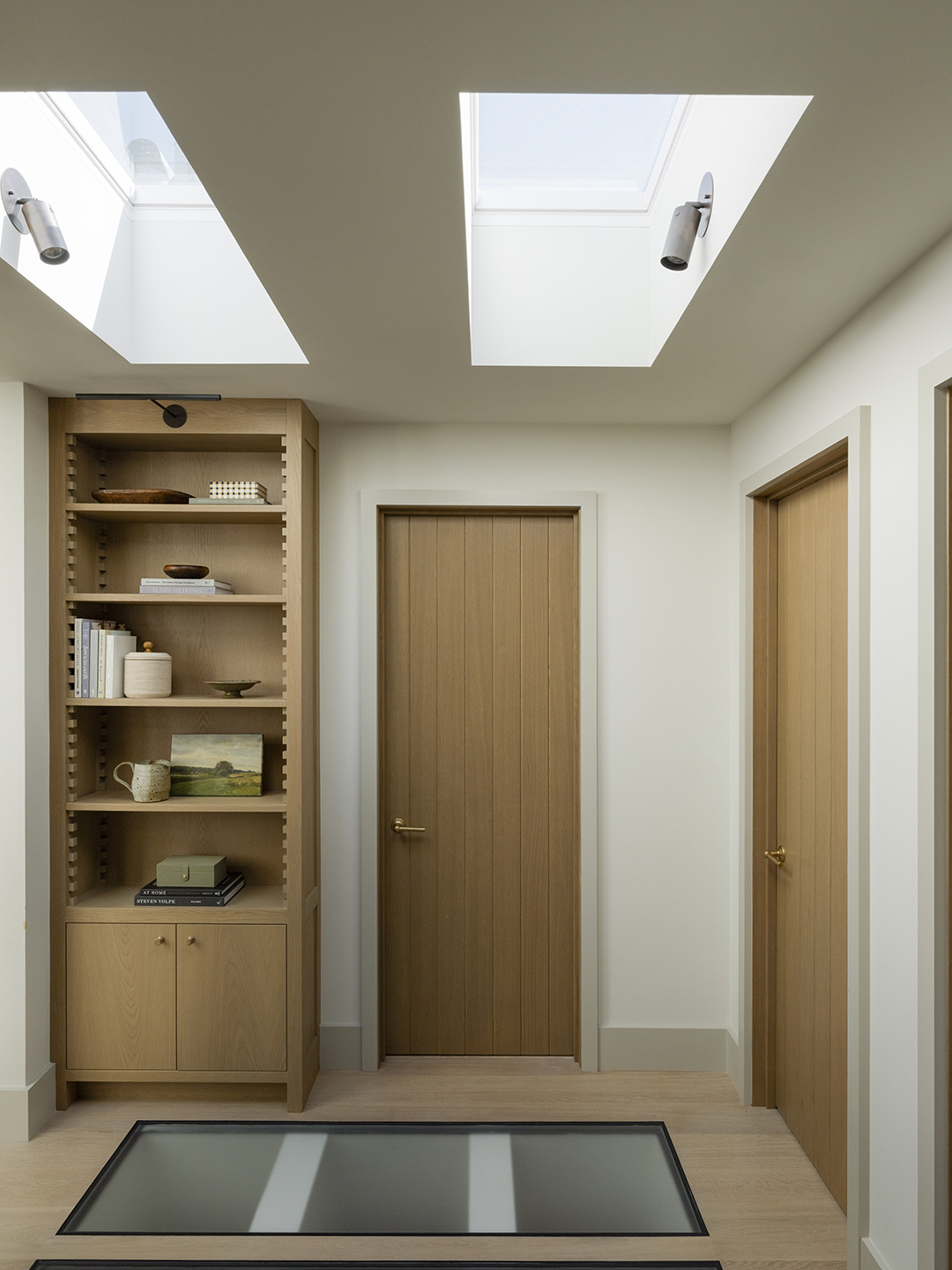
The floor skylights upstairs!
This was the genius of the architect. It’s a hallway between the kids’ bedrooms, bathroom, and laundry area. There are houses so close to them on either side, so there’s not a lot of natural light coming in. The architect and the client worked closely to create these opportunities where more light could get through to the main level.
The bookshelves in that hallway are really unique—why did you put extra effort into the brackets?
Typically, adjustable shelves are not something to write home about; they have little holes on the sides and pins…they’re not cute. We try to avoid those at all costs when we can. We designed these with little teeth so the shelves can just slide in and out [in the future]. But in the meantime, they have a lot of texture and interest—they add something to the design.
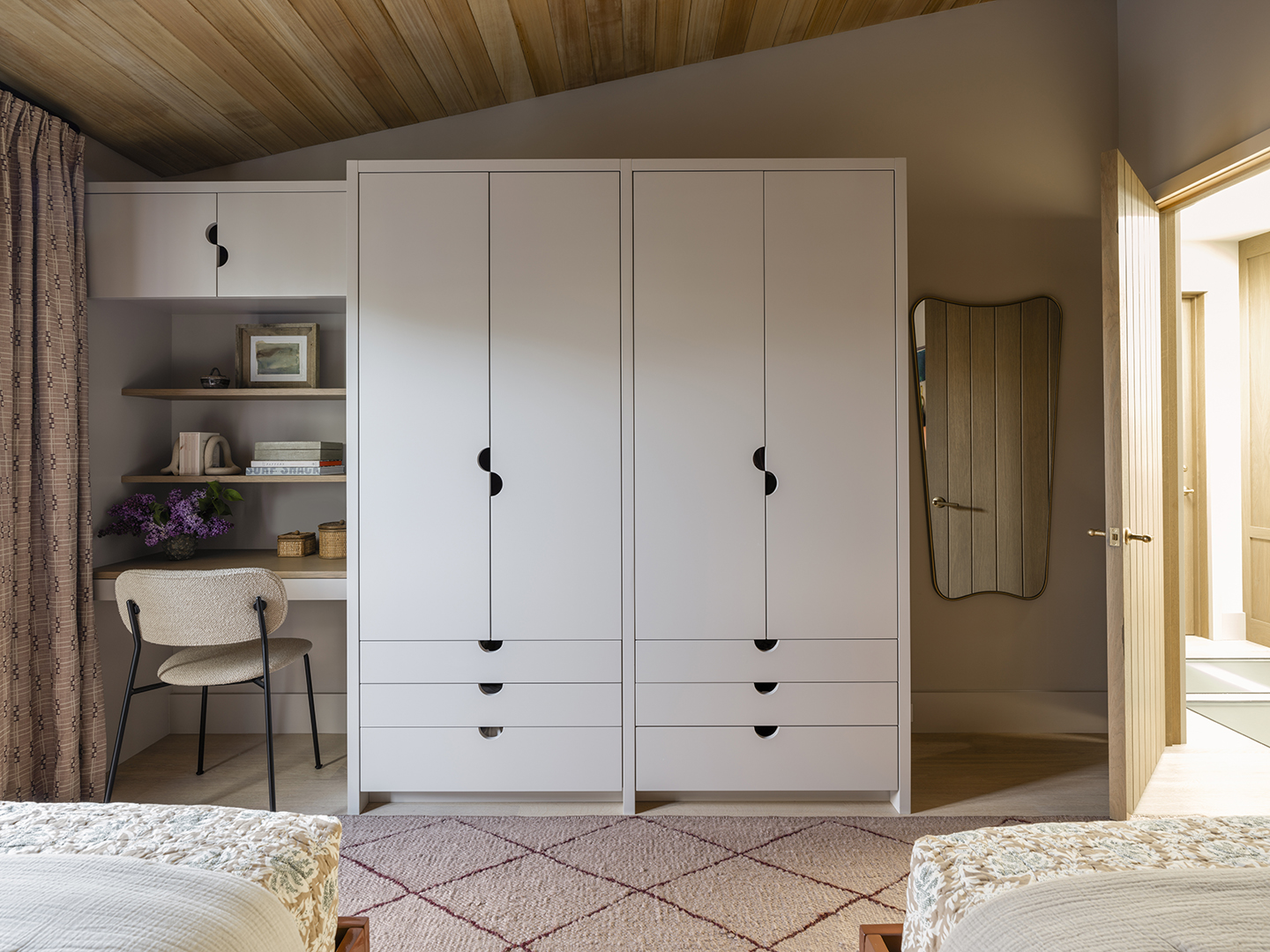
Did their kids have any say in their bedrooms?
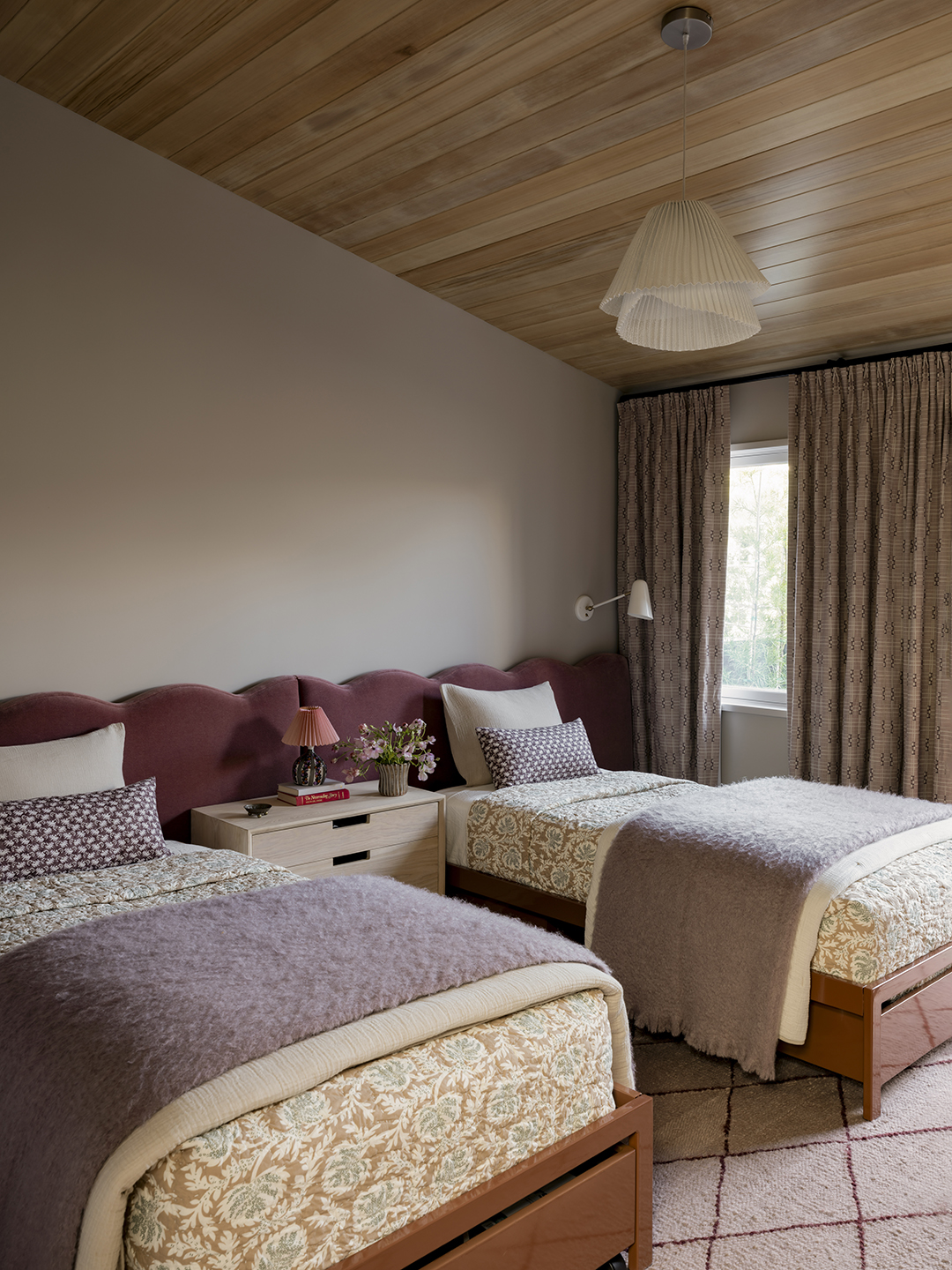
We talked about bunk beds, but at the end of the day the girls wanted their own beds. We created a single headboard to connect them. They have a large nightstand that they can share and it makes the room feel cohesive. And under each mattress is even more storage!
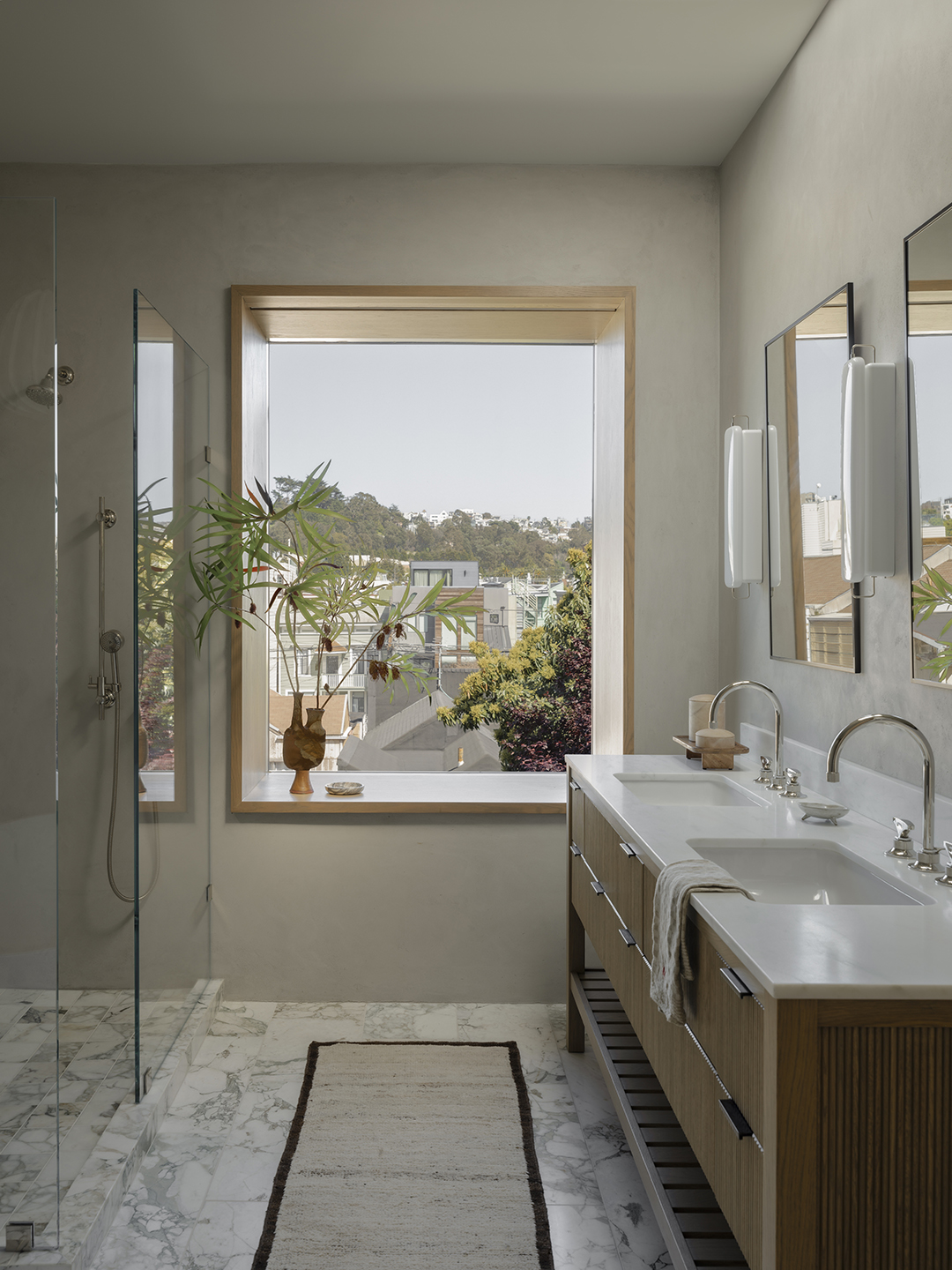
What was the vision for the primary bathroom?
The clients wanted a space that felt grown-up with a soaking tub, a large shower, and not a ton of complicated finishes. The walls are all Tadelakt plaster and the floors are marble. They also really loved white oak. They wanted a calm, quiet place to kind of enjoy themselves.
What was the most exciting material you used?
Mohair is probably one of our favorite fabrics for families. It shows up in a lot of different places in this project (sofas, poufs, the girls’ headboard). It adds a lot of texture and some color without a lot of pattern.
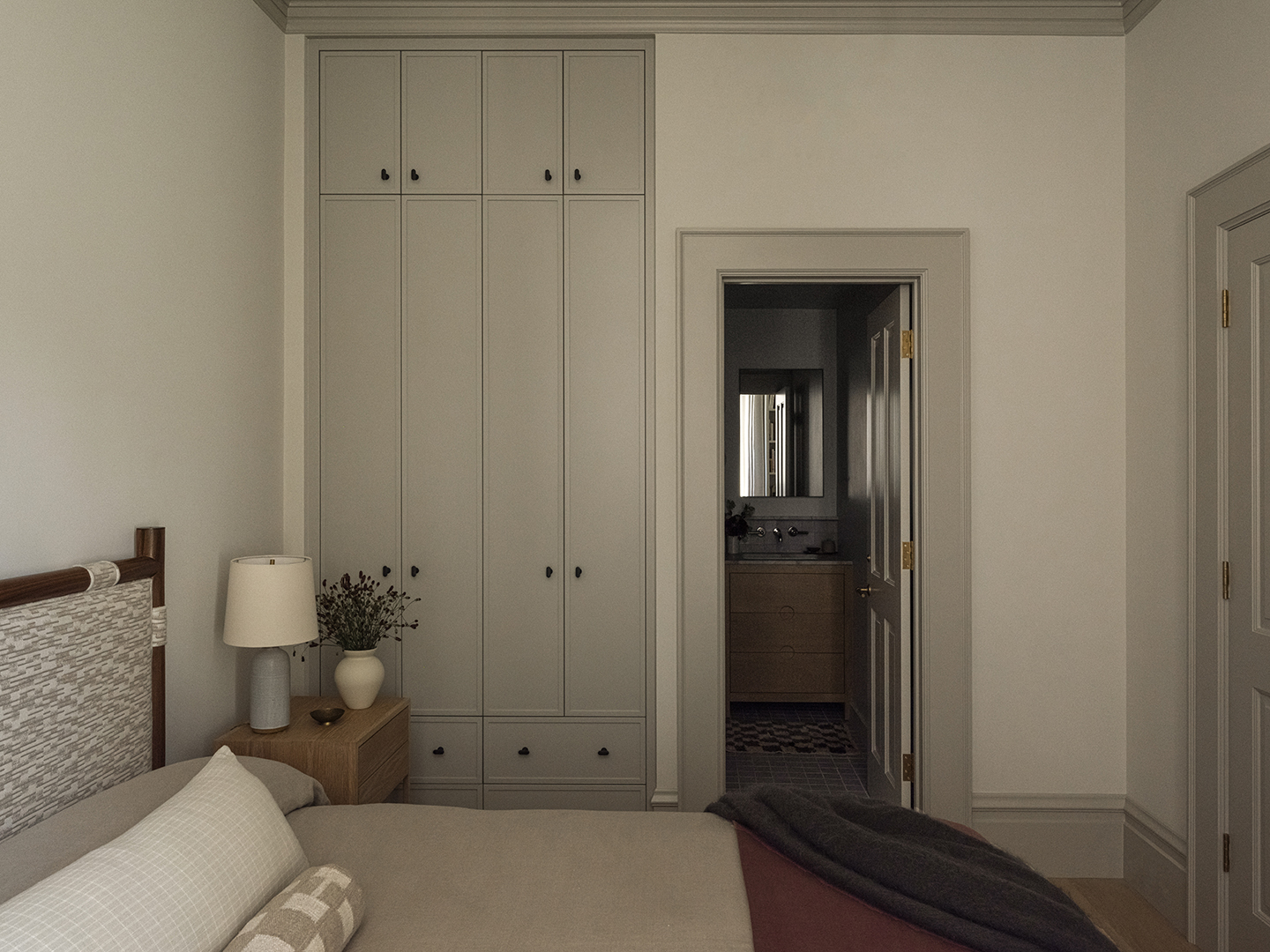
You went above and beyond with storage in the guest room, too—why?
Having a closet with big swinging doors was not going to work in this small room, and we couldn’t fit something with pockets within the wall, so we proposed this built-in cabinetry. It brought in the storage the family needed without taking up a huge amount of space.
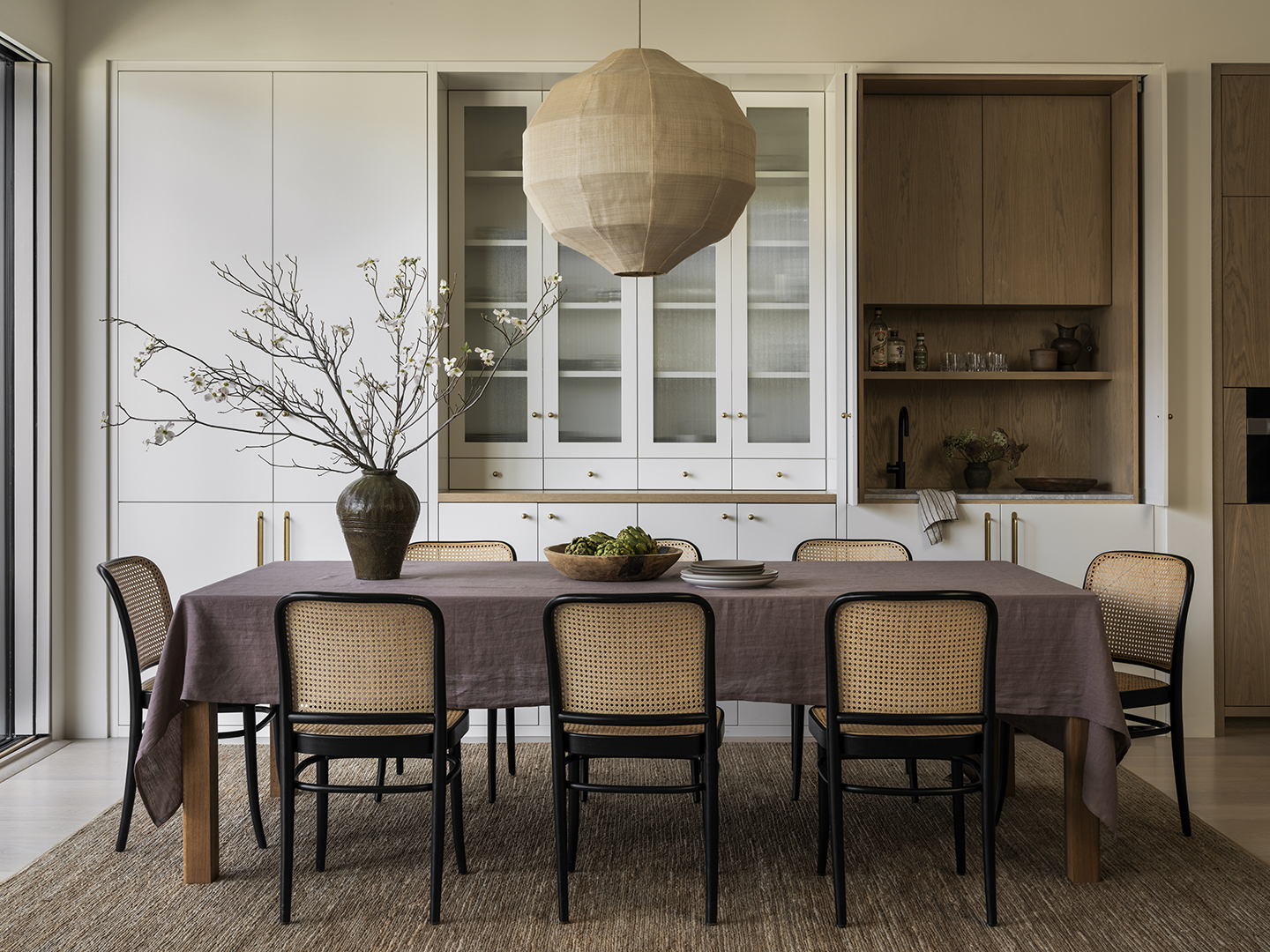
What is your favorite paint color in the house?
Choosing what we call the “whole-house color” is a critical decision. We didn’t want to give them just a crisp white box, so we tried to find a color that had depth. The main wall color, Benjamin Moore’s Seapearl, is a beautiful, nuanced white. It felt like a big success.