
We may earn revenue from the products available on this page and participate in affiliate programs.
Life in New York City requires a whole lot of schlepping—trudging to and from the nearest subway station in the snow, ambling down the sidewalk carrying 30 pounds of groceries like kettle bells, heaving oneself up five flights of stairs just to see a friend or get home.
Five flights is a lot—a whole glute workout twice a day just to go anywhere. But when editor, culinary consultant, and woman-about-town Christine Muhlke found herself staring down a 900-square-foot apartment on the top floor of a circa-1898 building in Manhattan’s Chelsea neighborhood, all her inhibitions flew out the door. It was 2023, she’d just moved back into the city after a Covid-era sojourn at her house upstate, and her temporary sublet in a nearby building was expiring soon.
True, the space was in unlivable condition: destroyed floors, cramped ceilings, layers of crud. There was a distinct sense that not one thing had been updated over the several decades that the former tenant had lived there, and the rooms had just become a repository for stuff (indeed, the super told Muhlke that it took six months to move his personal effects out).
But Muhlke could see beyond the grime. “I always say in real estate that if I can feel every hair on my head stand up, or I feel like I’ve mainlined espresso, that’s my spot,” she adds. This place gave her both sensations. Plus, the price was right.
Among numerous friends she brought in to take so-called “Am I crazy?” tours was designer Lithe Sebesta, an old pal trusted to give a no-nonsense assessment. Sebesta, who Muhlke says “has the spatial equivalent of perfect timing,” instantly saw the potential of the space. So Muhlke made her move, negotiating with the building owner on the purchase price. After closing, it took until 2024 for the board to approve the plans made with Sebesta and an interior architect. To finally get things moving, she bribed the then-board president with custom-curated travel guides, one of her specialties.
Ultimately, having “that [added] time was really important because it allowed us to refine what we wanted,” Muhlke remembers. “The main objective was a clean envelope with nice materials. We were able to add quiet details. My goal for this apartment was to have a calm atmosphere because the city is so crazy. I wanted a place with light and for my son Max to have a real bedroom.”
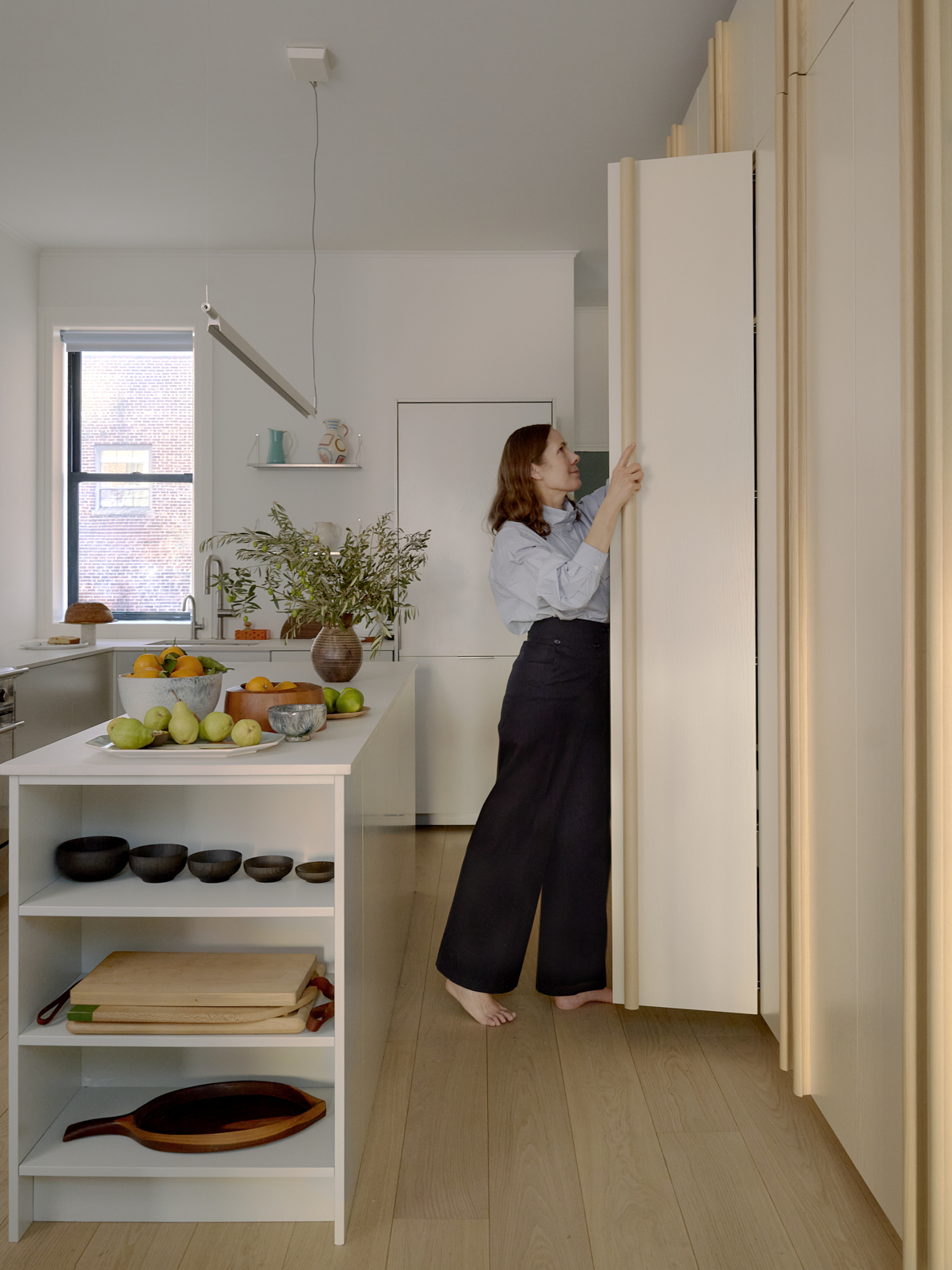
Sebesta’s interiors prowess lies in her ability to subtly synthesize past and present. With Muhlke’s apartment, she had to start nearly from scratch, but that allowed her to bring in other elements that would serve the owner better (and look like they’d always been that way). She’d introduce new touches that felt original, with a contemporary edge, plus serious storage—Christmas ornaments, seasonal clothes, and suitcases weren’t going to stash themselves.
The duo got a little gift while installing new flooring. Sebesta rang up Muhlke to let her know that they were working with 1,100 square feet, not 900 as it had originally been listed. “It was one of those dreams of opening the medicine cabinet to find another apartment on the other side,” she jokes. In turn, they needed extra flooring (not cheap considering they covered the apartment in engineered white oak.) Overhead, they were able to poke through the ceiling to gain another foot and a half of height. Then they decided to divide one of the rooms into a bedroom for Max and a private workspace for Muhlke.
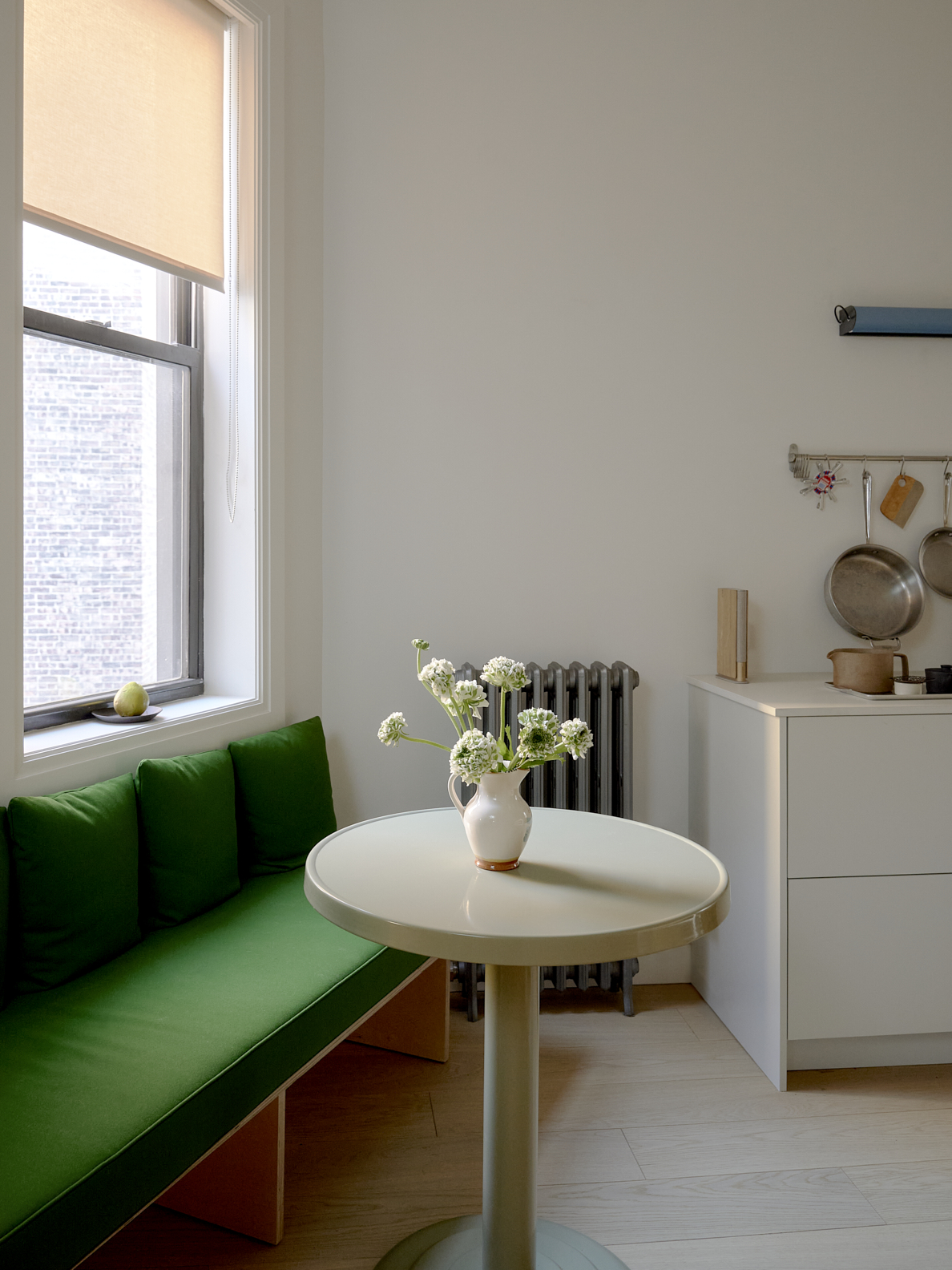
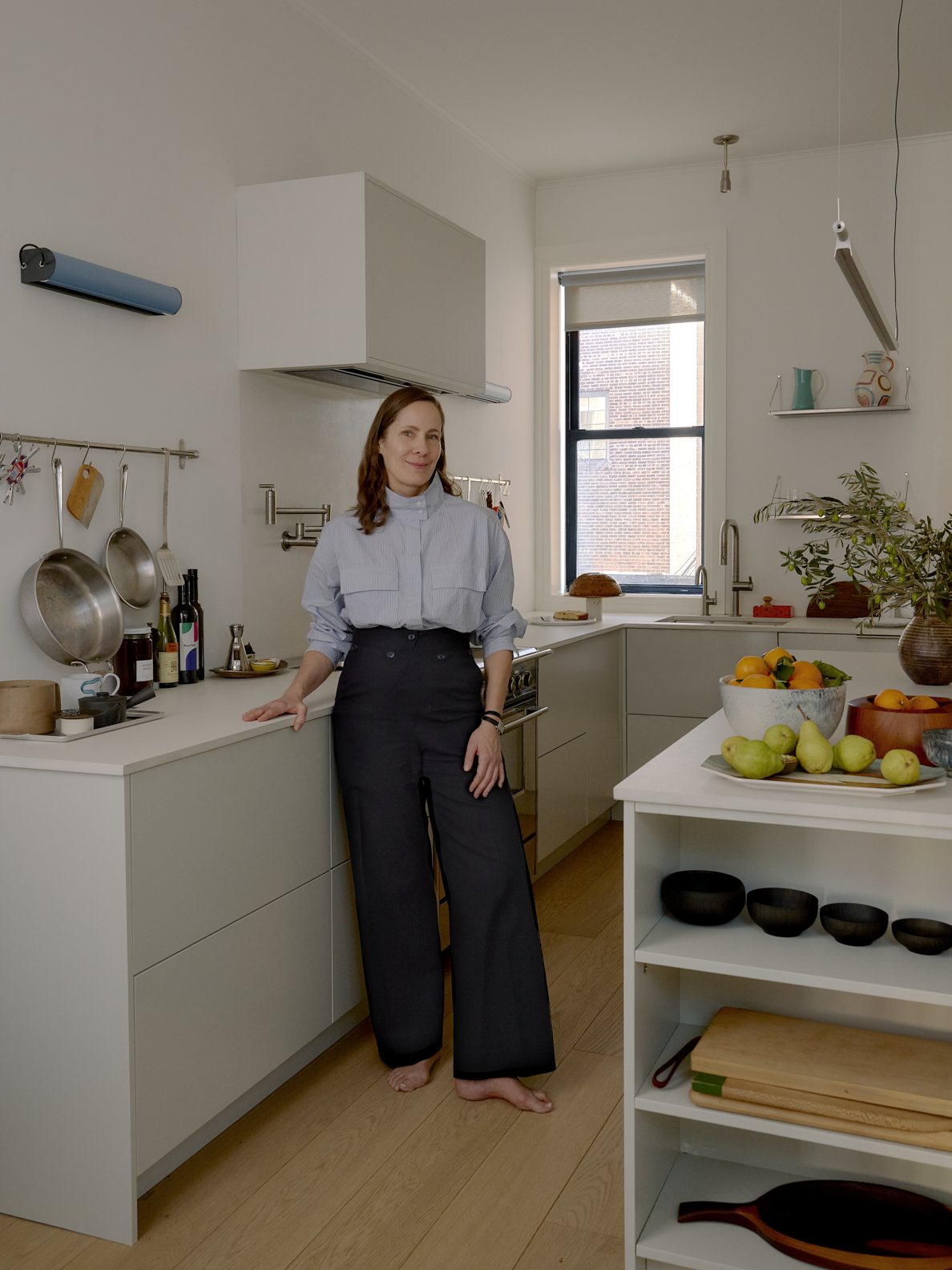
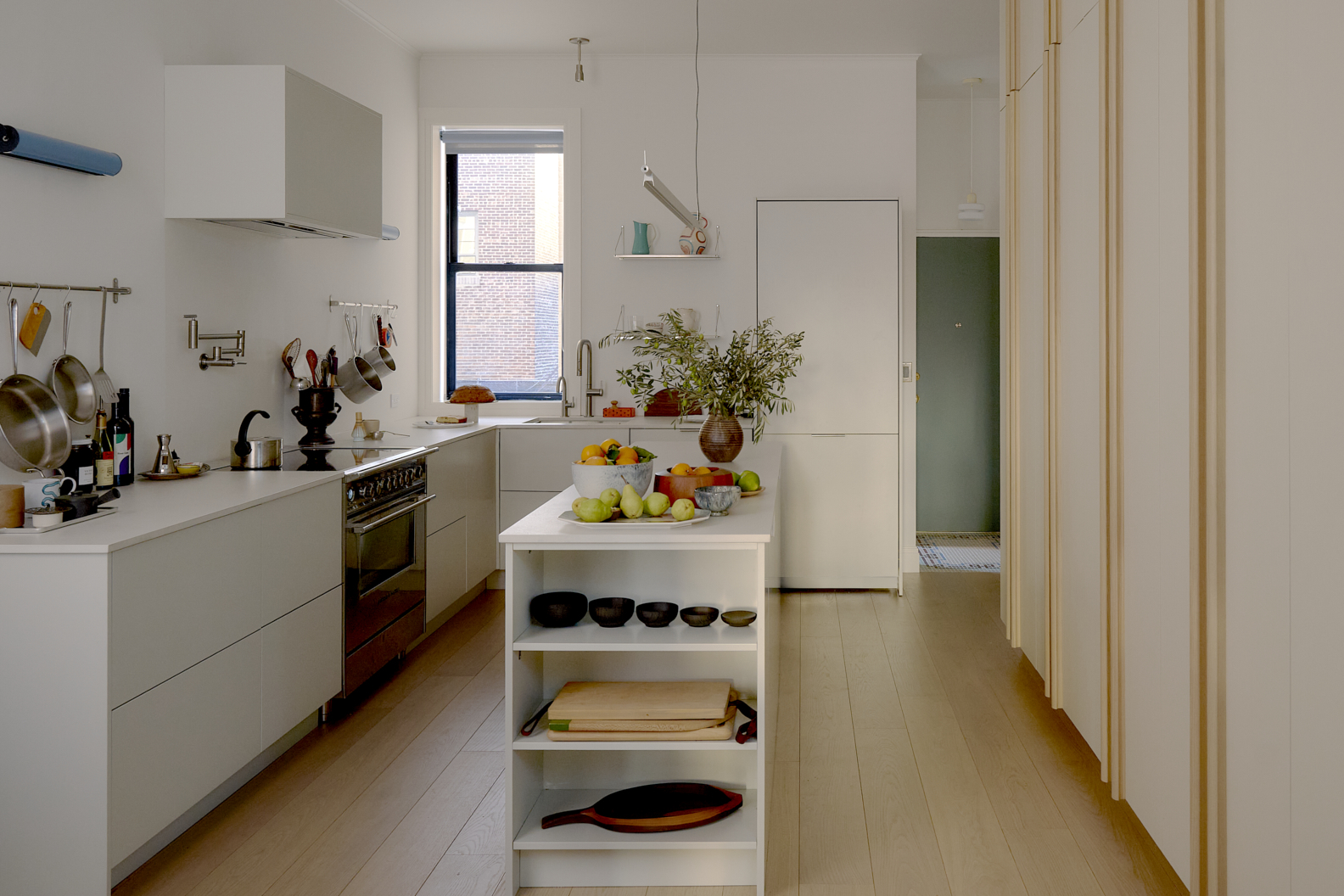
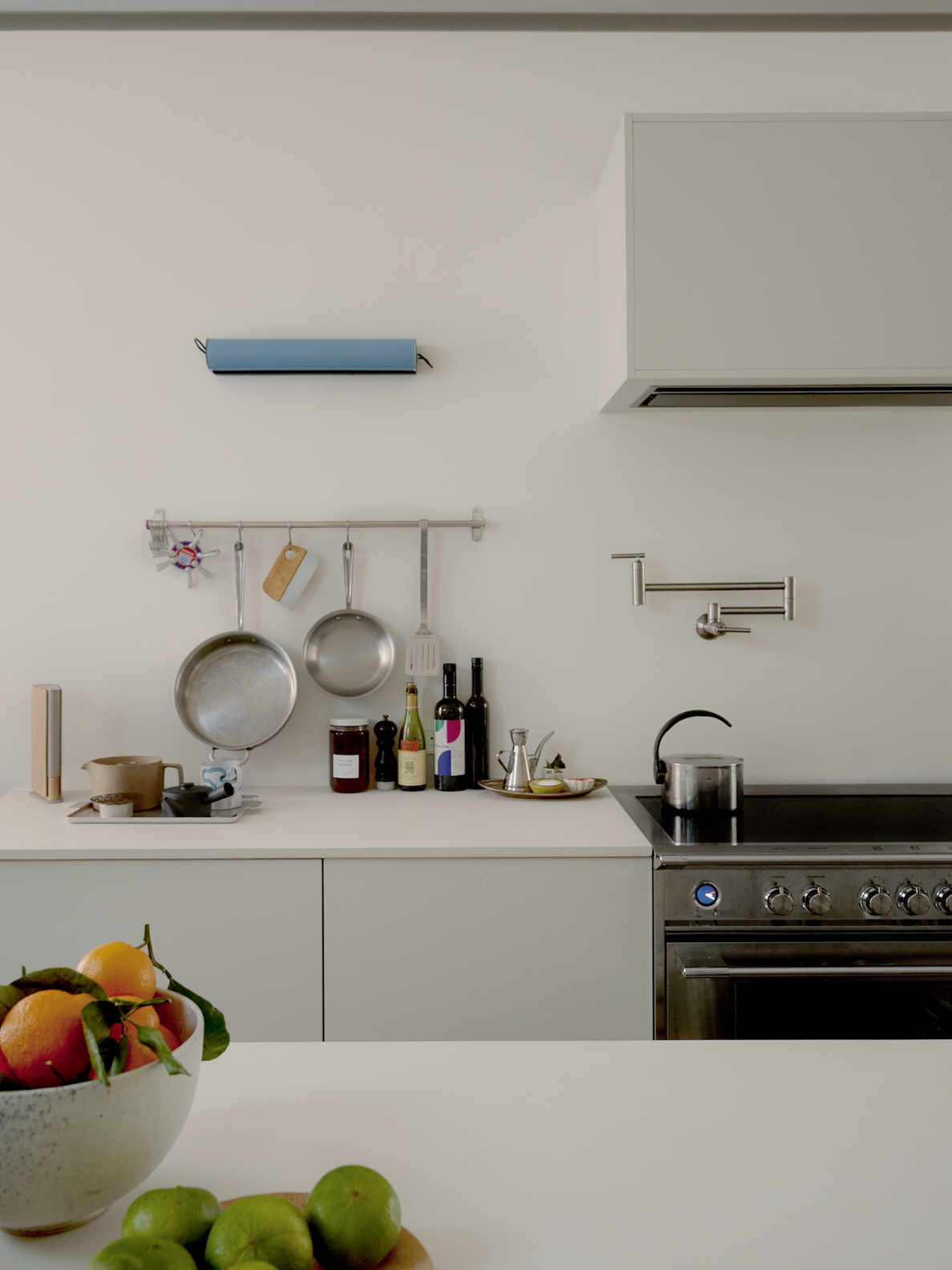
Muhlke invited me over for afternoon tea recently, and I marveled at how the apartment naturally unfurled as I moved through it. A tiled entry gives way immediately to the serene kitchen, clad in Muller Van Severen– and Inge Sempé–designed cabinetry that is home to Muhlke’s extensive collection of ceramics and cookware. As someone who writes cookbooks, runs a culinary consultancy, and helped the iconic kitchenware brand Dansk catalogue their archive, it’s not surprising that this room is where she spends most of her time. The Dekton countertops are indestructible, she notes, allowing Max to experiment with his own budding recipe development without fear of stains, and adding in the wall-mounted pot filler was just the right amount of luxury. In the evenings, she prepares dinner while her son does his homework or friends chat at the banquette nearby. (If she could do it over, she’d make room for a wine fridge.)

In a previous life, this one unit had been two. Floor-to-ceiling cookbook shelving now lines a wall between the kitchen and dining area, once the corridor that connected the two original apartments. Above the dining table, Sebesta dropped the ceiling just so and chose to reorient the flooring in a different direction for a wink at transition. Instead of ornate, Parisian-esque adornment, she added handsome stepped molding and window trim, and applied the same style to baseboards throughout.
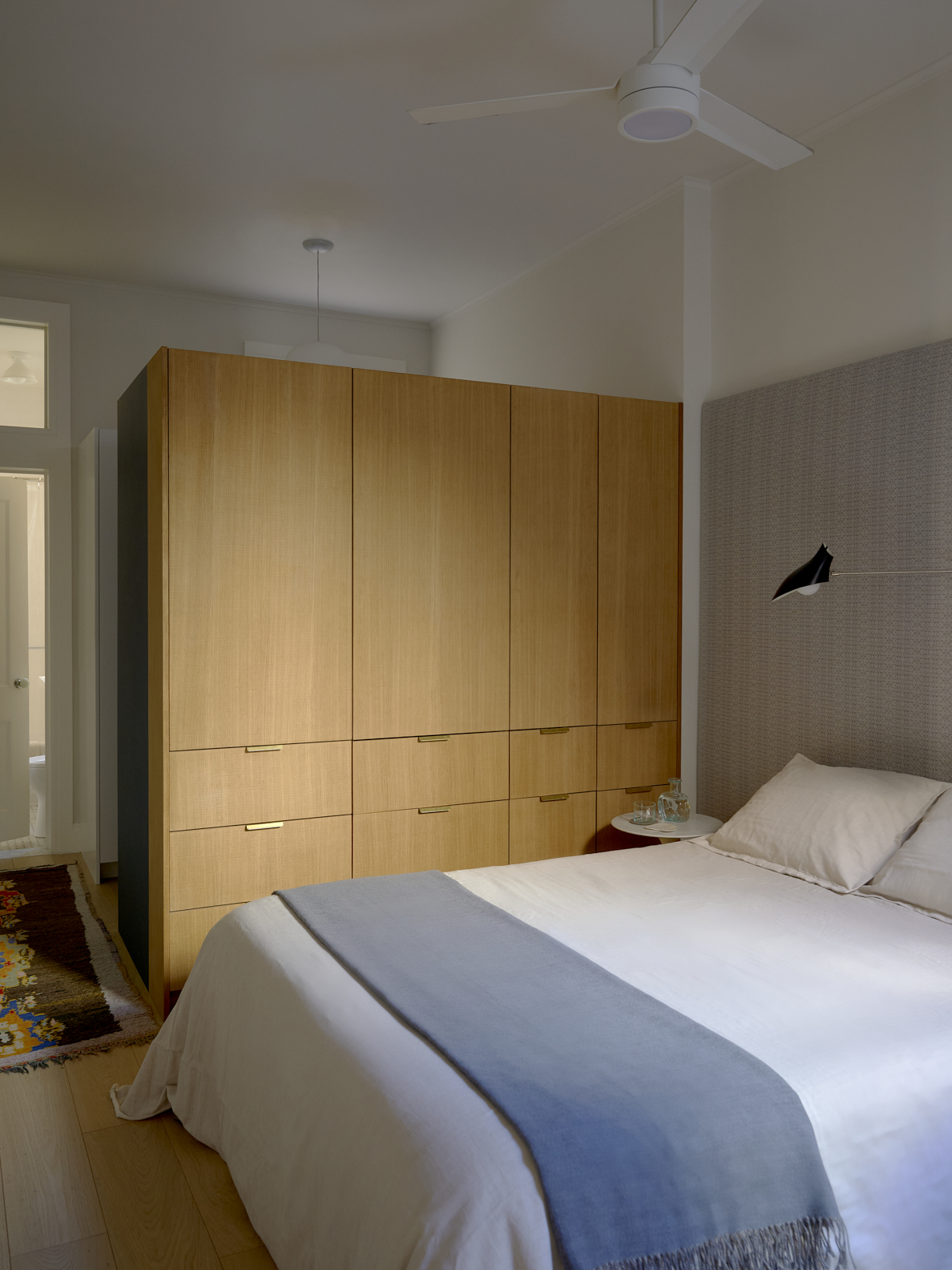

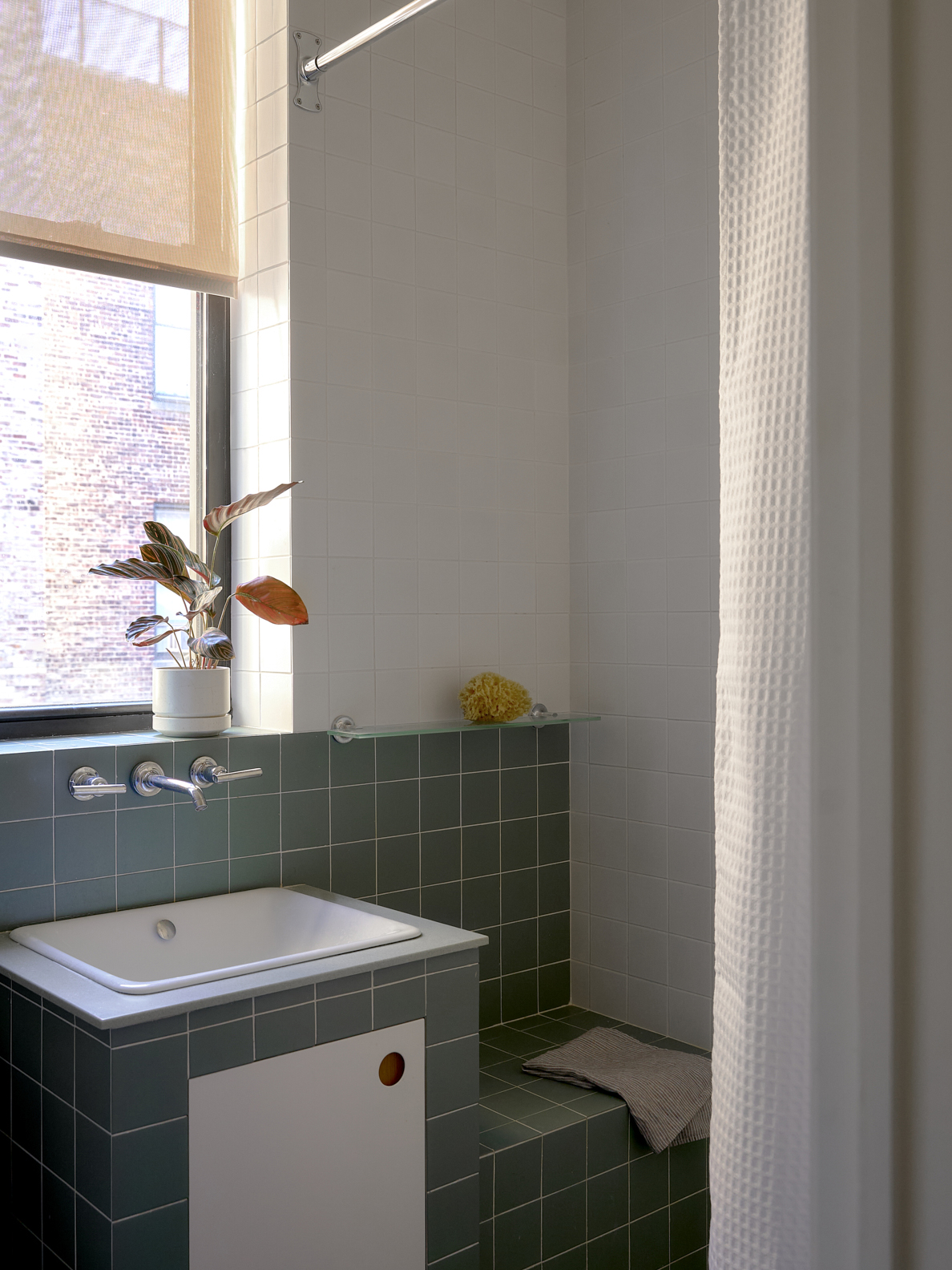
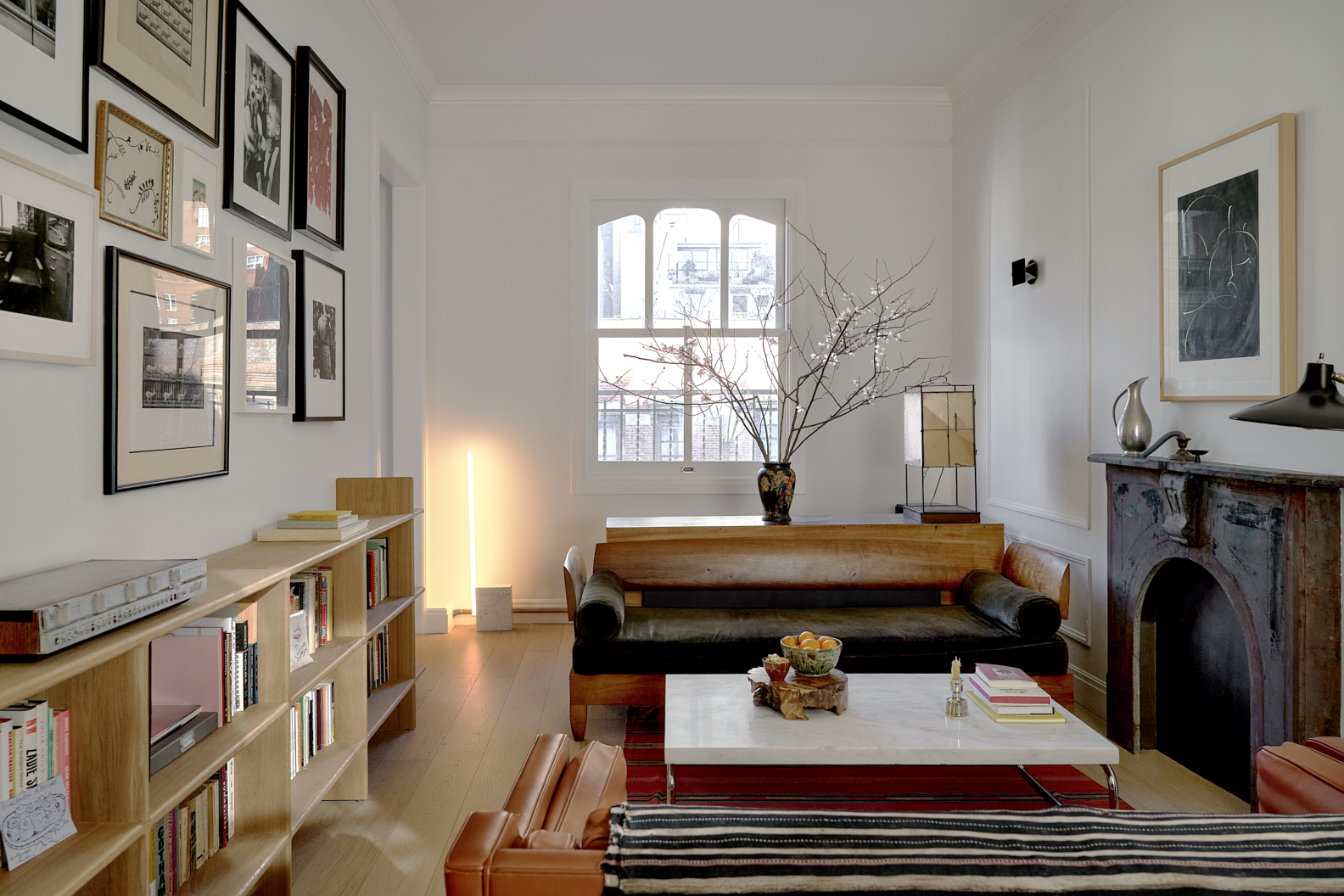
The bedrooms stem from here. Muhlke likens hers to a cozy hotel room, thanks to the custom oversized headboard covered in Chiarastella Cattana fabric, a dressing area that’s also home to her washer and dryer, and en suite bathroom. In the sizable, sophisticated living room, the walls are lined with custom millwork by Summerfield Fabrication and art she has collected over the years; a grand window with elegantly-shaped panes looks out on the city—a sliver of the Empire State Building in sight. “I’m just setting up all these little conversations around the apartment,” she says. Around the corner is her office, outfitted with more shelving, a custom daybed so the room can double as guest quarters, and a beloved vintage Georg Jensen desk she inherited from a mentor (her fairy godmother, as she puts it).
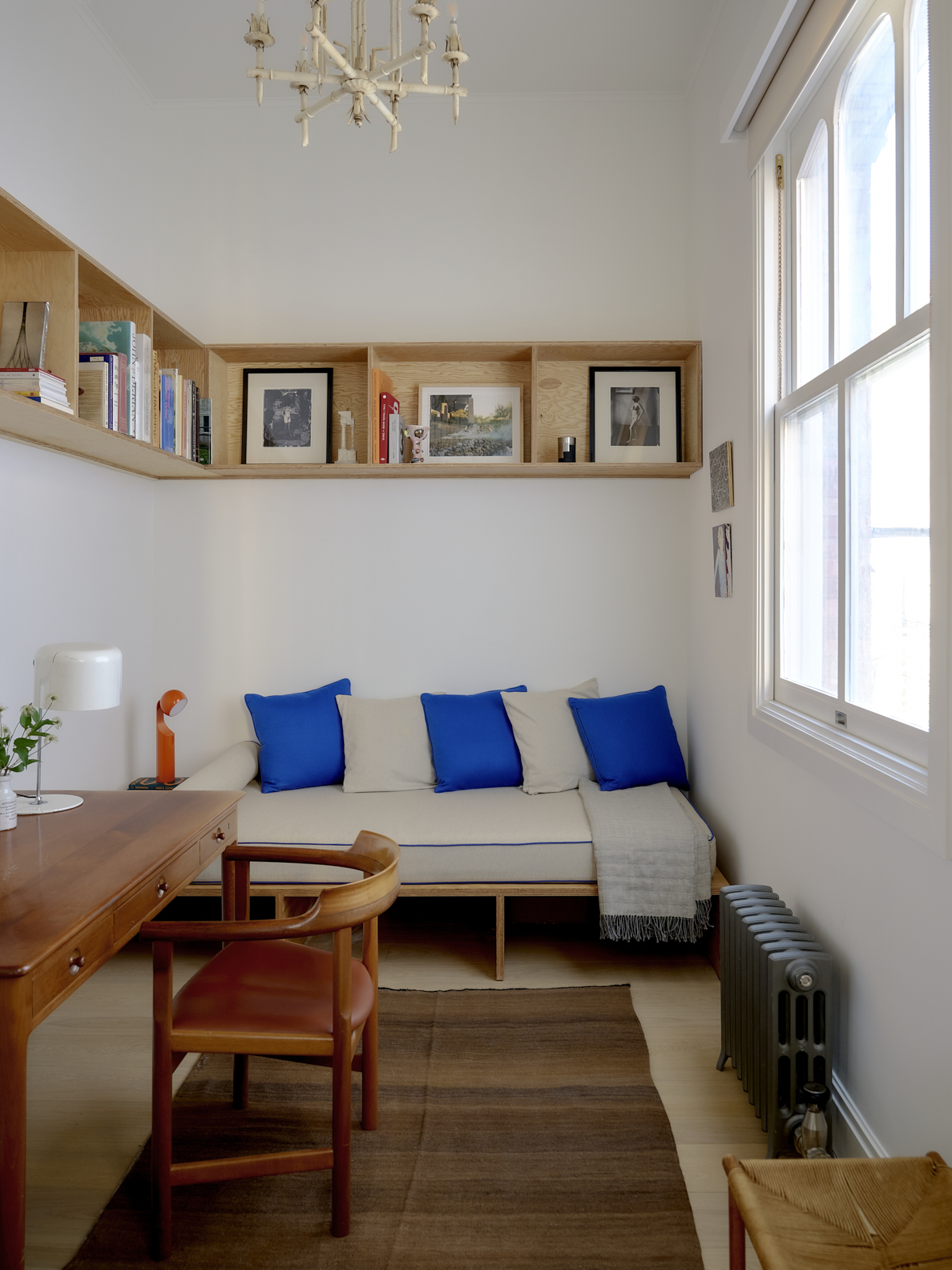
“What endures are the things that are really personal,” Muhlke says, acknowledging items like her father’s 1974 Bang & Olufsen receiver, a set of Agnes Martin prints, a vase from Bilbao, wood nesting bowls from Japan. “Everything is here because I love it. I would rather have fewer things and have them be very important.”
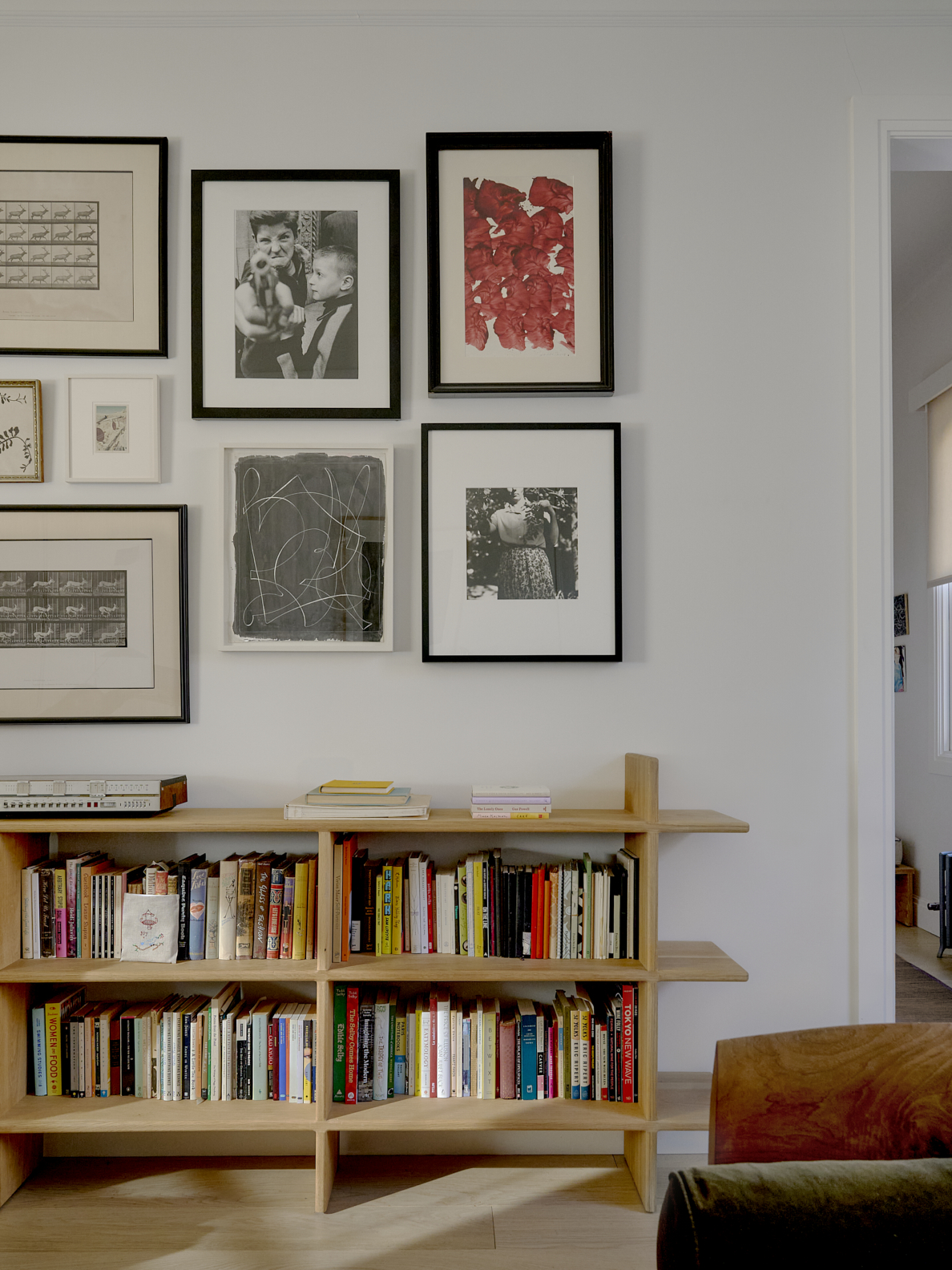
Settling in after the years-long renovation took no time—the apartment was home in an instant. Muhlke will stay as long as she can, but knows she’ll eventually require something new. “This is not my forever apartment, because I’m not going to be able to go up and down the stairs forever,” she admits. “But I wanted to do it in a way that I was going to be happy with forever.”